Bribery Concerning Programs Receiving Federal Funds (Solicting Bribe)
Understanding this form
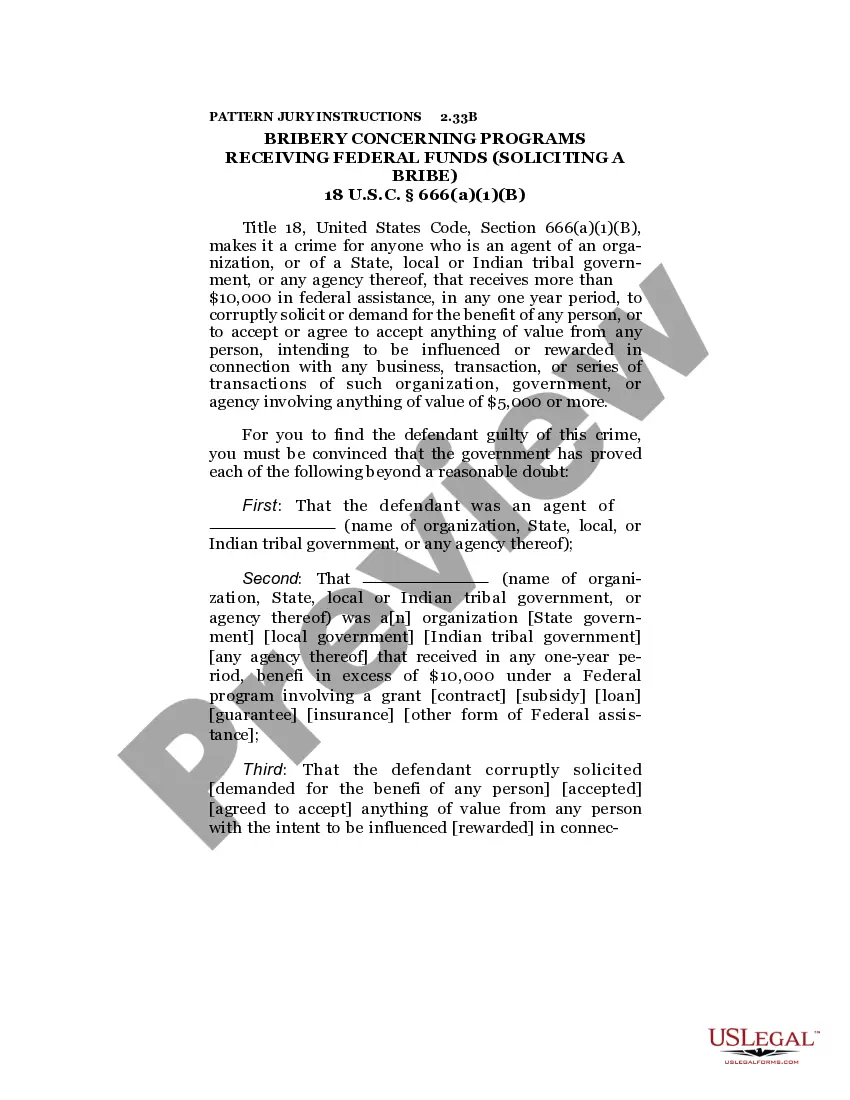
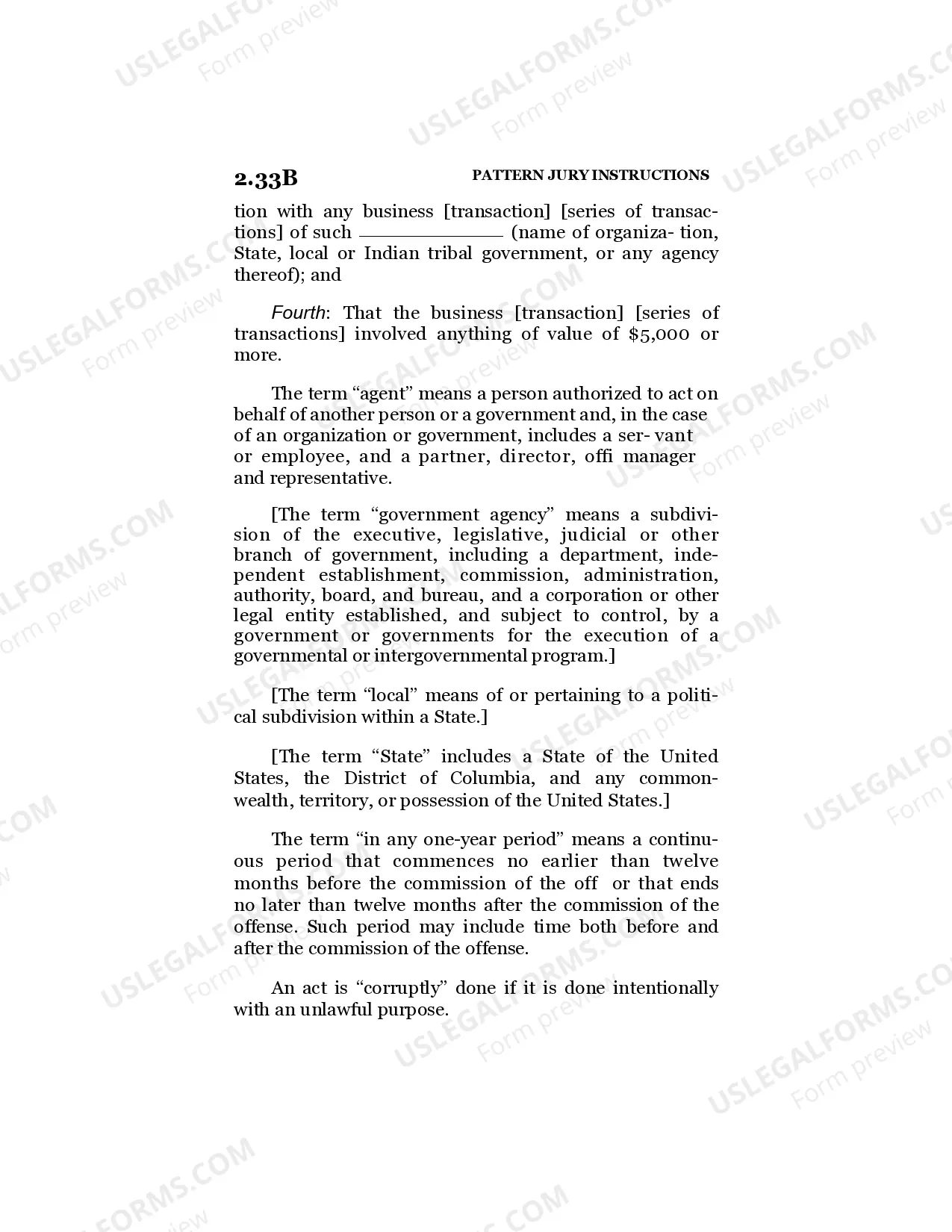
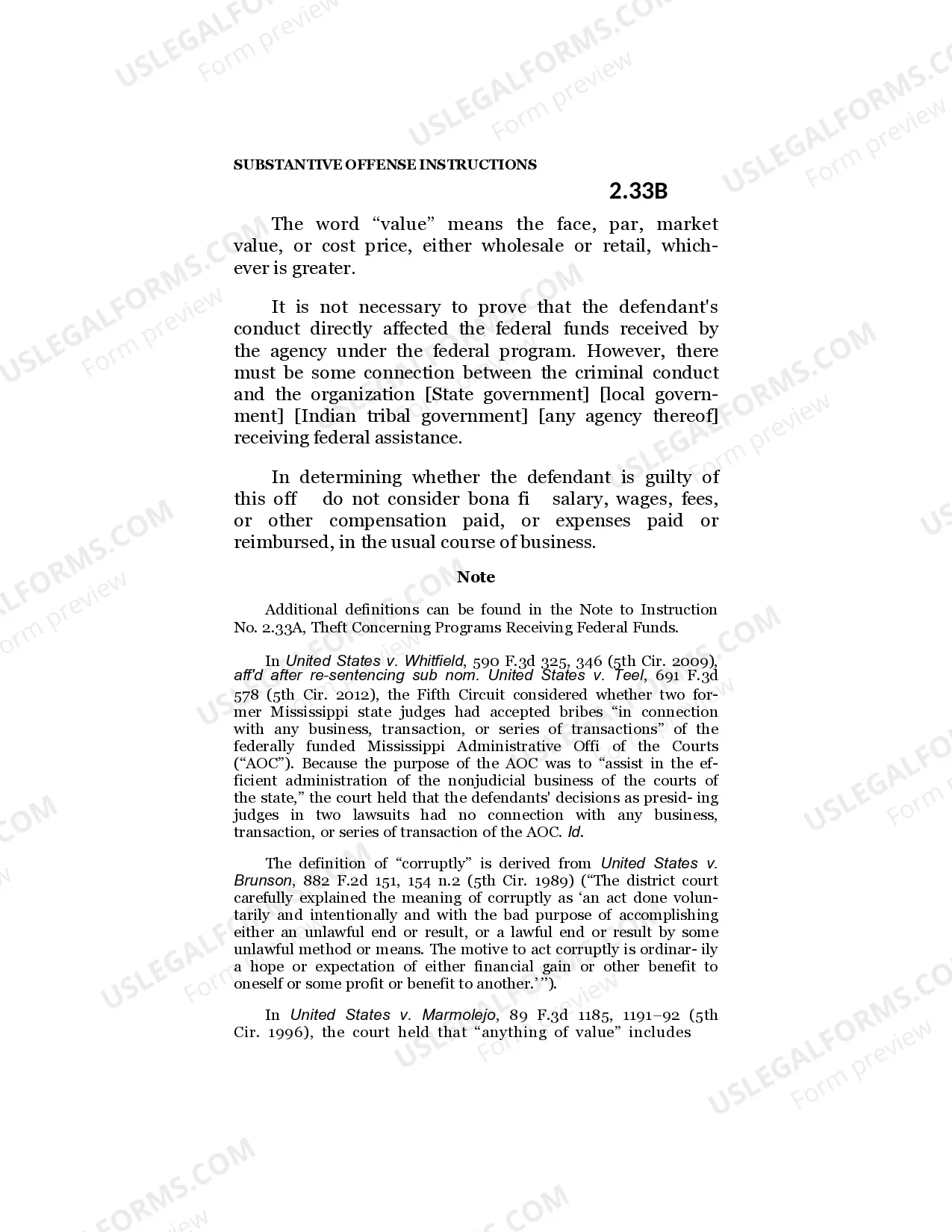
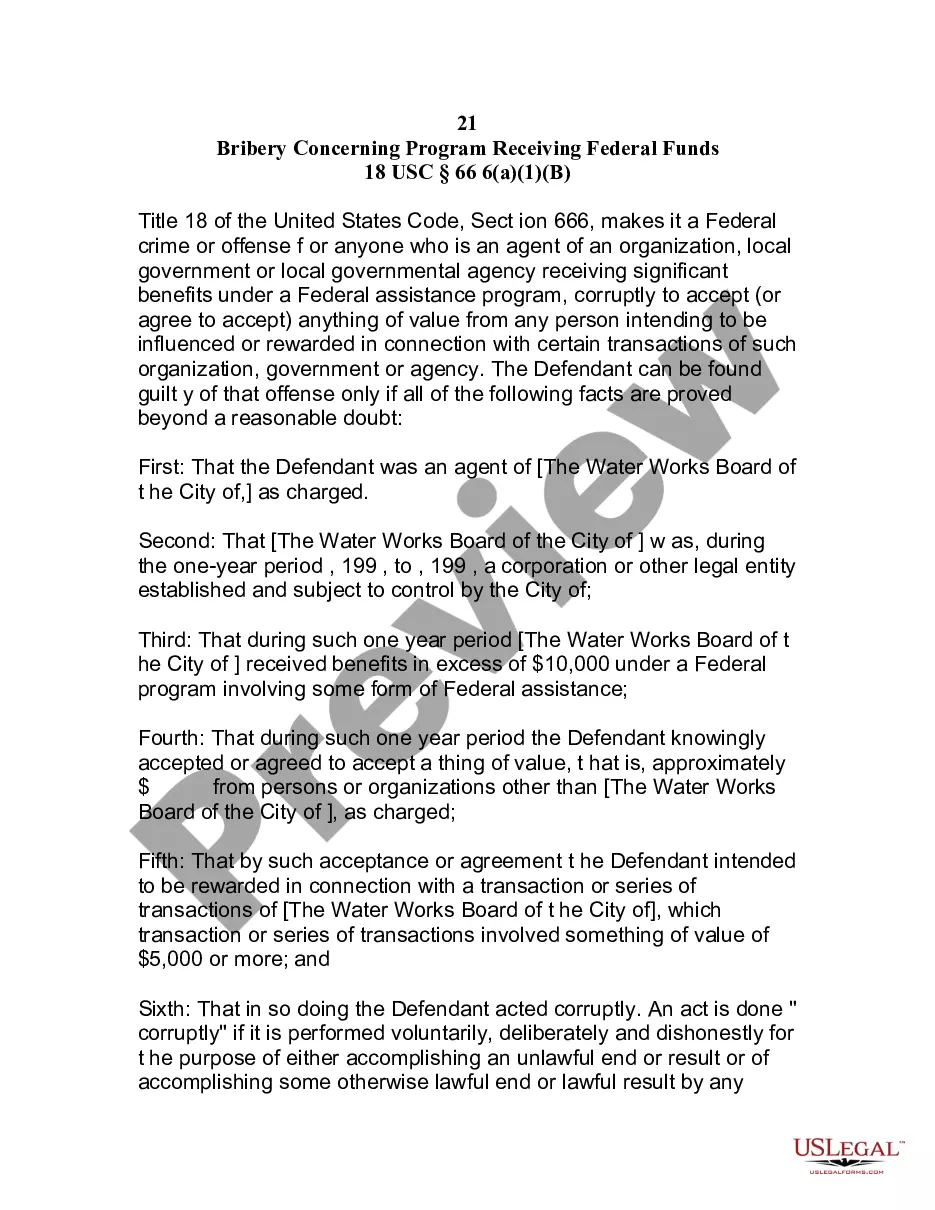
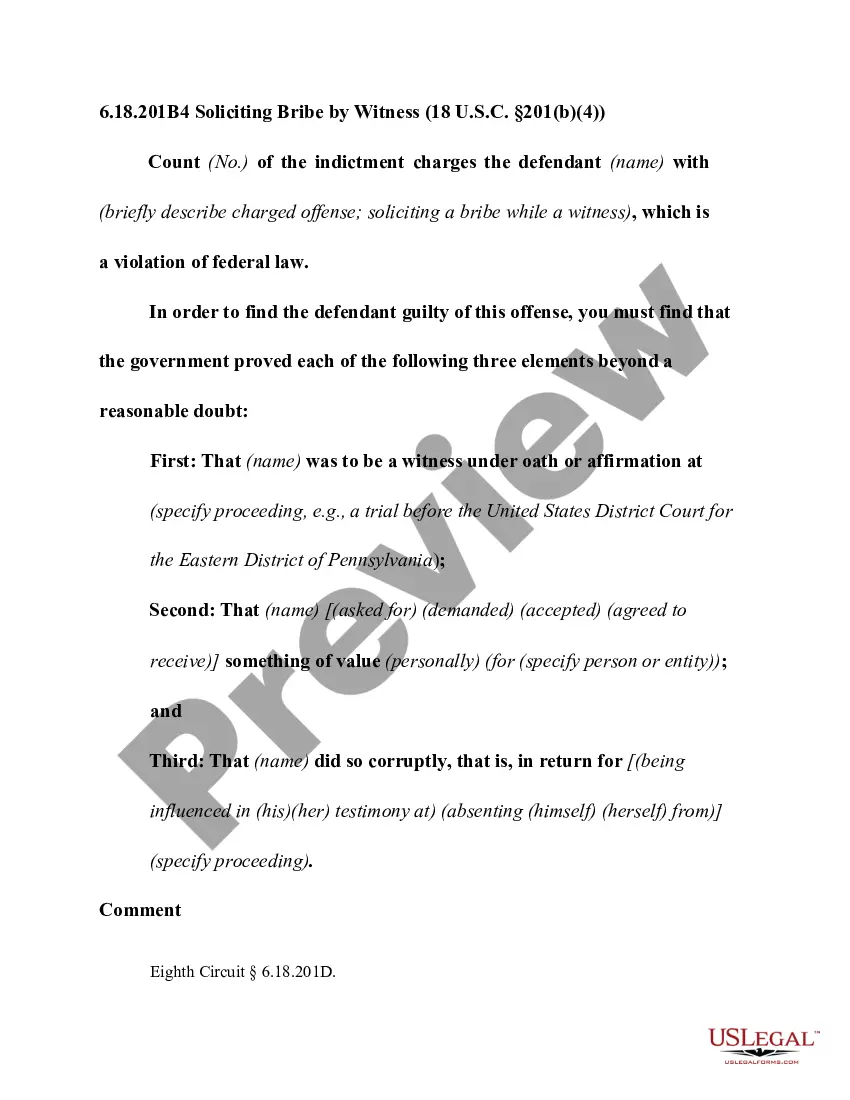
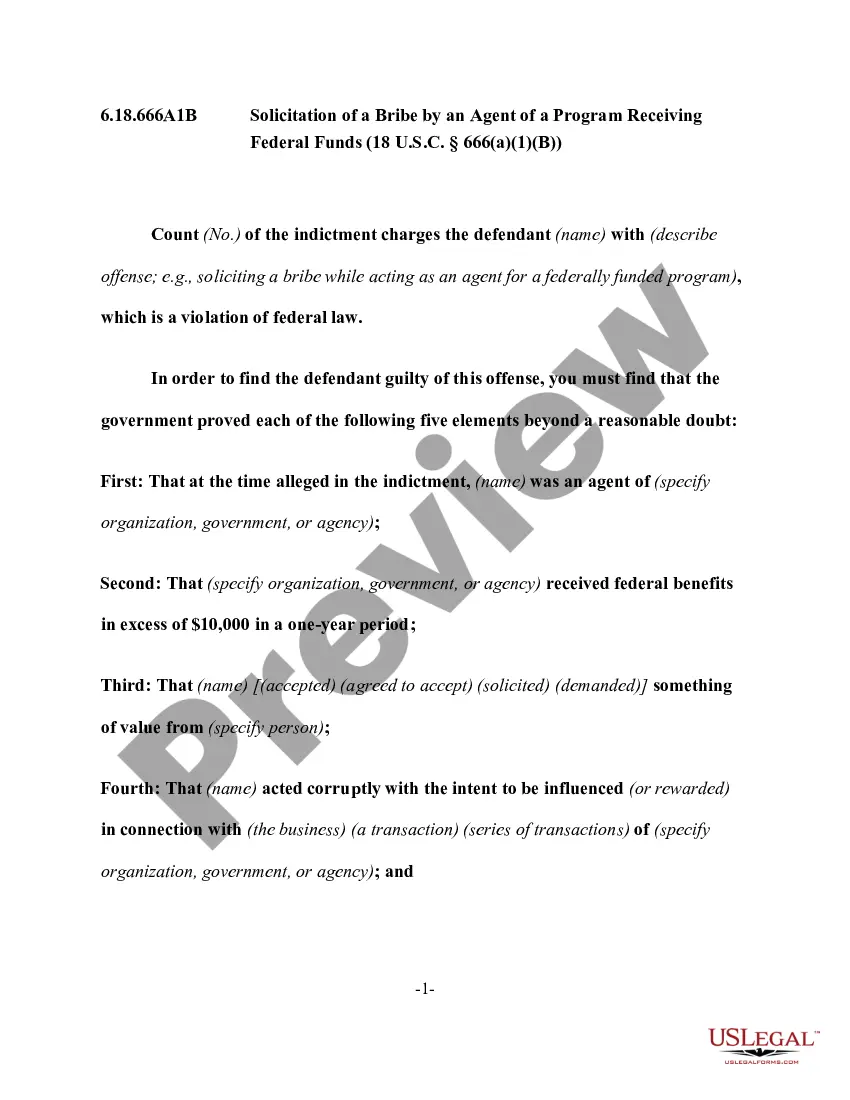
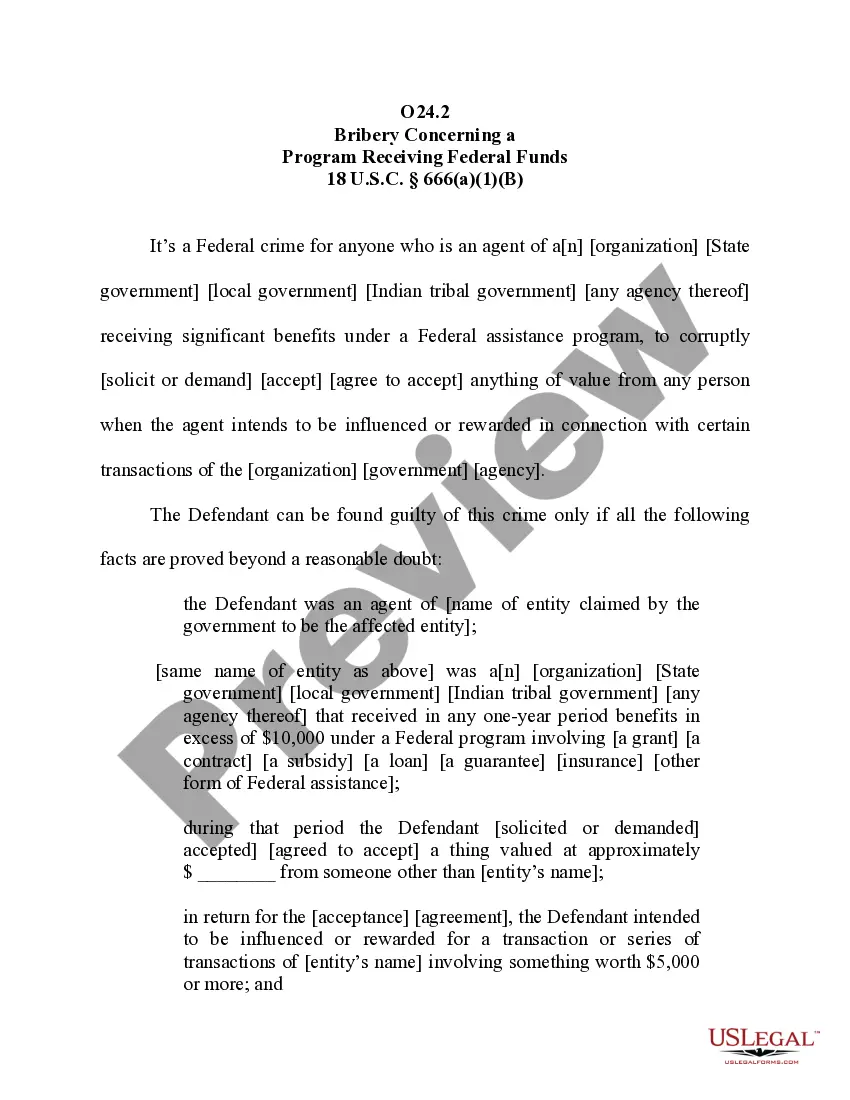
The Bribery Concerning Programs Receiving Federal Funds (Soliciting Bribe) form addresses illegal conduct where an agent demands or accepts a bribe in relation to federally funded programs. This form specifically highlights actions that fall under 18 U.S.C. 666(a)(1)(B), detailing the legal implications of soliciting bribes from organizations receiving federal assistance. Understanding this form is crucial for individuals involved in organizations that work with federal funds, as it helps differentiate legal solicitations from illicit activity.
Form components explained
- Definition of bribery concerning federal funds, including key legal terms.
- Requirements for establishing guilt, including the intent behind the solicitation.
- Details on who qualifies as an agent in this context.
- Threshold amounts, including the significance of values over $5,000.
- Definition of federal assistance and governmental agencies.

Common use cases
This form is necessary when an agent of an organization, or a state, local, or tribal government receiving federal funds is suspected of soliciting or accepting a bribe. It can be used in scenarios involving allegations of corruption in business transactions related to federally funded projects. Organizations and entities must be aware of this form to ensure compliance with federal regulations and to mitigate risks associated with bribery.
Who should use this form
This form is intended for:
- Employees or agents of organizations receiving federal funding.
- State, local, or tribal government officials.
- Legal professionals addressing bribery allegations.
- Whistleblowers or individuals reporting corrupt practices.
How to complete this form
To complete this form, follow these steps:
- Identify the parties involved, including the agent and the federal assistance program.
- Specify the nature of the business transaction or series of transactions.
- Detail the items of value involved in the solicitation or acceptance.
- Enter the relevant dates and any necessary signatures.
- Include any additional documentation that supports the claims made in the form.
Does this document require notarization?
This form does not typically require notarization unless specified by local law. However, it's always advisable to check local regulations to ensure full compliance.
Get your form ready online
Our built-in tools help you complete, sign, share, and store your documents in one place.
Make edits, fill in missing information, and update formatting in US Legal Forms—just like you would in MS Word.
Download a copy, print it, send it by email, or mail it via USPS—whatever works best for your next step.
Sign and collect signatures with our SignNow integration. Send to multiple recipients, set reminders, and more. Go Premium to unlock E-Sign.
If this form requires notarization, complete it online through a secure video call—no need to meet a notary in person or wait for an appointment.
We protect your documents and personal data by following strict security and privacy standards.

Make edits, fill in missing information, and update formatting in US Legal Forms—just like you would in MS Word.

Download a copy, print it, send it by email, or mail it via USPS—whatever works best for your next step.

Sign and collect signatures with our SignNow integration. Send to multiple recipients, set reminders, and more. Go Premium to unlock E-Sign.

If this form requires notarization, complete it online through a secure video call—no need to meet a notary in person or wait for an appointment.

We protect your documents and personal data by following strict security and privacy standards.
Common mistakes to avoid
- Failing to provide accurate details regarding the federal assistance received.
- Omitting key parties involved in the transaction.
- Misinterpreting the definitions of terms like "agent" or "corruptly done."
- Ignoring local laws that might affect the use of this form.
Benefits of completing this form online
- Conveniently downloadable and editable legal templates from licensed attorneys.
- Helps ensure compliance with federal laws and regulations.
- Provides clear guidance on legal terminology and definitions.
- Allows users to approach complex legal scenarios with confidence.
Looking for another form?

Form popularity
FAQ
Overview: Bribery refers to the offering, giving, soliciting, or receiving of any item of value as a means of influencing the actions of an individual holding a public or legal duty.
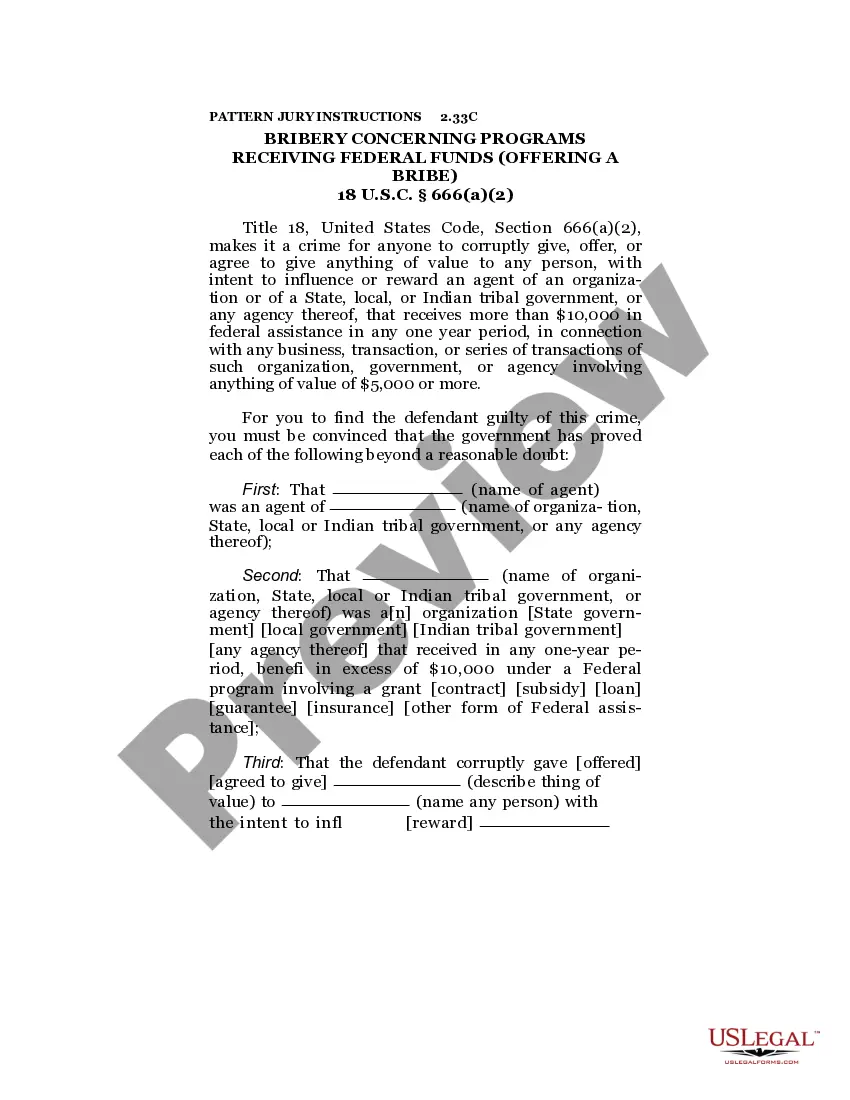
Section 666(b) requires that the organization, government or agency must have received, in any one year period, "benefits in excess of $10,000 under a Federal program involving a grant, contract, subsidy, loan, guarantee, insurance, or other form of Federal assistance." This provision does not distinguish between cash
§ 666. The section is designed to facilitate the prosecution of persons who steal money or otherwise divert property or services from state and local governments or private organizations--for example, universities, foundations and business corporations--that receive large amounts of Federal funds.
International Bribery The Foreign Corrupt Practices Act provides for federal criminal charges involving the bribery of foreign officials. It is unlawful for certain people and businesses to make payments to foreign government officials to help with obtaining or retaining business.
The district court observed, and the government agrees, that the following elements comprise a violation of § 666(a)(1)(B): 1) corrupt solicitation; 2) of anything of value; 3) with the intention of being influenced in connection with any transaction of a local government or organization receiving at least $10,000 in
18 U.S.C § 666 was enacted in 1984. The legislative history of the statute indicates that Congress intended to eliminate a gap in the criminal statutes which made it more difficult to prosecute theft from federally funded programs: In many cases, such Sec.
Bribery Penalties The penalties for bribery of a public official includes a fine of up to three times the value of the bribe, and imprisonment for up to 15 years in a federal penitentiary. A conviction can also disqualify the individual from holding any office of honor, trust or profit under the United States.