Counterfeiting
Understanding this form
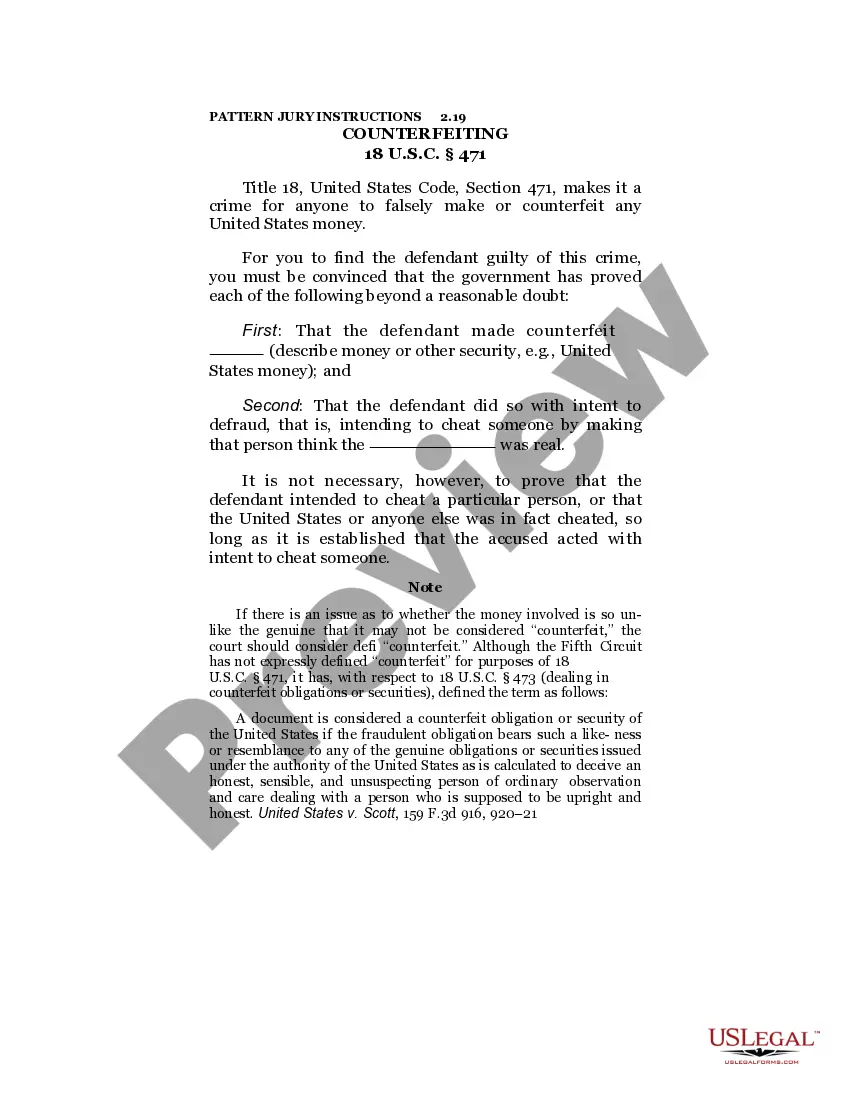
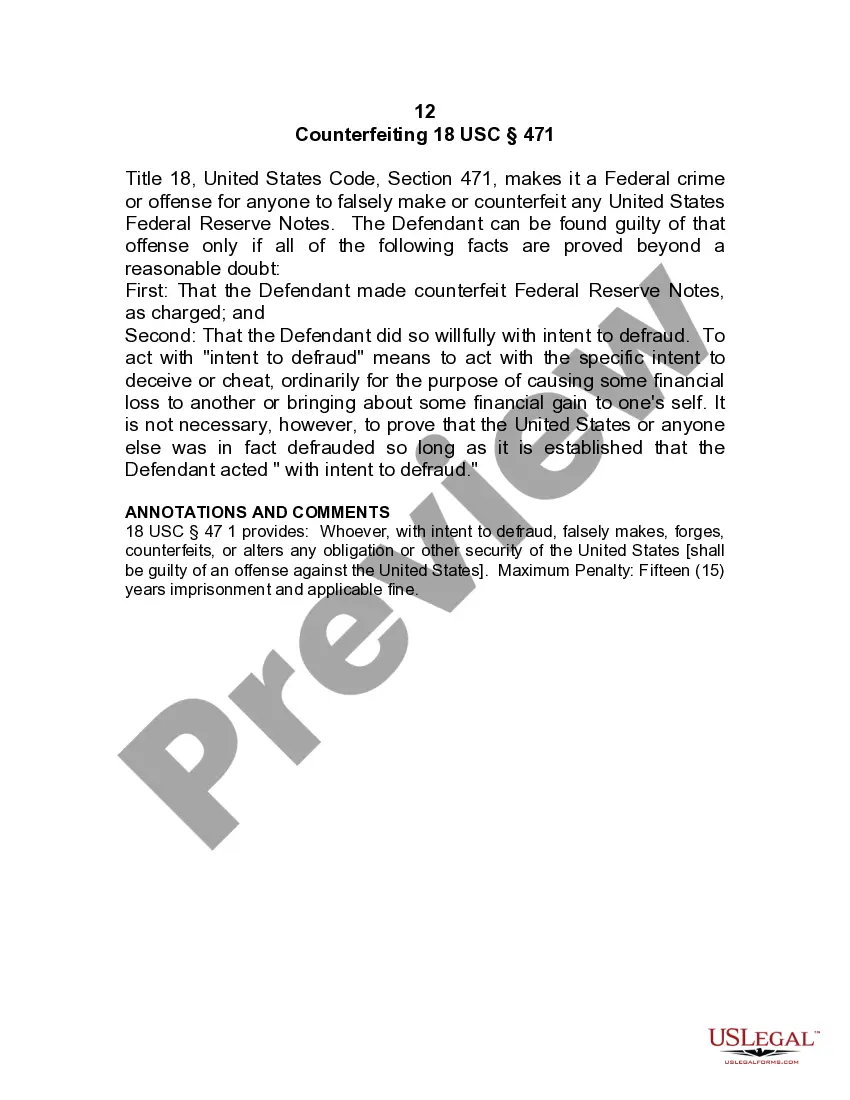
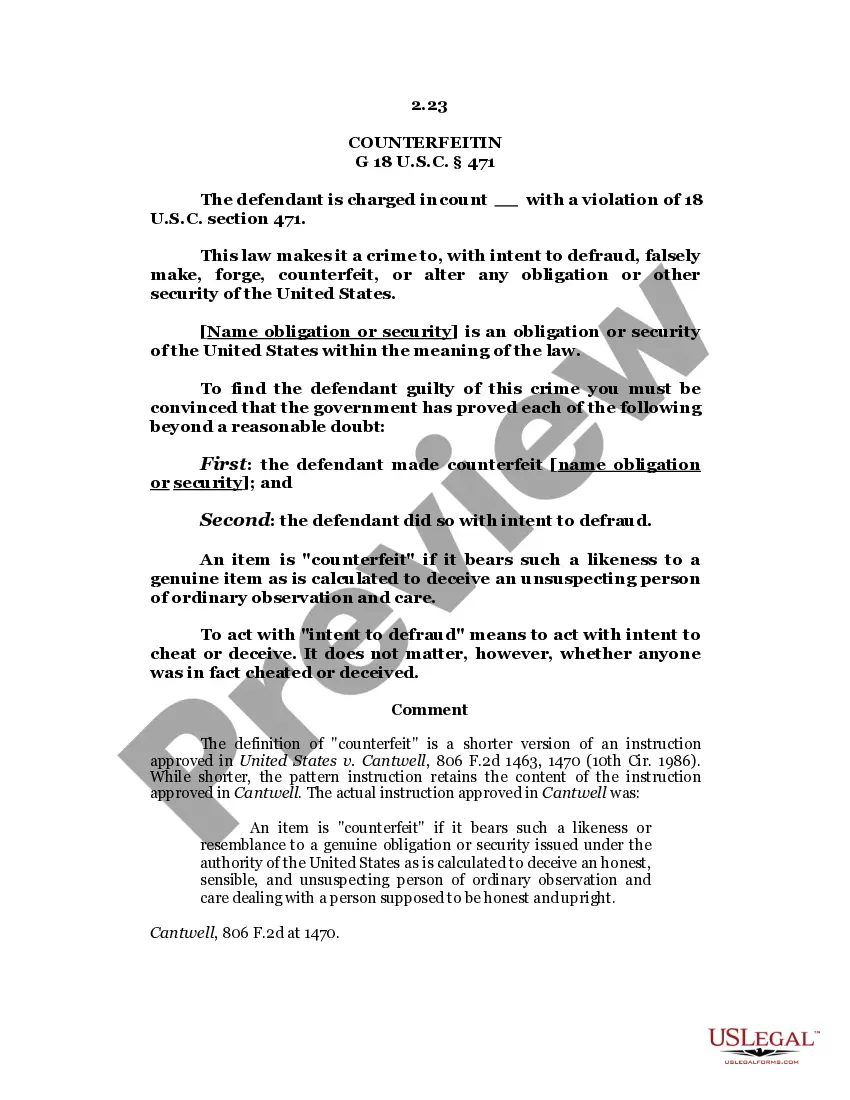
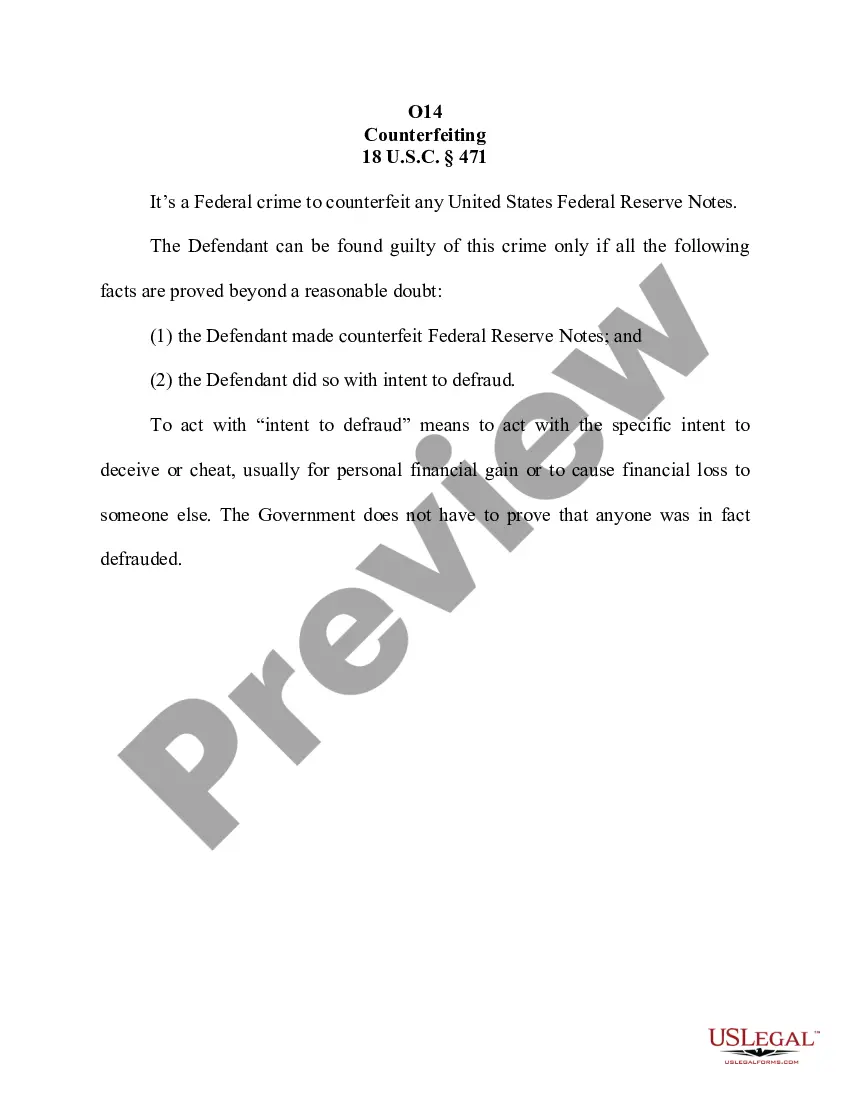
The Counterfeiting form is a legal document related to the crime of counterfeiting United States currency or securities, as defined under Title 18, United States Code, Section 471. This form addresses the necessary elements for proving the crime of counterfeiting, including the intent to defraud someone by creating counterfeit money or securities. It serves as a guideline to ensure all critical components of the crime are clearly understood and articulated.
Key components of this form
- Identification of the defendant and the specific counterfeit items.
- Specification of the intent to defraud, demonstrating that the defendant aimed to deceive others.
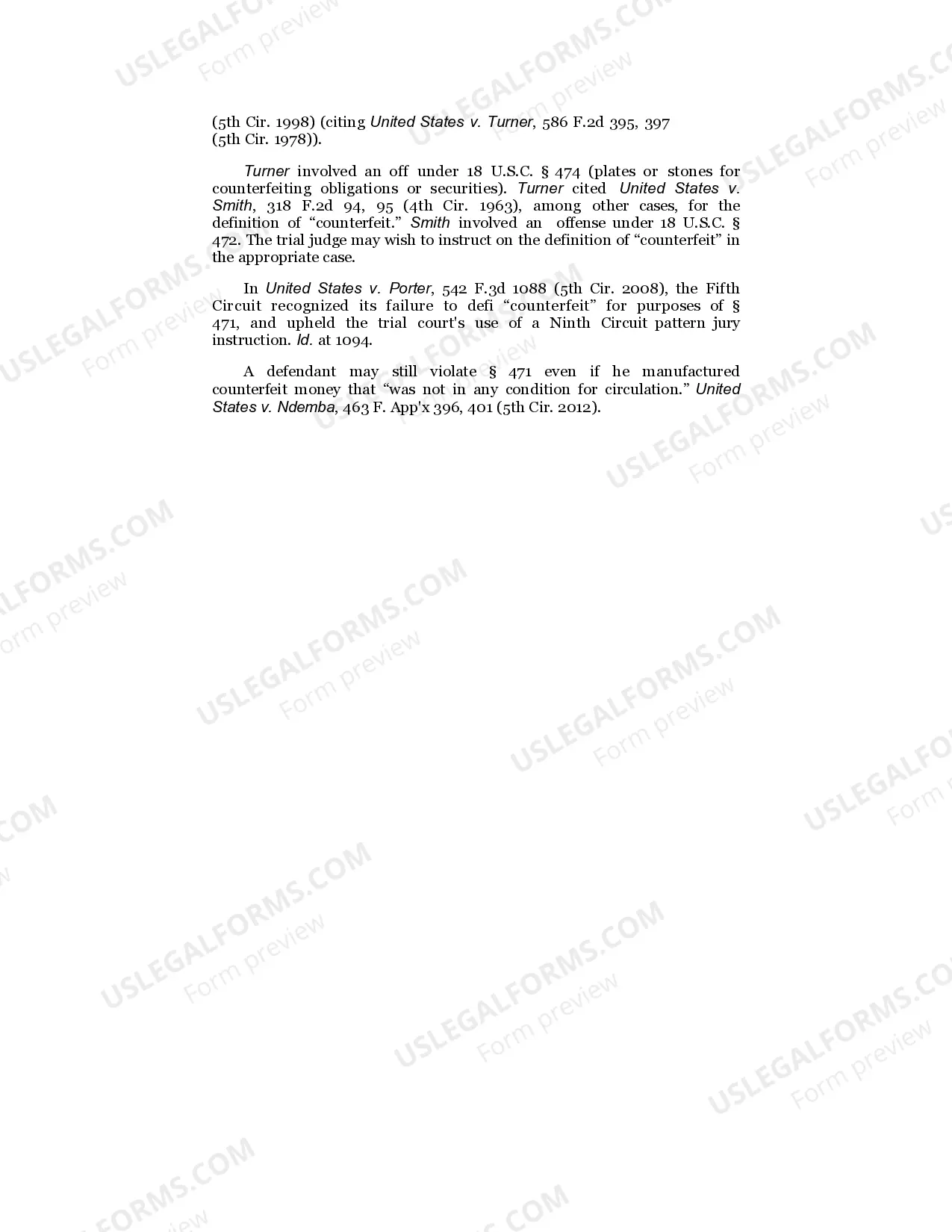
- Clarification of the legal definition of counterfeiting based on relevant case law.
- Evidence guidelines required for proving counterfeiting beyond a reasonable doubt.
Common use cases
This form is essential in situations where an individual faces allegations of counterfeiting or needs to understand the specific legal context surrounding such accusations. It is particularly relevant for legal practitioners preparing a defense or prosecutorial strategy in cases involving the manufacture or distribution of counterfeit currency or securities.
Who should use this form
- Individuals accused of counterfeiting activities.
- Legal professionals representing clients in counterfeiting cases.
- Students of law studying the implications of counterfeiting crimes.
Instructions for completing this form
- Identify and enter the defendant's full name and relevant details.
- Describe the counterfeit items, including their nature and intended use.
- Document the intent to defraud, citing specific examples if available.
- Review applicable case law references to support your submission.
- Gather and attach any evidence necessary to prove the allegations or defenses appropriately.
Is notarization required?
Notarization is generally not required for this form. However, certain states or situations might demand it. You can complete notarization online through US Legal Forms, powered by Notarize, using a verified video call available anytime.
Get your form ready online
Our built-in tools help you complete, sign, share, and store your documents in one place.
Make edits, fill in missing information, and update formatting in US Legal Forms—just like you would in MS Word.
Download a copy, print it, send it by email, or mail it via USPS—whatever works best for your next step.
Sign and collect signatures with our SignNow integration. Send to multiple recipients, set reminders, and more. Go Premium to unlock E-Sign.
If this form requires notarization, complete it online through a secure video call—no need to meet a notary in person or wait for an appointment.
We protect your documents and personal data by following strict security and privacy standards.

Make edits, fill in missing information, and update formatting in US Legal Forms—just like you would in MS Word.

Download a copy, print it, send it by email, or mail it via USPS—whatever works best for your next step.

Sign and collect signatures with our SignNow integration. Send to multiple recipients, set reminders, and more. Go Premium to unlock E-Sign.

If this form requires notarization, complete it online through a secure video call—no need to meet a notary in person or wait for an appointment.

We protect your documents and personal data by following strict security and privacy standards.
Common mistakes to avoid
- Failing to clearly define the counterfeit items involved.
- Overlooking the need to specify the intent to defraud.
- Not including relevant case law that supports the definition of counterfeiting.
Why use this form online
- Convenience of easy access anytime, from anywhere.
- Editability before final submission to ensure accuracy.
- Drafted by licensed attorneys, ensuring reliability and adherence to legal standards.
Looking for another form?





Form popularity
FAQ
Producing or distributing counterfeit money, or knowingly attempting to use counterfeit money, is a criminal offense under federal law.
A counterfeit is an item that uses someone else's trademark without their permission. By making or selling a counterfeit, criminals seek to profit unfairly from the trademark owner's reputation. Counterfeiting is a fraudulent imitation (a forgery) of a trusted brand and product, and it is a serious crime.
If a person pays for goods or services with counterfeit money, they could be charged through federal and state laws. 18 U.S. Code § 471 is a federal statute that states that a person can be fined and/or imprisoned for up to 20 years if they counterfeit a security of the United States with intent to defraud.
: to imitate or feign especially with intent to deceive. also : to make a fraudulent replica of. counterfeiting $20 bills. intransitive verb. : to try to deceive by pretense or dissembling.
Legal Implications It is illegal to purchase counterfeit goods. Bringing them into the United States may result in civil or criminal penalties and purchasing counterfeit goods often supports criminal activities, such as forced labor or human trafficking.
The power to "coin money, regulate the value thereof and of foreign coin," vested by the Constitution in the federal government, is an exclusive power. It is expressly inhibited to the states. And the power to punish for counterfeiting the coin is also expressly vested in Congress.
Whoever, with intent to defraud, falsely makes, forges, counterfeits, or alters any obligation or other security of the United States, shall be fined under this title or imprisoned not more than 20 years, or both.
Counterfeiting is the unlawful duplication of something valuable in order to deceive. Counterfeit items can include money, coupons, credit or debit cards, clothes, and jewelry.