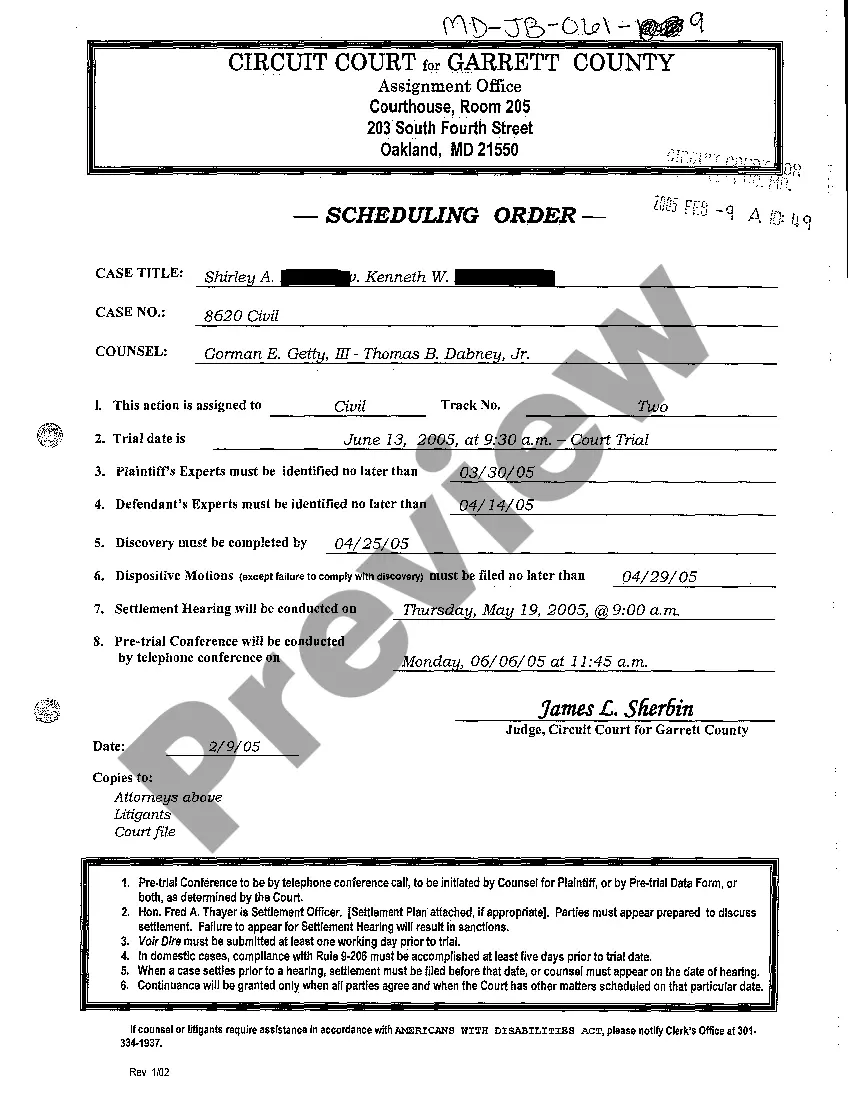
Conspiracy - Duration
Overview of this form
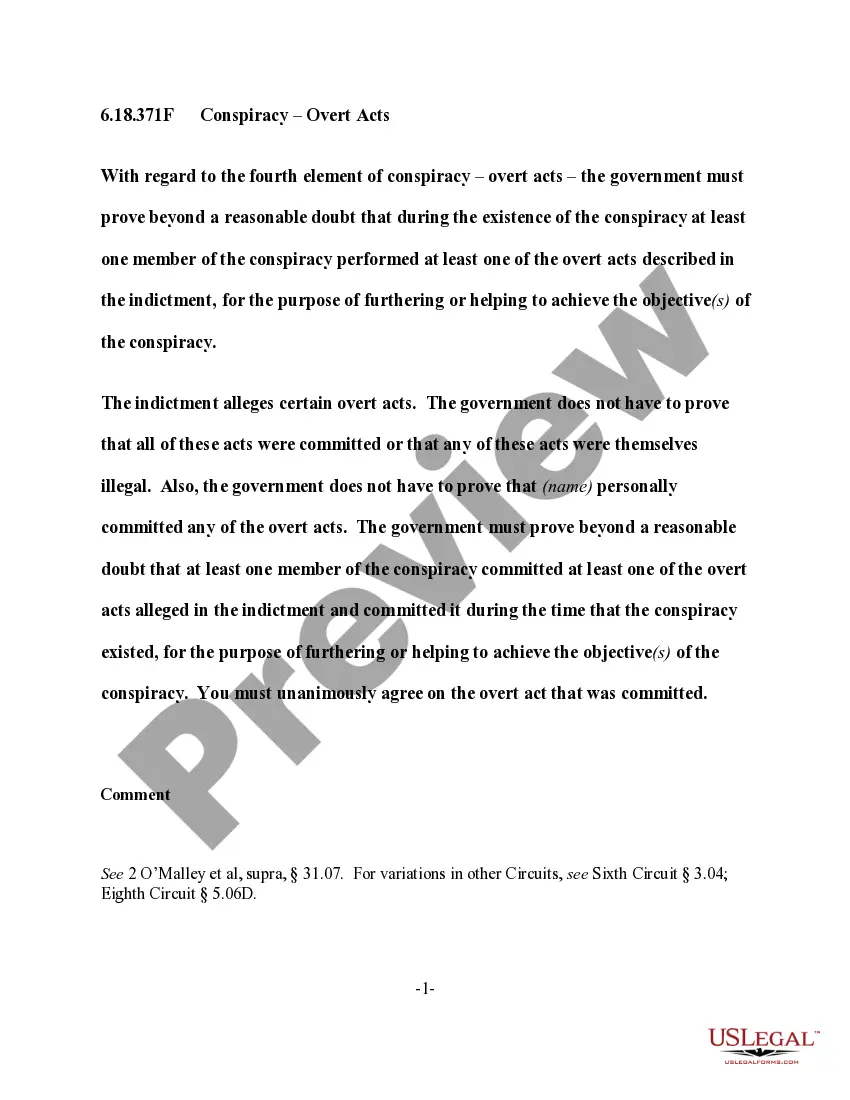
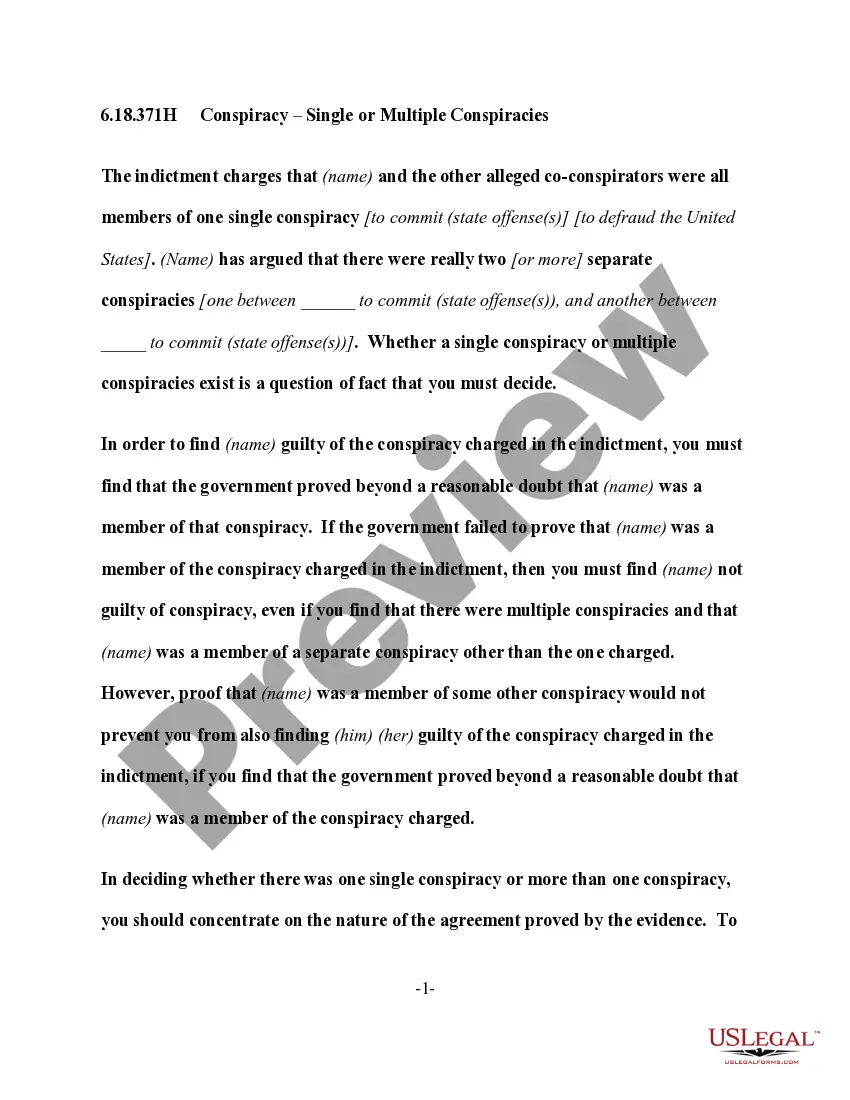
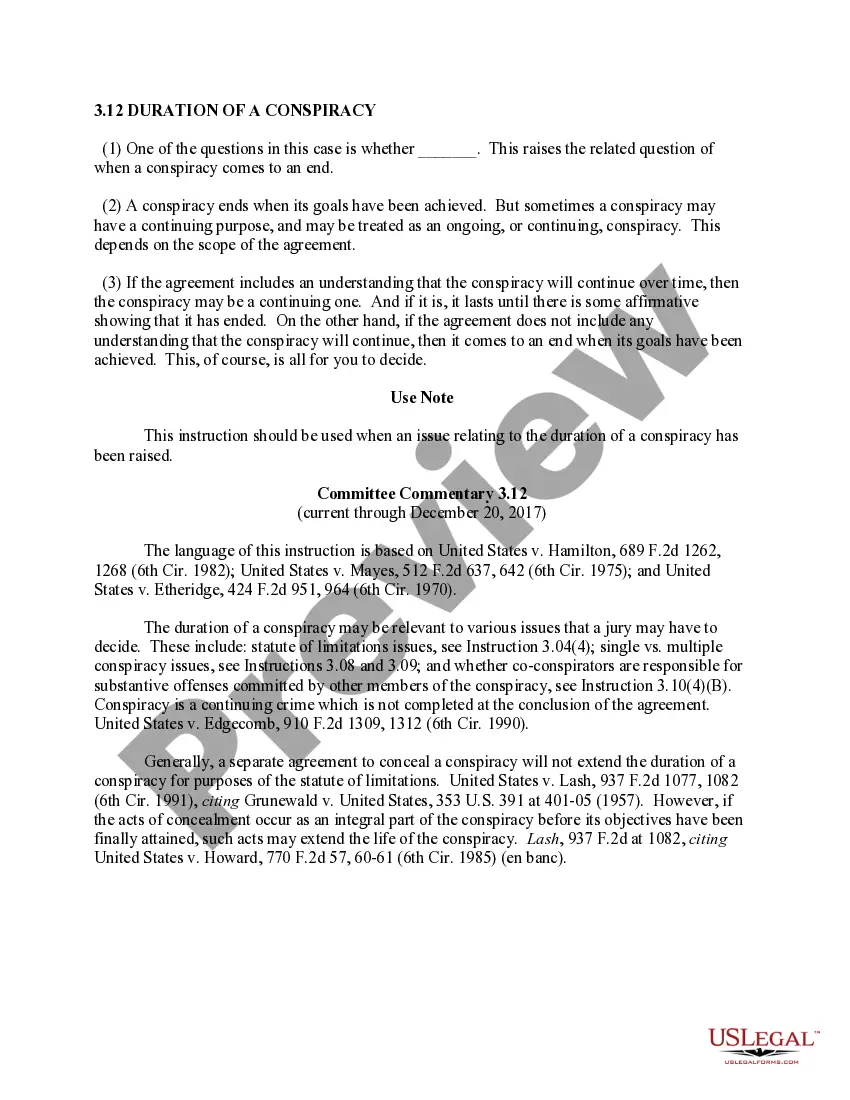
The Conspiracy - Duration form is a legal document that outlines the circumstances under which a conspiracy is considered to have ended. It defines both the completion of the conspiracy's objectives and the withdrawal of members. Unlike other legal forms that may strictly define actions or agreements, this form addresses the ongoing nature of conspiracies and when they may terminate. It is essential for legal professionals and those involved in criminal cases to understand the ongoing implications of conspiratorial agreements.
Form components explained
- Definition of conspiracy duration and termination conditions.
- Examples illustrating how conspiracies can be continuing in nature.
- Reference to relevant case law explaining conspiracy dynamics.
- Criteria for identifying affirmative actions that signal the end of a conspiracy.
- Clarification of factors such as continuity of purpose in conspiracies.

Situations where this form applies
This form should be used in scenarios where there is a need to establish the duration of a conspiracy for legal proceedings. It is particularly relevant in cases involving multiple parties or ongoing criminal activities. Legal professionals may refer to this form when determining if a conspiracy is still active or has concluded, especially in criminal defense, prosecution cases, or appeals involving alleged conspiratorial behavior.
Who needs this form
- Attorneys involved in criminal law cases.
- Defendants contesting charges related to conspiracy.
- Prosecutors who need to argue duration or termination of a conspiracy.
- Legal students studying conspiracy law.
- Individuals seeking to understand their rights in criminal conspiracy cases.
Completing this form step by step
- Identify the parties involved in the conspiracy.
- Specify the objectives of the conspiracy and any ongoing actions.
- Document any evidence of withdrawal from the conspiracy by its members.
- Reference relevant case law that supports the claims made in the form.
- Sign and date the form where required, ensuring all parties are aware of the implications.
Does this form need to be notarized?
In most cases, this form does not require notarization. However, some jurisdictions or signing circumstances might. US Legal Forms offers online notarization powered by Notarize, accessible 24/7 for a quick, remote process.
Get your form ready online
Our built-in tools help you complete, sign, share, and store your documents in one place.
Make edits, fill in missing information, and update formatting in US Legal Forms—just like you would in MS Word.
Download a copy, print it, send it by email, or mail it via USPS—whatever works best for your next step.
Sign and collect signatures with our SignNow integration. Send to multiple recipients, set reminders, and more. Go Premium to unlock E-Sign.
If this form requires notarization, complete it online through a secure video call—no need to meet a notary in person or wait for an appointment.
We protect your documents and personal data by following strict security and privacy standards.

Make edits, fill in missing information, and update formatting in US Legal Forms—just like you would in MS Word.

Download a copy, print it, send it by email, or mail it via USPS—whatever works best for your next step.

Sign and collect signatures with our SignNow integration. Send to multiple recipients, set reminders, and more. Go Premium to unlock E-Sign.

If this form requires notarization, complete it online through a secure video call—no need to meet a notary in person or wait for an appointment.

We protect your documents and personal data by following strict security and privacy standards.
Common mistakes to avoid
- Failing to provide clear definitions of the objectives involved.
- Omitting evidence of withdrawal by members of the conspiracy.
- Not referencing relevant legal precedents that apply to the situation.
- Assuming the conspiracy has ended without sufficient proof.
Benefits of using this form online
- Convenient access to forms anytime and anywhere.
- Easy editing capabilities to customize the form for specific cases.
- Reliability from templates drafted by licensed attorneys.
- Secure storage and downloading options available for personal records.
Looking for another form?

Form popularity
FAQ
With prison sentences ranging up to 40 years, a drug conspiracy conviction can significantly affect your life and freedom. If you are facing drug conspiracy charges, you will be fighting a difficult battle against a legal system that has been intentionally set up in favor of the prosecutor.
In New York, a conviction for conspiracy may result in up to 25 years in state prison depending on the circumstances of the offense. If the conspired act is carried out, the defendant may face an additional sentence for whatever the penalties associated with that offense may be under New York penal code.
What is an example of a conspiracy charge? An example of a conspiracy charge could be two people that make an agreement to kill someone and buy the weapons to do it. They are charged with conspiracy, even if they never fully follow through on killing the person.
Under our law, a person is guilty of Conspiracy in the Sixth Degree when, with intent that conduct constituting a crime be performed, he or she agrees with one or more persons to engage in or cause the performance of such conduct.
Many federal conspiracy charges carry a 5, 10 or 20-year mandatory minimum prison sentence. However, the important thing to remember is that these sentences can be negotiated based on the information you have to give.
No Statute of Limitations Conspiracy (first degree)
Conspiracy in the fourth degree is a Class E felony. This means that if you are convicted your sentence could include up to 4 years in prison, 5 years of probation, and a substantial fine.
Under our law, a person is guilty of Conspiracy in the Fourth Degree when, with intent that conduct constituting a felony be performed, he or she, being over eighteen years of age, agrees with one or more persons under sixteen years of age to engage in or cause the performance of such conduct.