Hobbs Act - Affecting Interstate Commerce (revised 2017)
Understanding this form
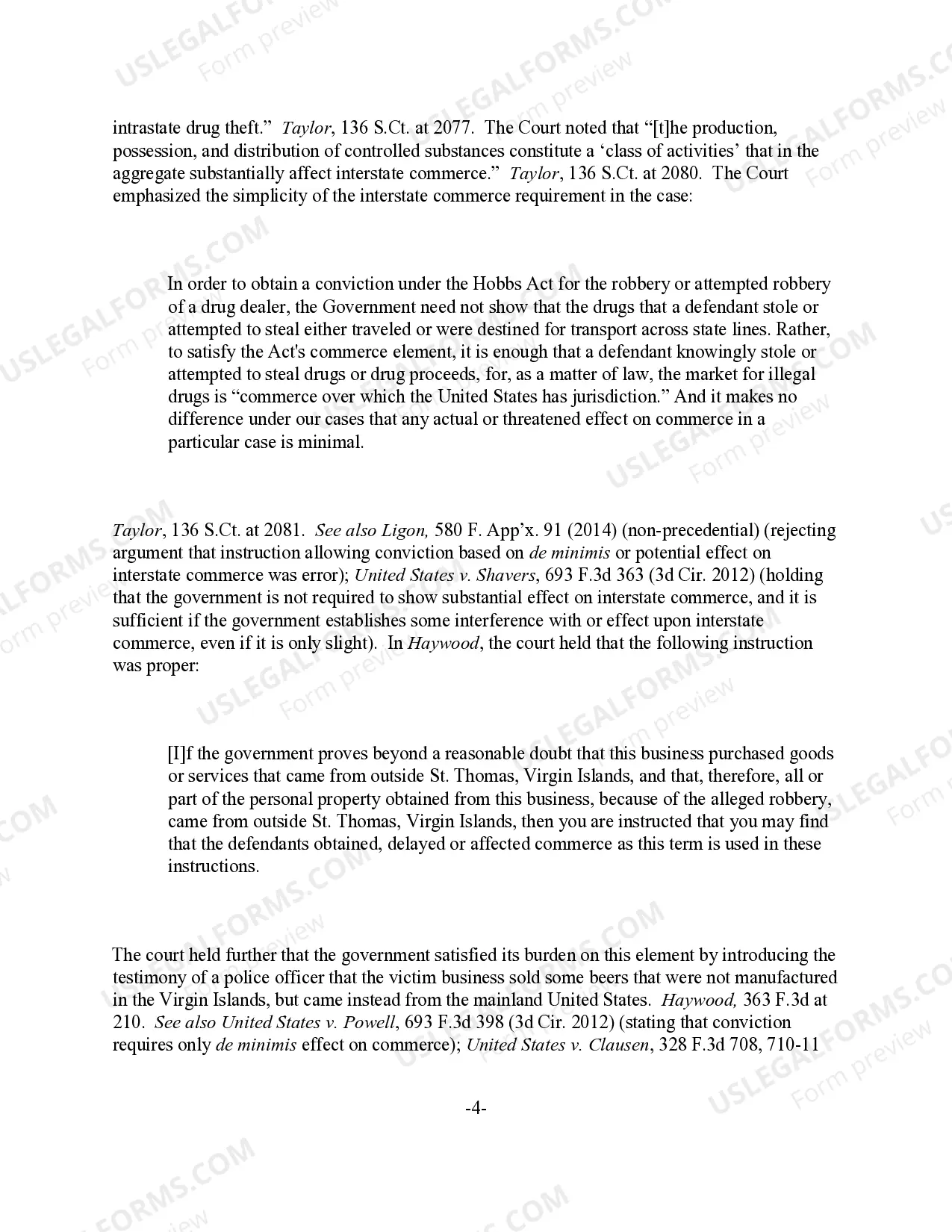
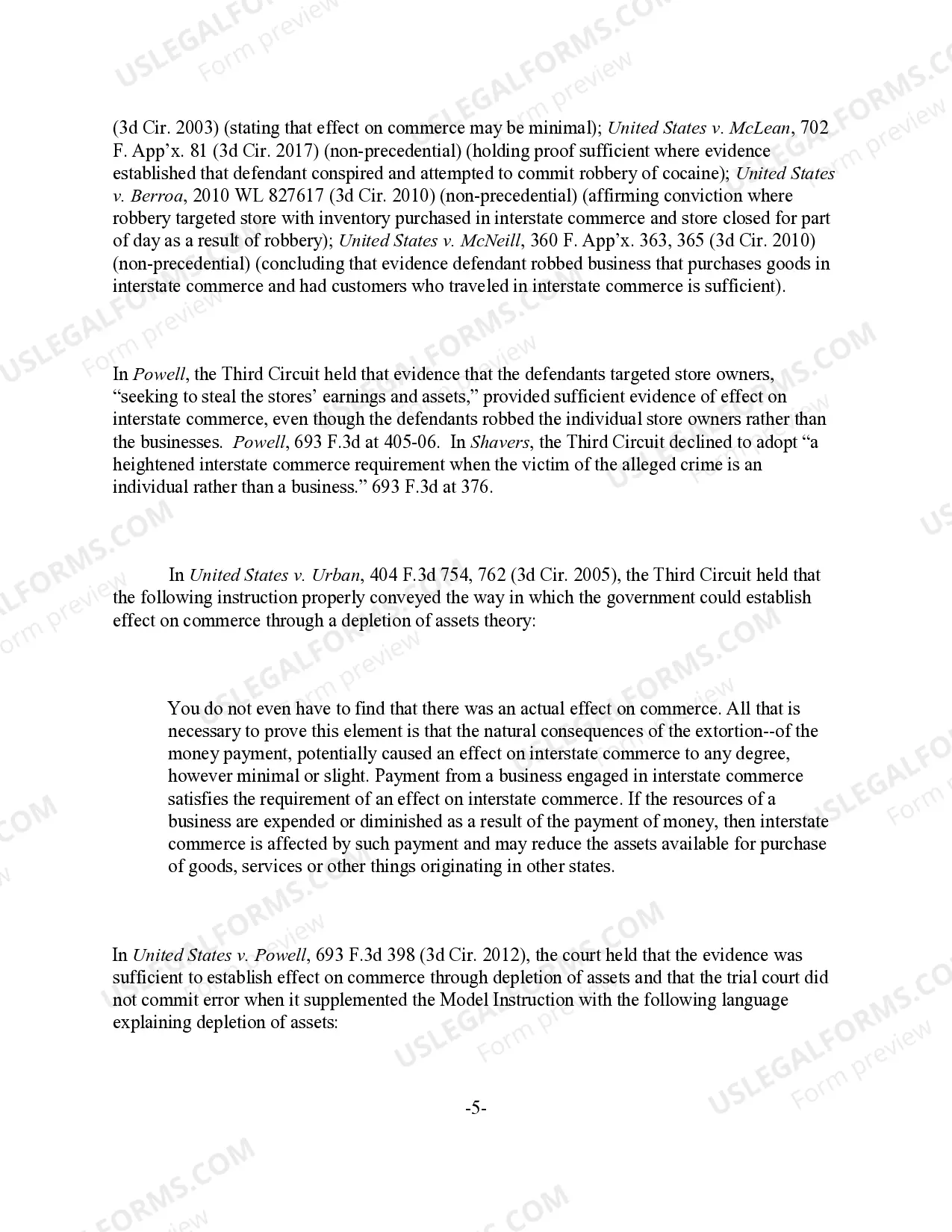
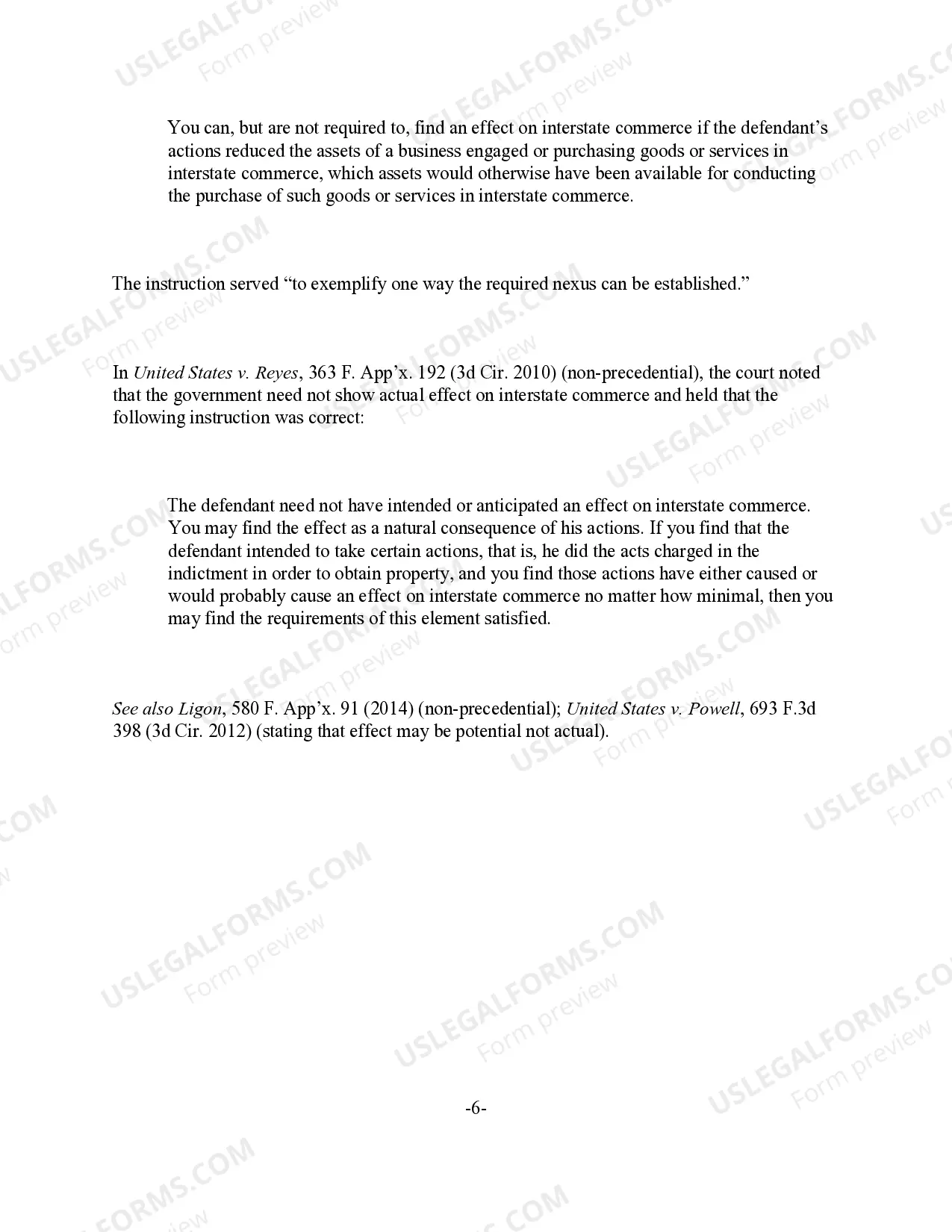
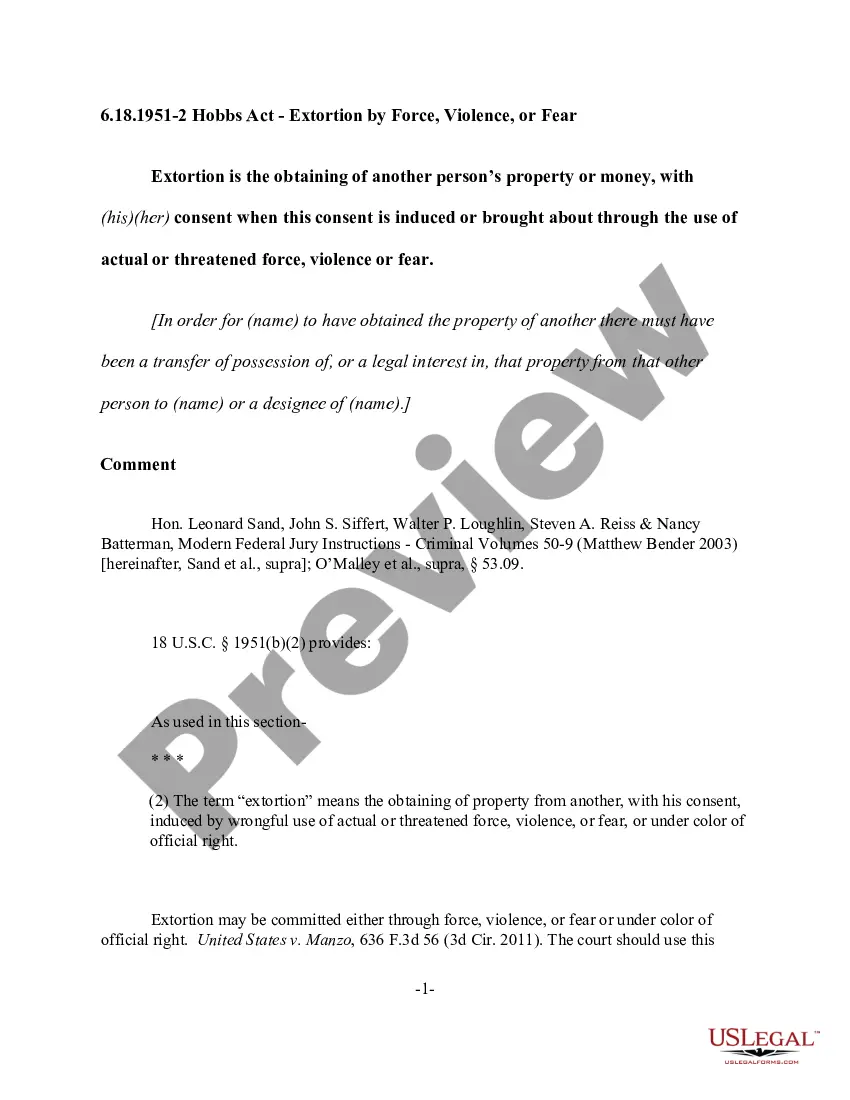
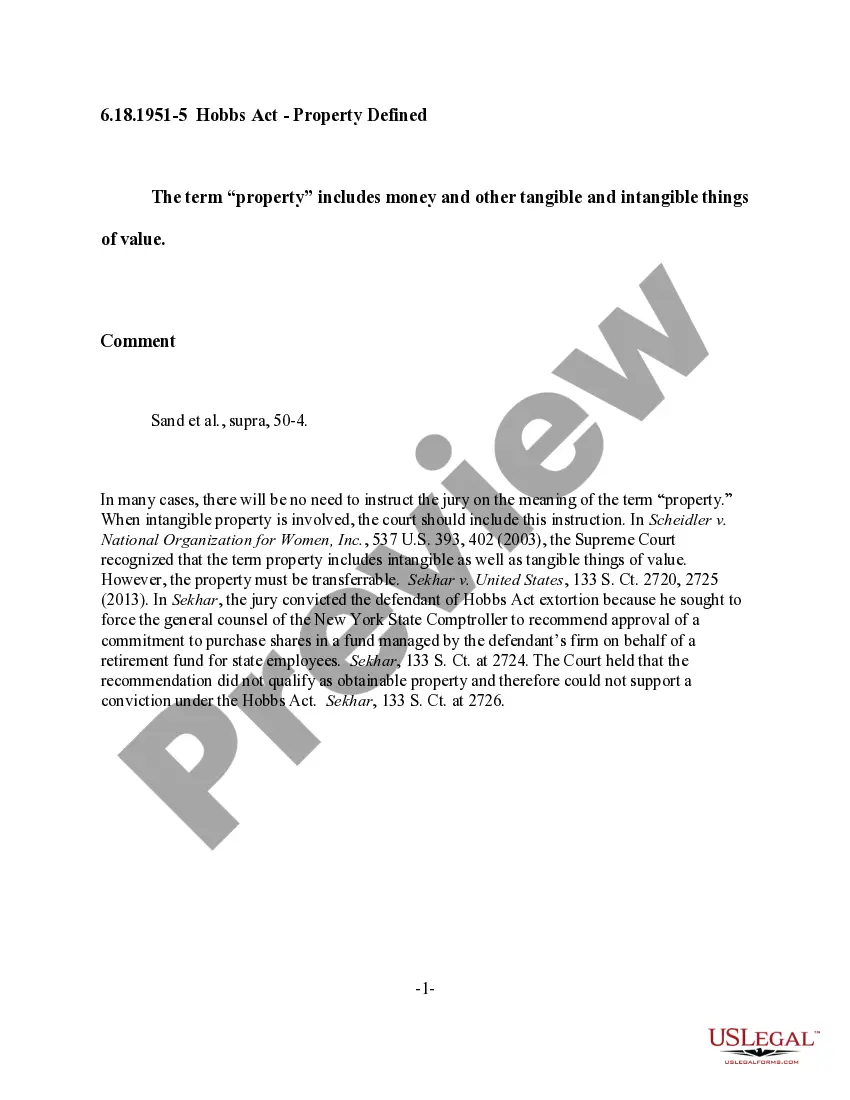
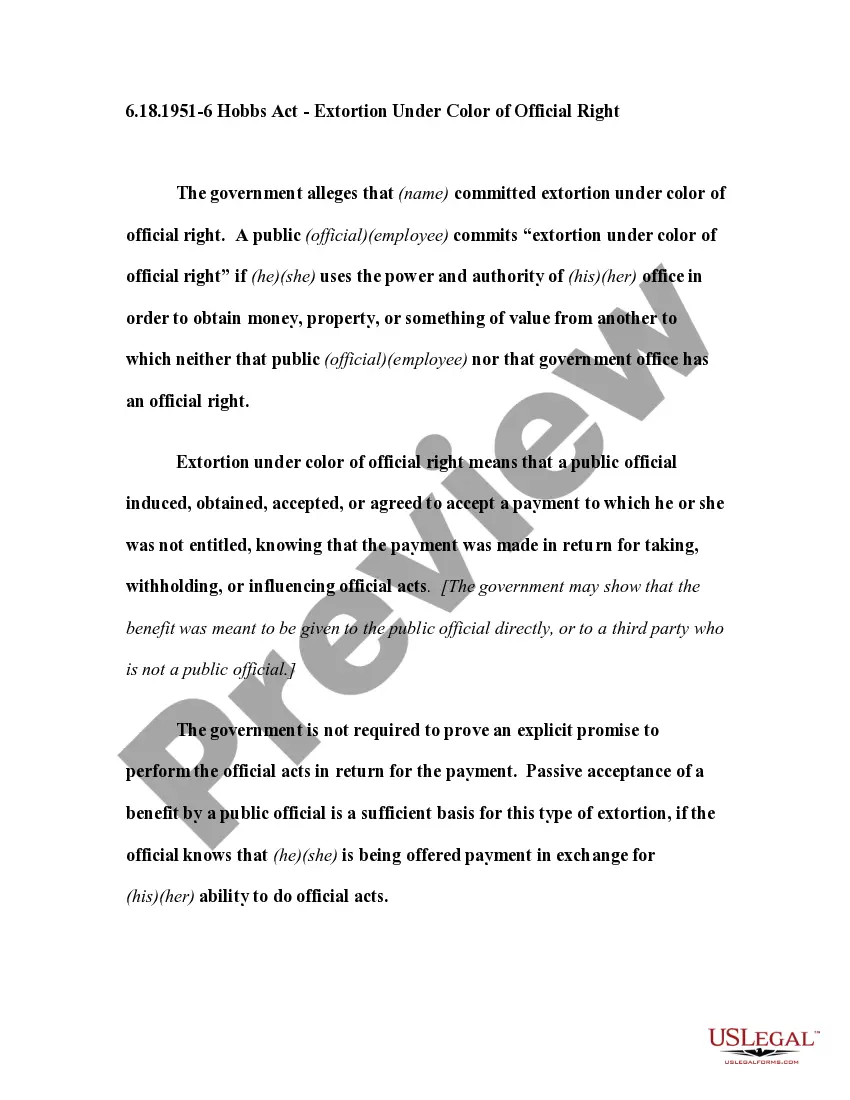
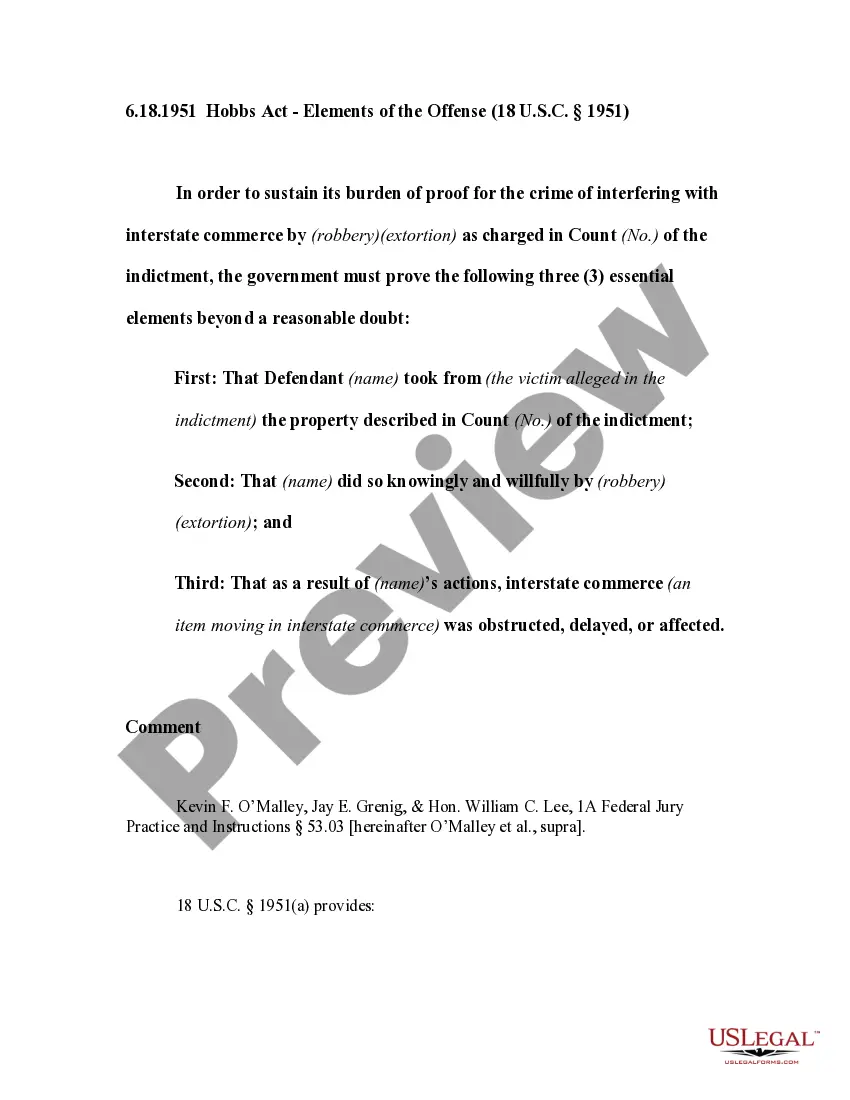
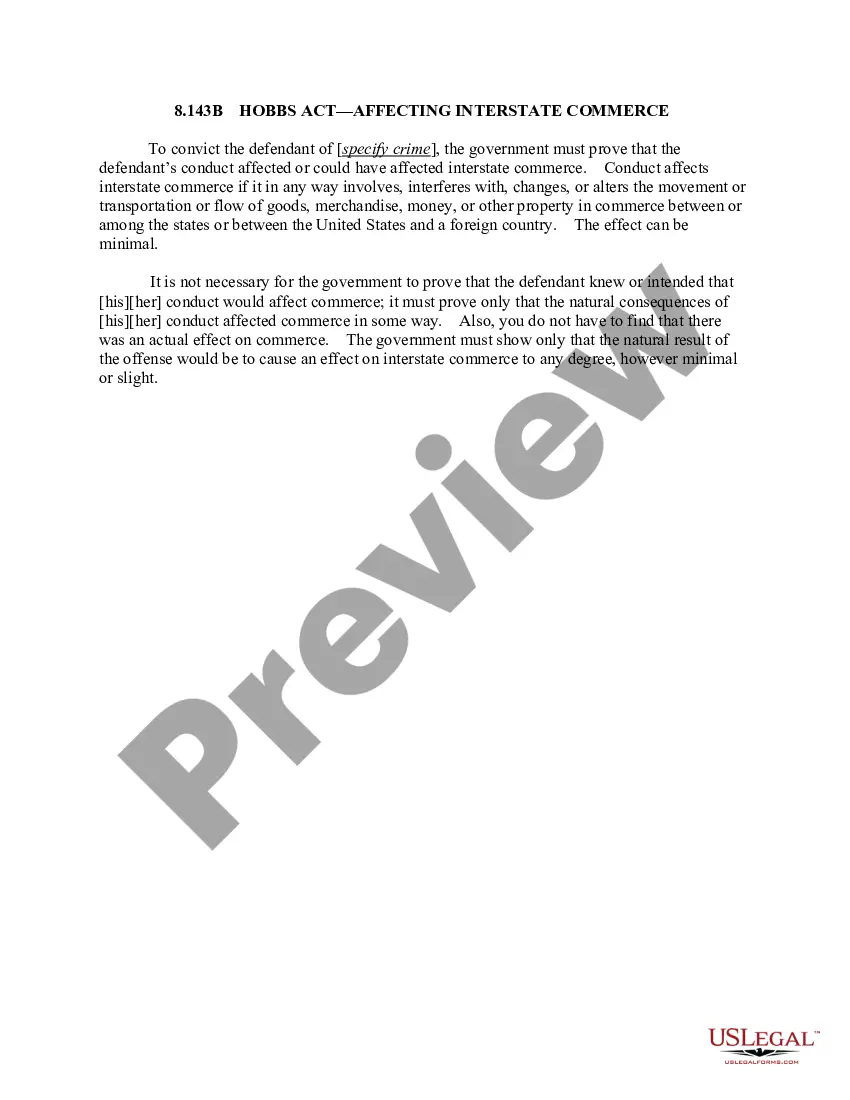
The Hobbs Act - Affecting Interstate Commerce form is used in federal criminal cases to establish a connection between a defendant's conduct and interstate commerce. It highlights that the government doesn't need to prove that the defendant intended to interfere with commerce, only that their actions could potentially affect it. This differs from other legal forms that may emphasize intent or a direct impact on commerce, making the Hobbs Act a vital instrument in cases involving robbery or extortion that intersects with interstate trade.
Main sections of this form
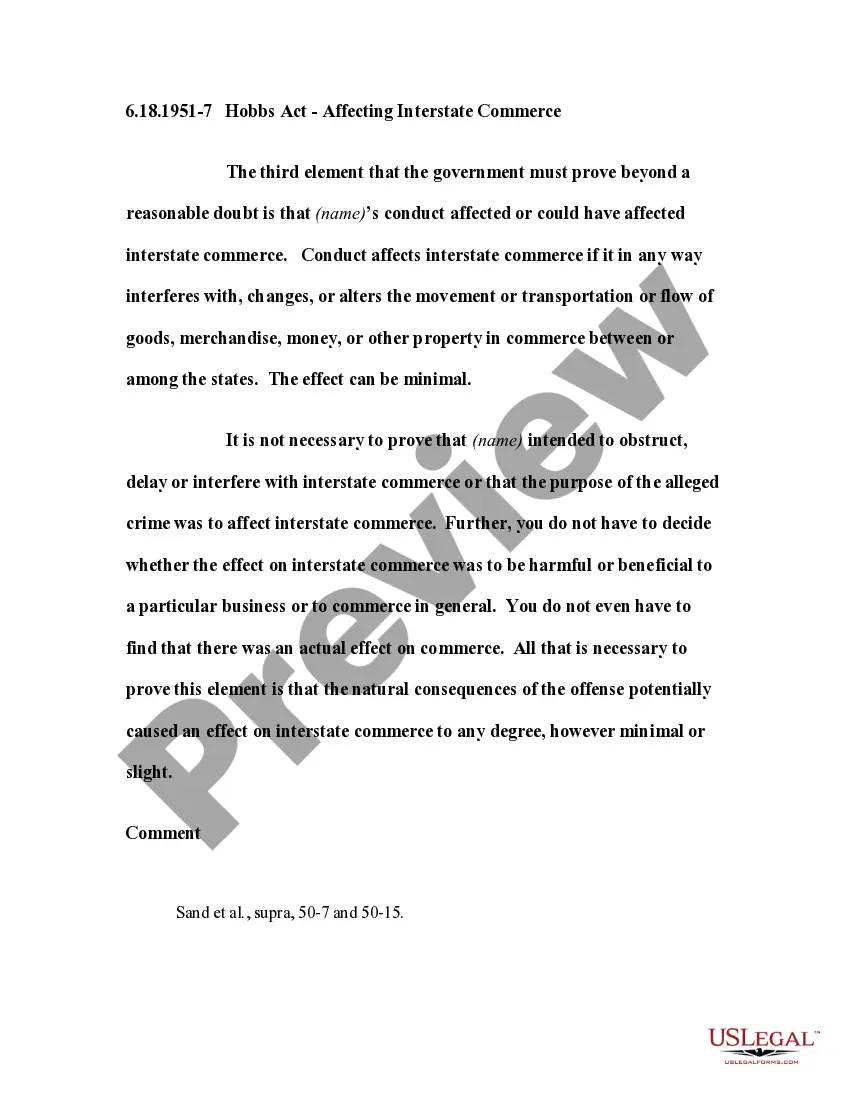
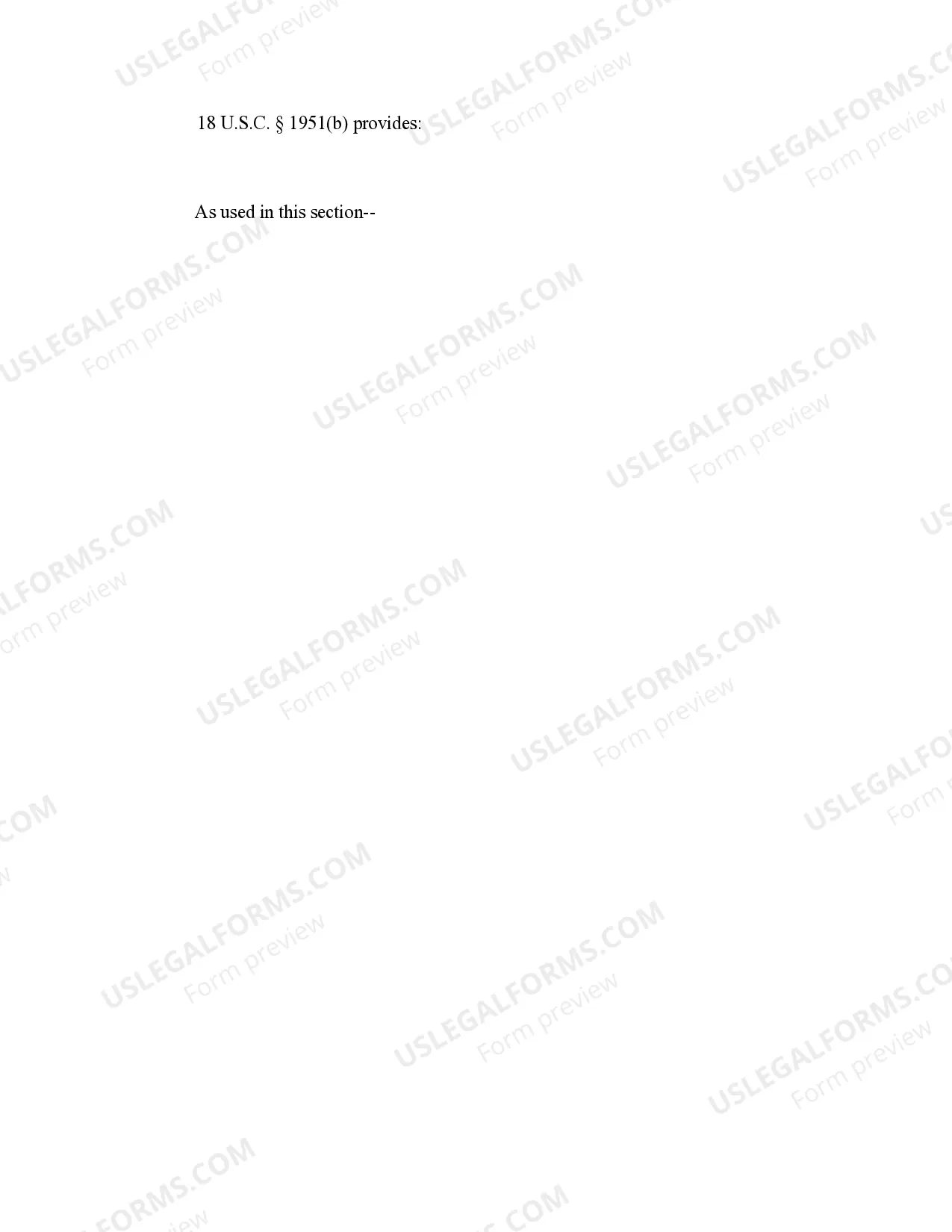
- Definition of interstate commerce as per 18 U.S.C. § 1951(b)
- Explanation that intent to obstruct commerce is not required
- Criteria for minimal effects on commerce, with examples
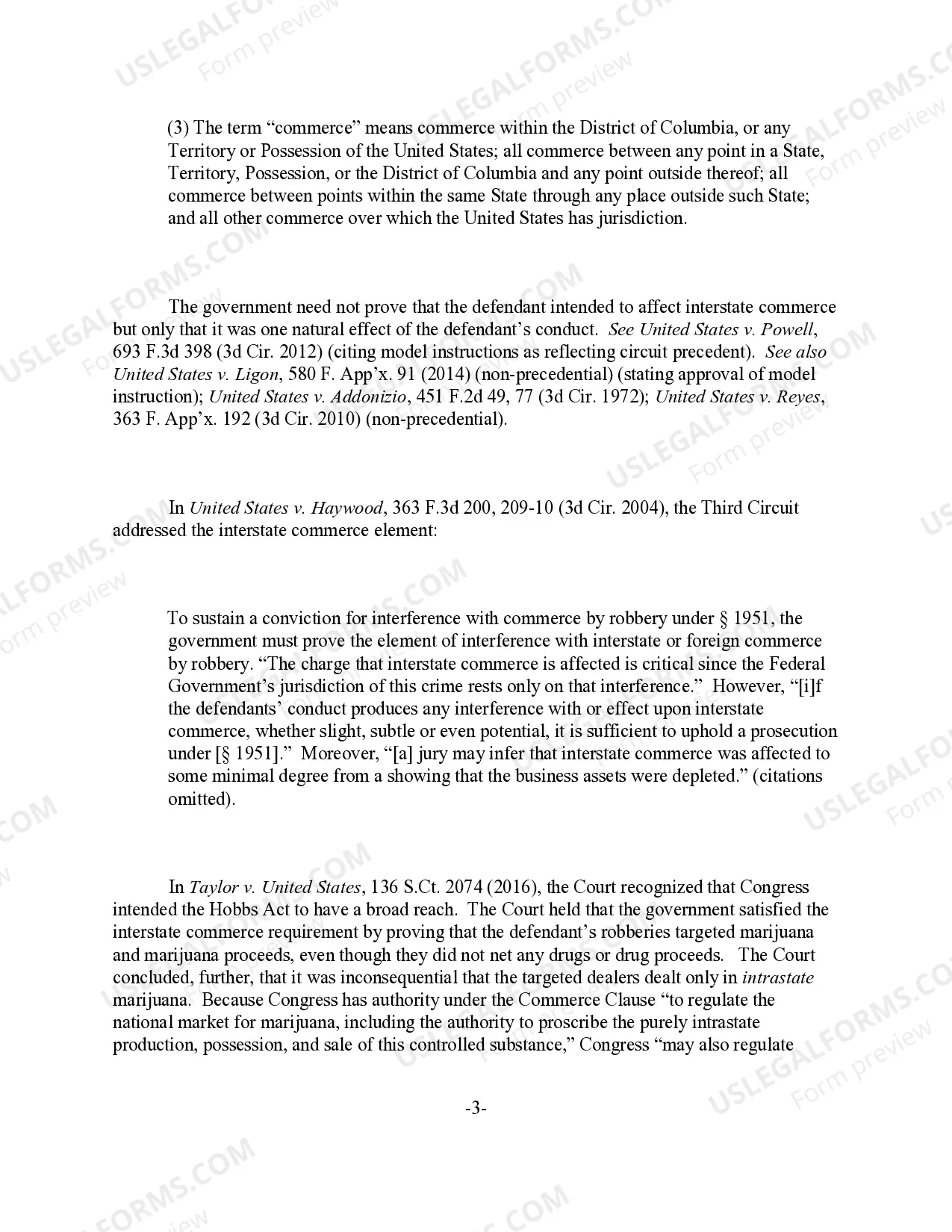
- Legal precedents that support the applicability of the Hobbs Act
- Instructions on how jurors should assess the defendant's conduct related to commerce
When to use this document
This form is necessary when prosecuting cases of robbery or extortion that involve financial gains from businesses engaged in interstate commerce. It is particularly useful when the prosecution aims to demonstrate even slight impacts on commerce, especially in cases that might involve elements like theft of money or goods that originated from other states. Using this form helps clarify the legal requirements for establishing jurisdiction under federal law.
Who should use this form
- Prosecutors handling federal criminal cases involving robbery or extortion
- Defense attorneys preparing for cases under the Hobbs Act
- Legal professionals involved in cases where interstate commerce is a central issue
- Students or researchers studying federal law related to commerce and criminal conduct
Steps to complete this form
- Review the legal definitions of key terms related to interstate commerce.
- Identify the specific conduct of the defendant and its relation to commerce.
- Gather evidence that supports the claim of potential interference with commerce.
- Consider relevant legal precedents that may apply to the case at hand.
- Submit the completed form to the appropriate court with supporting documentation.
Does this document require notarization?
In most cases, this form does not require notarization. However, some jurisdictions or signing circumstances might. US Legal Forms offers online notarization powered by Notarize, accessible 24/7 for a quick, remote process.
Get your form ready online
Our built-in tools help you complete, sign, share, and store your documents in one place.
Make edits, fill in missing information, and update formatting in US Legal Forms—just like you would in MS Word.
Download a copy, print it, send it by email, or mail it via USPS—whatever works best for your next step.
Sign and collect signatures with our SignNow integration. Send to multiple recipients, set reminders, and more. Go Premium to unlock E-Sign.
If this form requires notarization, complete it online through a secure video call—no need to meet a notary in person or wait for an appointment.
We protect your documents and personal data by following strict security and privacy standards.

Make edits, fill in missing information, and update formatting in US Legal Forms—just like you would in MS Word.

Download a copy, print it, send it by email, or mail it via USPS—whatever works best for your next step.

Sign and collect signatures with our SignNow integration. Send to multiple recipients, set reminders, and more. Go Premium to unlock E-Sign.

If this form requires notarization, complete it online through a secure video call—no need to meet a notary in person or wait for an appointment.

We protect your documents and personal data by following strict security and privacy standards.
Mistakes to watch out for
- Failing to establish the link between the defendant's actions and interstate commerce.
- Assuming intent must be proven to establish a violation of the Hobbs Act.
- Neglecting to reference relevant case law that supports claims.
- Overlooking the requirement that the effect on commerce need only be minimal.
Why complete this form online
- Convenient access to downloadable legal templates drafted by attorneys.
- Editability allows users to customize the form to their specific case needs.
- Reliable legal resources ensure compliance with current laws and procedures.
- Time-saving features to streamline the completion and submission process.
Legal use & context
- The Hobbs Act is a critical tool for federal prosecutors in cases of robbery and extortion.
- It emphasizes that even minimal impacts on interstate commerce can sustain a prosecution.
- This form serves to clarify the criteria needed for proving the necessary elements in such cases.
Looking for another form?




Form popularity
FAQ
This 1946 Act was originally designed to target racketeering in labor disputes which were fairly common at that time. However, now, the Hobbs Act is a common statute used by federal prosecutors for public corruption and commercial disputes, but still used for cases of alleged union corruption.
On February 4, 1887, both the Senate and House passed the Interstate Commerce Act, which applied the Constitution's ?Commerce Clause??granting Congress the power ?to Regulate Commerce with foreign Nations, and among the several States??to regulating railroad rates.
And because the principal offense of Hobbs Act robbery satisfies the force clause of § 924(c), aiding and abetting a Hobbs Act robbery qualifies as a crime of violence too.
The Hobbs Act, named after United States Representative Sam Hobbs (D-AL) and codified as 18 U.S.C. § 1951, is a United States federal law enacted in 1946 that prohibits actual or attempted robbery or extortion that affect intrastate or foreign commerce. It also forbids conspiracy to do so.
A conviction under the Hobbs Act requires proof beyond a reasonable doubt that (1) the defendant knowingly or willfully committed, or attempted or conspired to commit, robbery or extortion, and (2) the defendant's conduct affected interstate commerce. See United States v. Powell, 693 F. 3d 398 (3d Cir. 2012).
Interference in interstate commerce is any instance in which a person delays, obstructs or otherwise affects commerce. This can be the sale of or the movement of any type of commodity.
The Hobbs Act prohibits actual or attempted robbery or extortion affecting interstate or foreign commerce "in any way or degree." Section 1951 also proscribes conspiracy to commit robbery or extortion without reference to the conspiracy statute at 18 U.S.C. § 371.
The Hobbs Act makes it a federal crime to commit, attempt to commit, or conspire to commit a robbery with an interstate component. 18 U. S. C. § 1951(a). Meanwhile, § 924(c) authorizes further punish- ments for those who use a firearm in connection with a ?crime of violence.?
Hobbs Act Defense Lawyer ? 18 U.S.C § 1951 This federal stature prohibits public officials from acquiring property under color of official right or using their authority for extorting property. Further, it prohibits individuals from making threats to use force, violence, or fear to acquire property.