Jury Instruction - Note-Taking - Not Permitted
What this document covers
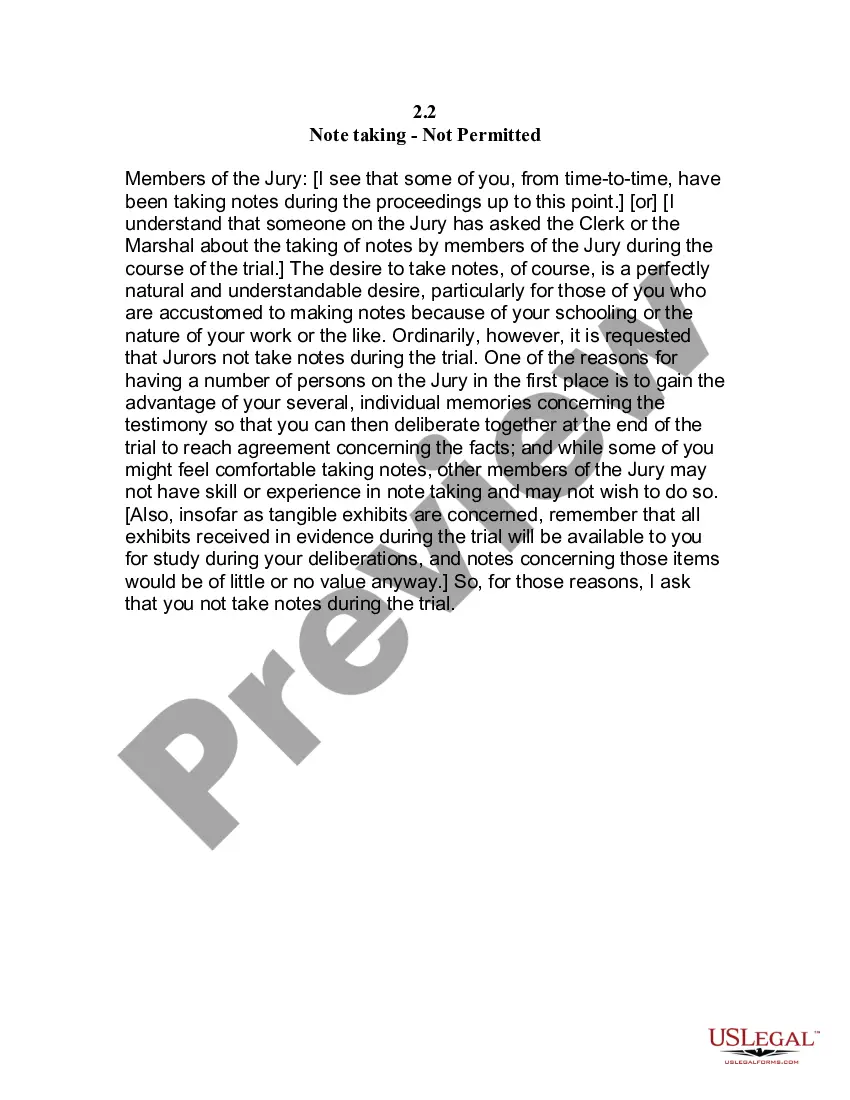
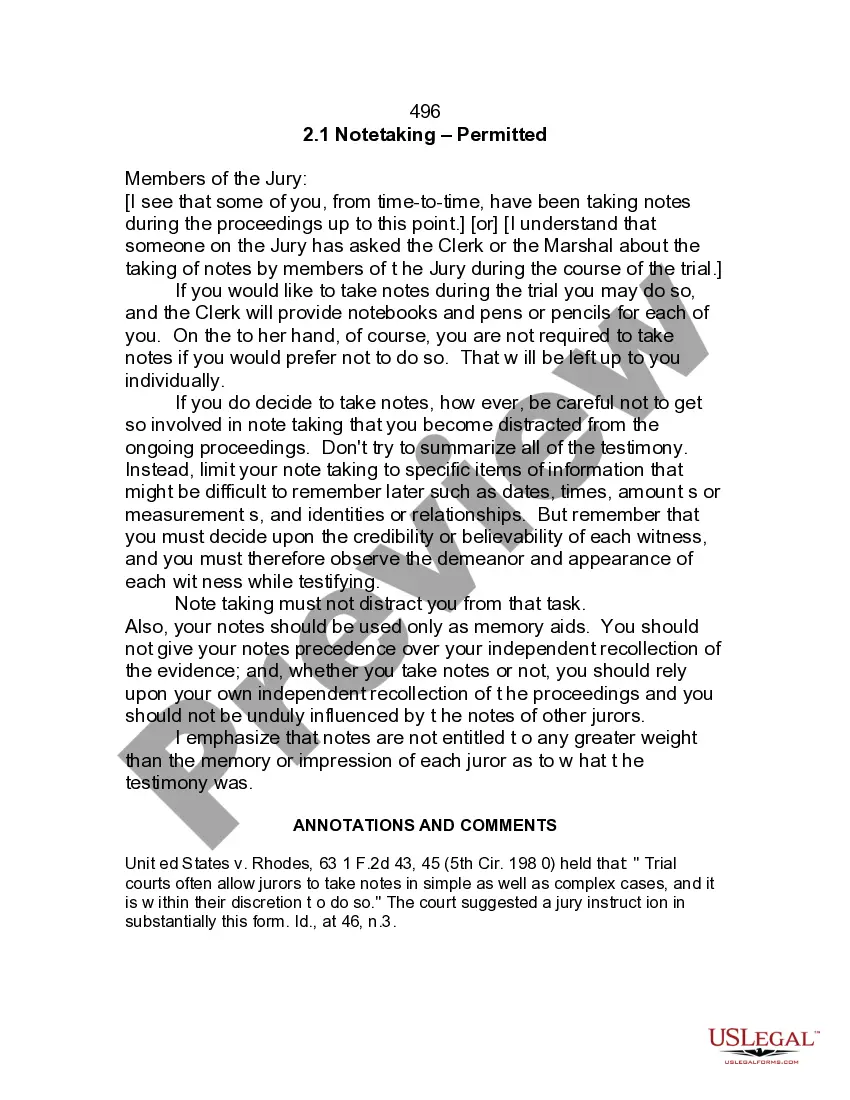
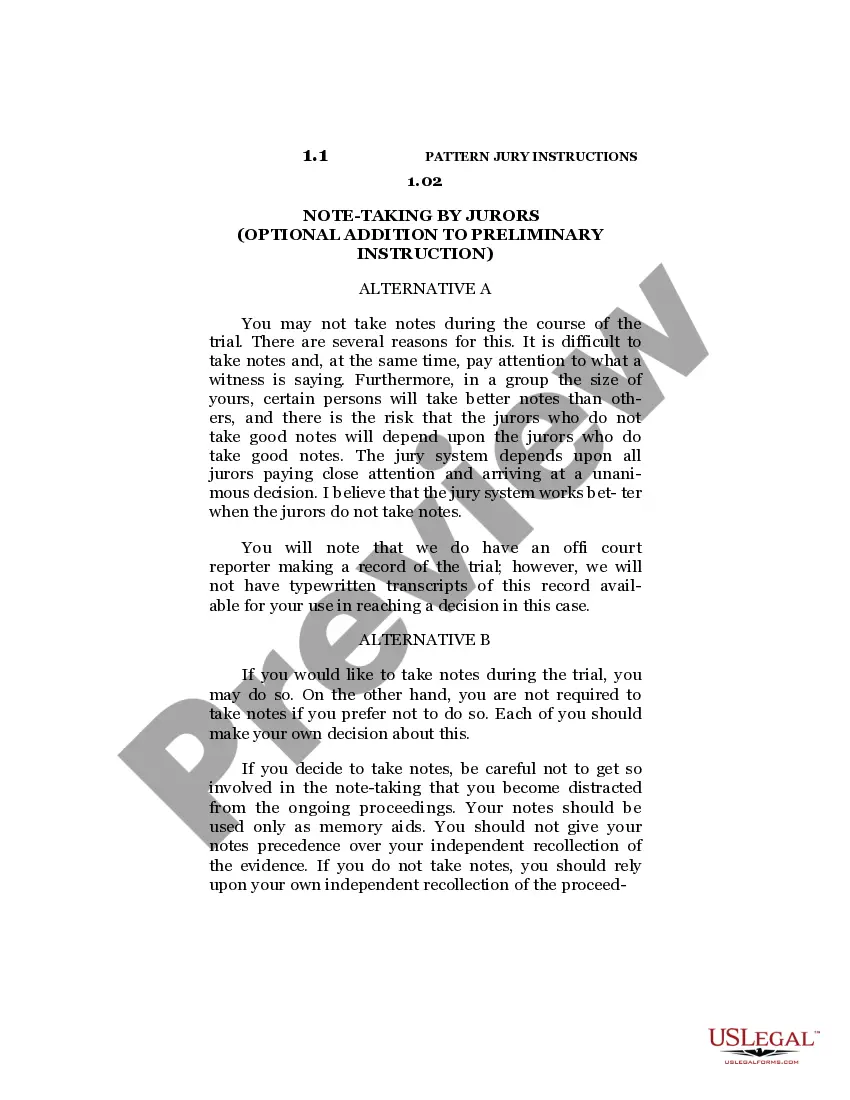
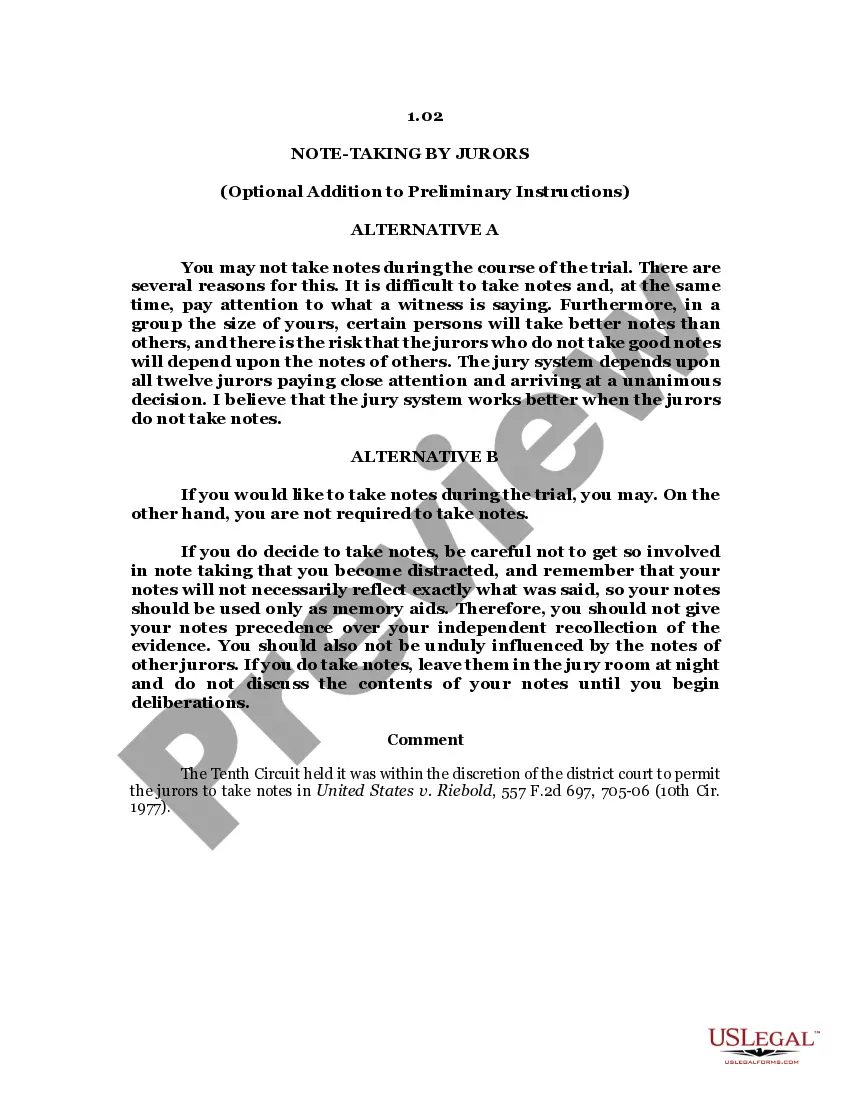
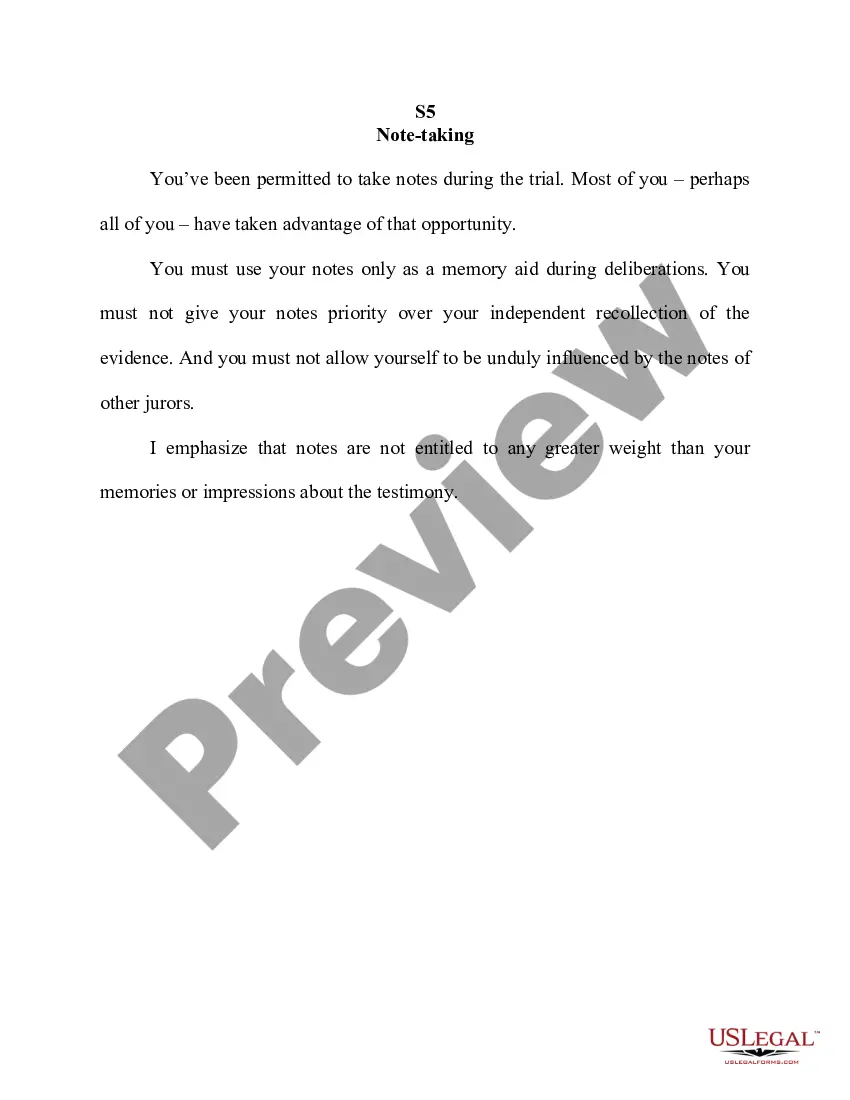
The Jury Instruction - Note-Taking - Not Permitted form provides guidance to jurors regarding the taking of notes during a trial. This model text instructs jurors that taking notes is discouraged to ensure that all jurors rely on their collective memory when deliberating. It distinguishes itself by emphasizing that all evidence will be available for review during deliberations, supporting a collaborative decision-making process without individual note reliance.
Key parts of this document
- Introduction stating the jurors' observed note-taking habits.
- Explanation of why note-taking is discouraged during the trial.
- Reassurance that all exhibits and testimony will be available during deliberations.
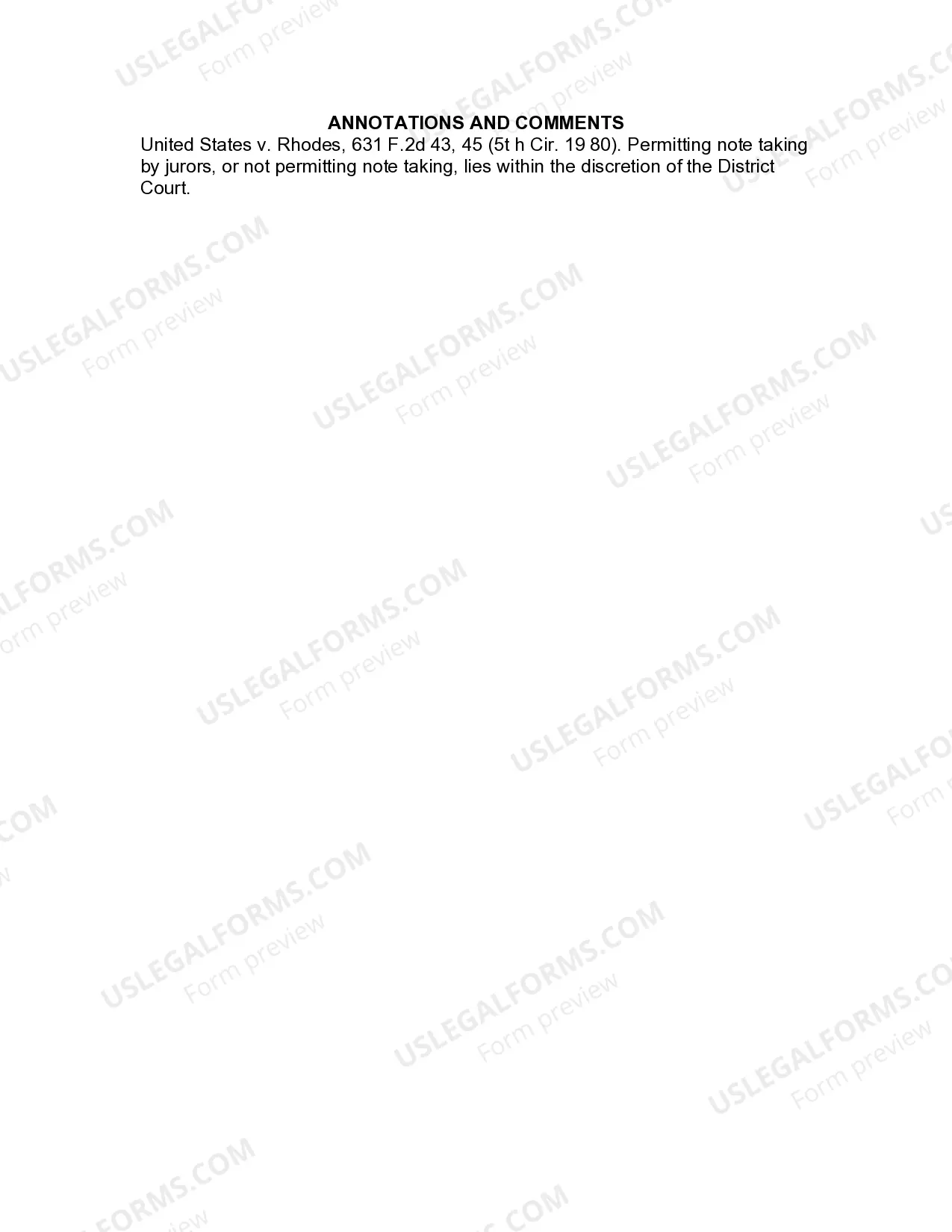
- Statement on the court's discretion regarding jurors' note-taking.
Common use cases
This form should be used by judges when delivering instructions to jurors in a trial where note-taking is to be prohibited. It is relevant in cases where the integrity of collective juror memory is deemed critical for accurate deliberation and decision-making. Utilizing this instruction helps ensure jurors remain focused on the proceedings without the distraction of note-taking.
Who needs this form
- Judges presiding over a trial where note-taking is not permitted.
- Court officials seeking to provide clear instructions to jurors.
- Attorneys preparing for jury trials where evidence presentation is crucial.
Steps to complete this form
- Present the form as part of jury instructions at the beginning of the trial.
- Read the instruction clearly to the jury to ensure understanding.
- Explain the rationale behind the no note-taking policy.
- Emphasize that all evidence will be accessible during deliberations.
- Inform jurors that the decision on note-taking is ultimately at the court's discretion.
Notarization requirements for this form
This form usually doesn’t need to be notarized. However, local laws or specific transactions may require it. Our online notarization service, powered by Notarize, lets you complete it remotely through a secure video session, available 24/7.
Get your form ready online
Our built-in tools help you complete, sign, share, and store your documents in one place.
Make edits, fill in missing information, and update formatting in US Legal Forms—just like you would in MS Word.
Download a copy, print it, send it by email, or mail it via USPS—whatever works best for your next step.
Sign and collect signatures with our SignNow integration. Send to multiple recipients, set reminders, and more. Go Premium to unlock E-Sign.
If this form requires notarization, complete it online through a secure video call—no need to meet a notary in person or wait for an appointment.
We protect your documents and personal data by following strict security and privacy standards.

Make edits, fill in missing information, and update formatting in US Legal Forms—just like you would in MS Word.

Download a copy, print it, send it by email, or mail it via USPS—whatever works best for your next step.

Sign and collect signatures with our SignNow integration. Send to multiple recipients, set reminders, and more. Go Premium to unlock E-Sign.

If this form requires notarization, complete it online through a secure video call—no need to meet a notary in person or wait for an appointment.

We protect your documents and personal data by following strict security and privacy standards.
Common mistakes
- Failing to communicate clearly the reasoning for prohibiting note-taking.
- Not reinforcing that all evidence will be available for deliberations.
- Overlooking the need to specify that note-taking is at the court's discretion.
Benefits of using this form online
- Convenience of accessing the form from anywhere at any time.
- Easy integration into court proceedings without needing physical copies.
- Reliable format that ensures compliance with legal standards.
Legal use & context
- This instruction is an essential part of jury management to uphold the trial's integrity.
- Clear guidelines help jurors understand their roles and responsibilities.
- Ensures that all jurors can focus equally on the trial without personal bias introduced by note-taking.
Looking for another form?
Form popularity
FAQ
X Don't talk about the case, or issues raised by the case with anyone, including other jurors, while the trial is going on, and don't talk to the lawyers, parties, or witnesses about anything. X Don't take notes during the trial unless the judge gives you permission to do so.
Most judges allow jurors to take notes during trials. At the commencement of the trial, the jury is handed small notepads and pencils for note taking. The judge also typically gives the jury some basic administrative instructions about what to do with the notebooks when they are finished each day.
Be a United States citizen; be at least 18 years of age; reside primarily in the judicial district for one year; be adequately proficient in English to satisfactorily complete the juror qualification form; have no disqualifying mental or physical condition;
X Don't lose your temper, try to bully or refuse to listen to the opinions of other jurors. X Don't draw straws, flip coins or otherwise arrive at your verdict by chance, or the decision will be illegal.
Personal knowledge about a party to the case or someone connected to the case. Personal experiences that might affect the person's ability to judge the case.
2021 California Rules of Court Jurors must be permitted to take written notes in all civil and criminal trials. At the beginning of a trial, a trial judge must inform jurors that they may take written notes during the trial.
One survey indicated that 37 percent of the judges in state courts indicate they do not allow jurors to take notes during a trial.In federal courts, this matter is also left up to the judge.
Most judges allow jurors to take notes during trials. At the commencement of the trial, the jury is handed small notepads and pencils for note taking. The judge also typically gives the jury some basic administrative instructions about what to do with the notebooks when they are finished each day.