Website Sales Agreement
What this document covers
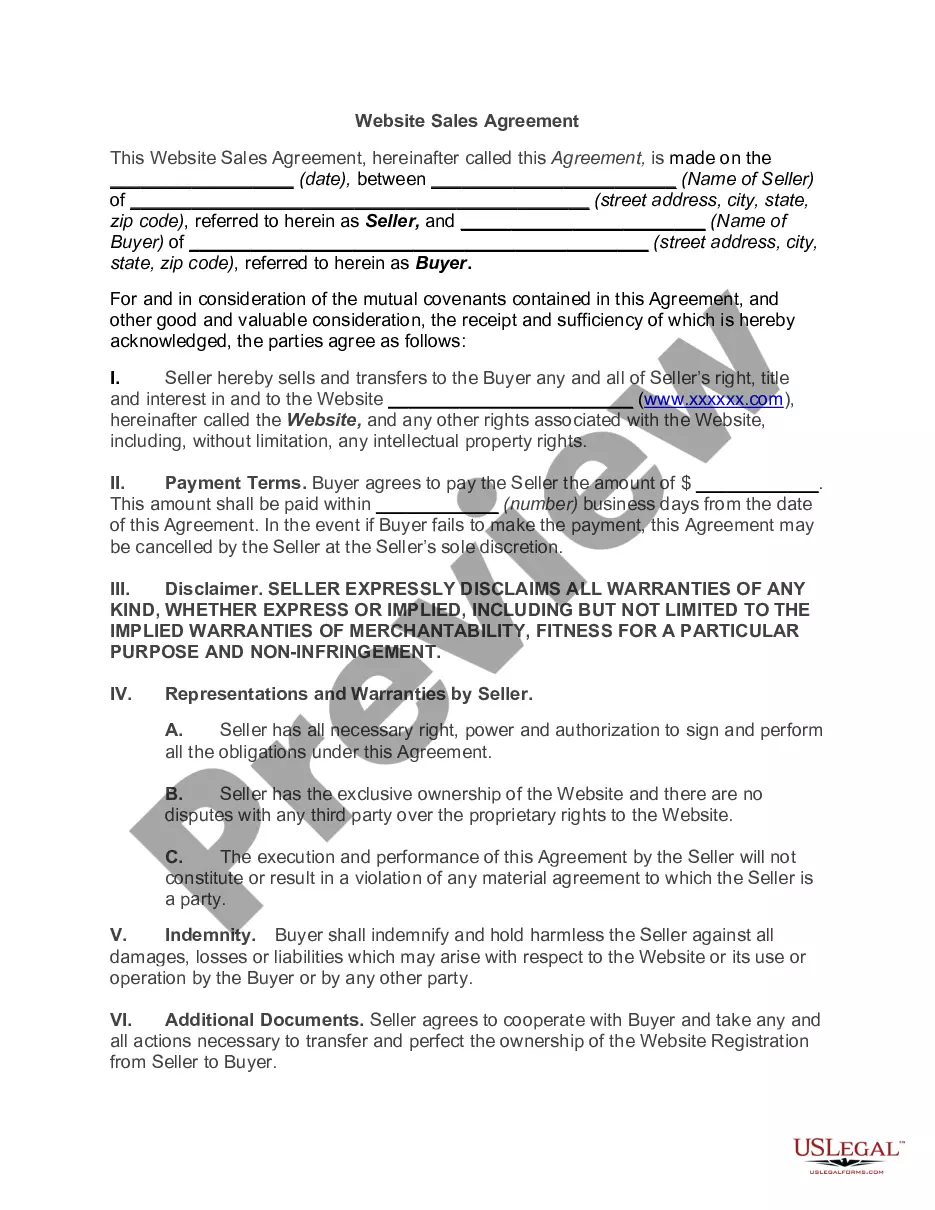
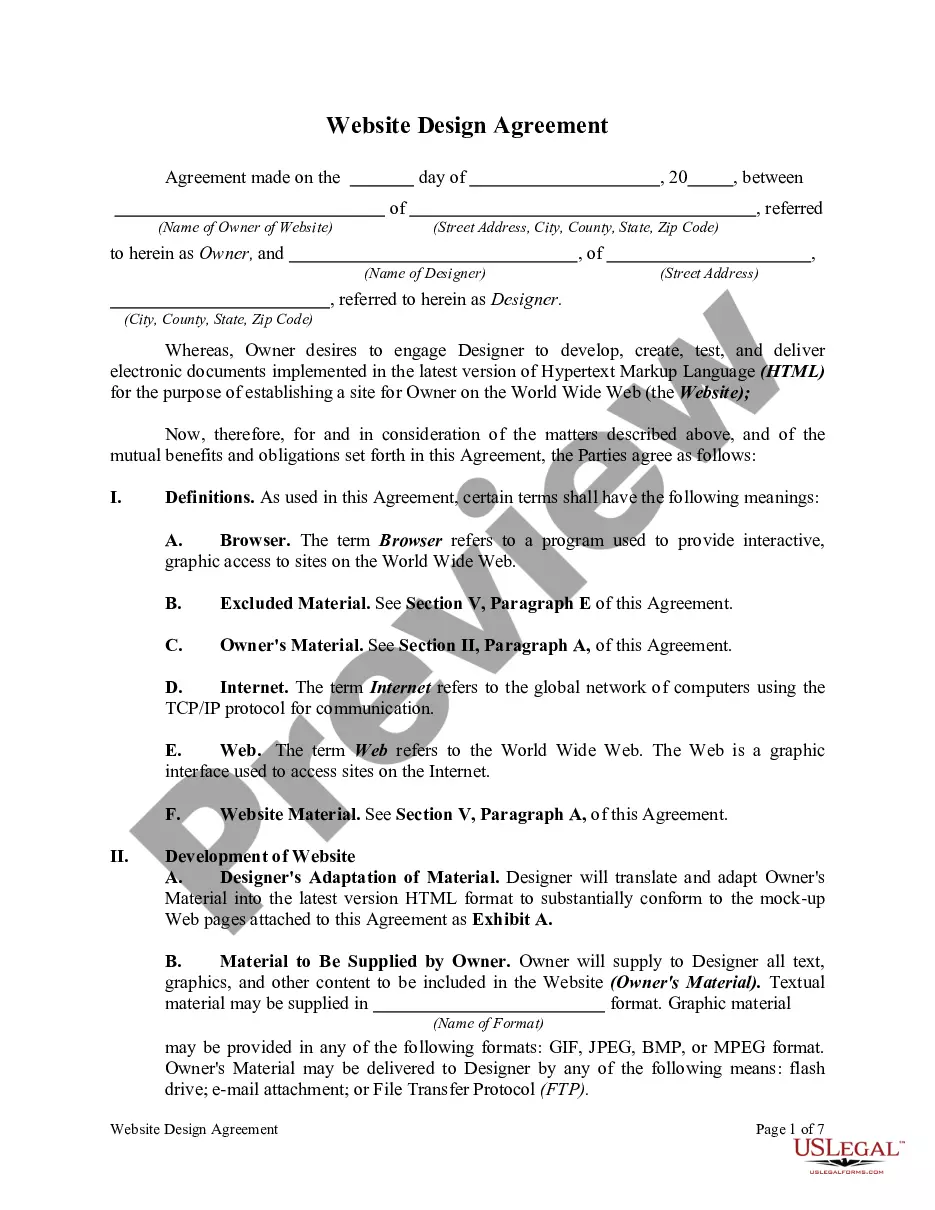
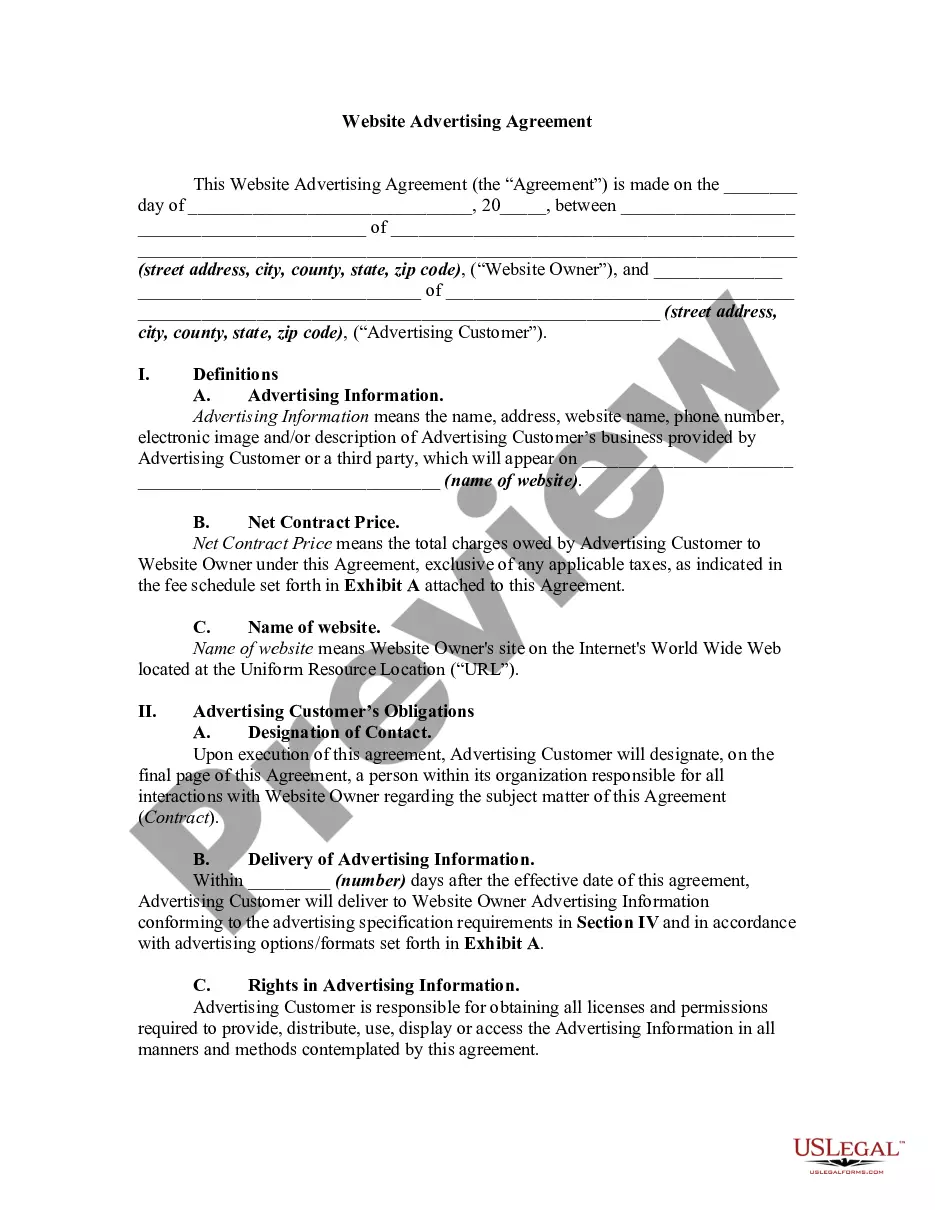
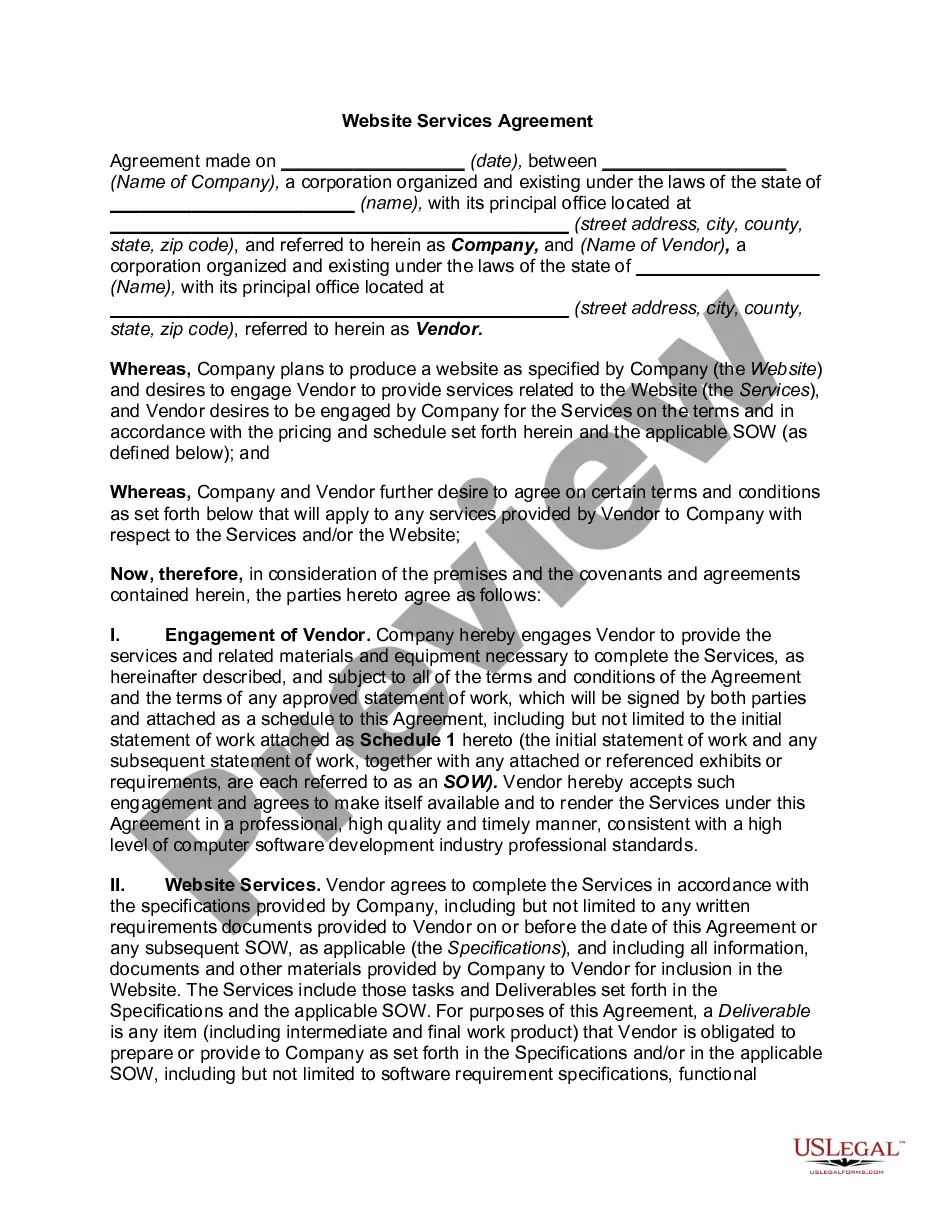
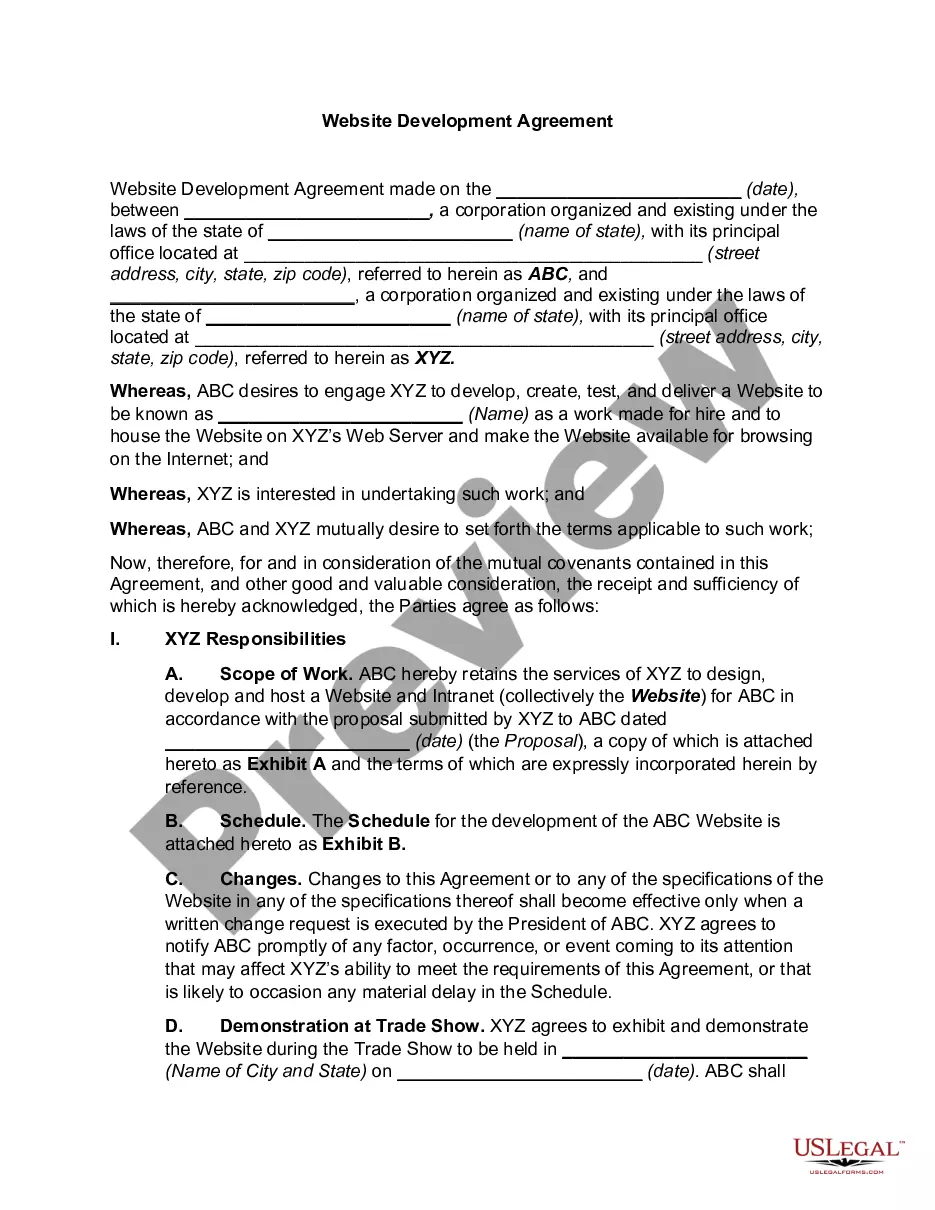
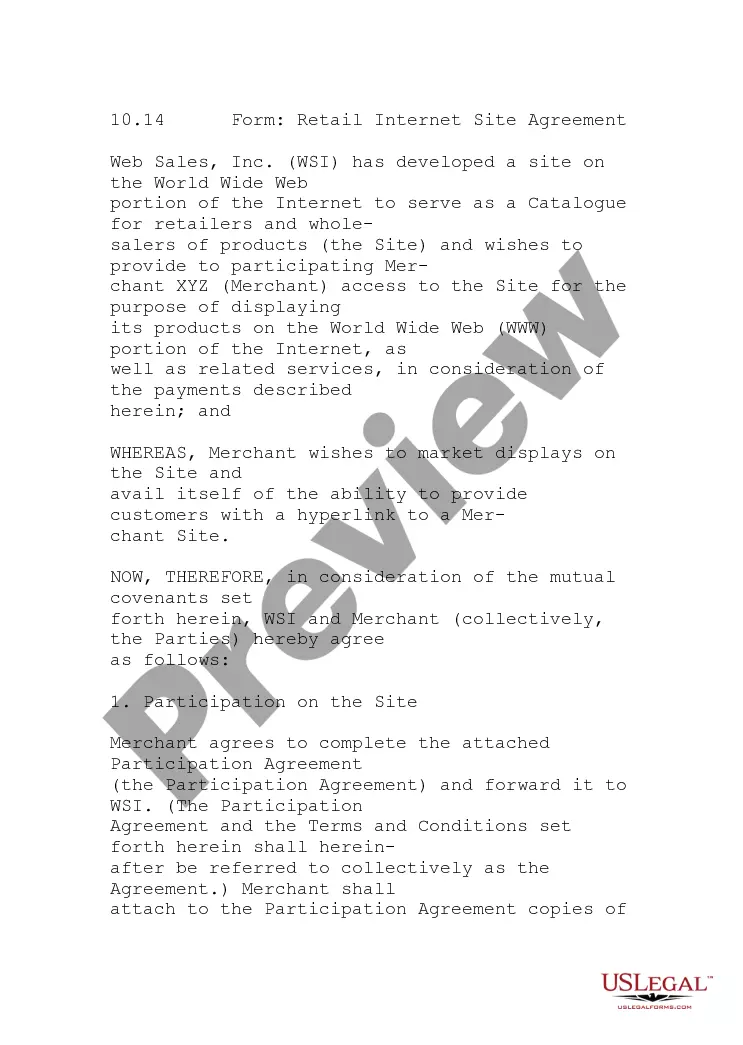
The Website Sales Agreement is a legal document that formalizes the sale of a website from a seller to a buyer. This agreement outlines the specific terms of the transaction, including the website's name, purchase price, payment terms, and the seller's representations and warranties. Unlike generic sales agreements, this document focuses specifically on the nuances involved in transferring online ownership and related rights, making it essential for both parties involved in such transactions.
What’s included in this form
- Date of agreement initiation.
- Details of the seller and buyer, including their addresses.
- Specific website being sold, including its link.
- Payment amount and terms for the transaction.
- Representations and warranties by the seller regarding ownership and rights of the website.
- Indemnification clause protecting the seller from liabilities arising from the buyer's use of the website.
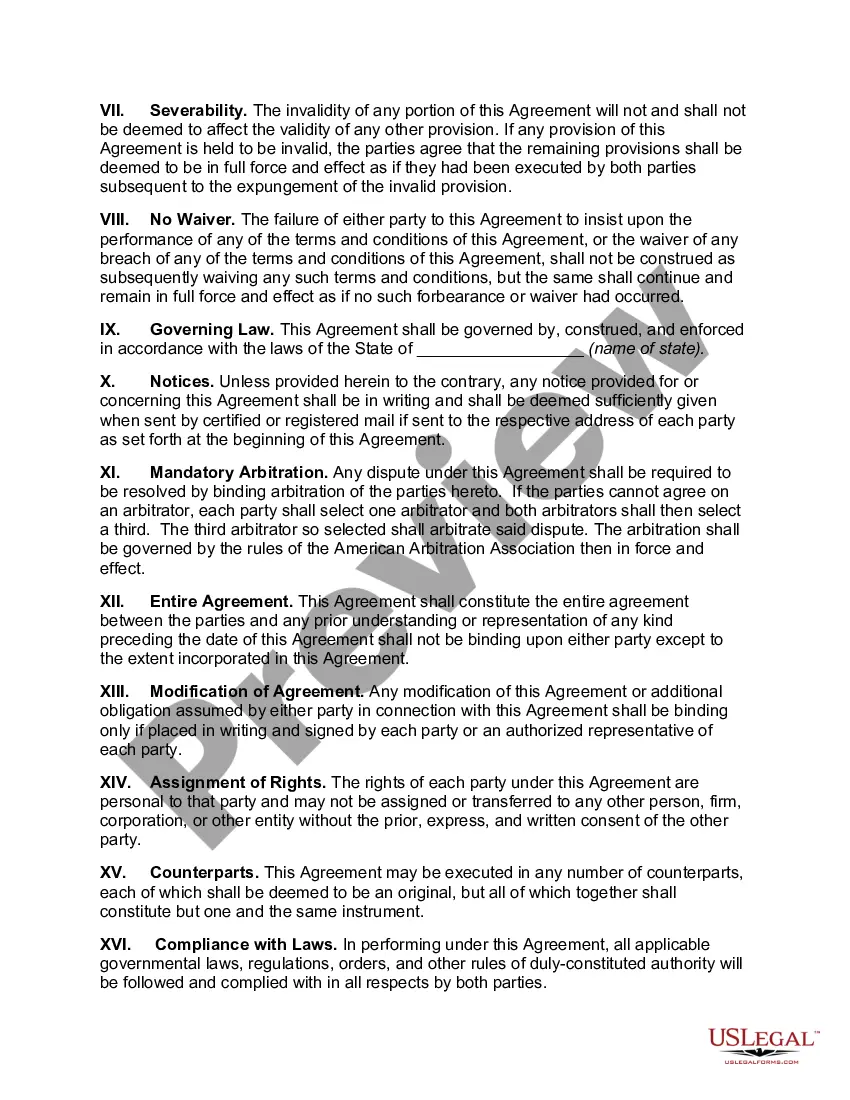
- Governing law and dispute resolution mechanisms.
When to use this form
This form should be used when an individual or business is looking to buy or sell a website. It is particularly useful in cases where the seller needs to clearly establish ownership and the buyer seeks assurance regarding the website's attributes and functionality. Examples include e-commerce sites being sold to new owners or companies divesting online assets as part of a larger business strategy.
Intended users of this form
This form is intended for:
- Website owners looking to sell their online properties.
- Individuals or businesses interested in acquiring an existing website.
- Legal professionals assisting clients in website transactions.
How to prepare this document
- Enter the date at the top of the agreement.
- Fill in the names and addresses of both the seller and buyer.
- Specify the internet address (URL) of the website being sold.
- Detail the payment amount and deadlines for payment.
- Include any additional documents needed for the transfer of ownership.
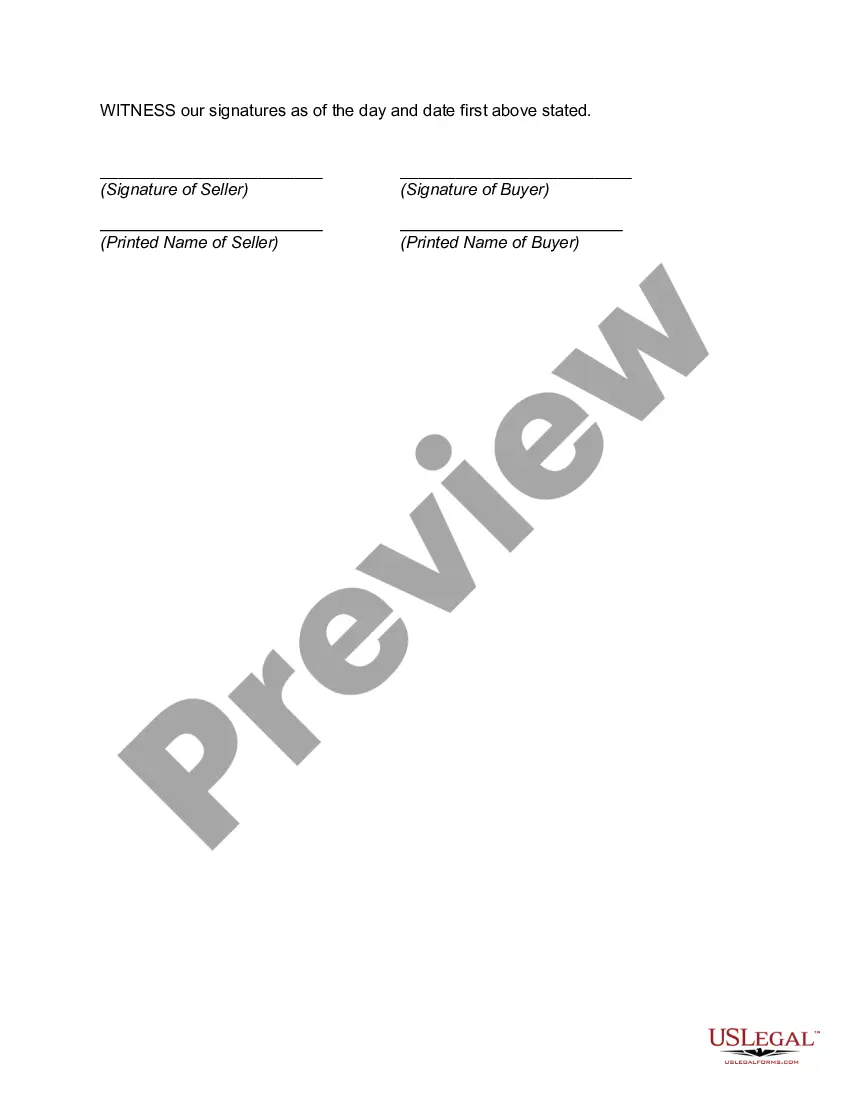
- Both parties should sign and date the agreement to finalize the sale.
Notarization requirements for this form
Notarization is generally not required for this form. However, certain states or situations might demand it. You can complete notarization online through US Legal Forms, powered by Notarize, using a verified video call available anytime.
Get your form ready online
Our built-in tools help you complete, sign, share, and store your documents in one place.
Make edits, fill in missing information, and update formatting in US Legal Forms—just like you would in MS Word.
Download a copy, print it, send it by email, or mail it via USPS—whatever works best for your next step.
Sign and collect signatures with our SignNow integration. Send to multiple recipients, set reminders, and more. Go Premium to unlock E-Sign.
If this form requires notarization, complete it online through a secure video call—no need to meet a notary in person or wait for an appointment.
We protect your documents and personal data by following strict security and privacy standards.

Make edits, fill in missing information, and update formatting in US Legal Forms—just like you would in MS Word.

Download a copy, print it, send it by email, or mail it via USPS—whatever works best for your next step.

Sign and collect signatures with our SignNow integration. Send to multiple recipients, set reminders, and more. Go Premium to unlock E-Sign.

If this form requires notarization, complete it online through a secure video call—no need to meet a notary in person or wait for an appointment.

We protect your documents and personal data by following strict security and privacy standards.
Typical mistakes to avoid
- Failing to specify the URL of the website being sold.
- Not clearly outlining payment terms or deadlines.
- Neglecting to include representations and warranties, which could lead to future disputes.
- Forgetting to sign and date the agreement, making it legally unenforceable.
Benefits of completing this form online
- Convenience of downloading and editing the form at your own pace.
- Access to templates created by licensed attorneys, ensuring legal validity.
- Ability to customize the agreement to fit specific transaction needs.
- Quick and secure electronic distribution of the finalized document.
Legal use & context
- The agreement ensures clear ownership transfer and minimizes liability for both parties.
- It provides legal protections, including indemnity clauses, which help safeguard against future claims.
- Using a standardized form helps in compliance with both state and federal laws concerning online transactions.
Quick recap
- The Website Sales Agreement is essential for formalizing website sales.
- It protects both buyers and sellers by clarifying terms of sale and ownership.
- Completing the form accurately is crucial to avoid legal issues in the future.
Looking for another form?
Form popularity
FAQ
Writing the Contract Include information about the exchange of consideration, and write clearly as to which party delivers and what the other agrees in exchange. Use short sentences and provide a numbered heading for each paragraph. This makes it easier to reference information.
A domain name sale agreement expresses the current owner's desire to sell all rights, interests, and the title of the domain to the purchaser. On the other hand, the purchaser acknowledges the desire to acquire the rights, interests, and the title of the domain from the seller.
Things to do before writing a sales contract Buyer and seller names and contact details. A description of the goods and/or services being sold. Delivery specifications. Details of the inspection period. Payment details. Contingencies, including any guarantees, warranties, and conditions for termination.
The Seller agrees to sell the Goods to the Buyer for $. The Seller will provide an invoice to the Buyer at the time of delivery. All invoices must be paid, in full, within thirty (30) days. Any balances not paid within thirty (30) days will be subject to a five percent (5%) late payment penalty.
What Should Be Identified in a Purchase Agreement? Buyer: The party purchasing the property. Seller: The party selling the property. Purchase price: The amount that the buyer will be paying the seller for the property. Personal property: A description of the personal property that is being sold.
At its most basic, a purchase agreement should include the following: Name and contact information for buyer and seller. The address of the property being sold. The price to be paid for the property. The date of transfer. Disclosures. Contingencies. Signatures.
Elements of a sales agreement Buyer and seller names and contact information. Description of goods, services, or property being purchased. Payment amount, dates, and method. Liability of each party in the case of loss, damage, or delivery failure.
In general, a sale refers to the transfer of ownership of a product or service from a seller to a buyer in exchange for money or other consideration. An agreement to sell, on the other hand, is a contract between a seller and a buyer in which the seller agrees to sell a product or service to the buyer at a later date.