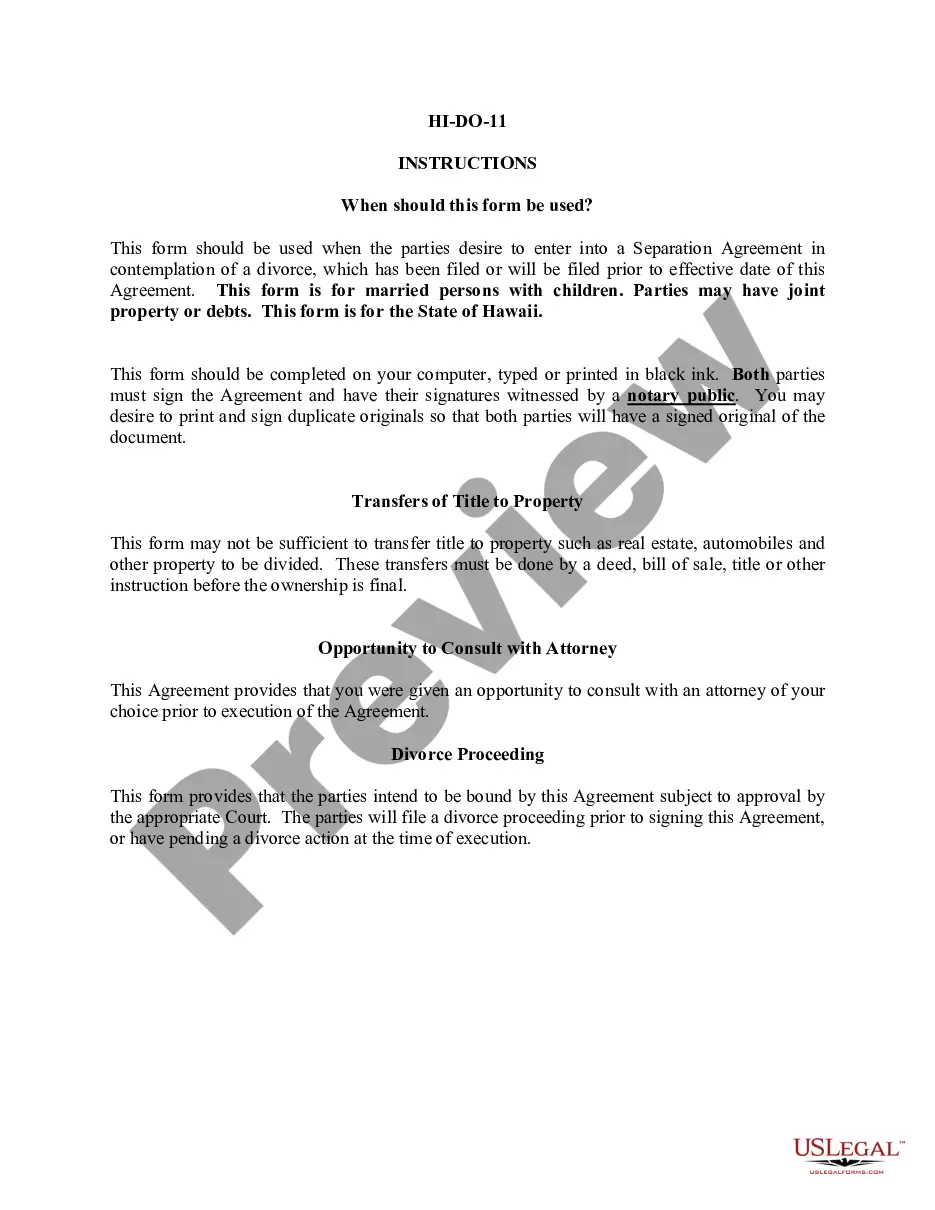
Project Assessment
What this document covers
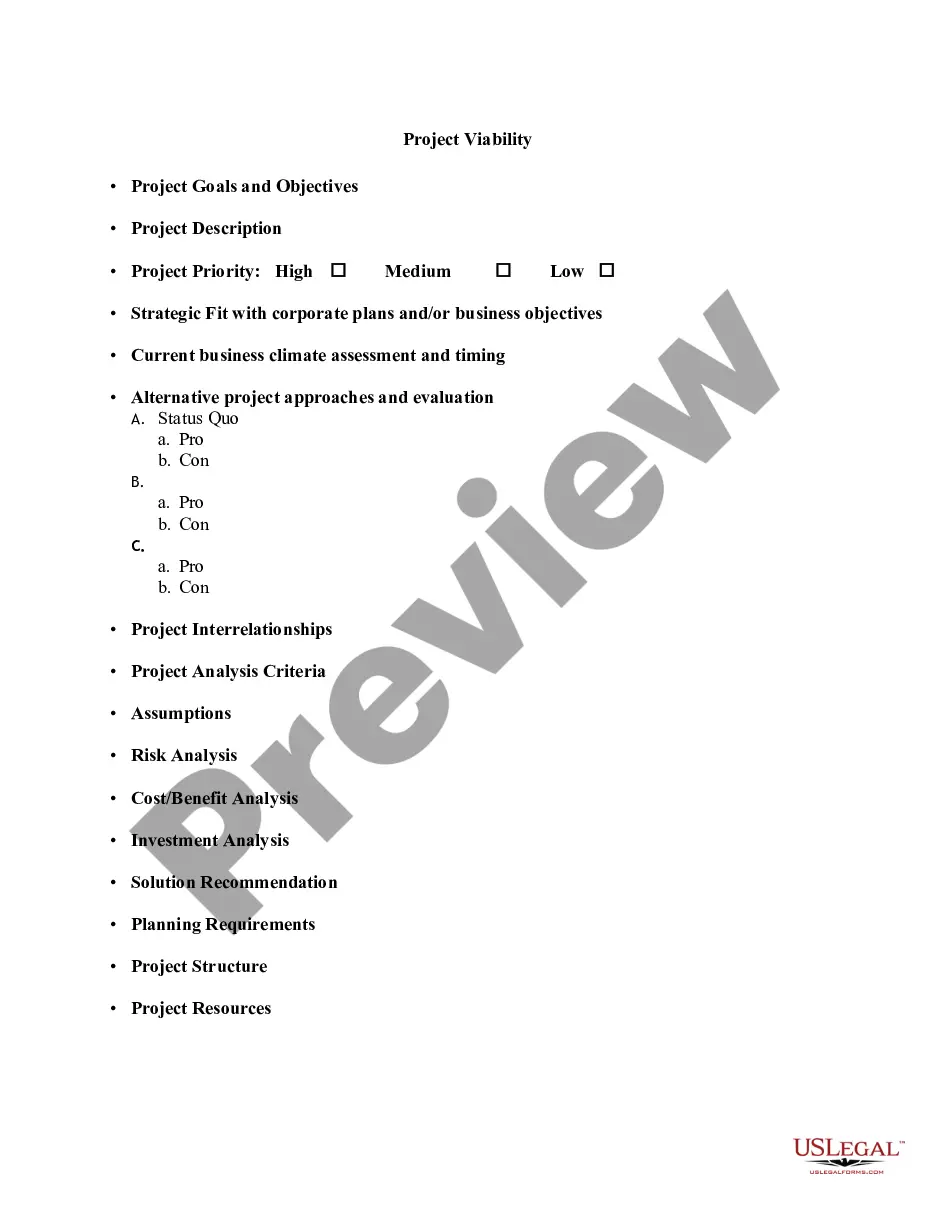
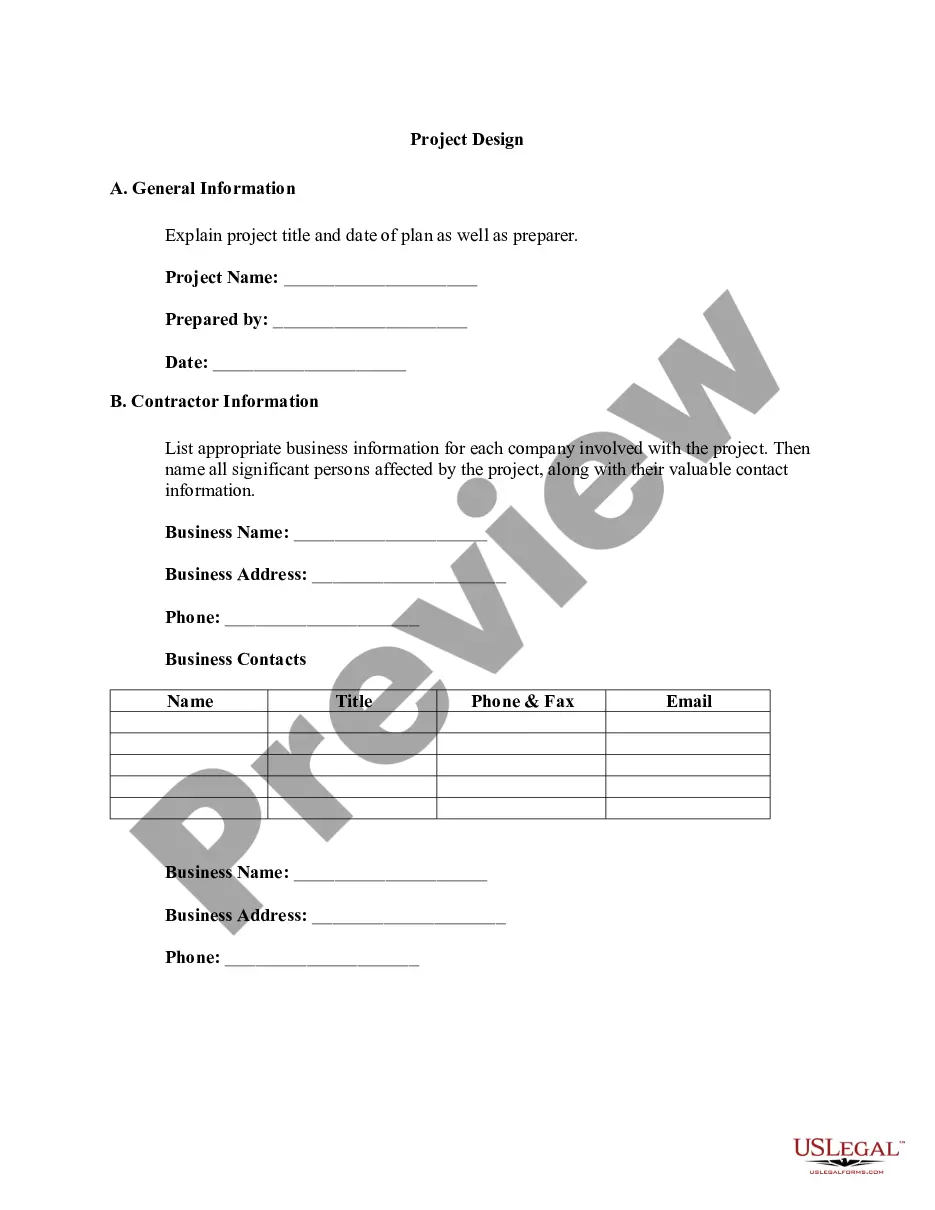
The Project Assessment form is a vital tool for evaluating a project's success as it nears completion. This assessment focuses on determining whether the project has met its original goals and objectives, facilitating a smooth transition from the construction or development phase to operational readiness. Unlike other evaluation forms, this specific document encapsulates lessons learned to enhance future project execution.
Main sections of this form
- Assessment of project goals and objectives, including success factors and variances
- Budget assessment, detailing actual versus budgeted expenditures
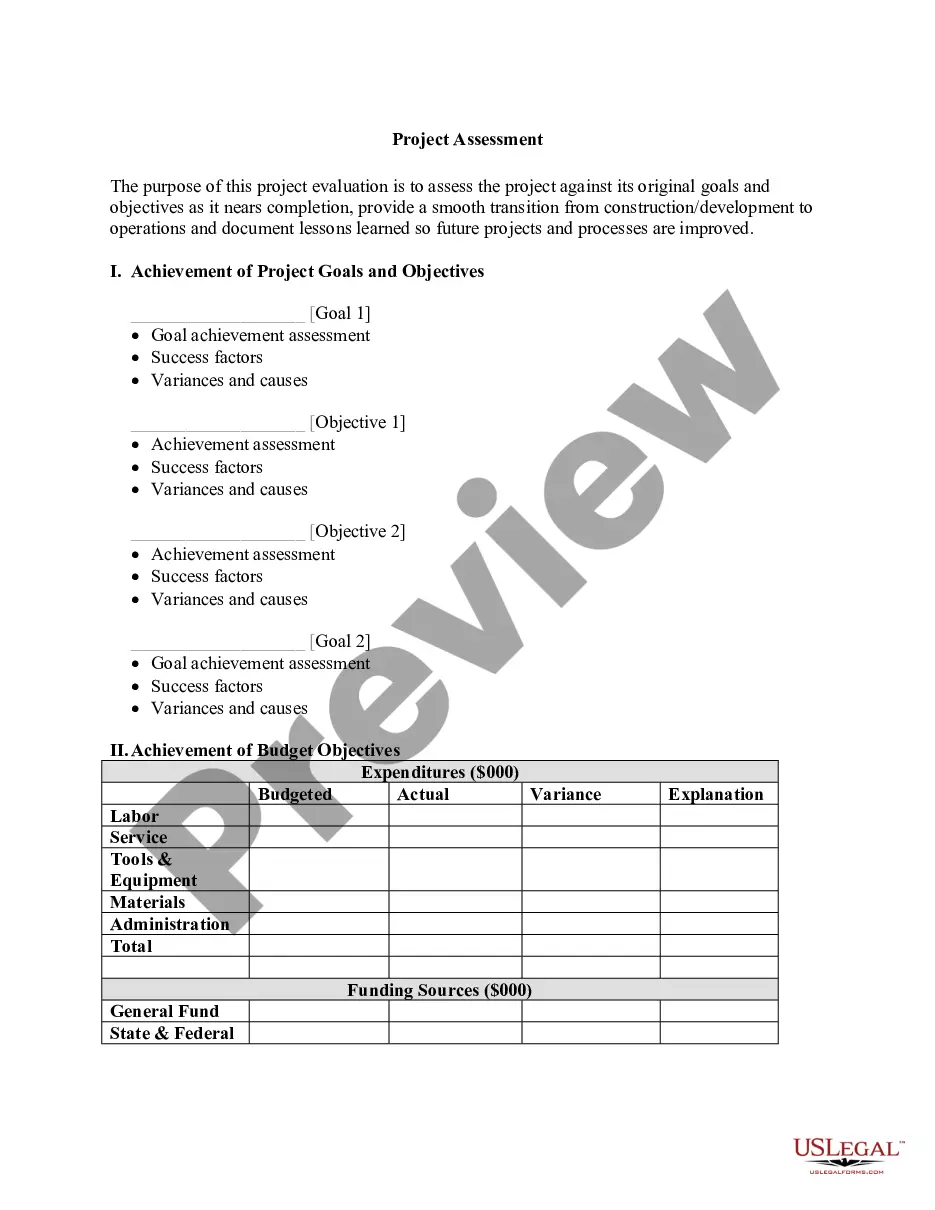
- Adherence to schedule and achievement of customer requirements
- Documentation of project deliverables and their acceptance status
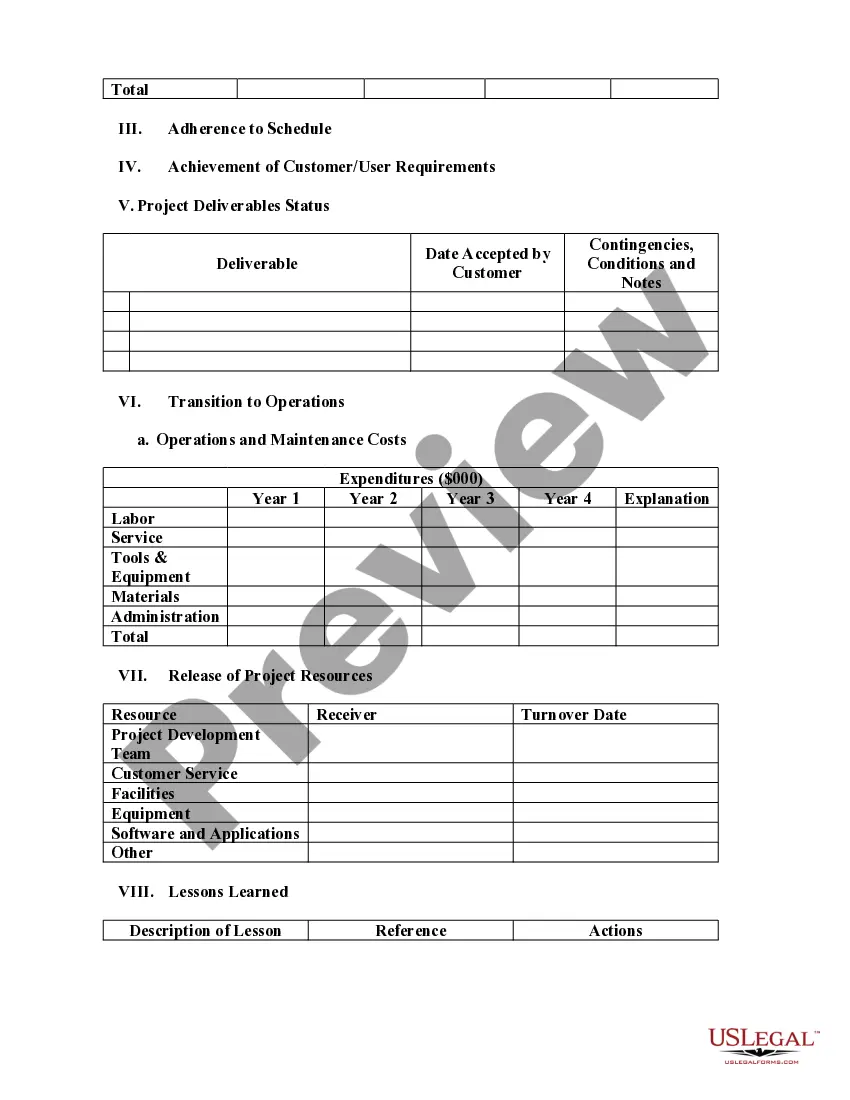
- Transition details to operations and maintenance costs for future years
- Lessons learned section for future reference and improvement
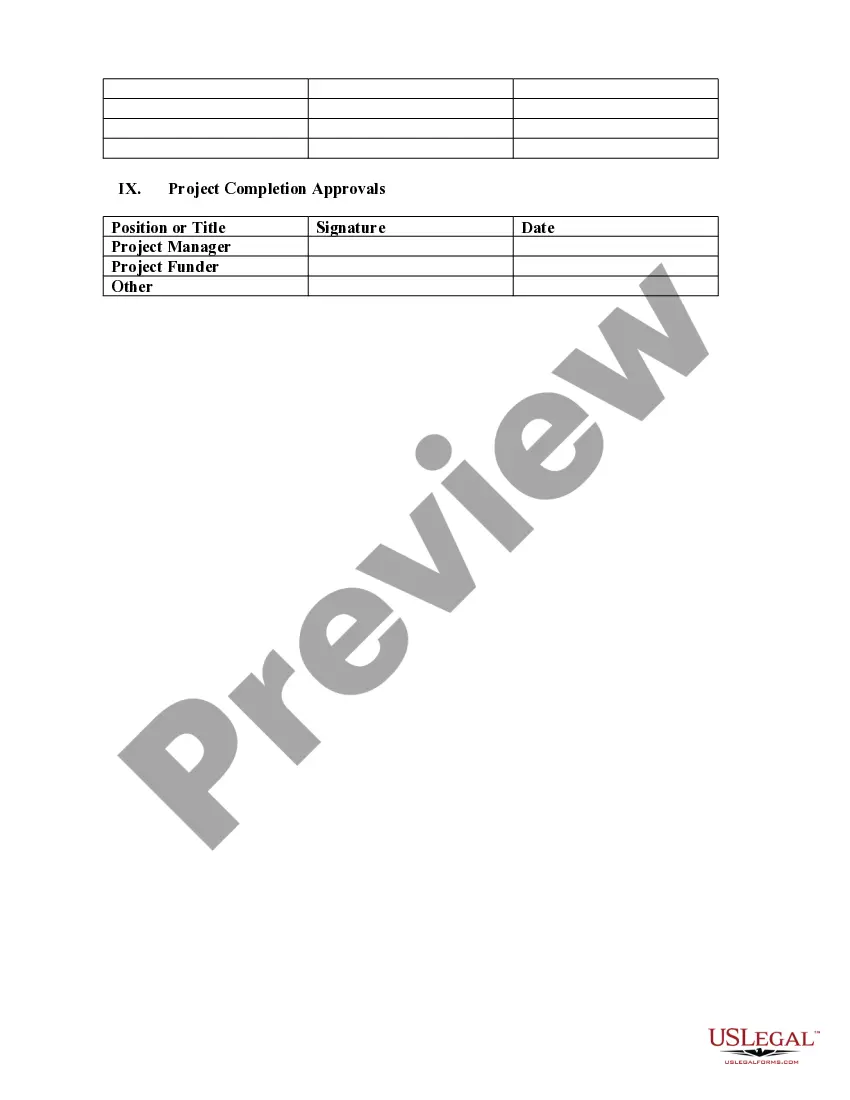
- Approval section for project managers and funders
When this form is needed
This form is appropriate to use when a project is nearing completion and requires a thorough evaluation. It helps stakeholders understand the project's success against the initial plan, validate expenditures, and record insights that could benefit future projects. Use this form during project closing meetings or final reviews to effectively communicate outcomes and improvements.
Intended users of this form
- Project managers responsible for overseeing project completion
- Stakeholders interested in assessing project performance
- Organizations conducting evaluations for internal projects
- Teams involved in learning and development focused on process improvement
Steps to complete this form
- Identify and clearly state the project's original goals and objectives.
- Evaluate the success of each goal and objective, noting any variances and underlying causes.
- Fill in the budget assessment section with actual expenditures compared to the budgeted amounts.
- Document accepted project deliverables and their acceptance dates by the customer.
- Record lessons learned throughout the project for future enhancement.
- Obtain signatures and approvals from the project manager and funders to finalize the assessment.
Is notarization required?
Notarization is not commonly needed for this form. However, certain documents or local rules may make it necessary. Our notarization service, powered by Notarize, allows you to finalize it securely online anytime, day or night.
Get your form ready online
Our built-in tools help you complete, sign, share, and store your documents in one place.
Make edits, fill in missing information, and update formatting in US Legal Forms—just like you would in MS Word.
Download a copy, print it, send it by email, or mail it via USPS—whatever works best for your next step.
Sign and collect signatures with our SignNow integration. Send to multiple recipients, set reminders, and more. Go Premium to unlock E-Sign.
If this form requires notarization, complete it online through a secure video call—no need to meet a notary in person or wait for an appointment.
We protect your documents and personal data by following strict security and privacy standards.

Make edits, fill in missing information, and update formatting in US Legal Forms—just like you would in MS Word.

Download a copy, print it, send it by email, or mail it via USPS—whatever works best for your next step.

Sign and collect signatures with our SignNow integration. Send to multiple recipients, set reminders, and more. Go Premium to unlock E-Sign.

If this form requires notarization, complete it online through a secure video call—no need to meet a notary in person or wait for an appointment.

We protect your documents and personal data by following strict security and privacy standards.
Common mistakes
- Failing to thoroughly evaluate all project goals and objectives.
- Neglecting to document variances and their explanations.
- Leaving the lessons learned section incomplete or vague.
- Not securing necessary approvals before finalizing the assessment.
Why use this form online
- Convenient download and edit options for personalized project assessments.
- Accessibility anytime, allowing for timely completion.
- Reliable templates drafted by licensed attorneys to ensure legal soundness.
Legal use & context
- This form serves as a legal document that aids in the formal closure of a project.
- It could be presented in case of disputes regarding project outcomes.
- The insights captured may support future funding applications or audit processes.
Looking for another form?



Form popularity
FAQ
Tip 1: Establish clear goals for the project Preventing scope creep, which means keeping the scope of the project from growing. Staying within a given budget. Completing all aspects of the project. Providing quality work. Completing work on time. Securing the right resources in advance.
Writing Evaluation Report of a Project Executive Summary. The executive summary of an evaluation report is a shortened version of the full report.Introduction to the Project.Purpose of the Evaluation.Objectives of the Evaluation.Methodology.Evaluation Findings.Strengths of the Project/Organization.Areas of Improvement.
The program evaluation process goes through four phases ? planning, implementation, completion, and dissemination and reporting ? that complement the phases of program development and implementation. Each phase has unique issues, methods, and procedures.
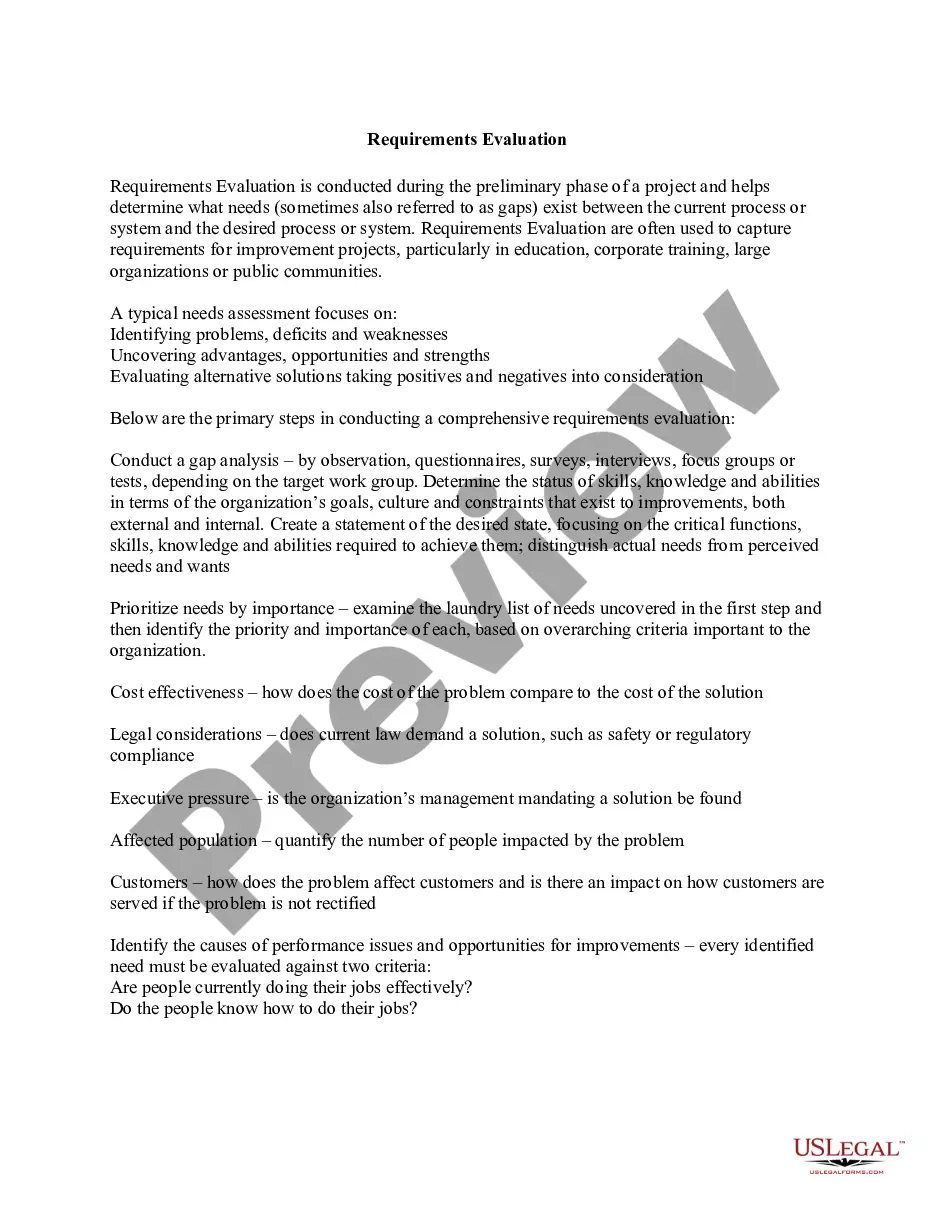
There are different kinds of project evaluation: Assessing the costs and effectiveness of the project. Evaluation of the results or impact. Evaluation of the adequacy of the implementation of the project. Assessing the need for the project. Other criteria or approach to the assessment.
The 7 Steps of an Evaluation Project Develop program logic and review needs.Develop the evaluation brief.Commission the evaluation project.Manage development of the evaluation design.Manage development of the evaluation workplan.Manage implementation of the workplan, including production of the report(s)
Evaluation helps get better project results: Progress review and evaluation tools make deadlocks, overruns, etc. visible, so problems are identified at an early stage. You have time to think through and react ingly. Thus, you get better control over your project, improve outcomes and enhance the impact.
In general terms, a project evaluation process goes over the project constraints including time, cost, scope, resources, risk and quality. In addition, organizations may add their own business goals, strategic objectives and other metrics.
The 5-Step approach Identify the problem. It is essential that you are clear from the start about the problem you are aiming to address.Review the evidence.Draw a logic model of how your service should work.Identify indictors and collect monitoring data.Evaluate logic model?