Attorney Retainer Agreement
What this document covers
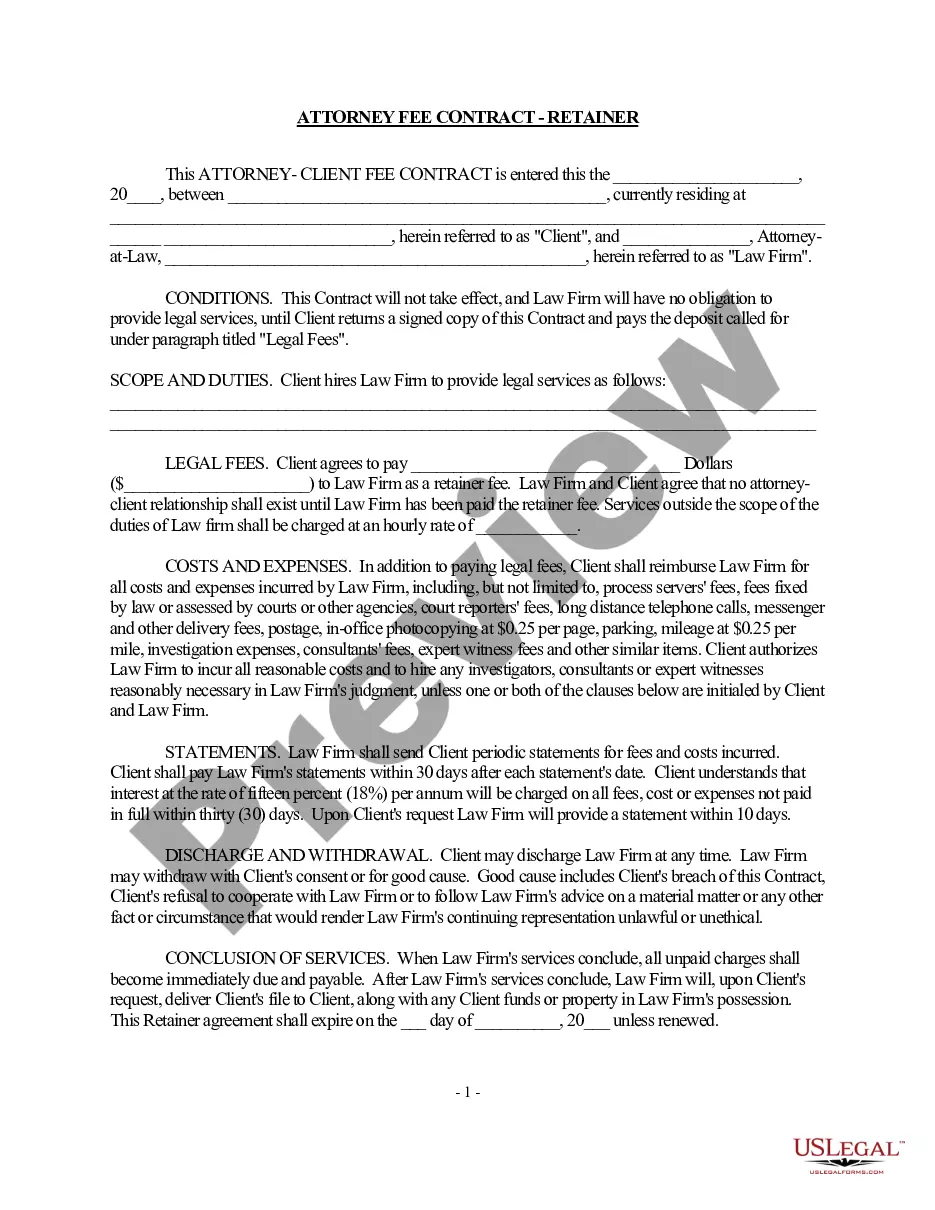
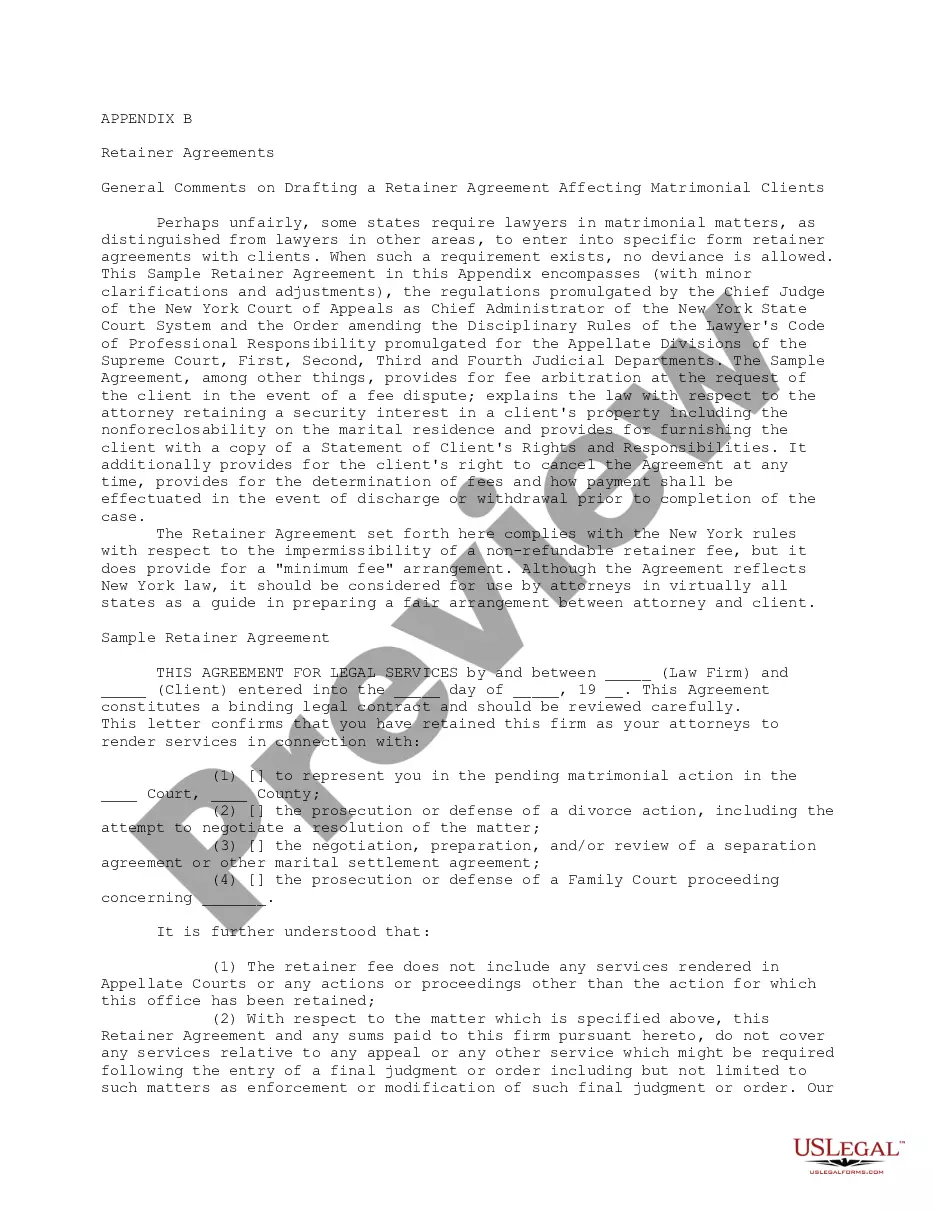
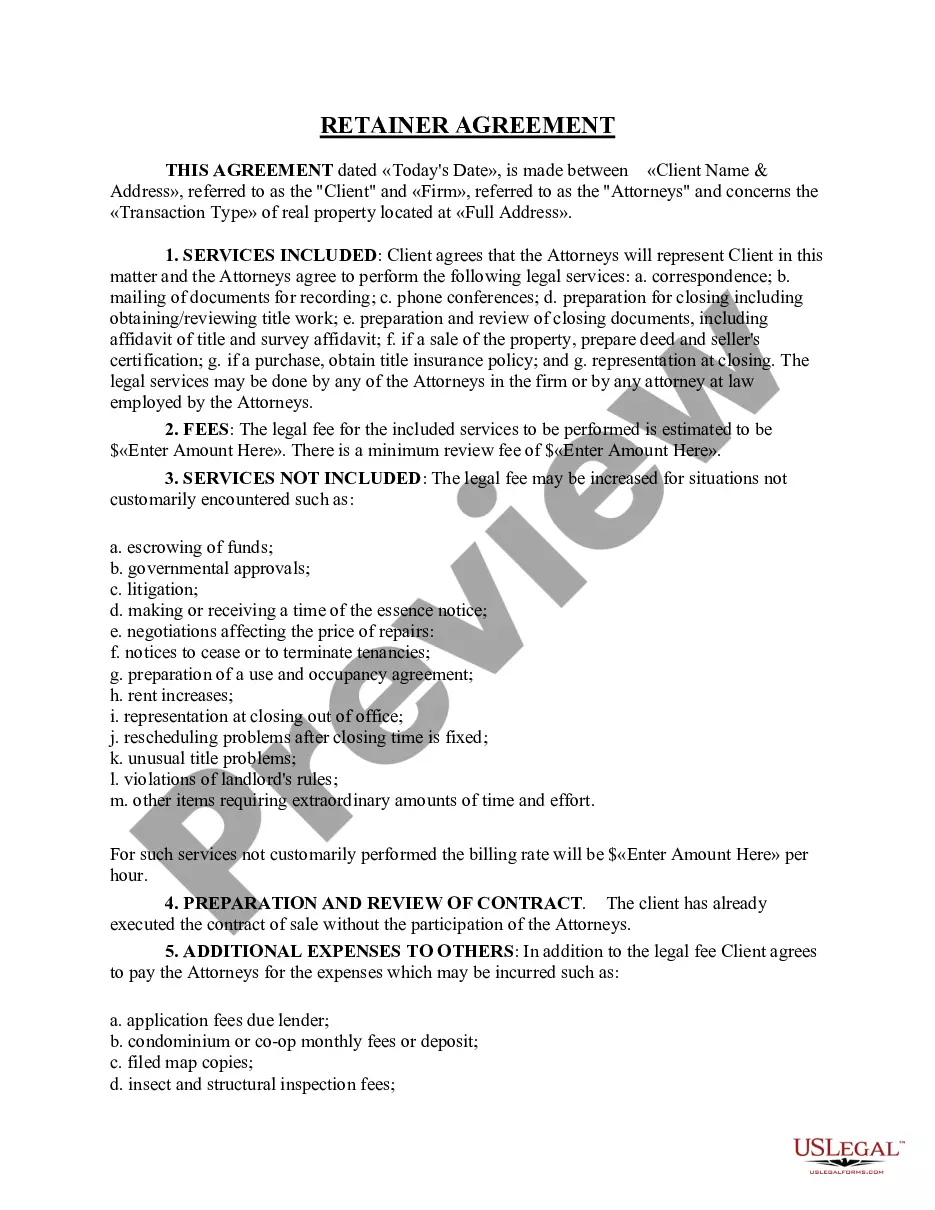
An Attorney Retainer Agreement is a legal document that outlines the terms and conditions of the relationship between a client and a lawyer. This agreement requires the client to pay a retainer fee, which secures the lawyer's services for a specific legal matter. The retainer functions as an advance for future legal fees and expenses, making it distinct from other legal agreements that may address the scope of work but not the payment structure.
What’s included in this form
- Identification of the parties involved, including the client and the law firm.
- Amount of the retainer and terms regarding additional payments if the retainer is depleted.
- Hourly rates for lawyers and potential additional fees for services rendered.
- Payment terms, including late fees and invoice procedures.
- Confidentiality and record retention practices by the law firm.
- Disclaimer regarding the firm's ability to predict outcomes of legal matters.

Situations where this form applies
This form is typically used when a client wishes to hire a lawyer for ongoing legal representation. It is suitable for various legal actions, such as family law cases, criminal defense, business litigation, or real estate matters. By signing this agreement, the client ensures that the attorney is available to provide legal services as needed throughout the legal process.
Who can use this document
This Attorney Retainer Agreement is intended for:
- Clients who need ongoing legal representation.
- Individuals or businesses entering into a service arrangement with a law firm.
- Any party seeking assurance of available legal counsel for specific matters.
Steps to complete this form
- Identify the parties: Fill in the names of the client and the law firm.
- Specify the legal matter: Describe the type of legal action the attorney will handle.
- Enter the retainer amount: State how much the client will pay as a retainer fee.
- List hourly rates: Fill out the applicable hourly rates for the attorney(s) involved.
- Sign and date the agreement: Ensure both parties sign and date the form to validate the agreement.
Does this document require notarization?
Notarization is not commonly needed for this form. However, certain documents or local rules may make it necessary. Our notarization service, powered by Notarize, allows you to finalize it securely online anytime, day or night.
Get your form ready online
Our built-in tools help you complete, sign, share, and store your documents in one place.
Make edits, fill in missing information, and update formatting in US Legal Forms—just like you would in MS Word.
Download a copy, print it, send it by email, or mail it via USPS—whatever works best for your next step.
Sign and collect signatures with our SignNow integration. Send to multiple recipients, set reminders, and more. Go Premium to unlock E-Sign.
If this form requires notarization, complete it online through a secure video call—no need to meet a notary in person or wait for an appointment.
We protect your documents and personal data by following strict security and privacy standards.

Make edits, fill in missing information, and update formatting in US Legal Forms—just like you would in MS Word.

Download a copy, print it, send it by email, or mail it via USPS—whatever works best for your next step.

Sign and collect signatures with our SignNow integration. Send to multiple recipients, set reminders, and more. Go Premium to unlock E-Sign.

If this form requires notarization, complete it online through a secure video call—no need to meet a notary in person or wait for an appointment.

We protect your documents and personal data by following strict security and privacy standards.
Common mistakes
- Failing to specify the legal matter in the agreement, leading to confusion on scope.
- Not detailing payment terms and potential additional fees, which can cause disputes later.
- Omitting to sign the agreement, rendering it unenforceable.
Benefits of completing this form online
- Convenience: Easily access and download the Attorney Retainer Agreement from any device.
- Editability: Customize the form fields to suit your specific legal needs.
- Reliability: The form is drafted by licensed attorneys, ensuring legal compliance.
Legal use & context
- Establishes a legal relationship between the client and attorney, ensuring mutual understanding.
- Legally binding once signed by both parties, subject to the laws governing the jurisdiction.
Main things to remember
- The Attorney Retainer Agreement specifies payment and representation details.
- Clear communication of fees and expectations is crucial for both parties.
- Understanding local laws is essential when utilizing this form.
Looking for another form?




Form popularity
FAQ
The amount you're to receive each month. The date you're to be paid by. Any invoicing procedures you're expected to follow. Exactly how much work and what type of work you expect to do. When your client needs to let you know about the month's work by.
The retainer is placed in the attorney's trust account and then used to pay for legal fees earned by the attorney and expenses related to the client's matter.The retainer still belongs to the client until it is earned by the attorney or used for legitimate expenses, and must be returned if unused.
A retainer is a fee paid to a person (usually a lawyer) before any services have been performed.This document typically includes the type of work the attorney is doing for the client, all associated fees, and the general rights of both parties entering into the agreement.
As such, a retainer agreement is a formal document outlining the relationship between an attorney and client. It details the different obligations and expectations involved, which can include ethical work principles, retainer fees, modes of communication, and professional ground rules.
The amount you're to receive each month. The date you're to be paid by. Any invoicing procedures you're expected to follow. Exactly how much work and what type of work you expect to do. When your client needs to let you know about the month's work by.
Accounting for a Retainer Fee If the firm is using the accrual basis of accounting, retainers are recognized as a liability upon receipt of the cash, and are recognized as revenue only after the associated work has been performed.
1The amount you're to receive each month.2The date you're to be paid by.3Any invoicing procedures you're expected to follow.4Exactly how much work and what type of work you expect to do.5When your client needs to let you know about the month's work by.How to Set Up a Retainer Agreement: Earn More From Your Best\nwww.bidsketch.com > blog > sales > freelance-retainer-agreement