Complaint for Malpractice
About this form
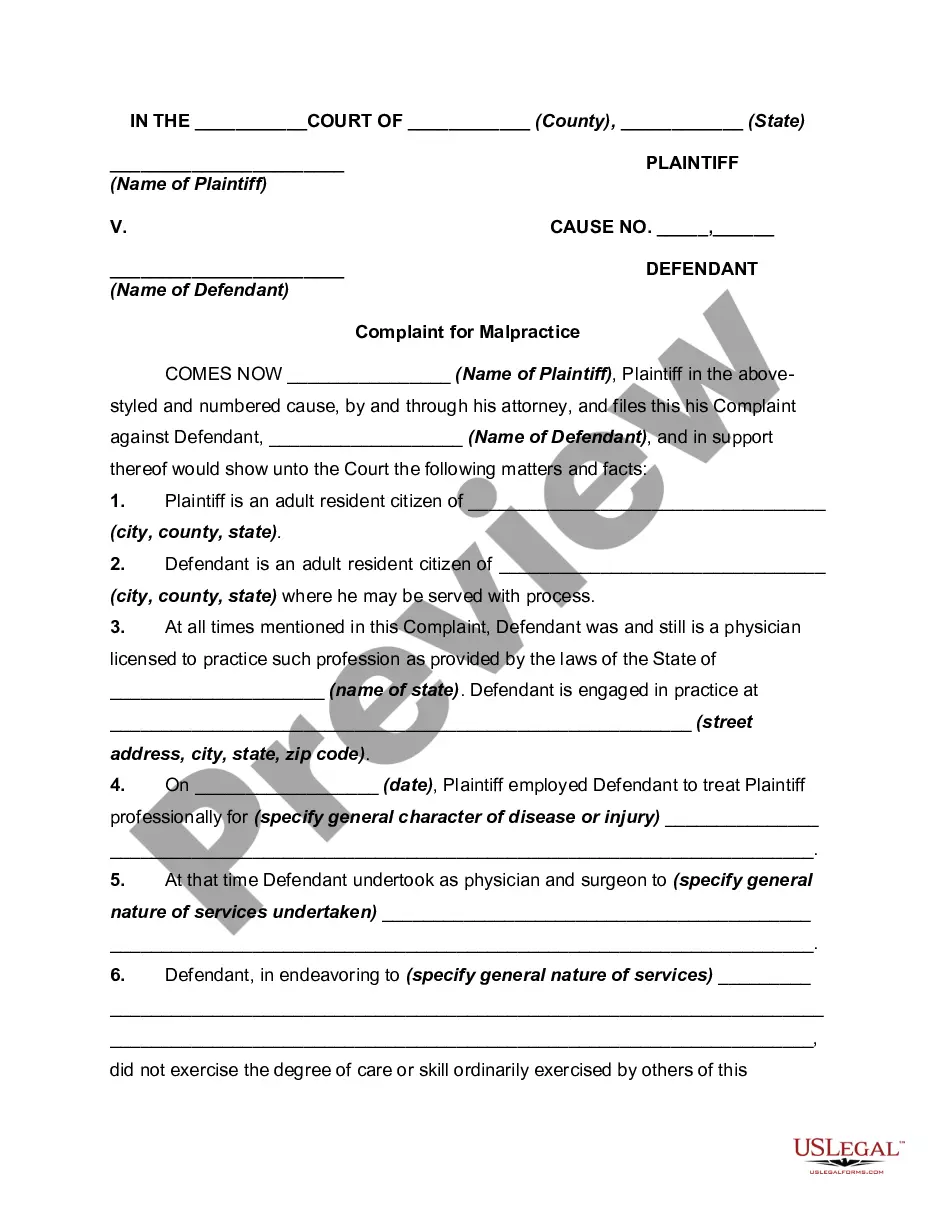
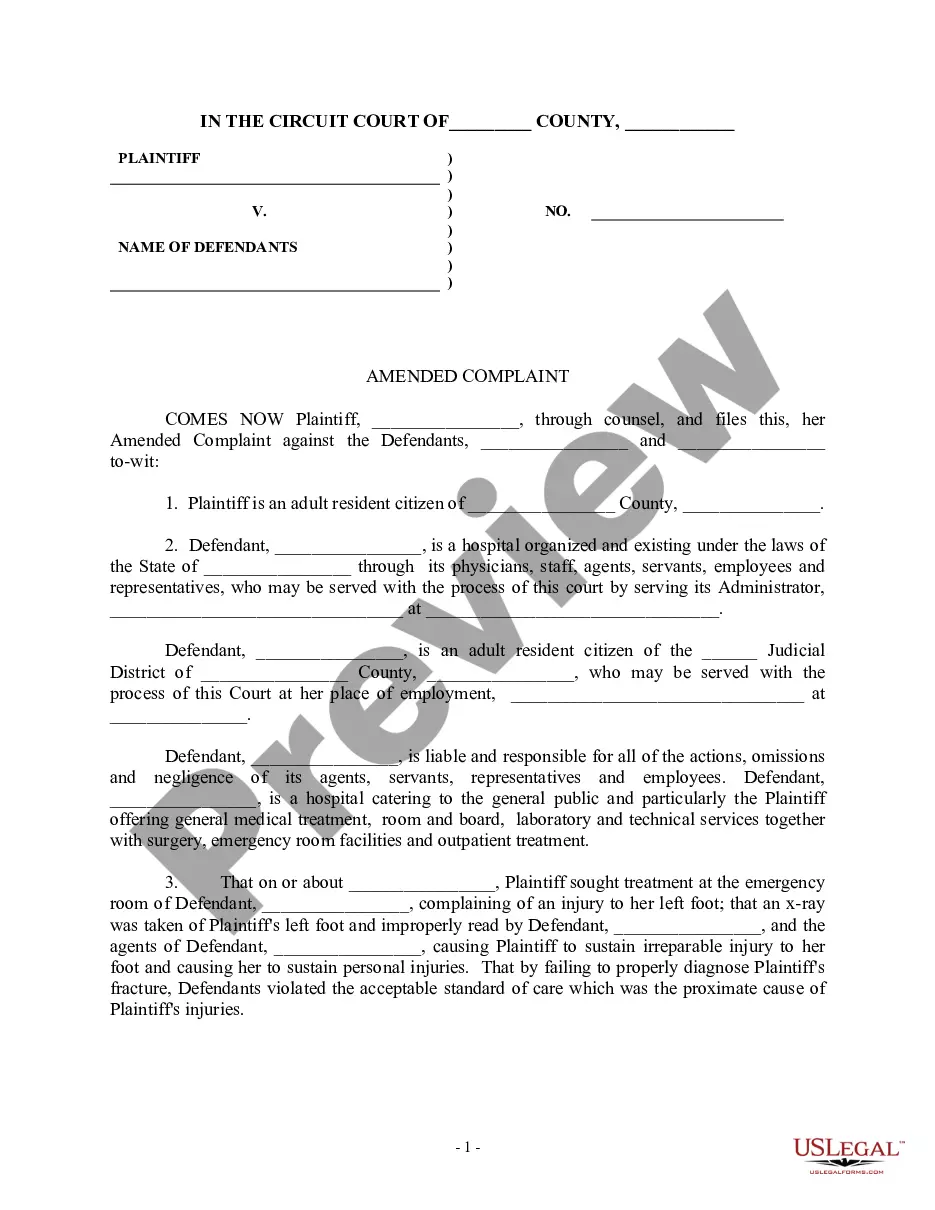
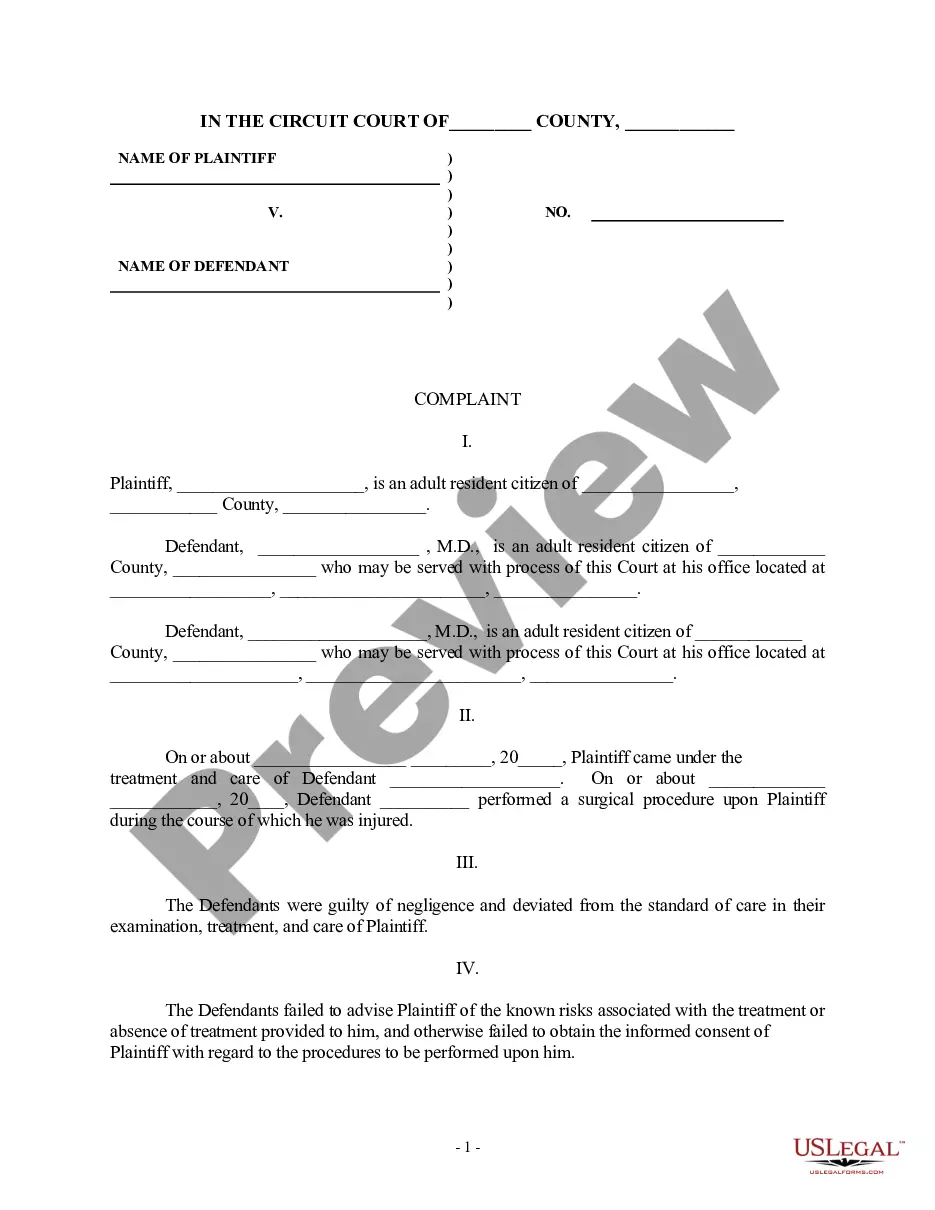
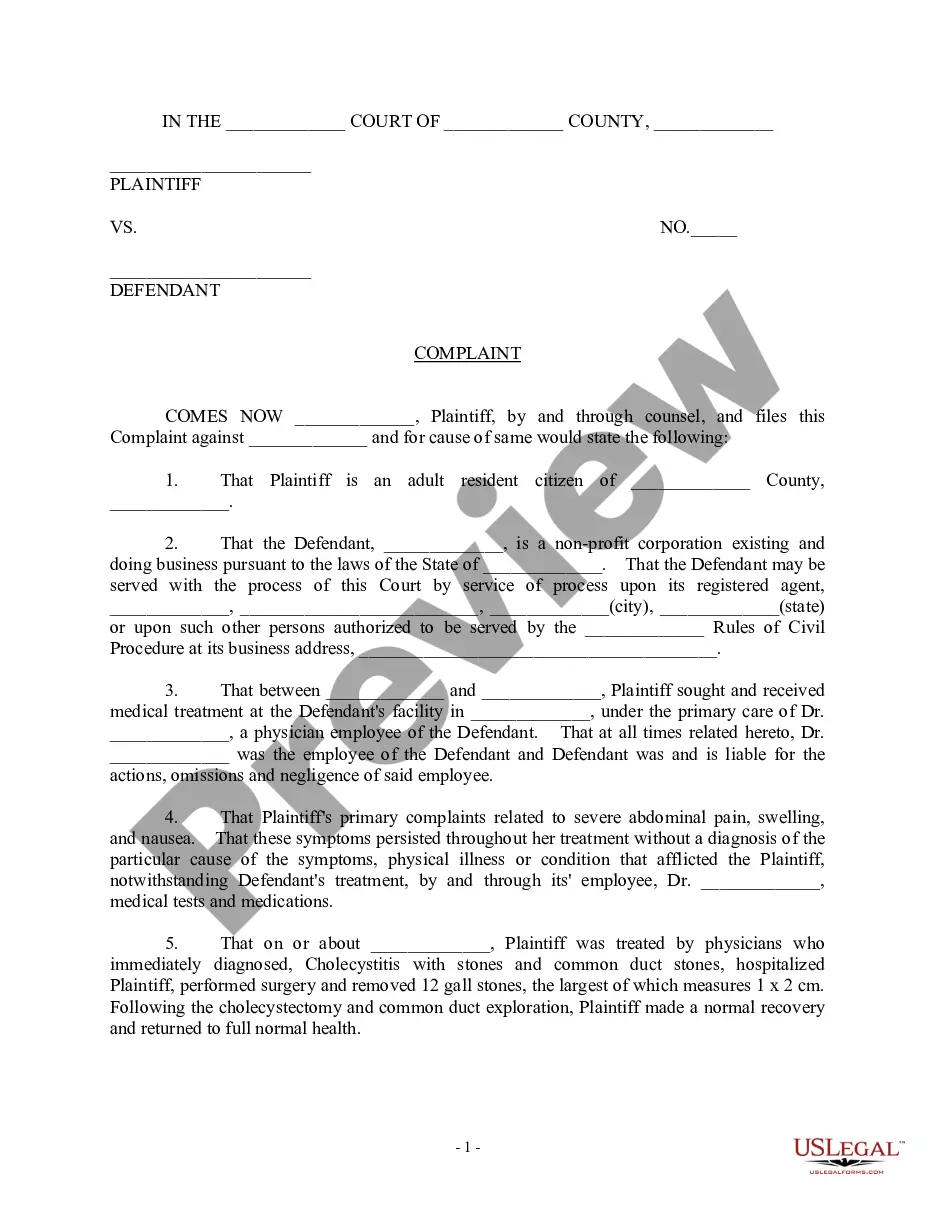
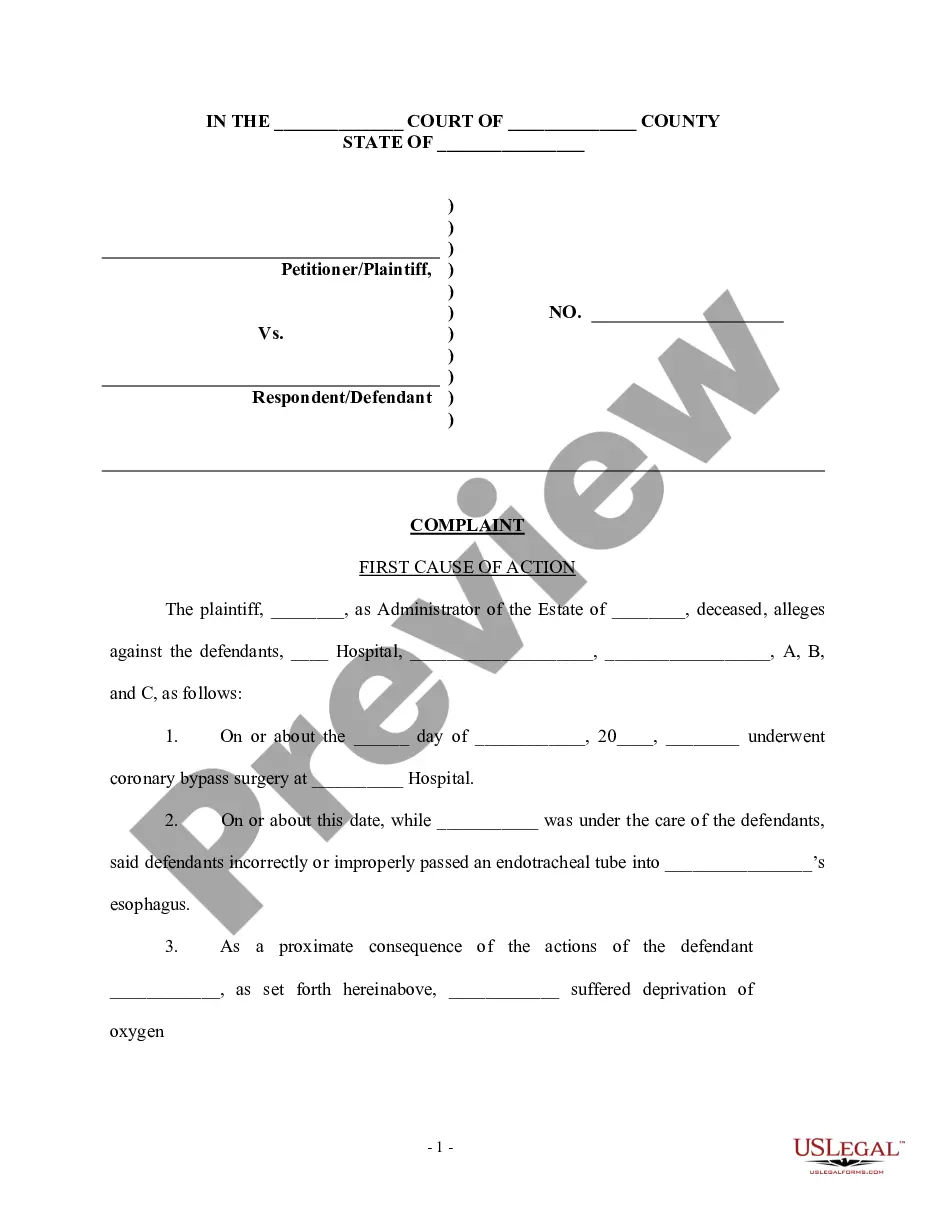
The Complaint for Malpractice is a legal document used to initiate a lawsuit against a healthcare provider for alleged negligence or failure to meet the expected standard of care. This form helps patients outline their grievances and the basis of their claim, differentiating it from other legal documents by its focus on medical-related negligence. This complaint follows the notice pleadings format set forth by the Federal Rules of Civil Procedure, ensuring that it meets the legal requirements for filing in most jurisdictions.
What’s included in this form
- Identification of the plaintiff and defendant: Names and addresses of the involved parties.
- Factual allegations: Details of the medical treatment provided and the nature of the alleged malpractice.
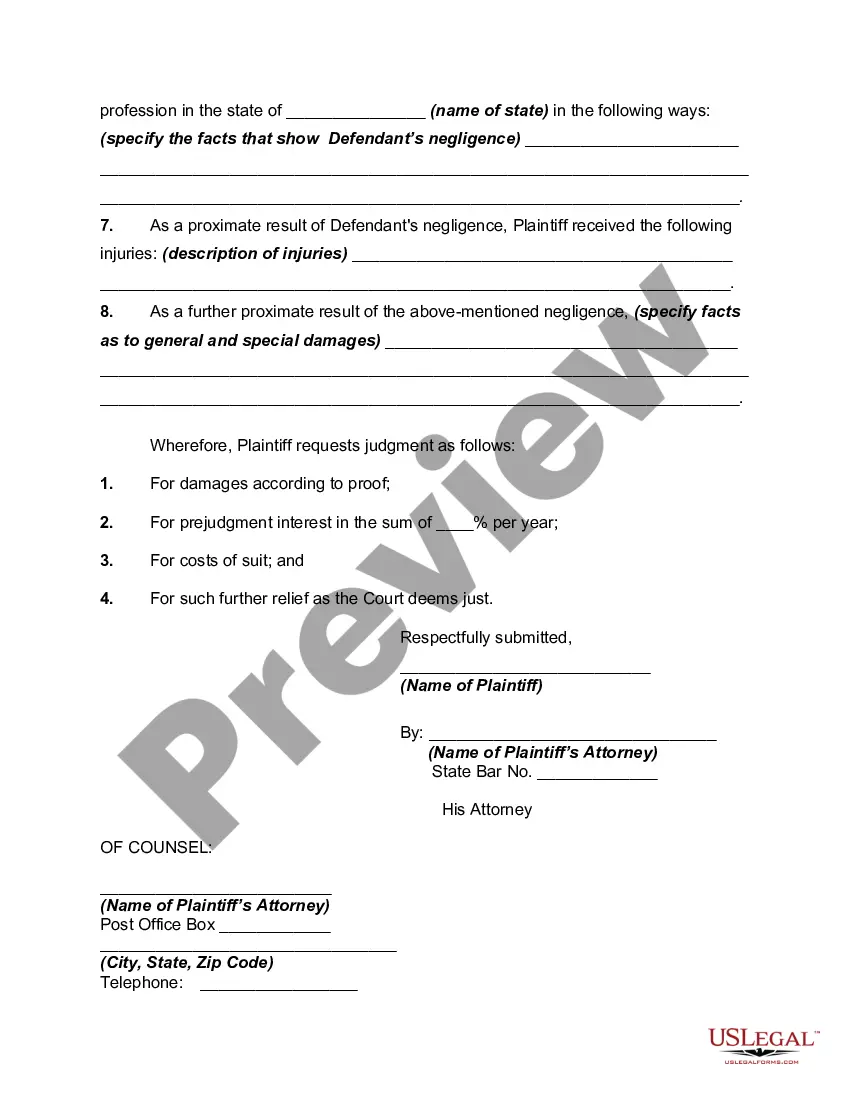
- Negligence specification: A description of how the defendant failed to meet the standard of care.
- Injury details: An outline of the injuries suffered by the plaintiff as a result of the malpractice.
- Request for relief: The specific damages sought by the plaintiff, including general and special damages.
When to use this document
This complaint should be used when a patient believes they have been harmed due to a healthcare provider's negligence. Common scenarios include improper diagnosis, surgical errors, or failure to provide adequate treatment. If you have experienced significant injury or worsening of a condition due to substandard medical care, this form is essential for filing a legal complaint to seek accountability and compensation.
Who this form is for
- Individuals who have received medical treatment and believe they were harmed due to malpractice.
- Patients who want to hold healthcare providers accountable for negligence.
- Legal representatives acting on behalf of a plaintiff in a medical malpractice case.
Steps to complete this form
- Identify the parties involved by entering the names and addresses of the plaintiff and defendant.
- Specify the date of treatment and the nature of the medical condition being treated.
- Clearly describe the actions taken by the healthcare provider that resulted in negligence.
- Detail the injuries sustained as a direct result of the alleged malpractice.
- State the damages sought, including any relevant costs or compensation.
Does this form need to be notarized?
Notarization is not commonly needed for this form. However, certain documents or local rules may make it necessary. Our notarization service, powered by Notarize, allows you to finalize it securely online anytime, day or night.
Get your form ready online
Our built-in tools help you complete, sign, share, and store your documents in one place.
Make edits, fill in missing information, and update formatting in US Legal Forms—just like you would in MS Word.
Download a copy, print it, send it by email, or mail it via USPS—whatever works best for your next step.
Sign and collect signatures with our SignNow integration. Send to multiple recipients, set reminders, and more. Go Premium to unlock E-Sign.
If this form requires notarization, complete it online through a secure video call—no need to meet a notary in person or wait for an appointment.
We protect your documents and personal data by following strict security and privacy standards.

Make edits, fill in missing information, and update formatting in US Legal Forms—just like you would in MS Word.

Download a copy, print it, send it by email, or mail it via USPS—whatever works best for your next step.

Sign and collect signatures with our SignNow integration. Send to multiple recipients, set reminders, and more. Go Premium to unlock E-Sign.

If this form requires notarization, complete it online through a secure video call—no need to meet a notary in person or wait for an appointment.

We protect your documents and personal data by following strict security and privacy standards.
Mistakes to watch out for
- Failing to include specific details of the negligent actions.
- Completing the form without a clear description of the injuries incurred.
- Neglecting to cite the correct state laws or procedural rules.
Why use this form online
- Easy access to editable templates that can be customized to fit individual circumstances.
- Immediate availability, allowing users to complete and download the form on their schedule.
- Access to forms drafted by licensed attorneys, ensuring they comply with legal standards.
Looking for another form?



Form popularity
FAQ
These requirements are known as the four Ds of medical negligence, which are: duty, deviation from duty, damages, and direct cause.
Find Another Doctor. Medical malpractice victims should make their health their first priority. Request Medical Records. Keep A Journal. Contact An Attorney. Avoid Making Contact With Other Parties.
Contact the Medical Professional Involved. Contact the Relevant Medical Licensing Board. Know How Long You Have to File a Claim. Get a Medical Assessment to Confirm Your Case Has Merit. Consider an Out-of-Court Settlement.
It is difficult and therefore expensive to demonstrate to a jury that a health care provider acted unreasonably. It is often at least as difficult and therefore at least as expensive to demonstrate that the negligence, rather than the underlying illness/injury, is what harmed the patient.
Failure to diagnose or misdiagnosis. Misreading or ignoring laboratory results. Unnecessary surgery. Surgical errors or wrong site surgery. Improper medication or dosage. Poor follow-up or aftercare. Premature discharge. Disregarding or not taking appropriate patient history.
Type your letter. Concisely review the main facts. Be polite. Write with your goal in mind. Ask for exactly what you want. Set a deadline. End the letter by stating you will promptly pursue legal remedies if the other party does not meet your demand. Make and keep copies.
In NSW, you can lodge a claim with the Health Care Complaints Commission and/or seek compensation for medical negligence. A complaint about medical negligence must be lodged in writing as required by the Act. To lodge a complaint online, or download a complaint form, visit the Health Care Complaints Commission website.
The four Ds of medical malpractice are duty, dereliction (negligence or deviation from the standard of care), damages, and direct cause. Each of these four elements must be proved to have been present, based on a preponderance of the evidence, for malpractice to be found.
Keep in mind some general considerations. Start off with a proper heading. Summarize all of the relevant facts. Go into detail about your injuries. Explain your treatments and ongoing care. Mention the intangible damages that impact your life. Include any other evidence discovered during your investigation.