Contractor or Construction Bond
Understanding this form
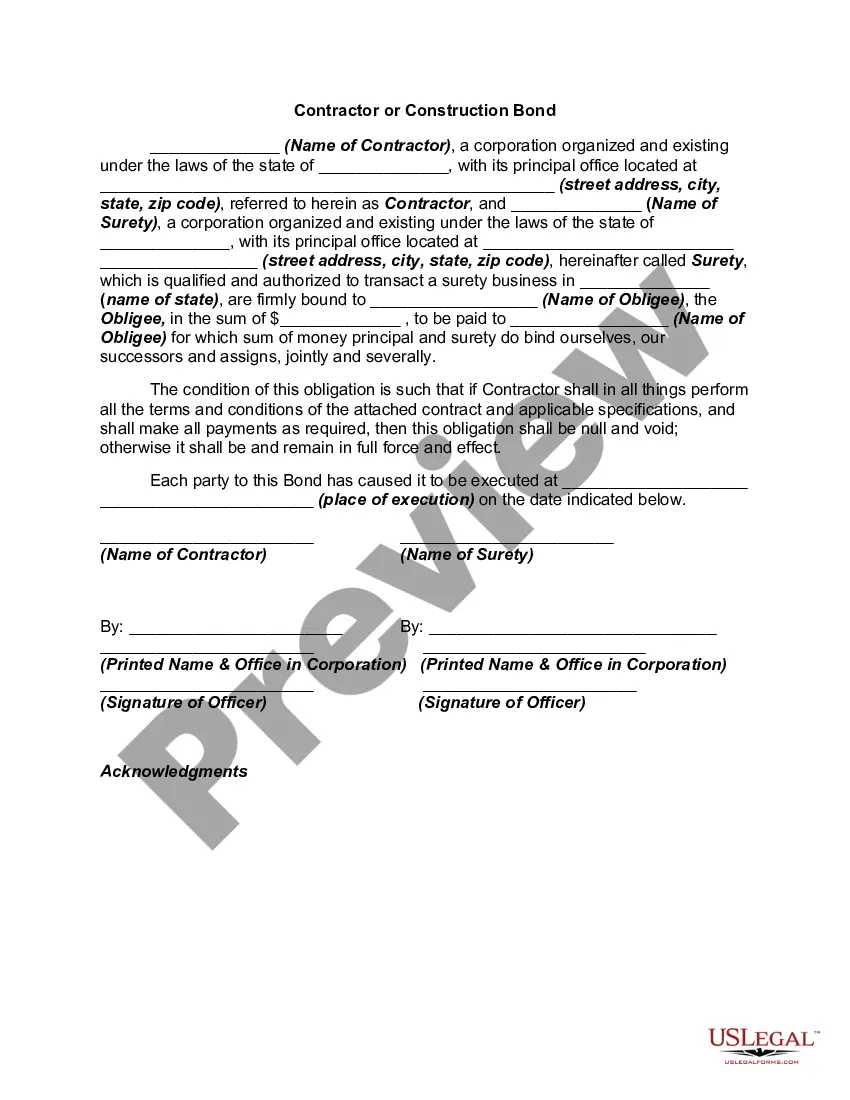
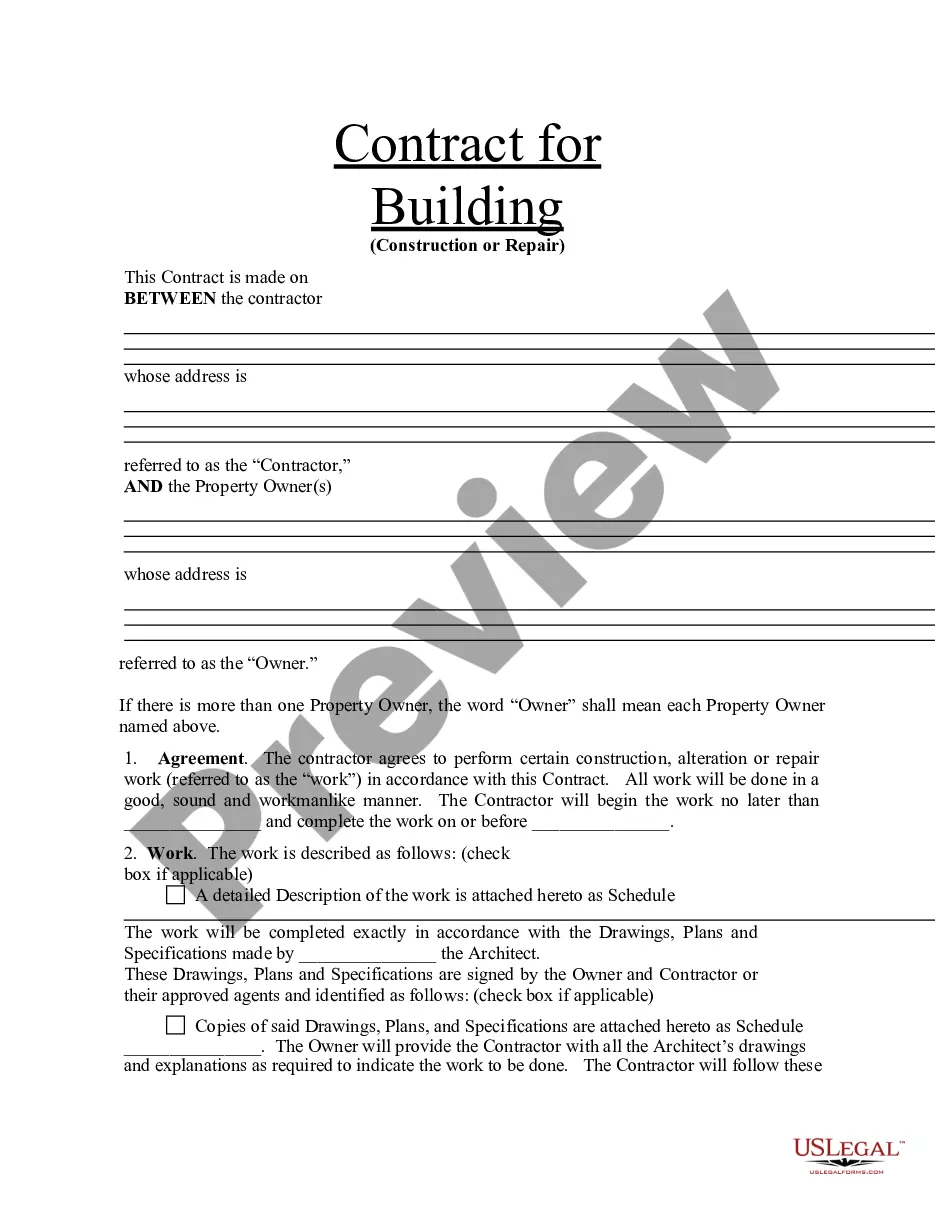
The Contractor or Construction Bond is a legal document that ensures a contractor fulfills their contractual obligations. This bond acts as a guarantee from a surety company, which agrees to be responsible for the contractor's debts and obligations in case of failure to complete the project as per the agreement. This form is essential for protecting the project owner from financial losses and ensuring that subcontractors and suppliers receive payment, thereby keeping the project free of liens.
Key components of this form
- Name and address of the contractor.
- Name and address of the surety company.
- Name and address of the obligee (project owner).
- Total bond amount to be guaranteed.
- Contract performance and payment obligations.
- Execution details including dates and signatures.


When to use this form
This form should be used when a contractor is required to obtain a bond for construction projects. It is typically needed when bidding for government contracts, large projects, or when the project owner mandates it to ensure compliance and financial security. Utilizing this bond protects the owner from potential non-performance by the contractor, ensuring completion and payment to suppliers and subcontractors.
Who needs this form
- Contractors seeking to secure a construction project.
- Project owners or obligees requiring a performance and payment bond.
- Surety companies offering bonding services to contractors.
Steps to complete this form
- Identify the contractor's name and address.
- Fill in the surety company's details including their name and address.
- Provide the project owner's name and address as the obligee.
- Enter the total bond amount that guarantees project completion.
- Review and confirm contract performance and payment obligations.
- Sign and date the form, ensuring all required parties execute the document.
Is notarization required?
This form does not typically require notarization unless specified by local law. It is important to check the specific regulations for your project or consult a legal professional to ensure compliance.
Get your form ready online
Our built-in tools help you complete, sign, share, and store your documents in one place.
Make edits, fill in missing information, and update formatting in US Legal Forms—just like you would in MS Word.
Download a copy, print it, send it by email, or mail it via USPS—whatever works best for your next step.
Sign and collect signatures with our SignNow integration. Send to multiple recipients, set reminders, and more. Go Premium to unlock E-Sign.
If this form requires notarization, complete it online through a secure video call—no need to meet a notary in person or wait for an appointment.
We protect your documents and personal data by following strict security and privacy standards.

Make edits, fill in missing information, and update formatting in US Legal Forms—just like you would in MS Word.

Download a copy, print it, send it by email, or mail it via USPS—whatever works best for your next step.

Sign and collect signatures with our SignNow integration. Send to multiple recipients, set reminders, and more. Go Premium to unlock E-Sign.

If this form requires notarization, complete it online through a secure video call—no need to meet a notary in person or wait for an appointment.

We protect your documents and personal data by following strict security and privacy standards.
Common mistakes
- Forgetting to include the correct total bond amount.
- Leaving out necessary signatures from the contractor or surety.
- Failing to review eligibility requirements for the specific project.
- Not keeping a copy of the executed bond for record-keeping.
Advantages of online completion
- Convenience of downloading and completing the form at your own pace.
- Editability allows for easy updates or corrections.
- Access to forms drafted by licensed attorneys ensures reliability.
Legal use & context
- This bond is enforceable once properly executed by all parties involved.
- Failure to comply with the contract terms or payment obligations can lead to claims against the bond.
- Consult with a legal professional for guidance specific to your jurisdiction and circumstances.
Summary of main points
- A contractor or construction bond ensures project completion and payment to subcontractors.
- Proper execution of this form protects project owners from financial loss.
- Review state-specific guidelines before completing the bond.
Looking for another form?





Form popularity
FAQ
Step 1: Verify which surety bond form you need. Step 2: Apply for a surety bond. Step 3: Get a surety bond quote. Step 4: Pay for your surety bond. Step 5: Verify the information on your bond. Step 6: File you surety bond with the obligee.
The surety company will give the Principal (the person who is bonded) a chance to satisfy the claim. If the Principal fails to satisfy the claim, the surety company will step in and satisfy the claim. The surety company will then go to the Principal for repayment of satisfying that claim.
When a contractor is bonded, this means he has purchased a surety bond.The bond provides a certain amount of liability protection, and if the contractor fails to complete a job as required or contracted, the bond can provide compensation to a property owner.
When a contractor is bonded, this means he has purchased a surety bond.The bond provides a certain amount of liability protection, and if the contractor fails to complete a job as required or contracted, the bond can provide compensation to a property owner.
Upon getting licensed in many states, contractors need to obtain a license bond from a surety bond company against a premium. This bond is an agreement among the contractor, the state licensing agency or board and the surety company.These bonds are often required on specific federal or state projects.
If a contractor is "bonded", it means that you are financially protected if the contractor doesn't complete a job for you, or the job is poorly executed. Insurance, on the other hand, covers any liability claims that may arise during a job.
Requirements for the Contractor's Bond: The bond must be written by a surety company licensed through the California Department of Insurance. The bond must be in the amount of $15,000.
How much does a contractor license bond cost in California? The bond costs between $69 and $465 depending on the personal credit, license history, and classification of the contractor.
Surety bonds financially compensate the client if the contractor does not fulfill his contractual obligation. Most federal, state and municipal contracts require independent contractors to obtain a bond as part of a project agreement. Some states request a bond as part of the professional licensing process.