Sample Letter to Municipality regarding Cable Television Consumer Protection and Competition Act of 1992
About this form
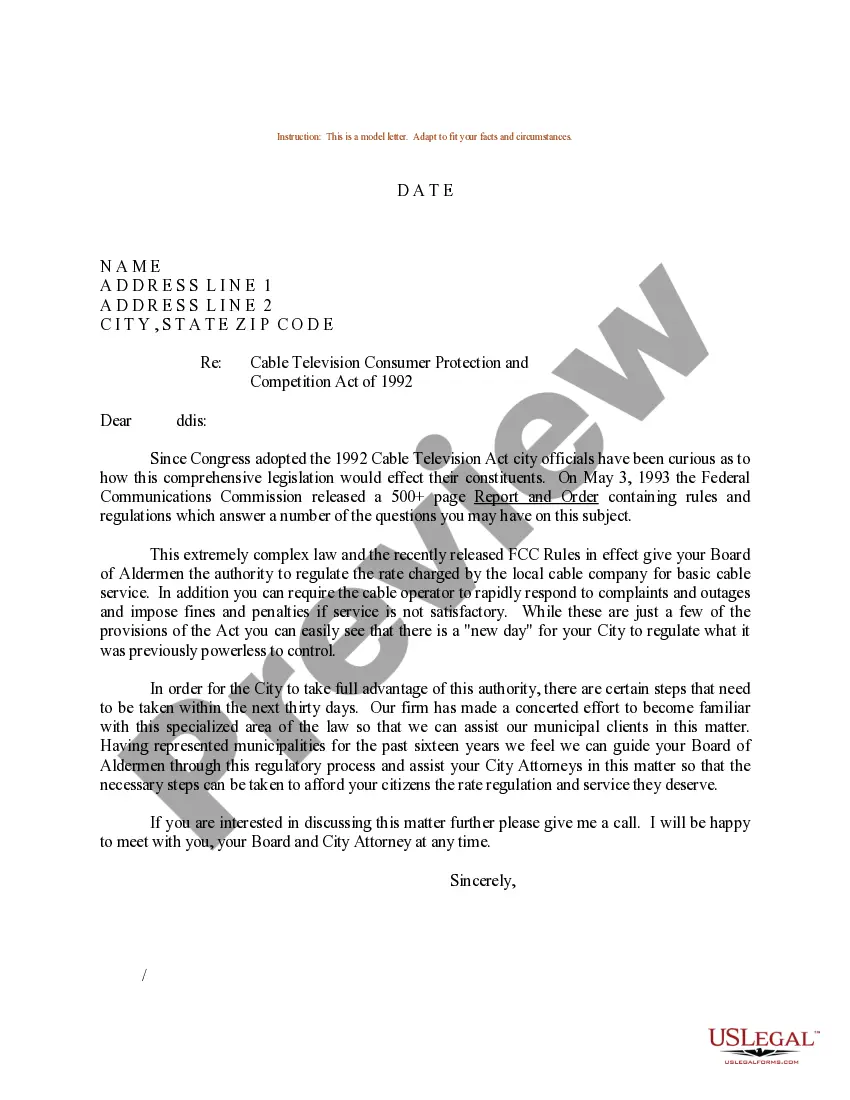
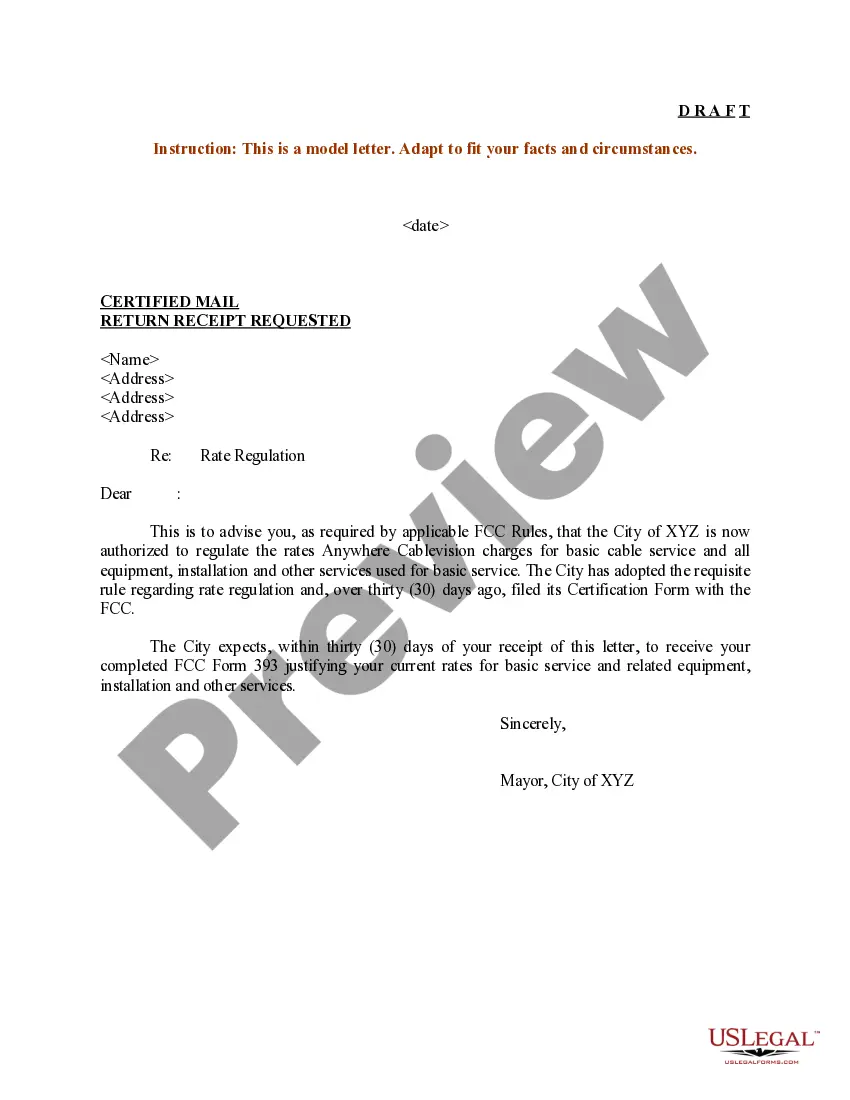
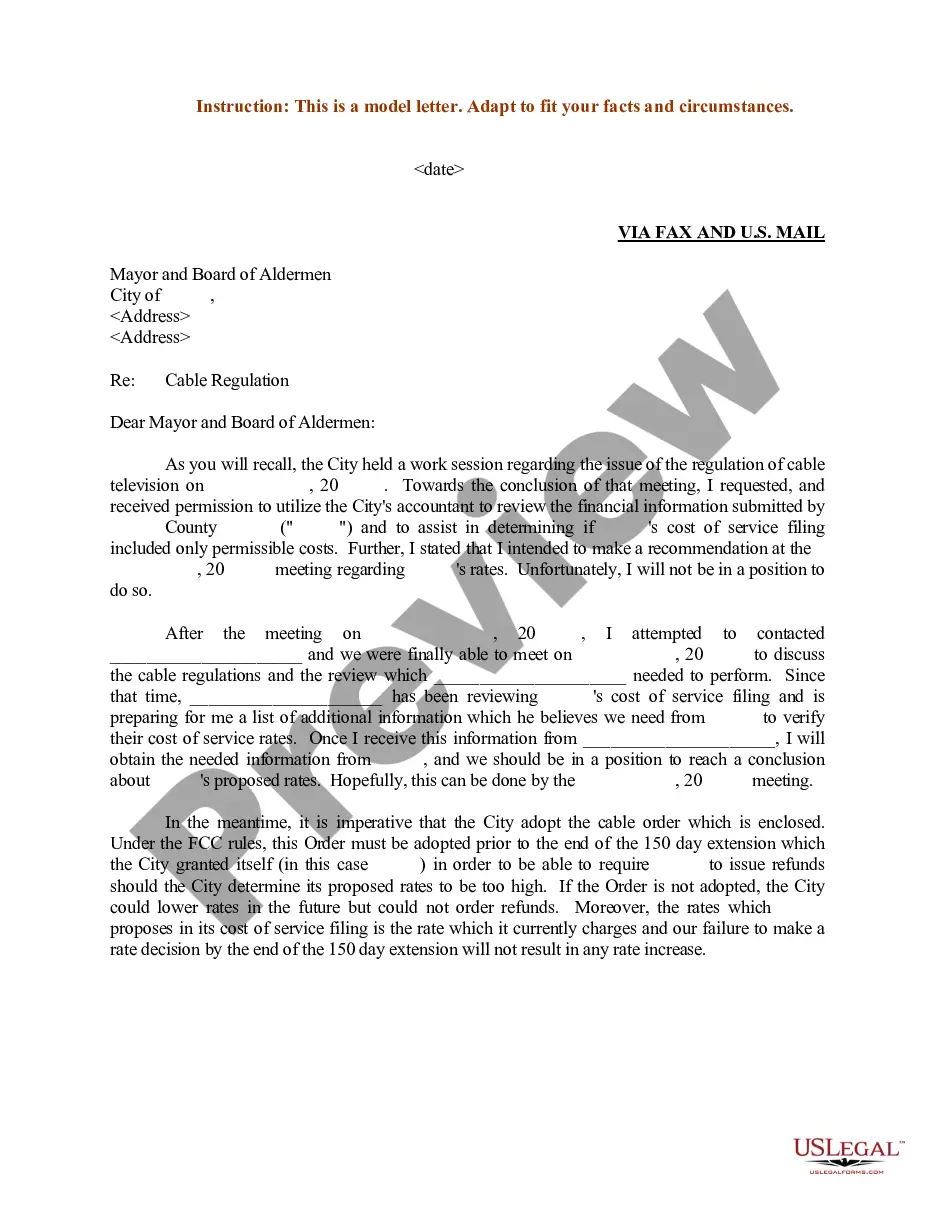
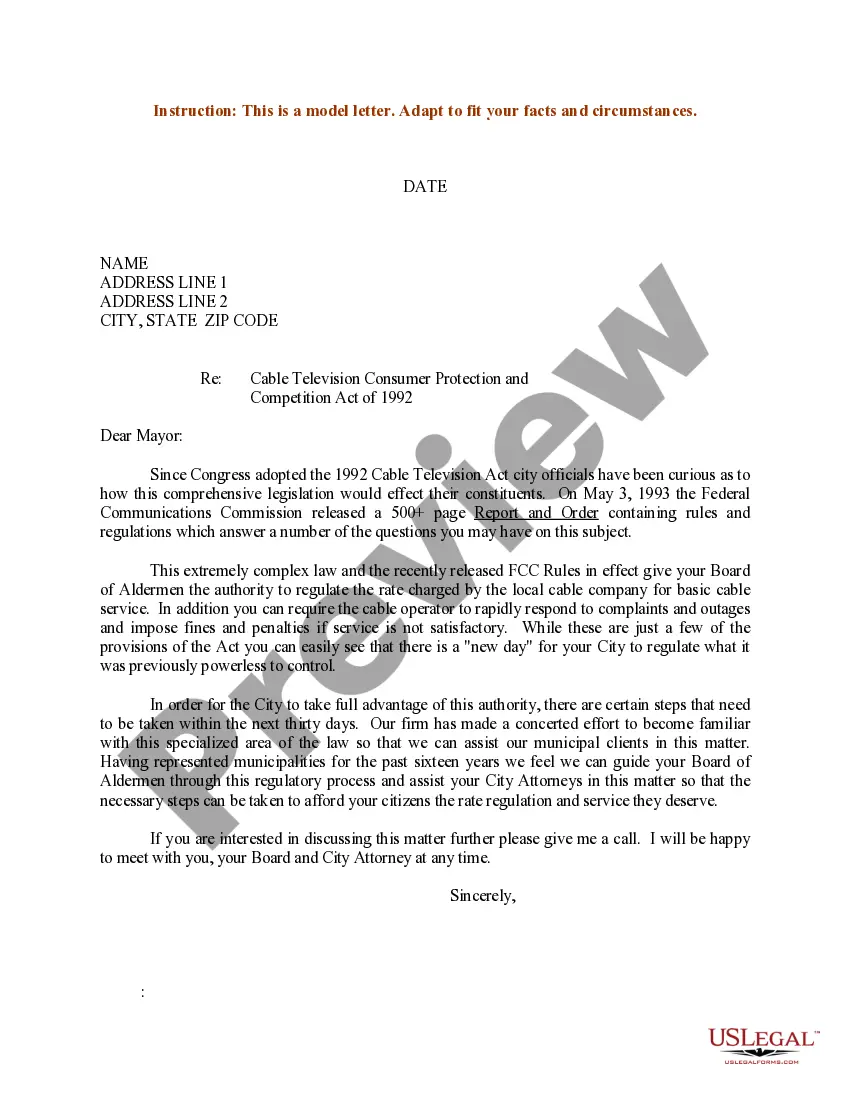
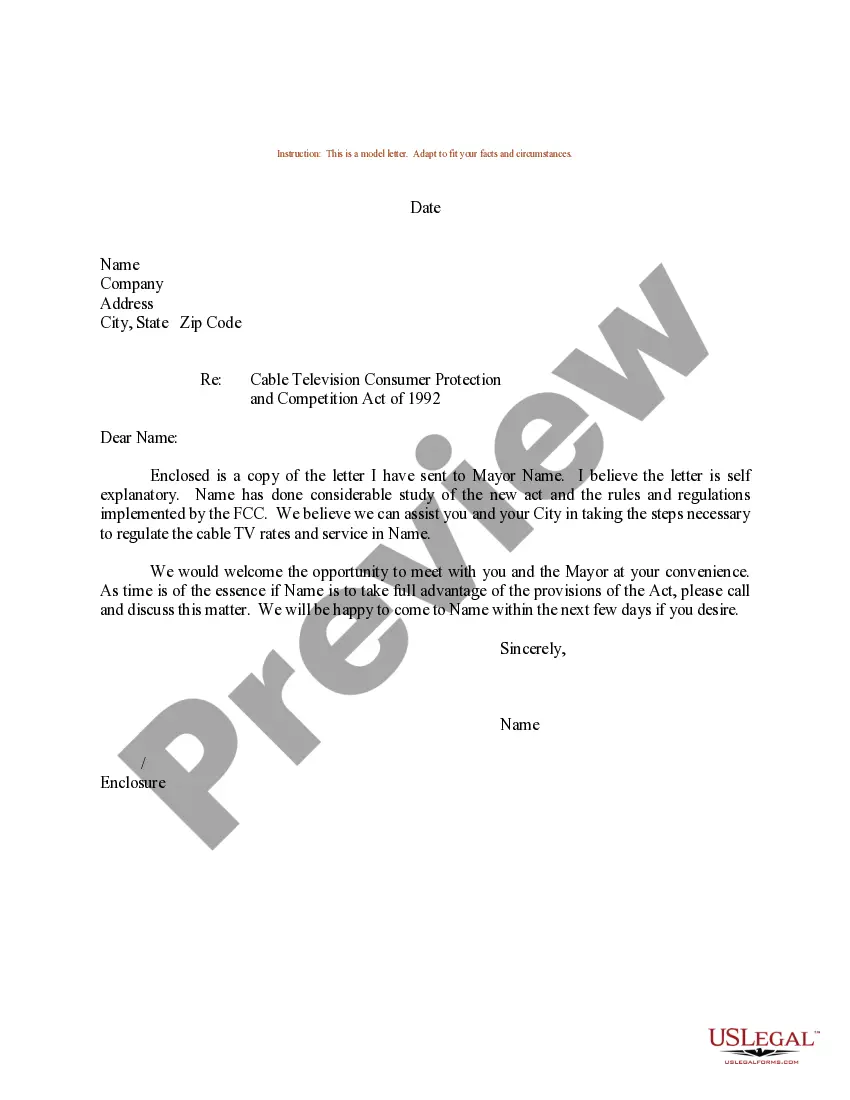
This Sample Letter to Municipality regarding the Cable Television Consumer Protection and Competition Act of 1992 is a template designed for municipal officials to communicate effectively with their local government bodies. It outlines the authority granted to municipalities under this federal law to regulate cable services, including rate adjustments and complaint resolutions. Unlike standard complaint letters, this form specifically addresses the legal framework governing cable television, making it a unique resource for municipal communication efforts.
What’s included in this form
- Date: The date the letter is written.
- Sender's name and address: The contact information of the person sending the letter.
- Subject line: Clearly states the focus on the Cable Television Consumer Protection and Competition Act of 1992.
- Body of the letter: Provides a summary of the law and its implications for municipal regulation of cable services.
- Closing remarks: An invitation to discuss further steps with municipal officials.
When this form is needed
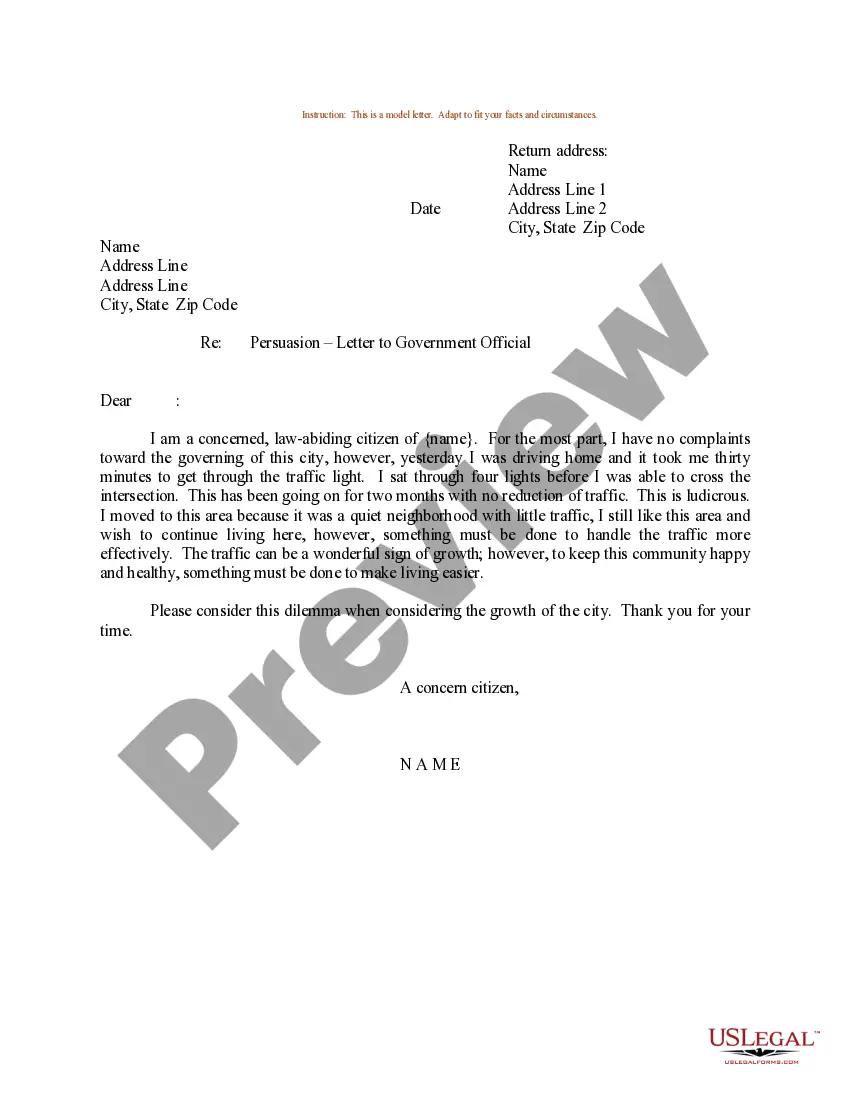
This form should be used when a municipality seeks to assert its regulatory authority over local cable services in compliance with the Cable Television Consumer Protection and Competition Act of 1992. It is particularly useful in situations where local officials need to inform the Board of Aldermen of their new responsibilities, seek guidance, or initiate discussions on implementing these regulations effectively. It is also appropriate for addressing service complaints or poor cable service to promote consumer rights.
Who should use this form
- Municipal officials responsible for managing local cable service regulations.
- Members of the Board of Aldermen seeking to address cable-related issues.
- City attorneys involved in drafting and implementing municipal regulations related to cable services.
- Citizens advocating for better cable services through their local government.
How to prepare this document
- Enter the date at the top of the letter.
- Fill in your name and address at the designated fields.
- Clearly state the subject regarding the Cable Television Consumer Protection and Competition Act of 1992.
- Summarize the intent of the letter, highlighting the need for municipal regulation as per the Act.
- Conclude with your invitation for further discussion, including your contact information.
Does this document require notarization?
This form does not typically require notarization unless specified by local law. Users should verify any local requirements that may affect the form's validity.
Get your form ready online
Our built-in tools help you complete, sign, share, and store your documents in one place.
Make edits, fill in missing information, and update formatting in US Legal Forms—just like you would in MS Word.
Download a copy, print it, send it by email, or mail it via USPS—whatever works best for your next step.
Sign and collect signatures with our SignNow integration. Send to multiple recipients, set reminders, and more. Go Premium to unlock E-Sign.
If this form requires notarization, complete it online through a secure video call—no need to meet a notary in person or wait for an appointment.
We protect your documents and personal data by following strict security and privacy standards.

Make edits, fill in missing information, and update formatting in US Legal Forms—just like you would in MS Word.

Download a copy, print it, send it by email, or mail it via USPS—whatever works best for your next step.

Sign and collect signatures with our SignNow integration. Send to multiple recipients, set reminders, and more. Go Premium to unlock E-Sign.

If this form requires notarization, complete it online through a secure video call—no need to meet a notary in person or wait for an appointment.

We protect your documents and personal data by following strict security and privacy standards.
Common mistakes
- Failing to include the date, which is essential for legal documentation.
- Omitting the recipientâs information, leading to confusion about the intended audience.
- Using vague language instead of clearly specifying the municipal authority and regulatory context.
- Neglecting to provide contact details for follow-up communication.
Benefits of using this form online
- Convenience: Downloadable format allows for easy access and use at any time.
- Editability: The Word format enables users to customize content as needed.
- Reliability: This form is drafted by licensed attorneys, ensuring compliance with legal standards.
- Time-saving: Quickly generate a professional letter without extensive legal expertise.
Legal use & context
- This letter serves as an official communication that can enhance a municipality's regulatory power.
- Proper use of this form can help protect consumer rights and ensure compliance from local cable operators.
Summary of main points
- The form enables municipalities to assert their regulatory authority over local cable services.
- Timely communication is essential for effective enforcement of consumer protection under the act.
- It is crucial to correctly fill out all sections of the letter to ensure clarity and professionalism.
Looking for another form?



Form popularity
FAQ
Most rates charged by cable television companies are not regulated by the FCC. However, there is no FCC requirement for such regulation and very few LFAs continue to regulate cable rates.
The Federal Communications Commission (FCC) regulates cable and satellite services to protect consumers. At the FCC Consumer Complaint Center, you can either file a complaint or get information about cable and satellite TV consumer issues.
The first section of the Act originally read as follows: "For the purpose of regulating interstate and foreign commerce in communication by wire and radio so as to make available, so far as possible to all the people of the United States a rapid, efficient, Nation-wide, and world-wide wire and radio communication
The 1984 cable act, limits these people from controlling cable programing. the charges cable companies pay to franchising authorities for the right to use public rights-of-way. 1984 act sets a max of 5% of a system's gross annual revenues.
Q: Does the FCC regulate all cable television rates? A: No. This authority is shared between the FCC and your local franchising authority, which is the local city, county, or other government organization that regulates your cable television service.
Rates for basic cable service were regulated by local franchising authorities.Pay-per-channel and pay-per-program services are not regulated. The 1996 Act modified the regulation of cable programming services and the rate complaint process established under the 1992 Cable Act.
About the bill VA) was an act of Congress passed on October 30, 1984 to promote competition and deregulate the cable television industry. The act established a national policy for the regulation of cable television communications by federal, state, and local authorities.
An Act to regulate the operation of cable television networks in the country and for matters connected therewith or incidental thereto. BE it enacted by Parliament in the Forty-sixth Year of the Republic of India as follows: CHAPTER I. PRELIMINARY.