Eviction Notice for Spouse
Understanding this form
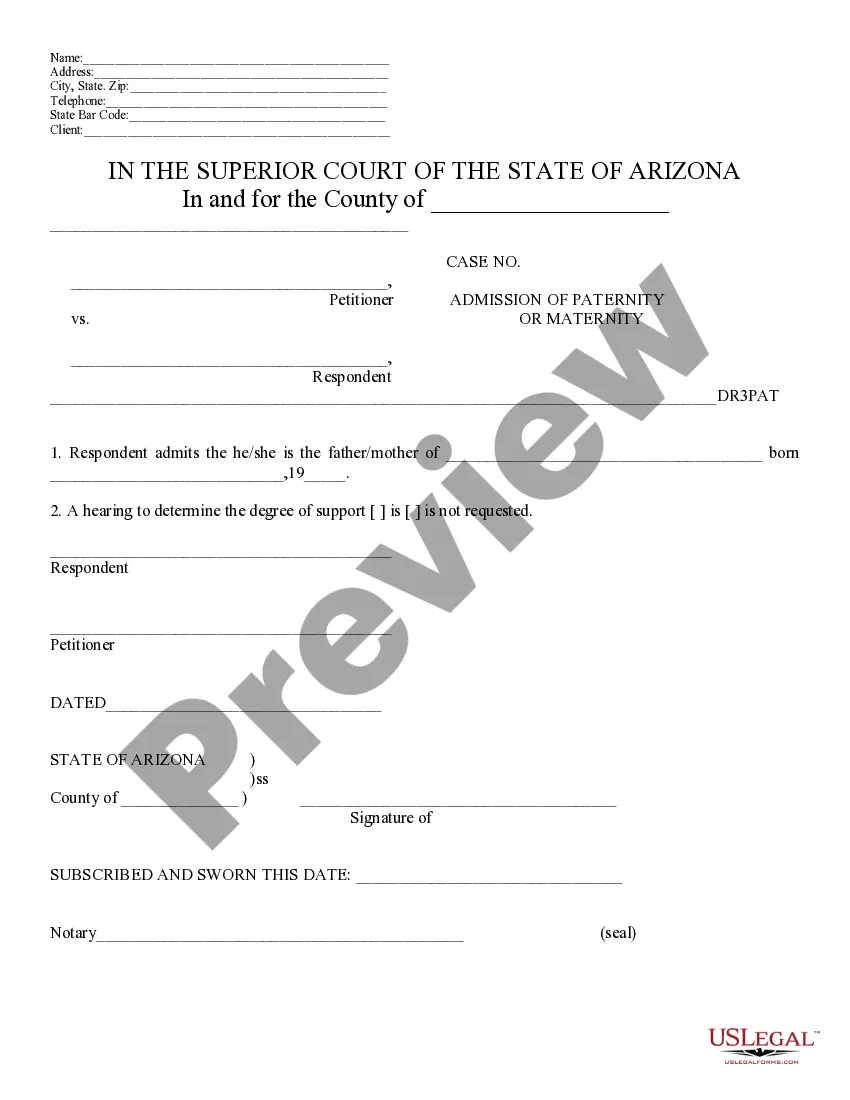
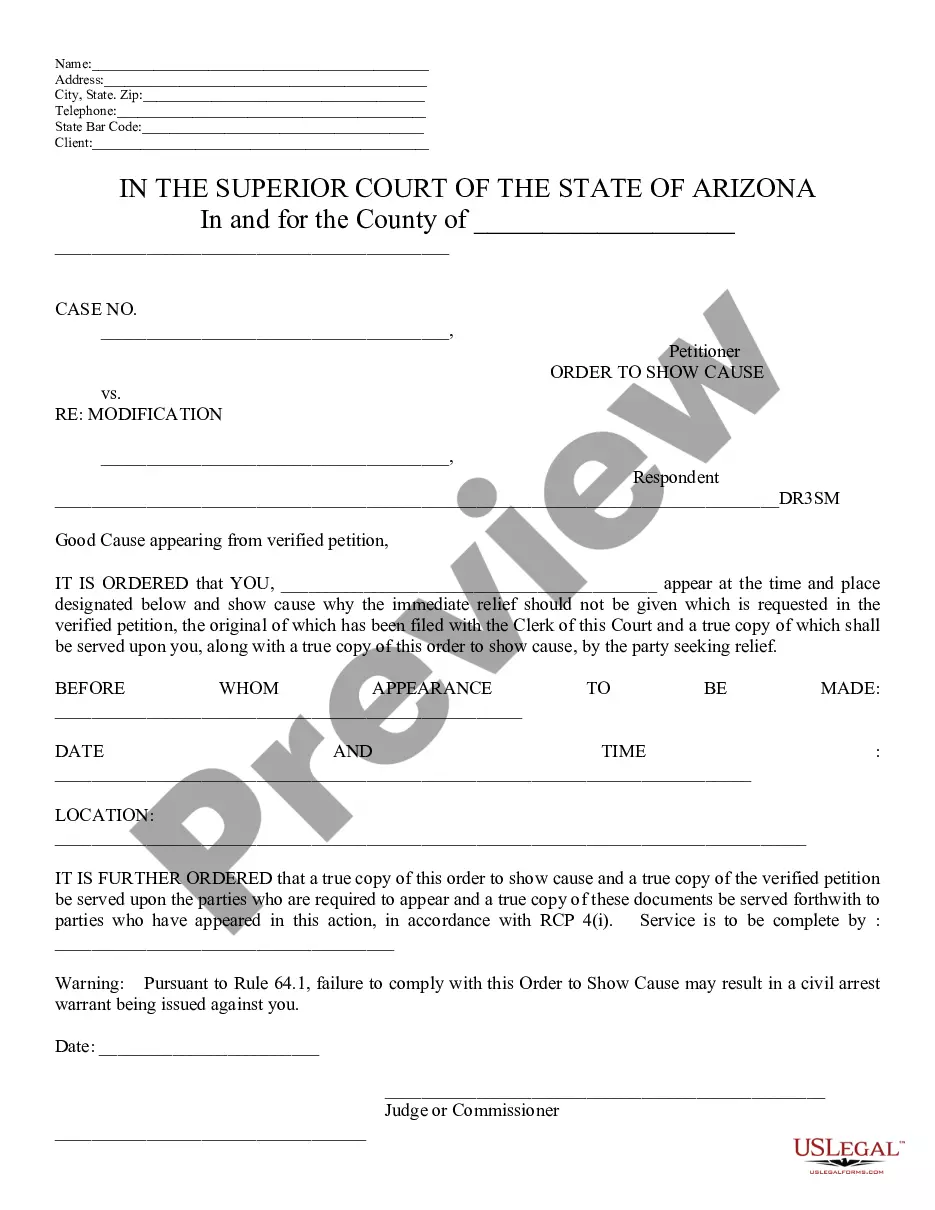
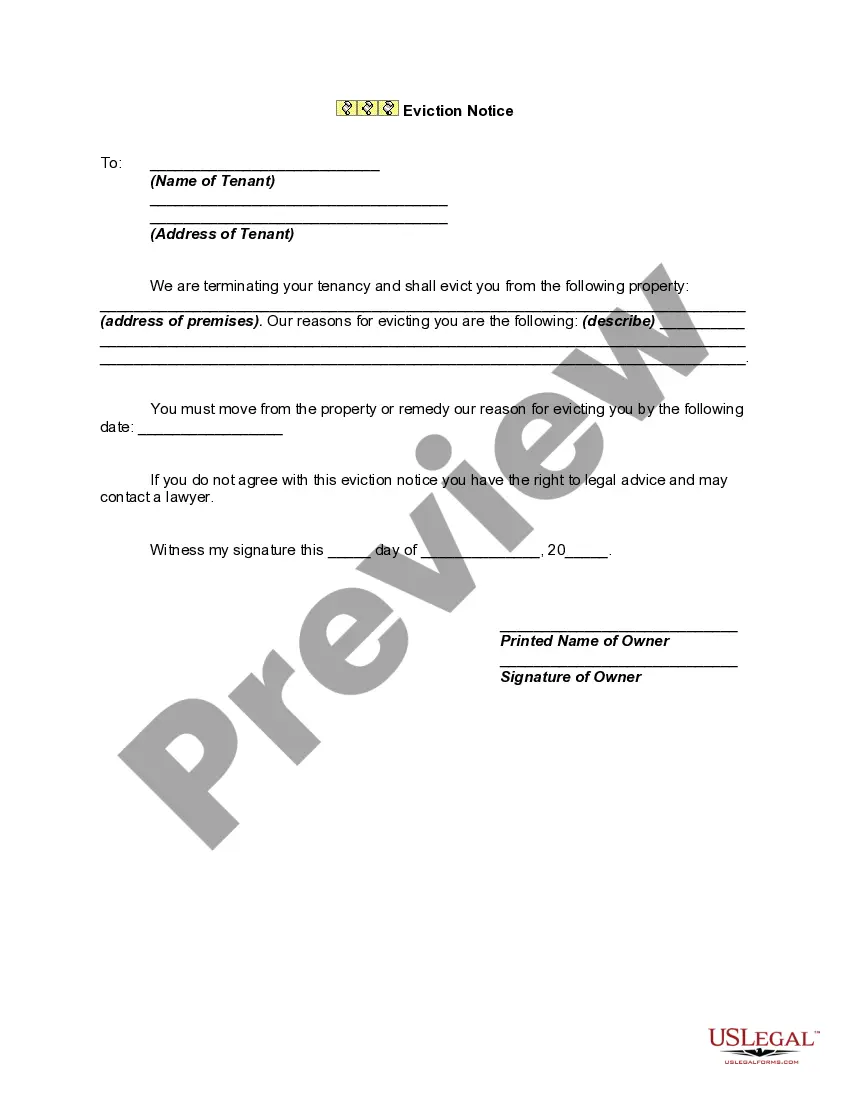
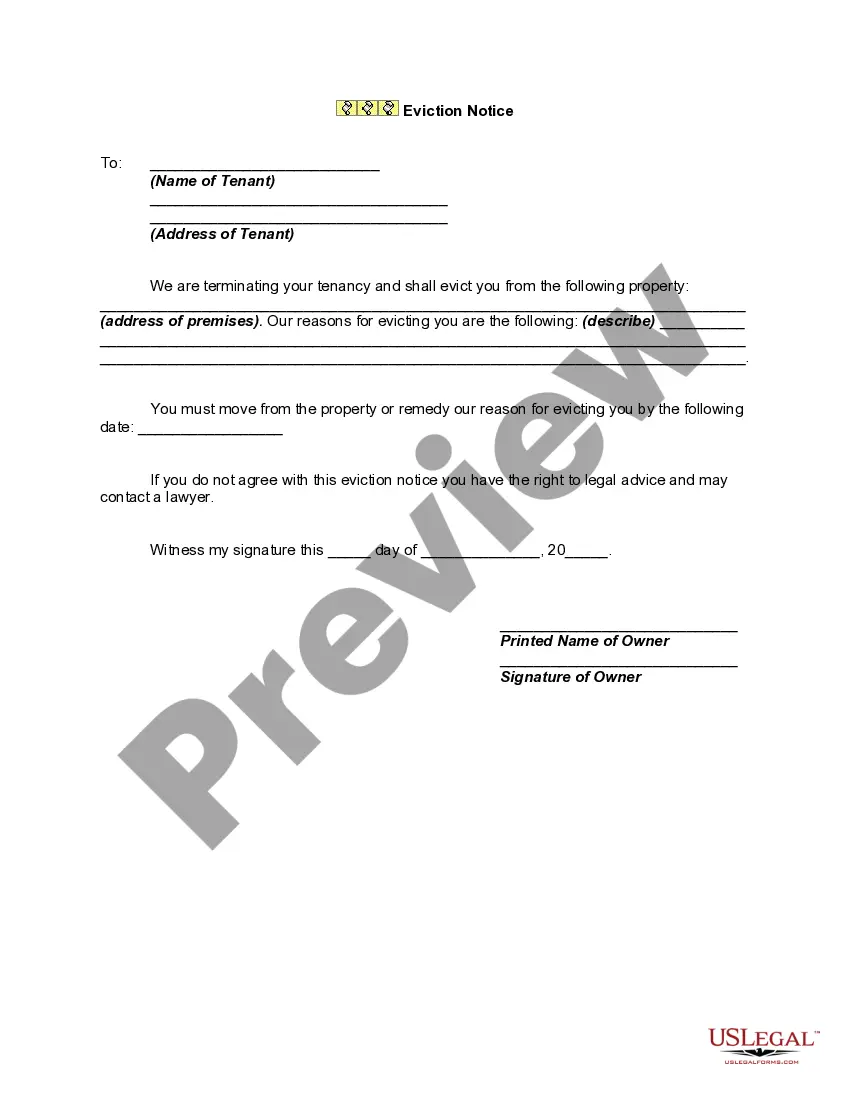
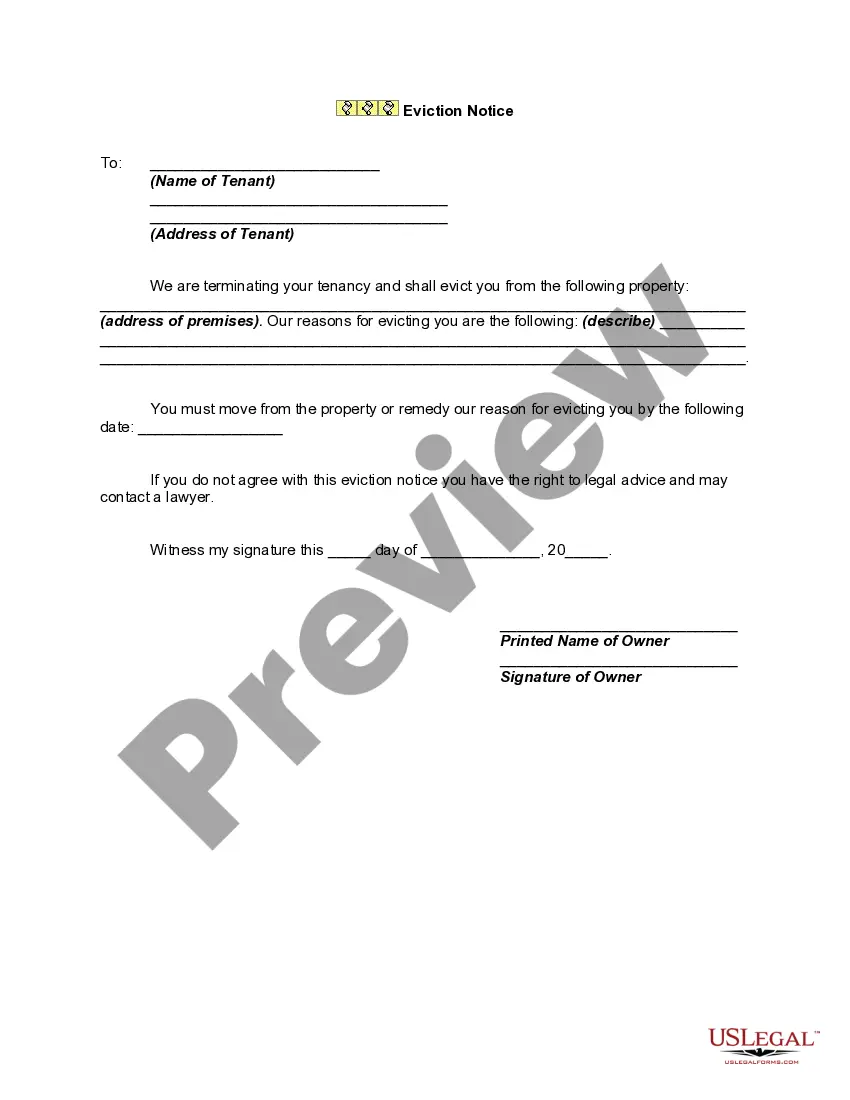
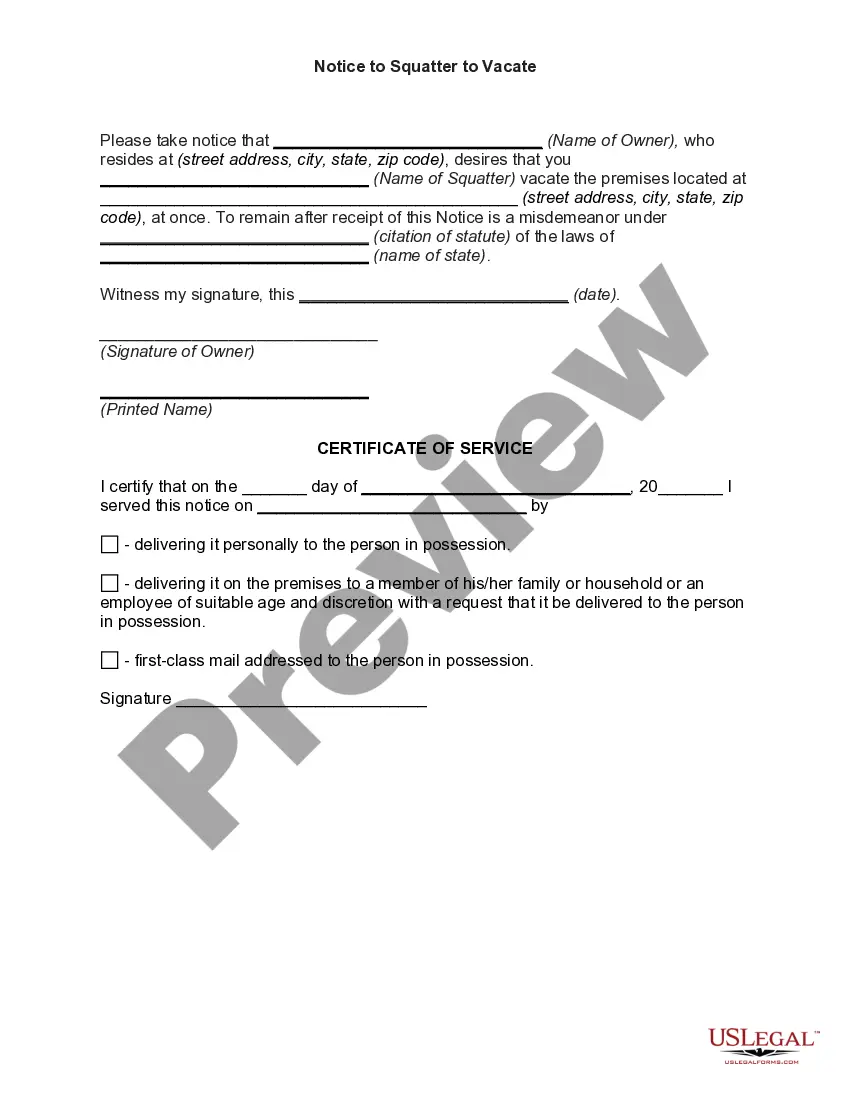
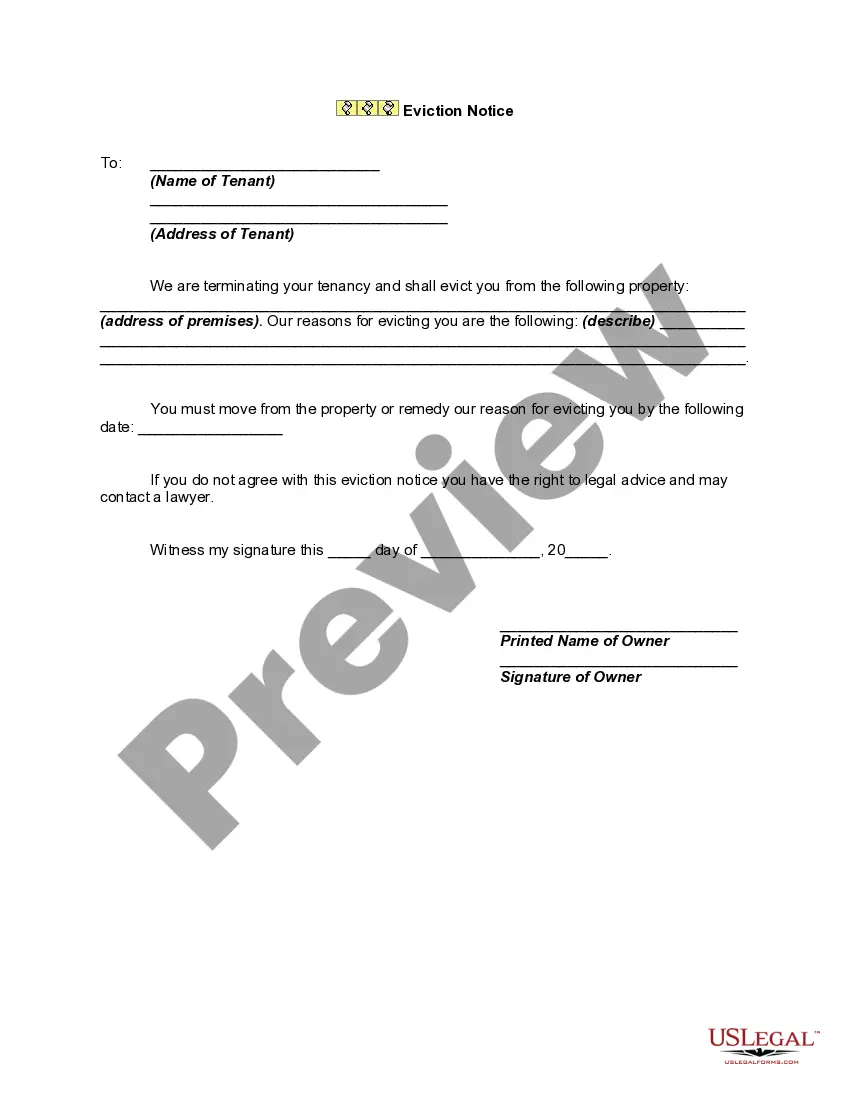
The Eviction Notice for Spouse is a legal document used to inform a spouse that their tenancy is being terminated. This form serves as a formal notification outlining the reason for the eviction and the date by which the tenant must vacate the property. Unlike other eviction notices, this one is specifically tailored for situations involving spouses, highlighting the unique legal considerations that may apply in these cases.
Key parts of this document
- Name and address of the tenant being evicted.
- Address of the property from which the tenant is being evicted.
- Specific reasons for the eviction.
- Deadline by which the tenant must vacate or remedy the situation.
- Signature and printed name of the property owner.

When this form is needed
This form should be used when a spouse is being evicted from a shared property. It is applicable in situations where there are disagreements regarding tenancy, such as non-payment of rent, violation of lease terms, or the desire of one spouse to end the shared living arrangement. Using the Eviction Notice provides a clear and formal approach to the situation, ensuring all legal steps are properly followed.
Who this form is for
- Property owners who are married to their tenant.
- Individuals seeking to terminate a tenancy due to discord with a spouse.
- Homeowners who need to document the eviction process legally.
Steps to complete this form
- Identify and write the name and address of the tenant.
- Specify the address of the property from which the tenant is being evicted.
- Clearly describe the reasons for the eviction.
- Enter the date by which the tenant must vacate or resolve the issue.
- Sign the form and print your name clearly as the owner.
Does this form need to be notarized?
This form does not typically require notarization unless specified by local law. It's advisable to check the laws in your jurisdiction to ensure compliance and validity of the eviction notice.
Get your form ready online
Our built-in tools help you complete, sign, share, and store your documents in one place.
Make edits, fill in missing information, and update formatting in US Legal Forms—just like you would in MS Word.
Download a copy, print it, send it by email, or mail it via USPS—whatever works best for your next step.
Sign and collect signatures with our SignNow integration. Send to multiple recipients, set reminders, and more. Go Premium to unlock E-Sign.
If this form requires notarization, complete it online through a secure video call—no need to meet a notary in person or wait for an appointment.
We protect your documents and personal data by following strict security and privacy standards.

Make edits, fill in missing information, and update formatting in US Legal Forms—just like you would in MS Word.

Download a copy, print it, send it by email, or mail it via USPS—whatever works best for your next step.

Sign and collect signatures with our SignNow integration. Send to multiple recipients, set reminders, and more. Go Premium to unlock E-Sign.

If this form requires notarization, complete it online through a secure video call—no need to meet a notary in person or wait for an appointment.

We protect your documents and personal data by following strict security and privacy standards.
Common mistakes
- Failing to specify a reason for the eviction.
- Not including the proper date by which the tenant must leave.
- Using incorrect addresses for the tenant or property.
- Not having the form signed by the owner.
Advantages of online completion
- Convenient access to a legally-compliant eviction notice template.
- Easy to customize for your specific situation and local requirements.
- Reliable format that meets legal standards.
Legal use & context
- This notice serves as a legal requirement in eviction proceedings.
- Failure to use the proper form could result in legal disputes.
- Ensure that the reasons for eviction align with local laws to maintain enforceability.
Key takeaways
- The Eviction Notice for Spouse formally communicates eviction intentions.
- Accurate completion is crucial to ensure legal validity.
- Local laws should always be consulted to tailor the form appropriately.
Looking for another form?




Form popularity
FAQ
You cannot simply force your wife out of your marital home. Even if her name was not on the lease, she has a right to reside there. You would have to legally evict her, and you cannot evict your Wife.
No, you cannot put him out because you bought the house. The house is the marital residence, and you both have a right to be there until a court says otherwise. To get him out, you will have to file a motion with the court for exclusive use.
Can a wife kick husband out of the house? In the USA, you can kick anyone out of the house and they can break back in if it is their LEGAL residence - and you can't do crap about it. Sure, you can call the cops. The first thing they will ask is if the person is LEGALLY entitled to live there.
Obtain a Court Order: File an order with the court for eviction. Sometimes this is known as an Order for Temporary Relief. File an Exclusive Use Motion: As the name suggests, this gives the filing spouse exclusive rights to the home.
In California, it is possible to legally force your spouse to move out of your home and stay away for a certain length of time. One can only get such a court order, however, if he or she shows assault or threats of assault in an emergency or the potential for physical or emotional harm in a non-emergency.
Obtain a Court Order: File an order with the court for eviction. Sometimes this is known as an Order for Temporary Relief. File an Exclusive Use Motion: As the name suggests, this gives the filing spouse exclusive rights to the home.
You cannot "legally" kick your husband out of the house without a court order. If you start a divorce action, you can ask the court to award you exclusive use and occupancy of the home during the pendency of the divorce action.
No one can force you to leave your residence without a court order unless there is domestic violence. In order to get such a court order in a divorce, a temporary orders hearing must be held. During a temporary order hearing, the judge will determine who is awarded the exclusive use of the home.