Eviction Notice for Family Member
What this document covers
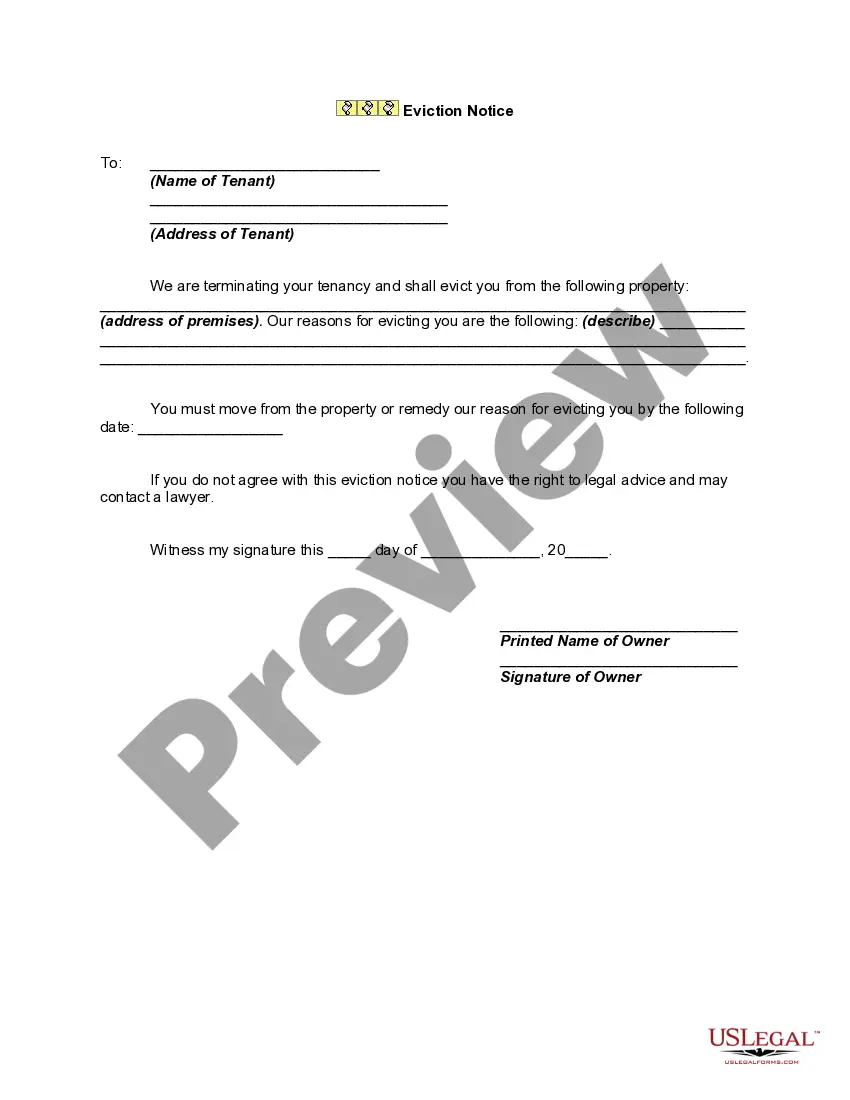
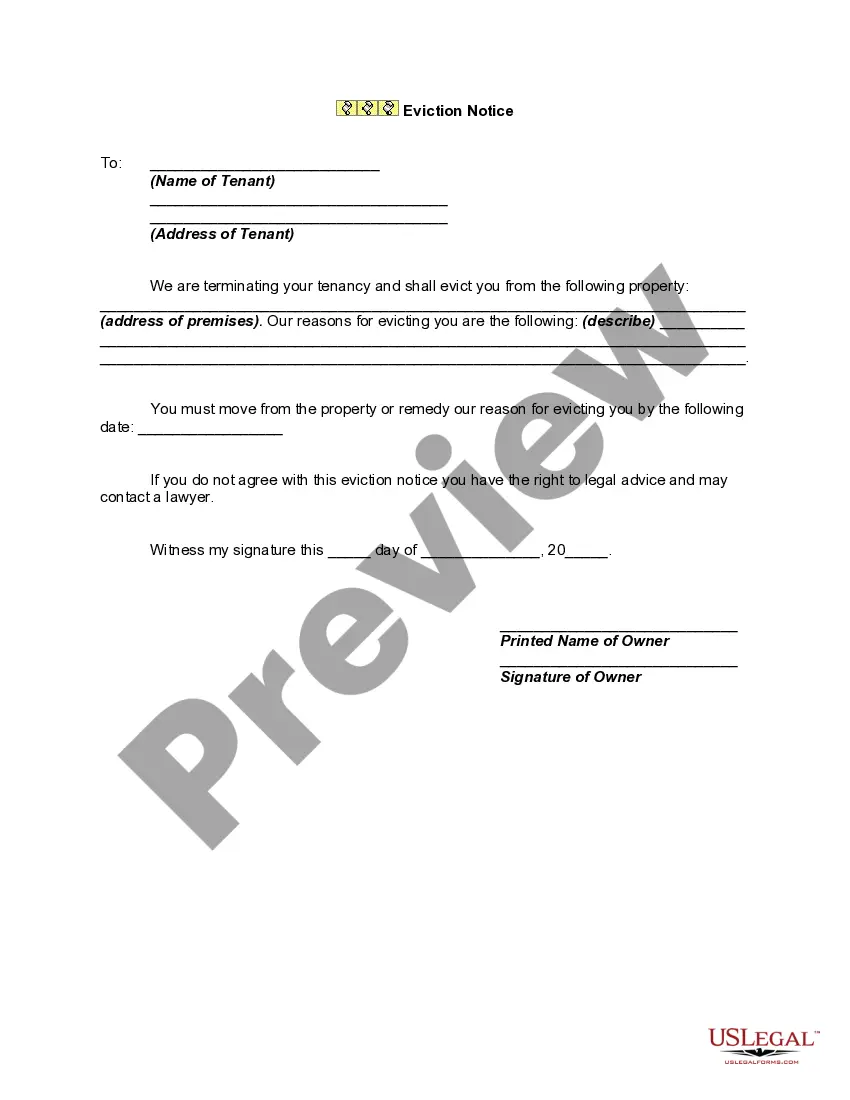
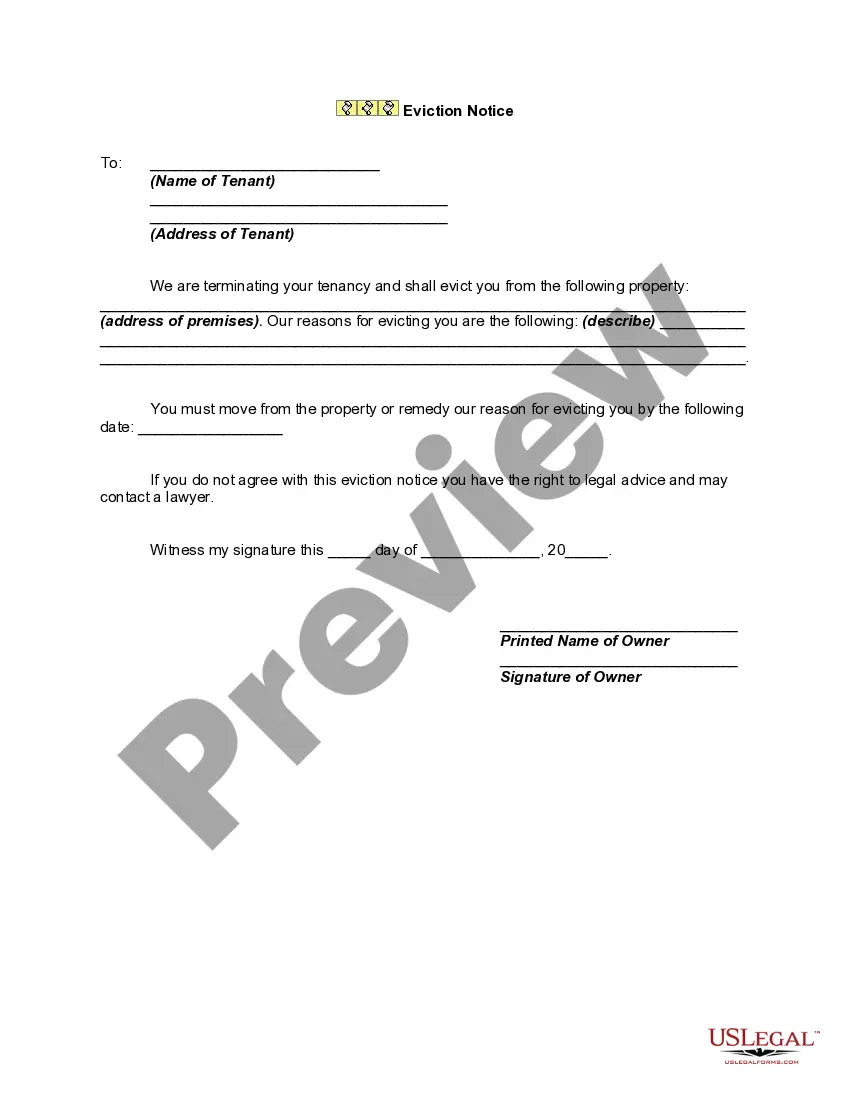
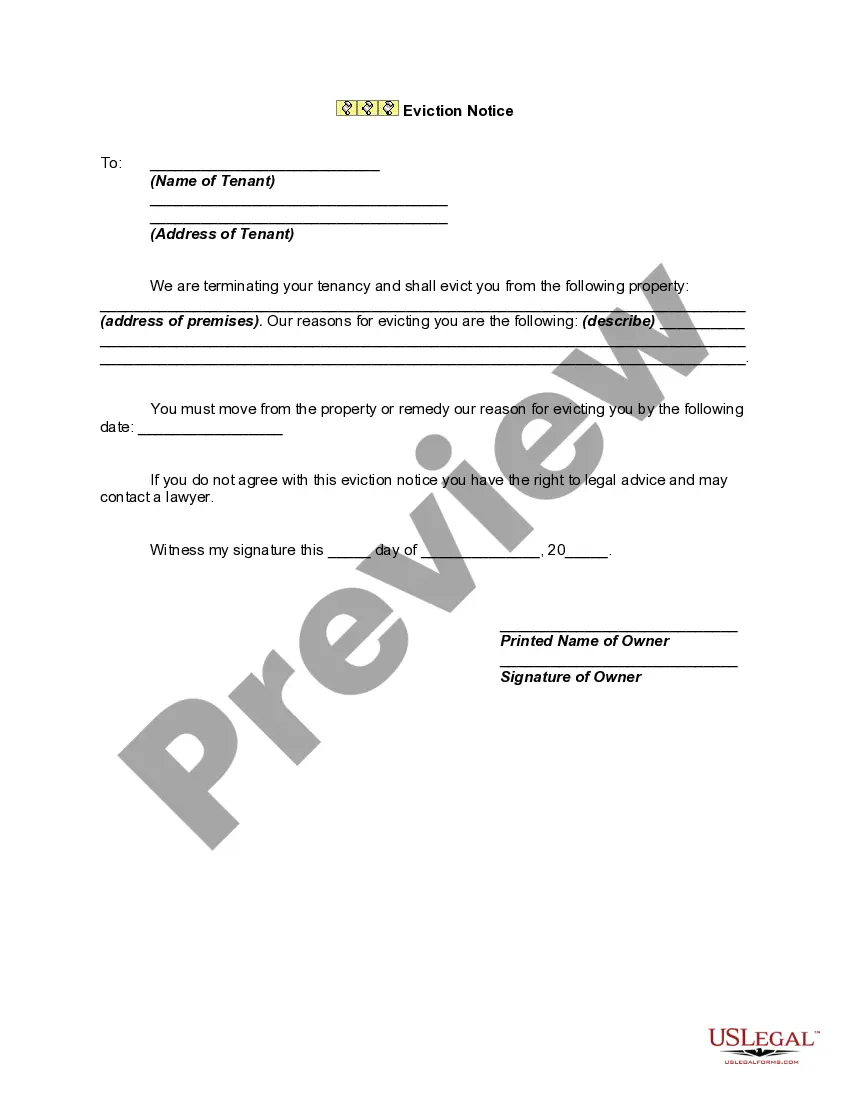
The Eviction Notice for Family Member is a legal document used by property owners to formally notify a family member tenant that their tenancy is being terminated. This form outlines the reasons for eviction and provides a deadline for vacating the premises. Unlike standard eviction notices, this form is tailored for situations involving familial relationships, making it easier for owners to navigate eviction processes with relatives while ensuring compliance with local laws.
Form components explained
- Name and address of the tenant receiving the notice.
- Description of the property being rented.
- Clear statement of the reasons for the eviction.
- Deadline for the tenant to vacate the property or remedy the issue.
- Signature and printed name of the property owner.
When this form is needed
This form is necessary when a property owner wishes to evict a family member who is not complying with rental agreements or household rules. Common scenarios include failure to pay rent, causing damage to the property, or violating other terms of tenancy. Utilizing this form ensures the eviction process is documented and conducted legally.
Who this form is for
- Property owners who rent property to a family member.
- Landlords who need to document the reasons for eviction.
- Individuals seeking to formally communicate the termination of a family tenancy.
Instructions for completing this form
- Identify the tenant by entering their name and address.
- Specify the property by filling in the address of the premises being rented.
- Describe the reasons for eviction clearly and concisely.
- Set a deadline by which the tenant must vacate or remedy the situation.
- Sign and print the name of the property owner at the bottom of the form.
Notarization requirements for this form
This form does not typically require notarization unless specified by local law. However, having a notarized document can enhance its authenticity and enforceability in case of legal disputes.
Get your form ready online
Our built-in tools help you complete, sign, share, and store your documents in one place.
Make edits, fill in missing information, and update formatting in US Legal Forms—just like you would in MS Word.
Download a copy, print it, send it by email, or mail it via USPS—whatever works best for your next step.
Sign and collect signatures with our SignNow integration. Send to multiple recipients, set reminders, and more. Go Premium to unlock E-Sign.
If this form requires notarization, complete it online through a secure video call—no need to meet a notary in person or wait for an appointment.
We protect your documents and personal data by following strict security and privacy standards.

Make edits, fill in missing information, and update formatting in US Legal Forms—just like you would in MS Word.

Download a copy, print it, send it by email, or mail it via USPS—whatever works best for your next step.

Sign and collect signatures with our SignNow integration. Send to multiple recipients, set reminders, and more. Go Premium to unlock E-Sign.

If this form requires notarization, complete it online through a secure video call—no need to meet a notary in person or wait for an appointment.

We protect your documents and personal data by following strict security and privacy standards.
Mistakes to watch out for
- Failing to specify a clear reason for the eviction.
- Not including the correct address of the property.
- Omitting a deadline for vacating the property.
- Not signing the form, rendering it invalid.
Benefits of completing this form online
- Convenient access to a professionally drafted eviction notice.
- Editable fields allow for personal customization without legal jargon.
- Reliable as it is created based on legal requirements and best practices.
Looking for another form?


Form popularity
FAQ
200bA letter of eviction should contain these four elements: The letter should be dated and state that the roommate has to be out within 30 days. You can also give a specific date by which the roommate has to leave. Make it clear that you'll bring legal action if he doesn't vacate the premises within the specified time.
Legally Removing People. Send a certified letter asking them to leave in 30 days or less. While a house guest is not technically a tenant, certain tenant-landlord laws still apply to the relationship if they've been with your for more than 30 days. Talk to an attorney who will help you draft and send an eviction notice
A landlord cannot legally evict you without a court order, whether or not you have a lease.) How long does it take for a landlord to evict a tenant? A landlord can evict a tenant only by going through a formal eviction proceeding, which can take a few weeks from start to finish.
You are a lodger if you live with your landlord and share a kitchen, bathroom or other living accommodation with them. Lodgers are 'excluded occupiers'. This means that your landlord can evict you without going to court.
Gather documents relating to your home and the person you wish to evict. Give written notice to the family member, informing him or her that you wish them to leave. Wait out the notice period.
If you want a family member to leave your home, you must follow an eviction process similar to the one for a formal tenant. In most states, you can evict any family member over the age of 18. Regulations regarding eviction vary, so make sure you follow the specific procedure for your location.
In most places, if your family rents on a month-to-month basis, your landlord can terminate your tenancy for any nondiscriminatory reason, as long as she gives you the required amount of notice30 days in most states.
Give these tenants notice to move with the proper waiting period (30 day notice). If the tenants don't want to move, the landlords can file for eviction with the courts. The landlord can prepare documents explaining they acquired the property without plans to keep the tenants or why they must leave.