Complaint regarding double rent damages for holdover
What this document covers
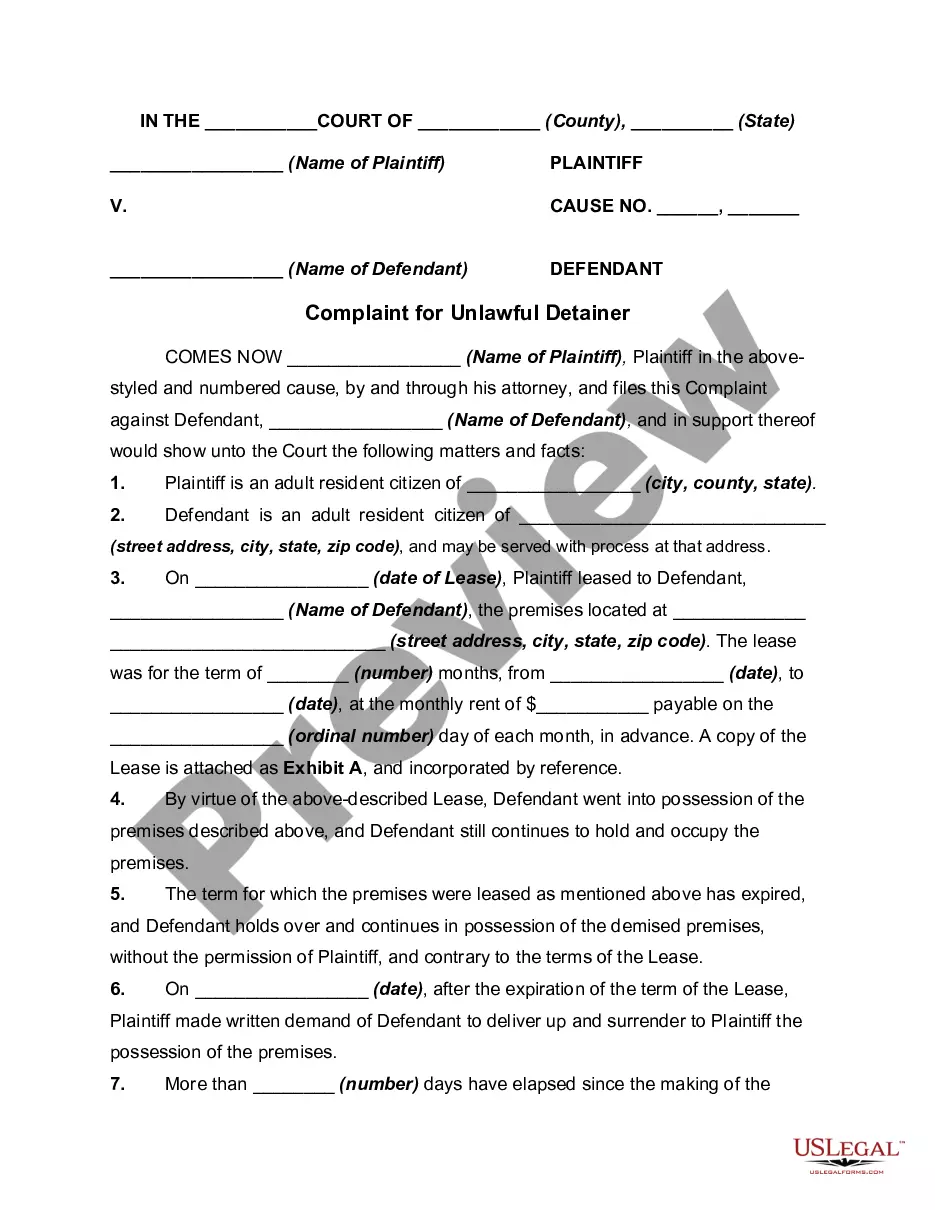
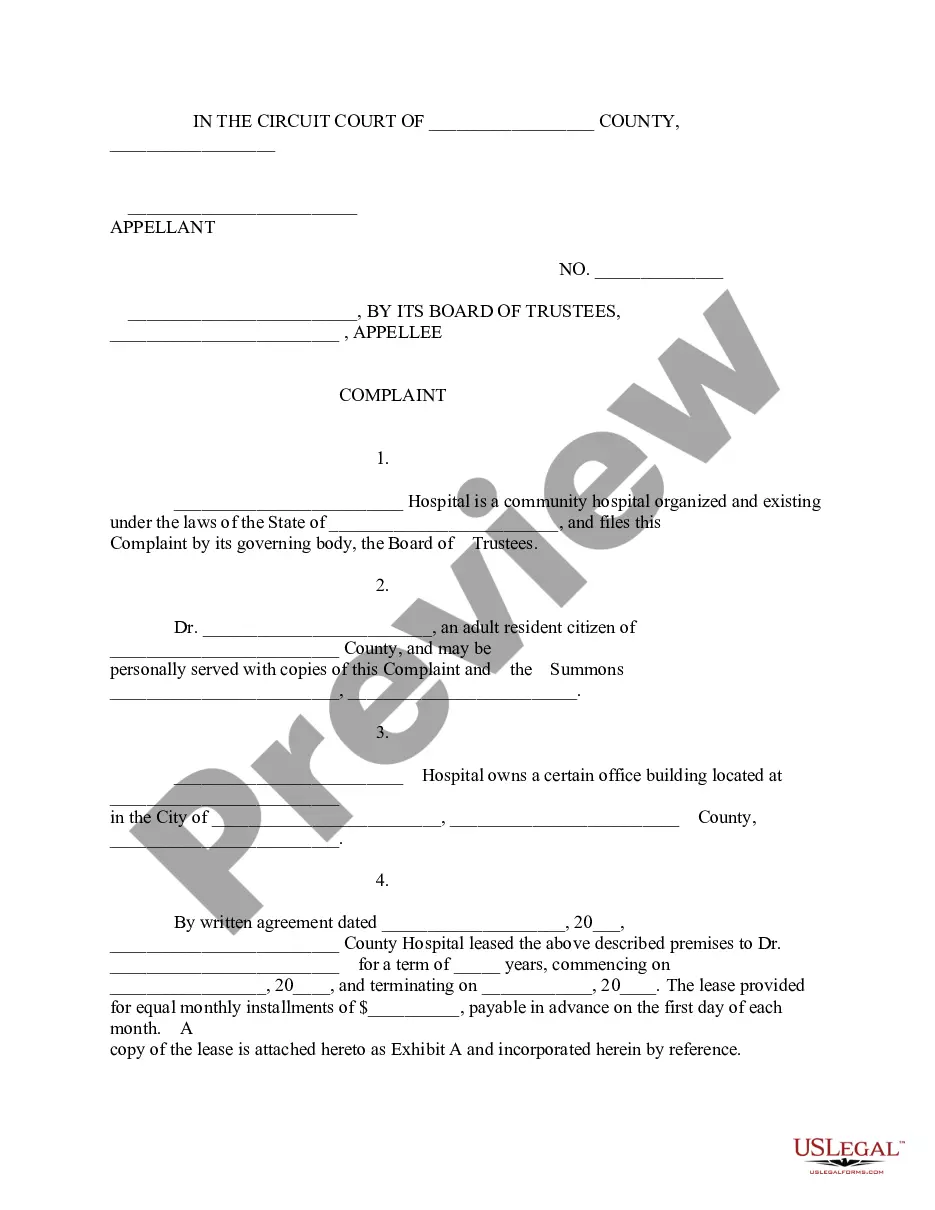
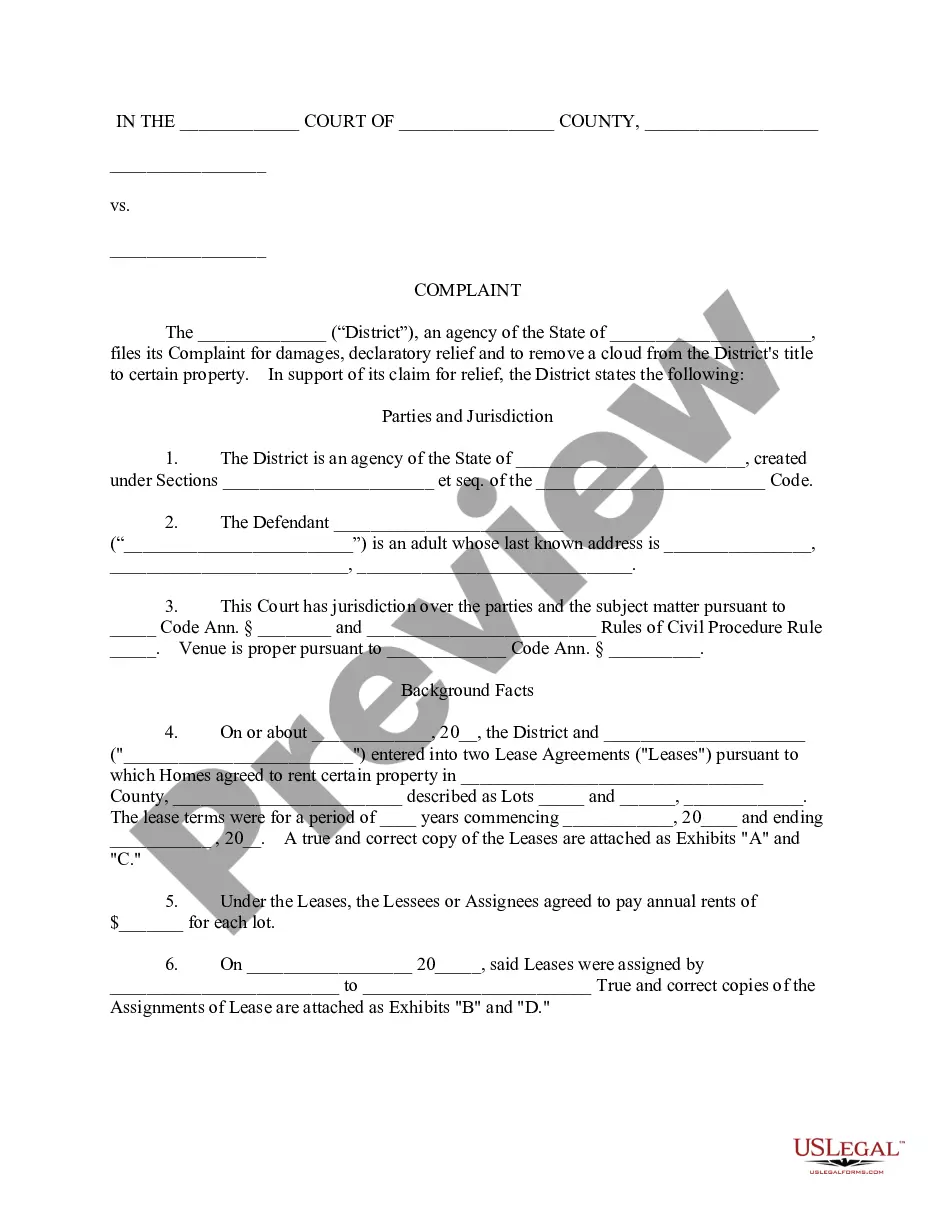
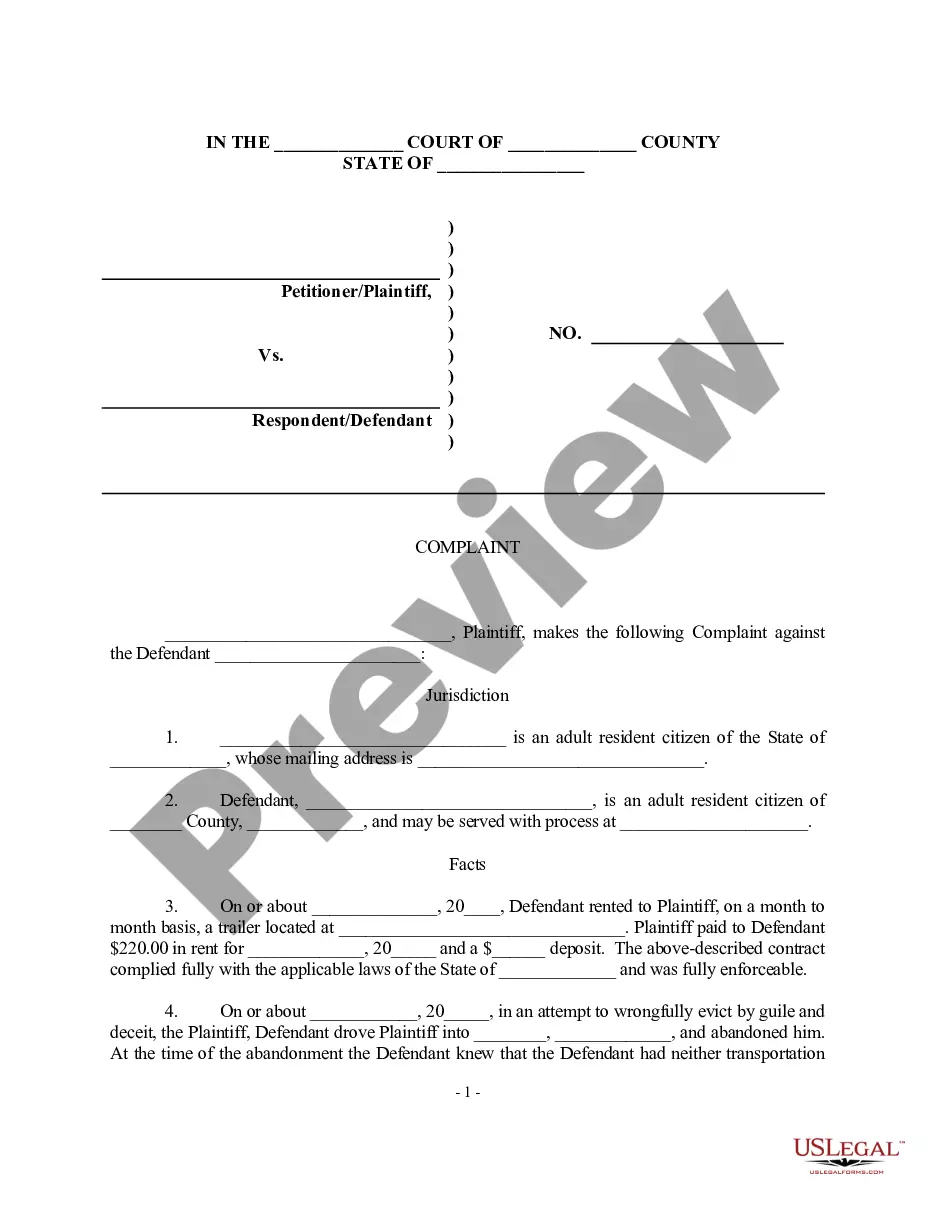
The Complaint regarding double rent damages for holdover is a legal document used to initiate a civil lawsuit for damages related to rental agreements. This form is particularly useful when a tenant has overstayed their lease and has caused financial harm to the landlord by not vacating the premises. Unlike other rental-related forms, this complaint specifically addresses double rent damages and unjust enrichment claims, allowing landlords to seek reimbursement for losses incurred due to a tenant's holdover tenancy.
Key components of this form
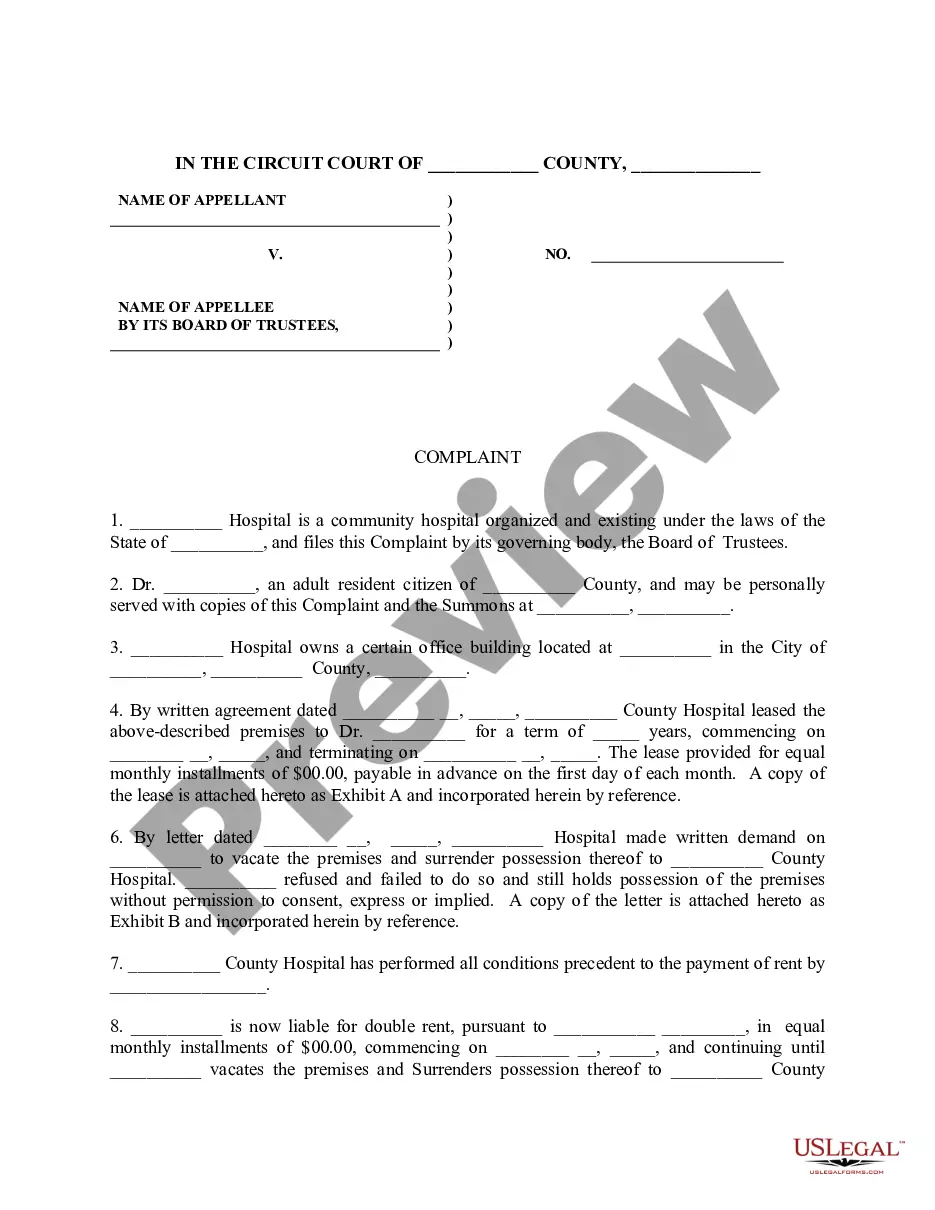
- Identifying information for the hospital and the tenant.
- Details of the office building leased under the agreement.
- Specific dates and terms of the lease agreement.
- Documentation of written demand for the tenant to vacate the premises.
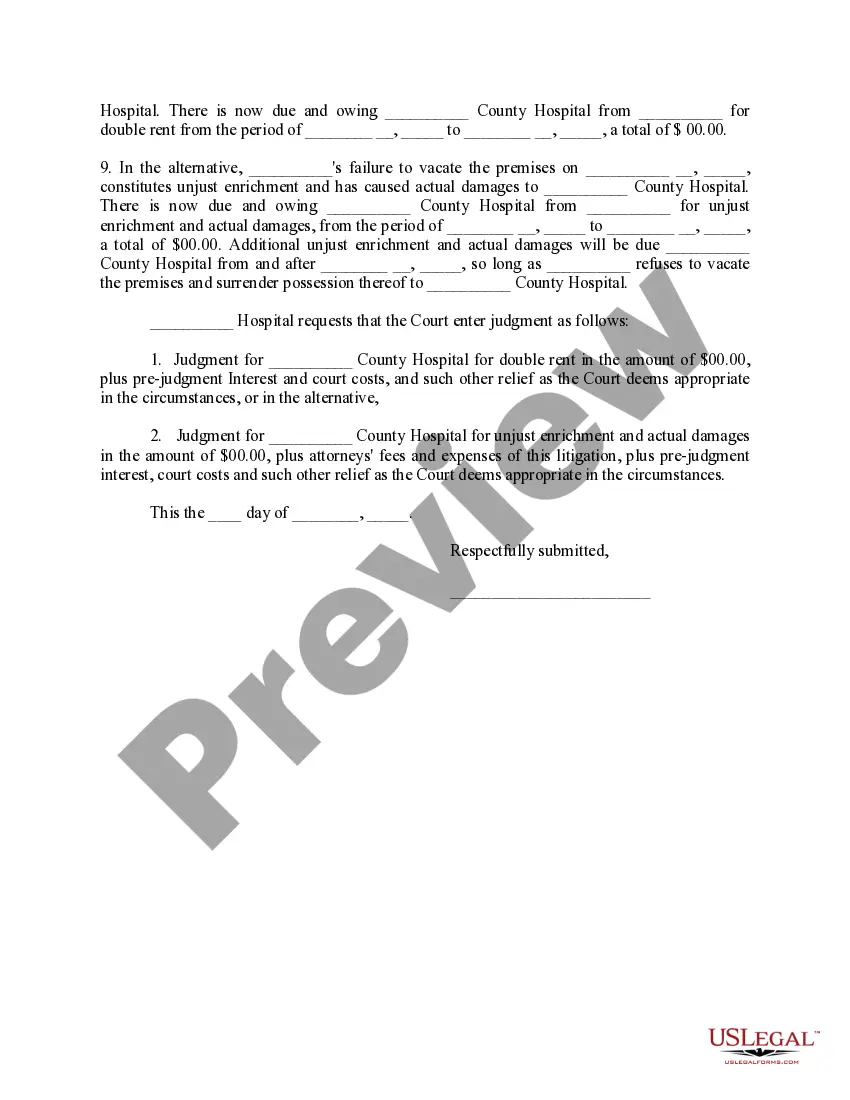
- Calculation of damages, including double rent and unjust enrichment claims.
- Request for judgment by the court, including amounts and types of relief sought.
When this form is needed
This form should be used when a landlord needs to file a lawsuit against a tenant who has failed to vacate rental property after the lease term has expired. It is suitable for scenarios where the landlord is seeking double rent damages due to the tenant's holdover and situations where the landlord wishes to recover losses through claims of unjust enrichment.
Who needs this form
- Landlords or property owners seeking legal recourse against a tenant who remains in the property after the lease has ended.
- Legal representatives filing on behalf of landlords in cases of holdover tenancies.
- Property management companies handling disputes involving tenants that have not vacated the premises as required.
Completing this form step by step
- Identify and fill in the legal names of the parties involved, including the hospital and the tenant.
- Enter the specific property details, including the address of the leased office building.
- Specify the dates related to the lease agreement, including the start and end dates.
- Attach any relevant communications, such as demand letters for vacating the premises.
- Calculate and input the total amount of damages being claimed for both double rent and unjust enrichment.
- Sign the complaint, ensuring all required signatures are present for legal validity.
Notarization guidance
This form does not typically require notarization unless specified by local law. It is advisable to check your stateâs requirements before filing.
Get your form ready online
Our built-in tools help you complete, sign, share, and store your documents in one place.
Make edits, fill in missing information, and update formatting in US Legal Forms—just like you would in MS Word.
Download a copy, print it, send it by email, or mail it via USPS—whatever works best for your next step.
Sign and collect signatures with our SignNow integration. Send to multiple recipients, set reminders, and more. Go Premium to unlock E-Sign.
If this form requires notarization, complete it online through a secure video call—no need to meet a notary in person or wait for an appointment.
We protect your documents and personal data by following strict security and privacy standards.

Make edits, fill in missing information, and update formatting in US Legal Forms—just like you would in MS Word.

Download a copy, print it, send it by email, or mail it via USPS—whatever works best for your next step.

Sign and collect signatures with our SignNow integration. Send to multiple recipients, set reminders, and more. Go Premium to unlock E-Sign.

If this form requires notarization, complete it online through a secure video call—no need to meet a notary in person or wait for an appointment.

We protect your documents and personal data by following strict security and privacy standards.
Mistakes to watch out for
- Failing to update the complaint with accurate dates or amounts owed.
- Not attaching necessary exhibits, such as the original lease or demand letters.
- Omitting required signatures, which may void the form.
- Using generic terms instead of the specific legal names of the parties involved.
Benefits of completing this form online
- Convenient access to legal forms that can be downloaded and completed at your own pace.
- Editability allows for customization based on specific circumstances and state requirements.
- Reliability, knowing that the forms are drafted by licensed attorneys and comply with relevant laws.
Looking for another form?







Form popularity
FAQ
You can immediately file an eviction if the tenant refuses to leave the property.If you took a rental payment from the tenant after their lease expired, you'll need to provide all the normal notices. When your tenant overstays their lease, you will still, however, be required to go through the normal eviction process.
A holdover tenant is a tenant who continues to pay rent, even after the lease has expired. The landlord must also agree, or else eviction proceedings may occur.This issue is often negated by the month-to-month rental clause that's in most tenancy agreements.
A holdover case is brought by a landlord to evict a tenant or the person in the apartment for reasons other than simple non-payment of rent. A holdover case is much more complicated than a non-payment case.
Hold over rent is when a tenant stays in their space after their lease expiration date. The landlord charges a premium for the tenant to stay in that space not being on a lease and it also hinders the landlord from making any plans on that space.
To evict a hold over tenant, the landlord must treat the tenant as a trespasser who does not have permission to be on the property and who is acting wrongfully by staying on the property from the moment the lease ends. The best way to deal with a trespasser will depend on the laws of your state and locality.
A holdover tenant is a renter who refuses to vacate the rental property after the end of the lease agreement. This is also known as a tenant at sufferance. The holdover period starts when the lease expires and ends when the landlord asks the tenant to leave.
A landlord can file an eviction lawsuit (or, as it's known in California, an "unlawful detainer") against a holdover tenant without first serving a notice to quit, streamlining the process somewhat. A holdover tenant can also be held liable for both rent and damages during the time they've overstayed their lease.
A holdover occurs when a tenant continues to occupy and use the premises after the term of the lease ends. If the landowner continues to accept rent payments, the holdover tenant can continue to legally occupy the premises.
Stats., which states that if a tenant remains in possession of the rental unit without the consent of the landlord after expiration of the lease or termination of the tenancy, the landlord may recover damages from the tenant for the tenant's failure to vacate the unit within the time required.