Sample Letter for Order Granting Motion for Summary Judgment
Understanding this form
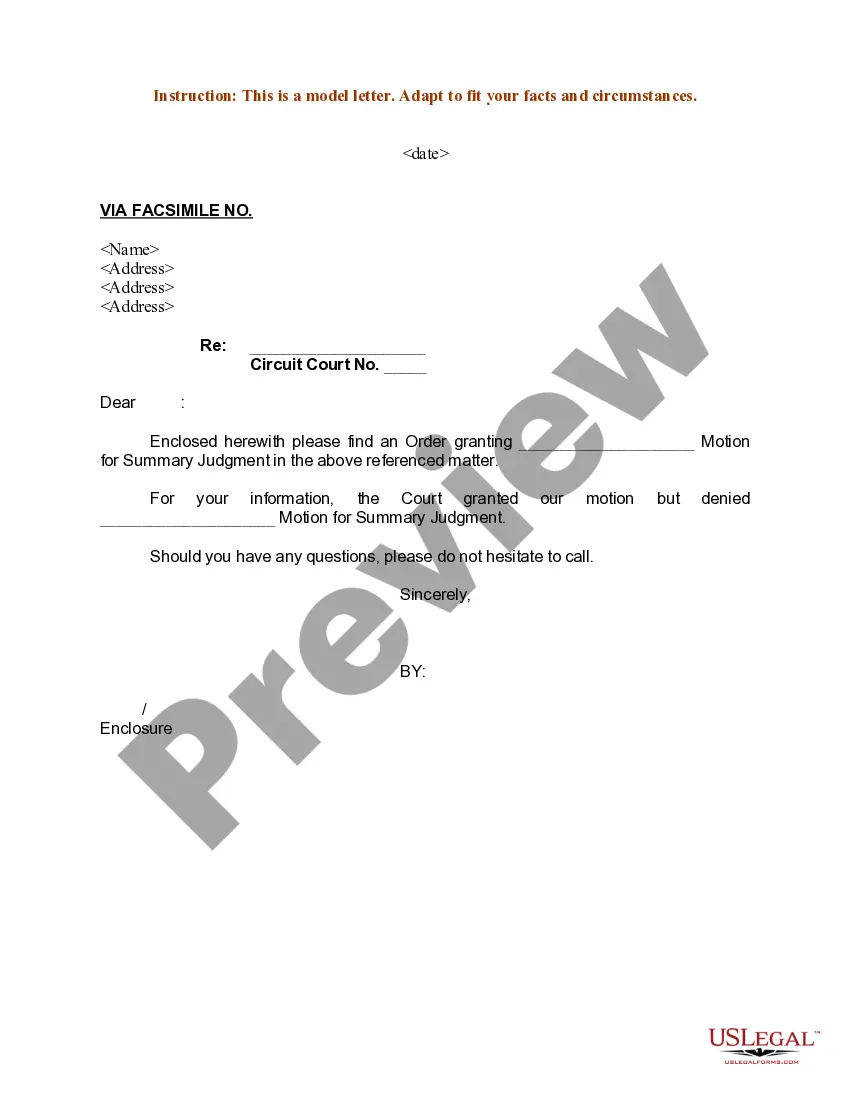
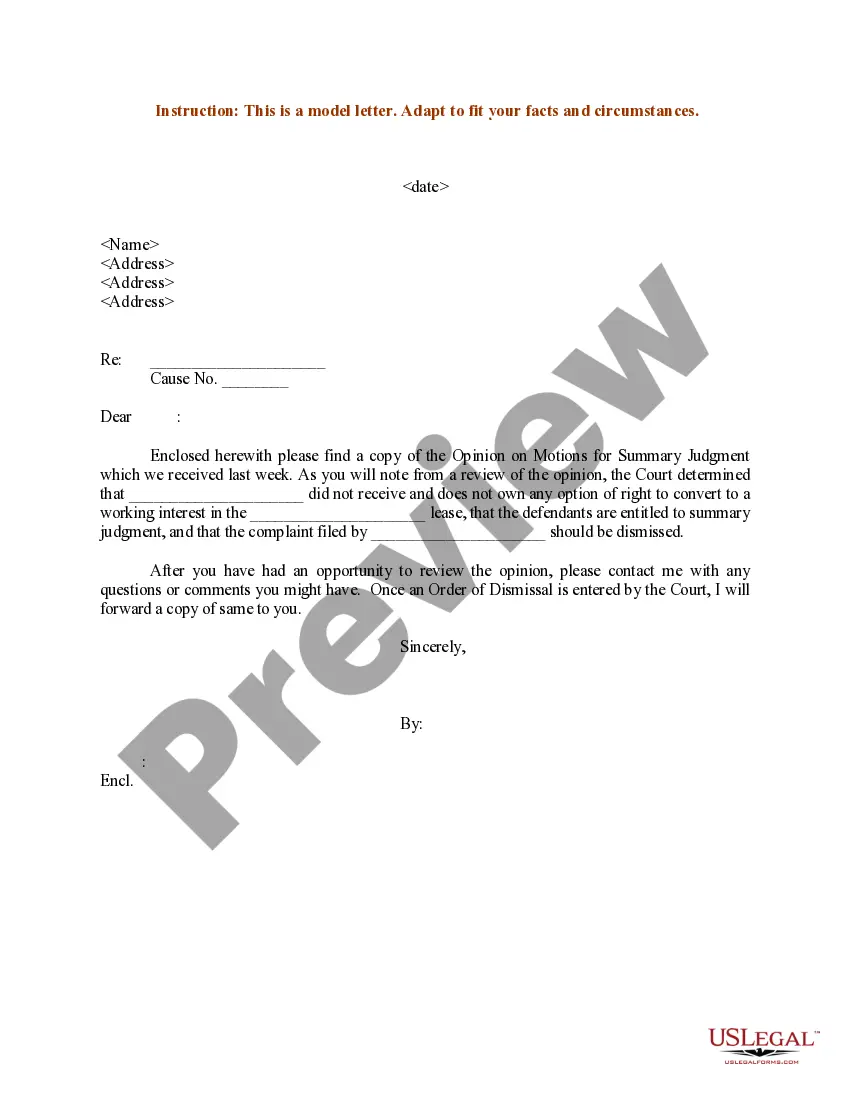
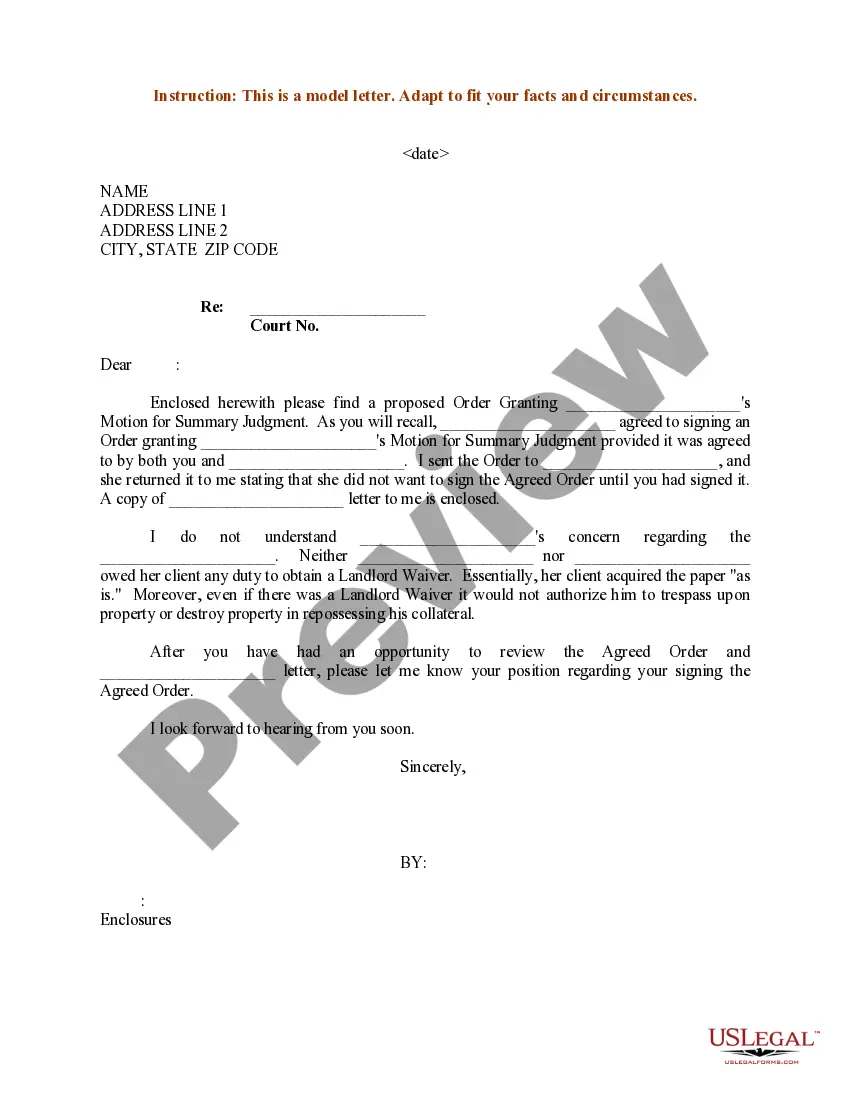
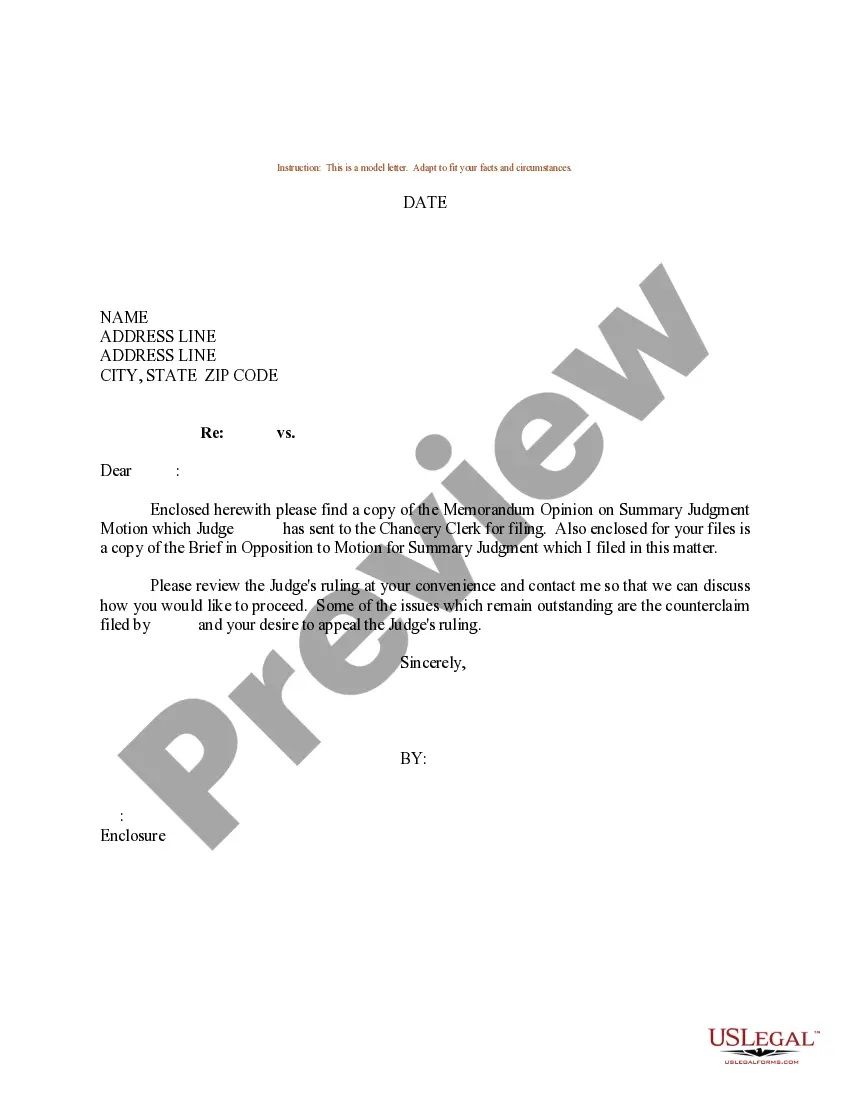
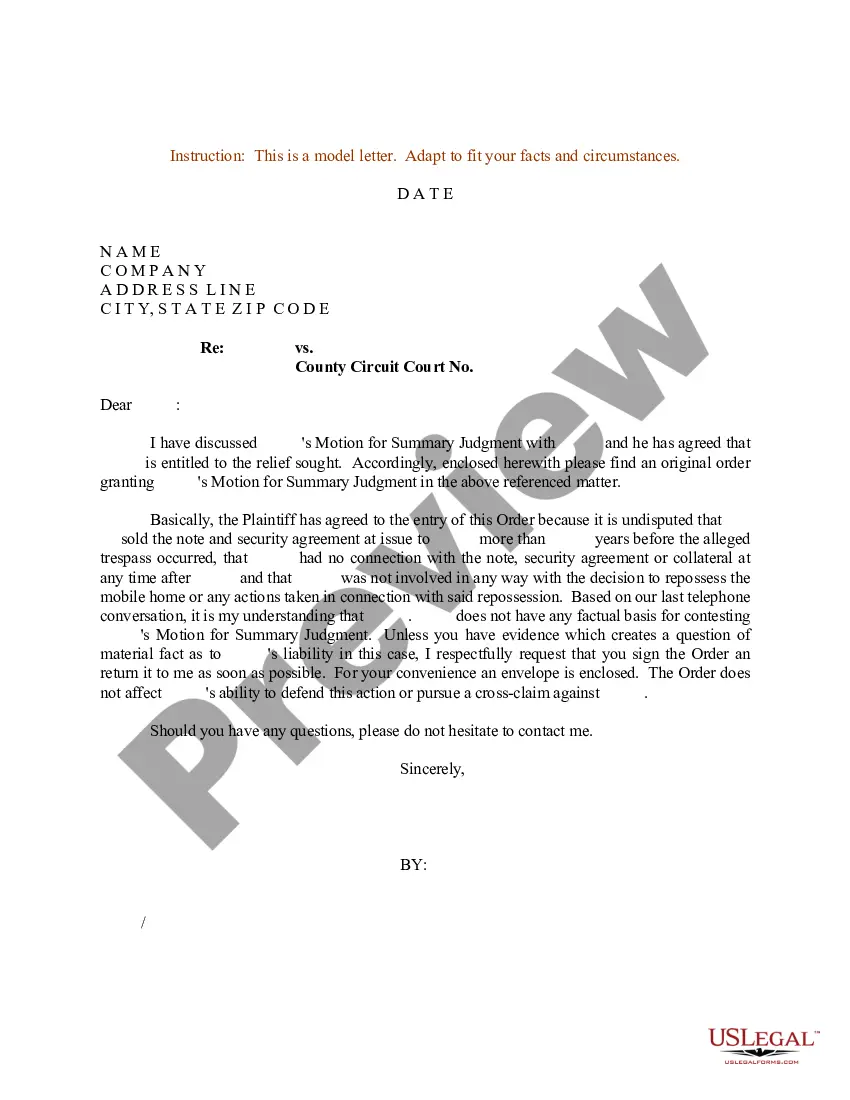
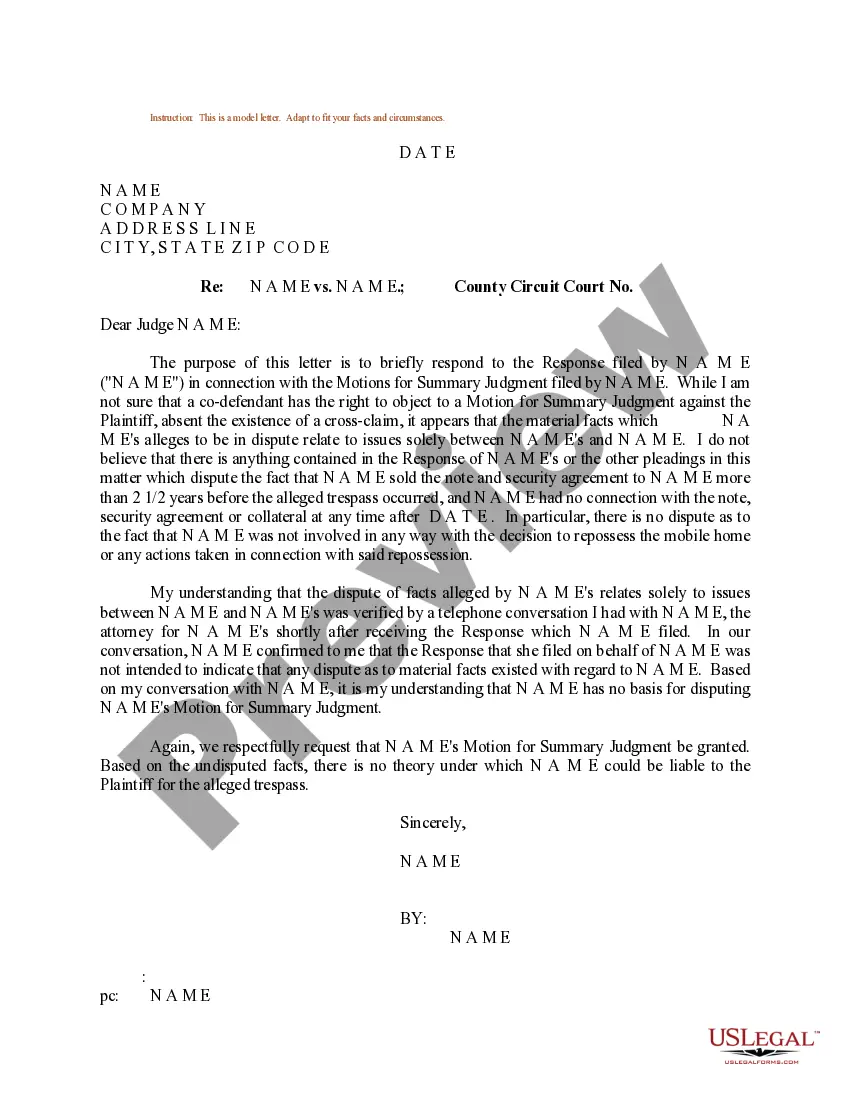
The Sample Letter for Order Granting Motion for Summary Judgment is a legal document template designed to formally request a judge to rule in favor of one party without a full trial. This form provides a structured format for presenting arguments and supporting facts, distinguishing it from other types of motions typically filed in court. Utilizing this letter can streamline the process of achieving a swift resolution in legal disputes.
Key parts of this document
- Title of the letter: Clearly states the purpose of the communication.
- Introduction: Provides context and identifies the parties involved.
- Statement of facts: Outlines the relevant facts justifying the motion.
- Legal argument: Presents the legal basis for the request for summary judgment.
- Conclusion: Summarizes the request and expresses anticipation for a favorable ruling.
- Signature block: Includes space for the signature of the requesting party or their attorney.
When to use this form
This form is useful in situations where one party believes that there are no factual disputes requiring a trial, allowing the court to resolve the case based on the law. It is commonly used in civil litigation, particularly in contract disputes, personal injury claims, or cases involving clear legal standards where one party's entitlement is evident.
Who this form is for
- Parties involved in civil litigation who are seeking summary judgment.
- Attorneys representing clients in court cases where expedited resolution is desired.
- Individuals who need a clear framework for their legal requests but may not have extensive legal training.
Completing this form step by step
- Identify the parties: Clearly state the names of the individuals or entities involved in the case.
- Present the facts: Write a concise summary of the relevant facts leading to the motion.
- Articulate the legal argument: Outline the laws that support the request for summary judgment.
- Draft a conclusion: Reiterate the request for the court to grant the motion and state the expected outcome.
- Sign the letter: Ensure that the requesting party or their attorney signs the document before submission.
Notarization guidance
This form does not typically require notarization unless specified by local law. It is advisable to check specific state requirements or court rules to confirm.
Get your form ready online
Our built-in tools help you complete, sign, share, and store your documents in one place.
Make edits, fill in missing information, and update formatting in US Legal Forms—just like you would in MS Word.
Download a copy, print it, send it by email, or mail it via USPS—whatever works best for your next step.
Sign and collect signatures with our SignNow integration. Send to multiple recipients, set reminders, and more. Go Premium to unlock E-Sign.
If this form requires notarization, complete it online through a secure video call—no need to meet a notary in person or wait for an appointment.
We protect your documents and personal data by following strict security and privacy standards.

Make edits, fill in missing information, and update formatting in US Legal Forms—just like you would in MS Word.

Download a copy, print it, send it by email, or mail it via USPS—whatever works best for your next step.

Sign and collect signatures with our SignNow integration. Send to multiple recipients, set reminders, and more. Go Premium to unlock E-Sign.

If this form requires notarization, complete it online through a secure video call—no need to meet a notary in person or wait for an appointment.

We protect your documents and personal data by following strict security and privacy standards.
Common mistakes
- Failing to provide sufficient evidence to support the motion.
- Neglecting to adhere to local court rules regarding formatting and content.
- Omitting crucial facts or arguments that could affect the outcome.
- Submitting the letter without proper signatures or without the required number of copies.
Why use this form online
- Convenience: Download and complete the form from anywhere at any time.
- Editability: Easily customize the template to suit your specific case details.
- Reliability: Access a form drafted by licensed attorneys, ensuring legal soundness.
What to keep in mind
- The sample letter for order granting motion for summary judgment serves as a useful template for requesting a court decision without a trial.
- Proper completion of this form can facilitate a more efficient resolution to legal disputes.
- Understanding local requirements is crucial for successfully submitting the form.
Looking for another form?
Form popularity
FAQ
When a motion for summary judgement is granted, it indicates there is sufficient evidence to declare one party the clear winner.The judge will then rule on the case based on the facts and evidence. A summary judgement can often be beneficial as it potentially skips a lengthy (and costly) court trial.
Filing an Opposition to a Motion for Summary Judgment A response must be in writing and include the same supporting documents as a motion for summary judgment. The opposition to the motion for summary judgment should also include a statement of facts showing the dispute and supporting documents.
Completely resolve a case (e.g., entry of judgment for plaintiff or defendants) Completely resolve a claim. Completely determine the status of a particular party. Resolve a particular claim's application to a particular party. Establish a fact or ruling applicable to the case as it is further adjudicated.
When filing a motion for summary judgment, the motion must be filed with supporting evidence. Thus, the party bringing the motion must have conducted discovery and/or submitted evidence to the court following the applicable rules of evidence.
As the name implies, the motion for summary judgment is a motion filed by one of the parties seeking to obtain a judgment on all or part of the case in a summary fashion. An issue or case which is decided by summary judgment is not allowed to be presented to a judge or jury at trial.
Rule 56 of the Federal Rules of Civil Procedure governs summary judgment for federal courts. Under Rule 56, in order to succeed in a motion for summary judgment, a movant must show 1) that there is no genuine dispute as to any material fact, and 2) that the movant is entitled to judgment as a matter of law.
The motion must include a separate "Notice of Motion" which includes a brief summary of the nature of the motion, the deadline for filing a response, and if there is a hearing, the date, time, and location of the hearing.
Completely resolve a case (e.g., entry of judgment for plaintiff or defendants) Completely resolve a claim. Completely determine the status of a particular party. Resolve a particular claim's application to a particular party. Establish a fact or ruling applicable to the case as it is further adjudicated.