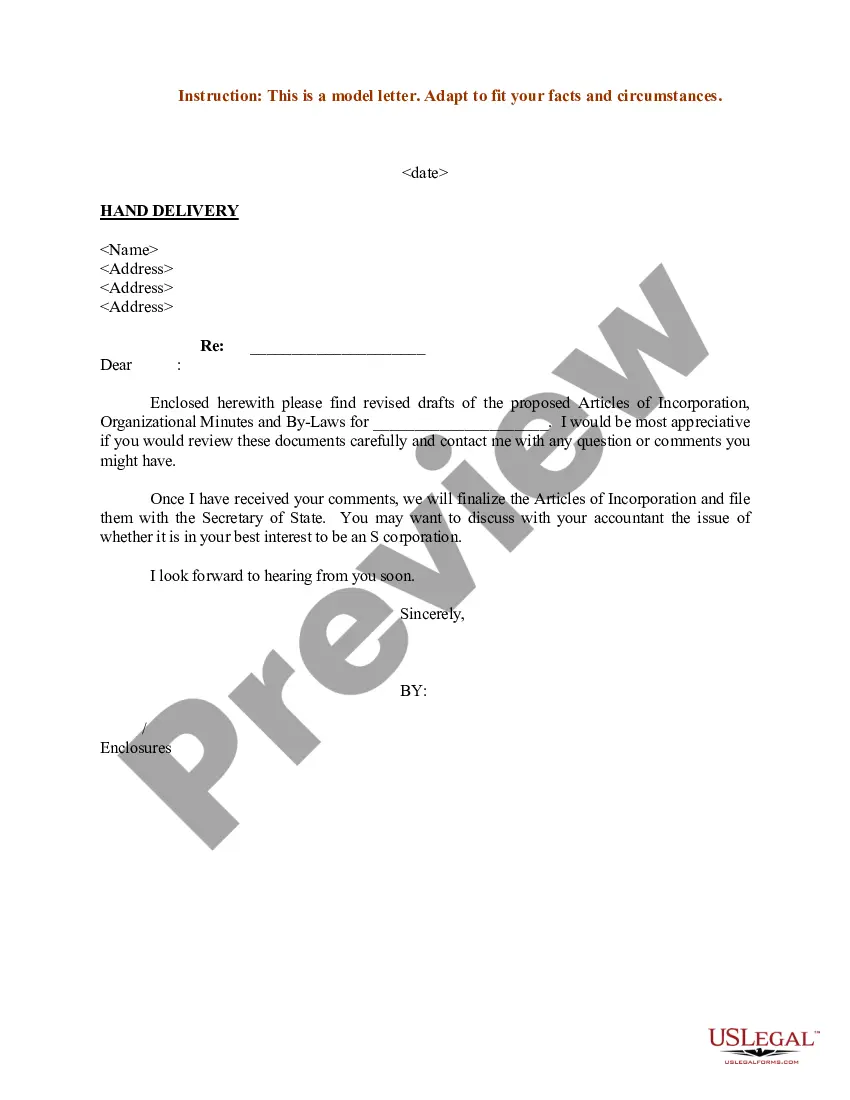
Sample Letter regarding Revised Drafts of Articles of Incorporation, Organizational Minutes, and Bylaws
Overview of this form
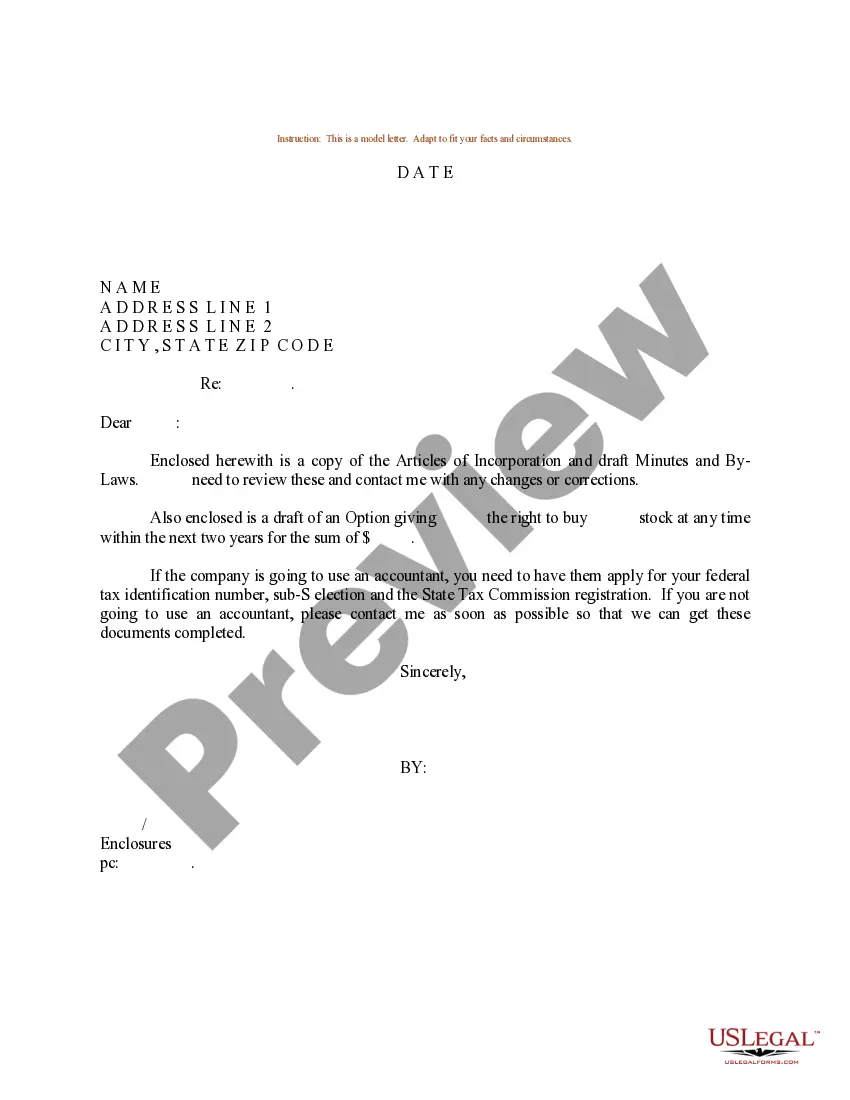
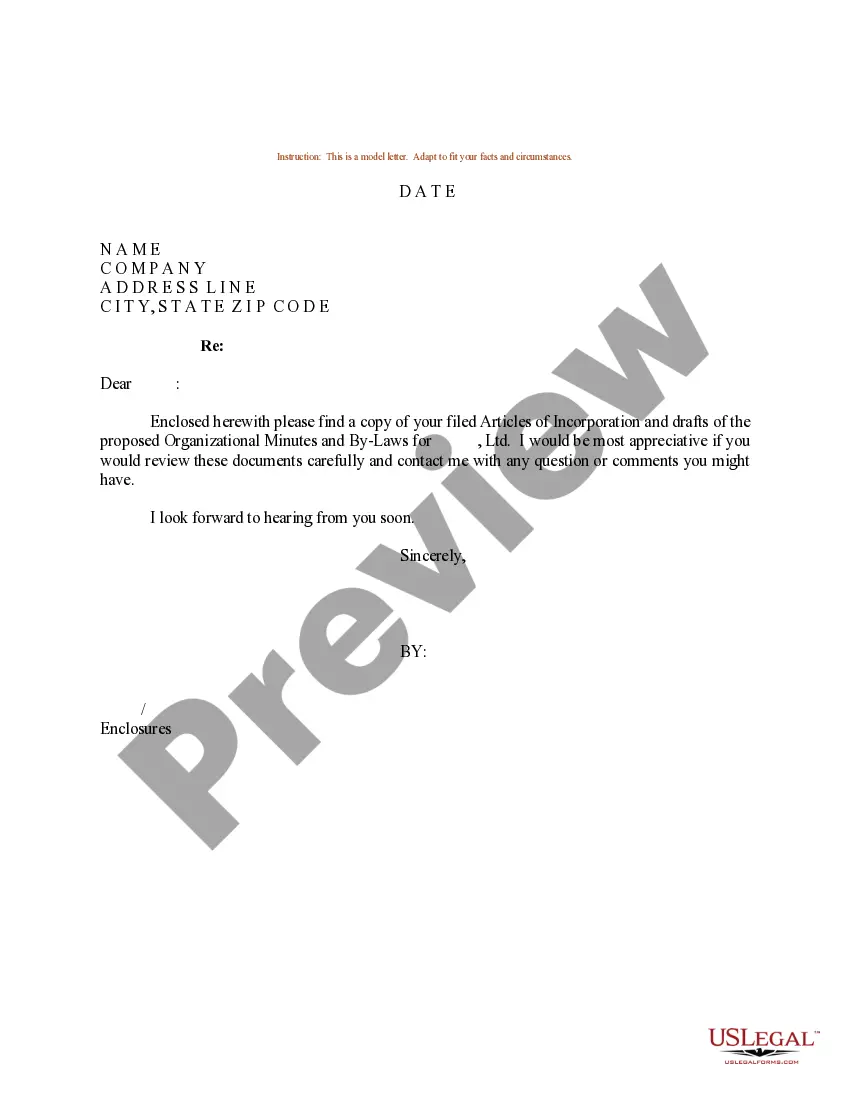
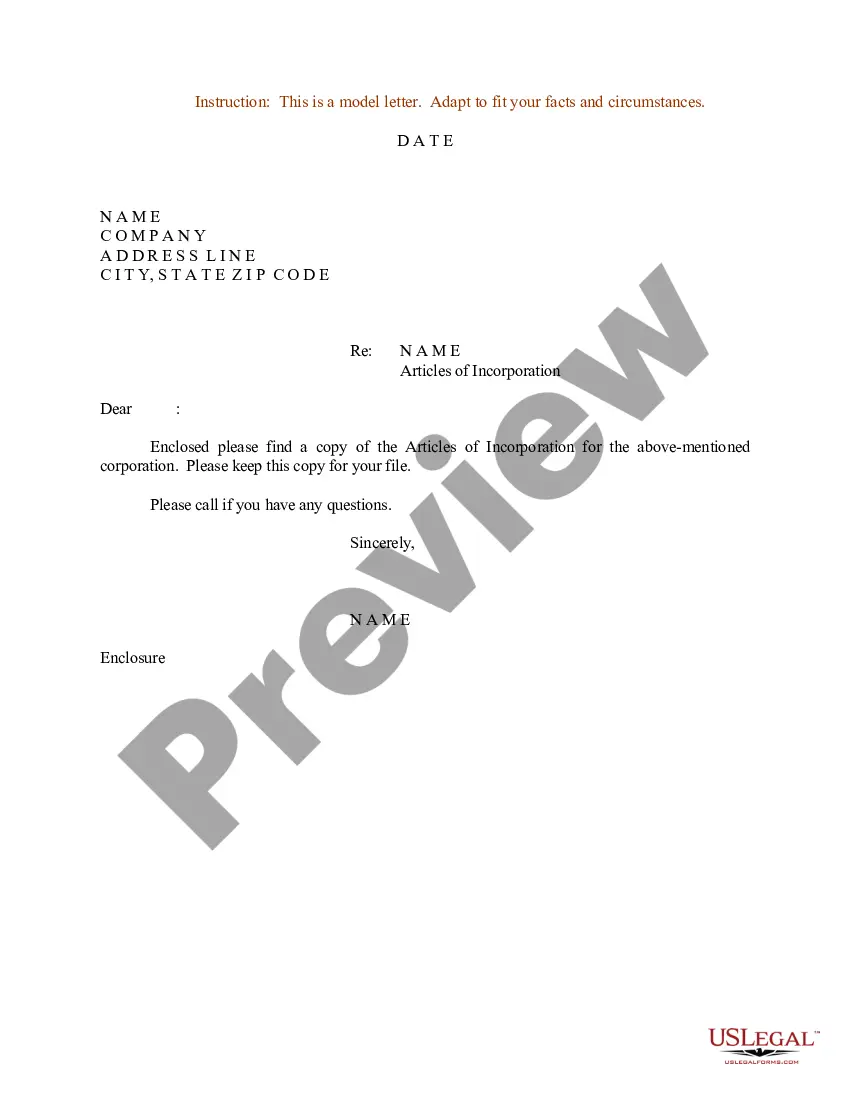
This Sample Letter regarding Revised Drafts of Articles of Incorporation, Organizational Minutes, and Bylaws is a template designed to assist individuals and businesses in communicating changes or updates concerning their corporate documents. It is intended for those who need to notify relevant parties about modifications in their Articles of Incorporation, minutes of organizational meetings, and bylaws. This letter serves a specific purpose by providing a professional format for such communications, ensuring clarity and legal validity.
Form components explained
- Date of the letter
- Name and physical address of the recipient
- Subject line indicating the purpose of the letter
- Details of the revisions made to the Articles of Incorporation
- Information regarding the Organizational Minutes and Bylaws
When to use this document
This form is particularly useful when a corporation or organization has made revisions to its foundational documents and needs to formally communicate these updates to stakeholders or board members. It can be used in scenarios such as changing the corporate structure, adjusting bylaws, or updating meeting records. Utilizing this letter ensures that all parties are informed in a formal manner.
Who can use this document
- Business owners looking to update stakeholders on corporate document revisions
- Corporate secretaries tasked with maintaining accurate records of organizational changes
- Legal representatives facilitating communication between organizations and stakeholders
Steps to complete this form
- Enter the current date at the top of the letter.
- Specify the recipient's name and complete address.
- Craft an effective subject line that reflects the primary intent of the letter.
- Clearly outline the revisions made to the Articles of Incorporation.
- Include any changes related to the Organizational Minutes and Bylaws as necessary.
Does this form need to be notarized?
This form does not typically require notarization unless specified by local law, ensuring user convenience in its execution.
Get your form ready online
Our built-in tools help you complete, sign, share, and store your documents in one place.
Make edits, fill in missing information, and update formatting in US Legal Forms—just like you would in MS Word.
Download a copy, print it, send it by email, or mail it via USPS—whatever works best for your next step.
Sign and collect signatures with our SignNow integration. Send to multiple recipients, set reminders, and more. Go Premium to unlock E-Sign.
If this form requires notarization, complete it online through a secure video call—no need to meet a notary in person or wait for an appointment.
We protect your documents and personal data by following strict security and privacy standards.

Make edits, fill in missing information, and update formatting in US Legal Forms—just like you would in MS Word.

Download a copy, print it, send it by email, or mail it via USPS—whatever works best for your next step.

Sign and collect signatures with our SignNow integration. Send to multiple recipients, set reminders, and more. Go Premium to unlock E-Sign.

If this form requires notarization, complete it online through a secure video call—no need to meet a notary in person or wait for an appointment.

We protect your documents and personal data by following strict security and privacy standards.
Typical mistakes to avoid
- Failing to include the date, making the letter appear less formal.
- Omitting recipient details, which can lead to confusion about who the letter is intended for.
- Vague language in outlining the changes, which may leave recipients unclear about the updates.
Advantages of online completion
- Convenient access to the form allows for quick downloads and completion.
- Editable format enables personalization to fit specific needs and situations.
- Reliability in terms of legal standards upheld by licensed attorneys who drafted the form.
Legal use & context
- Used to formally inform stakeholders about changes in corporate governance.
- Establishes a record of communication regarding important documents.
Main things to remember
- This form is a sample letter for communicating revisions to corporate governance documents.
- Key information includes the date, recipient details, and subject line.
- The form doesn't typically need notarization.
Looking for another form?
Form popularity
FAQ
The basic difference is pretty simple. Articles of Incorporation are public records, Bylaws are not.For a corporation, this document is called Articles of Incorporation and Articles of Organization for a Limited Liability Company (LLC).
You will have to pay a fee for the following types of amendments: Amalgamation: $50. Continuance: $50. Name change: $25.
Obtain articles of amendment of the articles of incorporation (sometimes called the certificate of amendment of articles of incorporation) from your state's Secretary of State. Obtain a copy of the original articles of incorporation. Propose the change in the articles of incorporation to the Board of Directors.
Article I. Name and purpose of the organization. Article II. Membership. Article III. Officers and decision-making. Article IV. General, special, and annual meetings. Article V. Board of Directors.
The easiest way to amend the Articles is to draft, adopt, and file a Certificate of Amendment of Articles of Incorporation. For a name change only, the Secretary of State offers a simple form that can be used. A Certificate of Amendment may be appropriate for minor other changes.
Taking Meeting Notes. Type Meeting Notes - Type up a full version of the meeting minutes. Circulate a Draft - Follow your corporation's policy about who must review the draft notes. Distribute Minutes to Board - Usually in advance of the next meeting.
Check your bylaws and state law. First, review your company's bylaws to see what steps you must take to change the articles. Have the board of directors vote on the proposed changes. Hold a shareholder vote, if necessary. Prepare and file an amendment form.
Basic Corporate Information. The bylaws should include your corporation's formal name and the address of its main place of business. Board of Directors. Officers. Shareholders. Committees. Meetings. Conflicts of Interest. Amendment.
That the articles of incorporation or any amendment thereto is not substantially in accordance with the form prescribed herein; 2. That the purpose or purposes of the corporation are patently unconstitutional, illegal, immoral, or contrary to government rules and regulations; 3.