Dismissal Without Prejudice
Understanding this form
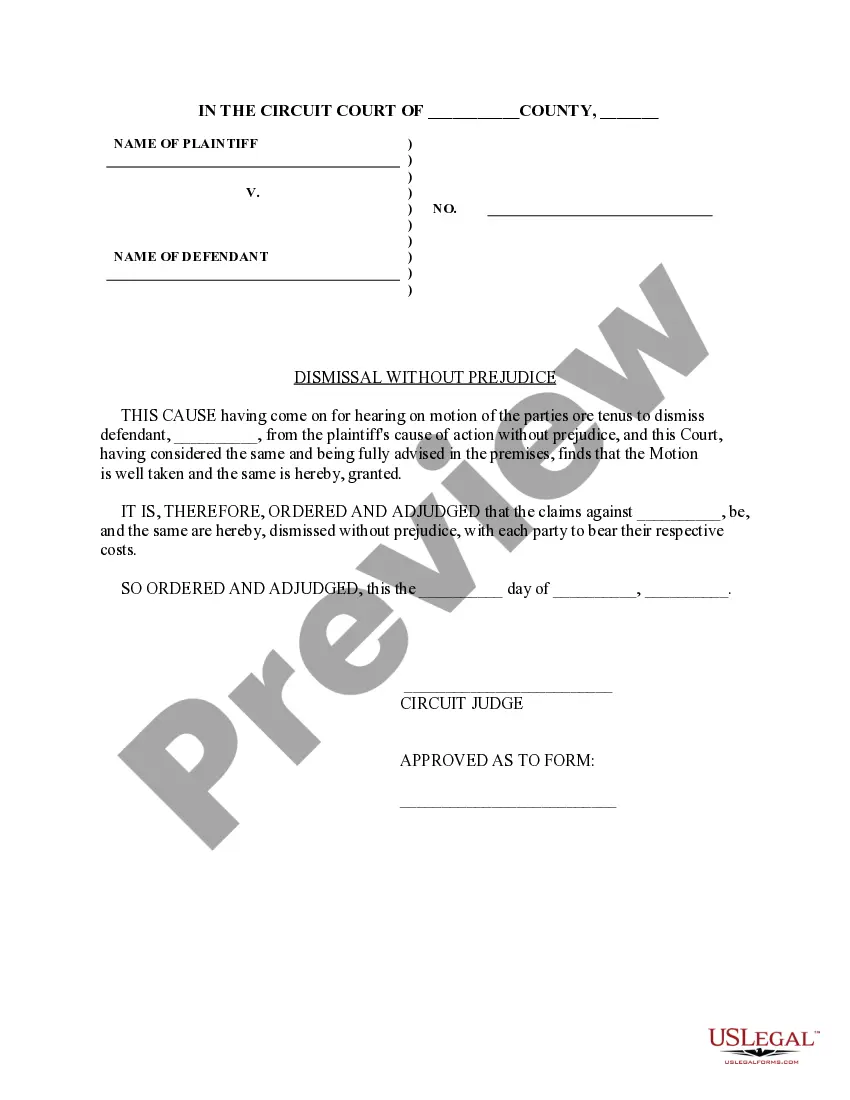
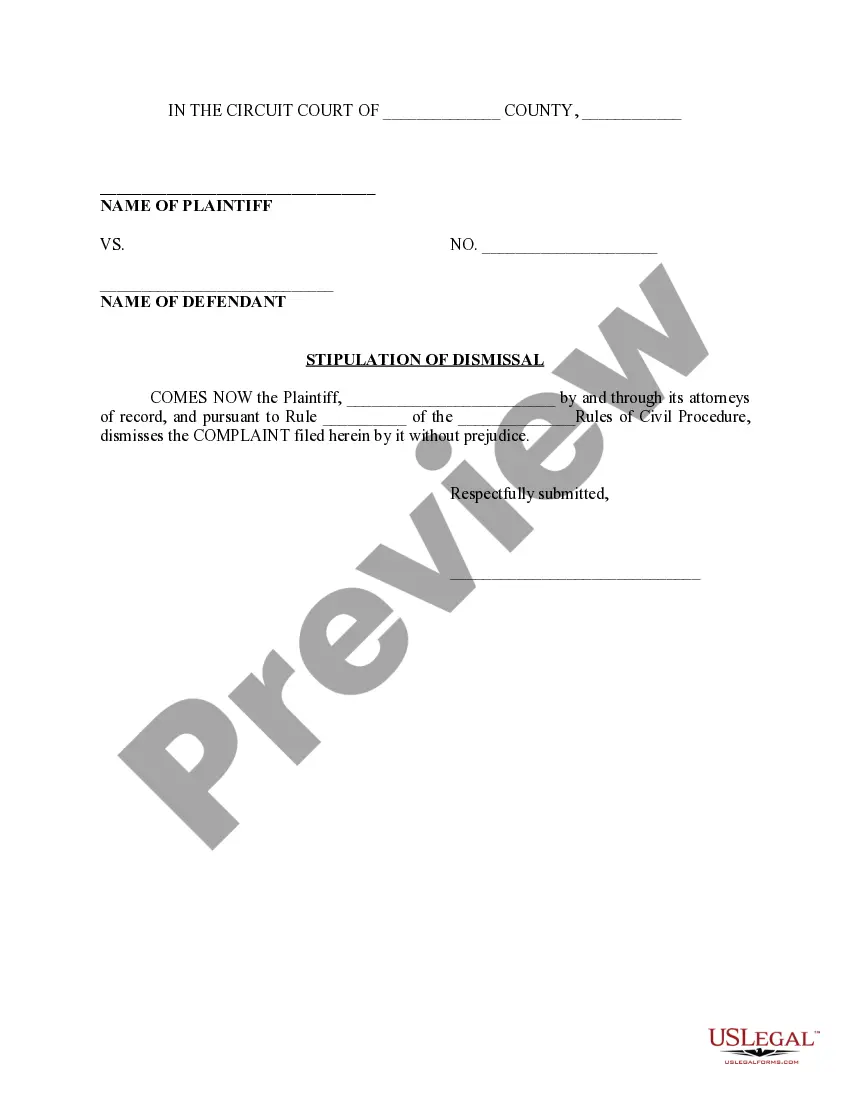
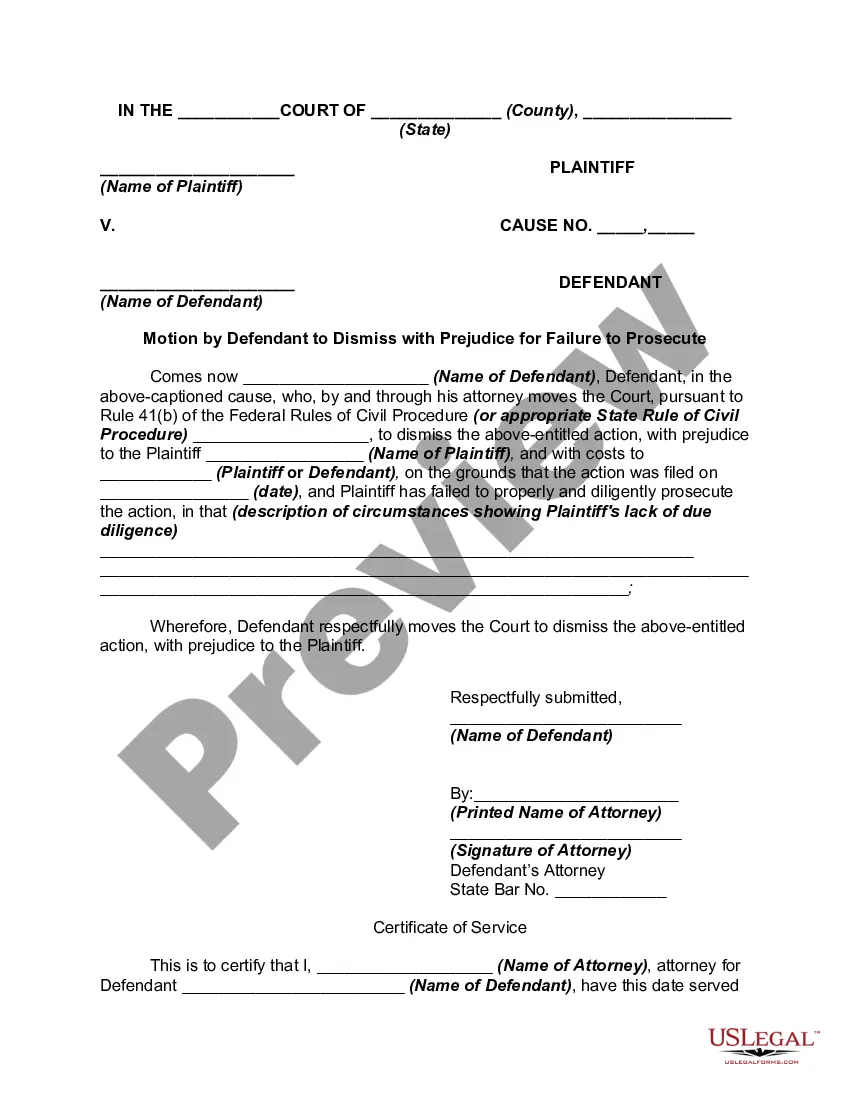
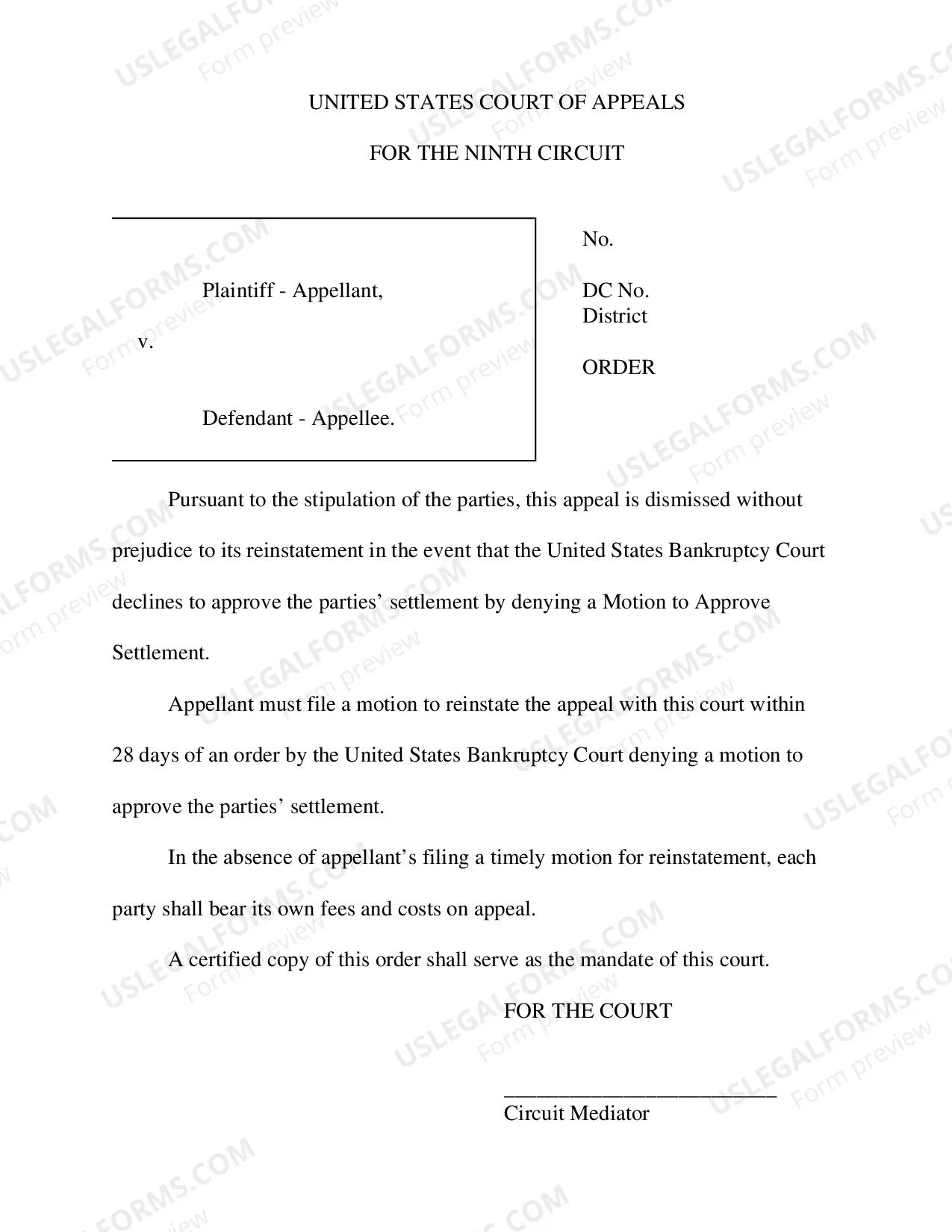
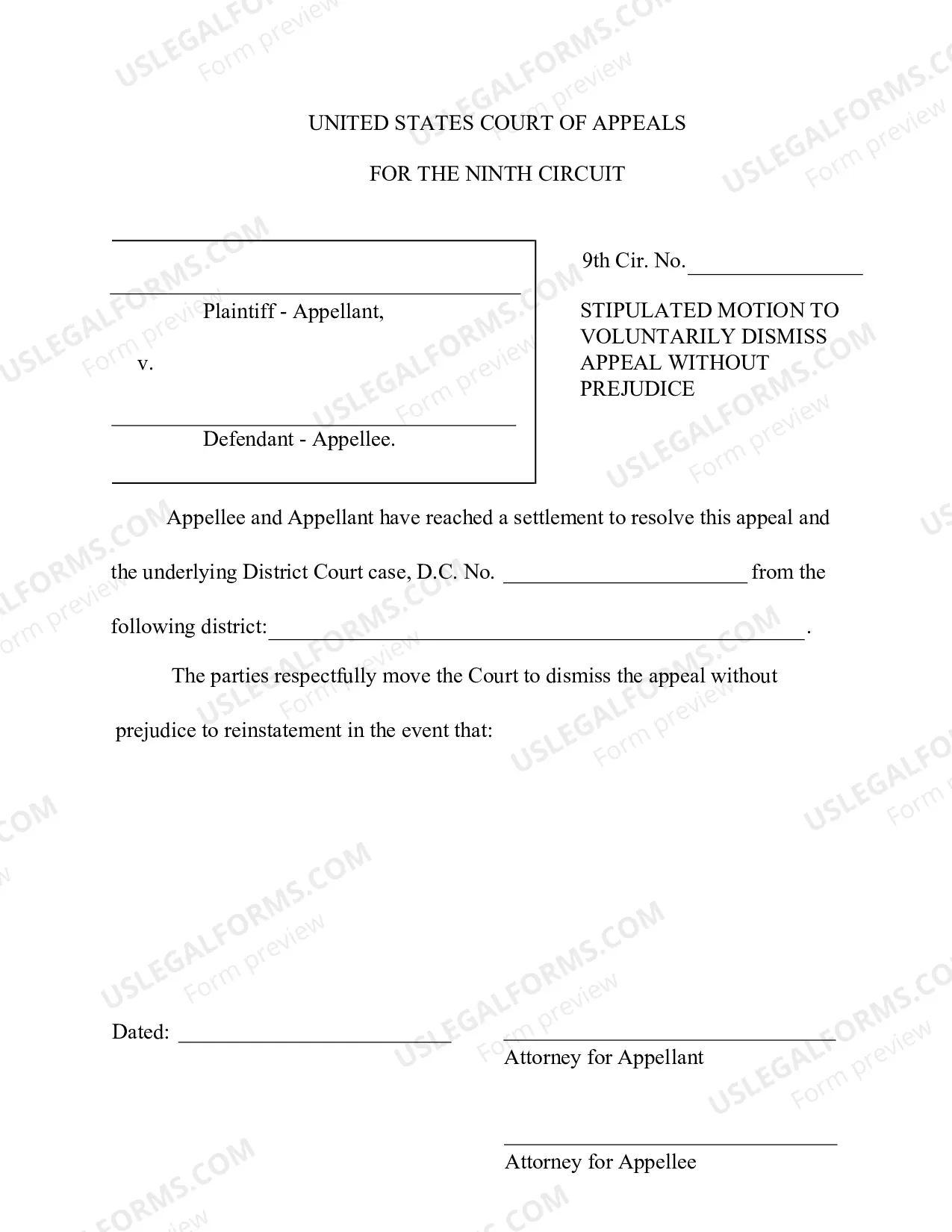
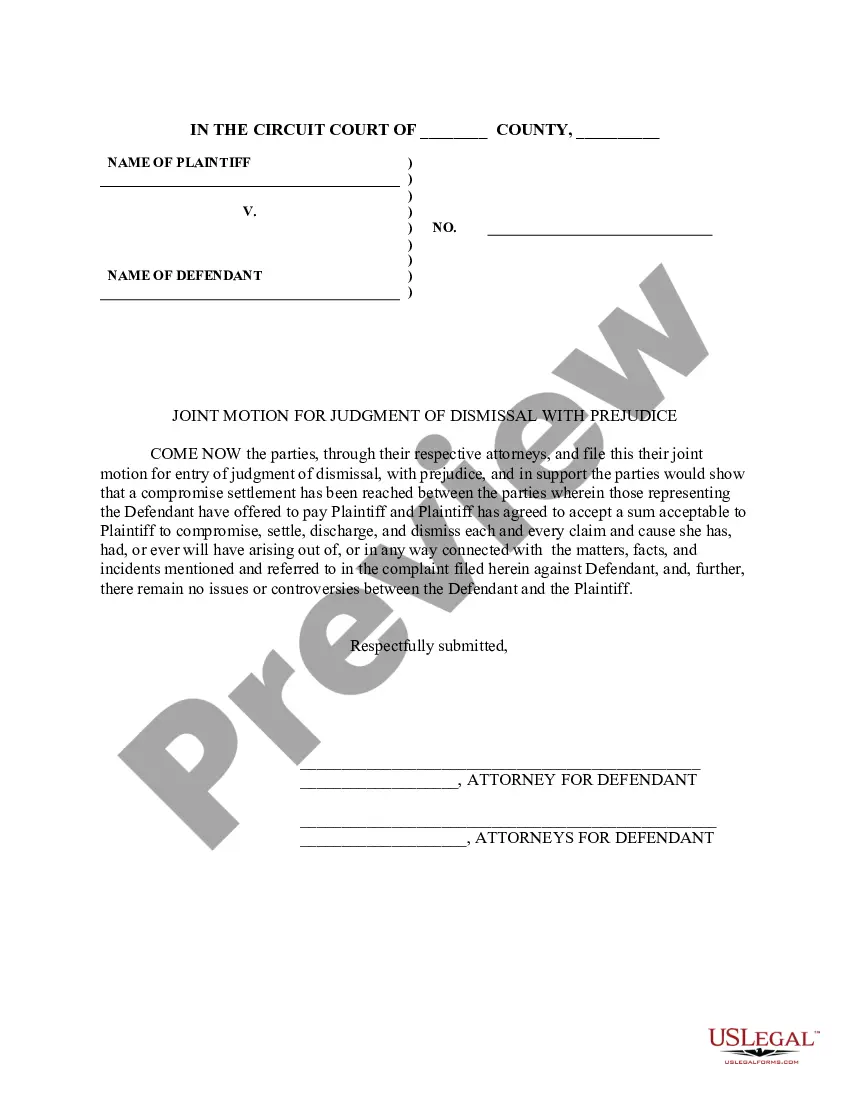
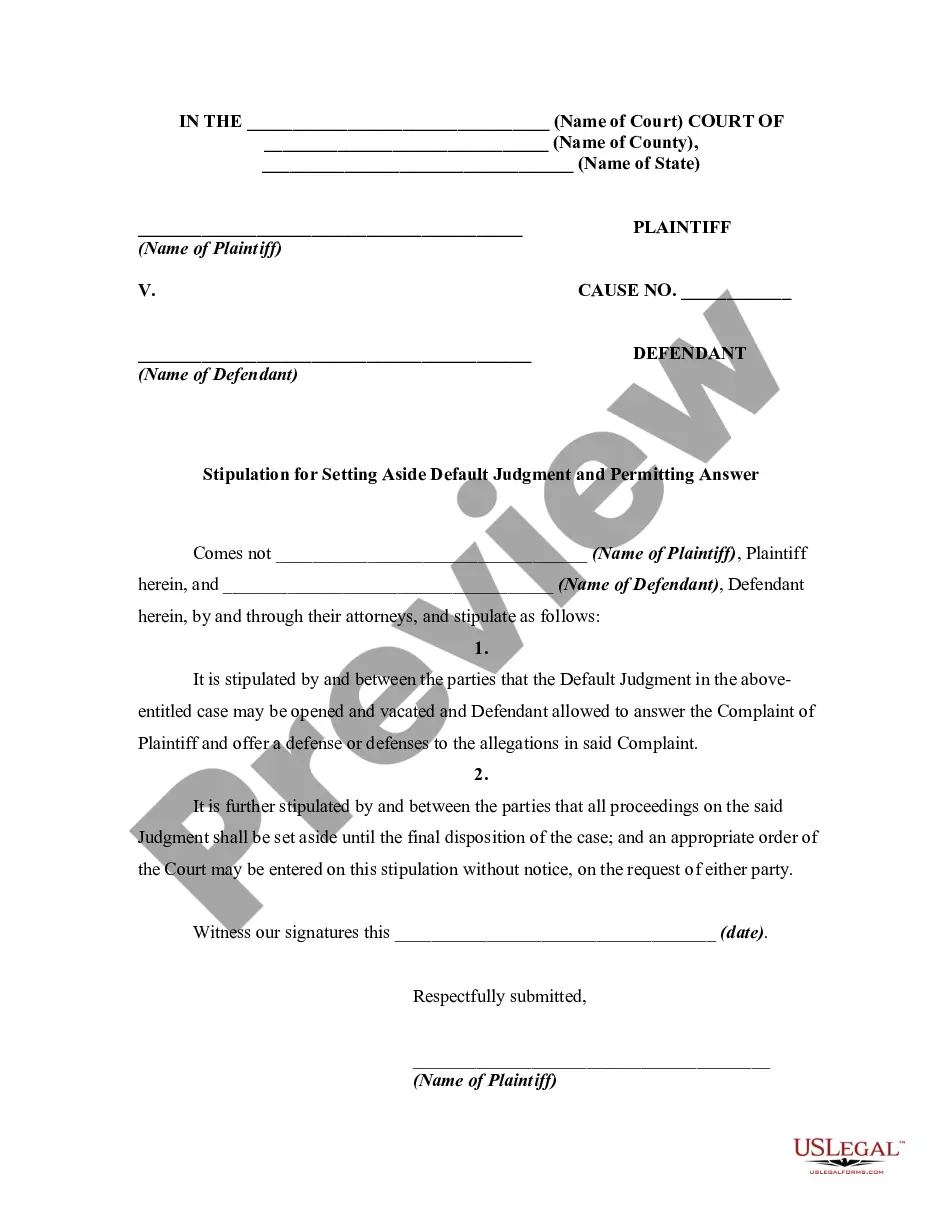
The Dismissal Without Prejudice form is a legal document that permits a plaintiff to withdraw their case without being barred from refiling in the future. This type of dismissal typically occurs due to procedural issues or when the plaintiff chooses to dismiss the case to correct deficiencies before attempting to refile. Unlike dismissals with prejudice, this form allows for future legal action on the same claims.
Key components of this form
- Title of the motion or order for dismissal without prejudice.
- Name of the parties involved, including the plaintiff and defendant.
- Statement indicating that the claims are dismissed without prejudice.
- Clause specifying that each party will bear its respective costs.
- Signature line for the presiding judge with date.
- Approval section, confirming the form's compliance with legal standards.
Situations where this form applies
This form is used when a plaintiff decides to withdraw their case from court without losing the right to reopen it in the future. It is applicable when procedural technicalities arise, or when the plaintiff requires more time to gather evidence or amend the allegations before proceeding with the same legal claims.
Who this form is for
- Any plaintiff who wishes to voluntarily dismiss their lawsuit without prejudice.
- Litigants facing procedural challenges that may impact their case.
- Individuals looking to refile a case after initial dismissal.
Steps to complete this form
- Identify the parties involved in the lawsuit.
- Clearly state the claims being dismissed without prejudice.
- Indicate that each party will bear its respective costs.
- Provide the date of the order and sign it before the designated circuit judge.
- Ensure that the form meets any local court requirements for submission.
Does this document require notarization?
This form does not typically require notarization to be legally valid. However, some jurisdictions or document types may still require it. US Legal Forms provides secure online notarization powered by Notarize, available 24/7 for added convenience.
Get your form ready online
Our built-in tools help you complete, sign, share, and store your documents in one place.
Make edits, fill in missing information, and update formatting in US Legal Forms—just like you would in MS Word.
Download a copy, print it, send it by email, or mail it via USPS—whatever works best for your next step.
Sign and collect signatures with our SignNow integration. Send to multiple recipients, set reminders, and more. Go Premium to unlock E-Sign.
If this form requires notarization, complete it online through a secure video call—no need to meet a notary in person or wait for an appointment.
We protect your documents and personal data by following strict security and privacy standards.

Make edits, fill in missing information, and update formatting in US Legal Forms—just like you would in MS Word.

Download a copy, print it, send it by email, or mail it via USPS—whatever works best for your next step.

Sign and collect signatures with our SignNow integration. Send to multiple recipients, set reminders, and more. Go Premium to unlock E-Sign.

If this form requires notarization, complete it online through a secure video call—no need to meet a notary in person or wait for an appointment.

We protect your documents and personal data by following strict security and privacy standards.
Mistakes to watch out for
- Failing to include all parties' names, which can affect the validity of the dismissal.
- Not specifying that the dismissal is without prejudice, which may bar future claims.
- Omitting signatures, particularly from the presiding judge.
Benefits of using this form online
- Convenient access allows for easy completion at any time.
- Editable templates ensure all necessary information can be accurately included.
- Reliability from templates drafted by licensed attorneys, ensuring compliance with legal standards.
Looking for another form?



Form popularity
FAQ
WHAT IS A DISMISSED CASE? A dismissed criminal case is one in which you were not convicted. When a criminal charge is dismissed, you are not guilty and the case is concluded.
The courts in California may dismiss a case either with or without prejudice. Cases dismissed with prejudice cannot be reopened.After a dismissal without prejudice, a case may be refiled in Los Angeles. This means that you can face the same charges again.
When a lawsuit is dismissed without prejudice, it signifies that none of the rights or privileges of the individual involved are considered to be lost or waived.The same holds true when an admission is made or when a motion is denied without prejudice.
In the formal legal world, a court case that is dismissed with prejudice means that it is dismissed permanently. A case dismissed with prejudice is over and done with, once and for all, and can't be brought back to court. A case dismissed without prejudice means the opposite. It's not dismissed forever.
Motion for Nonsuit in Texas A Motion for Nonsuit is what a creditor typically files to dismiss a lawsuit.This means that the Plaintiff is voluntarily giving up on their case but they reserve the right to re-file the case if they want to.
A non-suit is a dismissal without prejudice to re-filing the case. A dismissal with prejudice means that the case cannot be re-filed. Usually, a non-suit is taken when parties do not execute a release. Take care.
Legal Definition of nonsuit 1 : a judgment entered against a plaintiff for failure to prosecute a case or inability to establish a prima facie case : dismissal. 2 : voluntary dismissal at dismissal.
A judge may dismiss a case without prejudice in order to allow for errors in the case presented to be addressed before it is brought back to court. A judge will dismiss a case with prejudice if he or she finds reason why the case should not move forward and should be permanently closed.
If a prosecutor files such a case and the charges are dismissed, the defendant can sue for malicious prosecution and seek financial damages. The law that allows a malicious prosecution suit is aimed at preventing and addressing abuse of the legal process.