Construction Cost Estimate 1
What is this form?
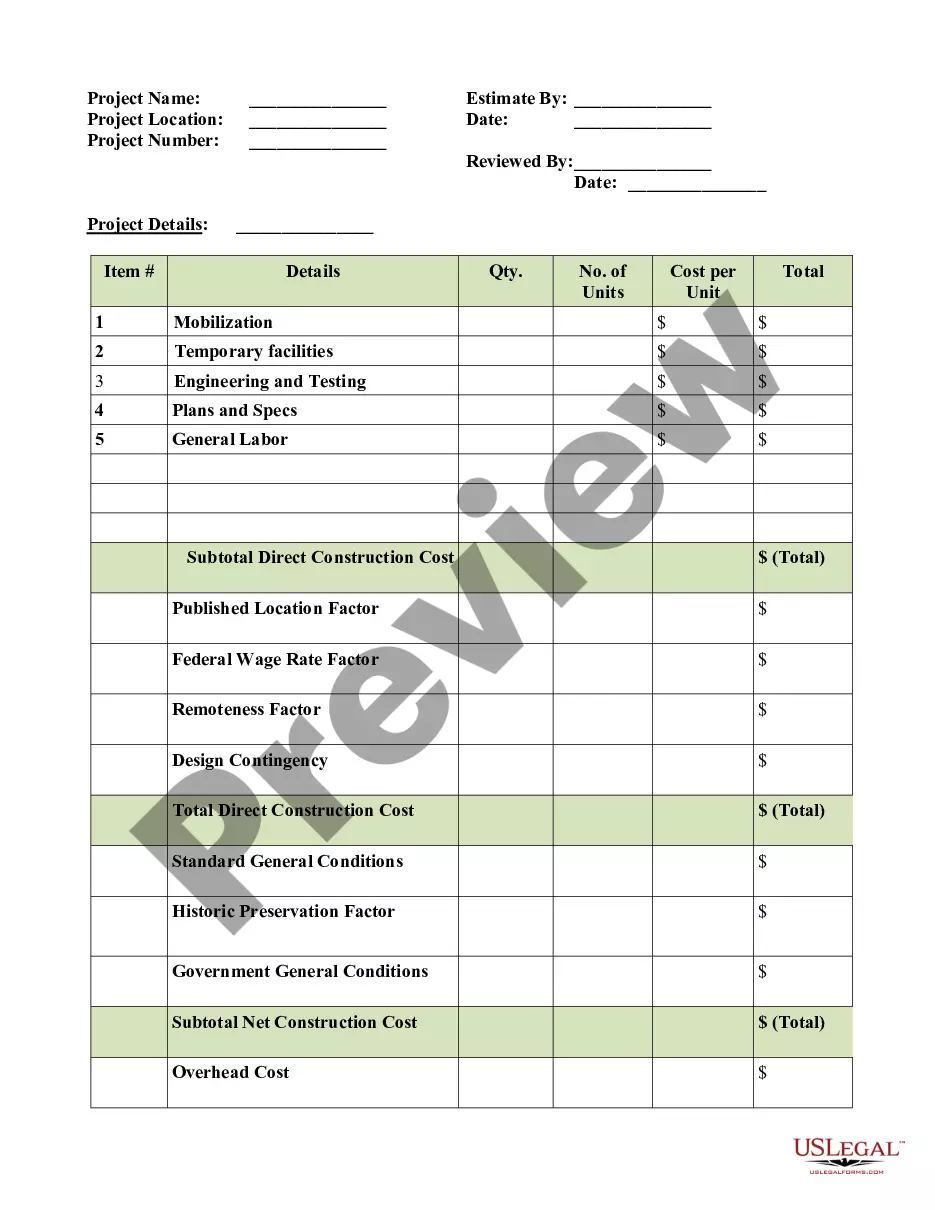
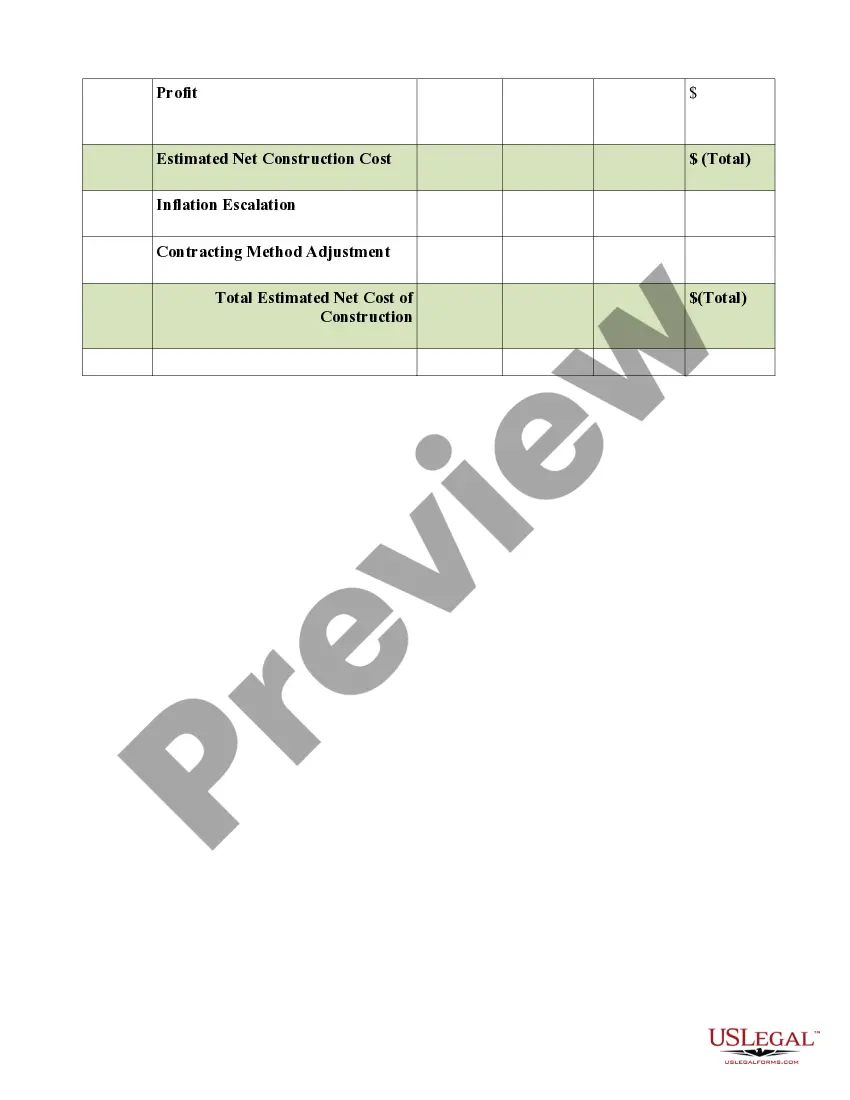
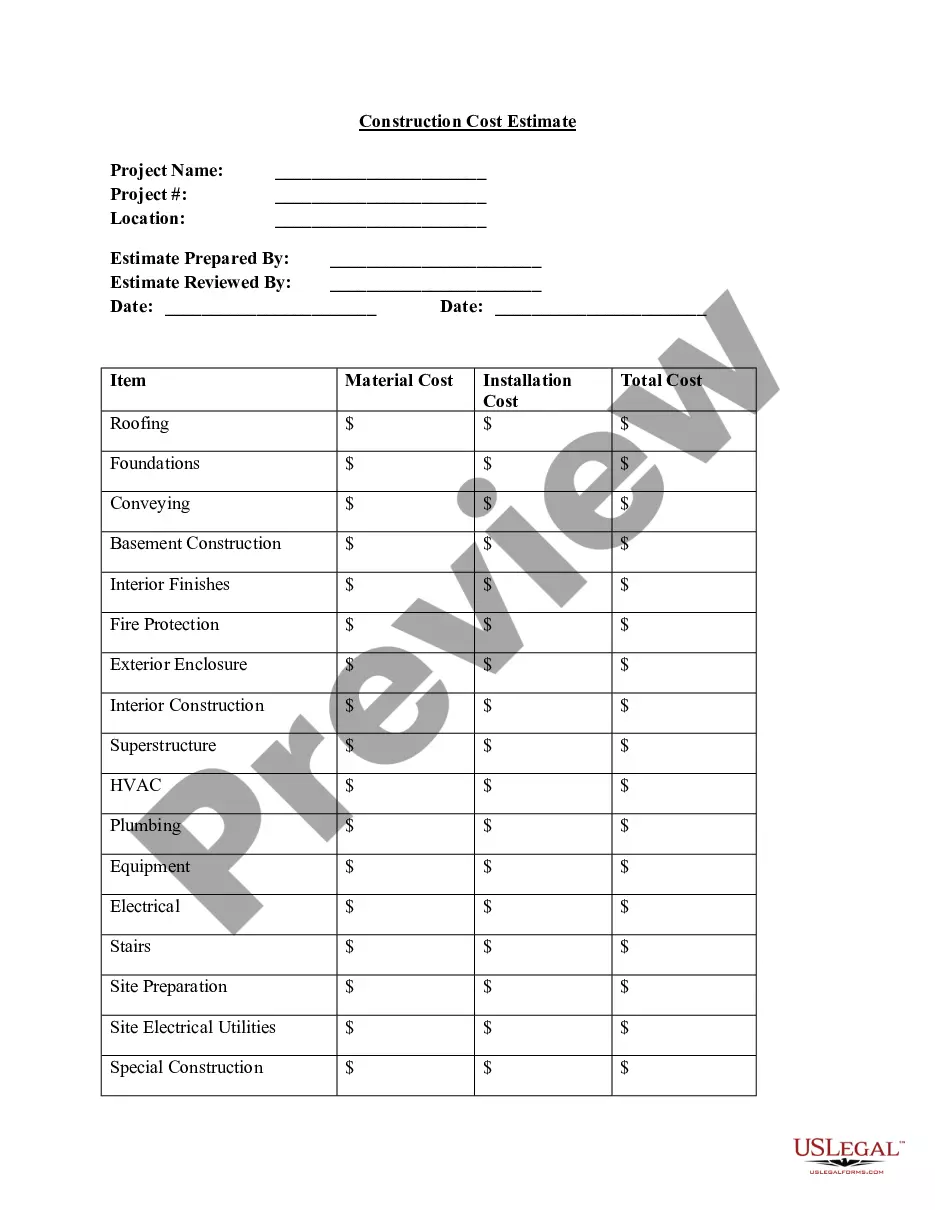
The Construction Cost Estimate form is designed to provide a comprehensive approximation of construction costs based on available data and prior experience. It helps project owners and contractors anticipate expenses associated with a construction project. Unlike simple estimation forms, this detailed template accounts for several factors, including direct costs, overhead, and profit margins, ensuring a well-rounded financial outlook before construction begins.
Key parts of this document
- Project Location: Details the address where the construction will take place.
- Date: The date the estimate is prepared.
- Project Details: A section for outlining specific project information.
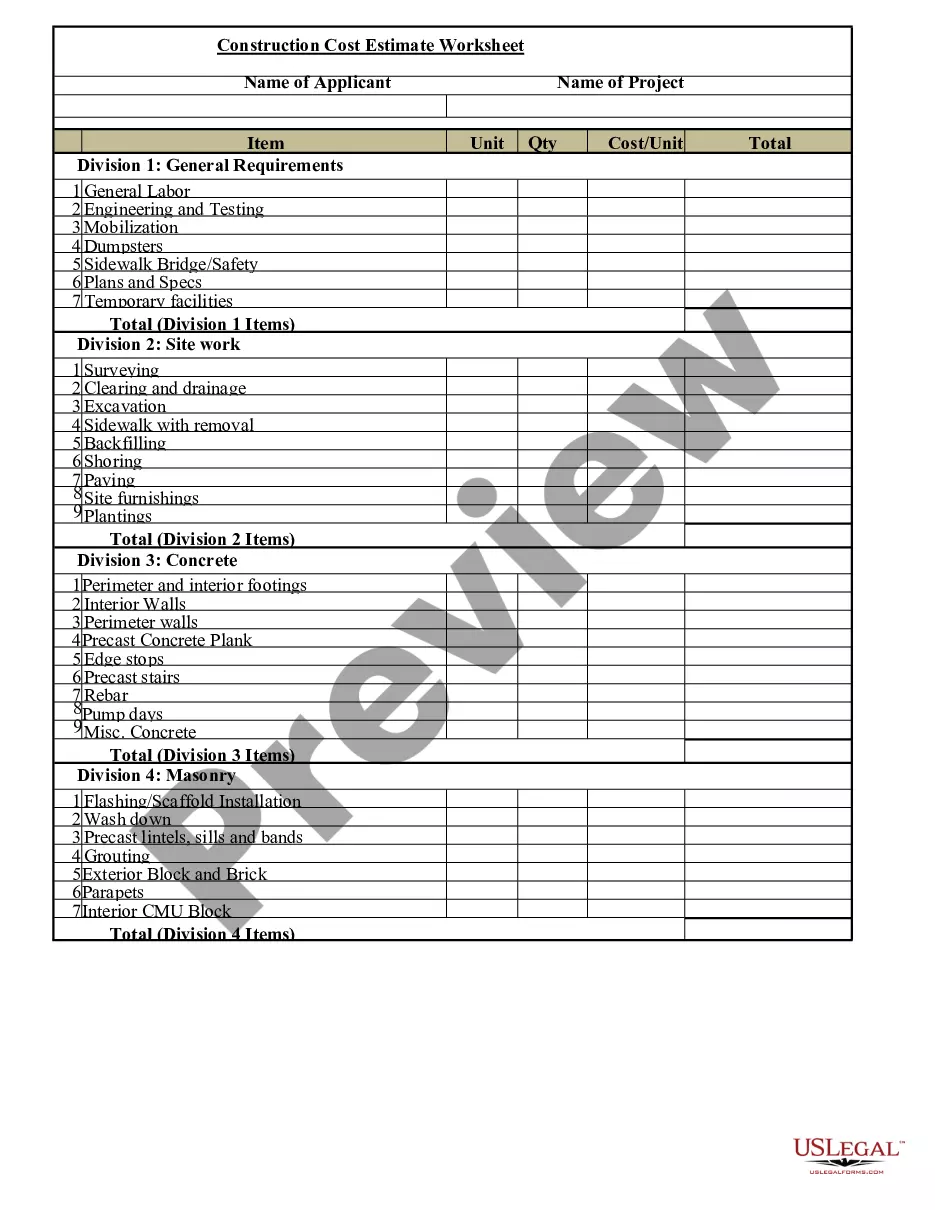
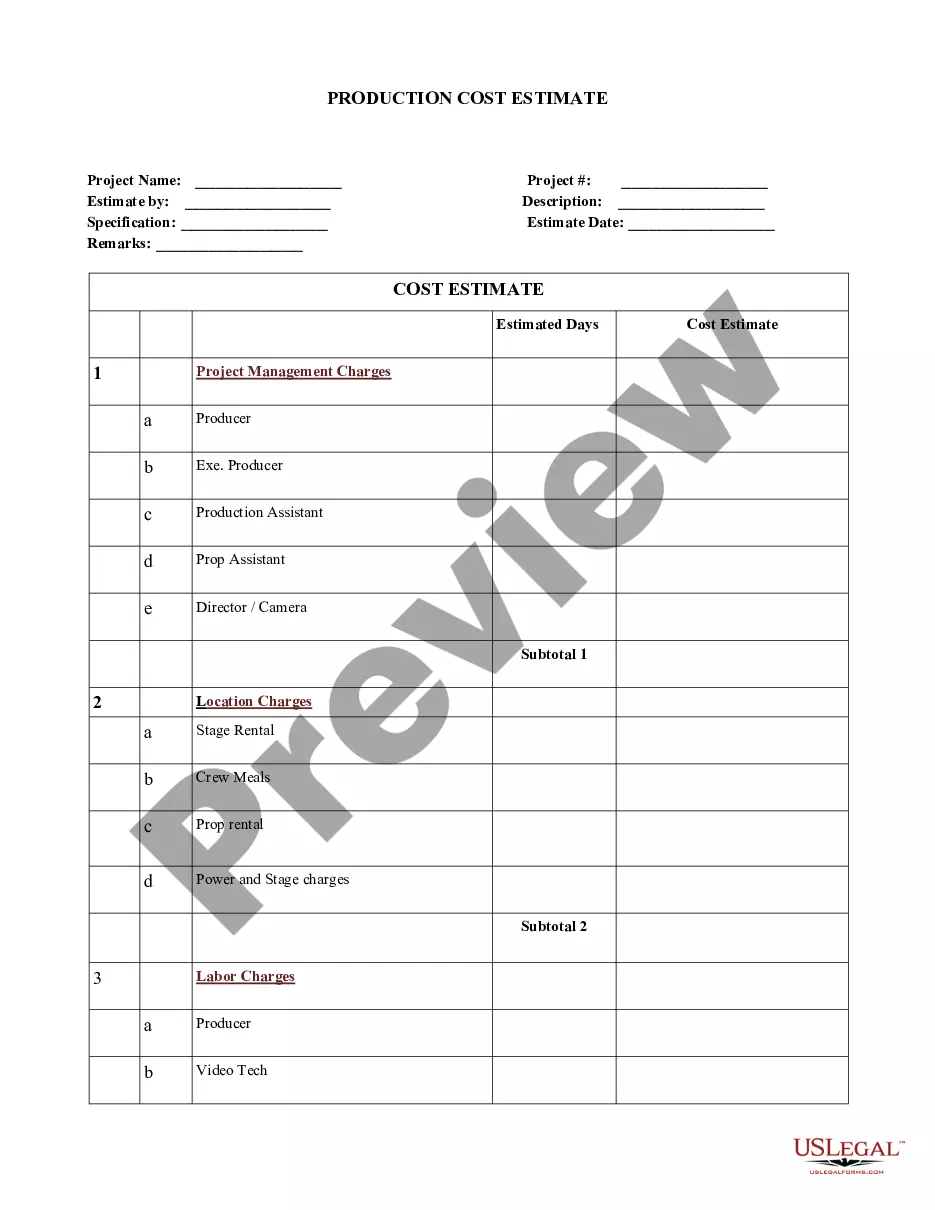
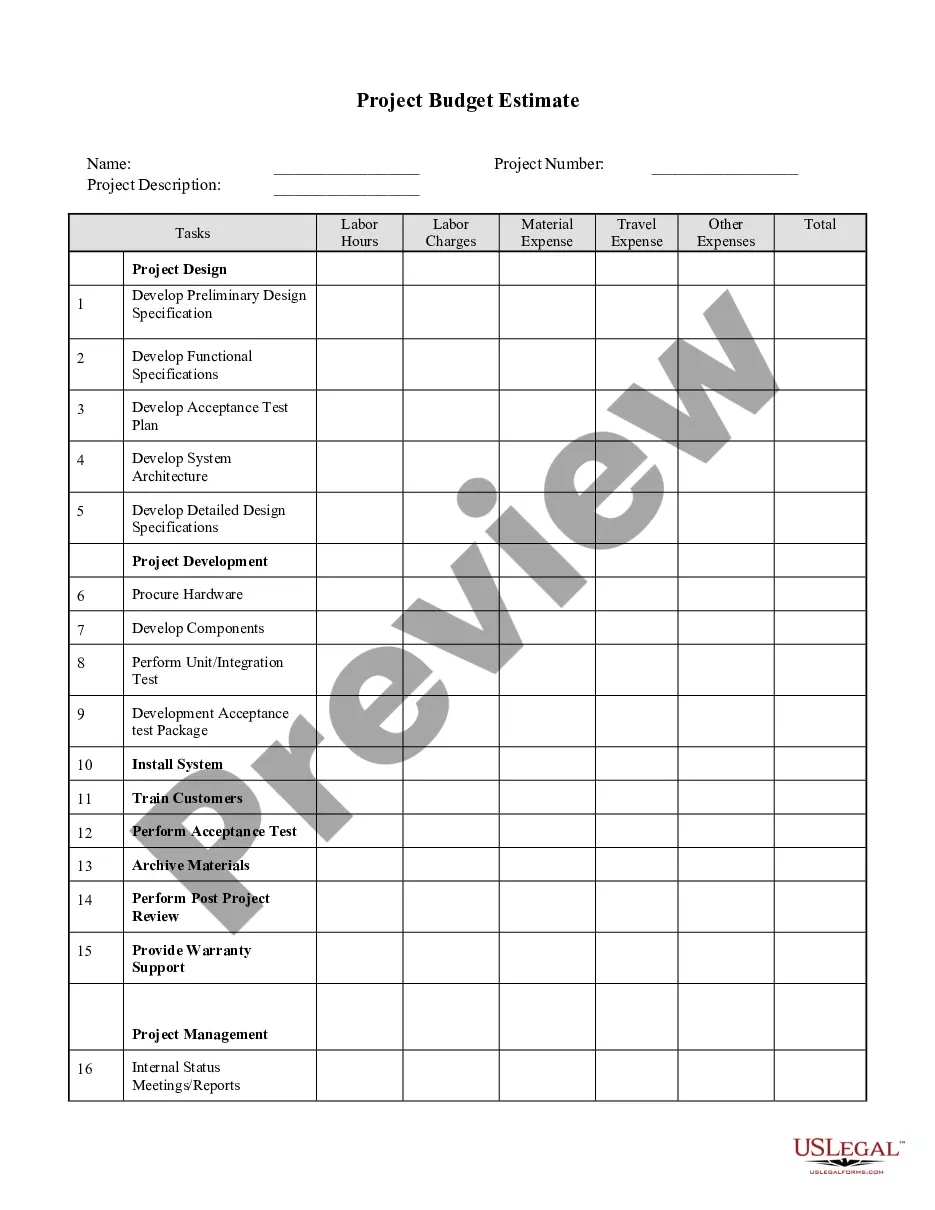
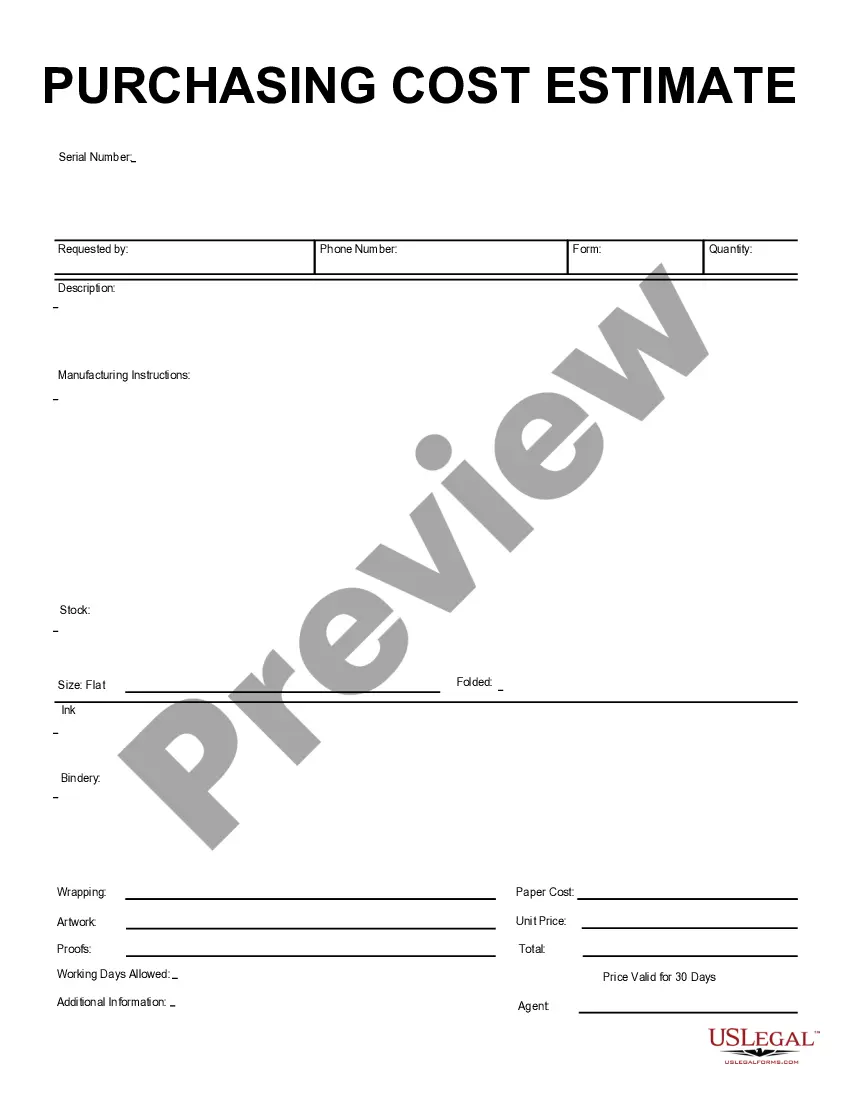
- Cost Breakdown: Lists items, quantities, costs per unit, and totals for each component of the project.
- Contingency and Adjustment Factors: Includes allowances for unforeseen circumstances.
- Total Estimated Costs: Summarizes the complete projected expenses for the project.
Common use cases
This form is essential whenever a construction project is planned, helping to create a reliable budget for the project. Use it when you need to assess the financial requirements for various phases of construction, such as mobilization, engineering, and labor. It is particularly useful in early planning stages when determining feasibility and securing funding or bids.
Who should use this form
- Contractors seeking to estimate costs for new construction projects.
- Project managers who need to prepare a budget for specific tasks.
- Property owners wishing to understand potential project expenses.
- Architects and engineers involved in the financial planning of construction.
- Developers looking to assess investment opportunities in construction.
Steps to complete this form
- Identify the project location and enter the date in the designated fields.
- Provide detailed project information in the Project Details section.
- List all cost items, including quantity and cost per unit, in the Cost Breakdown area.
- Calculate subtotal costs, including factors for contingency and overhead.
- Summarize the total estimated costs at the end of the form.
Does this document require notarization?
Notarization is generally not required for this form. However, certain states or situations might demand it. You can complete notarization online through US Legal Forms, powered by Notarize, using a verified video call available anytime.
Get your form ready online
Our built-in tools help you complete, sign, share, and store your documents in one place.
Make edits, fill in missing information, and update formatting in US Legal Forms—just like you would in MS Word.
Download a copy, print it, send it by email, or mail it via USPS—whatever works best for your next step.
Sign and collect signatures with our SignNow integration. Send to multiple recipients, set reminders, and more. Go Premium to unlock E-Sign.
If this form requires notarization, complete it online through a secure video call—no need to meet a notary in person or wait for an appointment.
We protect your documents and personal data by following strict security and privacy standards.

Make edits, fill in missing information, and update formatting in US Legal Forms—just like you would in MS Word.

Download a copy, print it, send it by email, or mail it via USPS—whatever works best for your next step.

Sign and collect signatures with our SignNow integration. Send to multiple recipients, set reminders, and more. Go Premium to unlock E-Sign.

If this form requires notarization, complete it online through a secure video call—no need to meet a notary in person or wait for an appointment.

We protect your documents and personal data by following strict security and privacy standards.
Common mistakes to avoid
- Failing to account for all necessary cost items in the estimate.
- Overlooking contingency factors or adjusting costs for inflation.
- Using outdated cost data, which can skew the estimate.
- Not reviewing the form for accuracy before submission.
Why use this form online
- Easy access to download and complete the form at your convenience.
- Editable fields allow for quick adjustments as project details change.
- Reliable templates drafted by licensed attorneys ensure legal compliance.
- Reduced risk of errors compared to handwritten estimates.
Looking for another form?



Form popularity
FAQ
'The base cost estimate is the total of the building works estimate, main contractor's preliminaries estimate and main contractor's overheads and profit estimate, project/design team fee estimate and the other development/project costs estimate. The base cost estimate is to contain no allowances for risk or inflation.
The Rule of Six-tenths Approximate costs can be obtained if the cost of a similar item of different size or capacity is known. A rule of thumb developed over the years known as the rule of six-tenths gives very satisfactory results when only an approximate cost within plus or minus 20% is required.
The Rule of Two Method It is based on the premise that labor is about half of the material costs. Through historical data and industry knowledge, you estimate the labor cost then multiply it by two, add 10%, and you have a basic cost estimation.
There are four primary methods used to estimate construction costs. Those methods are known as Project Comparison Estimating or Parametric Cost Estimating, Area & Volume Estimating, Assembly & System Estimating, and Unit Price & Schedule Estimating.
The rule of two Given that between 40% and 50% of the average construction project's cost goes towards labor, you could estimate the entire project's budget by determining either the expected labor cost or the expected material cost.
When you're developing an estimate based on average industry pricing, you will need to take the following criteria into consideration: Quantity take off. Material prices. Labour rate. Labour hour. Subcontractor rates. Equipment costs. Contingencies. Indirect costs.
The rule of thumb is to take the $150/sq. ft. residential estimate and divide it in half, so you are left with approximately $75 each for labor and materials. Materials typically only fluctuate a little.
The American Society of Professional Estimators (ASPE) defines estimate levels in the reverse order as Level 1 ? Order (Range) of Magnitude, Level 2 ? Schematic/Conceptual Design, Level 3- Design Development, Level 4 ? Construction Document, and Level 5 ? Bid.>.? ACostE defines a Class I Estimate as definitive, a Class