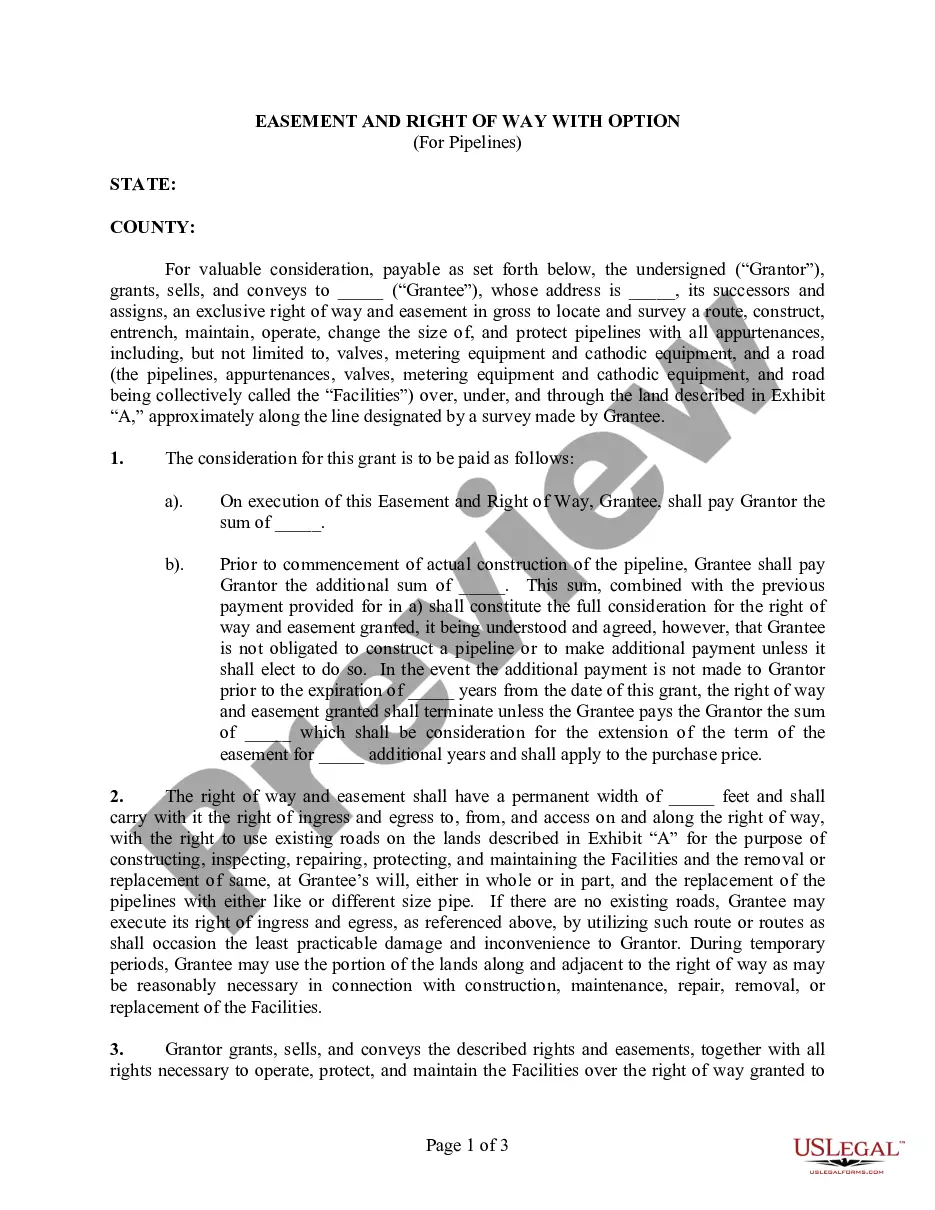
Cost Estimate and Schedule Data Sheet
What this document covers
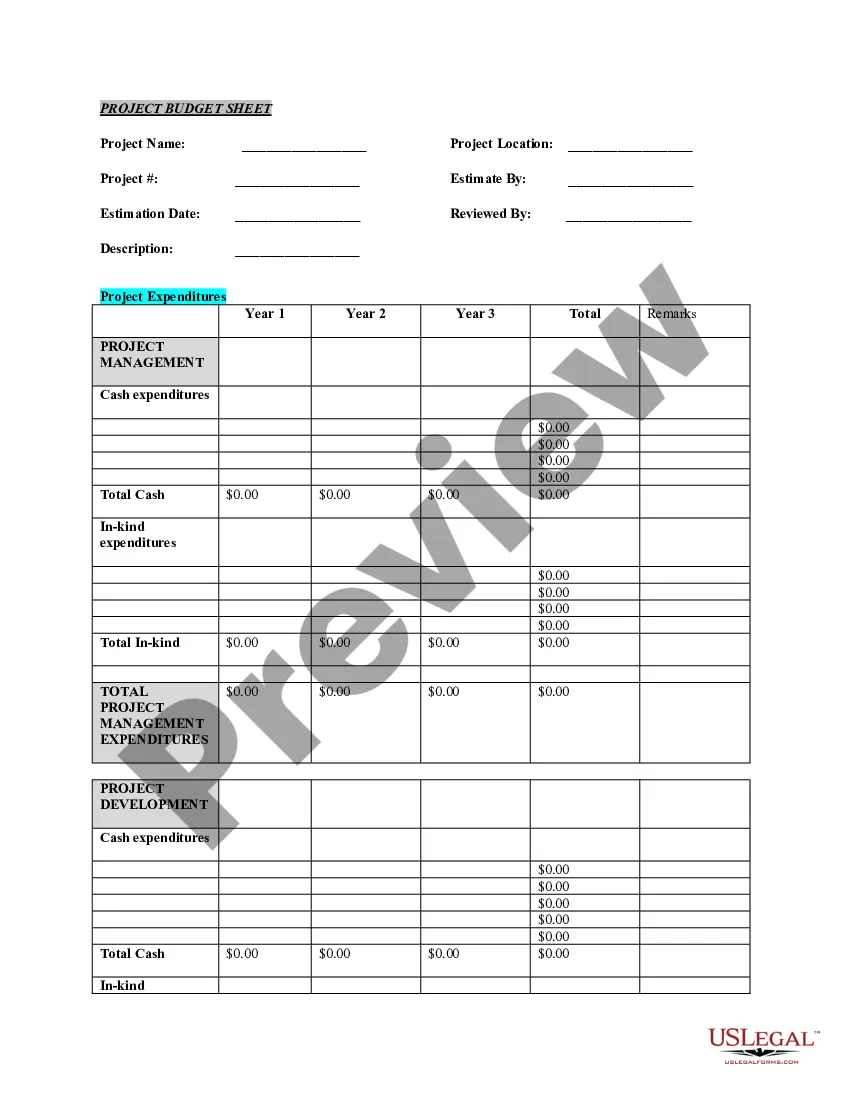
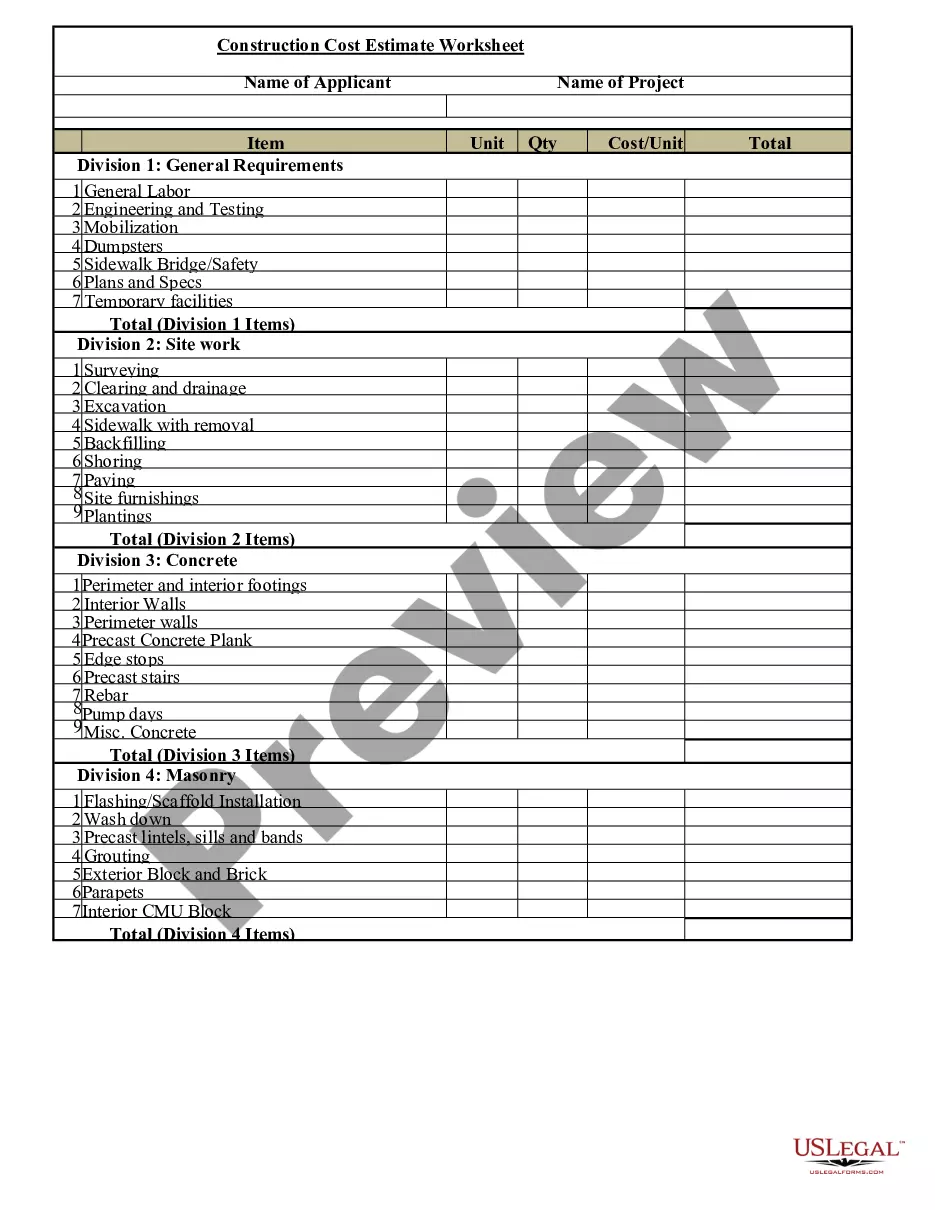
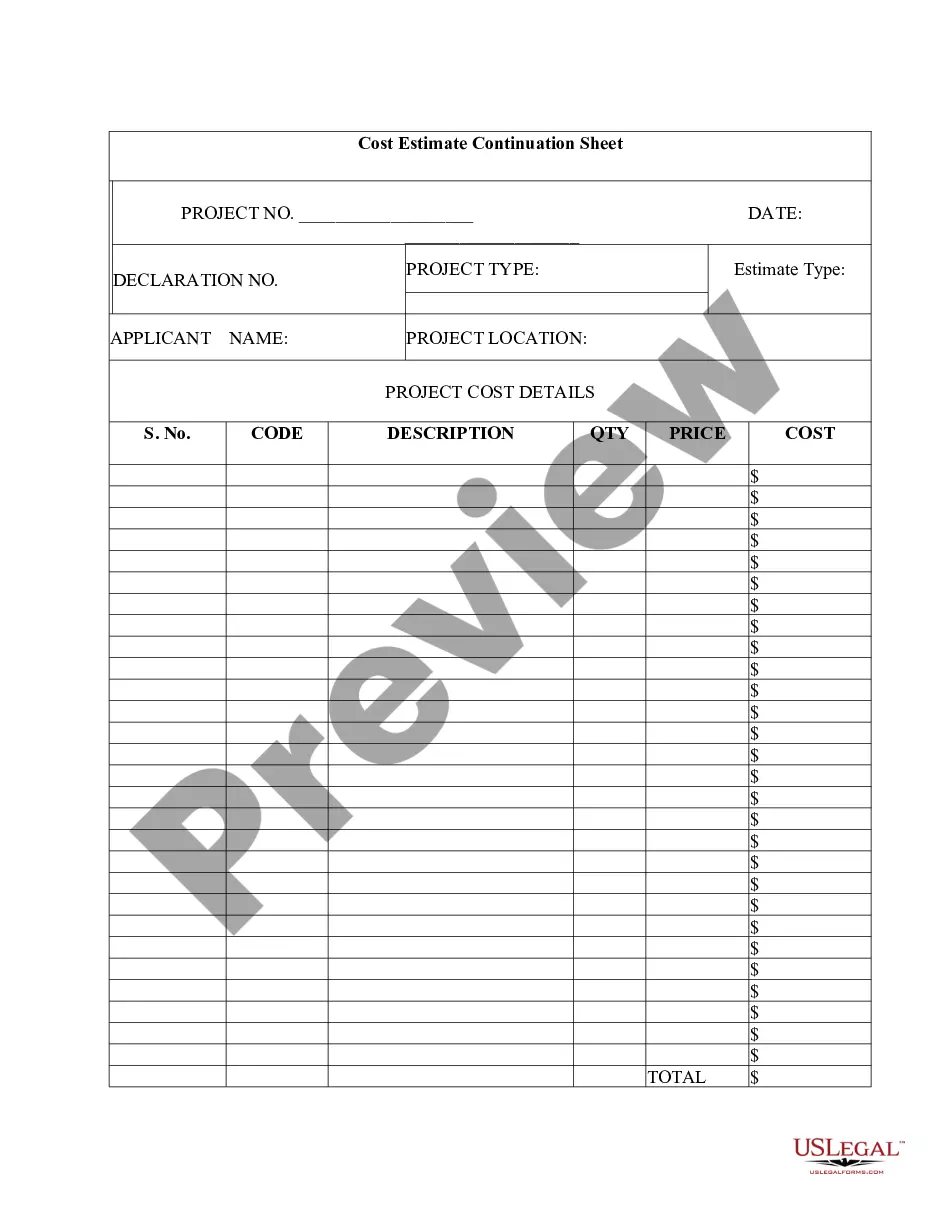
The Cost Estimate and Schedule Data Sheet is a legal form used to provide an approximation of project costs and timelines based on available information and expert experience. This form is essential for project planning and differs from other estimates by including specific phases of work, funding sources, and a detailed schedule while acknowledging uncertainties in project details.
What’s included in this form
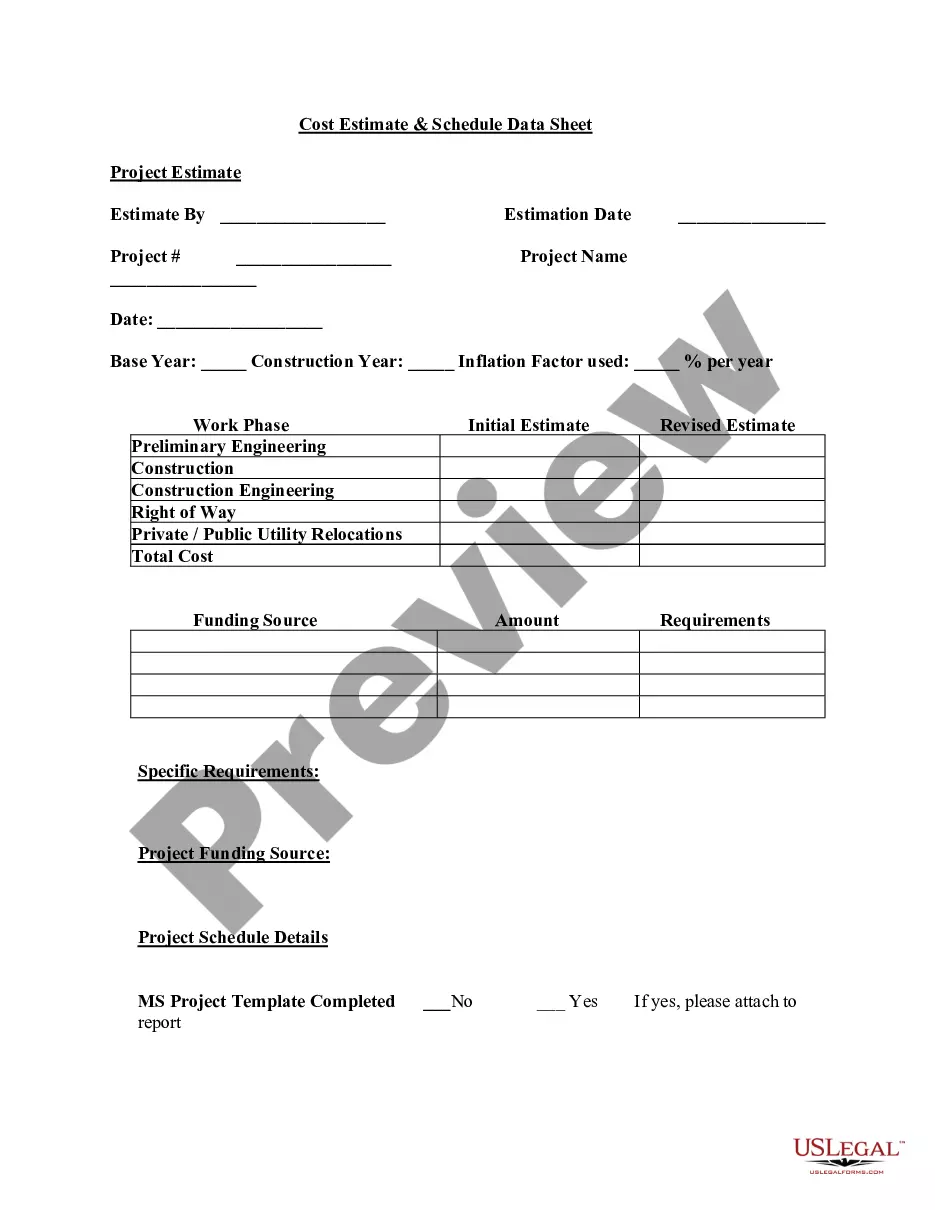
- Project Estimate: Includes sections for estimation by, estimation date, and project details.
- Work Phases: Lists various work phases such as preliminary engineering, construction, and total cost estimates.
- Funding Source: Identifies the source of funds and project-specific requirements.
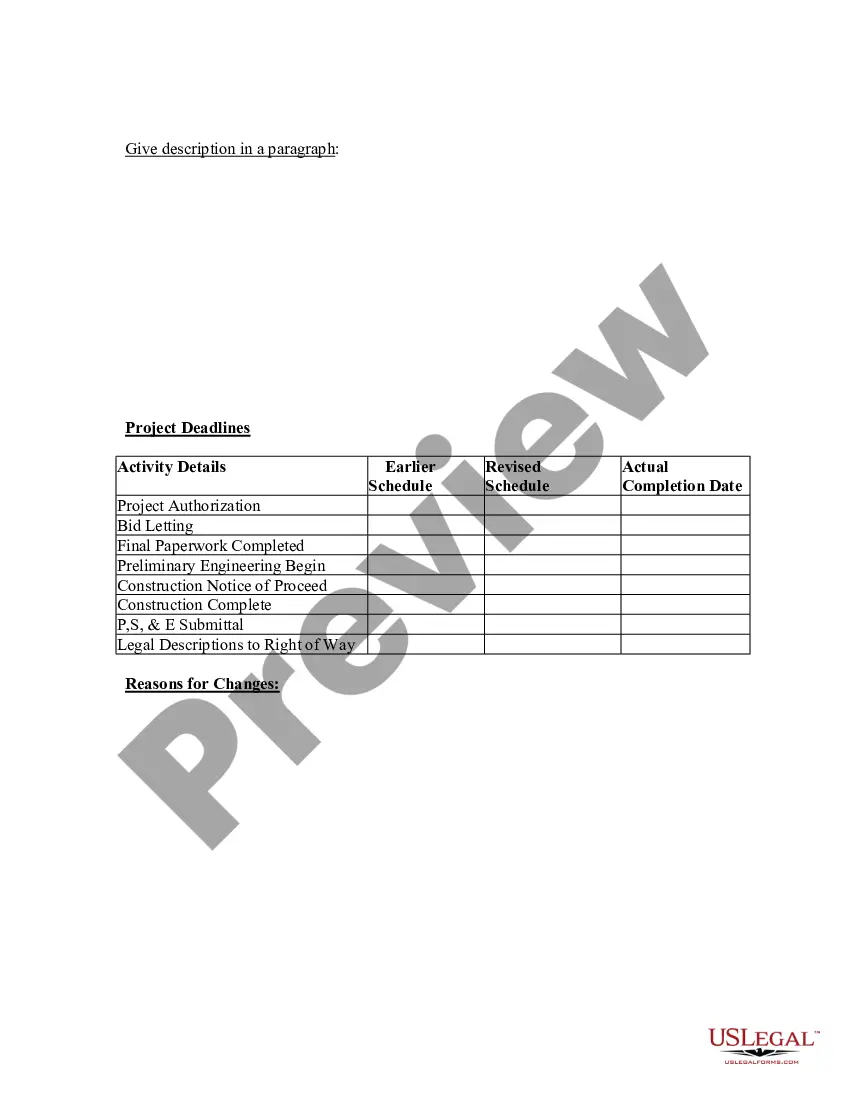
- Project Schedule: Documents deadlines for activities including construction start and completion dates.
- Reasons for Changes: Space to explain any changes to the estimates or schedule.
Common use cases
This form is used in scenarios where a project manager needs to outline expected costs and timelines for construction or engineering projects. It is especially useful when seeking funding, negotiating contracts, or planning project phases in both public and private sectors.
Who needs this form
- Project managers in construction or engineering.
- Government agencies overseeing public works.
- Private companies seeking estimates for upcoming projects.
- Stakeholders requiring detailed cost assessments for budget approvals.
How to prepare this document
- Enter the name of the project and the estimated person along with the estimation date.
- Specify the base year and construction year, including the inflation factor used per year.
- Detail the initial and revised estimates for each work phase, including total costs.
- Identify the funding sources and specific project requirements.
- Outline the project schedule, including key deadlines and completion dates.
Notarization requirements for this form
This form usually doesn’t need to be notarized. However, local laws or specific transactions may require it. Our online notarization service, powered by Notarize, lets you complete it remotely through a secure video session, available 24/7.
Get your form ready online
Our built-in tools help you complete, sign, share, and store your documents in one place.
Make edits, fill in missing information, and update formatting in US Legal Forms—just like you would in MS Word.
Download a copy, print it, send it by email, or mail it via USPS—whatever works best for your next step.
Sign and collect signatures with our SignNow integration. Send to multiple recipients, set reminders, and more. Go Premium to unlock E-Sign.
If this form requires notarization, complete it online through a secure video call—no need to meet a notary in person or wait for an appointment.
We protect your documents and personal data by following strict security and privacy standards.
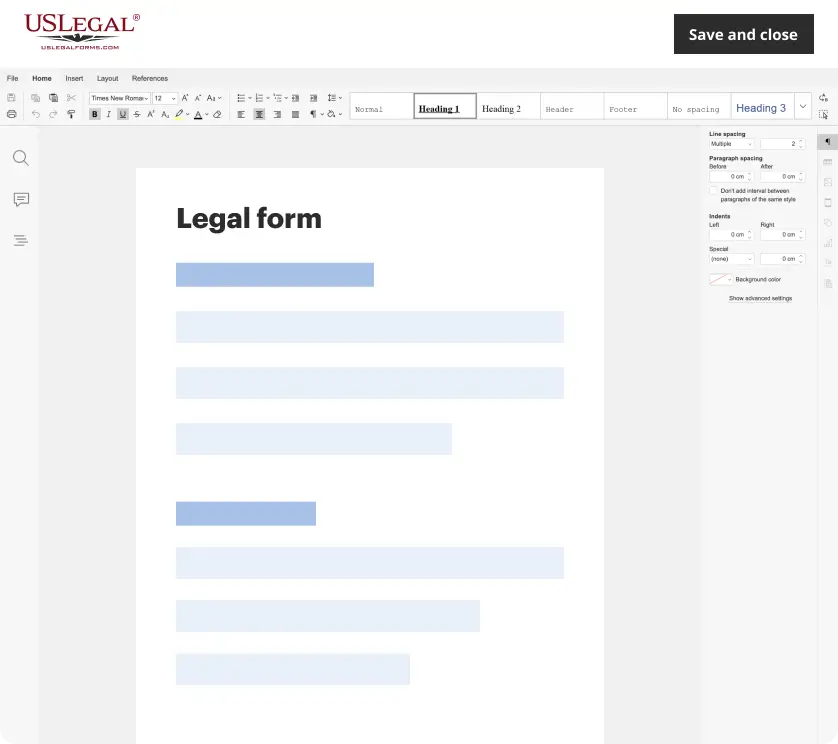
Make edits, fill in missing information, and update formatting in US Legal Forms—just like you would in MS Word.
Download a copy, print it, send it by email, or mail it via USPS—whatever works best for your next step.
Sign and collect signatures with our SignNow integration. Send to multiple recipients, set reminders, and more. Go Premium to unlock E-Sign.
If this form requires notarization, complete it online through a secure video call—no need to meet a notary in person or wait for an appointment.
We protect your documents and personal data by following strict security and privacy standards.
Mistakes to watch out for
- Failing to update estimates based on changing project conditions.
- Not referencing proper funding sources or requirements.
- Missing critical deadlines or project activity details.
Why complete this form online
- Convenience: Download and complete the form at your own pace.
- Editability: Easily make changes to your estimates as needed.
- Reliability: Ensure accuracy by utilizing formats drafted by licensed attorneys.
Legal use & context
- Provides a formal record of cost estimates and project scheduling useful in legal proceedings.
- Helps establish a clear understanding between parties regarding project expectations.
- Supports compliance with regulatory requirements for publicly funded projects.
What to keep in mind
- The Cost Estimate and Schedule Data Sheet is a crucial tool for project planning.
- Proper completion requires attention to detail in costs, timelines, and project phases.
- Always verify state-specific requirements to ensure legal compliance.
Looking for another form?
Form popularity
FAQ
The purpose of cost estimation is to give project stakeholders accurate information concerning the related project costs. It is easier to make lasting decisions if there is information to back them up. Cost estimation also gives clients value-aided options and helps clients minimize expenses.
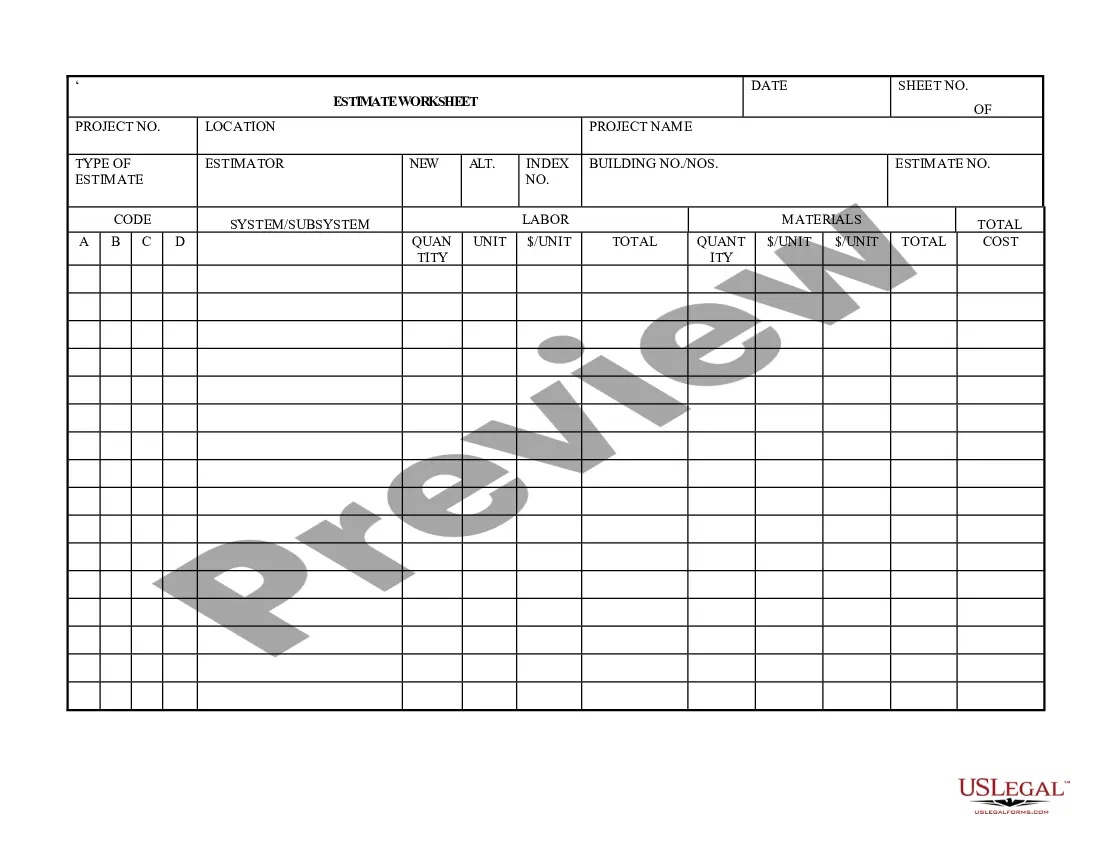
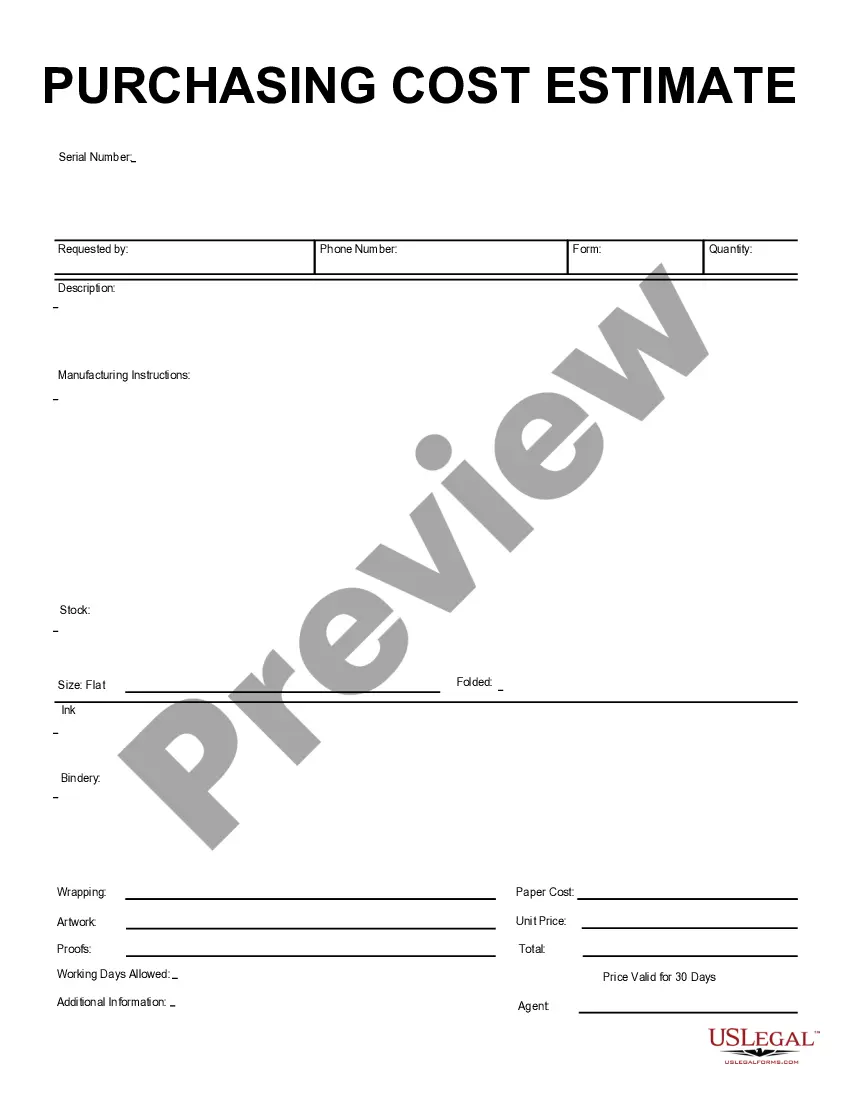
Basic estimate sheets are used by businesses or organizations to provide an idea about an estimated cost for a project, activity, or purchase to their customers.
Identify the high and low activity levels from the data set. Calculate the variable cost per unit (v). Calculate the total fixed cost (f). State the results in equation form Y = f + vX. Calculate the variable cost per unit (v). Calculate the total fixed cost (f). State the results in equation form Y = f + vX.
A cost estimate is more than a list of costs. It also includes a detailed Basis of Estimate (BOE) report that describes the assumptions, inclusions, exclusions, accuracy and other aspects that are needed to interpret the total project cost.
Three types of estimates: Ballpark, budgetary, and definitive.
Complete Set of Detailed Drawings In order to work out the quantities of various items of work, a complete set of detailed drawings consisting of the plan, elevation, sections and foundation details, etc. is required.
A basis of estimate (BOE) is an organized set of data and narrative information that explains the logic, methodology, calculations, and assumptions you use to define the tasks and determine the resources needed to accomplish the scope of work described in a government or other request for proposal (RFP).
The four major analytical methods or cost estimation techniques used to develop cost estimates for acquisition programs are Analogy, Parametric (Statistical), Engineering (Bottoms Up), and Actual Costs.