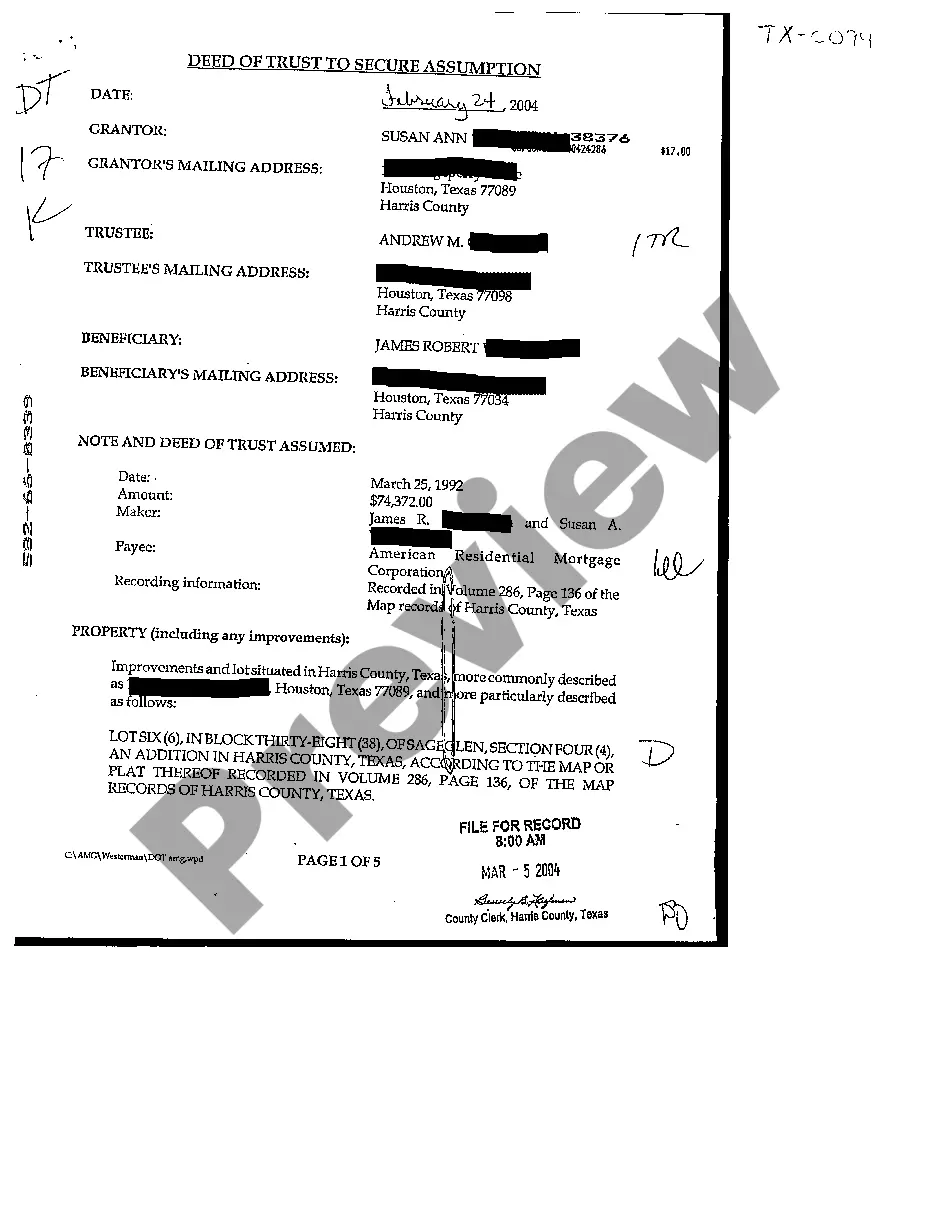
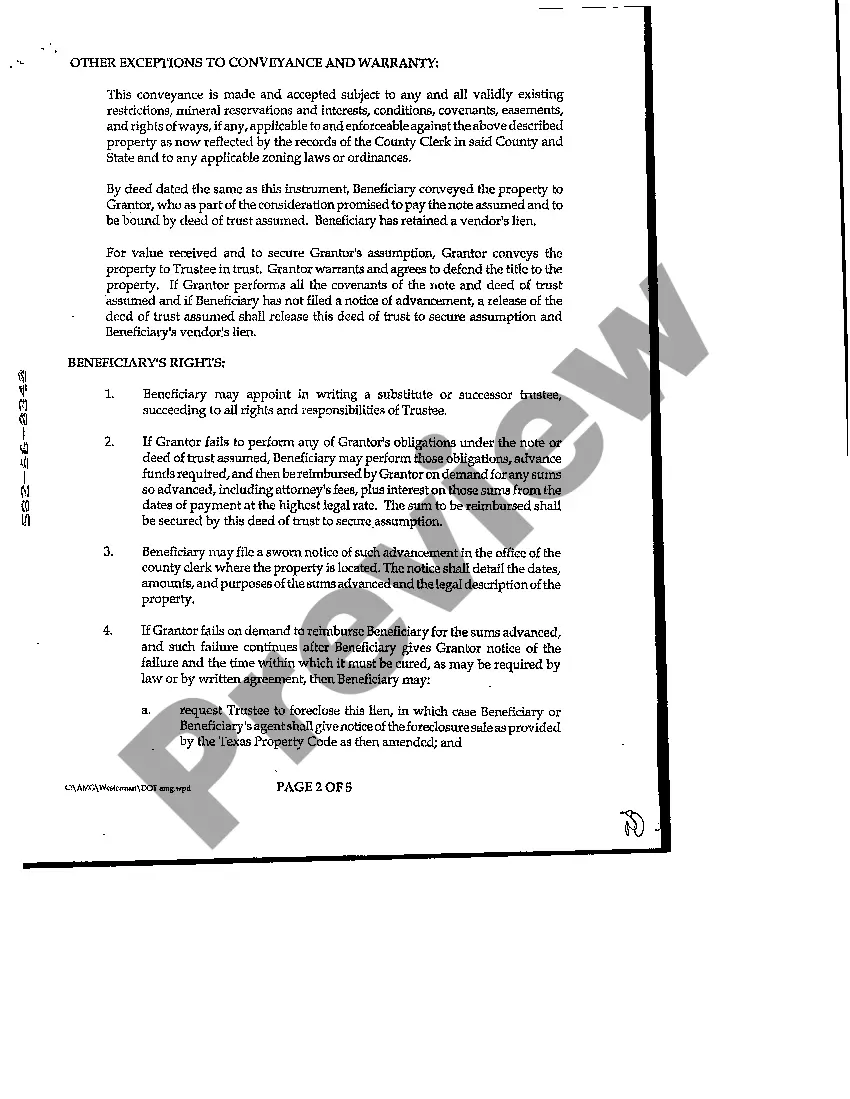
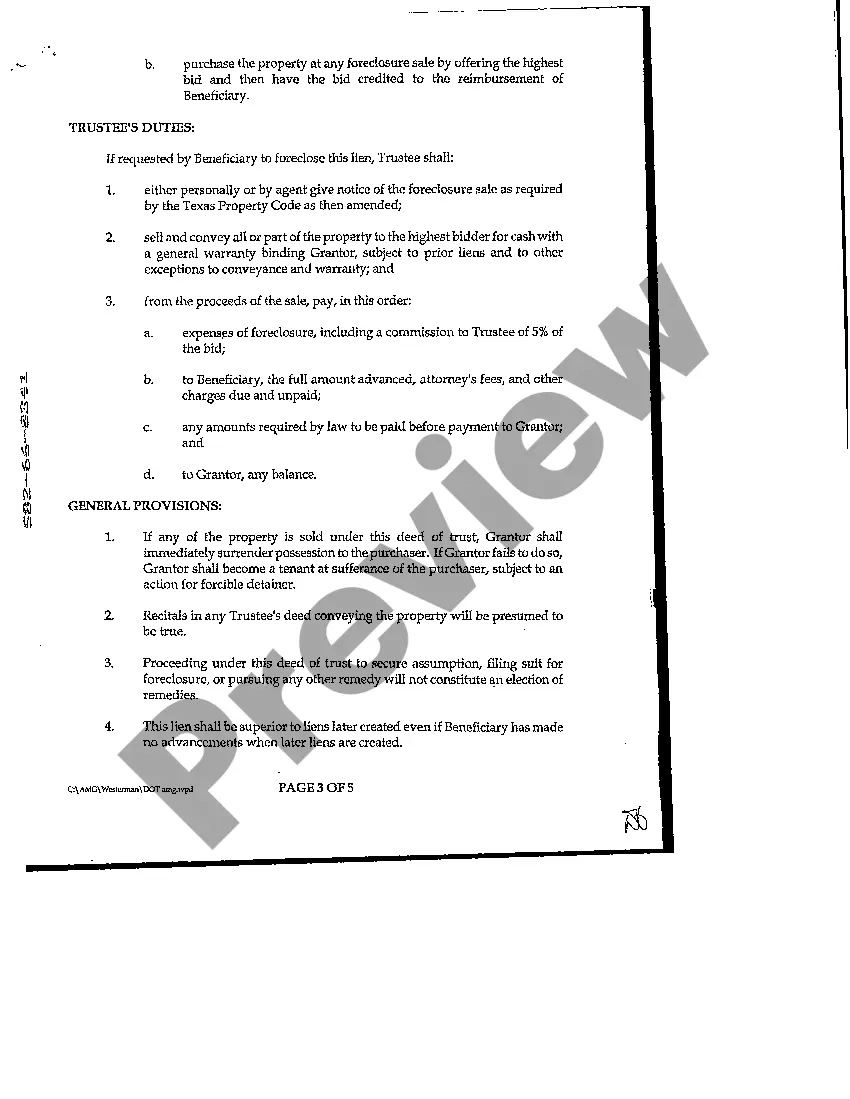
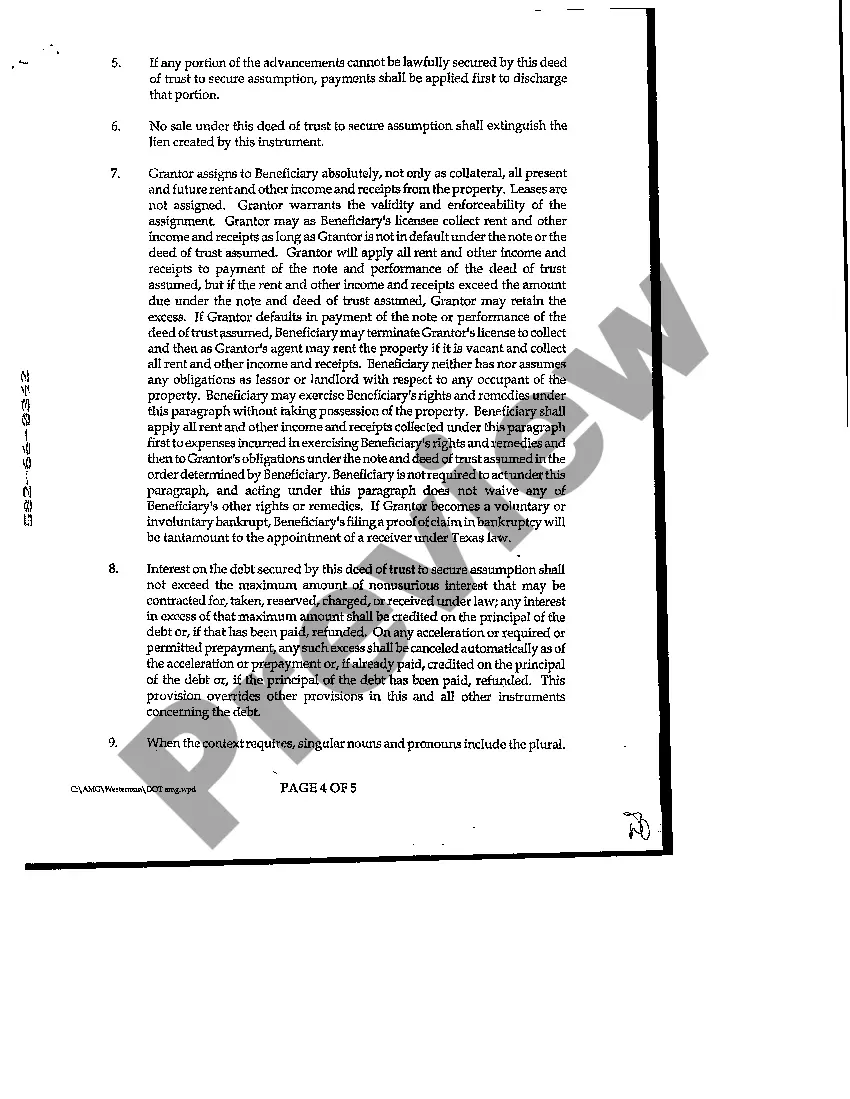
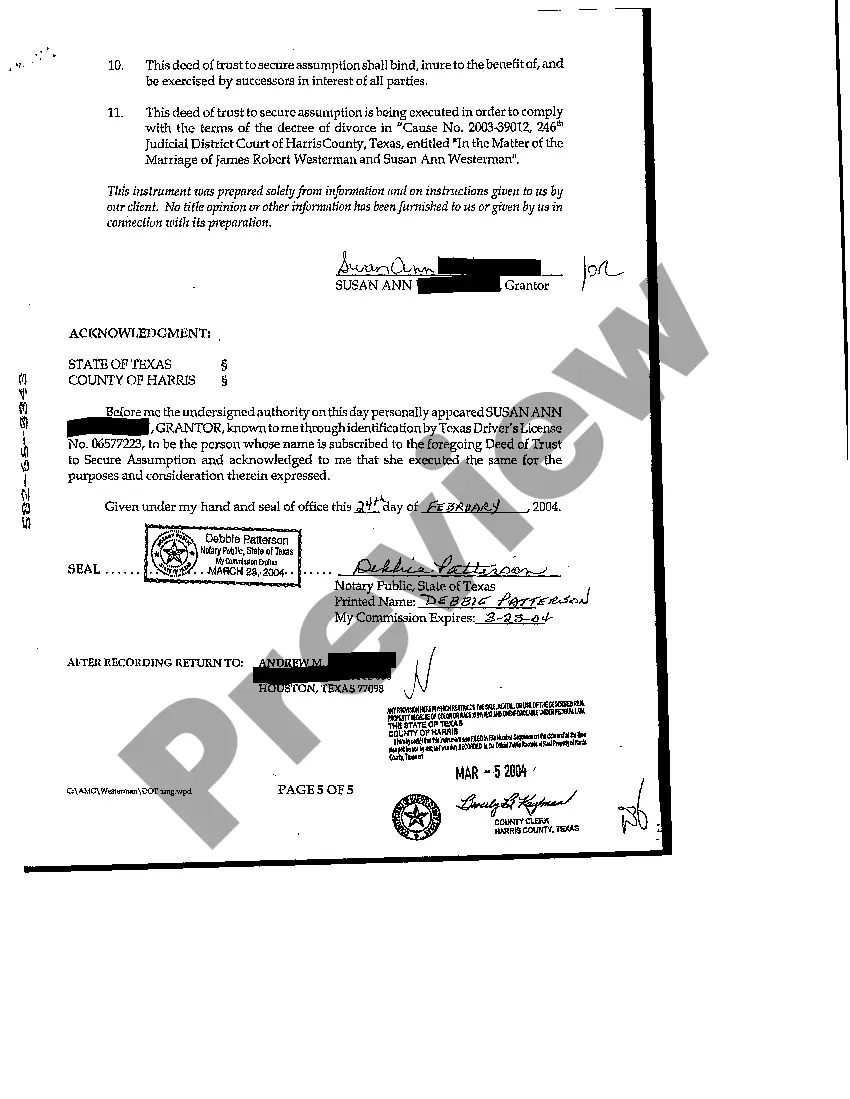
Texas Deed of Trust to Secure Assumption
Does this document require notarization?
This form usually doesn’t need to be notarized. However, local laws or specific transactions may require it. Our online notarization service, powered by Notarize, lets you complete it remotely through a secure video session, available 24/7.

Form popularity
FAQ
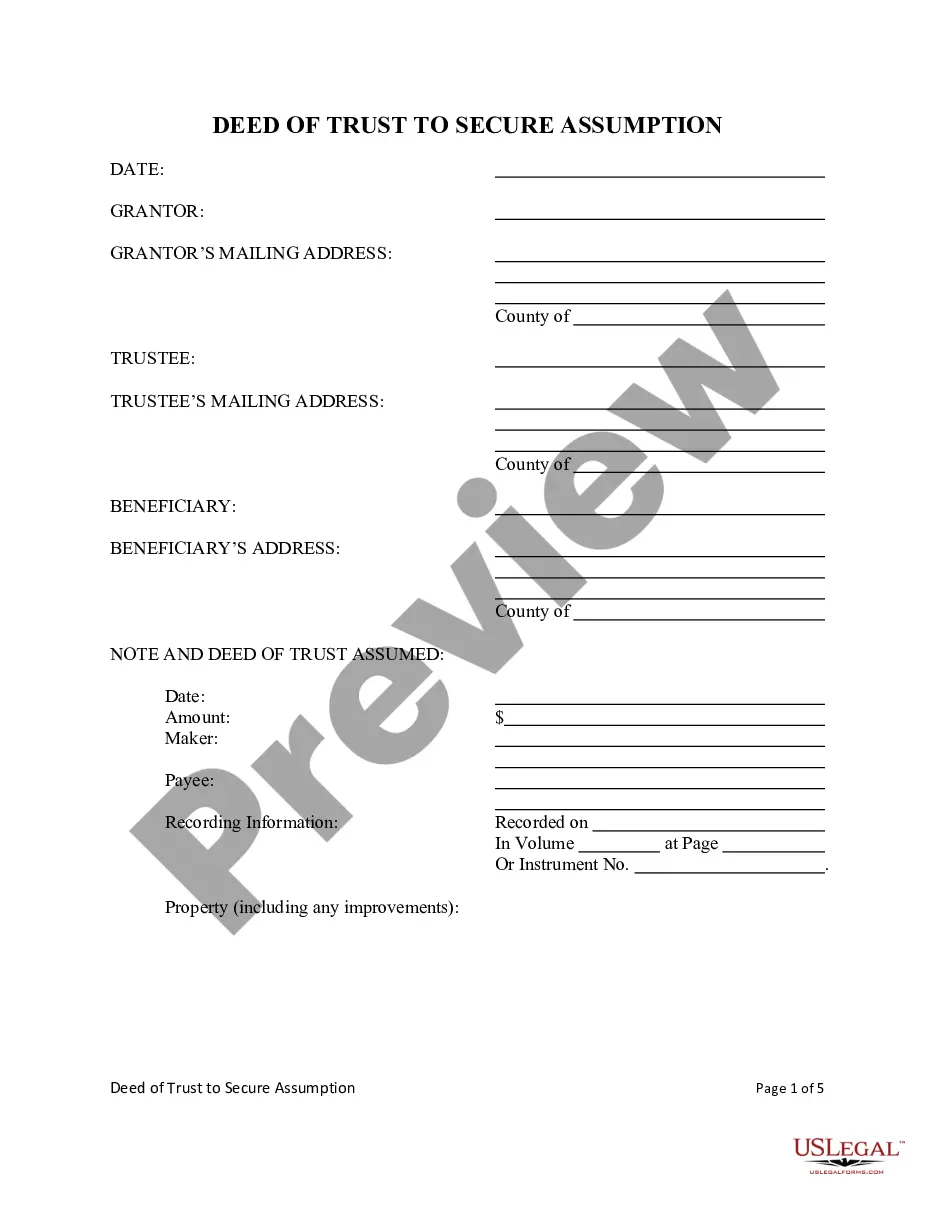
Party information: names and addresses of the trustor(s), trustee(s), beneficiary(ies), and guarantor(s) (if applicable) Property details: full address of the property and its legal description (which can be obtained from the County Recorder's Office)
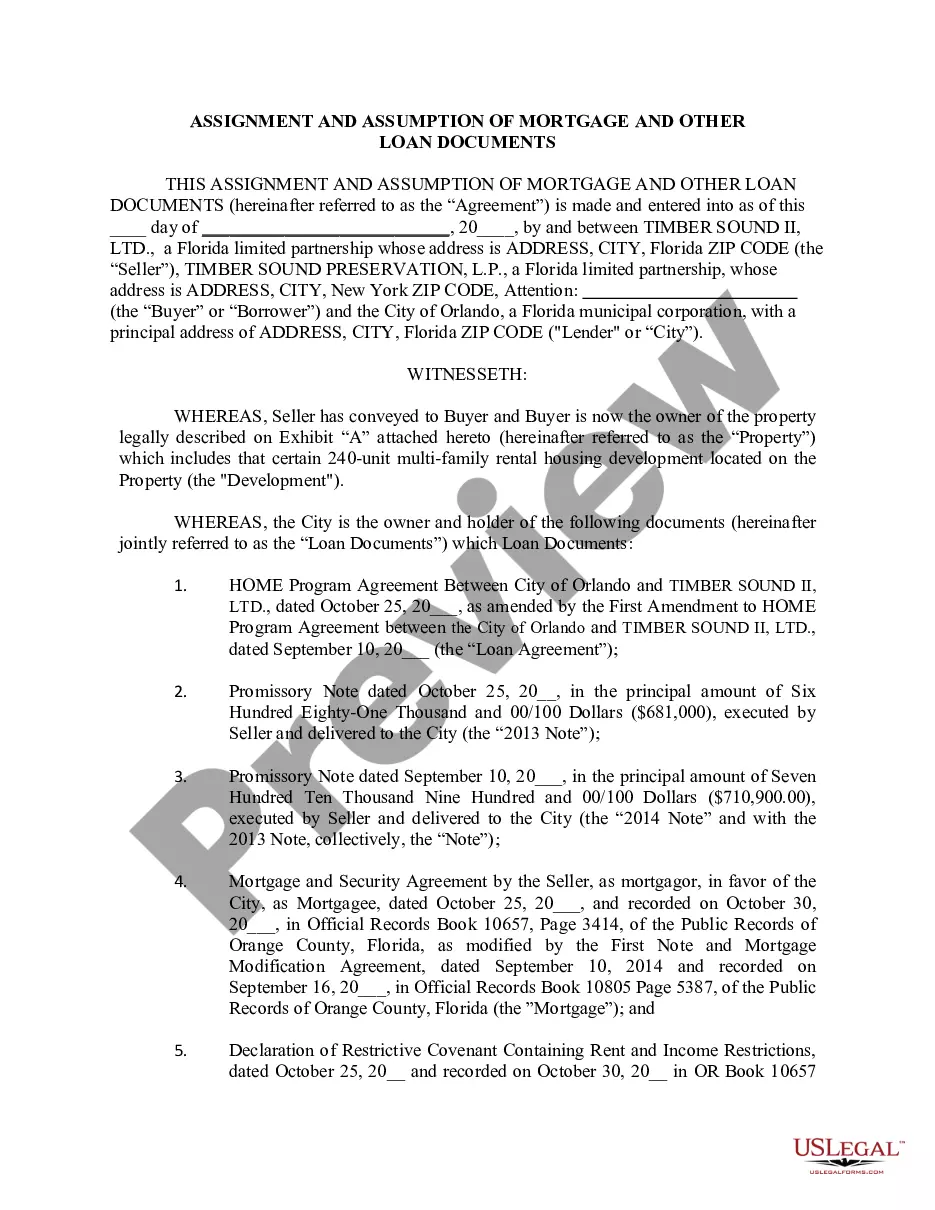
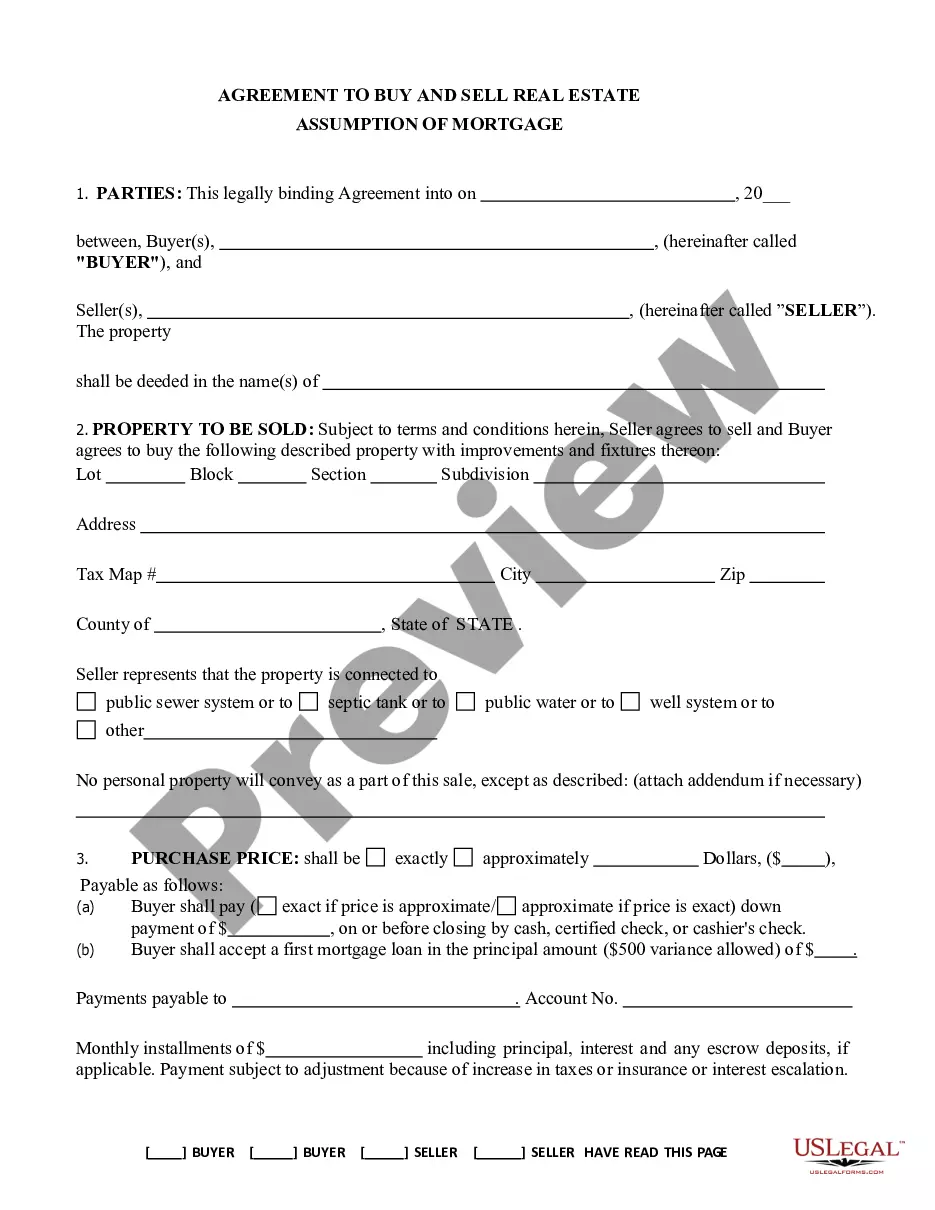
An assumption warranty deed is a general or special warranty deed that has an additional provision.This provision differs from the mortgage assumption in that the assumption deed obligates the buyer to the seller, whereas the mortgage assumption obligates the buyer to the lender.
The deed of trust to secure assumption is a document that names the spouse who did not receive the house as the beneficiary.If the spouse receiving the house fails to repay the mortgage lender, then the spouse who did not get the house can foreclose on the property just like any other creditor.
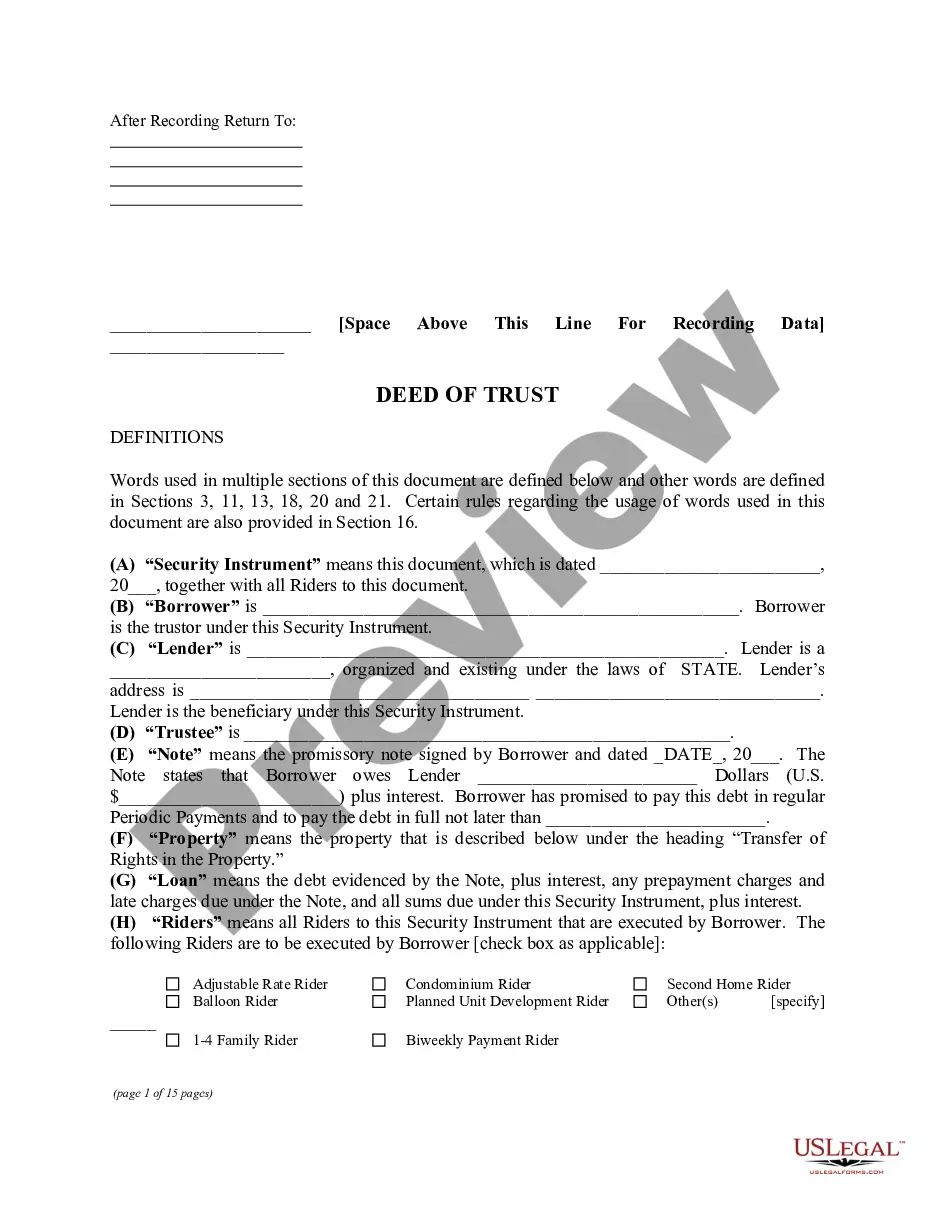
In a deed of trust, the borrower is called the trustor and the lender is the beneficiary. The trustee holds title to the property until the trustor has fully repaid the loan to the beneficiary, at which time the lender notifies the trustee, who then transfers full title of the property to the trustor.
The trustee's primary function is to hold and maintain a property title for the borrower and the lender for the duration of the loan. Therefore, it is the trustee who retains factual ownership and control of the property in question, not the lender.
The one major difference in some areas between the two is that the security deed is held by the lender whereas a trust deed is usually held by a third party.The mortgage requires a judicial action for foreclosure to take place; while the security or trust deed is a nonjudicial action where no court is involved.
A deed of trust is a written instrument with three parties: The trustor, who is the borrower and homeowner. The beneficiary, who is the lender. The trustee, who is a third party such as an insurance company or escrow management agency that holds actual title to the property in trust for the beneficiary.
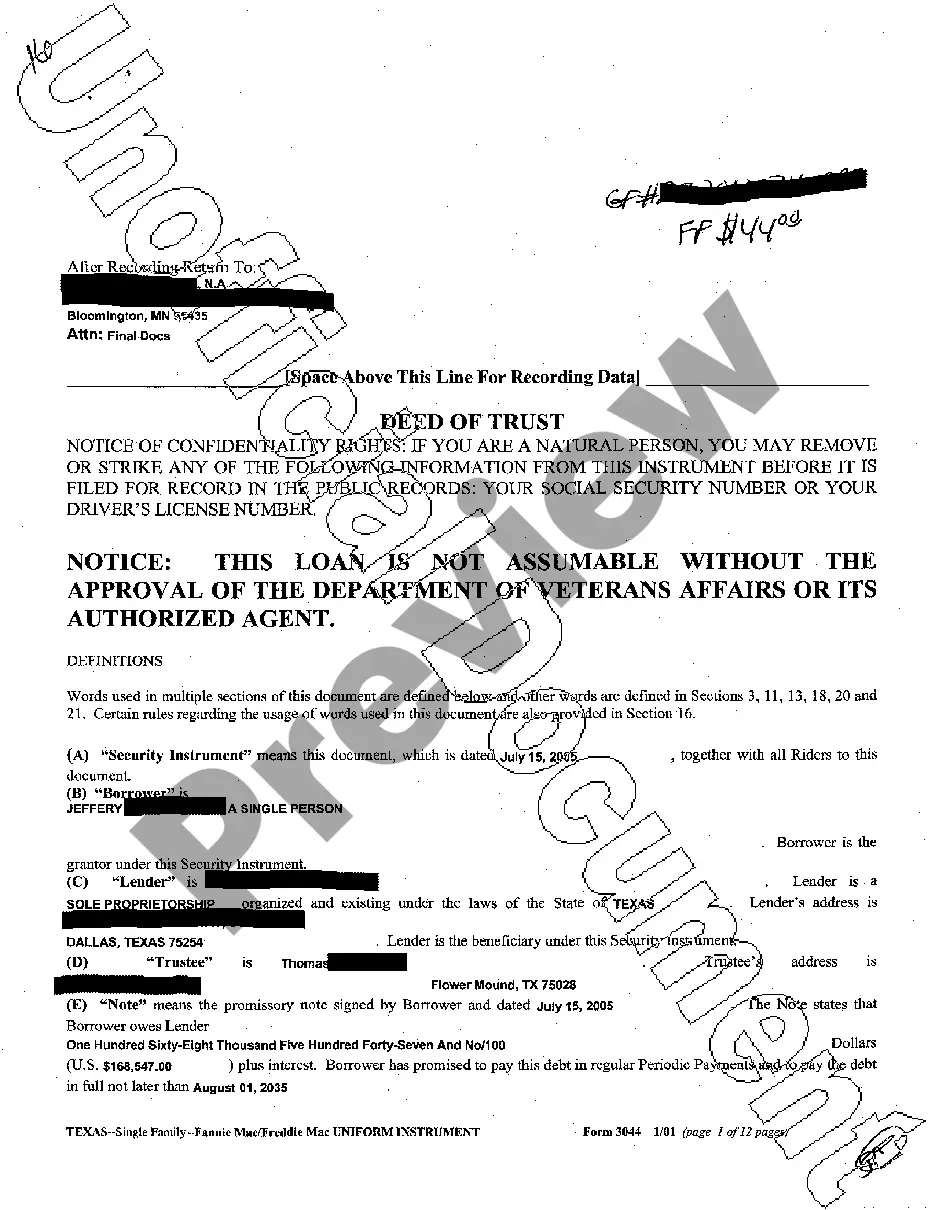
The Deed of Trust (or Mortgage or Security Instrument) is a legal document that grants the lender the rights to take the property if the borrower goes into default and does not pay under the terms of the Note. The lender holds title to the property until the borrower has repaid the debt in full.
Key Takeaways. A deed of trust is a type of security for a loan that names a third party called the trustee to hold the legal title until you pay it off. The trustee is typically an entity such as a title company with "power of sale" in the event that you default on your loan payment.