Texas Executor's Deed - Three Executors to Five Beneficiaries Pursuant to Terms of Will
What is this form?
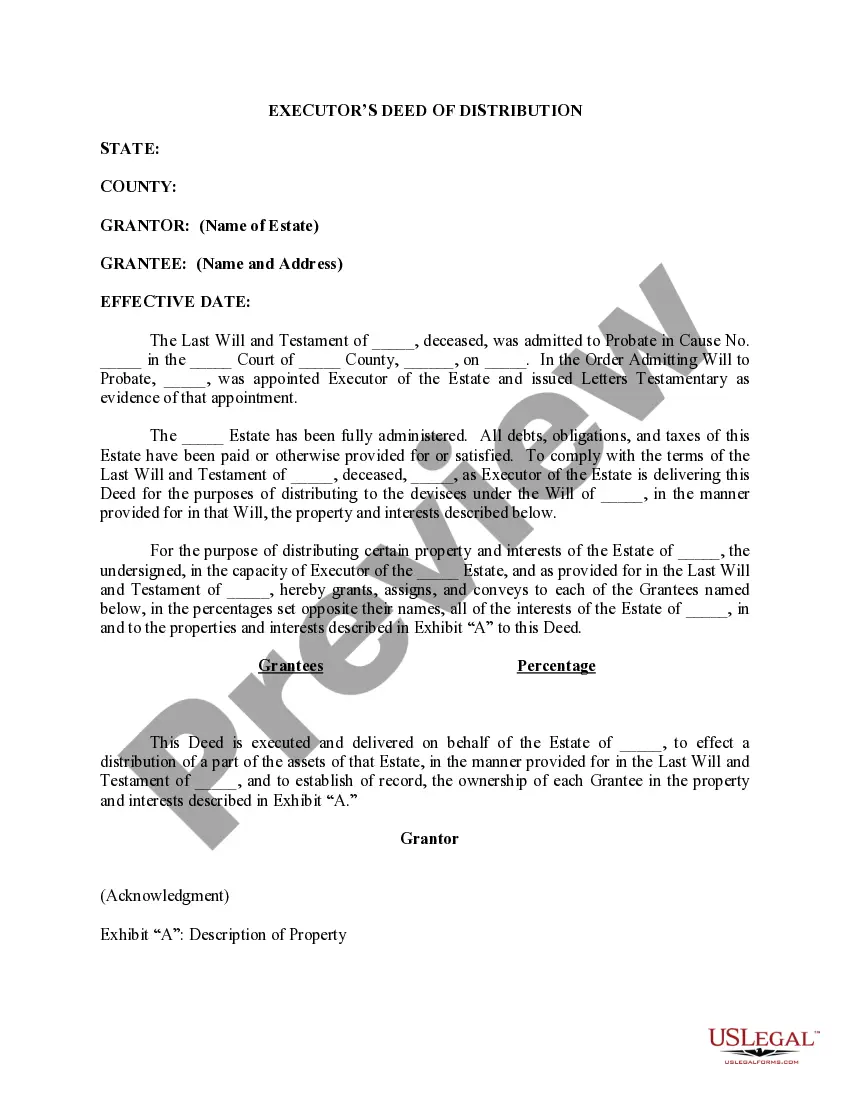
The Executor's Deed is a legal document that allows executors of an estate to transfer property to the beneficiaries named in a will. It distinguishes itself from other forms by specifically outlining the rights and responsibilities of the executors during the conveyance. This deed serves as proof of the transfer of ownership from the executors to the beneficiaries based on the terms set forth in the will.
Main sections of this form
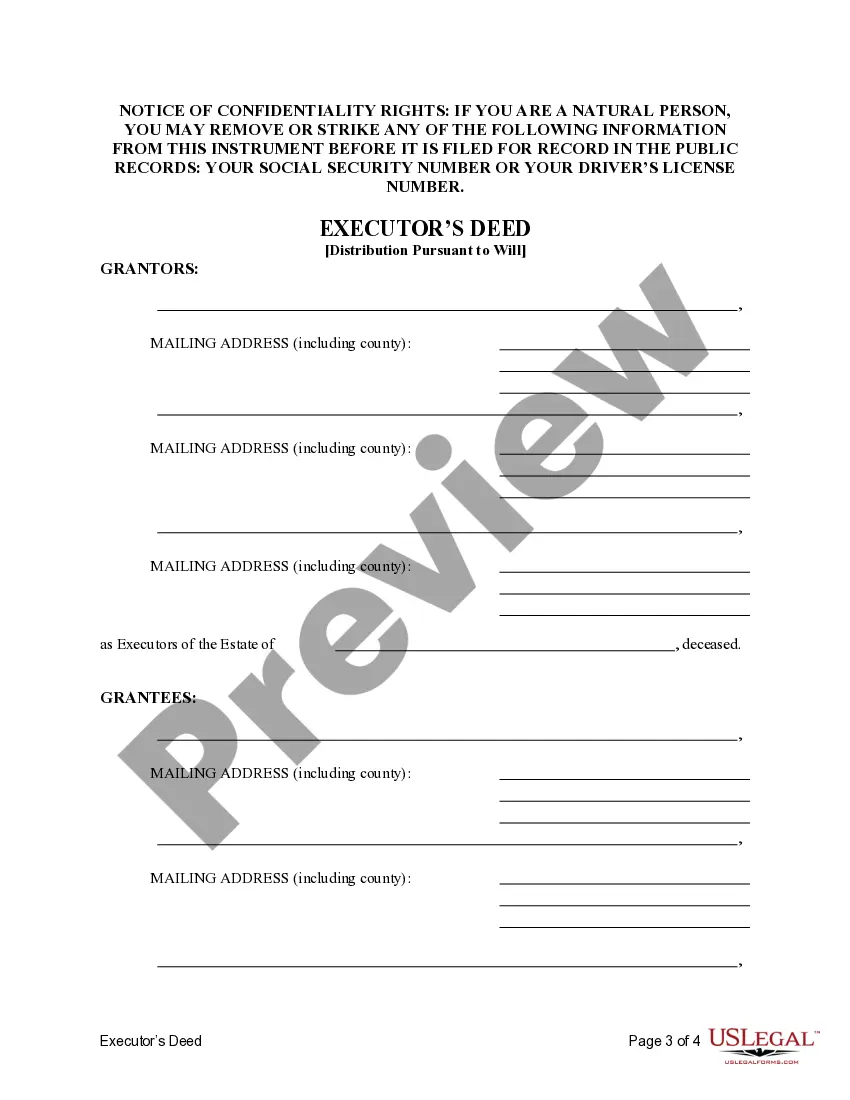
- Identification of Grantors (executors of the estate)
- Identification of Grantees (beneficiaries receiving the property)
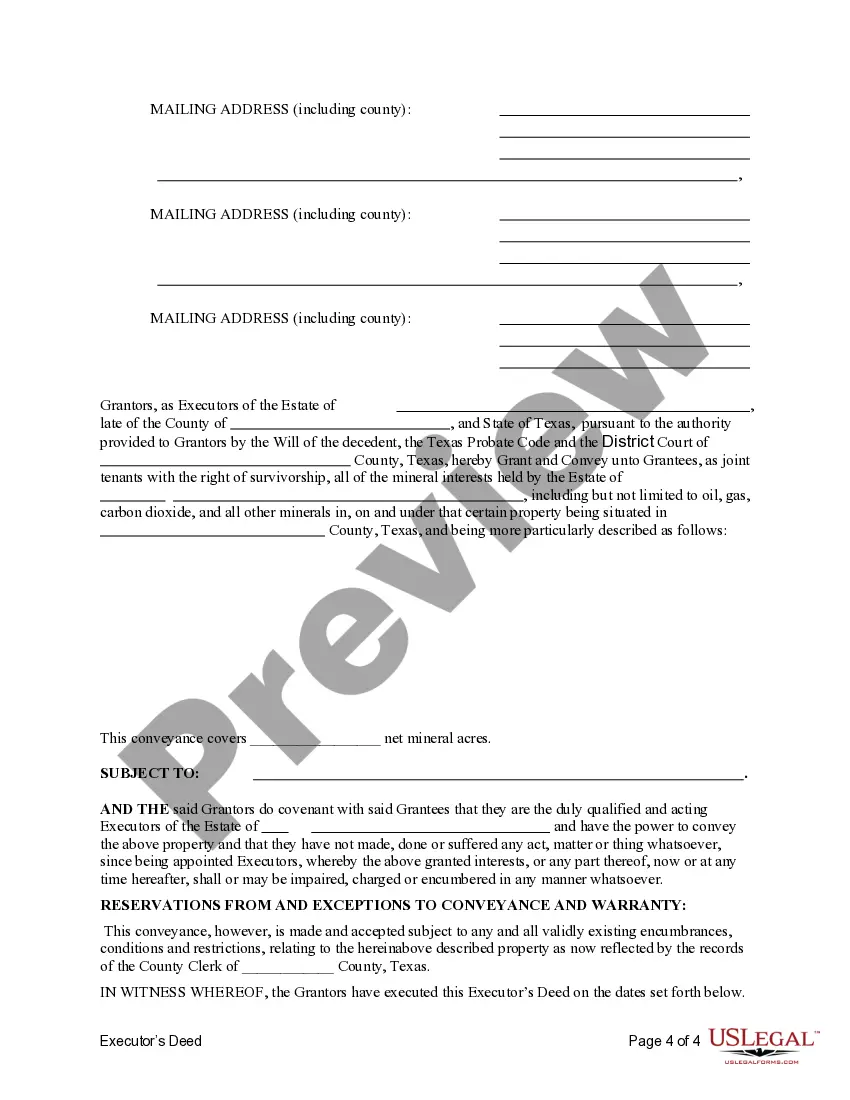
- Legal description of the property being transferred
- Warranties outlining the title held by executors
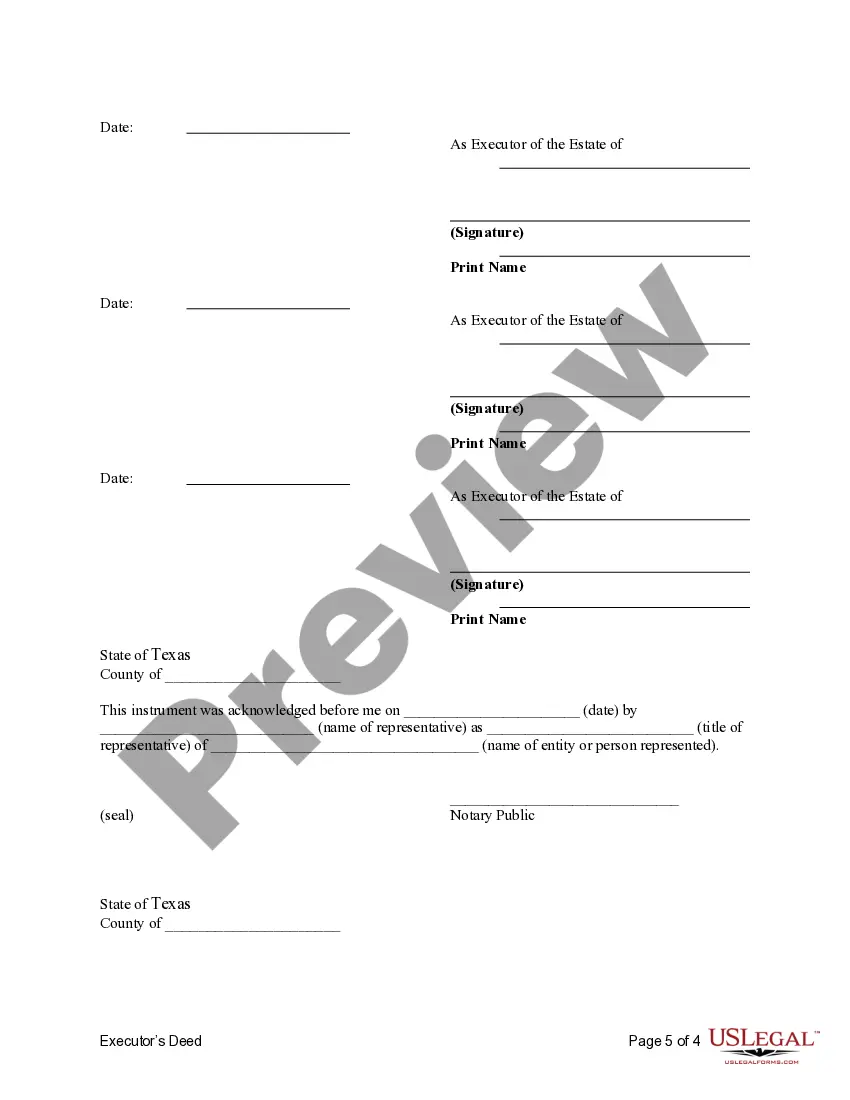
- Signatures of the Grantors to ensure legal validity
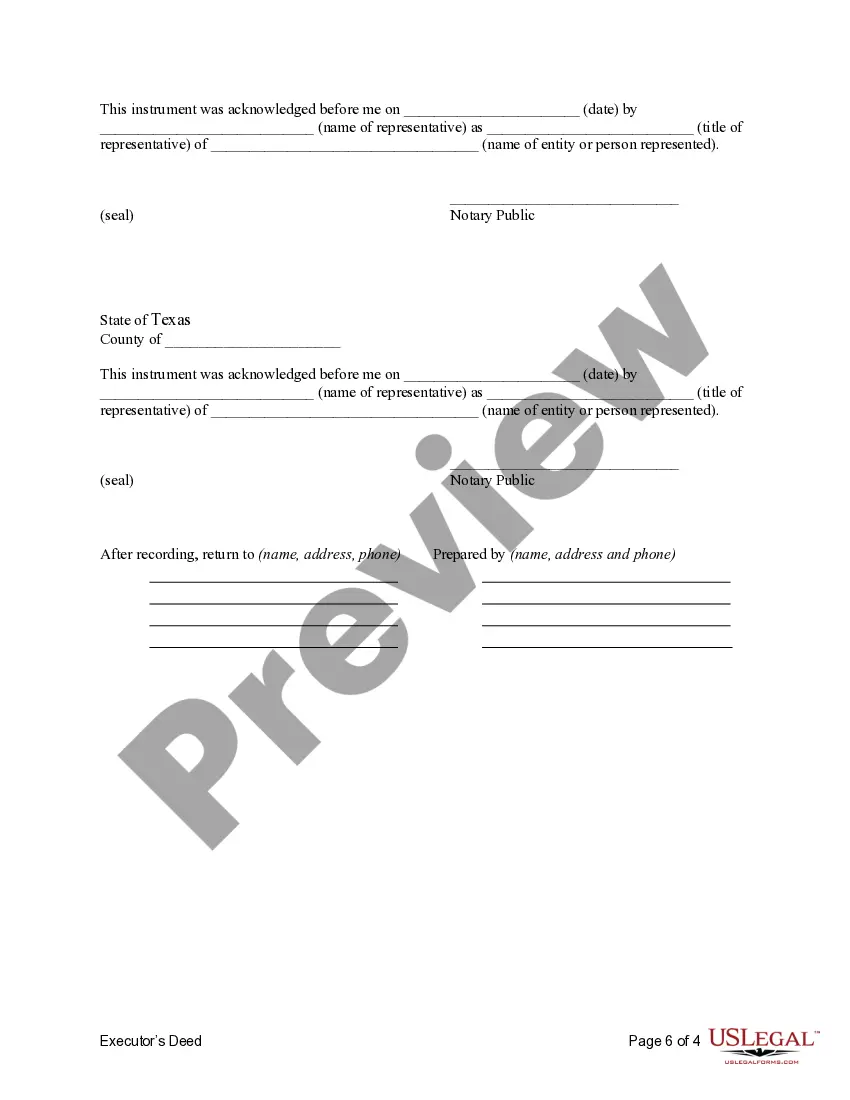
- Notarization block, if required for formal recognition

Common use cases
This form should be used when the executors of an estate need to formally transfer property to the beneficiaries as outlined in a will. It is applicable in situations where there are multiple executors and several beneficiaries, ensuring that the property is conveyed according to the deceased's wishes. Common scenarios include the distribution of family homes, land, or other real estate holdings following a probate process.
Who can use this document
- Executors appointed in a will
- Beneficiaries named in the will who are receiving property
- Individuals familiar with the property's legal description and estate guidelines
- Estate administrators or legal representatives involved in the settlement process
How to prepare this document
- Identify the parties involved by entering full names of the executors and beneficiaries.
- Specify the property to be conveyed by providing a detailed legal description.
- Complete any warranty clauses by indicating the specific events or acts concerning the title held by the executors.
- Include the date of the conveyance and the signatures of all involved executors.
- If required, have the document notarized to validate the transfer.
Does this form need to be notarized?
To make this form legally binding, it must be notarized. Our online notarization service, powered by Notarize, lets you verify and sign documents remotely through an encrypted video session.
Get your form ready online
Our built-in tools help you complete, sign, share, and store your documents in one place.
Make edits, fill in missing information, and update formatting in US Legal Forms—just like you would in MS Word.
Download a copy, print it, send it by email, or mail it via USPS—whatever works best for your next step.
Sign and collect signatures with our SignNow integration. Send to multiple recipients, set reminders, and more. Go Premium to unlock E-Sign.
If this form requires notarization, complete it online through a secure video call—no need to meet a notary in person or wait for an appointment.
We protect your documents and personal data by following strict security and privacy standards.

Make edits, fill in missing information, and update formatting in US Legal Forms—just like you would in MS Word.

Download a copy, print it, send it by email, or mail it via USPS—whatever works best for your next step.

Sign and collect signatures with our SignNow integration. Send to multiple recipients, set reminders, and more. Go Premium to unlock E-Sign.

If this form requires notarization, complete it online through a secure video call—no need to meet a notary in person or wait for an appointment.

We protect your documents and personal data by following strict security and privacy standards.
Avoid these common issues
- Failing to adequately describe the property being transferred.
- Omitting signatures from all required executors.
- Not having the document notarized when it is required.
- Incorrectly identifying beneficiaries, which may lead to disputes.
Benefits of using this form online
- The ability to complete the form from the convenience of your home.
- Editable formats that allow you to tailor the document to your situation.
- Easy access to forms drafted by licensed attorneys.
- Secure storage and retrieval of completed forms in your account.
Looking for another form?
Form popularity
FAQ
When multiple Executors act together on the administration of an Estate, disagreements can sometimes arise.If an agreement cannot be reached through negotiations, and a Grant of Representation has already been issued by the Probate Court, then it is possible for one Executor to apply to the Court to remove the other.
While an executor is obligated to notify beneficiaries and then move things along at a reasonable pace, he or she isn't required to distribute inheritances at the time of notification. In fact, beneficiaries might not receive anything until several months after they've been notified of their place in the will.
Your will can dictate how co-executors fulfill their duties. For example, your will can designate three co-executors and provide that decisions be made by a majority vote, that all co-executors must take action together, or that any one of them has authority to act alone.
When multiple Executors act together on the administration of an Estate, disagreements can sometimes arise.If an agreement cannot be reached through negotiations, and a Grant of Representation has already been issued by the Probate Court, then it is possible for one Executor to apply to the Court to remove the other.
Because co-executors must agree and act together, naming multiple executors can cause delays and inconvenience.In cases of extreme disagreements, one executor (or a beneficiary) can even ask the probate court to remove one or more of the other executors, so the estate can be settled without too much delay.
Usually, the person making the will (in legal terms, the testator) nominates one or more executors in his or her will, having already asked each whether he or she is willing to act. But being named in someone's last will and testament as an executor does not necessarily confer automatic appointment.
Why Might Joint Executors Disagree? The problems occur when all of your executors are alive, present and involved in handling your estate by all being named on the probate application. If that's the case, then all decisions must be agreed by all executors.