Texas Discovery Interrogatories from Defendant to Plaintiff with Production Requests
Overview of this form
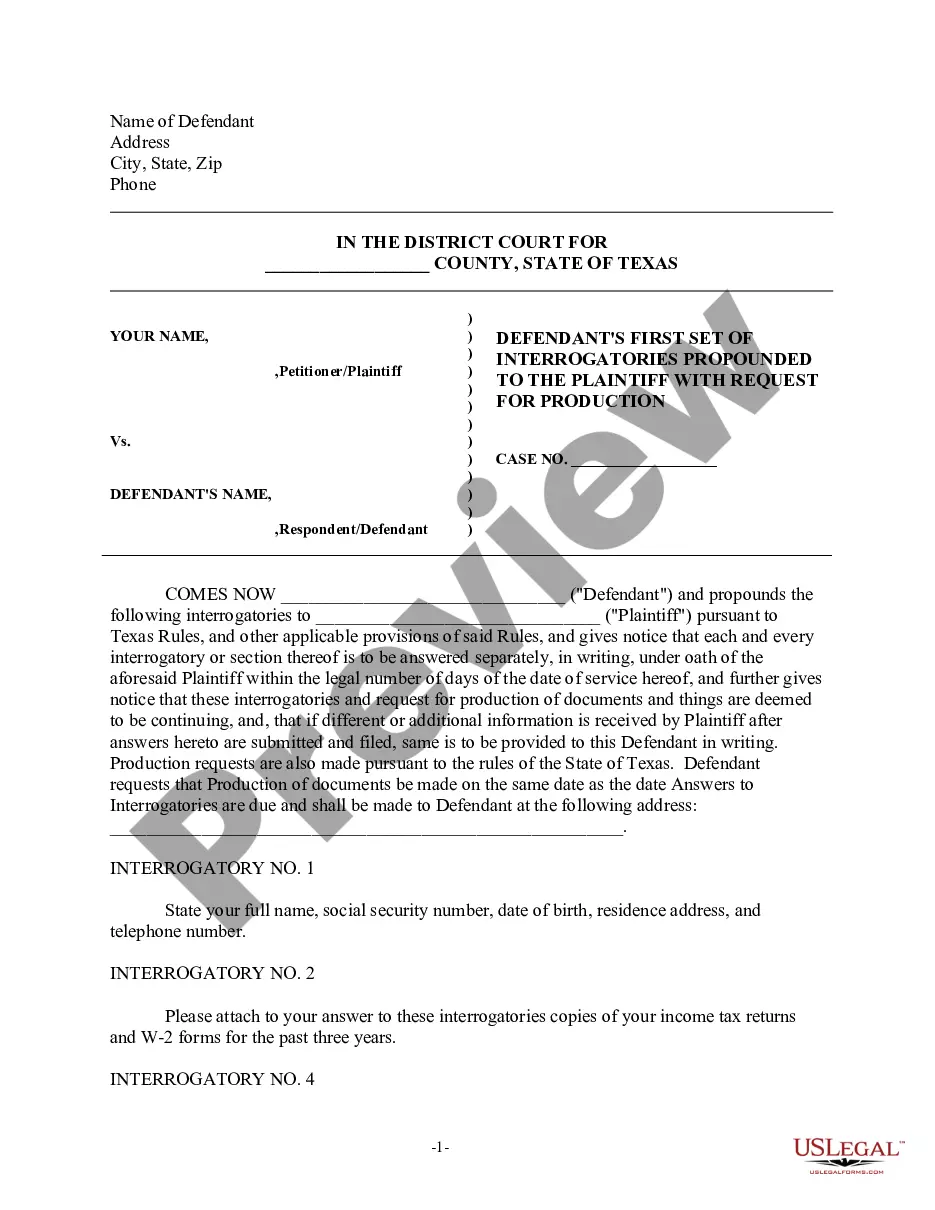
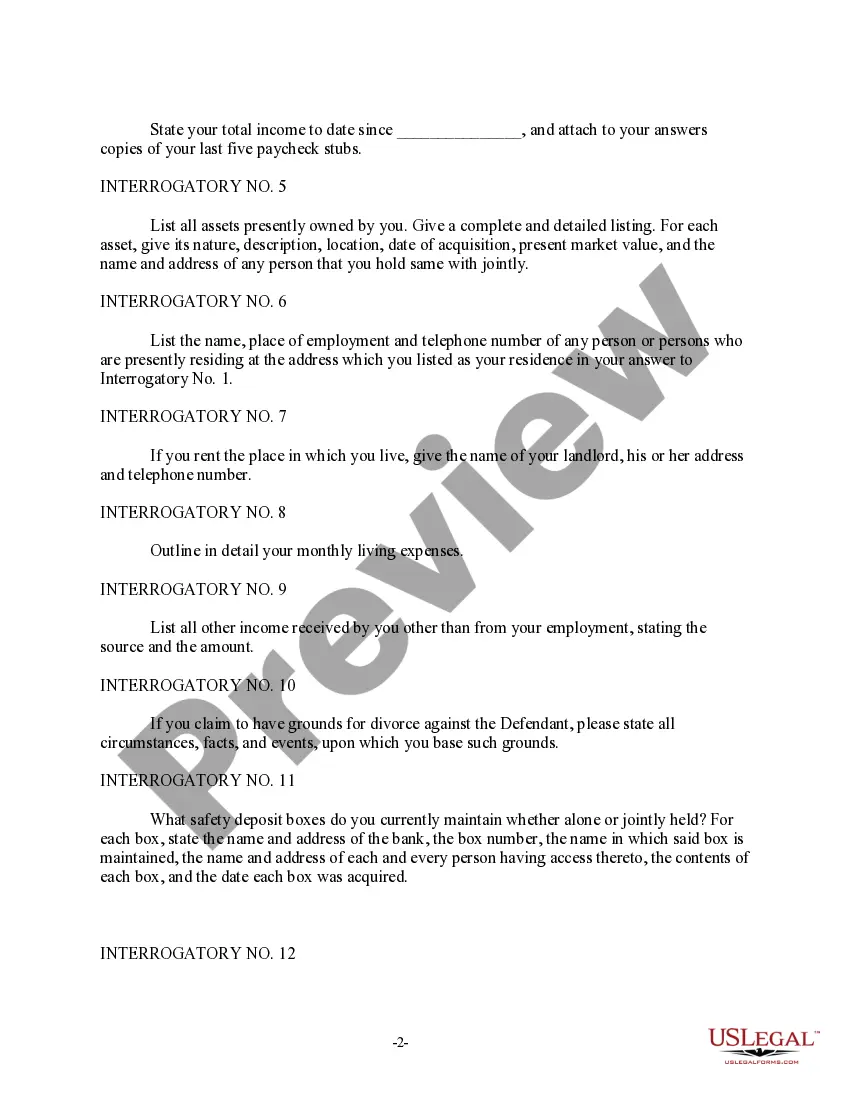
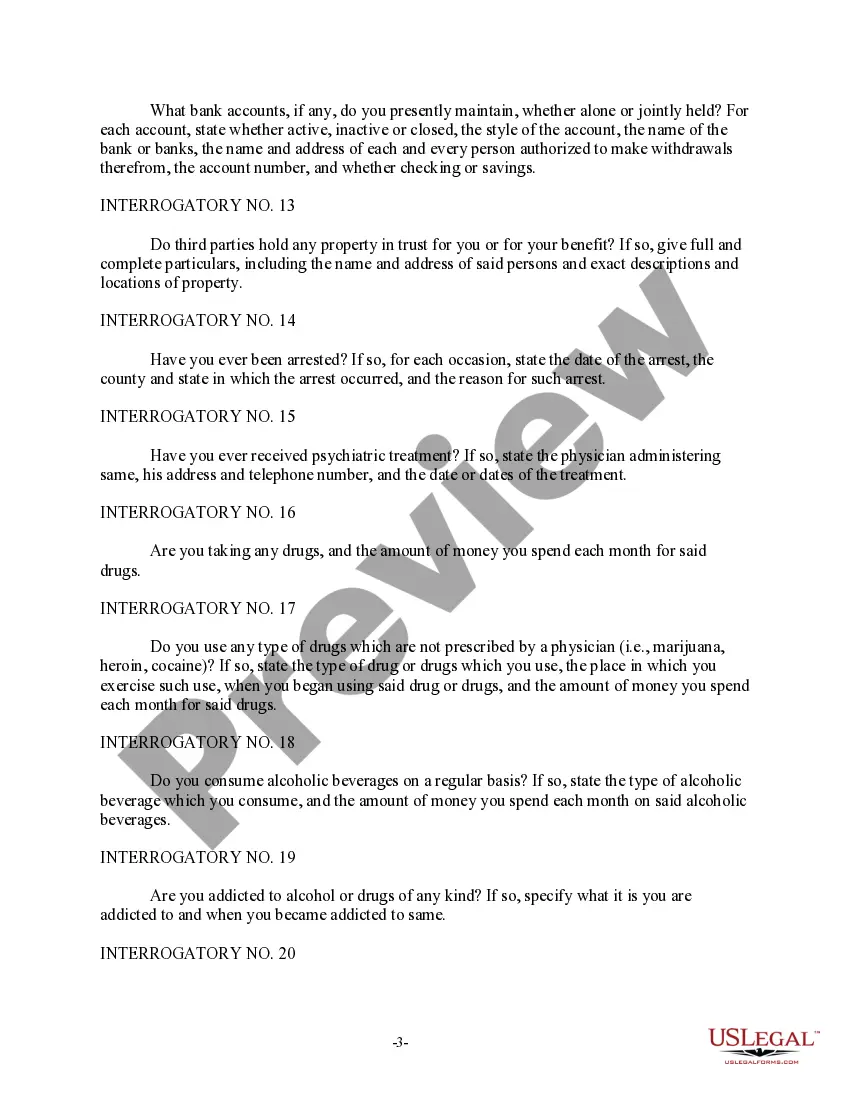
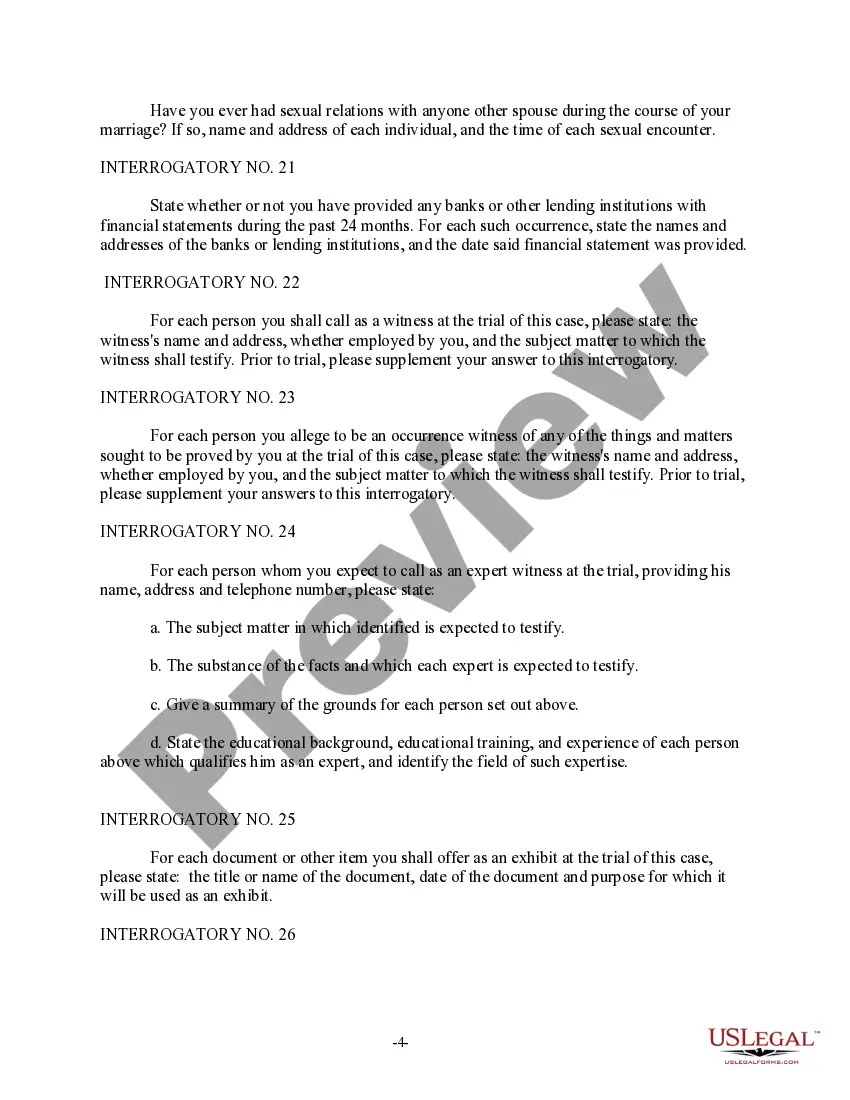
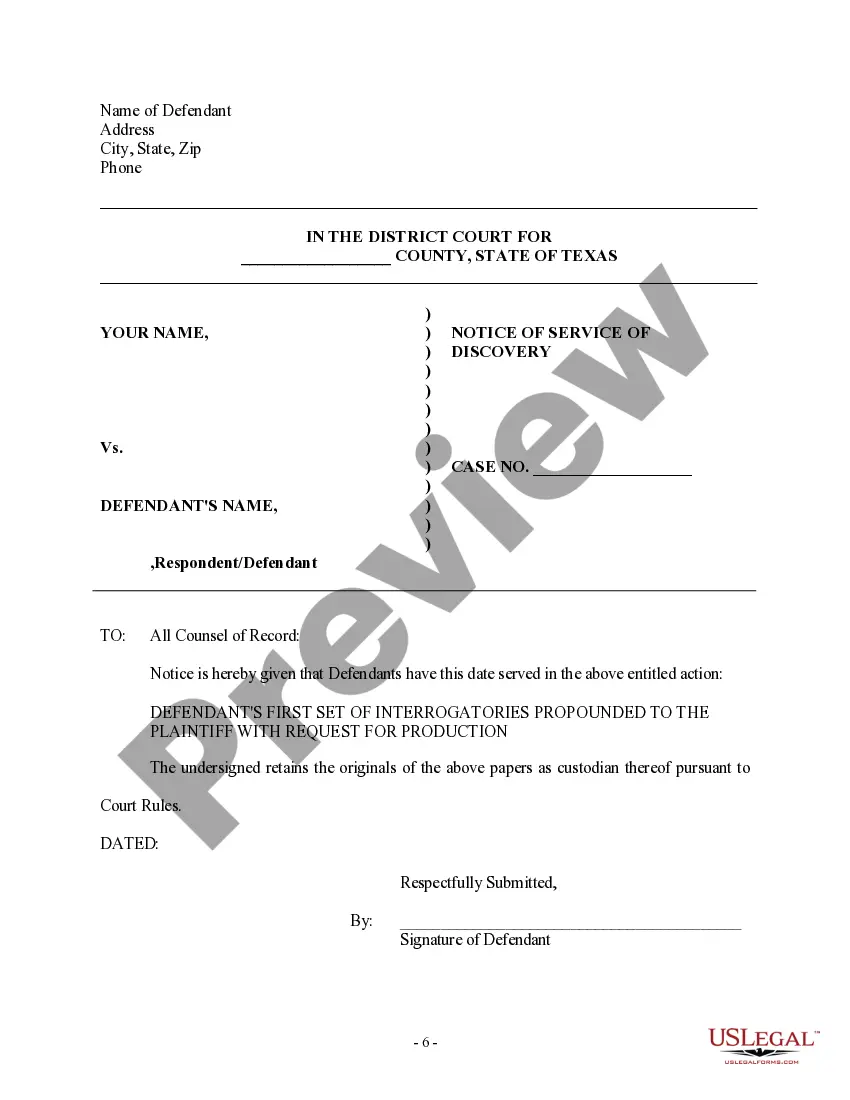
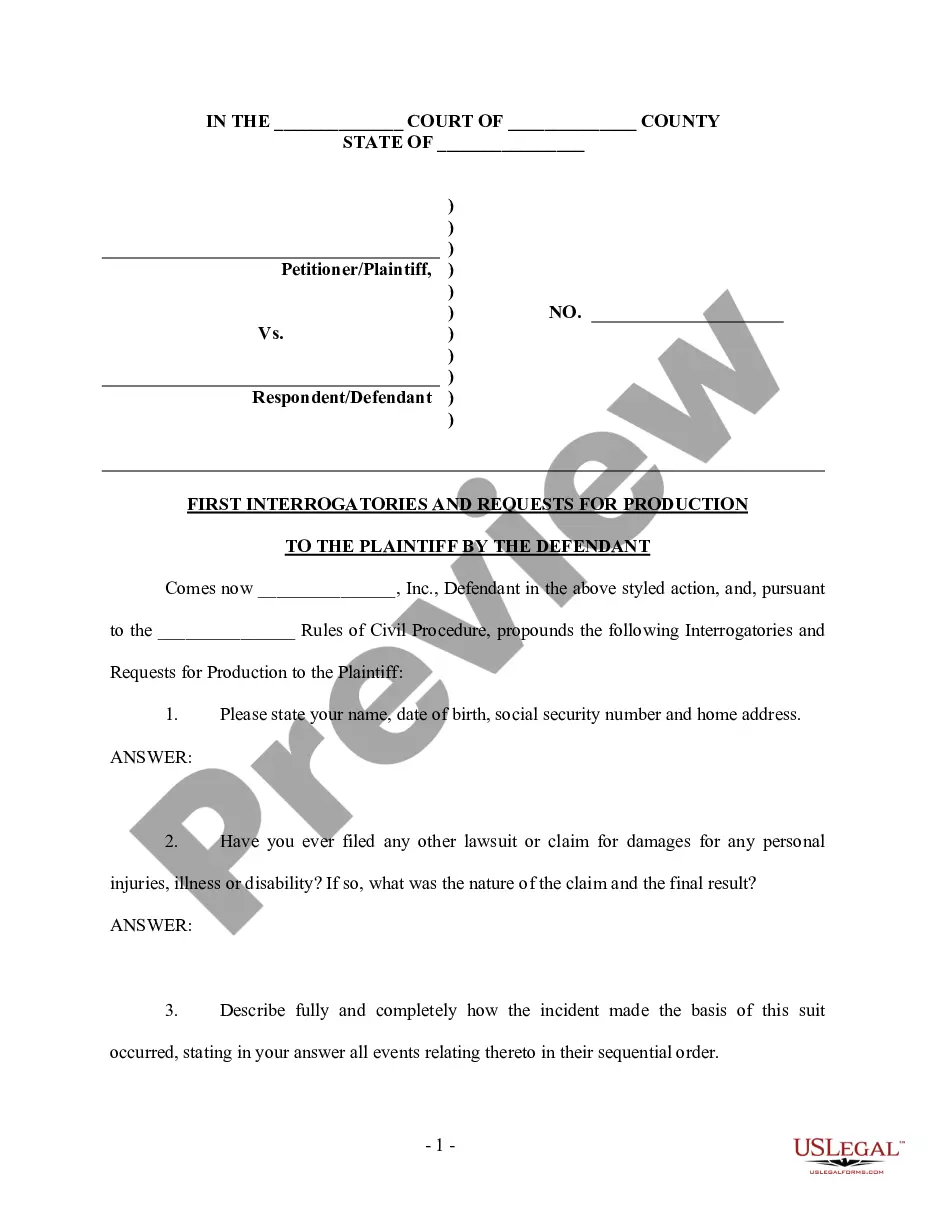
The Discovery Interrogatories from Defendant to Plaintiff with Production Requests is a legal document used in divorce proceedings. This form enables the defendant to ask the plaintiff a series of specific questions (interrogatories) and requests for the production of documents relevant to the case. Unlike other legal forms, this template is tailored to ensure the defendant obtains necessary information directly from the plaintiff, facilitating the discovery process in court. It is essential for defendants to understand the scope and nature of the plaintiff's claims and evidence.
Form components explained
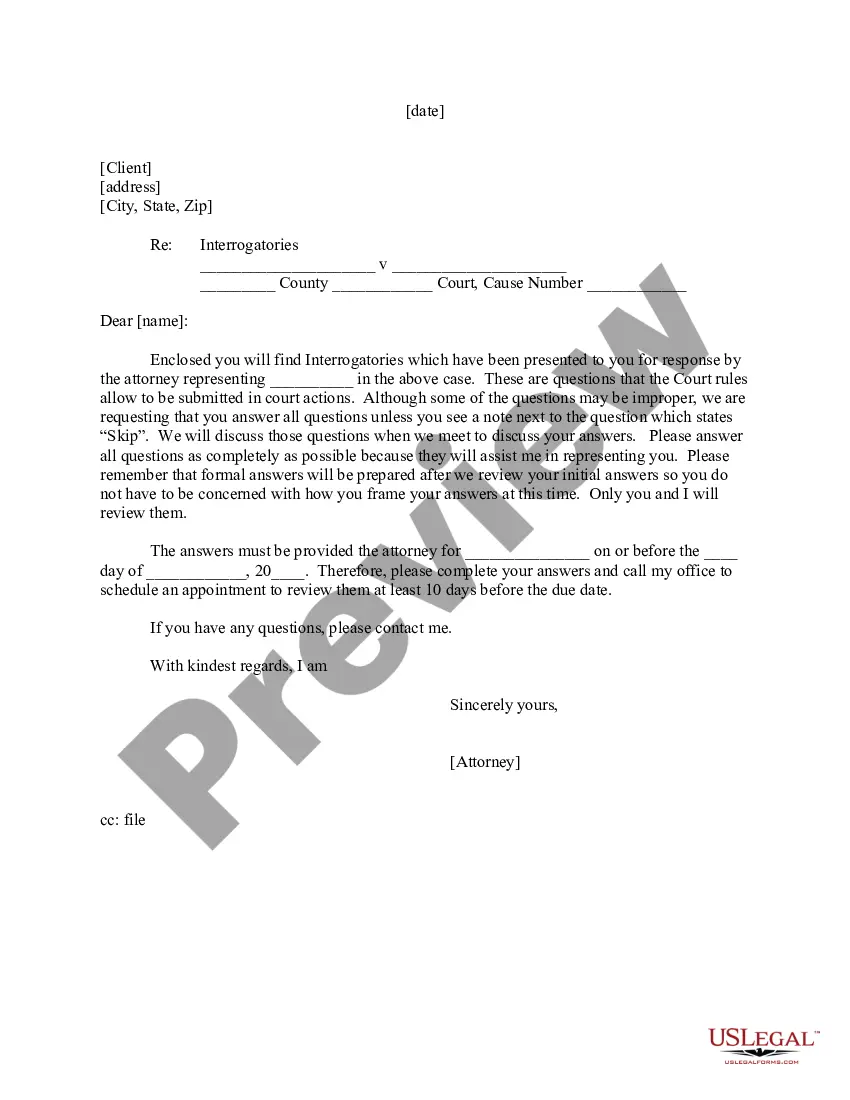
- Interrogatories: A set of questions that the plaintiff must answer under oath.
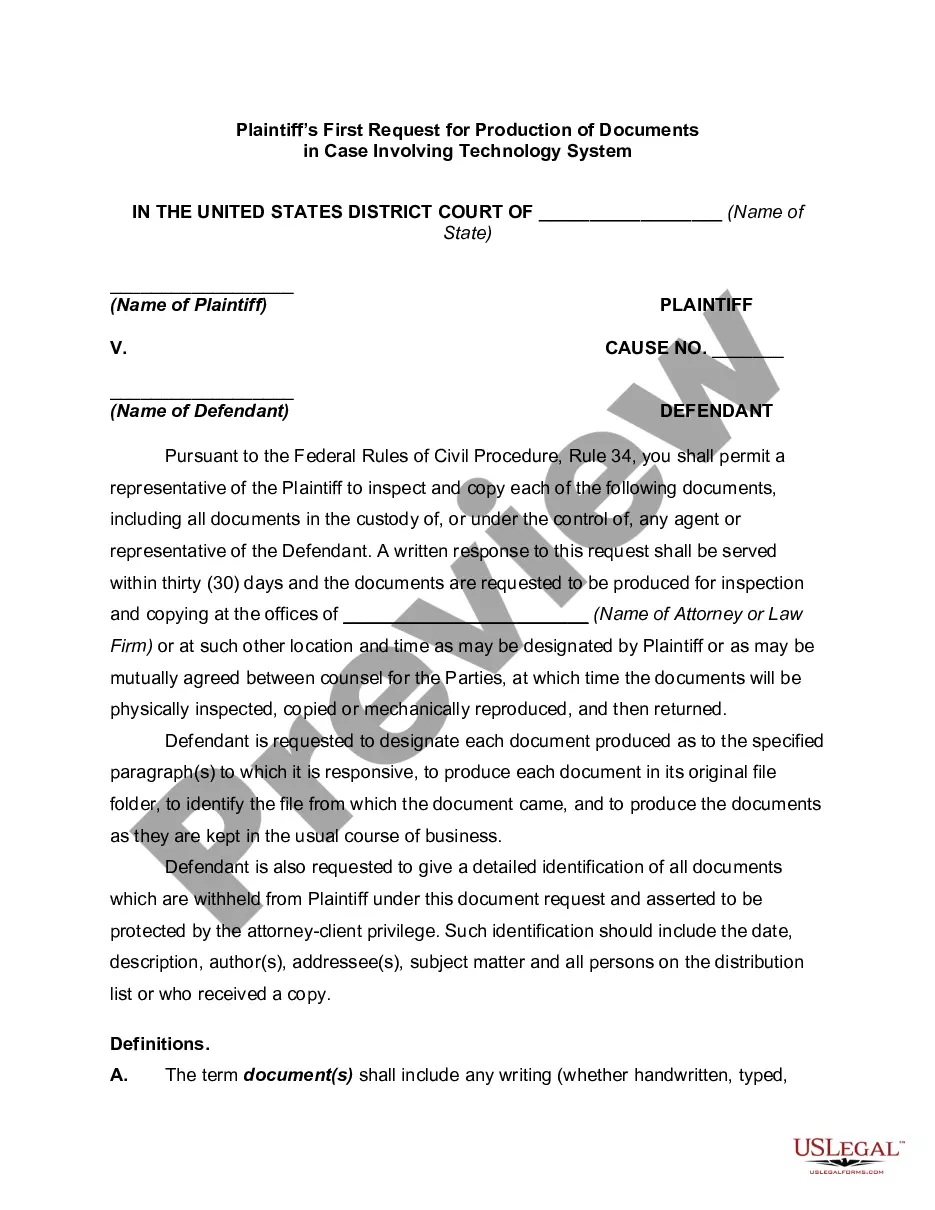
- Requests for production of documents: Specific documents the plaintiff is required to provide to the defendant.
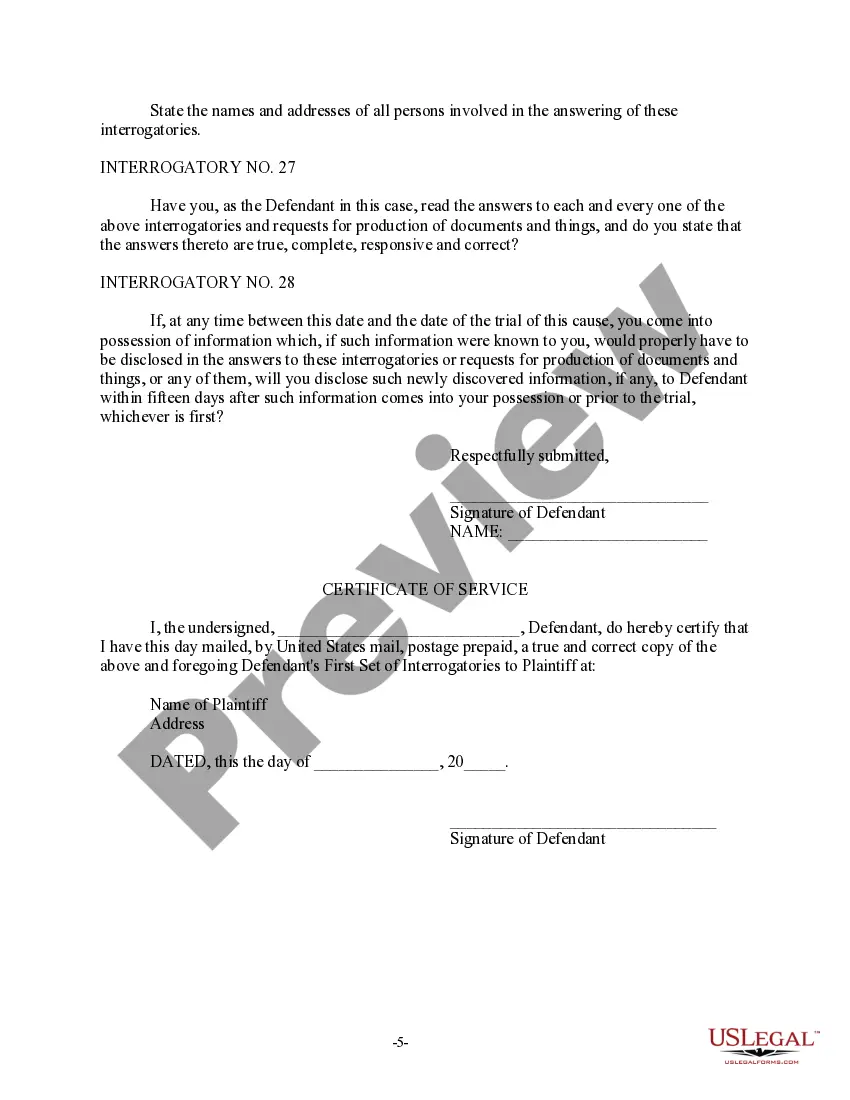
- Defendant and plaintiff identification: Sections to fill in names and addresses.
- Legal notice: Provides instructions regarding the timing and method of responses.
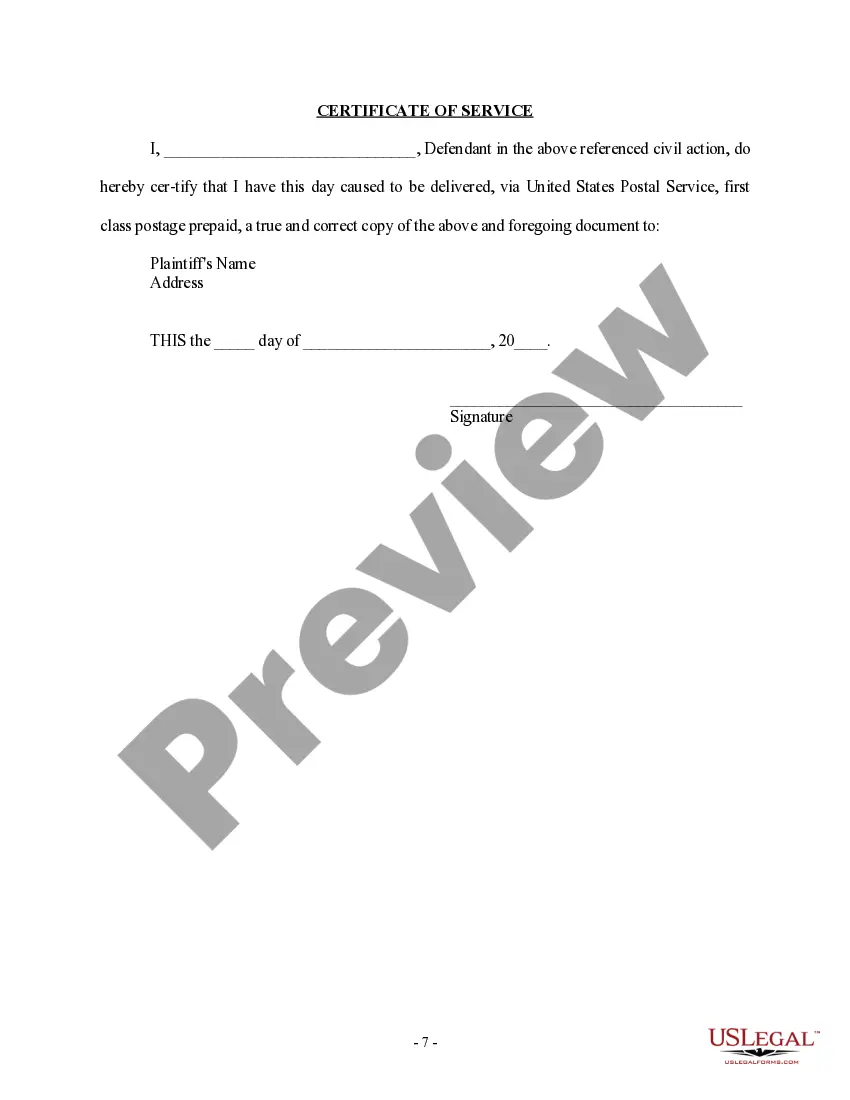
- Certification of service: Acknowledges that all legal parties have received the completed form.

Common use cases
This form is utilized during the discovery phase of a divorce lawsuit. You should use it when you need detailed information from the plaintiff, such as financial data, personal history, or other evidence that may impact the court's decision regarding case matters. It is a crucial tool for gathering information to support your legal position.
Intended users of this form
- Defendants involved in divorce proceedings who need to obtain information from the plaintiff.
- Legal representatives or attorneys acting on behalf of the defendant in a divorce case.
- Individuals looking for an organized way to request specific evidence relevant to their divorce case.
Instructions for completing this form
- Identify the parties: Enter the names and addresses of the defendant and plaintiff in the designated fields.
- Respond to interrogatories: Fill in the questions directed to the plaintiff, ensuring clarity and compliance with the formâs requirements.
- Specify document requests: Clearly state what documents you are requesting from the plaintiff.
- Include legal notices: Attach the notice of service of discovery to inform the court and other parties of the submission.
- Sign and dates: Ensure that the form is signed and dated by the defendant and that all necessary information is accurate.
Does this document require notarization?
This form does not typically require notarization unless specified by local law. Always check the local regulations to ensure compliance.
Get your form ready online
Our built-in tools help you complete, sign, share, and store your documents in one place.
Make edits, fill in missing information, and update formatting in US Legal Forms—just like you would in MS Word.
Download a copy, print it, send it by email, or mail it via USPS—whatever works best for your next step.
Sign and collect signatures with our SignNow integration. Send to multiple recipients, set reminders, and more. Go Premium to unlock E-Sign.
If this form requires notarization, complete it online through a secure video call—no need to meet a notary in person or wait for an appointment.
We protect your documents and personal data by following strict security and privacy standards.

Make edits, fill in missing information, and update formatting in US Legal Forms—just like you would in MS Word.

Download a copy, print it, send it by email, or mail it via USPS—whatever works best for your next step.

Sign and collect signatures with our SignNow integration. Send to multiple recipients, set reminders, and more. Go Premium to unlock E-Sign.

If this form requires notarization, complete it online through a secure video call—no need to meet a notary in person or wait for an appointment.

We protect your documents and personal data by following strict security and privacy standards.
Avoid these common issues
- Failing to sign the document or date it appropriately.
- Not including a complete list of interrogatories or production requests necessary for the case.
- Omitting important personal information required from the plaintiff.
- Not providing sufficient time for the plaintiff to respond to the requests.
Benefits of using this form online
- Convenience: Access and complete the form from anywhere at any time.
- Editability: Easily customize the form to fit the specifics of your case by adding or removing questions as needed.
- Reliability: Utilize a template drafted by licensed attorneys, ensuring a higher standard of accuracy and completeness.
The Discovery Interrogatories from Defendant to Plaintiff with Production Requests is legally binding as part of the discovery process in Texas divorce proceedings. It allows for transparent gathering of information and is an essential step to create a fair and informed trial.
- Essential for defendants to gather evidence and information from plaintiffs in divorce cases.
- Includes both interrogatories and requests for production of documents.
- Must be completed accurately and filed on time to ensure effective legal representation.
Looking for another form?
Form popularity
FAQ
This Texas divorce discovery form lets the defendant question the plaintiff under oath through a set of interrogatories and demand production of documents relevant to the case. It includes defendant/plaintiff identification, a legal notice about when and how responses must be provided, and a certification of service. It helps uncover the plaintiff’s claims and supporting evidence during discovery.
In this form, the most common objection to interrogatories is that a question is overly broad or unduly burdensome, or seeks information not reasonably calculated to lead to admissible evidence. The objection may be followed by a narrowed, more focused response or a request to limit the scope.
Common improper objections to interrogatories include vague or ambiguous questions, objections that a request is irrelevant, or evasive or overly broad refusals without offering a helpful alternative. If sustained, these objections can be challenged with a motion to compel more precise, complete answers.
An improper contention interrogatory asks for legal conclusions or theories of the case rather than factual information. In the Texas Discovery Interrogatories from Defendant to Plaintiff with Production Requests, responses should focus on factual details; legal conclusions are generally sought in pleadings, not interrogatories.
The four types of objections are relevance, privilege or confidentiality, overly broad or unduly burdensome, and form or vagueness. In this form, these categories guide how a responding party may defend or withhold information or seek clarification during discovery.
This form combines both questions and document requests in one template and is tailored for divorce proceedings in Texas. It prompts the defendant to obtain sworn answers plus specific documents, with sections for identification, a legal notice on response timing, and certification of service.