South Dakota Transfer on Death Deed or TOD - Beneficiary Deed for Individual to a Trust
What this document covers
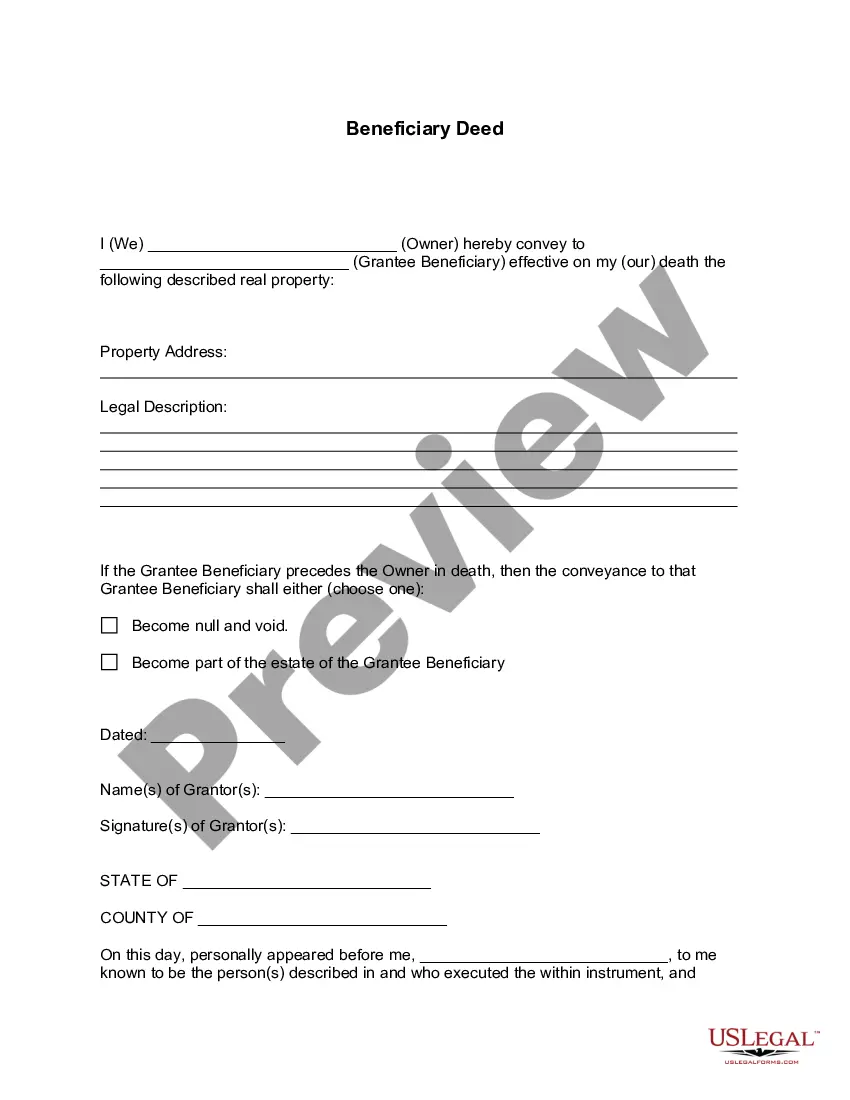
The Transfer on Death Deed (TOD) allows property owners to designate a beneficiary who will automatically receive ownership of the property upon their death. This deed is unique as it does not transfer ownership during the owner's lifetime, maintaining complete control until death. Unlike a traditional will, the TOD facilitates a straightforward transfer without the need for probate.
Main sections of this form
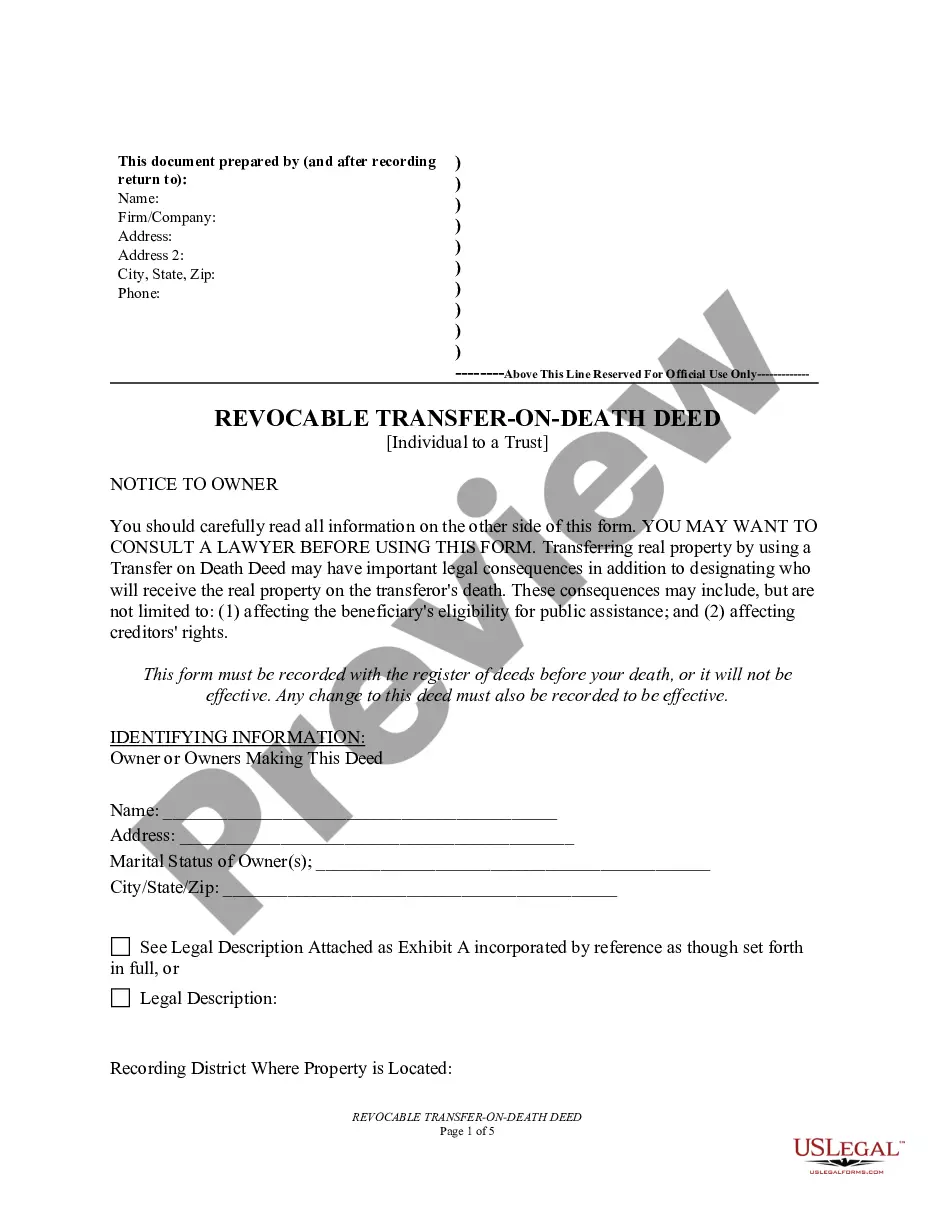
- Grantor Information: Details about the property owner(s) making the deed.
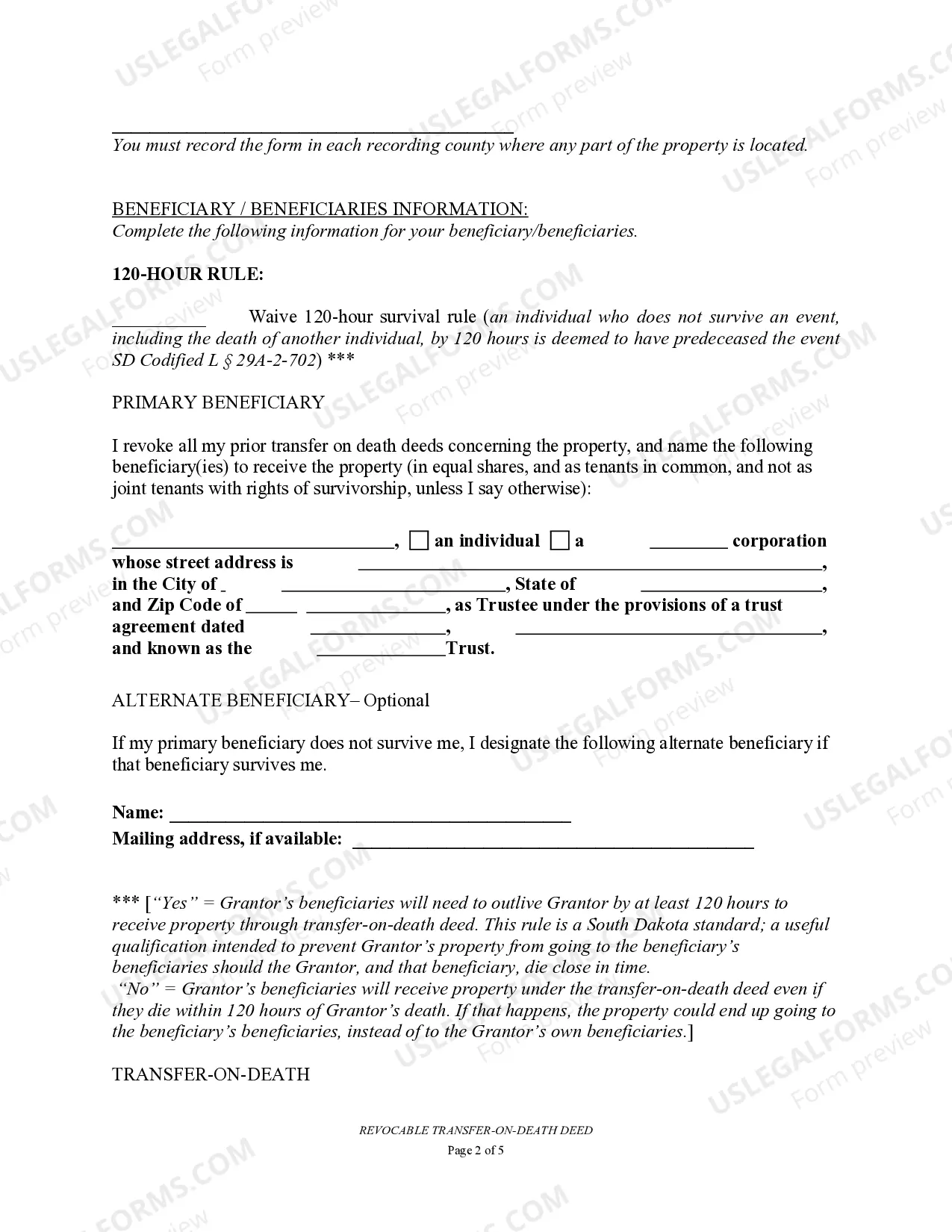
- Beneficiary Designation: Names and addresses of the primary beneficiary and optional alternate beneficiary.
- Property Details: Description of the property being transferred, including legal descriptions and address.
- Revocation Clause: A statement allowing the grantor to revoke any prior transfer on death deeds related to the given property.
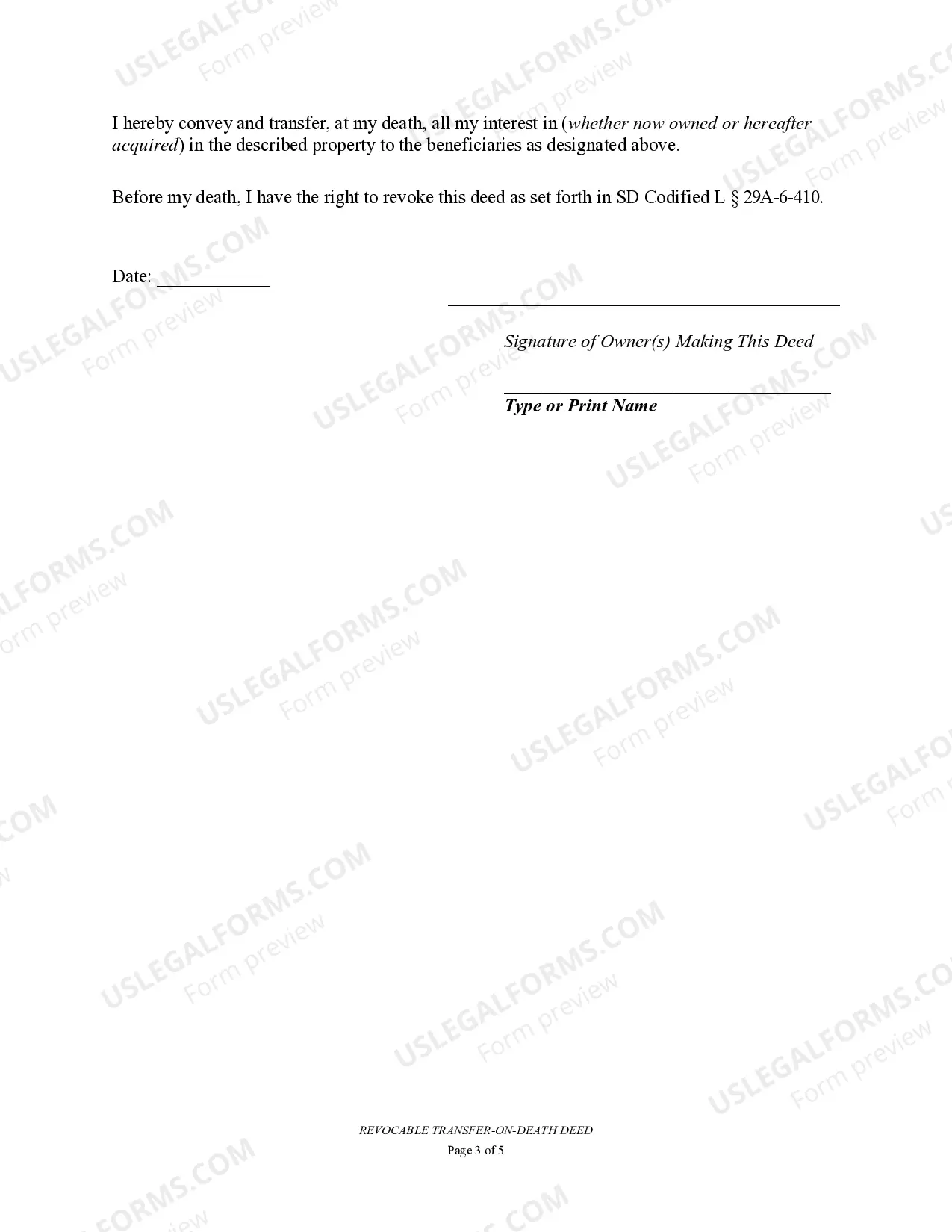
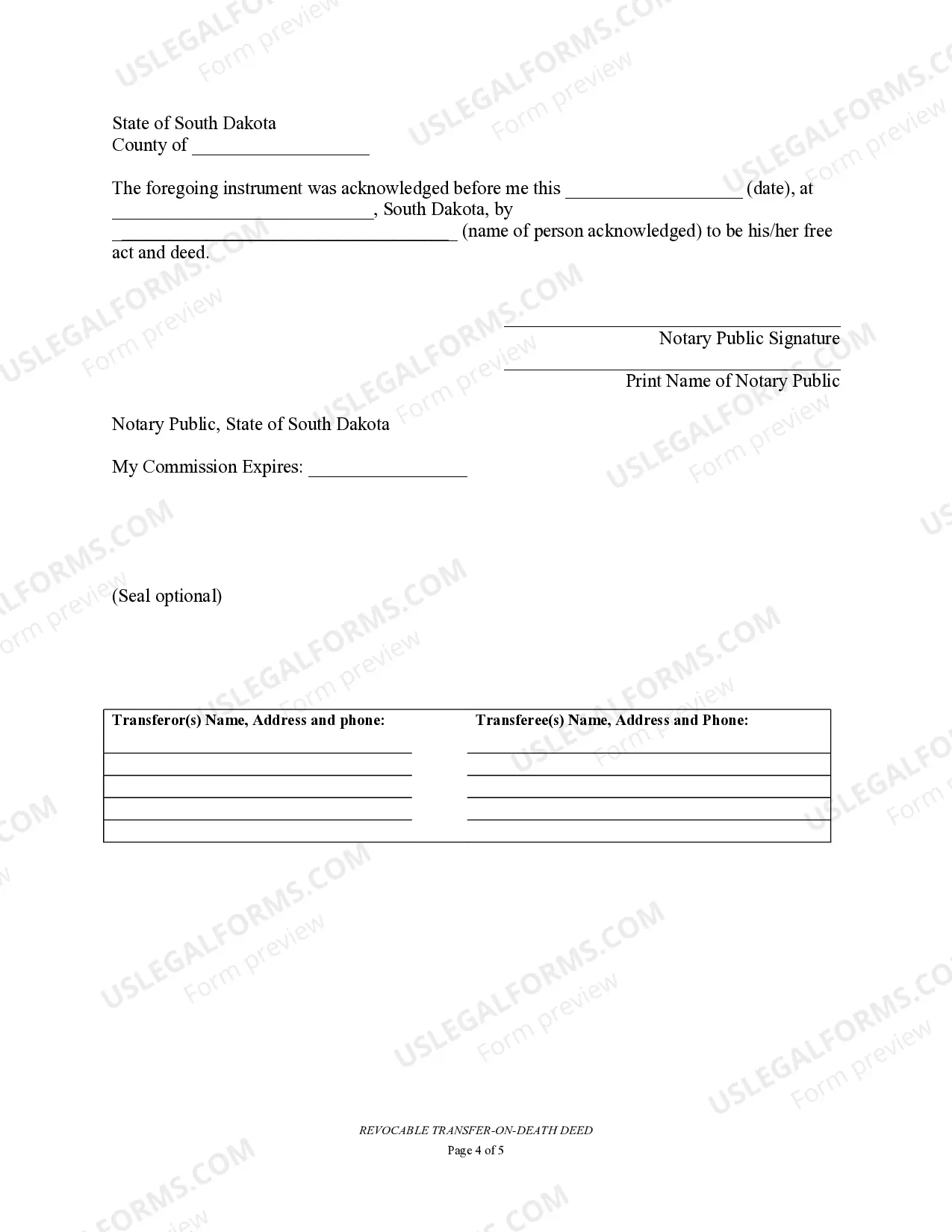
- Witness and Notary Section: Area for the grantor's signature and notarization, confirming the deed's validity.


When this form is needed
This form is useful when a property owner wants to ensure that their property is transferred to a designated beneficiary automatically upon their death, without undergoing probate. It is advisable in situations where the owner wishes to provide for loved ones or manage estate transfer efficiently. Additionally, it can be beneficial for individuals who prefer to retain control of their property during their lifetime but want a clear plan for after their passing.
Who should use this form
- Individuals who own real estate and wish to designate a beneficiary for that property.
- Property owners looking for a way to transfer property without complicating the probate process.
- Those wanting to ensure a smooth transfer of assets to specific individuals or a trust upon their death.
- Individuals familiarizing themselves with estate planning to ensure their wishes are honored.
How to prepare this document
- Identify the property owner(s) by filling in their name, address, and marital status in the designated sections.
- Specify the legal description of the property to be transferred, either by attaching an exhibit or providing the details directly.
- Designate the primary beneficiary or beneficiaries and their corresponding addresses. Include an alternate beneficiary if desired.
- Review the revocation statement and ensure it accurately reflects your intentions regarding previous deeds.
- Sign the deed in the presence of a notary public, ensuring all parties acknowledge the deed upon finalization.
Notarization requirements for this form
Yes, this form must be notarized to be legally valid. Notarization ensures that the identity of the signatories is verified and adds a layer of legal protection to the transfer. US Legal Forms offers integrated online notarization services, allowing you to complete this process securely via video call at your convenience.
Get your form ready online
Our built-in tools help you complete, sign, share, and store your documents in one place.
Make edits, fill in missing information, and update formatting in US Legal Forms—just like you would in MS Word.
Download a copy, print it, send it by email, or mail it via USPS—whatever works best for your next step.
Sign and collect signatures with our SignNow integration. Send to multiple recipients, set reminders, and more. Go Premium to unlock E-Sign.
If this form requires notarization, complete it online through a secure video call—no need to meet a notary in person or wait for an appointment.
We protect your documents and personal data by following strict security and privacy standards.

Make edits, fill in missing information, and update formatting in US Legal Forms—just like you would in MS Word.

Download a copy, print it, send it by email, or mail it via USPS—whatever works best for your next step.

Sign and collect signatures with our SignNow integration. Send to multiple recipients, set reminders, and more. Go Premium to unlock E-Sign.

If this form requires notarization, complete it online through a secure video call—no need to meet a notary in person or wait for an appointment.

We protect your documents and personal data by following strict security and privacy standards.
Common mistakes
- Failing to record the deed prior to the owner's death, rendering it ineffective.
- Not providing complete and accurate legal descriptions of the property.
- Overlooking the revocation of prior deeds, which may lead to confusion regarding beneficiary rights.
- Not including all required signatures or notarization, which can invalidate the deed.
Key takeaways
- A Transfer on Death Deed allows for seamless property transfer upon death without probate.
- The form must be completed and recorded during the grantor's lifetime to be effective.
- Consulting with a legal professional is recommended to avoid potential consequences related to asset transfer.