Pennsylvania Marital Domestic Separation and Property Settlement Agreement no Children parties may have Joint Property or Debts where Divorce Action Filed
What is this form?
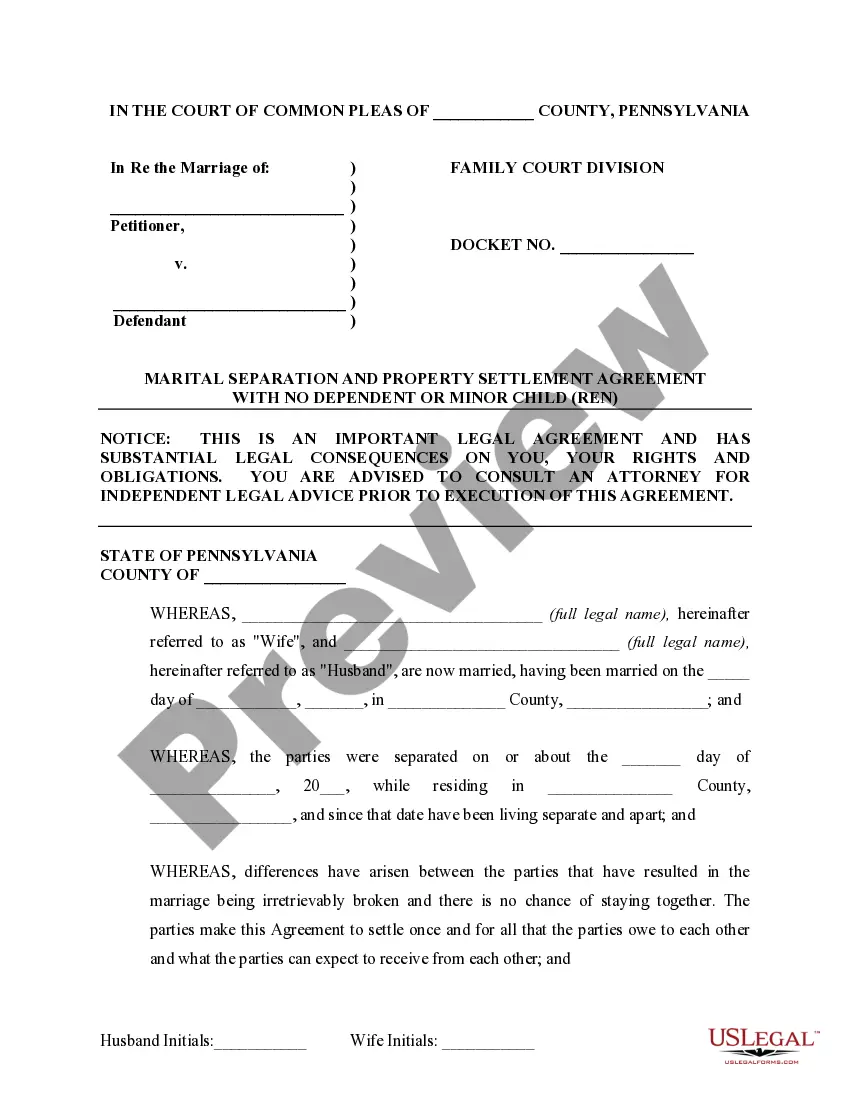
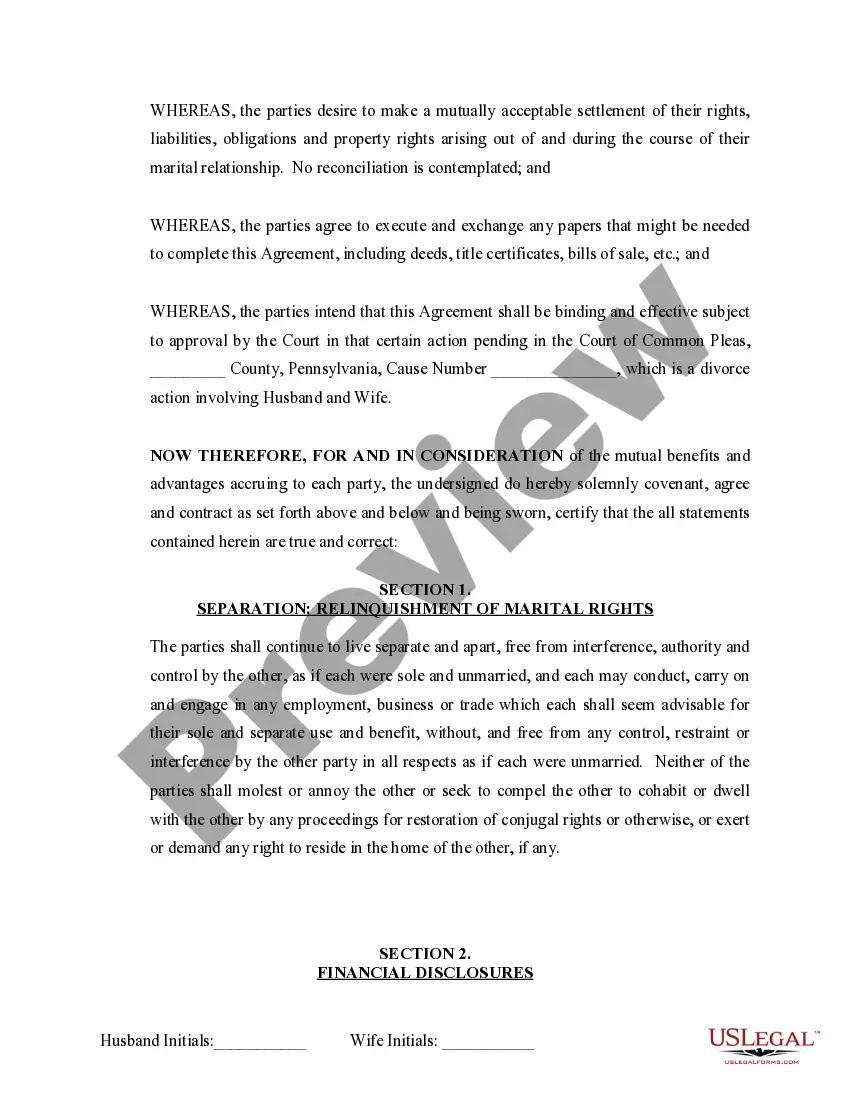
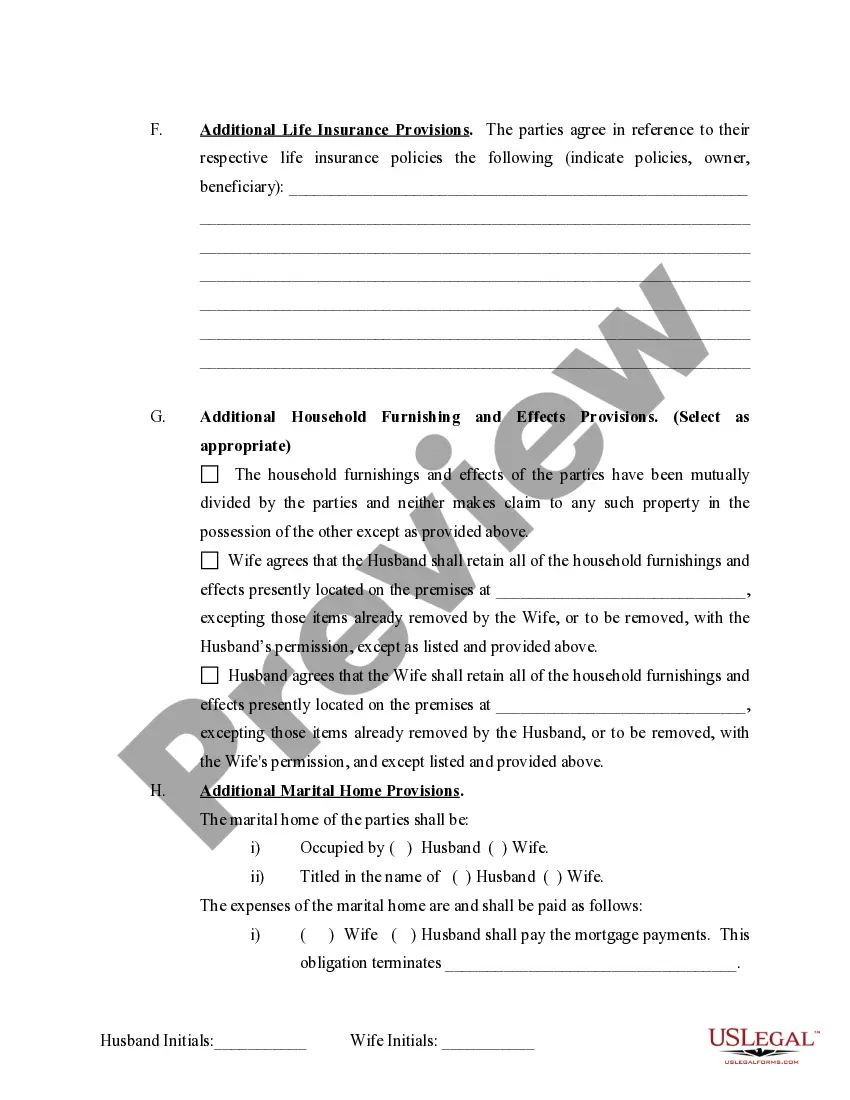
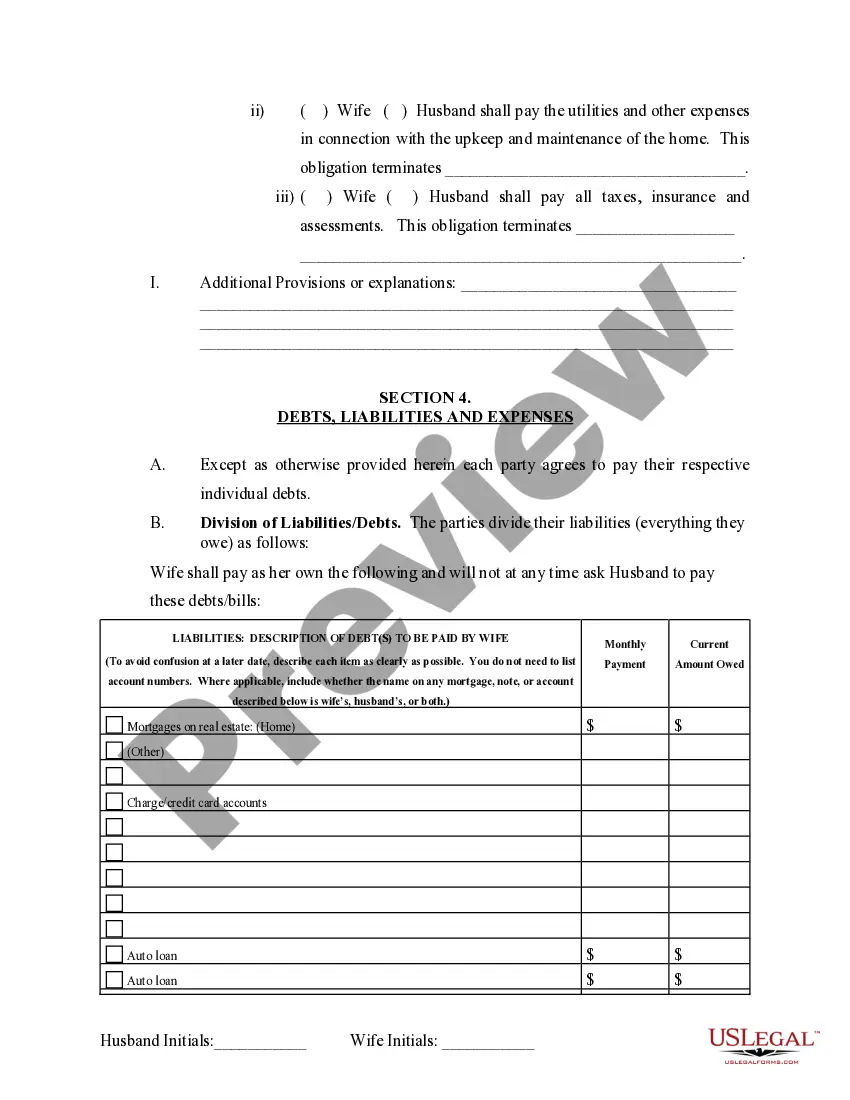
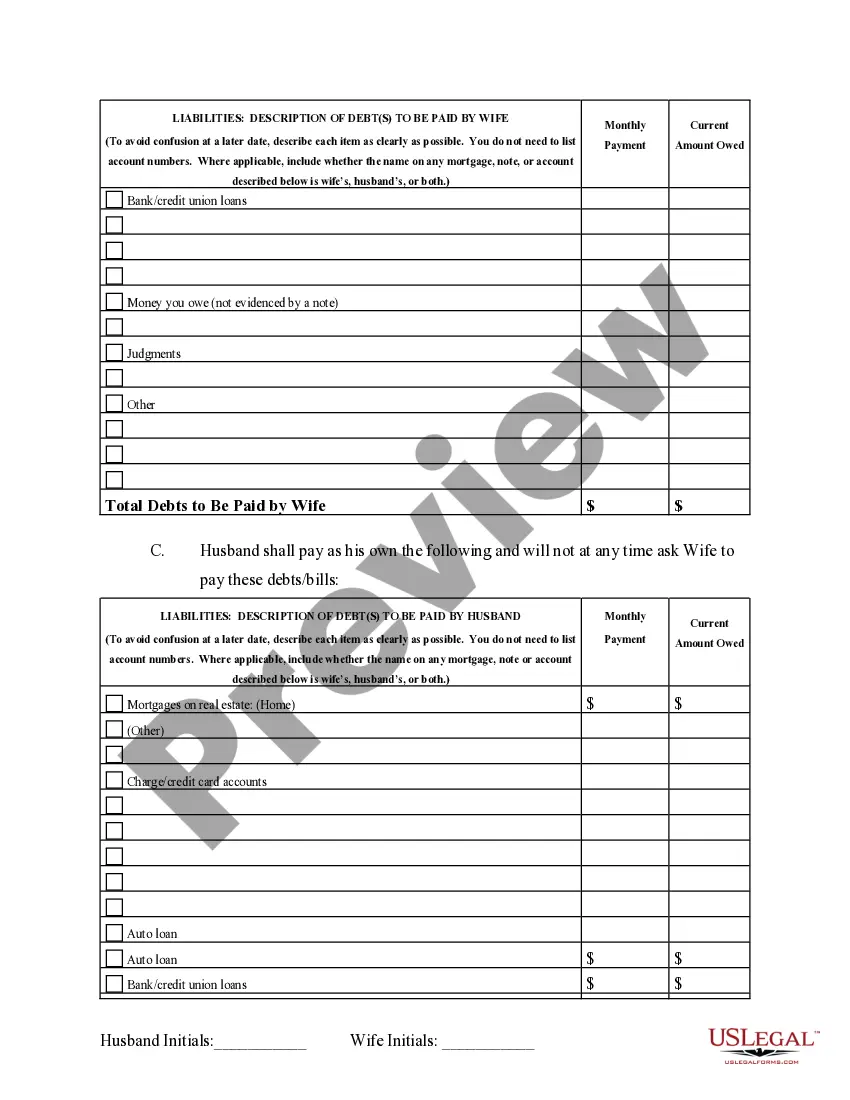
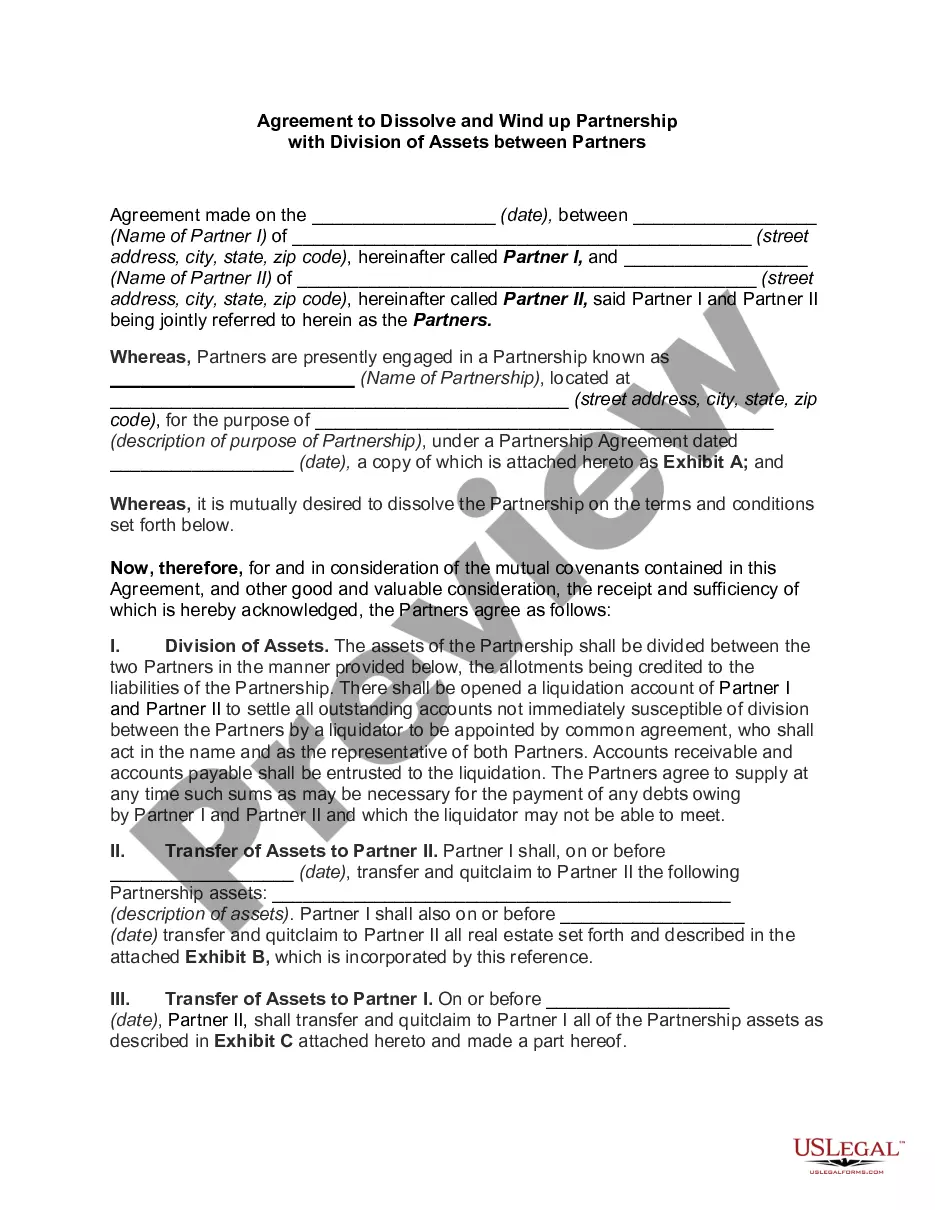
This Marital Domestic Separation and Property Settlement Agreement is a legal document designed for couples without children who are going through a divorce and have joint property or debts. It outlines the terms for the division of assets and liabilities, ensuring both parties have a clear understanding of their rights and obligations. This form is specifically for use in the State of Pennsylvania and is intended to facilitate a fair and amicable resolution during divorce proceedings.
Key parts of this document
- Identification of the parties: Full legal names of both husband and wife.
- Separation of marital rights: Clear terms regarding the partiesâ future independence.
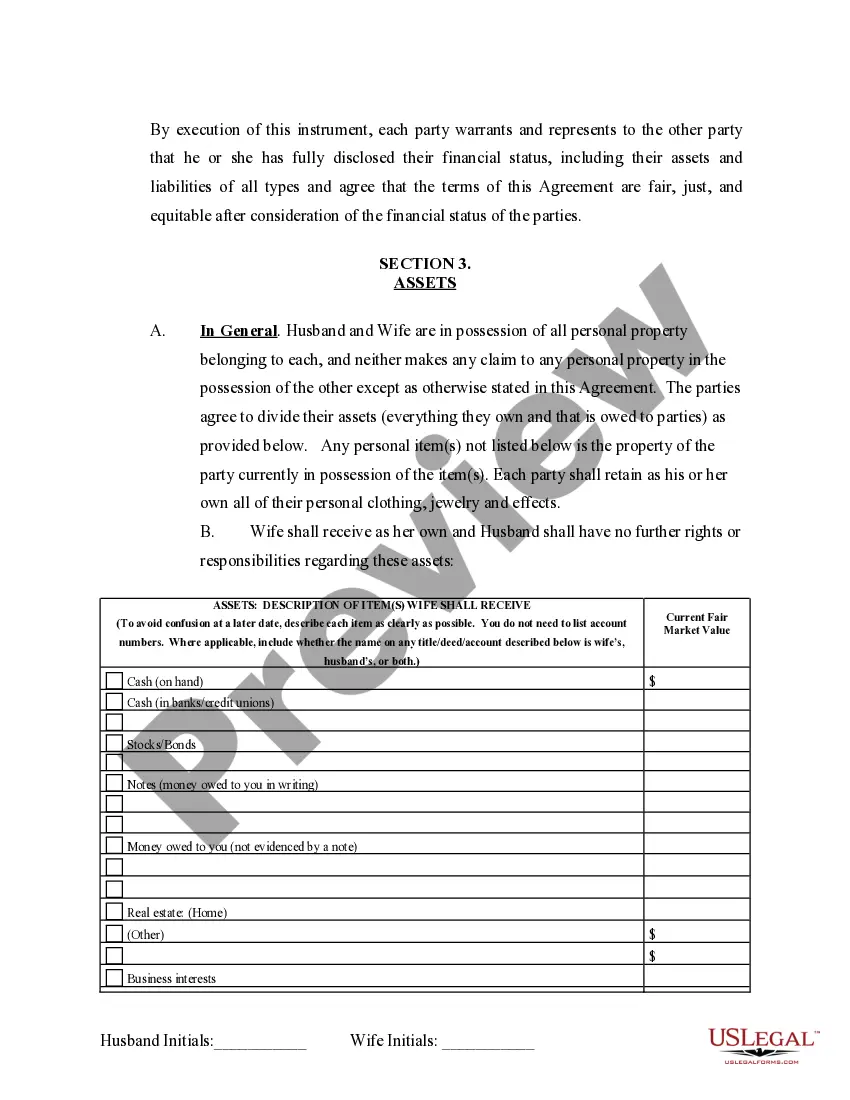
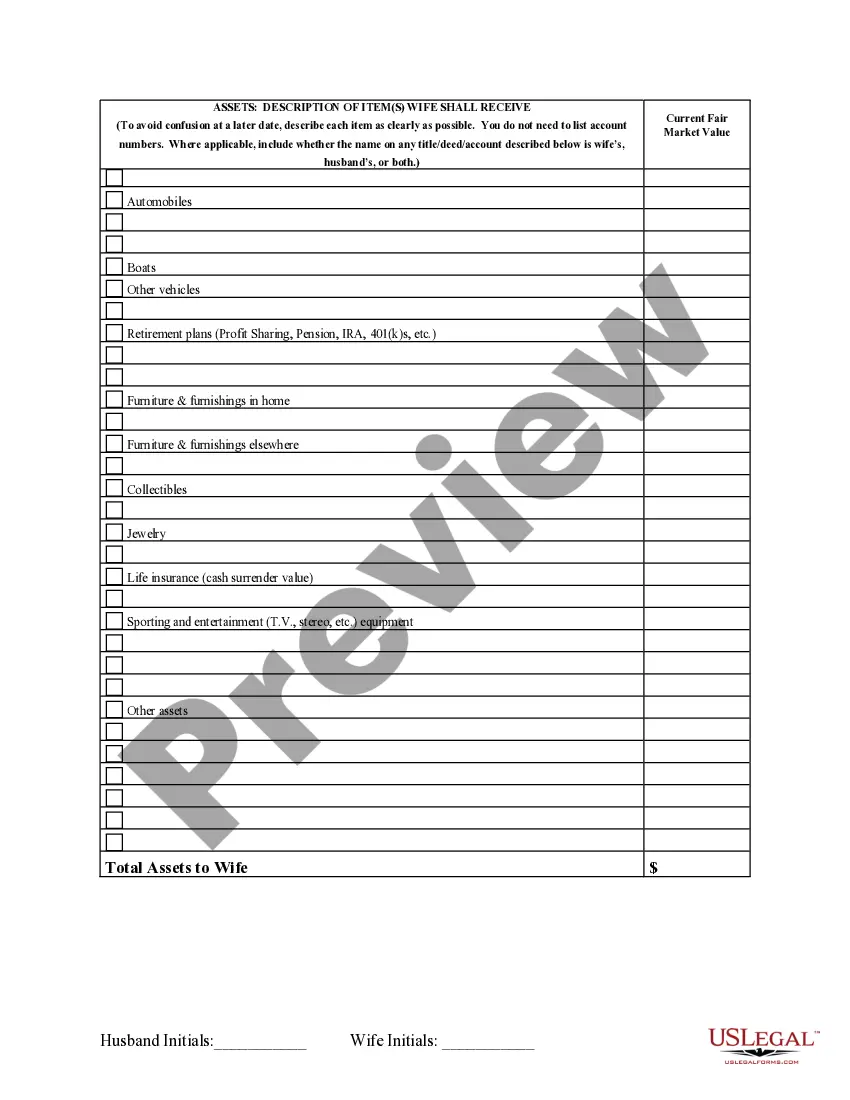
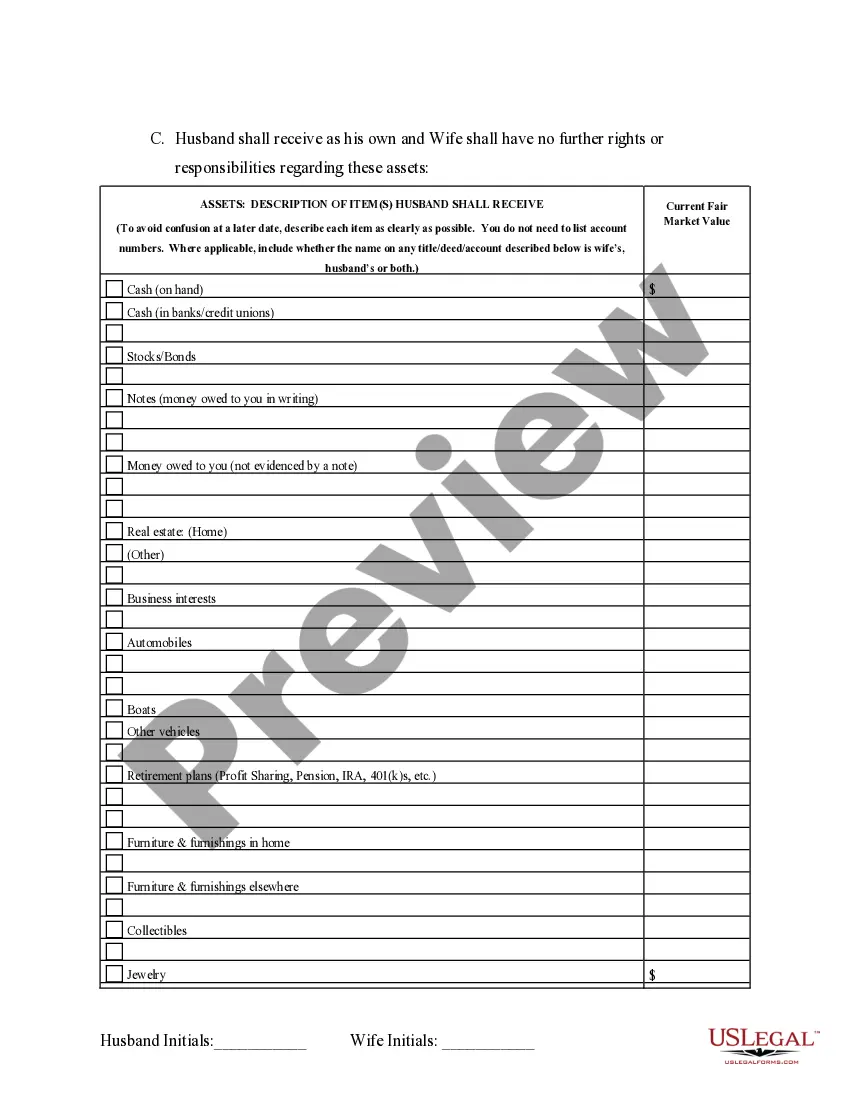
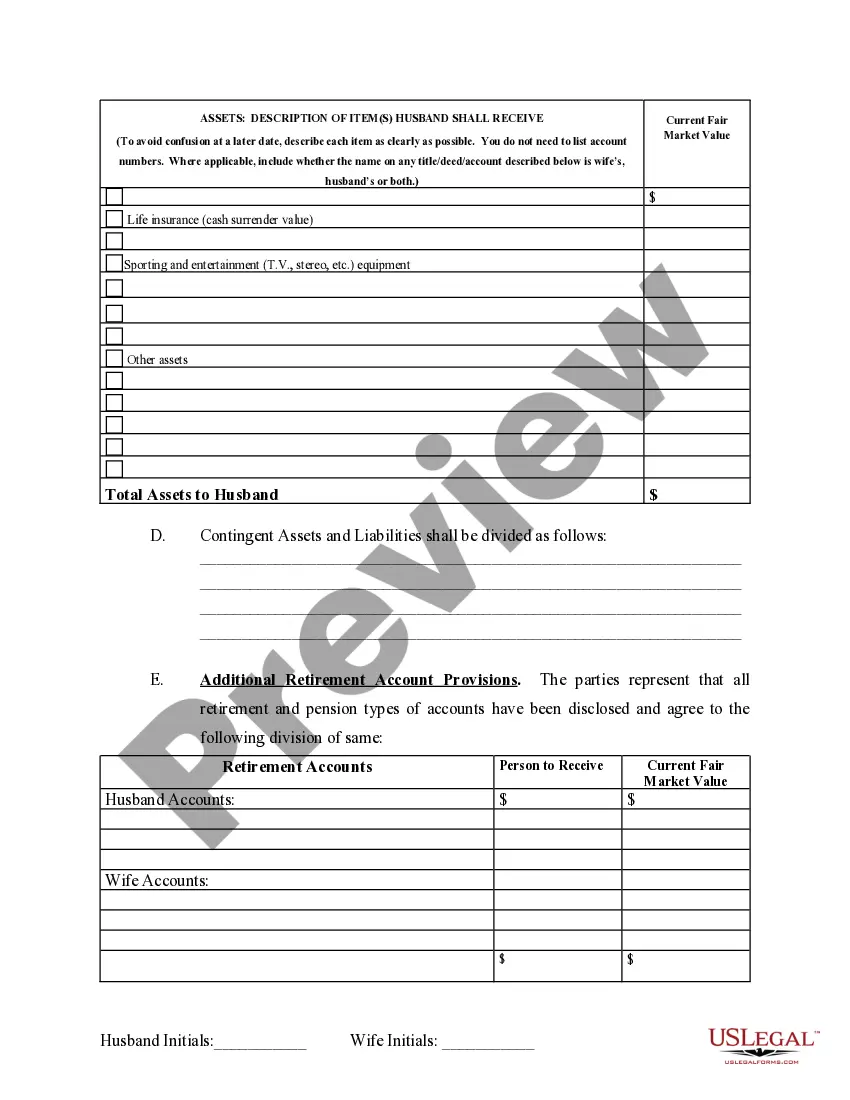
- Division of assets: Detailed provisions for the distribution of jointly owned properties and individual assets.
- Debts and liabilities: Agreement on how to handle existing debts, ensuring each party is responsible for their obligations.
- Spousal support: Terms under which alimony may be paid, if applicable.
- Notarization requirement: Signatures must be witnessed by a notary public to validate the agreement.


Situations where this form applies
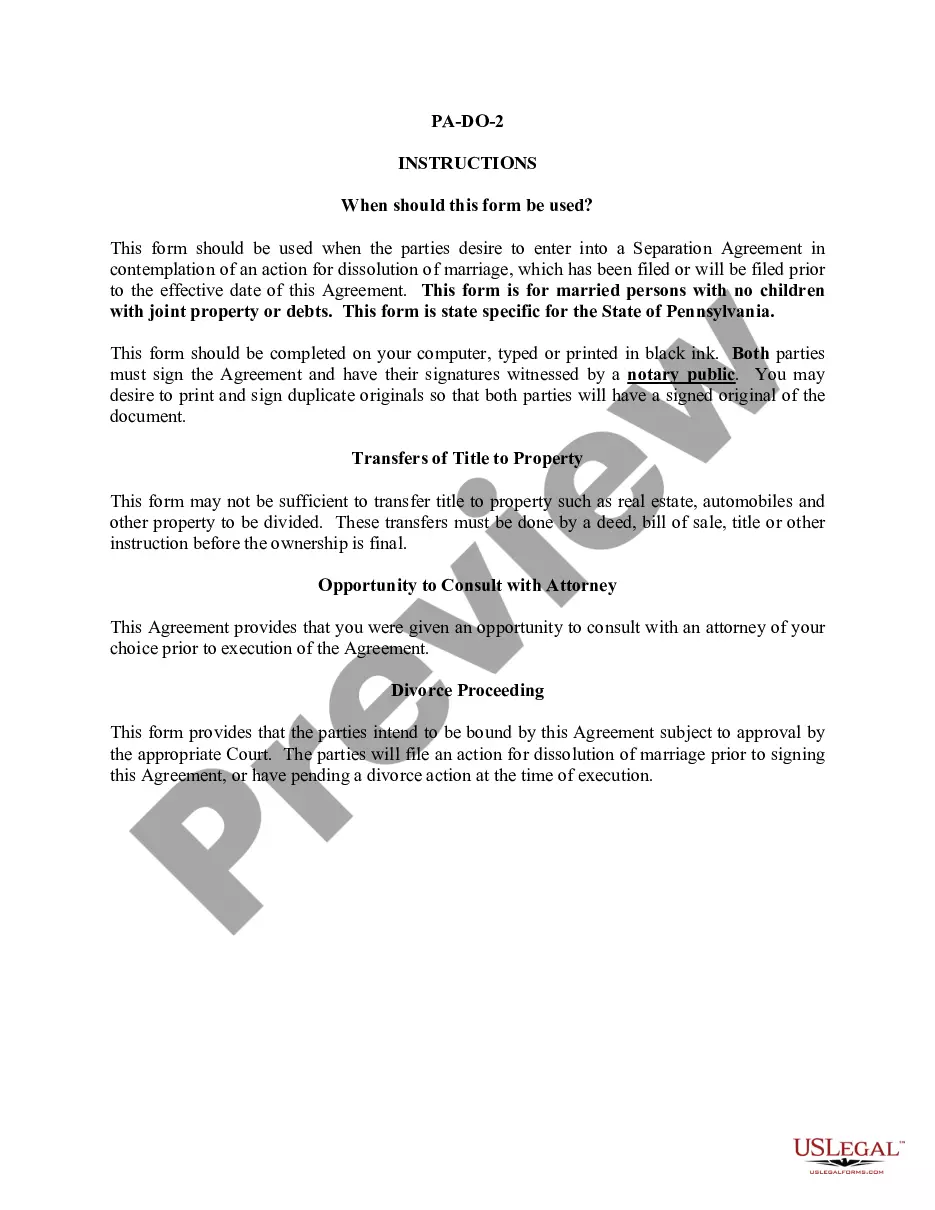
This form should be used when the spouses wish to establish clear agreements regarding the division of their assets and debts in anticipation of divorce proceedings. It is particularly relevant when a divorce action has already been filed or is intended to be filed, and both parties have jointly owned properties or debts to settle.
Intended users of this form
- Married individuals without children who are filing for divorce.
- Couples who share joint property or debts and need to outline their division.
- Parties seeking a mutual agreement to avoid potential conflicts during the divorce process.
How to prepare this document
- Identify the parties: Enter the full names of both husband and wife at the beginning of the document.
- Specify the property: Clearly describe all joint assets and debts in the appropriate sections.
- Distinguish between individual and shared property: Make note of which assets are awarded to each party.
- Determine spousal support: Include any agreements regarding alimony payments and their terms.
- Sign and notarize: Both parties must sign the agreement in front of a notary public for it to be legally binding.
Notarization requirements for this form
Yes, this form must be notarized to be legally valid. Each partyâs signature must be witnessed by a notary public, affirming that they are entering into the agreement willingly and without coercion. US Legal Forms offers integrated online notarization options that provide 24/7 availability through secure video calls, ensuring a hassle-free process.
Get your form ready online
Our built-in tools help you complete, sign, share, and store your documents in one place.
Make edits, fill in missing information, and update formatting in US Legal Forms—just like you would in MS Word.
Download a copy, print it, send it by email, or mail it via USPS—whatever works best for your next step.
Sign and collect signatures with our SignNow integration. Send to multiple recipients, set reminders, and more. Go Premium to unlock E-Sign.
If this form requires notarization, complete it online through a secure video call—no need to meet a notary in person or wait for an appointment.
We protect your documents and personal data by following strict security and privacy standards.

Make edits, fill in missing information, and update formatting in US Legal Forms—just like you would in MS Word.

Download a copy, print it, send it by email, or mail it via USPS—whatever works best for your next step.

Sign and collect signatures with our SignNow integration. Send to multiple recipients, set reminders, and more. Go Premium to unlock E-Sign.

If this form requires notarization, complete it online through a secure video call—no need to meet a notary in person or wait for an appointment.

We protect your documents and personal data by following strict security and privacy standards.
Common mistakes
- Failing to list all assets and debts, which could lead to disputes later.
- Not having the agreement notarized, which may invalidate the document.
- Ignoring state-specific laws that could affect the agreement's enforceability.
- Not consulting with an attorney before finalizing the agreement.
Benefits of using this form online
- Convenience of downloading and filling out the form from home.
- Editability allows for clear and accurate entries before printing.
- Access to templates drafted by licensed attorneys, ensuring legal compliance.
- Time-saving option compared to visiting an attorney in person.
Main things to remember
- This agreement is essential for managing property and debts during a divorce for couples without children.
- It must be executed with proper notary assurances to ensure legality.
- Mutual agreement and clear disclosure of finances are crucial components of the form.
Looking for another form?


Form popularity
FAQ
In a Pennsylvania divorce, the court divides marital property on an equitable basis. However, this does not necessarily mean that the court will evenly split property between the two spouses. Rather, the judge presiding over the case will split up the property in a way that he or she deems fair.
Technically, 50/50 states are called community property states because each spouse is entitled to 50 percent of the marital assets acquired during the marriage in the event of a divorce.Pennsylvania is NOT a community property state. Instead, it is an equitable distribution state.
Marital property includes all property that was acquired during the marriage, regardless of how it is titled (in whose name it is). Gifts from one spouse to another are marital property if they were purchased with marital funds.
Separation agreement is a general term used to describe a written contract that spouses enter into to address some or all issues arising from their marital separation.Therefore, if a spouse refuses to sign a separation agreement, the other spouse cannot force the unwilling spouse to do so.
Though the term non-marital property often refers to any personal or real property owned prior to, and brought into the marriage, it can also refer to things such as inheritances and gifts made to only one spouse.
Is Pennsylvania a Community Property State? No. Pennsylvania divides marital property under the theory of equitable distribution.
Marital property includes all property that was acquired during the marriage, regardless of how it is titled (in whose name it is). Gifts from one spouse to another are marital property if they were purchased with marital funds.
Yes, it is mandatory. Each party must obtain independent legal advice prior to signing a separation agreement. You also cannot use the same lawyer and should not use the same law firm. If you fail to obtain advice from a lawyer, the separation agreement will be unenforceable.
Pennsylvania's divorce law gives the court the right to allow one or both of the spouses to reside in the marital home, during the divorce or afterwards.