Pennsylvania Income and Expense Statement
Overview of this form
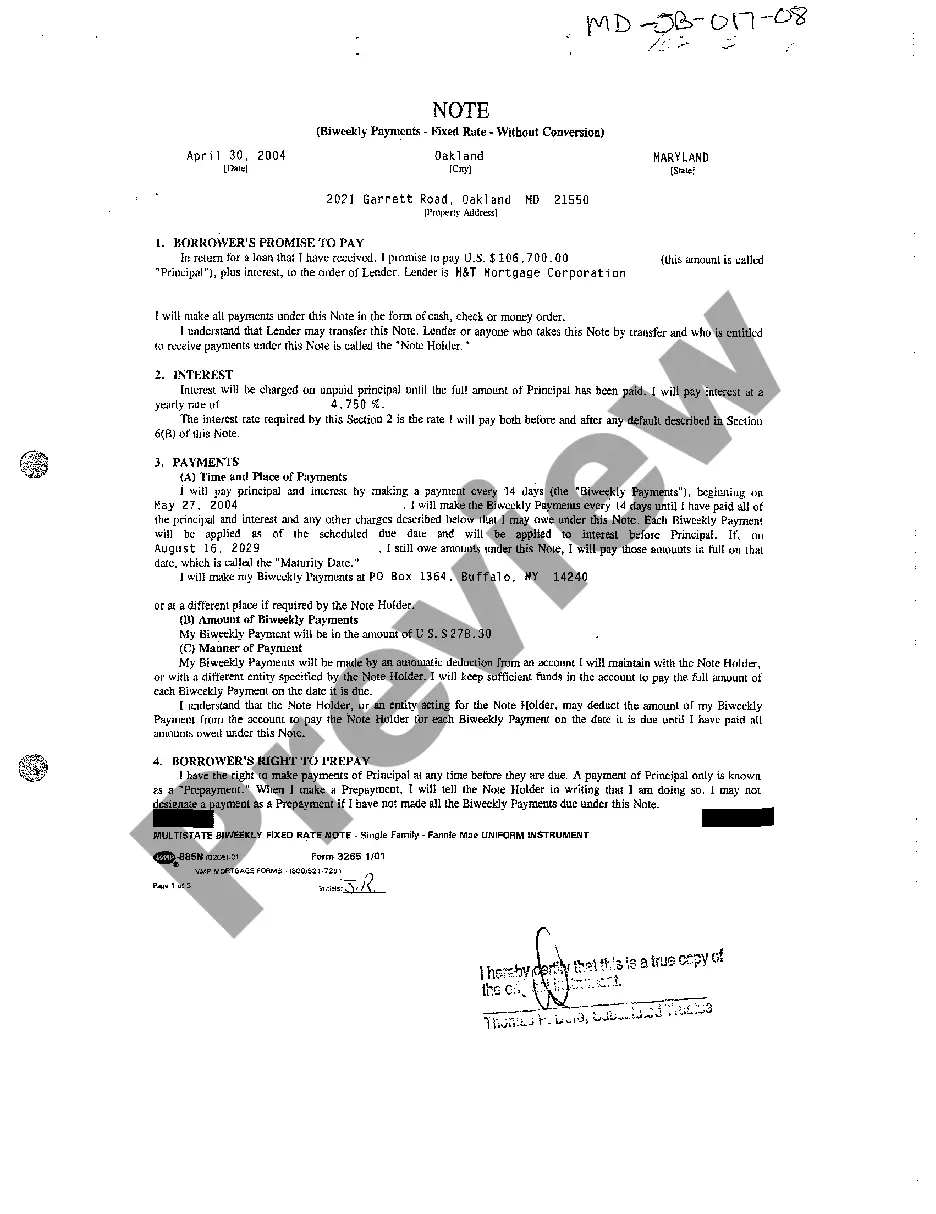
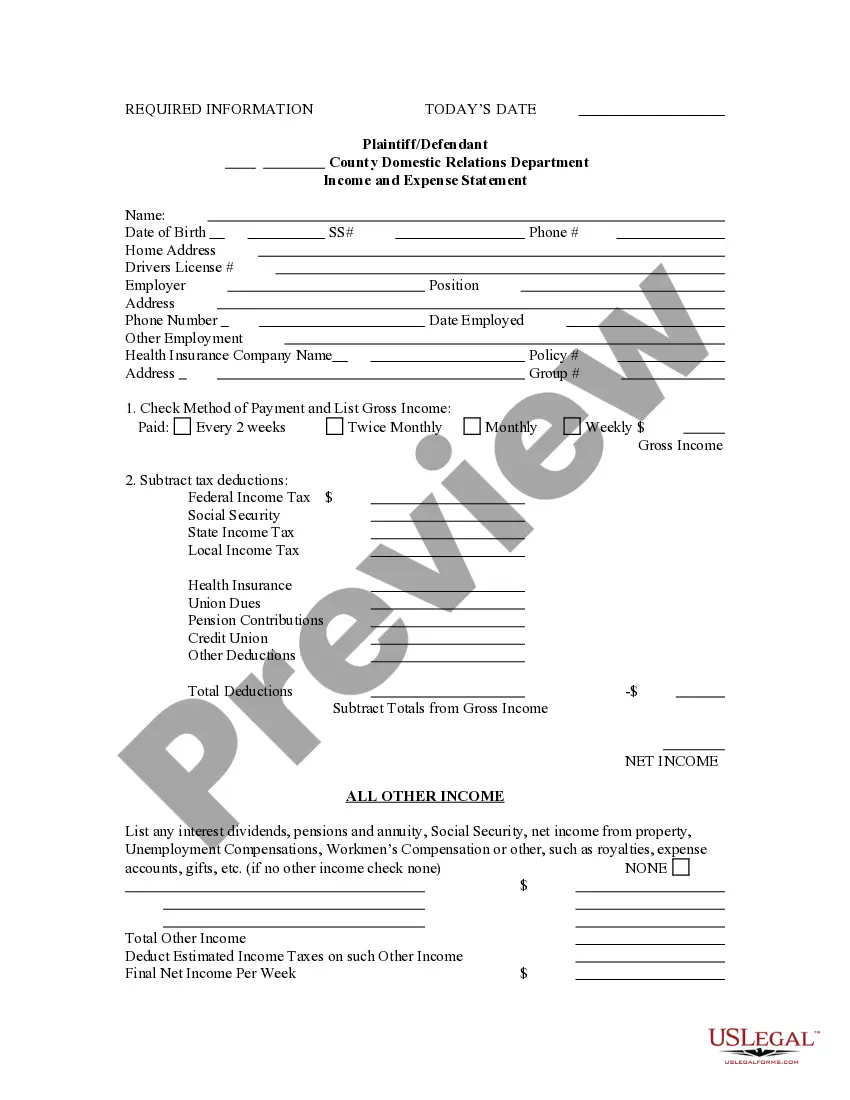
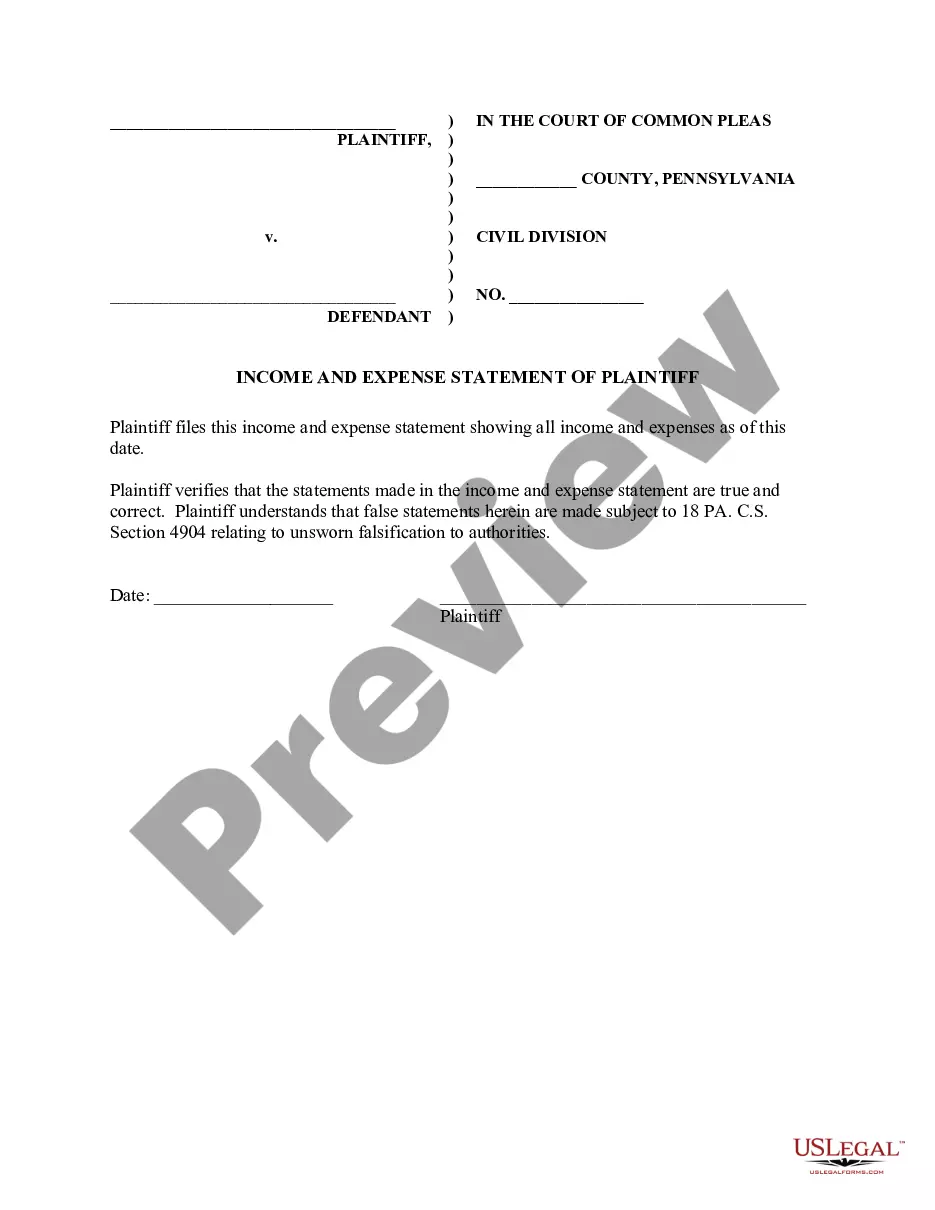
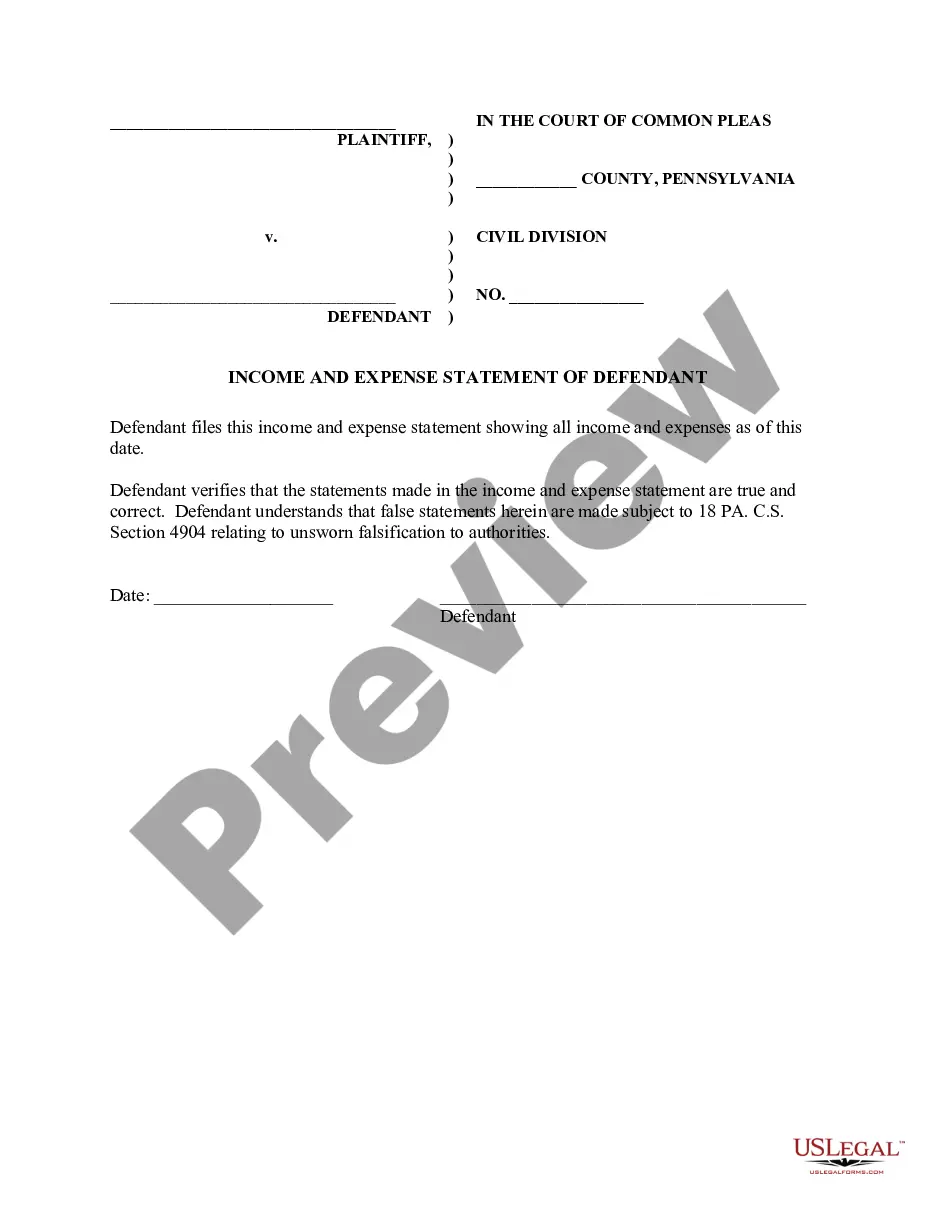
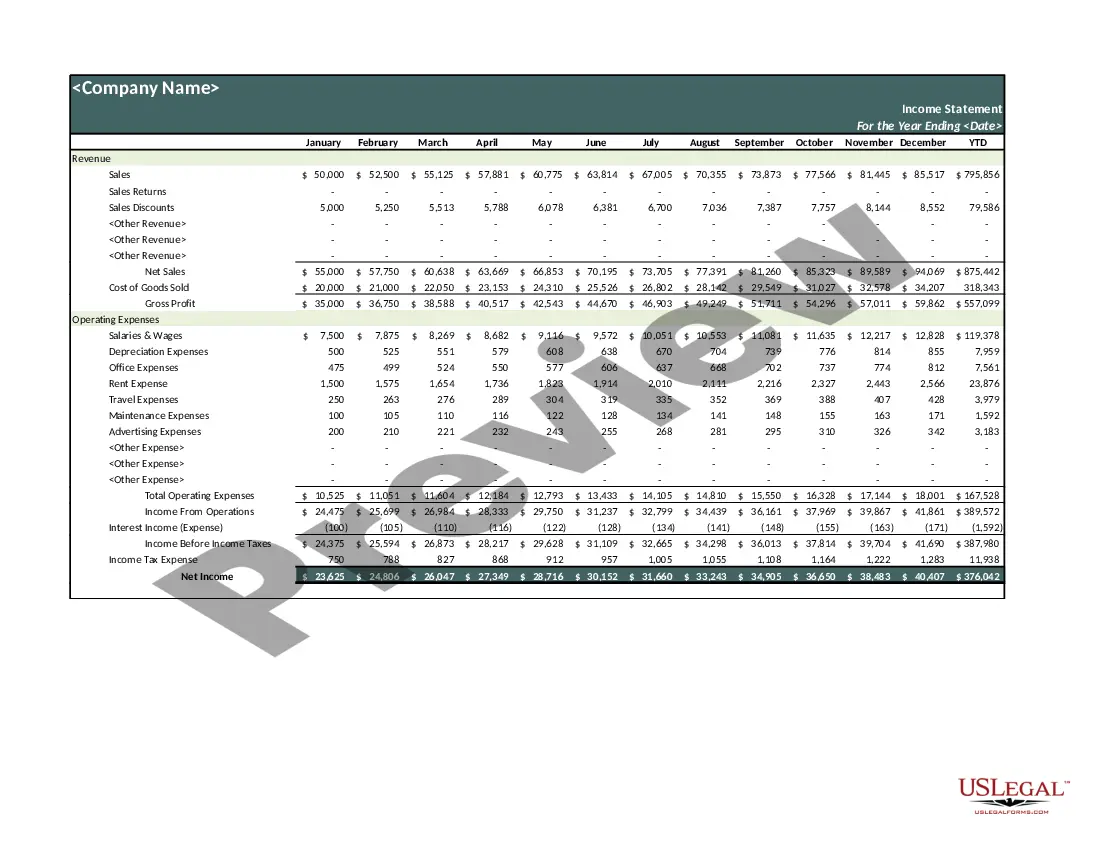
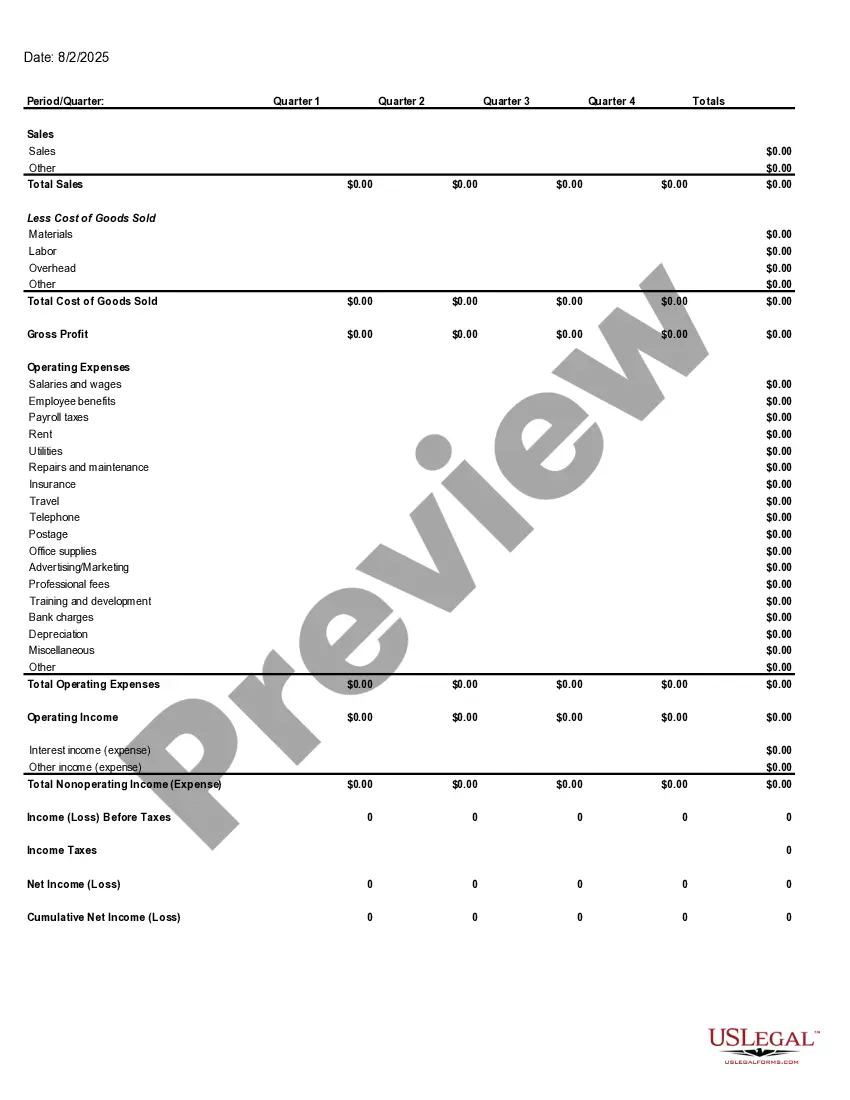
The Income and Expense Statement is a legal document designed to provide the court with essential financial information in cases involving children. This statement helps outline the income and expenses of both parties, making it distinct from other financial declarations by focusing specifically on obligations related to child support and custody matters.
Key components of this form
- Personal information of both parties involved.
- Detailed account of income sources and amounts.
- Summary of monthly and annual expenses.
- Information regarding employment and health insurance coverage.
- Section for additional comments or disclosures required by the court.
Common use cases
This form is used during legal proceedings that involve children, such as custody disputes or child support hearings. It is essential for providing a clear financial picture to the court, allowing for equitable decisions regarding child-related expenses.
Who can use this document
- Parents involved in custody or child support cases.
- Individuals seeking to establish financial obligations related to children.
- Accountants or attorneys assisting clients in family law matters.
Instructions for completing this form
- Gather personal and financial information for both parties.
- Fill out the sections for income sources detailing gross income and net income.
- List all monthly expenses, categorizing them as necessary (e.g., housing, utilities, and childcare).
- Include information about employment and benefits, such as health insurance.
- Review the form for completeness before submission to the court.
Notarization requirements for this form
This form does not typically require notarization unless specified by local law. Always check with your jurisdiction's requirements to ensure compliance.
Get your form ready online
Our built-in tools help you complete, sign, share, and store your documents in one place.
Make edits, fill in missing information, and update formatting in US Legal Forms—just like you would in MS Word.
Download a copy, print it, send it by email, or mail it via USPS—whatever works best for your next step.
Sign and collect signatures with our SignNow integration. Send to multiple recipients, set reminders, and more. Go Premium to unlock E-Sign.
If this form requires notarization, complete it online through a secure video call—no need to meet a notary in person or wait for an appointment.
We protect your documents and personal data by following strict security and privacy standards.

Make edits, fill in missing information, and update formatting in US Legal Forms—just like you would in MS Word.

Download a copy, print it, send it by email, or mail it via USPS—whatever works best for your next step.

Sign and collect signatures with our SignNow integration. Send to multiple recipients, set reminders, and more. Go Premium to unlock E-Sign.

If this form requires notarization, complete it online through a secure video call—no need to meet a notary in person or wait for an appointment.

We protect your documents and personal data by following strict security and privacy standards.
Avoid these common issues
- Failing to include all sources of income.
- Underestimating or neglecting to disclose certain expenses.
- Providing incorrect or outdated information regarding employment or health insurance.
- Not reviewing the form for accuracy before submission.
Advantages of online completion
- Convenient access to editable templates anytime.
- Reliability of forms drafted by licensed attorneys.
- Secure storage for completed forms and easy retrieval.
Legal use & context
- This form is legally recognized in family court to assess financial obligations.
- Failure to accurately complete this form can lead to unfavorable court outcomes.
- Keep copies of this form for your records and future court proceedings.
Key takeaways
- The Income and Expense Statement is crucial for family law cases involving children.
- Accurate and complete financial disclosures are essential for fair court decisions.
- Utilizing this form online simplifies the completion process and ensures legal integrity.
Looking for another form?


Form popularity
FAQ
Work Out the Details. To set a budget, first, you would like to understand each of your financial gain and expenditure very well. Determine Your Net Income. Account for Future Income and Expenses. Account for Change. Be Disciplined.
Pick a Reporting Period. Generate a Trial Balance Report. Calculate Your Revenue. Determine Cost of Goods Sold. Calculate the Gross Margin. Include Operating Expenses. Calculate Your Income.
Income and Expenditure Account is a nominal account. Therefore, the rule of nominal account (debit all expenses and losses and credit all incomes and gains) is followed while preparing it. While preparing the account, only items of revenue nature are recorded and all items of capital nature are ignored.
Expenditure This is the total purchase price of a good or service. For example, a company buys a $10 million piece of equipment that it estimates to have a useful life of 5 years. This would be classified as a $10 million capital expenditure.
Lists and summarizes income and expense transactions that have taken place over a specific period of time, usually a month or year. Insurance. A product that transfers risk from a individual to an insurance company or organization.
An expense is the cost of operations that a company incurs to generate revenue. As the popular saying goes, it costs money to make money. Common expenses include payments to suppliers, employee wages, factory leases, and equipment depreciation.
Definition: An expense is the cost of an asset used by a company in its operations to produce revenues. In other words, an expense is the use of assets to create sales.Expenses are created when an asset is used up, not when cash is paid out. Take depreciation expense for example.
Cost of goods sold. Sales commissions expense. Delivery expense. Rent expense. Salaries expense. Advertising expense.
Fixed expenses, savings expenses, and variable costs are the three categories that make up your budget, and are vitally important when learning to manage your money properly. When you've committed to living on a budget, you must know how to put your plan into action.