Connecticut Acknowledgment of Paternity
What is this form?
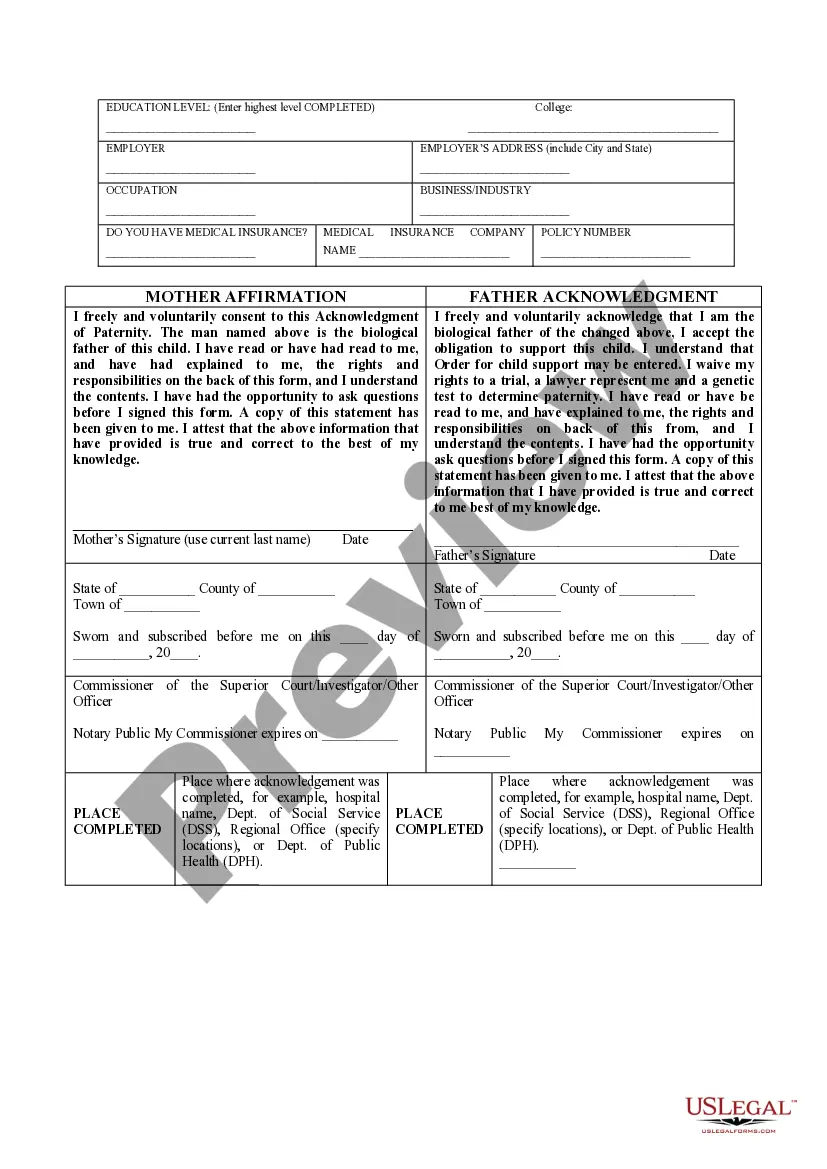
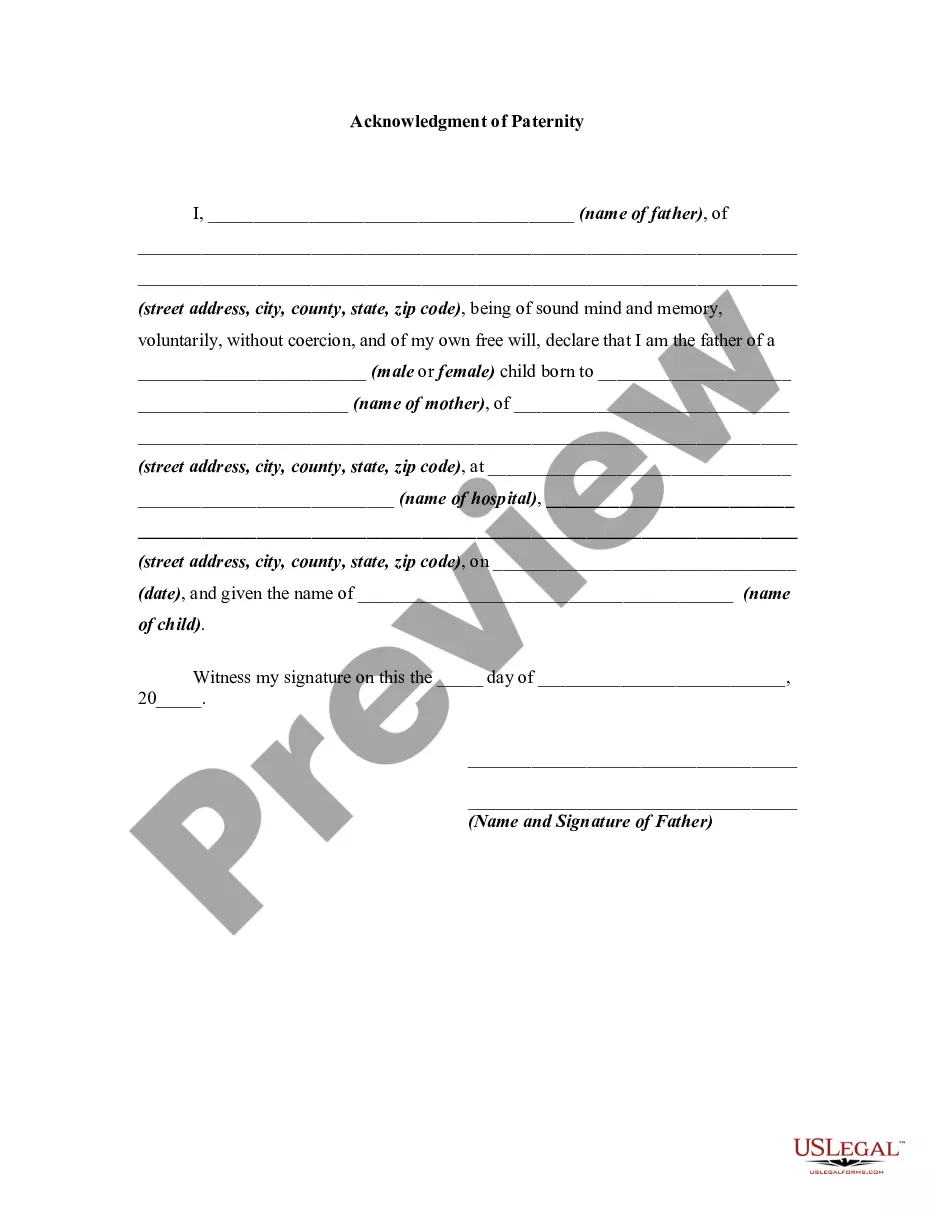
The Acknowledgment of Paternity is a legal document used to establish the legal paternity of a child when the parents are not married. By completing this form, the father's name can appear on the child's birth certificate, ensuring the child knows their father and has the right to financial support from both parents. This form provides clarity regarding the legal relationship, differentiating it from other documents that may establish paternity through court orders or genetic testing.
Main sections of this form
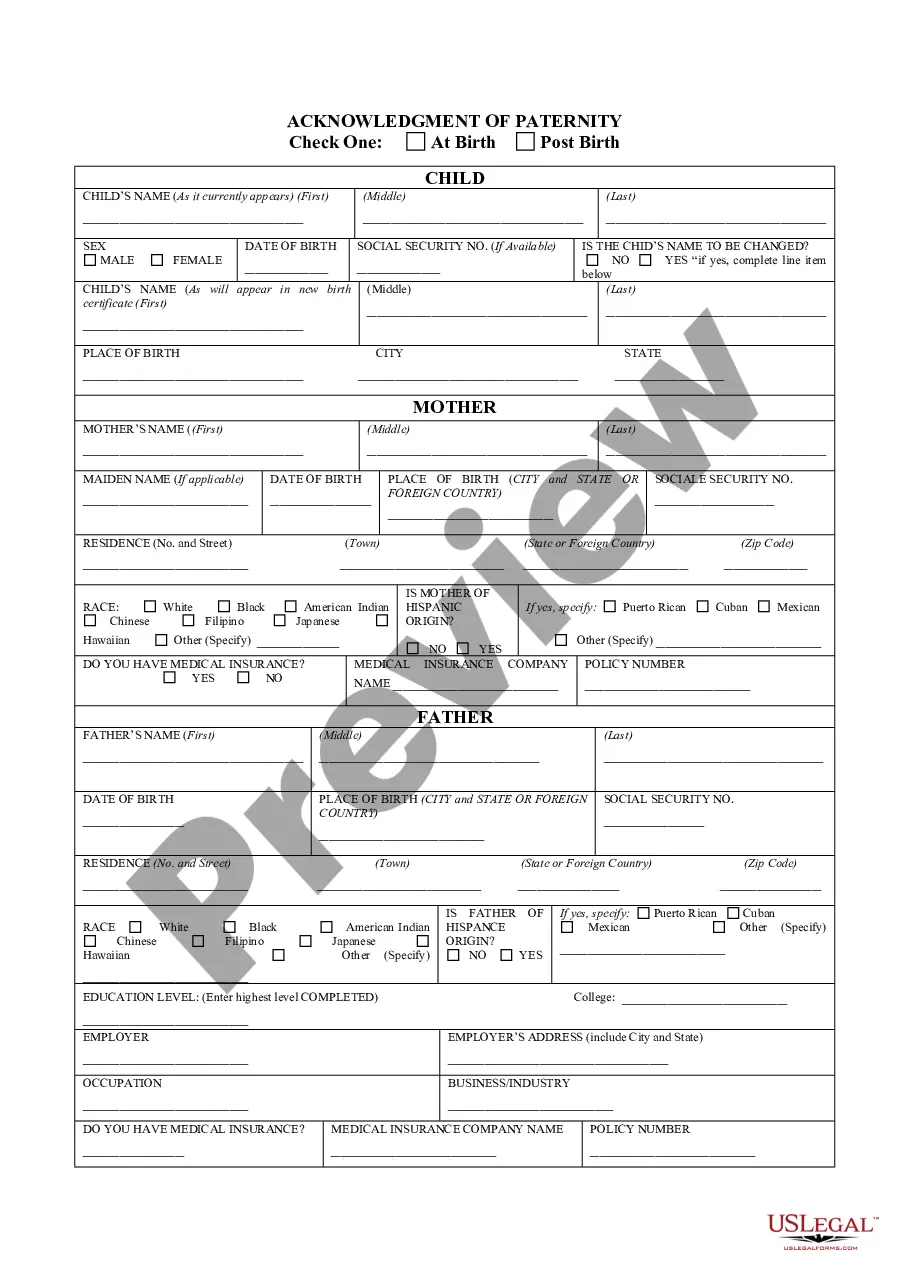
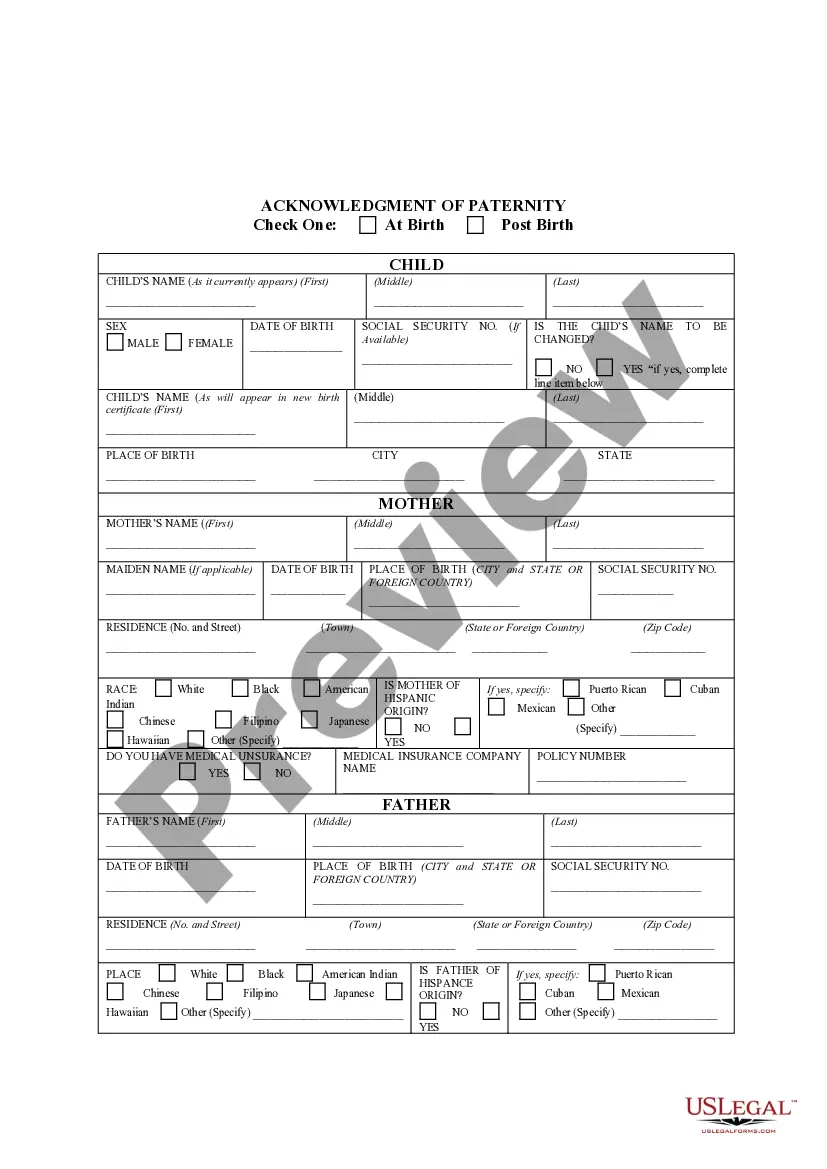
- Child's details: Includes the child's name, date of birth, sex, and whether the name will change.
- Mother's information: Requires the mother's name, maiden name, date of birth, place of birth, and social security number.
- Father's information: Requires the father's details including name, date of birth, place of birth, and social security number.
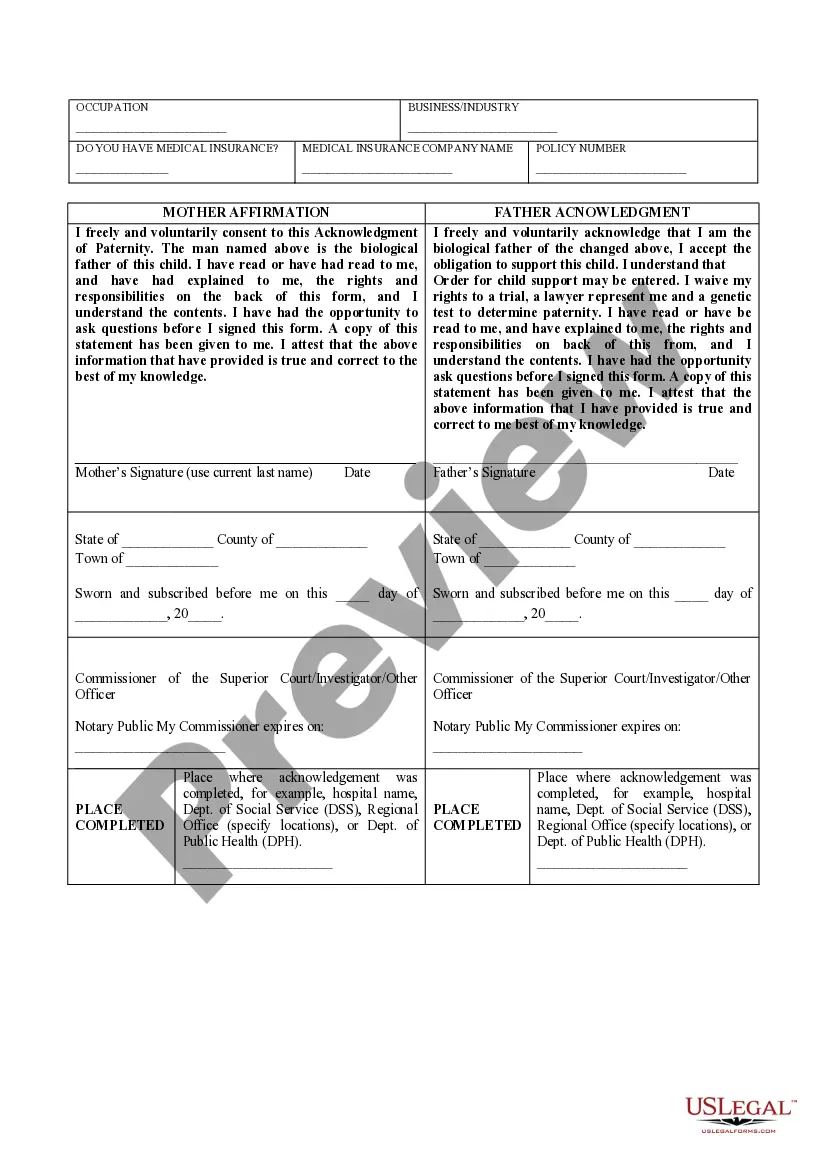
- Acknowledgment statements: Both parents affirm their biological relationship to the child and understanding of their rights and responsibilities.
- Notary section: A space for officials to certify the form's validity.
Situations where this form applies
This form is typically used when parents of a child born out of wedlock wish to legally establish paternity. Situations where this form may be necessary include: the father's name not being present on the birth certificate, the need for both parents to have legal recognition, or when securing child support benefits is required. Utilizing this form can be an important step for parents who wish to delineate legal responsibilities and rights concerning the child.
Who can use this document
- Unmarried parents looking to establish legal paternity.
- Fathers wanting their name included on the birth certificate.
- Parents wishing to secure legal rights and support obligations for their child.
- Any parent who seeks to clarify their relationship to the child legally.
How to complete this form
- Enter the child's name as it currently appears and indicate if the name will be changed.
- Provide the mother's full name, date of birth, place of birth, and social security number if available.
- Fill in the father's full name, date of birth, place of birth, and social security number.
- Both parents should complete the acknowledgment statements, affirming their relationship to the child.
- Have the form notarized in the appropriate section, if required.
Does this form need to be notarized?
Yes, this form must be notarized to be legally valid. Proper notarization helps verify the identities of the signatories and authenticate the document for legal purposes. US Legal Forms offers integrated online notarization, allowing for a secure video call with a notary, making the process convenient and efficient.
Get your form ready online
Our built-in tools help you complete, sign, share, and store your documents in one place.
Make edits, fill in missing information, and update formatting in US Legal Forms—just like you would in MS Word.
Download a copy, print it, send it by email, or mail it via USPS—whatever works best for your next step.
Sign and collect signatures with our SignNow integration. Send to multiple recipients, set reminders, and more. Go Premium to unlock E-Sign.
If this form requires notarization, complete it online through a secure video call—no need to meet a notary in person or wait for an appointment.
We protect your documents and personal data by following strict security and privacy standards.

Make edits, fill in missing information, and update formatting in US Legal Forms—just like you would in MS Word.

Download a copy, print it, send it by email, or mail it via USPS—whatever works best for your next step.

Sign and collect signatures with our SignNow integration. Send to multiple recipients, set reminders, and more. Go Premium to unlock E-Sign.

If this form requires notarization, complete it online through a secure video call—no need to meet a notary in person or wait for an appointment.

We protect your documents and personal data by following strict security and privacy standards.
Typical mistakes to avoid
- Failing to include the correct child's name or details.
- Not having the form notarized when required.
- Leaving sections incomplete, such as the parents' signatures.
- Not reading or understanding the rights and responsibilities outlined in the acknowledgment statements.
Benefits of using this form online
- Convenience: Access and download the Acknowledgment of Paternity form from anywhere, at any time.
- Editability: Easily fill in the relevant information before printing.
- Reliability: Forms provided are drafted by licensed attorneys and tailored to meet legal standards.
Looking for another form?


Form popularity
FAQ
The Connecticut Acknowledgment of Paternity is a form used by unmarried parents to establish who is the biological father of a child. When completed and filed, it records paternity with the appropriate state agency and can help secure child support, medical coverage, and the child’s birth certificate. Use this form when both parents agree on paternity and want to formalize it without a court order.
A father can typically establish paternity through the Connecticut Acknowledgment of Paternity when both parents participate and sign the form. If the mother does not sign or participate, this form alone may not finalize paternity and a court process or alternative procedures may be required to determine or confirm paternity.
Processing times vary, but once the Connecticut Acknowledgment of Paternity is signed and filed with the appropriate agency, it generally becomes effective after review and acceptance. Timelines depend on paperwork completeness and agency processing, so actual time can range from a few days to several weeks. This form helps establish paternity outside of court, when appropriate.
Material mistake of fact in paternity refers to a significant factual error at the time the acknowledgment is signed, such as incorrect information about paternity. If such a mistake is discovered, a court may review or rescind the acknowledgment, and paternity may need to be established again through appropriate procedures.
Connecticut does not determine custody based on a simple 'mother state' or 'father state' label. The Connecticut Acknowledgment of Paternity focuses on establishing paternity, while custody and parental rights are decided separately by the courts based on the best interests of the child. For custody questions, consult an attorney experienced in Connecticut family law.
The Connecticut Acknowledgment of Paternity is a voluntary, out-of-court method to establish paternity when both parents agree, often updating birth records and enabling child support and benefits. A court order establishing paternity, by contrast, is issued after a court proceeding (often with a contest or dispute) and may set support, custody, and parental rights.