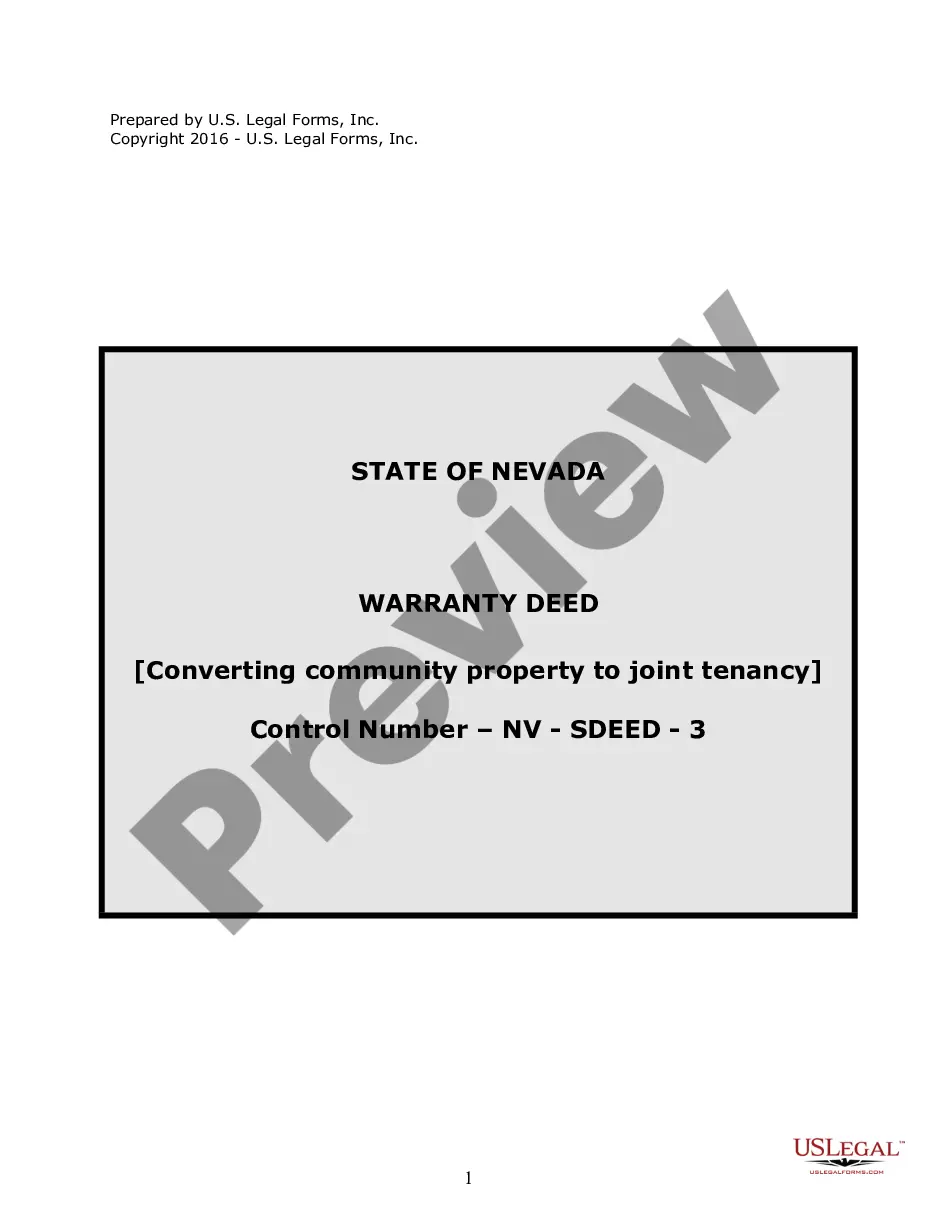
Nevada Warranty Deed to convert Community Property to Joint Tenancy
Overview of this form
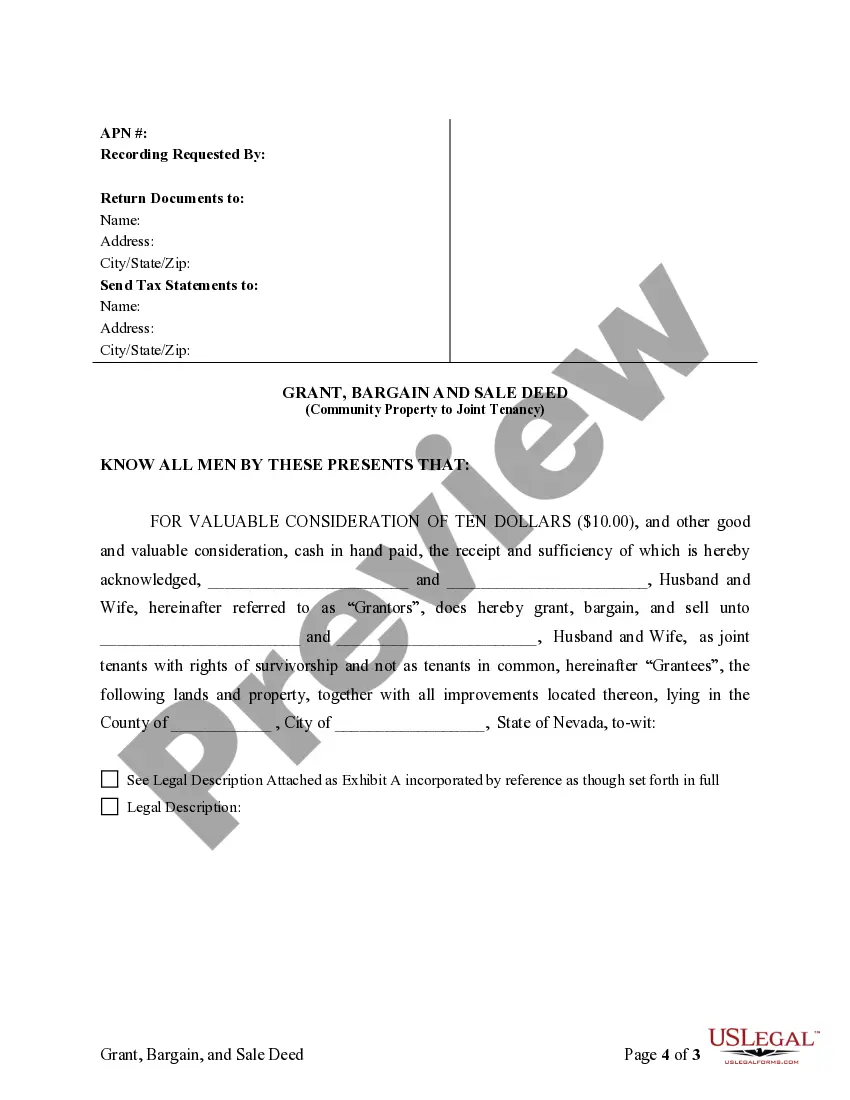
The Warranty Deed to convert Community Property to Joint Tenancy is a legal document used to transfer ownership of property from one or more individuals to another while changing the ownership type from community property to joint tenancy. This form is distinct, as it provides a clear legal foundation for establishing joint rights to the property, which is often desired by couples or co-owners looking to clarify their ownership status and rights of survivorship.
Form components explained
- Identification of grantors (those transferring the property) and grantees (those receiving the property).
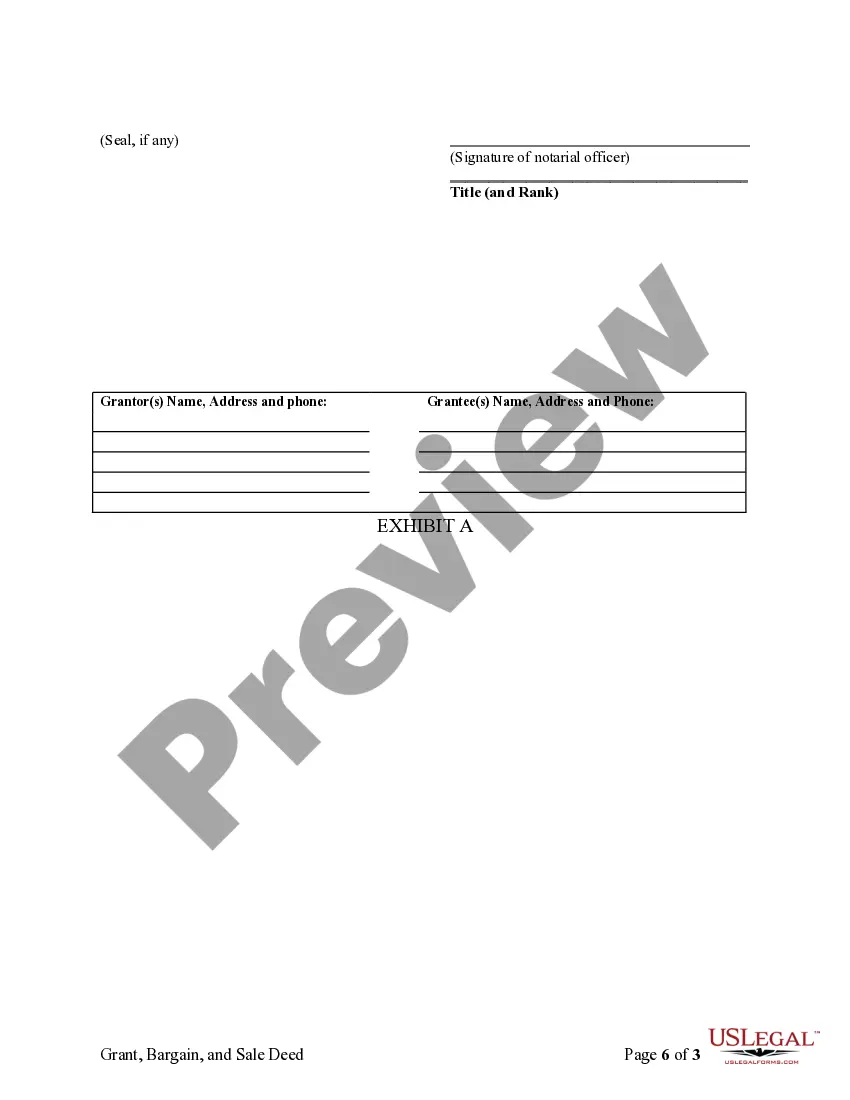
- Legal description of the property being transferred.
- Statement indicating the conversion from community property to joint tenancy.
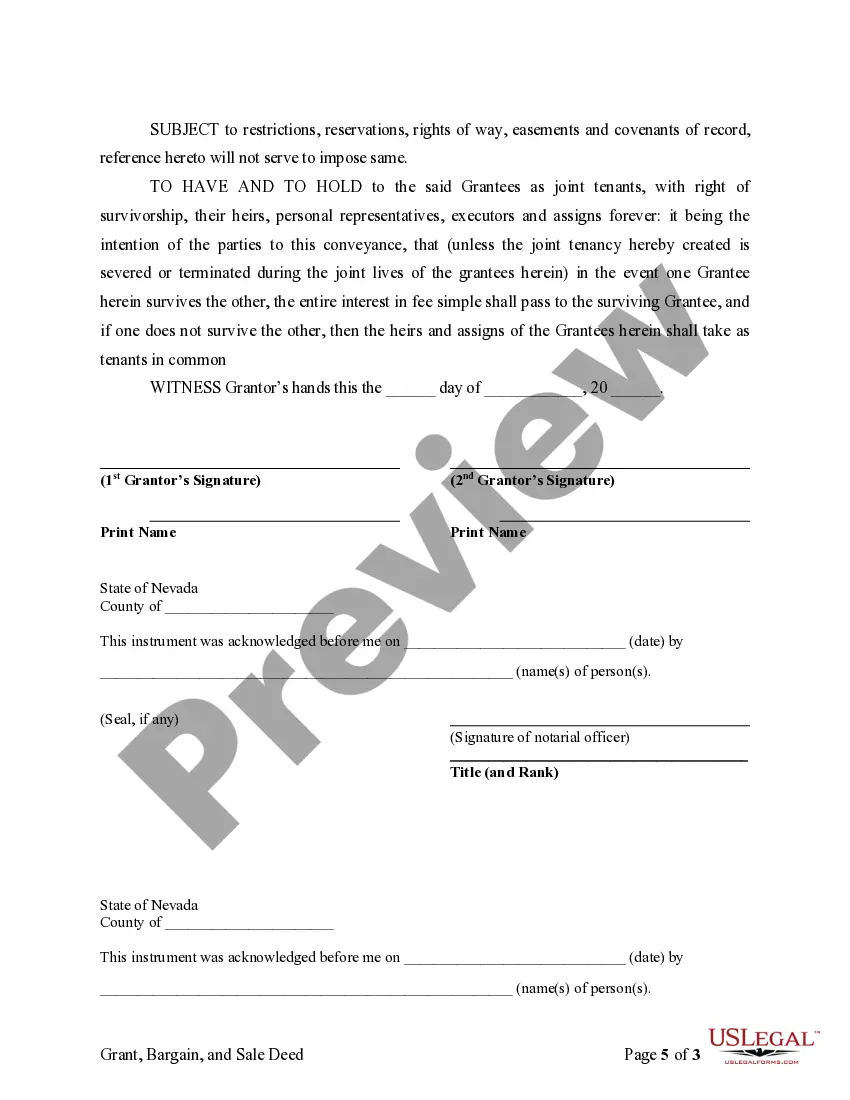
- Notarization section to validate the form.
- Signatures of the grantors and notary public.





When this form is needed
This form is typically used when two individuals, often spouses, wish to convert their community property into joint tenancy. This change allows for the automatic transfer of property rights to the surviving owner in the event of one ownerâs death, thereby simplifying the estate process.
Who can use this document
- Couples who own property together and want to change their ownership type.
- Individuals seeking to ensure property rights of survivorship for their partner or co-owner.
- Property owners in Nevada who want to clarify their property ownership status.
Steps to complete this form
- Identify the grantors and grantees by entering their names and addresses.
- Provide a detailed legal description of the property to be transferred.
- Include the date of conversion from community property to joint tenancy.
- Sign the document before a notary public to ensure its legality.
- Submit or file the completed form as required by local regulations.
Is notarization required?
Yes, this form must be notarized to be legally valid. Completing the notarization ensures that the identities of the grantors are confirmed, and the document adheres to legal requirements for property transitions.
Get your form ready online
Our built-in tools help you complete, sign, share, and store your documents in one place.
Make edits, fill in missing information, and update formatting in US Legal Forms—just like you would in MS Word.
Download a copy, print it, send it by email, or mail it via USPS—whatever works best for your next step.
Sign and collect signatures with our SignNow integration. Send to multiple recipients, set reminders, and more. Go Premium to unlock E-Sign.
If this form requires notarization, complete it online through a secure video call—no need to meet a notary in person or wait for an appointment.
We protect your documents and personal data by following strict security and privacy standards.

Make edits, fill in missing information, and update formatting in US Legal Forms—just like you would in MS Word.

Download a copy, print it, send it by email, or mail it via USPS—whatever works best for your next step.

Sign and collect signatures with our SignNow integration. Send to multiple recipients, set reminders, and more. Go Premium to unlock E-Sign.

If this form requires notarization, complete it online through a secure video call—no need to meet a notary in person or wait for an appointment.

We protect your documents and personal data by following strict security and privacy standards.
Mistakes to watch out for
- Failing to include a complete legal description of the property.
- Not having the form notarized prior to submission.
- Leaving out crucial signatures from grantors or the notary public.
Why complete this form online
- Immediate access to the form, allowing for quick completion and filing.
- Editable fields enable users to customize the form to their specific needs.
- Convenient and secure storage of documents for future reference.
When properly executed, a Warranty Deed converting community property to joint tenancy is legally enforceable. However, users should ensure that they follow all statutory requirements in their jurisdiction to maintain the deed's validity.
Key takeaways
- The Warranty Deed allows for conversion from community property to joint tenancy.
- It is important for property owners looking to simplify the transfer process in case of death.
- Notarization is a necessary step in completing this form.
Looking for another form?


Form popularity
FAQ
Change from tenants in common to joint tenantsYou need the agreement of all the other joint owners to change from being tenants in common to joint tenants. A solicitor, conveyancer or legal executive can also make the application for you.
In California, a joint checking account is considered a form of community property. Under state marriage laws, community property is defined as property that is owned by both spouses.
Quite simply, with a joint tenancy each person has ownership of the complete property. If one owner dies, the property passes automatically to the remaining joint tenant(s). With this type of home ownership, no more than four people are permitted to share ownership of a property as joint tenants.
To hold a real estate property in joint tenancy, you and the co-owners have to write the abbreviation for joint tenants with the right of survivorship, or JTWROS, on the official real estate deed or title. This creates a legally binding joint tenancy.
It would be simple for us to say that you can simply record a new document putting both of you onto title to the home as joint tenants with rights of survivorship. Usually, when you make a simple change in the title from tenants in common to joint tenants, the taxing authorities will ignore that change.
Like joint tenancy property, each spouse's interest in community property is equal during their marriage. Unlike joint tenancy, however, each spouse's one-half community property interest is subject to disposition by the deceased spouse's will.
The name and address of the seller (called the grantor) The name and address of the buyer (called the grantee) A legal description of the property (found on the previous deed) A statement that the grantor is transferring the property to the grantee.
California is a community property state.In fact, California law expressly prohibits a spouse from giving away community property for less than fair and reasonable value without the written consent of the other spouse. Failure to follow this rule can lead to complicated litigation after a spouse's death.
California is a community property state, which means that following the death of a spouse, the surviving spouse will have entitlement to one-half of the community property (i.e., property that was acquired over the course of the marriage, regardless of which spouse acquired it).