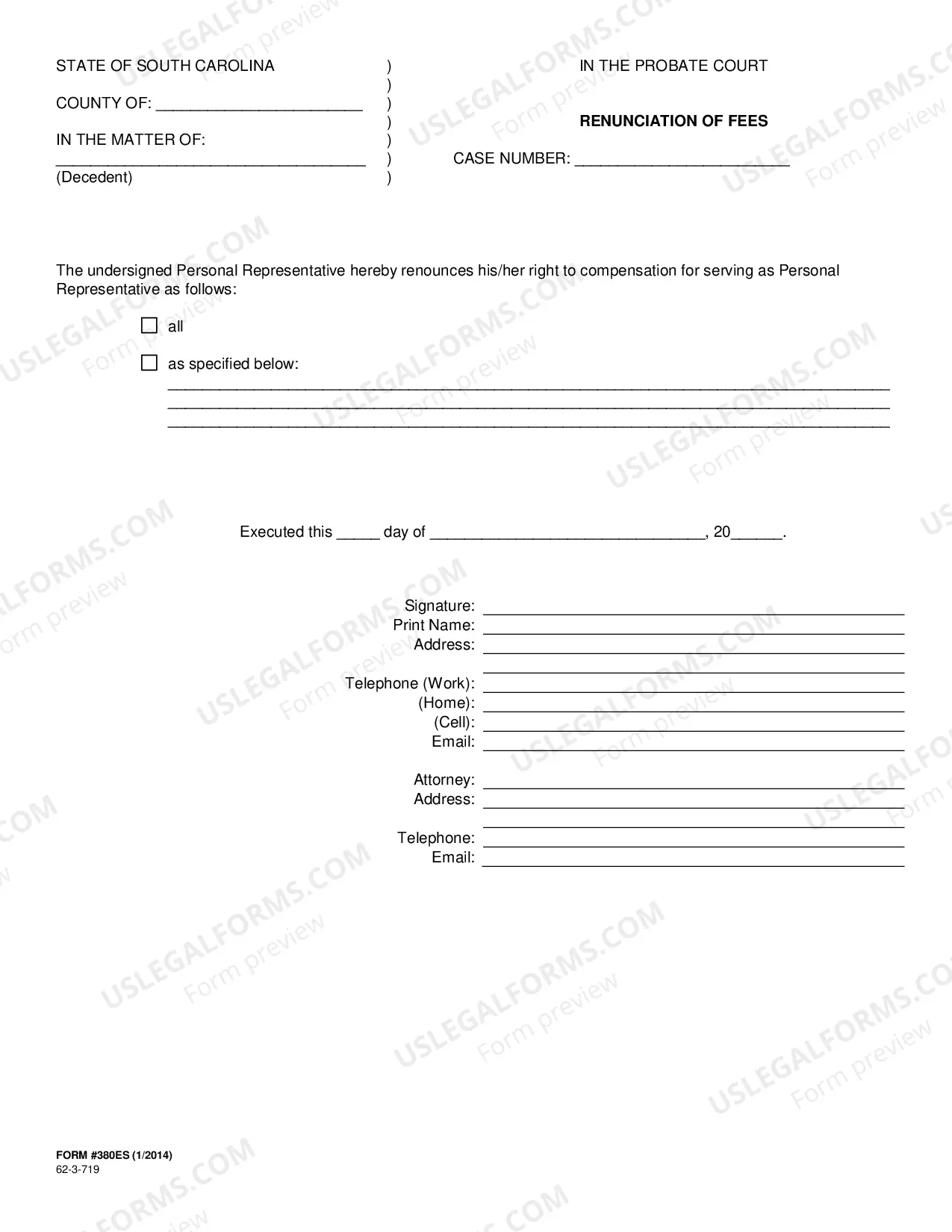
New Mexico Complaint for Conversion of Property or In the Alternative Replevin
What this document covers
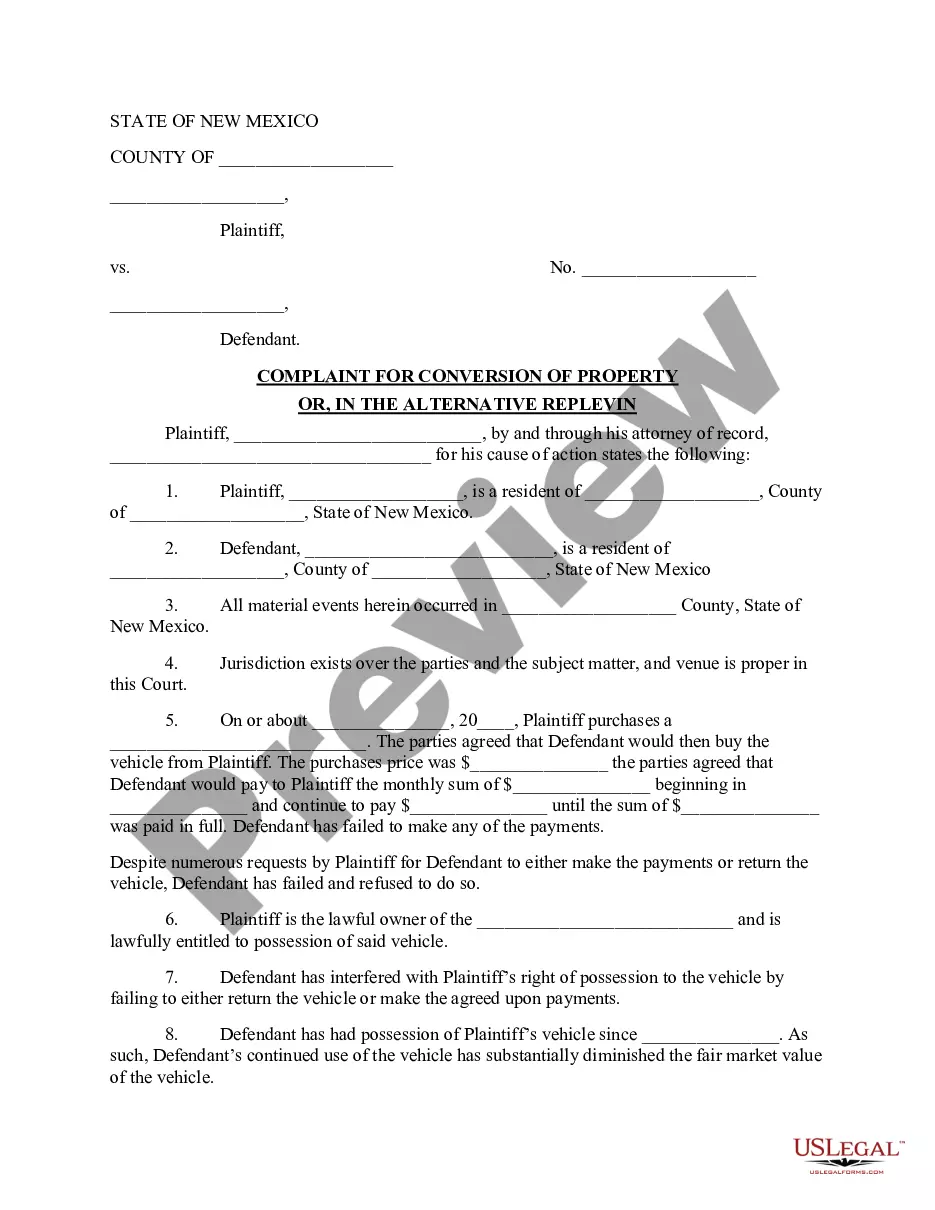
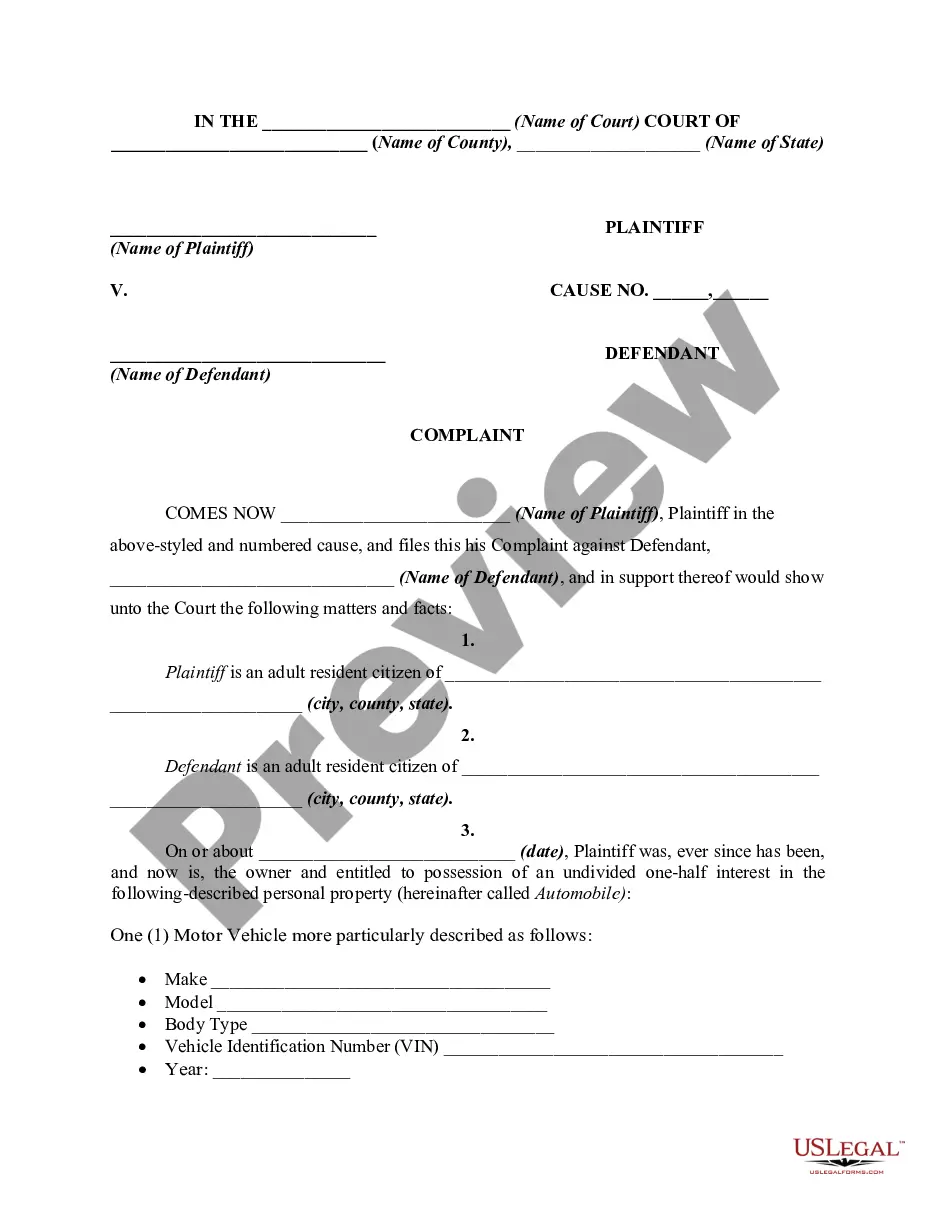
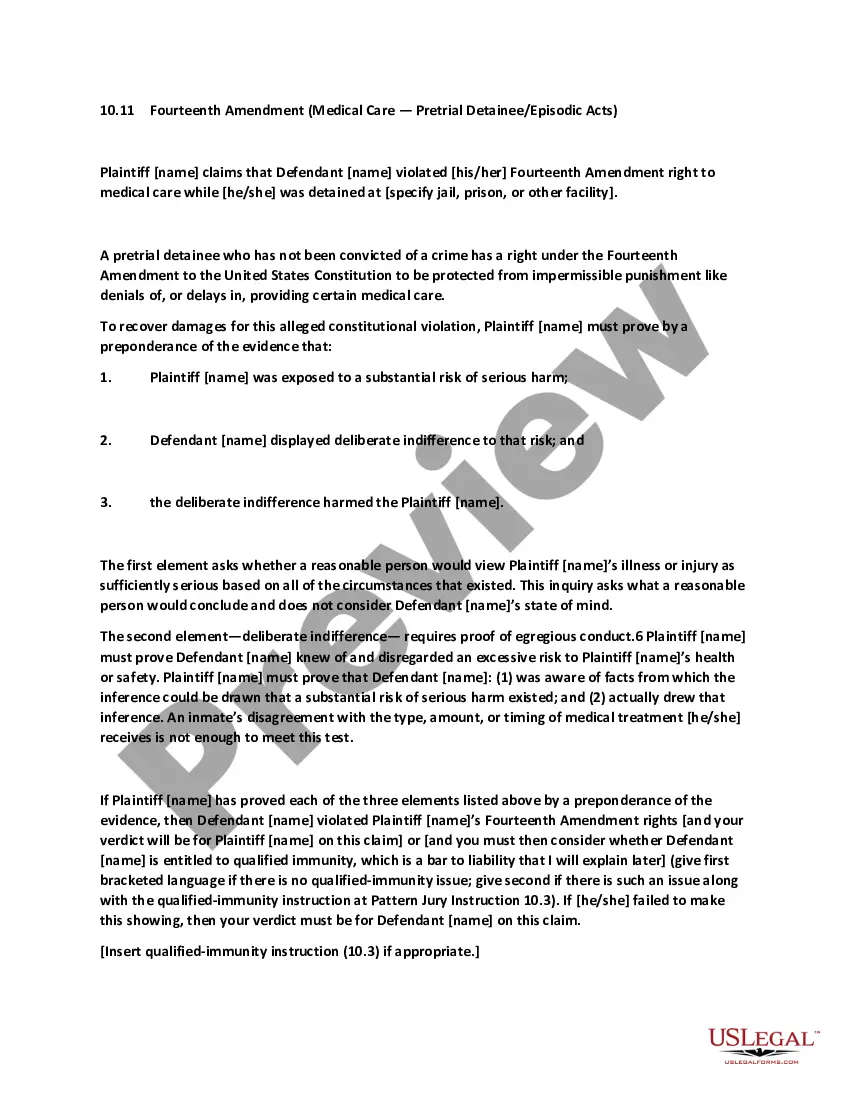
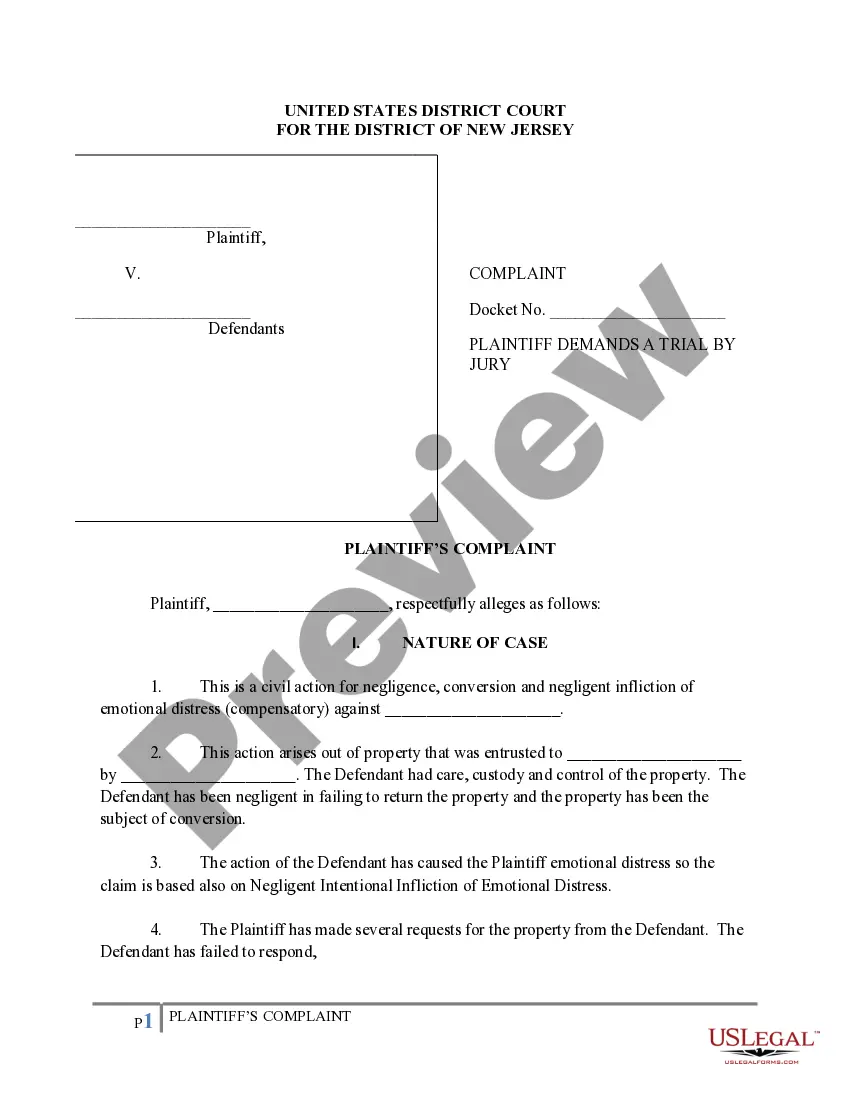
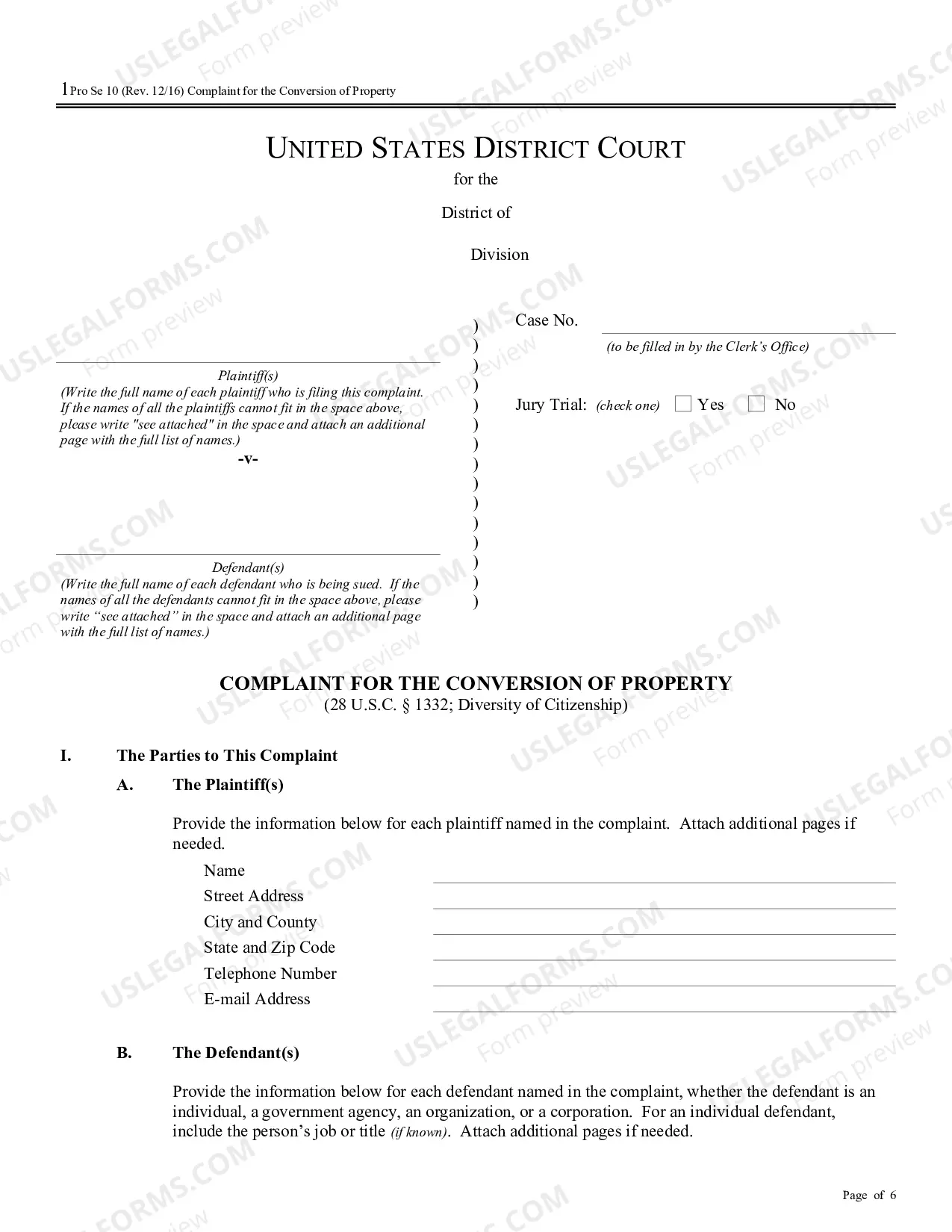
The Complaint for Conversion of Property, or in the Alternative Replevin, is a legal document used to initiate a lawsuit against someone who has wrongfully taken or retained possession of property, such as a vehicle, without payment. This form allows the plaintiff to seek damages or the return of the property, distinguishing it from other forms that may address general property disputes.
Main sections of this form
- Identification of Parties: Names and addresses of the plaintiff and defendant.
- Factual Background: A description of events leading to the conversion of the property.
- Legal Claims: Assertions regarding the plaintiff's ownership and the defendant's wrongful possession.
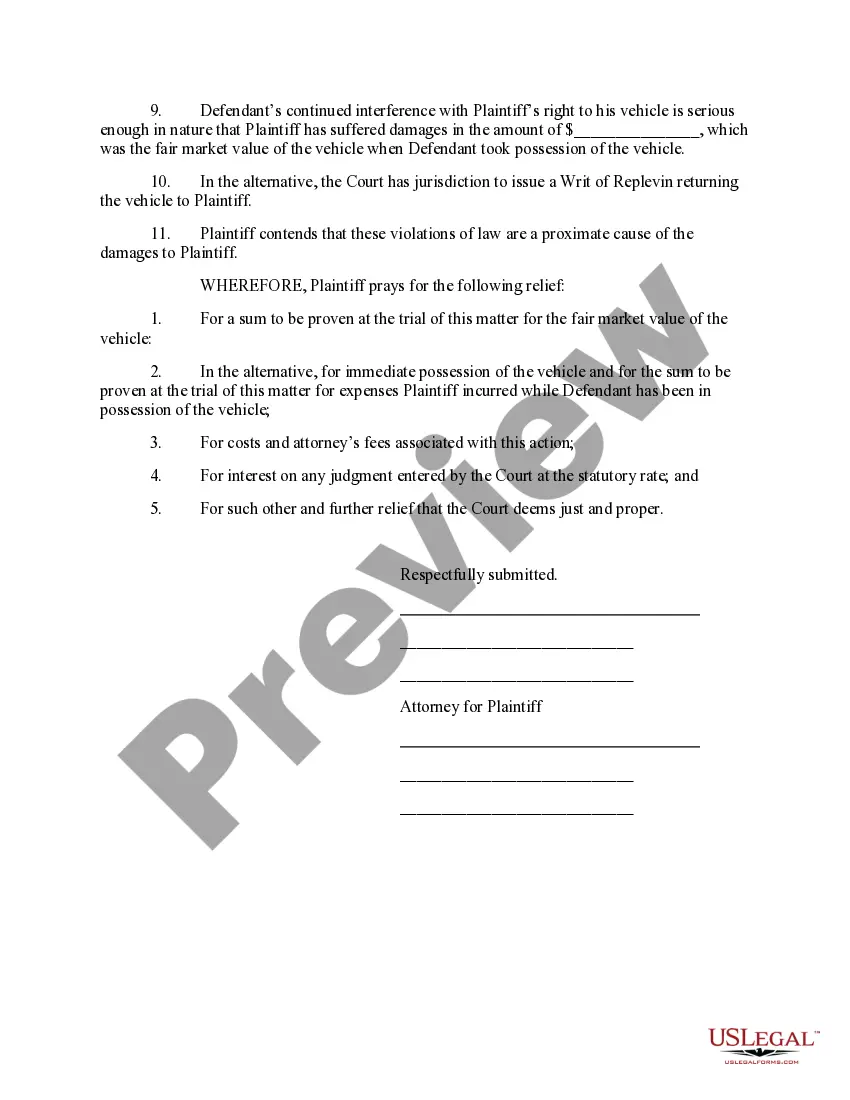
- Relief Sought: Requests for damages, return of property, and other legal remedies.
- Signing Requirements: Signature lines for the plaintiff and their attorney.
When to use this form
This form is used when an individual, referred to as the plaintiff, seeks legal recourse against another party, the defendant, for taking control of their property, such as a vehicle, without consent or payment. Situations may include failed sales agreements where payment was not made, unauthorized use of the vehicle, or refusal to return property after agreement terms were unmet.
Who this form is for
- Individuals or businesses who have sold personal property and are not receiving agreed payments.
- Property owners attempting to reclaim possession of their property after it has been wrongfully retained.
- Legal professionals representing clients in property conversion or replevin cases.
Instructions for completing this form
- Identify the parties by entering the full names and addresses of the plaintiff and defendant.
- Specify the property involved by entering a detailed description of the vehicle or property in question.
- Document the dates relevant to the agreement and the payments owed.
- Clearly state the damages incurred or the fair market value of the property.
- Sign and date the form, ensuring all necessary parties have signed.
Does this document require notarization?
This form does not typically require notarization unless specified by local law. Always check with your jurisdictionâs rules to confirm if notarization is necessary for legal validity.
Get your form ready online
Our built-in tools help you complete, sign, share, and store your documents in one place.
Make edits, fill in missing information, and update formatting in US Legal Forms—just like you would in MS Word.
Download a copy, print it, send it by email, or mail it via USPS—whatever works best for your next step.
Sign and collect signatures with our SignNow integration. Send to multiple recipients, set reminders, and more. Go Premium to unlock E-Sign.
If this form requires notarization, complete it online through a secure video call—no need to meet a notary in person or wait for an appointment.
We protect your documents and personal data by following strict security and privacy standards.

Make edits, fill in missing information, and update formatting in US Legal Forms—just like you would in MS Word.

Download a copy, print it, send it by email, or mail it via USPS—whatever works best for your next step.

Sign and collect signatures with our SignNow integration. Send to multiple recipients, set reminders, and more. Go Premium to unlock E-Sign.

If this form requires notarization, complete it online through a secure video call—no need to meet a notary in person or wait for an appointment.

We protect your documents and personal data by following strict security and privacy standards.
Mistakes to watch out for
- Failing to provide accurate details about the parties involved.
- Not including a complete description of the property in question.
- Omitting important dates, such as payment deadlines.
- Neglecting to sign the form or include legal representation details where applicable.
Advantages of online completion
- Ease of access: Download the form at any time, eliminating the need for in-person visits.
- Editability: Customize the form to suit individual circumstances before printing.
- Reliability: Legal templates are created by licensed attorneys, ensuring compliance with current laws.
Looking for another form?
Form popularity
FAQ
Generally speaking, restitutionary and equitable remedies are not available if legal damages will be claimed by the plaintiff.For example in a conversion (theft) case, the judge may order replevin so that the plaintiff can get their stolen property back.
Replevin seeks the return of property, along with possible damages. It allows for the possible return/possession of the property at a Show Cause hearing, a hearing held before a trial. It is filed in the District Court, regardless of the amount in dispute.
Replevin is a action or a writ issued to recover an item of personal property wrongfully taken. Replevin, sometimes known as "claim and delivery", is an antiquated legal remedy in which a court requires a defendant to return specific goods to the plaintiff at the beginning of the action.
Read all of the paperwork that you receive from the court. Return the vehicle immediately to the rightful owner. Show proof of ownership if you want to dispute the claim. Speak with a licensed attorney in your area.
To win a replevin action, you must show that you are entitled to immediate possession of the property. (Note: It is possible to own or have title to property but not have the right to possess it immediately. In that case, you cannot win a replevin action.)
One option you have, aside from filing an answer and raising a valid defense to the request to replevin, is to file for bankruptcy. A bankruptcy action will stop a pending replevin request, and will also help you to get the rest of your finances in order.
An action seeking return of personal property wrongfully taken or held by the defendant. Rules on replevin actions vary by jurisdiction.
Replevin, also known as "claim and delivery," is an action to recover personal property that was wrongfully taken or detained. Unlike other forms of legal recovery, replevin seeks the return of the actual thing itself, as opposed to money damages (the more commonly-sought after remedy).
78.01 Right of replevin. Any person whose personal property is wrongfully detained by any other person or officer may have a writ of replevin to recover said personal property and any damages sustained by reason of the wrongful taking or detention as herein provided.