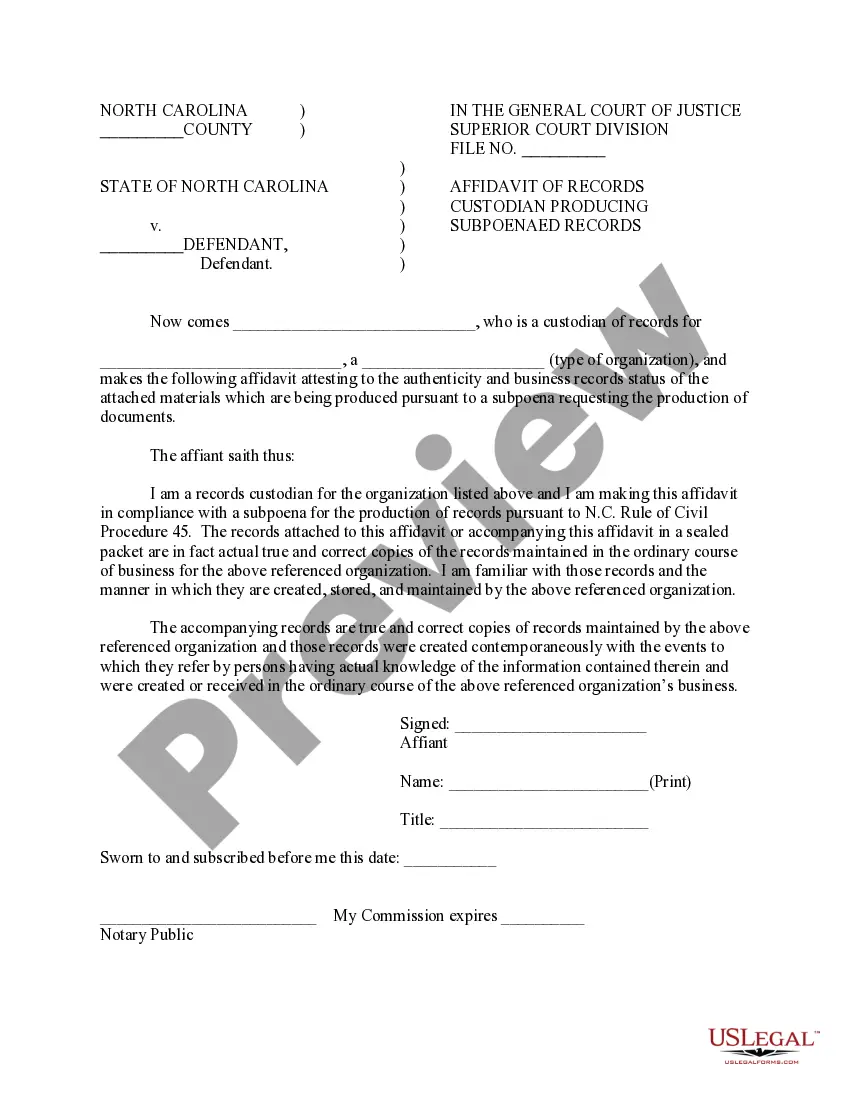
North Carolina Affidavit of Records Custodian Producing Subpoenaed Records
What this document covers
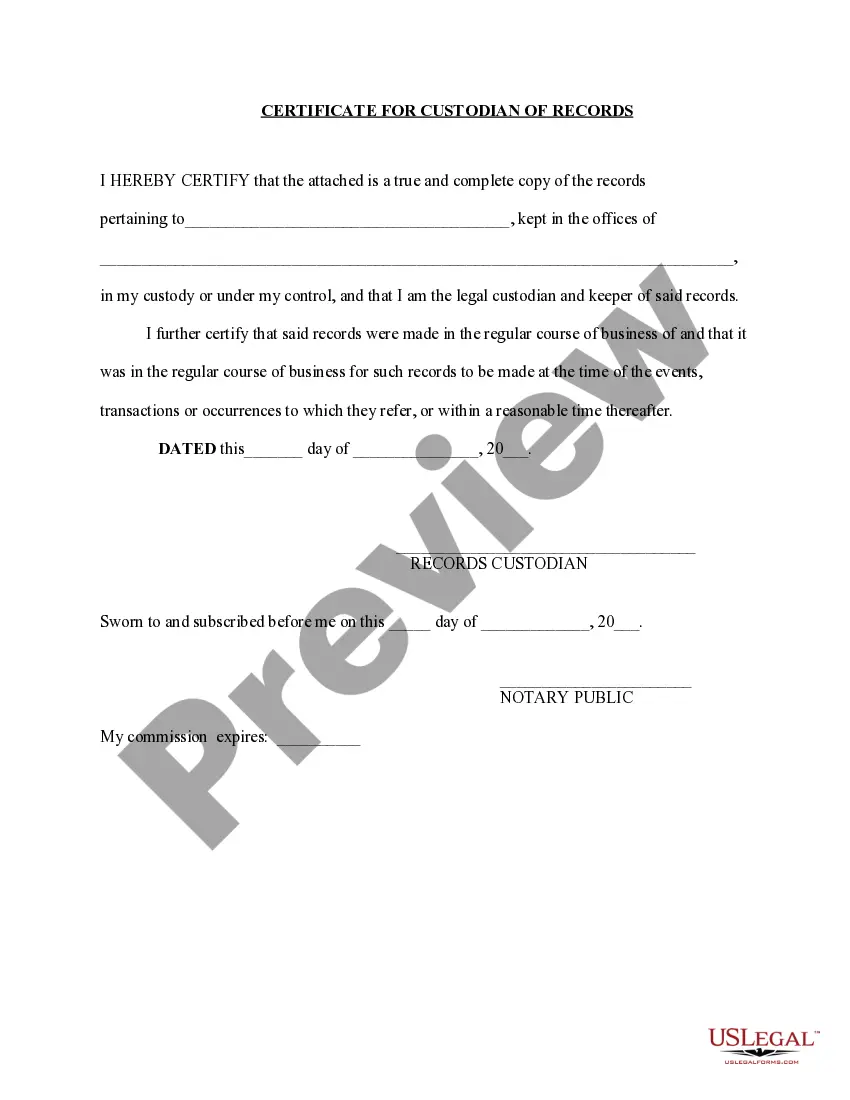
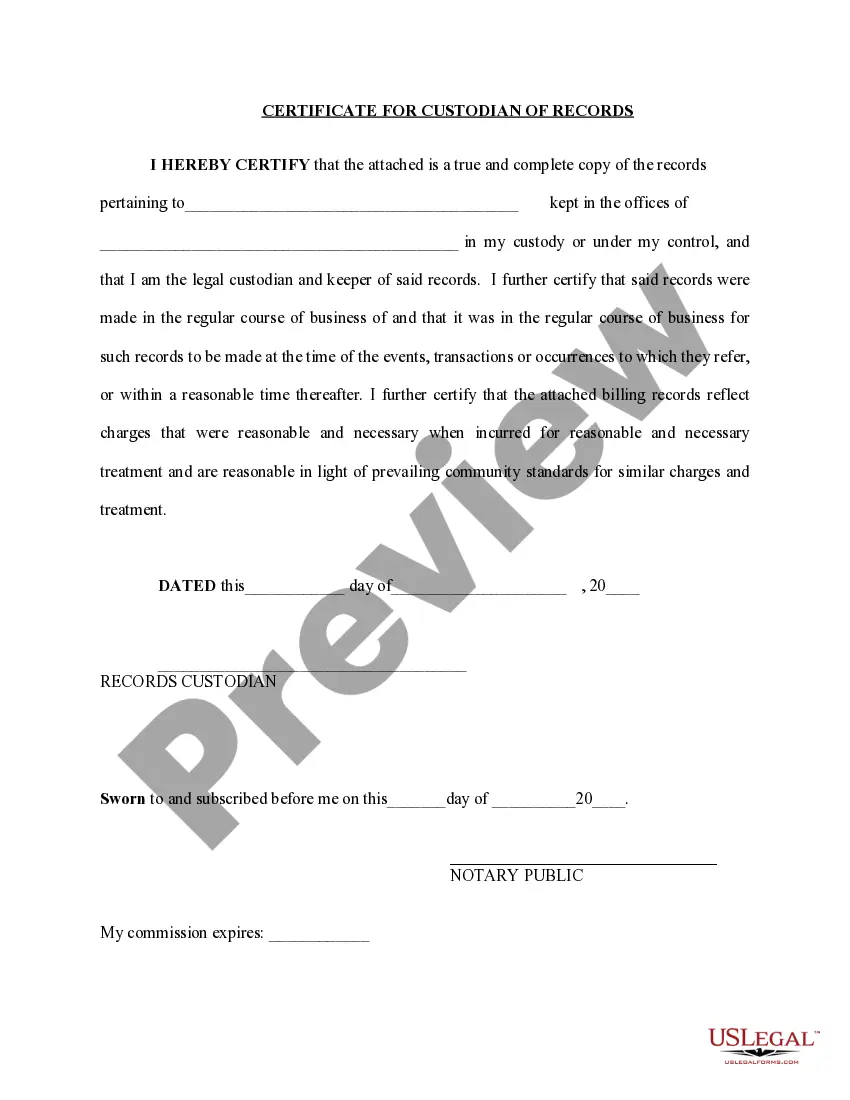
The Affidavit of Records Custodian Producing Subpoenaed Records is a legal document used to verify the authenticity of business records in response to a subpoena. The custodian of records swears to the truth and accuracy of the attached documents, affirming they are maintained in the regular course of business. This form ensures that the presented records are legitimate and complies with legal requirements for document production, setting it apart from other affidavit forms that may not specifically address subpoenaed materials.
Form components explained
- Name and title of the custodian of records.
- Details of the organization for which records are maintained.
- Affirmation of the authenticity of records in accordance with legal rules.
- Reference to the relevant civil procedure rule under North Carolina law.
- Signature of the custodian of records and a notary acknowledgment.
Common use cases
This form is used when a party is required to produce documents in response to a subpoena. It is essential in legal cases where the authenticity of records is in question, such as during litigation, audits, or investigations. If you are the custodian of records for an organization and have received a subpoena requesting certain documents, you will need to complete this affidavit to affirm the validity of those records.
Who should use this form
- Custodians of records for businesses or organizations.
- Legal representatives involved in litigation.
- Organizations producing documents in response to subpoenas.
- Individuals tasked with ensuring compliance with court orders.
How to prepare this document
- Identify the custodian of records and their title.
- Provide the name and type of organization for which the records are maintained.
- Attach the documents being produced pursuant to the subpoena.
- Affirm the authenticity and accuracy of the records in the affidavit.
- Sign the affidavit in the presence of a notary public.
Notarization guidance
Yes, this form must be notarized to be legally valid. It requires a signature from a notary public to affirm that the custodian swore to the truth and accuracy of the affidavit content. US Legal Forms offers integrated online notarization services, available 24/7, allowing for a secure video call to complete this requirement without needing to travel.
Get your form ready online
Our built-in tools help you complete, sign, share, and store your documents in one place.
Make edits, fill in missing information, and update formatting in US Legal Forms—just like you would in MS Word.
Download a copy, print it, send it by email, or mail it via USPS—whatever works best for your next step.
Sign and collect signatures with our SignNow integration. Send to multiple recipients, set reminders, and more. Go Premium to unlock E-Sign.
If this form requires notarization, complete it online through a secure video call—no need to meet a notary in person or wait for an appointment.
We protect your documents and personal data by following strict security and privacy standards.

Make edits, fill in missing information, and update formatting in US Legal Forms—just like you would in MS Word.

Download a copy, print it, send it by email, or mail it via USPS—whatever works best for your next step.

Sign and collect signatures with our SignNow integration. Send to multiple recipients, set reminders, and more. Go Premium to unlock E-Sign.

If this form requires notarization, complete it online through a secure video call—no need to meet a notary in person or wait for an appointment.

We protect your documents and personal data by following strict security and privacy standards.
Common mistakes
- Failing to attach all required documents to the affidavit.
- Not providing accurate details about the organization.
- Leaving the signature section incomplete or unsigned.
- Not having the affidavit notarized if required by law.
Advantages of online completion
- Convenient access to legal forms anytime and anywhere.
- Editable templates that allow for customized responses.
- Guaranteed compliance with current legal standards.
- Time-saving compared to drafting from scratch.
Legal use & context
- This affidavit is critical in legal proceedings for establishing the credibility of records.
- It serves to protect organizations by providing a legal defense for produced documents.
- Failure to comply with subpoena requirements may lead to legal penalties or sanctions.
Summary of main points
- The affidavit confirms the authenticity of records requested via subpoena.
- Custodians of records must complete this form to legally submit documents.
- Notarization is necessary for the affidavit to be valid.
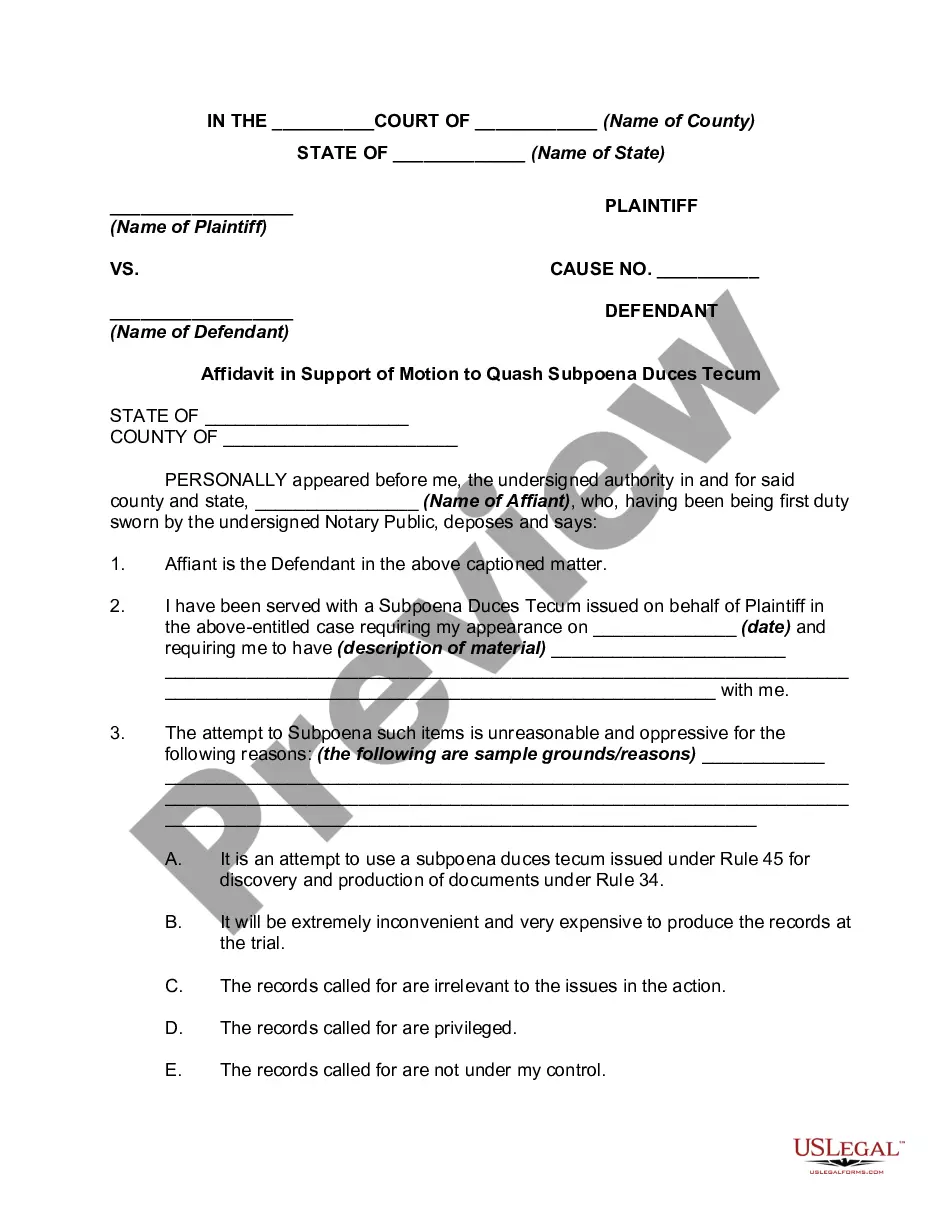
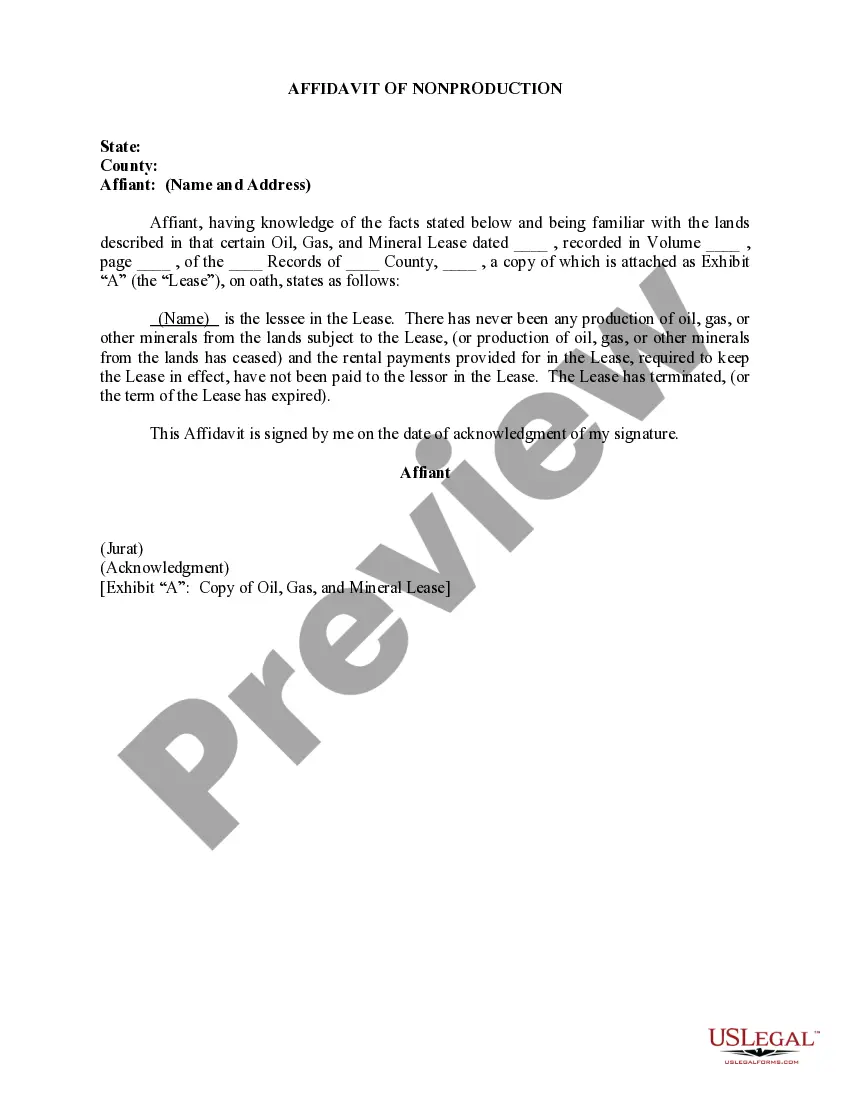
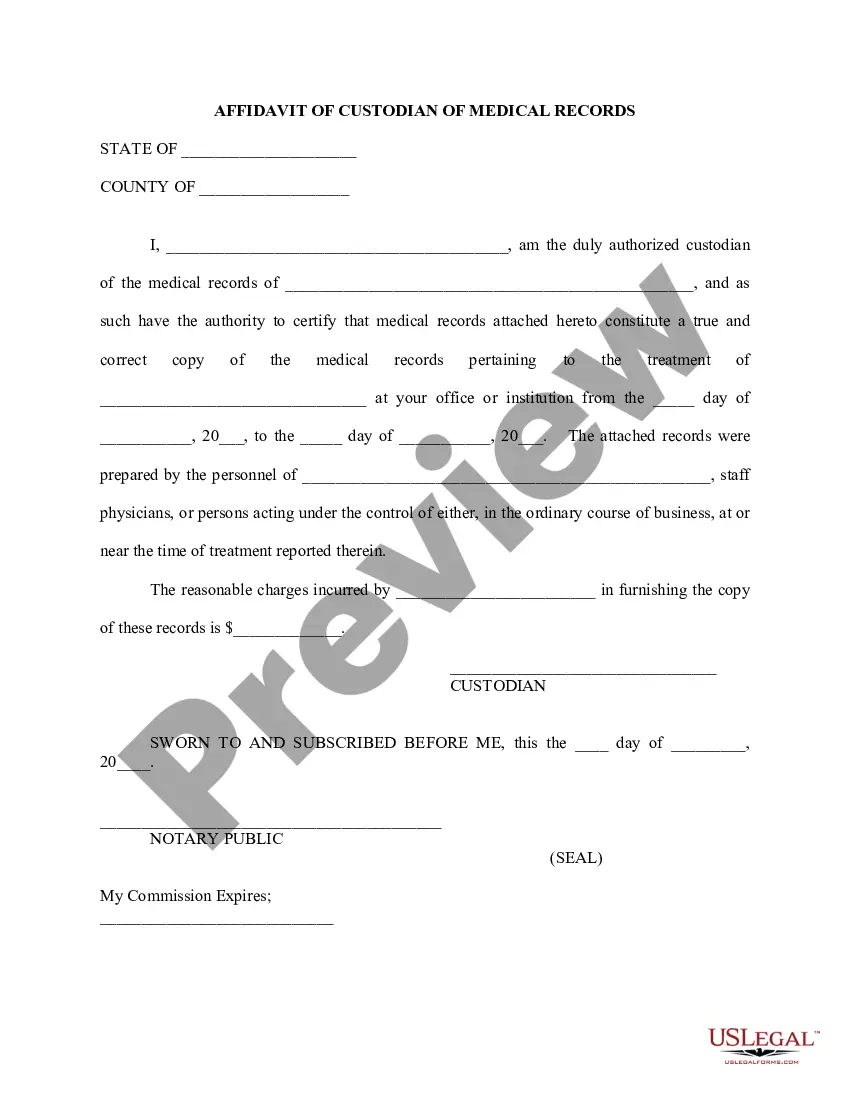
Looking for another form?


Form popularity
FAQ
In North Carolina, an affidavit generally must be notarized to be considered valid. This requirement ensures that the document is authentic and that the individual signing it does so willingly and under oath. When dealing with the North Carolina Affidavit of Records Custodian Producing Subpoenaed Records, notarization adds an extra layer of credibility, especially in legal contexts. Using platforms like USLegalForms can simplify the process by providing templates that meet these requirements.
B. A command to each person to whom it is directed to attend and give testimony or to produce and permit inspection and copying of designated records, books, papers, documents, electronically stored information, or tangible things in the possession, custody, or control of that person therein specified.
The ICE Records and Data Management Unit is responsible for providing operational and policy oversight of Records and Information Management (RIM) functions across ICE and ensuring the agency is compliant with the Federal Records Act.
The Records Custodian Manages records at the office level and is the base for implementing records management policies and procedures by: Applying a records/retention schedule.
The document custodian certifies the complete and accurate representation of the documents within its control. Under the terms of the Master Custodial Agreement, documents may be released to the Issuer from time to time in connection with servicing. Only the Issuer may request the release of documents.
In North Carolina, an attorney, magistrate, judge, or a clerk of court may issue subpoenas. You can obtain the subpoena for from the clerk of court. We recommend that you have the sheriff serve the subpoena. Although, there is a fee involved with that.
A term used in litigation referring to a corporate (or other organizational) employee who exercises control over the organization's records in the ordinary course of business.
The subpoena subjects a person to an undue burden or expense. The subpoena is otherwise unreasonable or oppressive. The subpoena is procedurally defective. If you are served with a subpoena and want to know your rights or you need to file a motion to quash a subpoena, contact an attorney.