Mississippi Summons in Eminent Domain
About this form
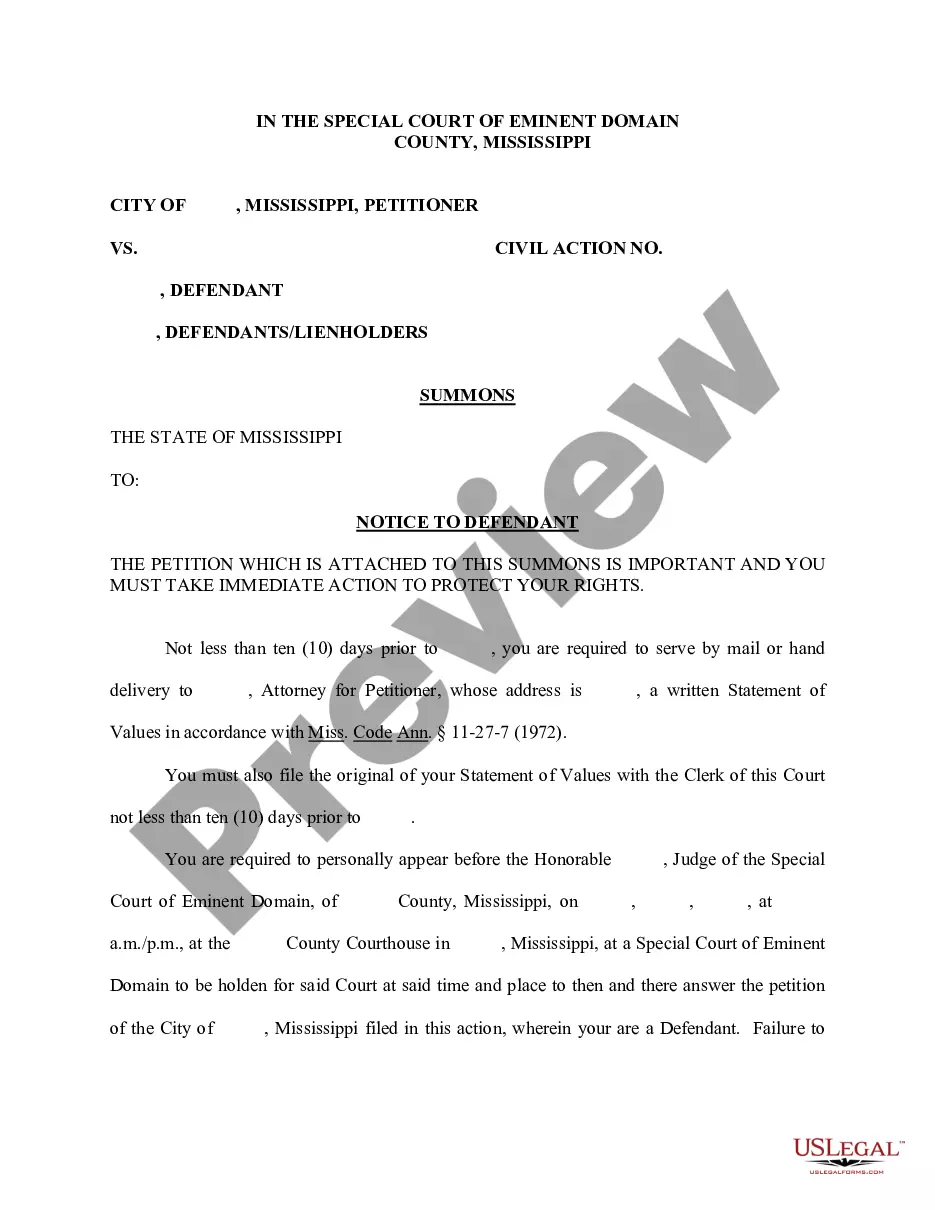
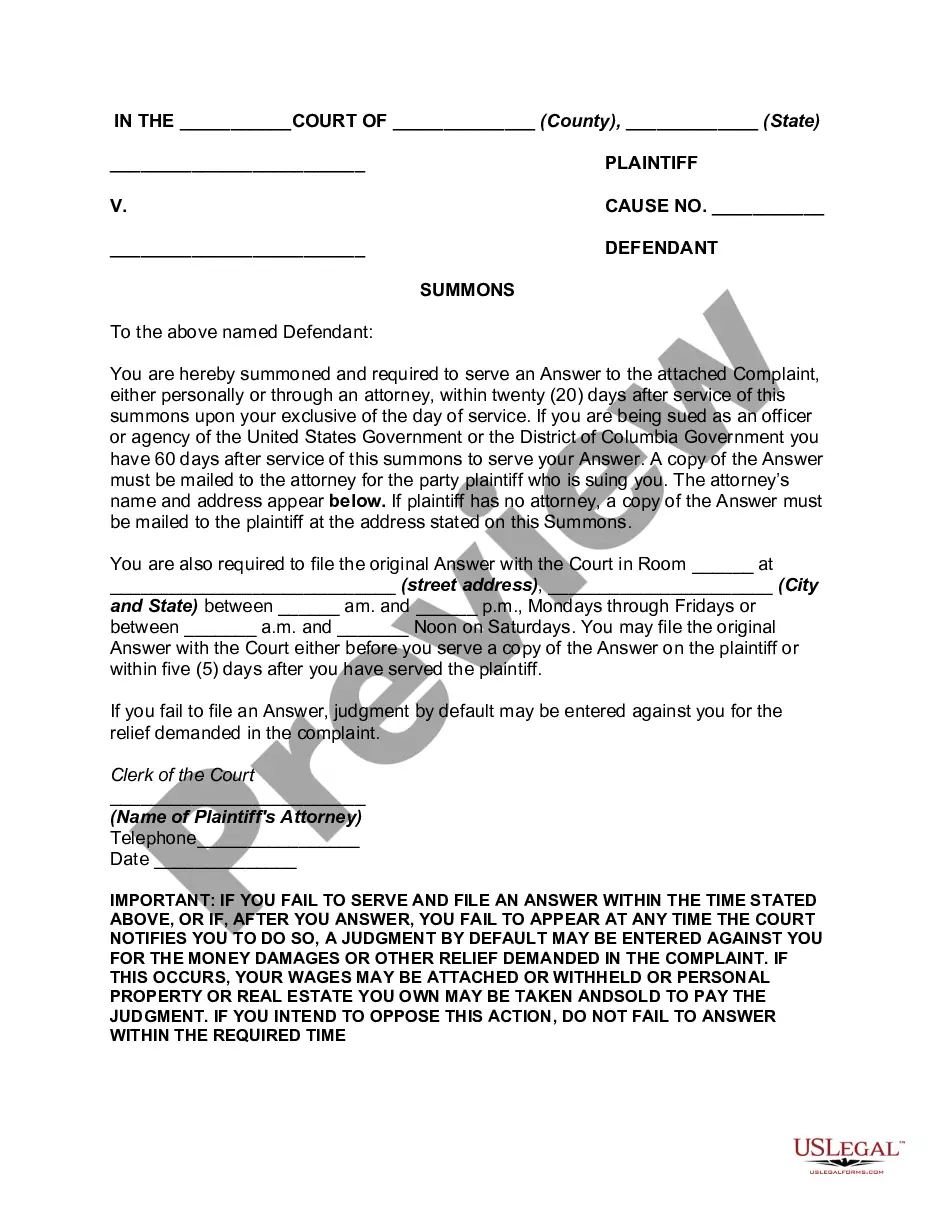
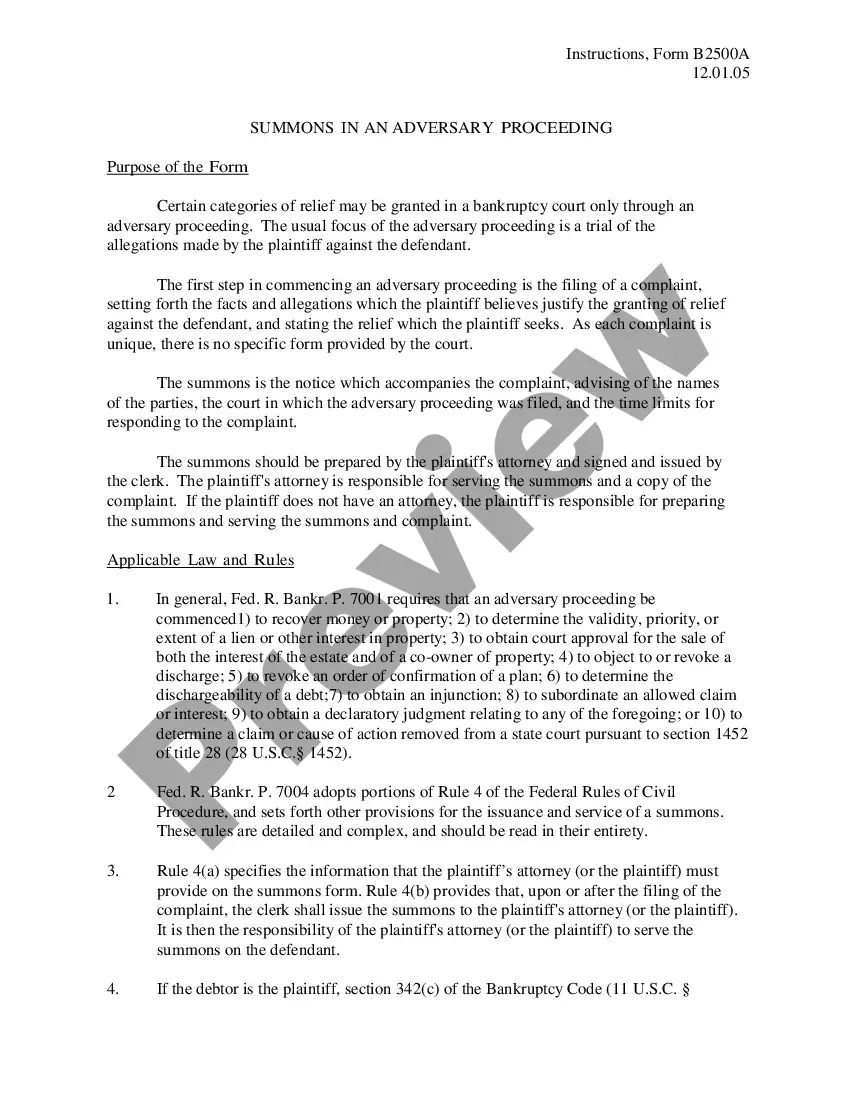
A Summons in Eminent Domain is an official court document that notifies a party that a lawsuit has been filed against them regarding the government's intent to acquire private property for public use. This form serves as a legal notice and differs from other summonses by specifically relating to eminent domain actions, wherein the government seeks to take property for purposes like infrastructure development or urban renewal. Upon being served, the recipient must respond to avoid a default judgment against them.
Key components of this form
- Parties involved: Identify the plaintiff (the government) and the defendant (the property owner).
- Property description: Specify the details of the property subject to the eminent domain action.
- Case number: Include the unique case number assigned by the court.
- Legal notice: A statement outlining the nature of the legal action and the obligation to respond.
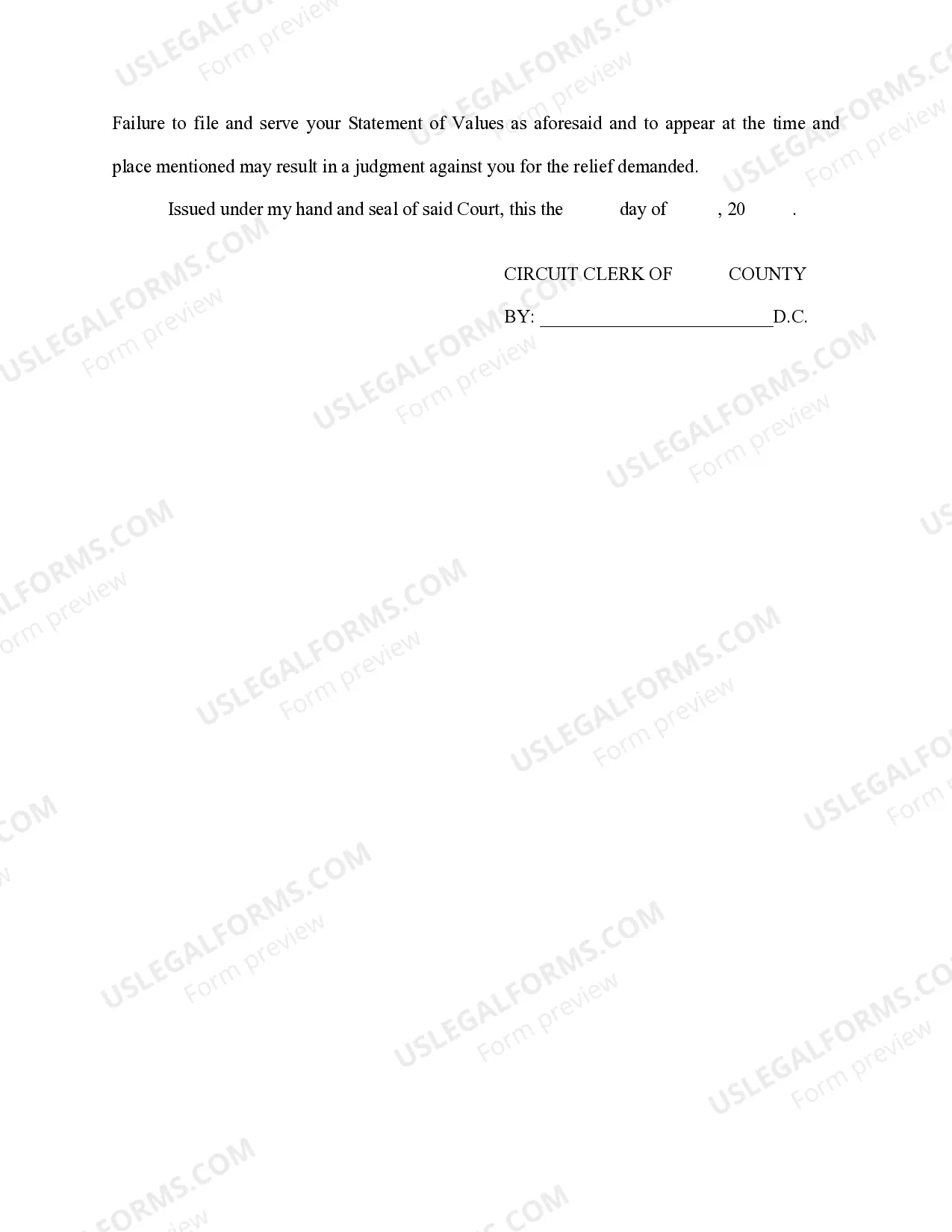
- Signature line: A section for the court clerk's signature to validate the summons.
When to use this form
This form should be used when a government entity initiates a lawsuit to acquire private property through eminent domain. It is necessary when property owners are formally notified of the action so that they have the opportunity to contest the taking or negotiate compensation for their property. Situations could include creating highways, public parks, or utility projects where land acquisition is essential.
Who can use this document
- Government agencies seeking to acquire private property.
- Property owners who have received a notice of eminent domain action.
- Attorneys representing clients involved in eminent domain cases.
Steps to complete this form
- Identify the parties involved in the lawsuit, specifying the government entity as the plaintiff.
- Provide a detailed description of the property that is being affected by the eminent domain action.
- Fill in the assigned case number, if applicable, to ensure accurate processing by the court.
- Include the legal notice to inform the defendant of their obligation to respond.
- Secure the clerk's signature to validate the summons before serving it to the defendant.
Notarization requirements for this form
This form must be notarized to be legally valid. US Legal Forms provides secure online notarization powered by Notarize, allowing you to complete the process through a verified video call.
Get your form ready online
Our built-in tools help you complete, sign, share, and store your documents in one place.
Make edits, fill in missing information, and update formatting in US Legal Forms—just like you would in MS Word.
Download a copy, print it, send it by email, or mail it via USPS—whatever works best for your next step.
Sign and collect signatures with our SignNow integration. Send to multiple recipients, set reminders, and more. Go Premium to unlock E-Sign.
If this form requires notarization, complete it online through a secure video call—no need to meet a notary in person or wait for an appointment.
We protect your documents and personal data by following strict security and privacy standards.
Make edits, fill in missing information, and update formatting in US Legal Forms—just like you would in MS Word.
Download a copy, print it, send it by email, or mail it via USPS—whatever works best for your next step.
Sign and collect signatures with our SignNow integration. Send to multiple recipients, set reminders, and more. Go Premium to unlock E-Sign.

If this form requires notarization, complete it online through a secure video call—no need to meet a notary in person or wait for an appointment.
We protect your documents and personal data by following strict security and privacy standards.
Common mistakes
- Failing to accurately describe the property involved, leading to confusion about the taking.
- Not including the case number, which can delay legal proceedings.
- Omitting signatures or dates, rendering the document invalid.
Benefits of completing this form online
- Convenience: Easily download the form anytime without needing to visit a law office.
- Editability: Customize the form to match your specific situation and requirements.
- Reliability: Access professionally drafted legal documents that meet legal standards.
Legal use & context
- Must be served to the property owner to provide legal notice.
- Completing this form correctly is critical to protecting the rights of both the government and the property owner.
- Failure to respond can lead to a default judgment in favor of the government.
Quick recap
- A Summons in Eminent Domain notifies property owners of a government lawsuit to acquire their property.
- It is crucial to complete the form accurately to avoid legal complications.
- This form should be used in accordance with state-specific requirements for eminent domain actions.
Looking for another form?




Form popularity
FAQ
You can negotiate on your own, but, depending on your knowledge of eminent domain, you might be better off having an attorneyand getting that attorney at the beginning this complicated process.
Just compensation in a total taking scenario is simply the value of your entire property. Just compensation in a partial taking scenario can be viewed in terms of difference of your property's value before the taking (before value) less what it is worth after the taking (after value).
Assuming you decline, the government will file an action in court to seize your property through eminent domain. Then, the court schedules an Order of Taking. This is a court hearing in which the government argues that it attempted to purchase your land for a fair price and is justified in seizing it for public use.
In most cases, it is not possible to refuse an eminent domain action. The power of eminent domain is a legal right of the government.However, you can oppose the government's requests if they are not acting justly, and can refuse their compensation offers to ensure you receive a fair sum.
Under Eminent Domain law, the government can take private property for public use but must provide landowners with just compensation.Further, if the government leaves out certain property or fails to provide select landowners with just compensation, landowners can sue the government under Inverse Condemnation.
Eminent domain refers to the power of the government to take private property and convert it into public use. The Fifth Amendment provides that the government may only exercise this power if they provide just compensation to the property owners.
The true and original purpose of the law of eminent domain is to provide property which is necessary to complete a project that is for public use. This may include highways, parks, and buildings for public purpose.In essence, these projects should enhance the growth of the local area and may even extend further.