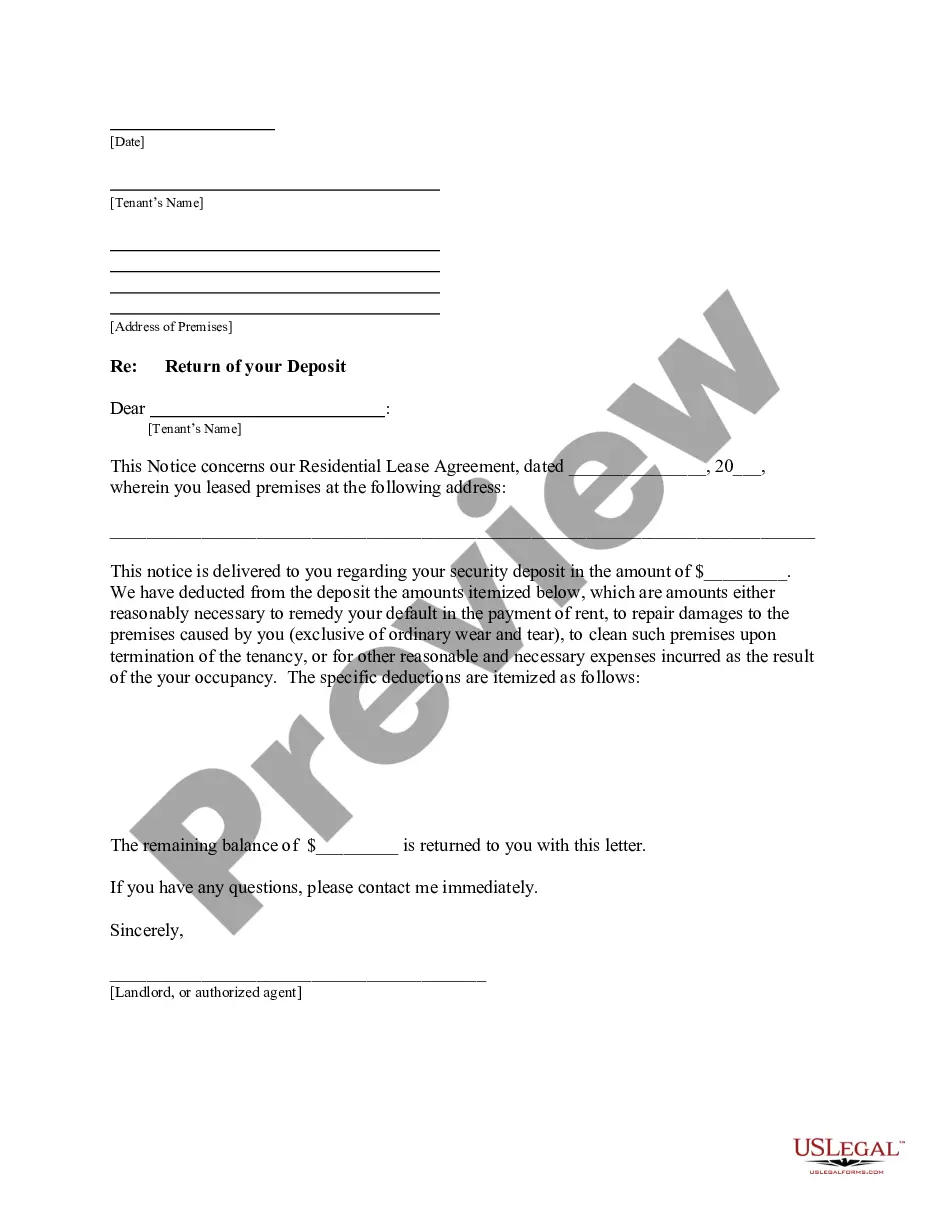
Louisiana Judgment Regarding Child Custody
What is this form?
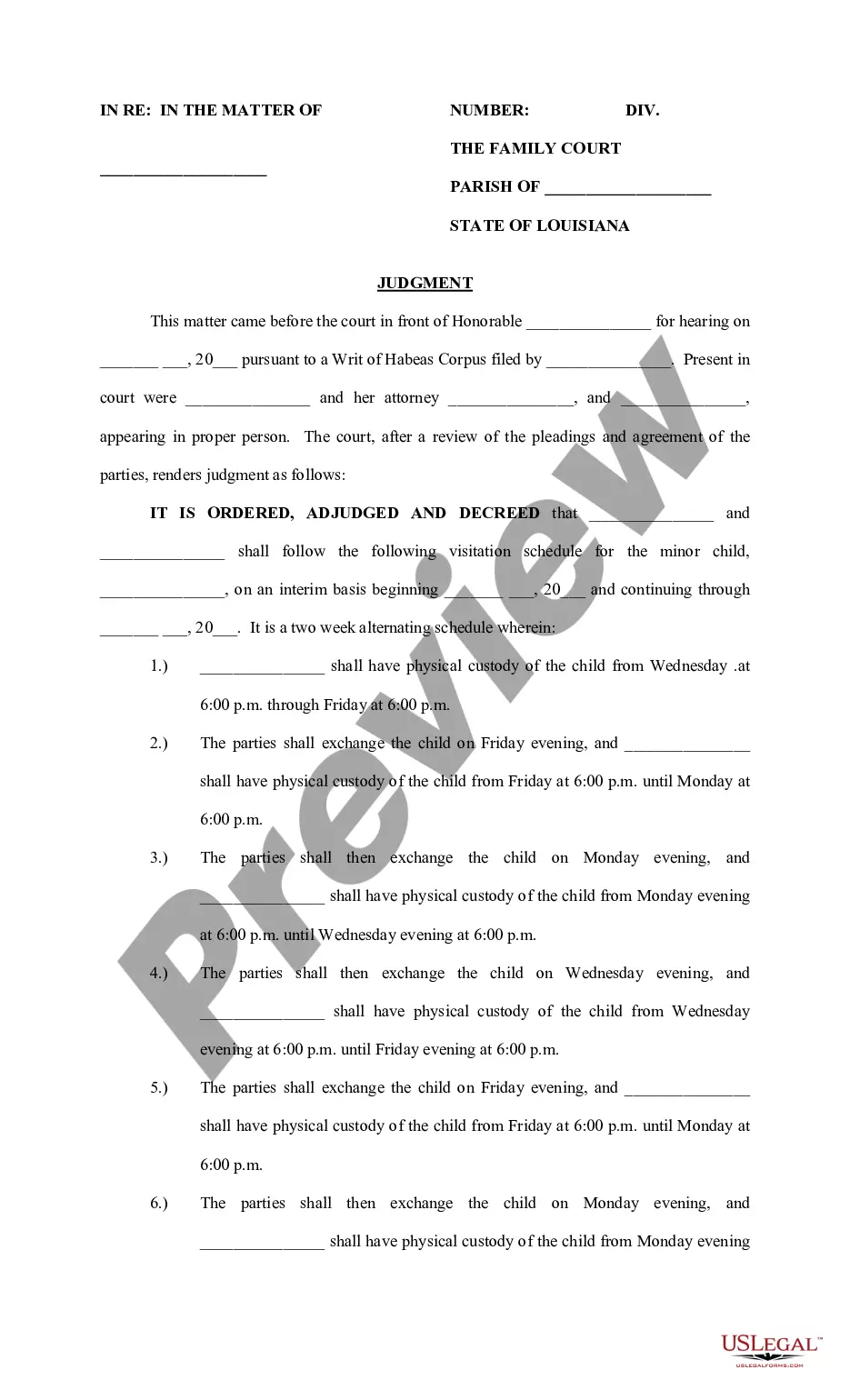
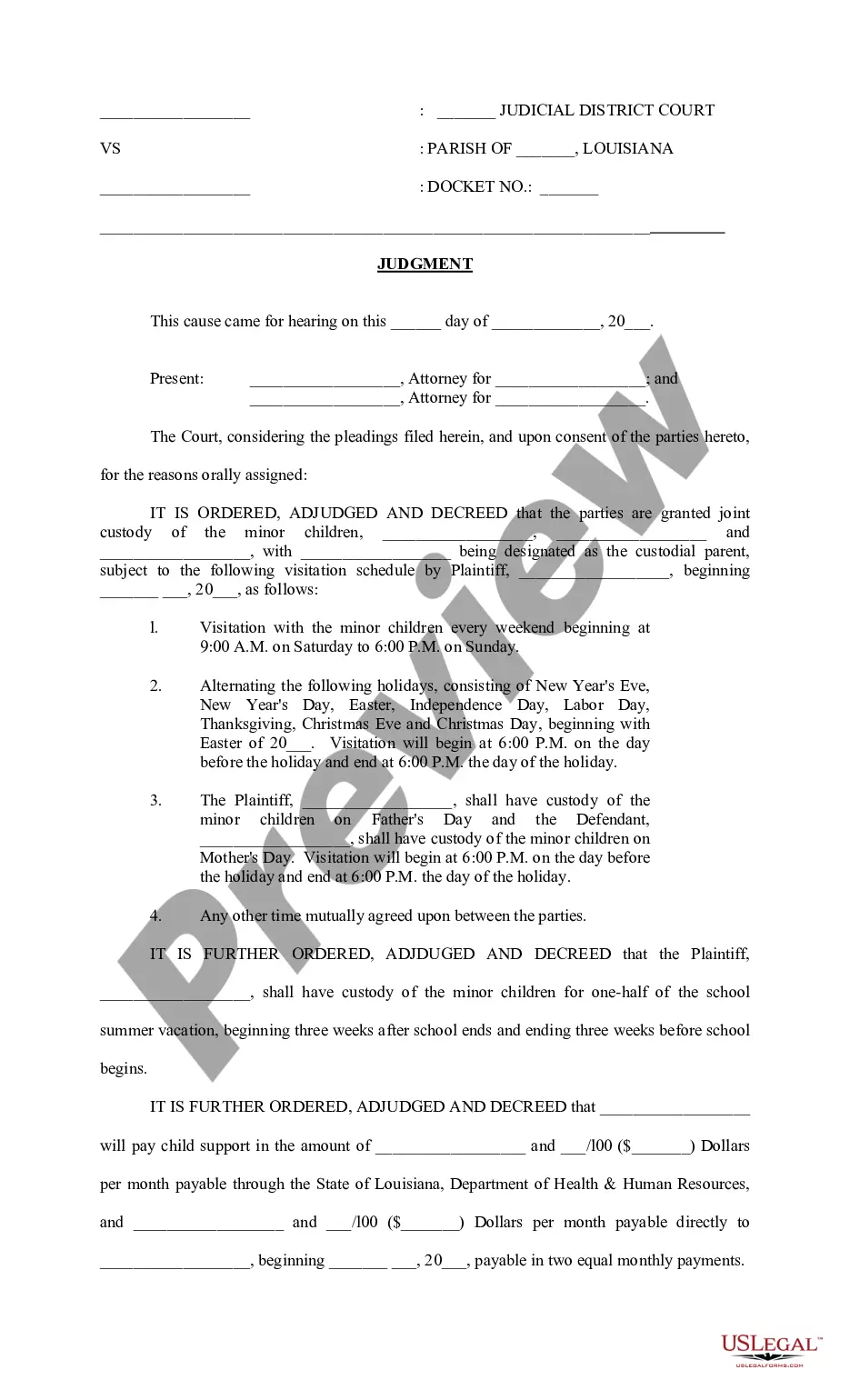
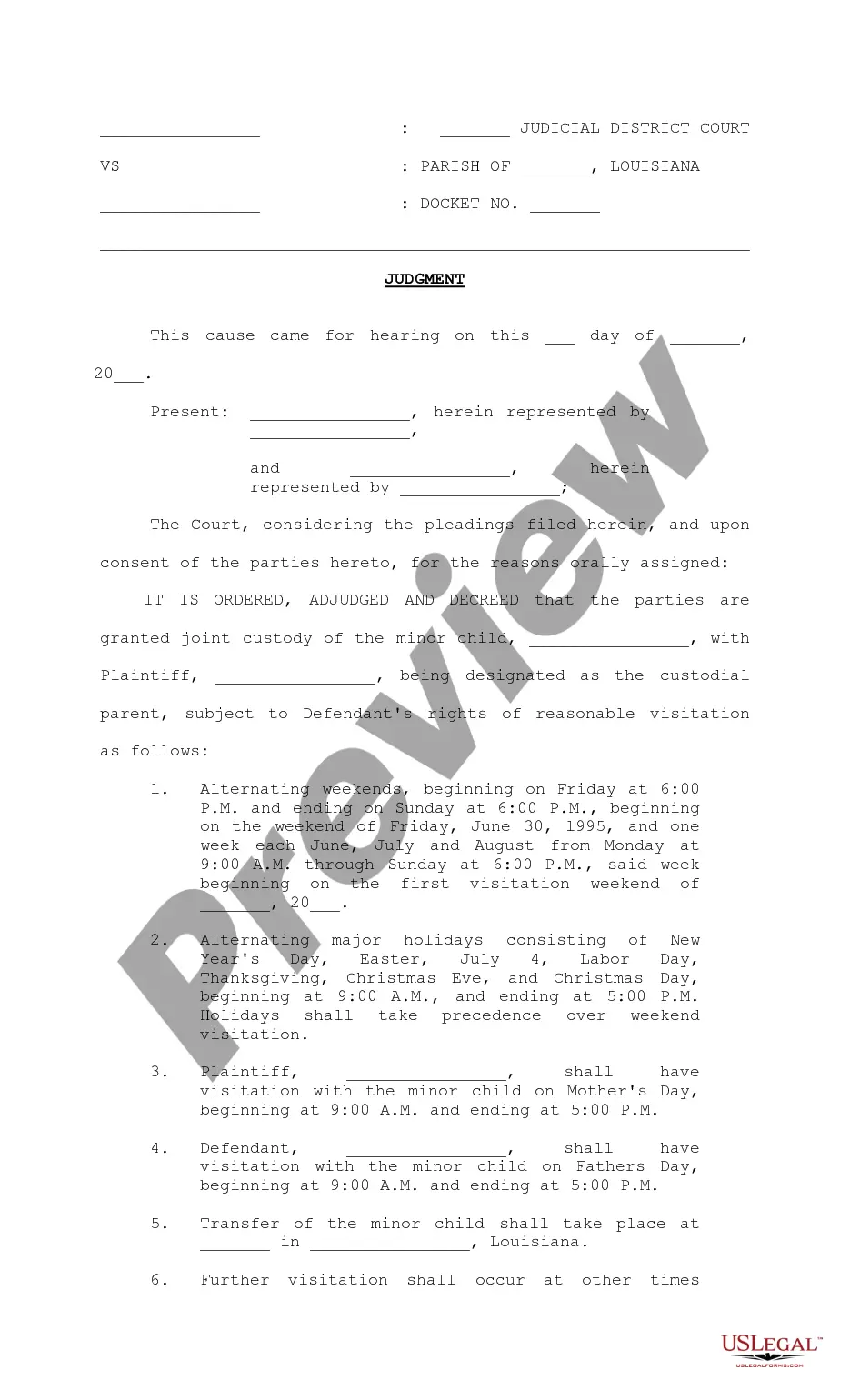
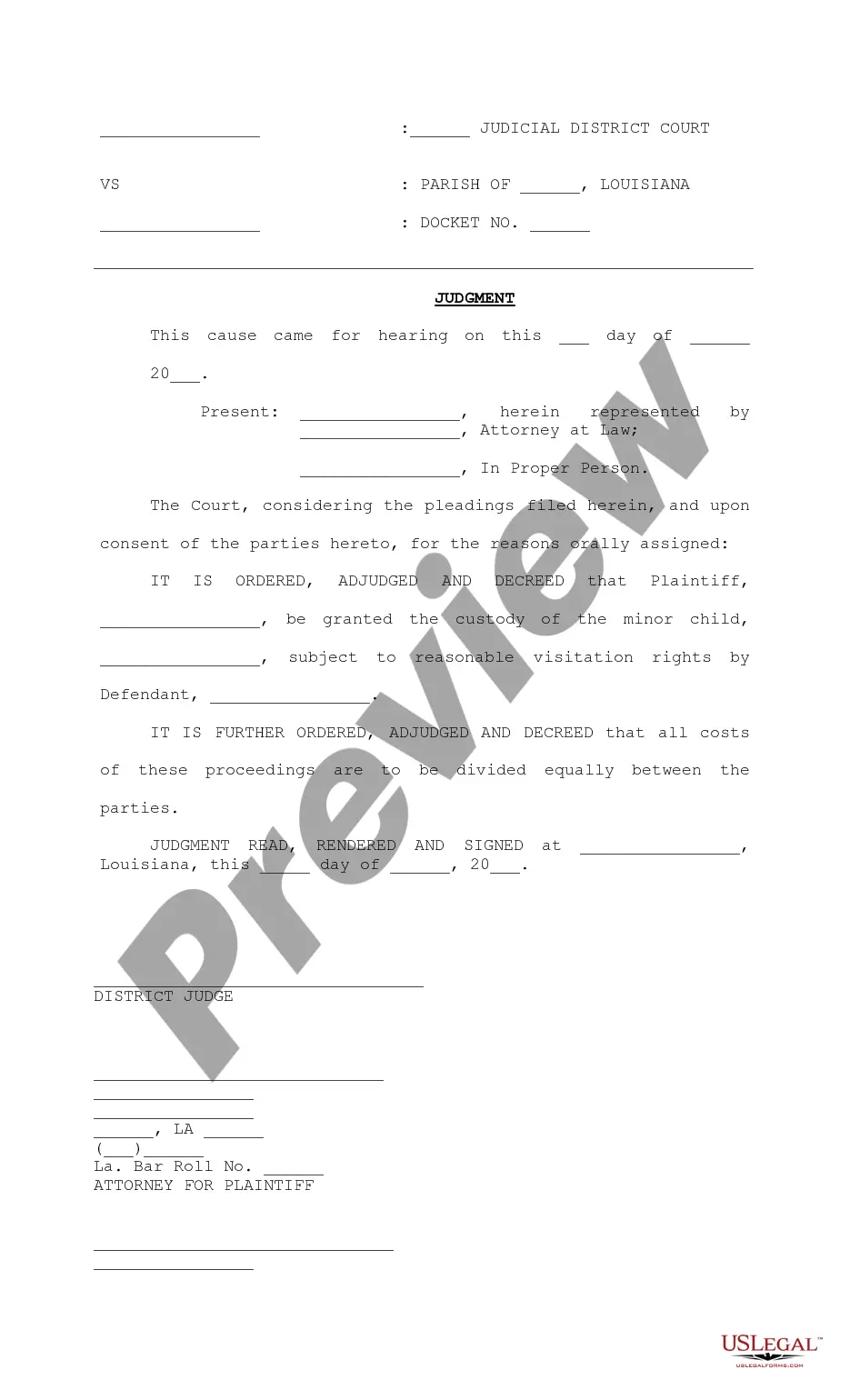
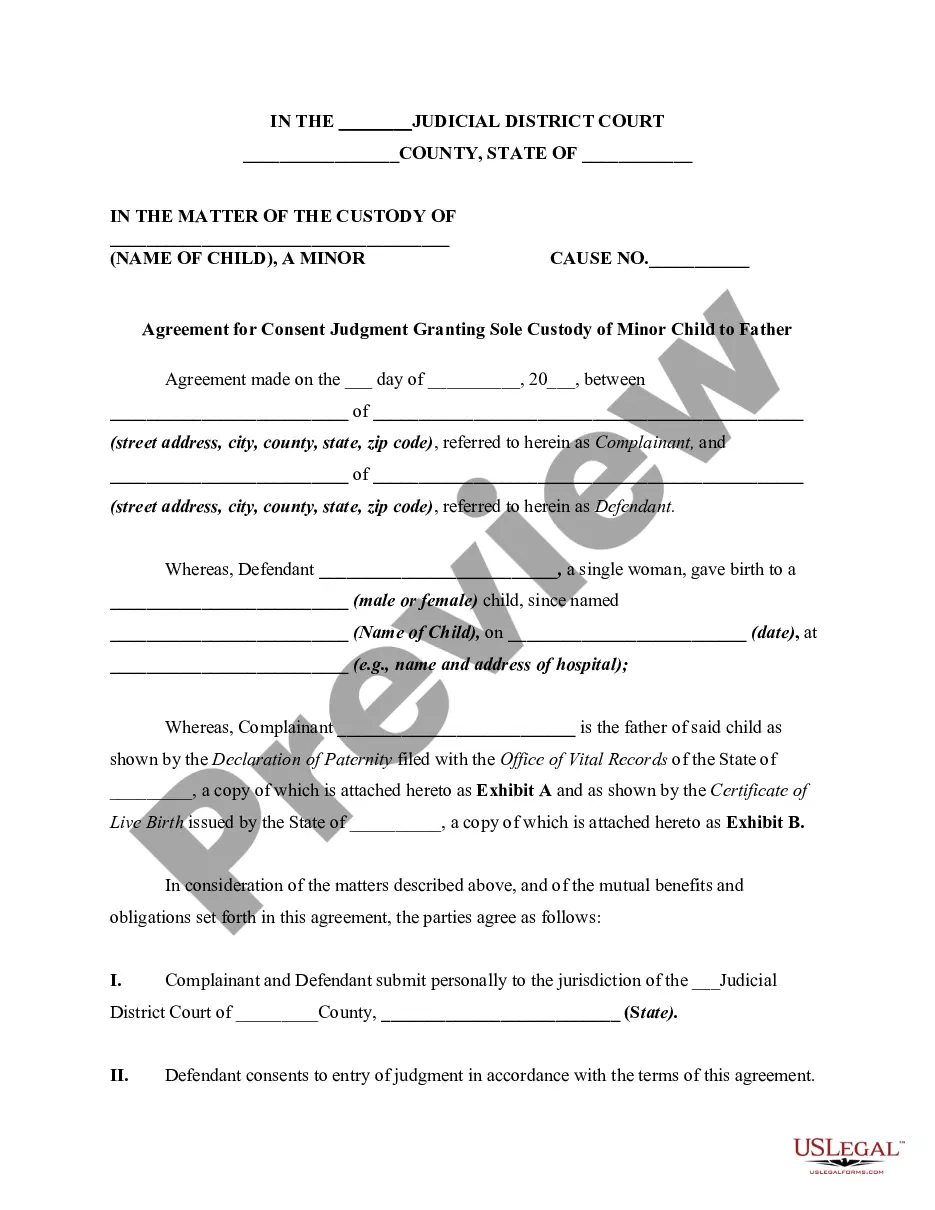
The Judgment Regarding Child Custody is a legal document that establishes visitation schedules for a non-custodial parent concerning a minor child. This form is typically utilized following a writ of habeas corpus, and it outlines a clear, enforceable schedule of visitation, differentiating it from custody agreements, which may cover broader parenting responsibilities.
Main sections of this form
- Identification of the court, parties involved, and the judge presiding over the case.
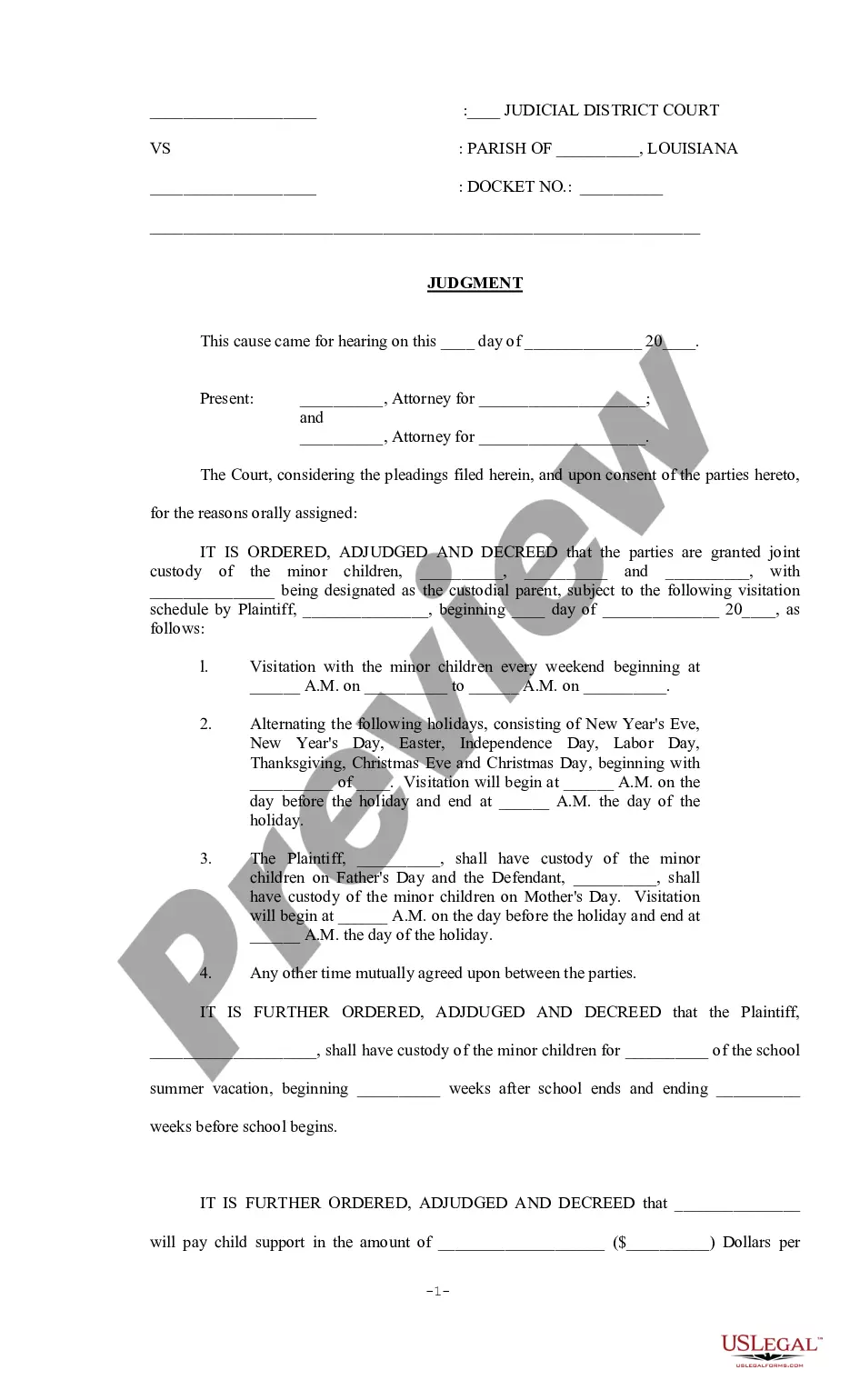
- A detailed visitation schedule, indicating when each parent will have physical custody of the child.
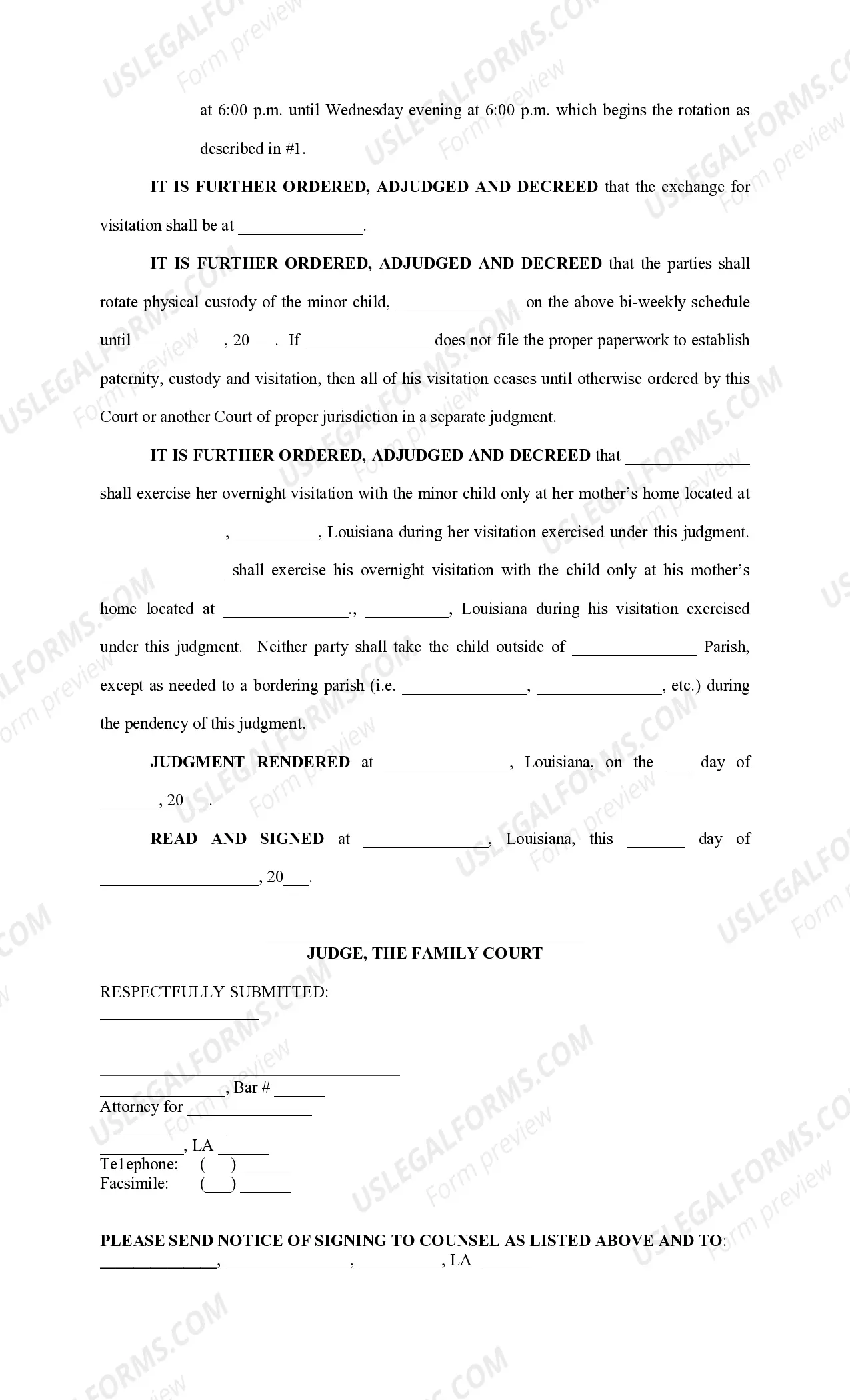
- Provisions for exchanges of the child between parents.
- Restrictions on the child's travel outside of the designated parish.
- Specific terms for overnight visitation, including locations where the child can stay.
Situations where this form applies
This form is essential when a non-custodial parent seeks to establish or formalize a visitation schedule with their minor child following legal proceedings. It is commonly used in cases of disputes regarding child custody, ensuring both parents have a clear understanding of their visitation rights and responsibilities.
Intended users of this form
- Non-custodial parents who want to establish visitation rights.
- Custodial parents who wish to clarify visitation arrangements.
- Attorneys representing parents in family law cases.
Steps to complete this form
- Identify the parties involved, including both parents and the minor child.
- Fill in the court name and the date of the hearing.
- Clearly outline the visitation schedule, including specific days and times each parent will have custody.
- Specify the location of child exchanges and any restrictions on travel.
- Include provisions for overnight visitation, detailing acceptable locations.
Notarization requirements for this form
This form does not typically require notarization to be legally valid. However, some jurisdictions or document types may still require it. US Legal Forms provides secure online notarization powered by Notarize, available 24/7 for added convenience.
Get your form ready online
Our built-in tools help you complete, sign, share, and store your documents in one place.
Make edits, fill in missing information, and update formatting in US Legal Forms—just like you would in MS Word.
Download a copy, print it, send it by email, or mail it via USPS—whatever works best for your next step.
Sign and collect signatures with our SignNow integration. Send to multiple recipients, set reminders, and more. Go Premium to unlock E-Sign.
If this form requires notarization, complete it online through a secure video call—no need to meet a notary in person or wait for an appointment.
We protect your documents and personal data by following strict security and privacy standards.

Make edits, fill in missing information, and update formatting in US Legal Forms—just like you would in MS Word.

Download a copy, print it, send it by email, or mail it via USPS—whatever works best for your next step.

Sign and collect signatures with our SignNow integration. Send to multiple recipients, set reminders, and more. Go Premium to unlock E-Sign.

If this form requires notarization, complete it online through a secure video call—no need to meet a notary in person or wait for an appointment.

We protect your documents and personal data by following strict security and privacy standards.
Common mistakes to avoid
- Failing to accurately fill in the names and dates, which can lead to misunderstandings.
- Not specifying the exchange location, causing confusion for both parents.
- Overlooking state-specific requirements for visitation that may alter the schedule.
Benefits of using this form online
- Convenient access from anywhere, allowing you to complete the form at your own pace.
- Editability ensures you can customize the visitation schedule to your specific situation.
- Reliable resources and templates drafted by licensed attorneys provide peace of mind.
Looking for another form?






Form popularity
FAQ
Has one parent been the primary caretaker, or have the parents shared the responsibility? What is the mental and physical health status of the parents? Will the child be in a stable home environment?
Begin your letter by introducing yourself and explaining your relationship to the parent and how long you've known her. Then, spend two or three paragraphs explaining why you think she should be awarded custody. Use your final paragraph to summarize the points you've made in the body of your letter.
If the child is at least 12 years old, courts will usually give the child's preference some weight. Courts don't have to follow a child's custodial preference.
Judges must decide custody based on the best interests of the child." The best interests of the child law requires courts to focus on the child's needs and not the parent's needs. The law requires courts to give custody to the parent who can meet the child's needs best .
Child's best interests. Child's desires, given the child has reached a certain age and maturity (typically 12 years old) Record of domestic violence. Record of drug use. Parents' emotional and mental stability.
You can write a letter to the Judge but the Judge will not read it. You have to provide testimony through witnesses including yourself. You do not have to agree with what the GAL proposes. You need an attorney to represent you.
Age of the children. Each parent's living situation. Each parent's willingness to support the other's relationship with the children. Each parent's relationship with the children before the divorce. Children's preferences. Continuity and stability.
A default judgment in a child custody case is a decision made by a judge in favor of one party due to the inaction of the opposing party. In a child custody battle, if a defendant fails to respond to the inquires of the court within enough time, a default judgment can be granted in favor of the plaintiff.
If you and the other parent cannot reach an agreement in regards to child custody, you may have to go to court. When this happens, the judge will weigh the most important factor in your child custody decision: the best interests of your children.