Illinois Exclusive Easement Agreement For Parking Space
Overview of this form
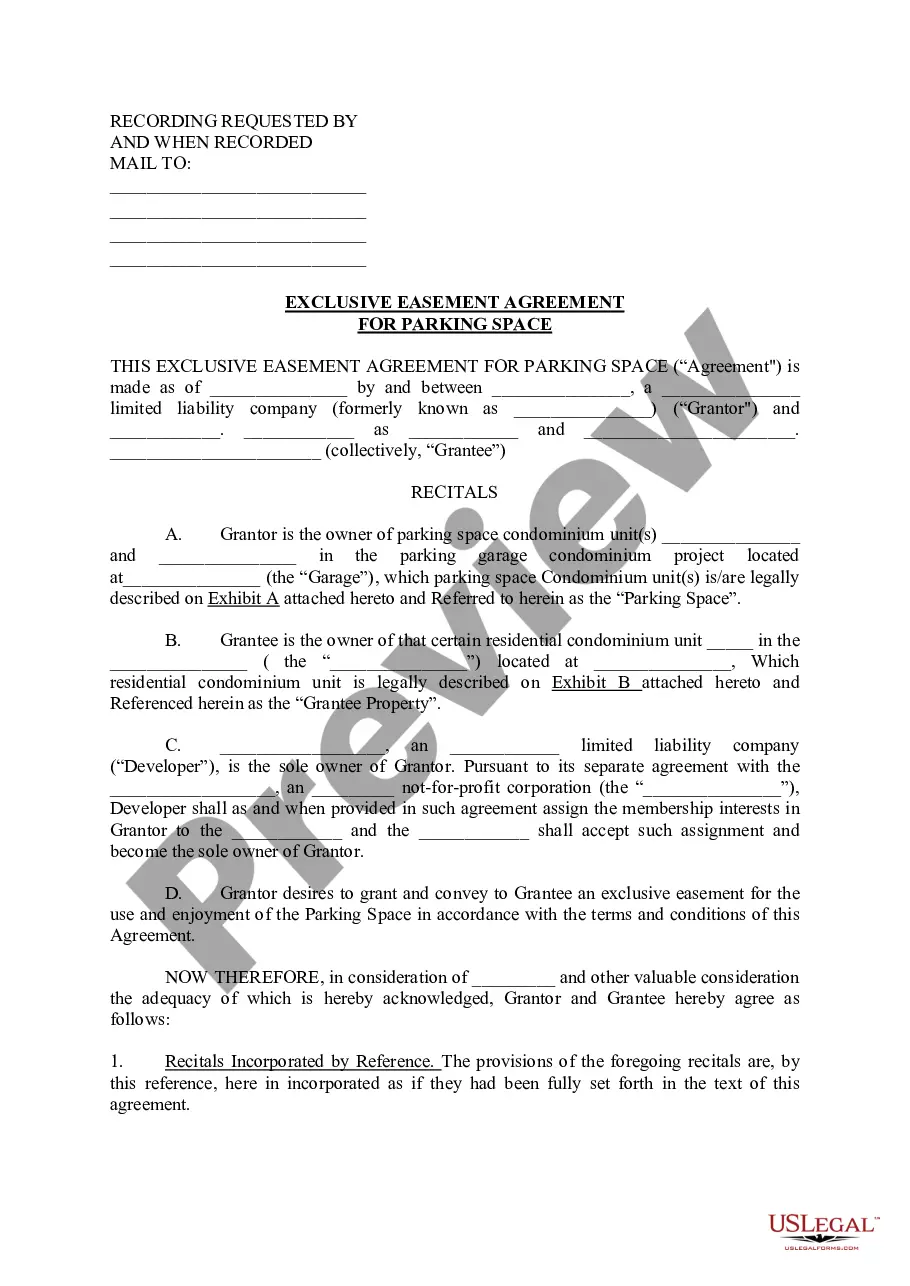
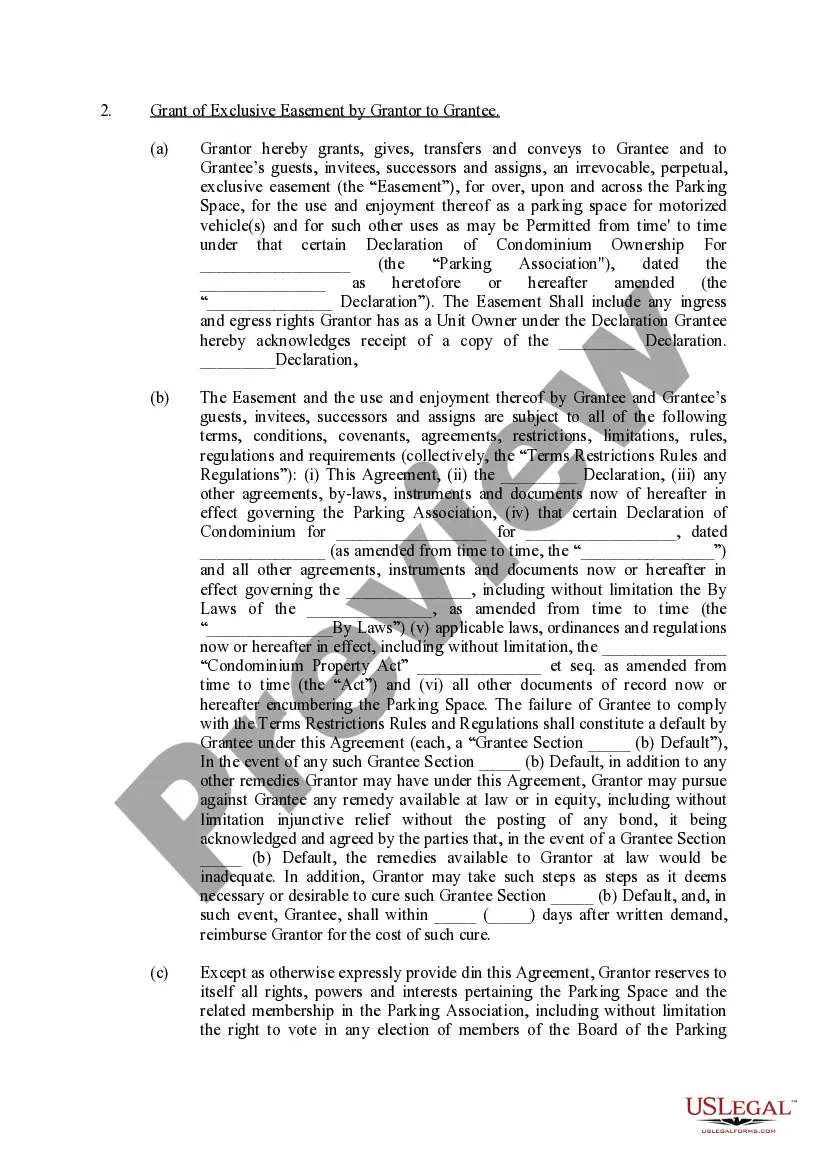
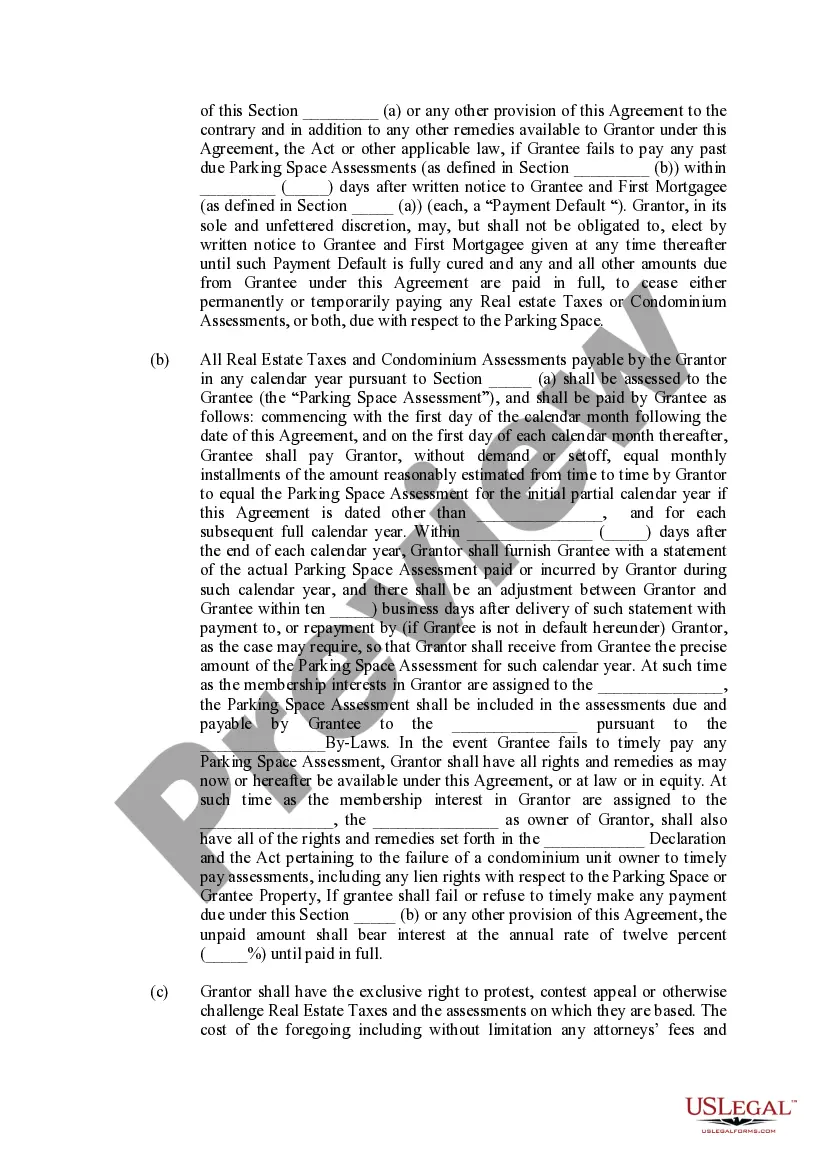
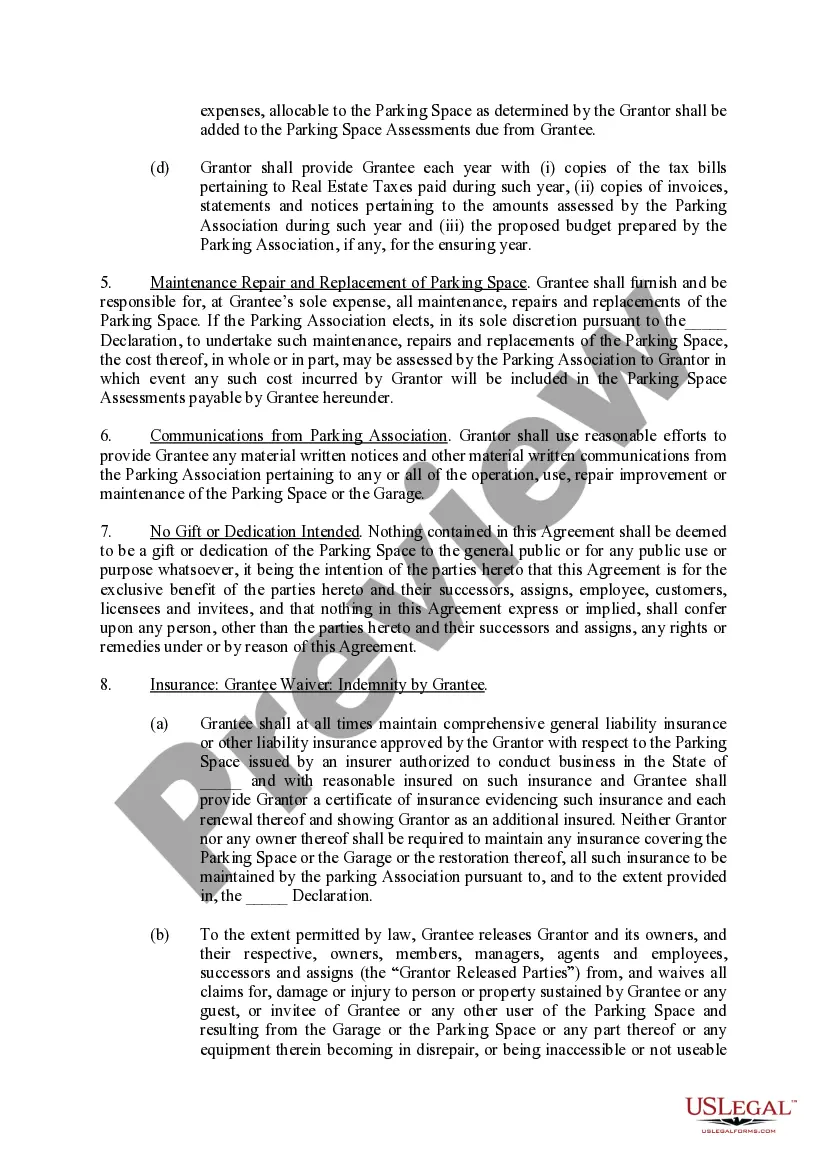
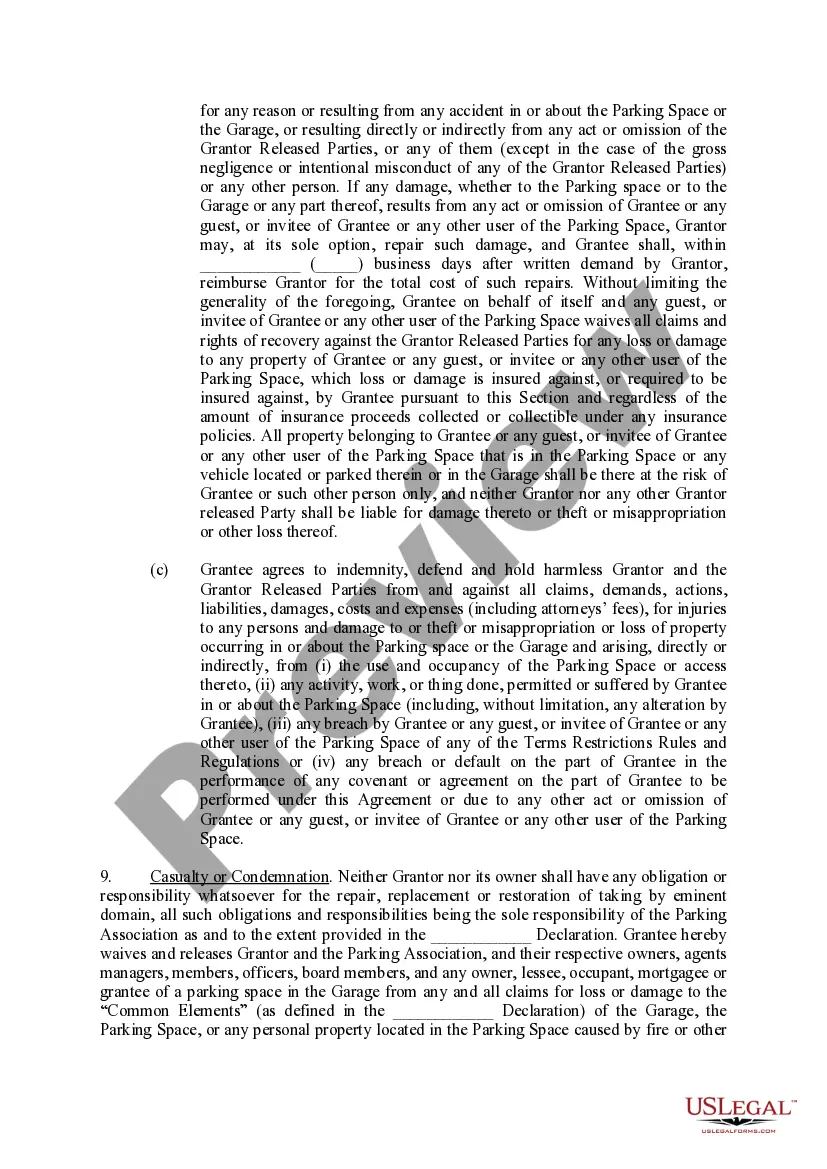
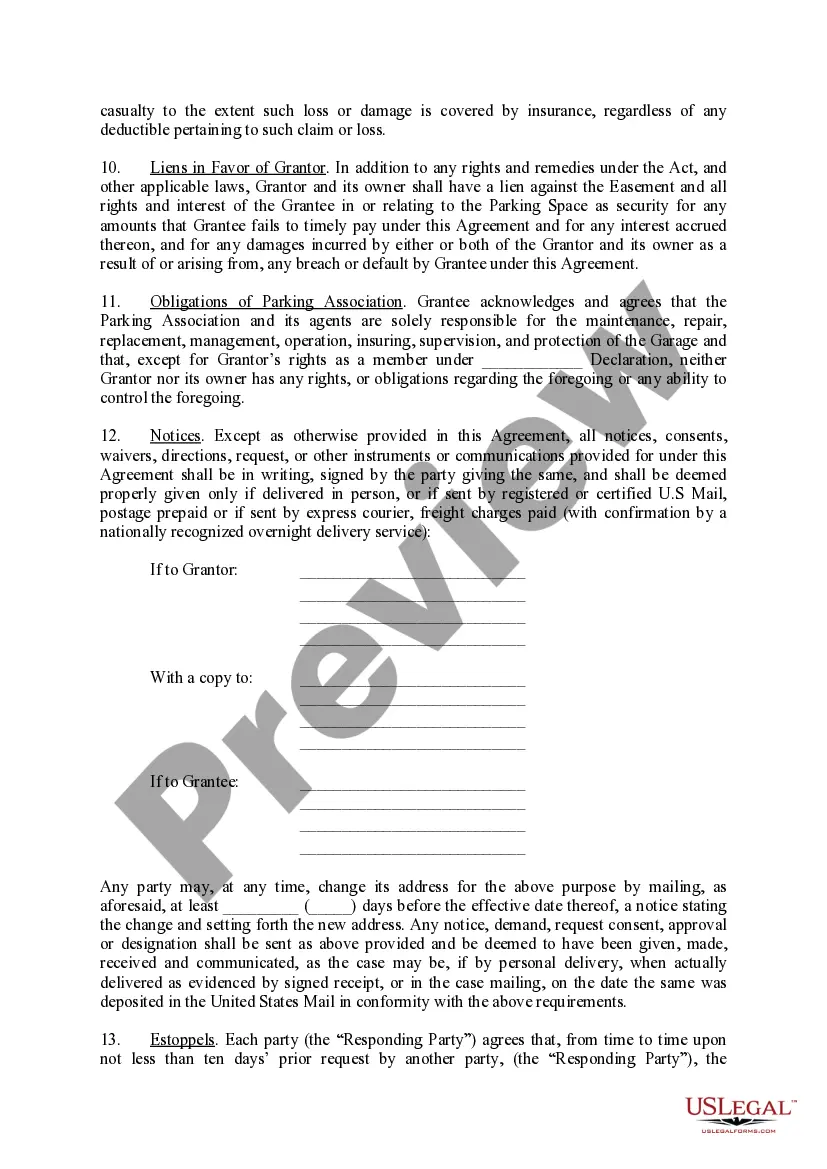
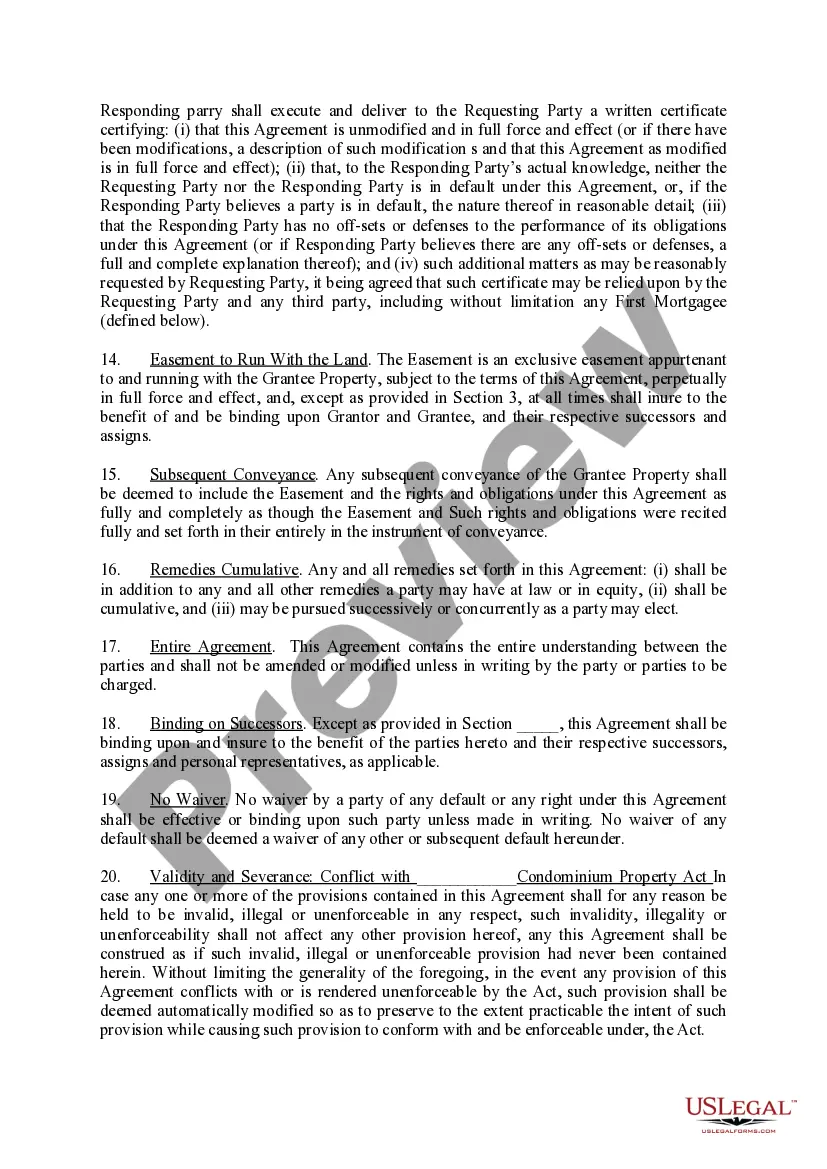
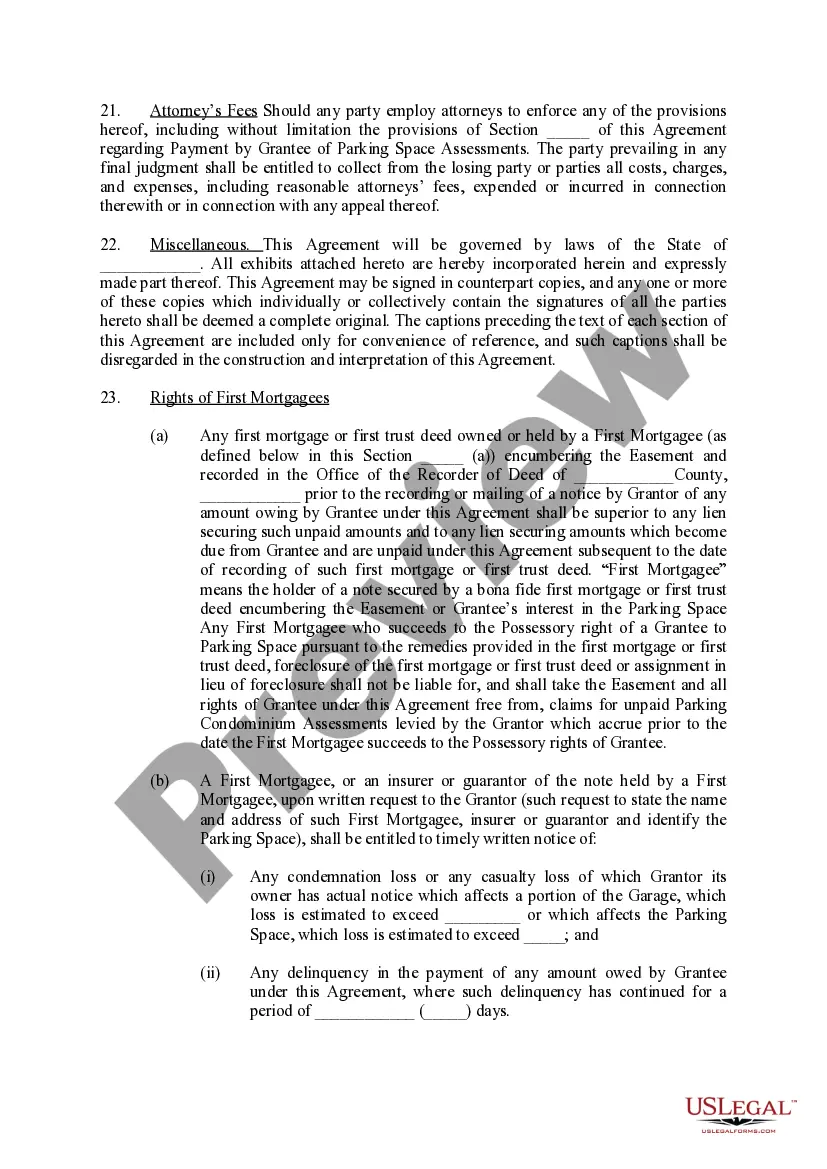
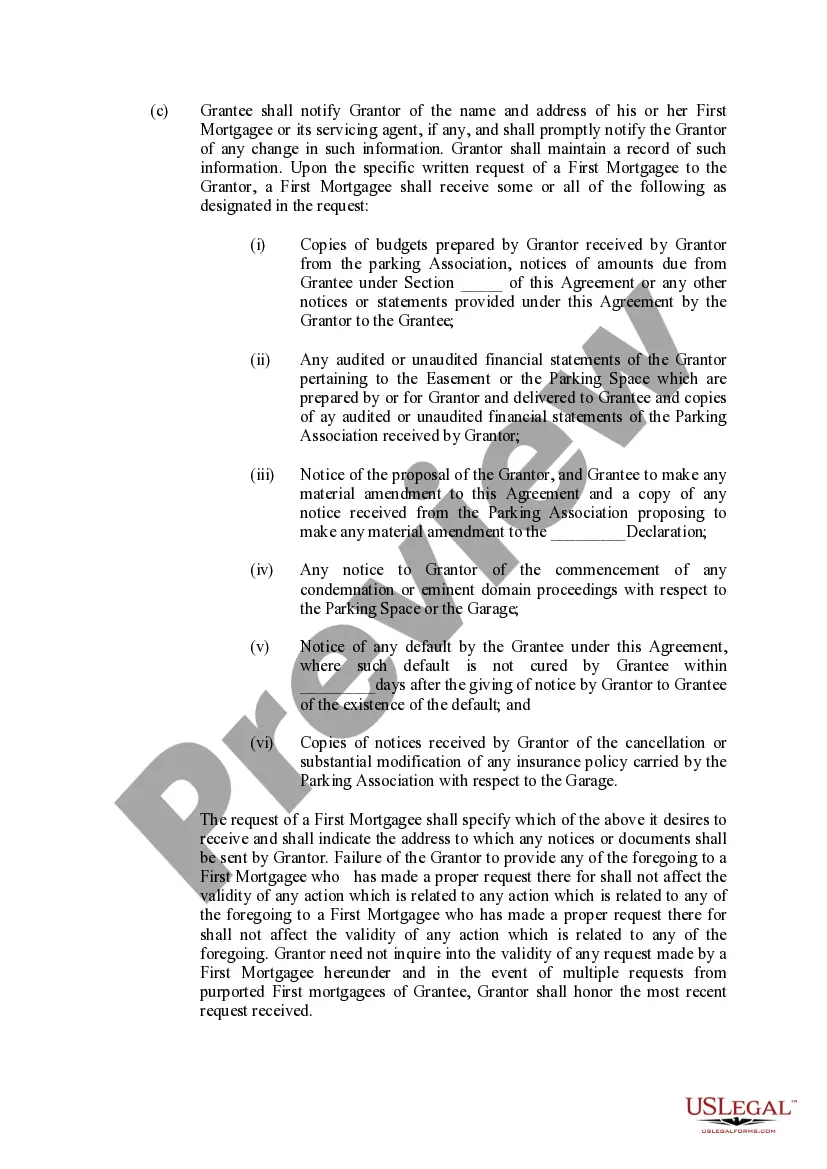
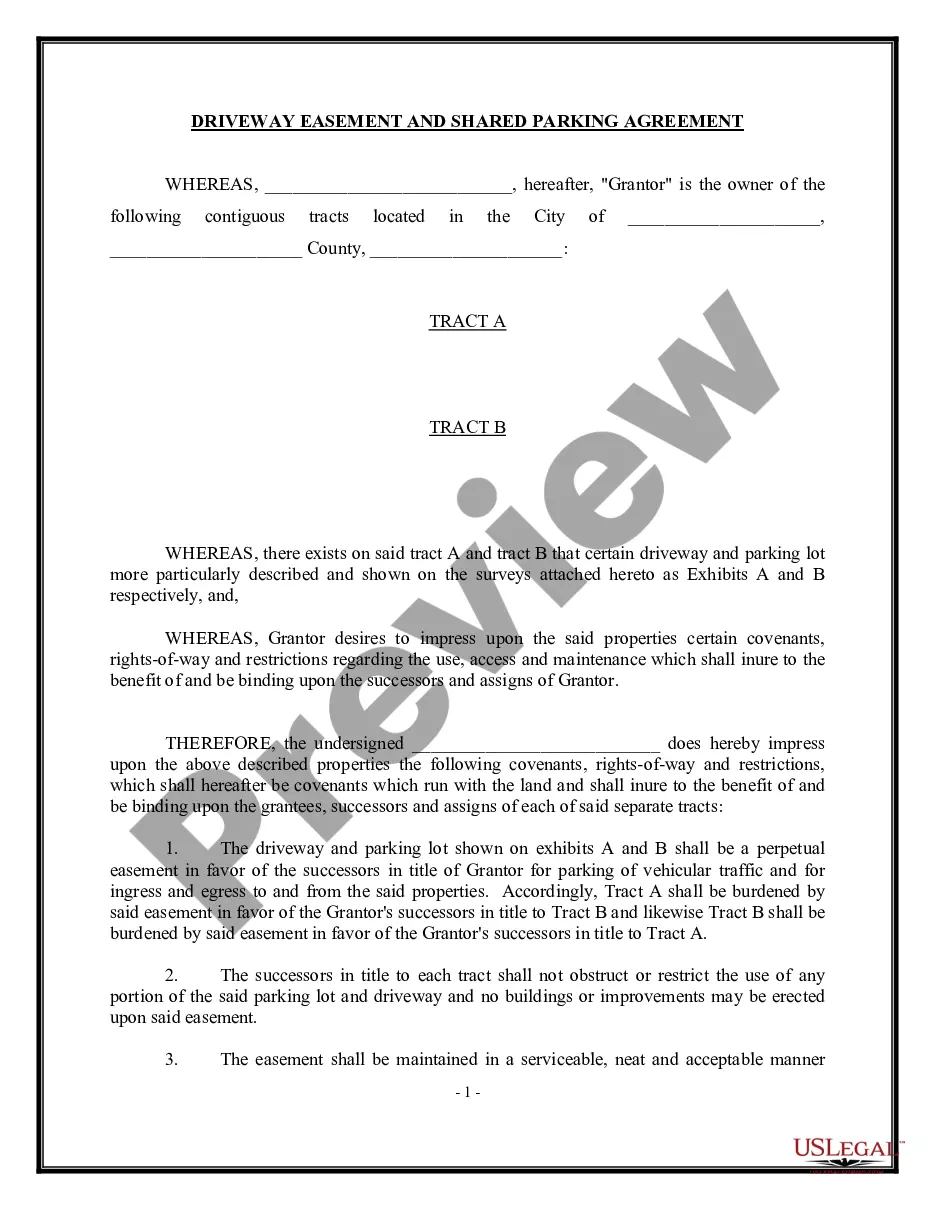
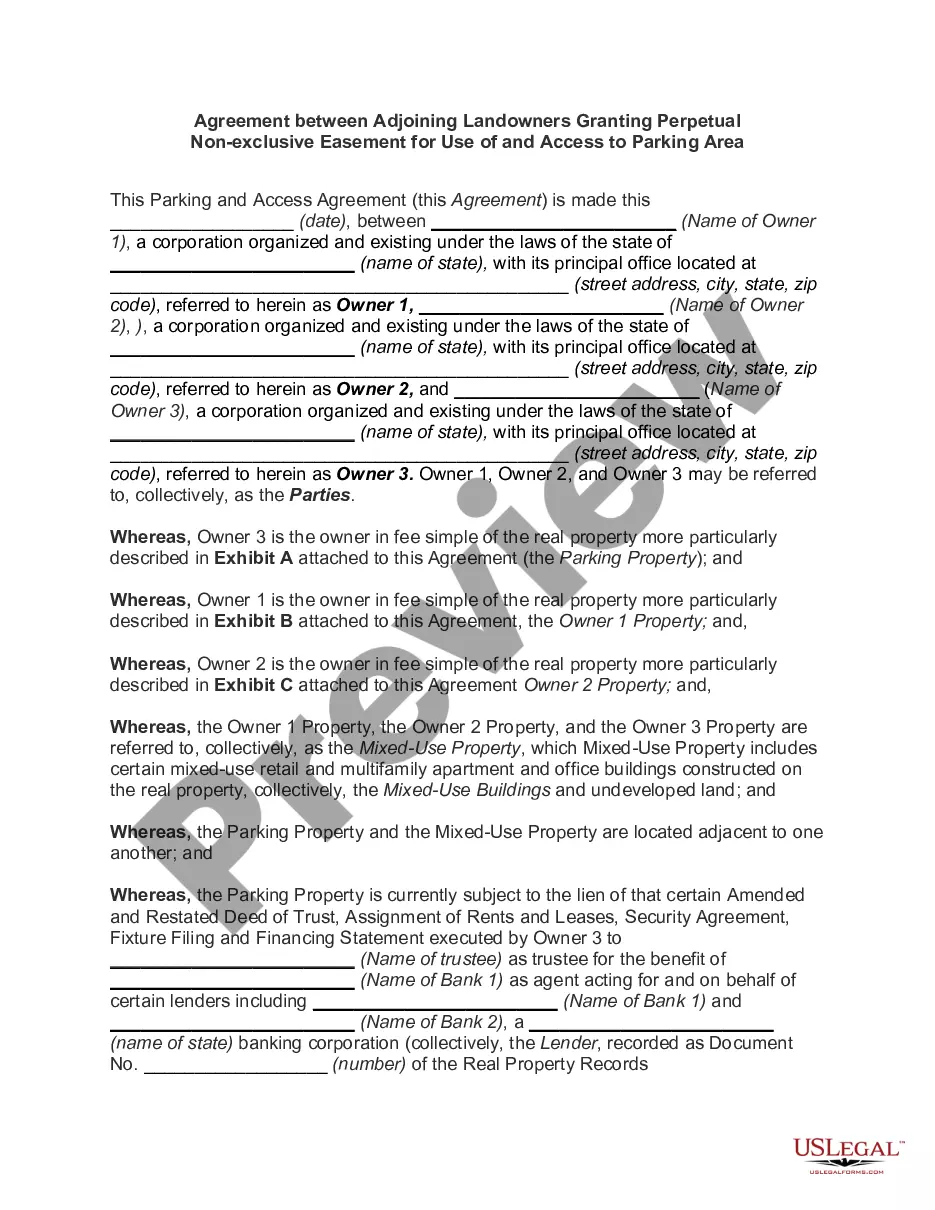
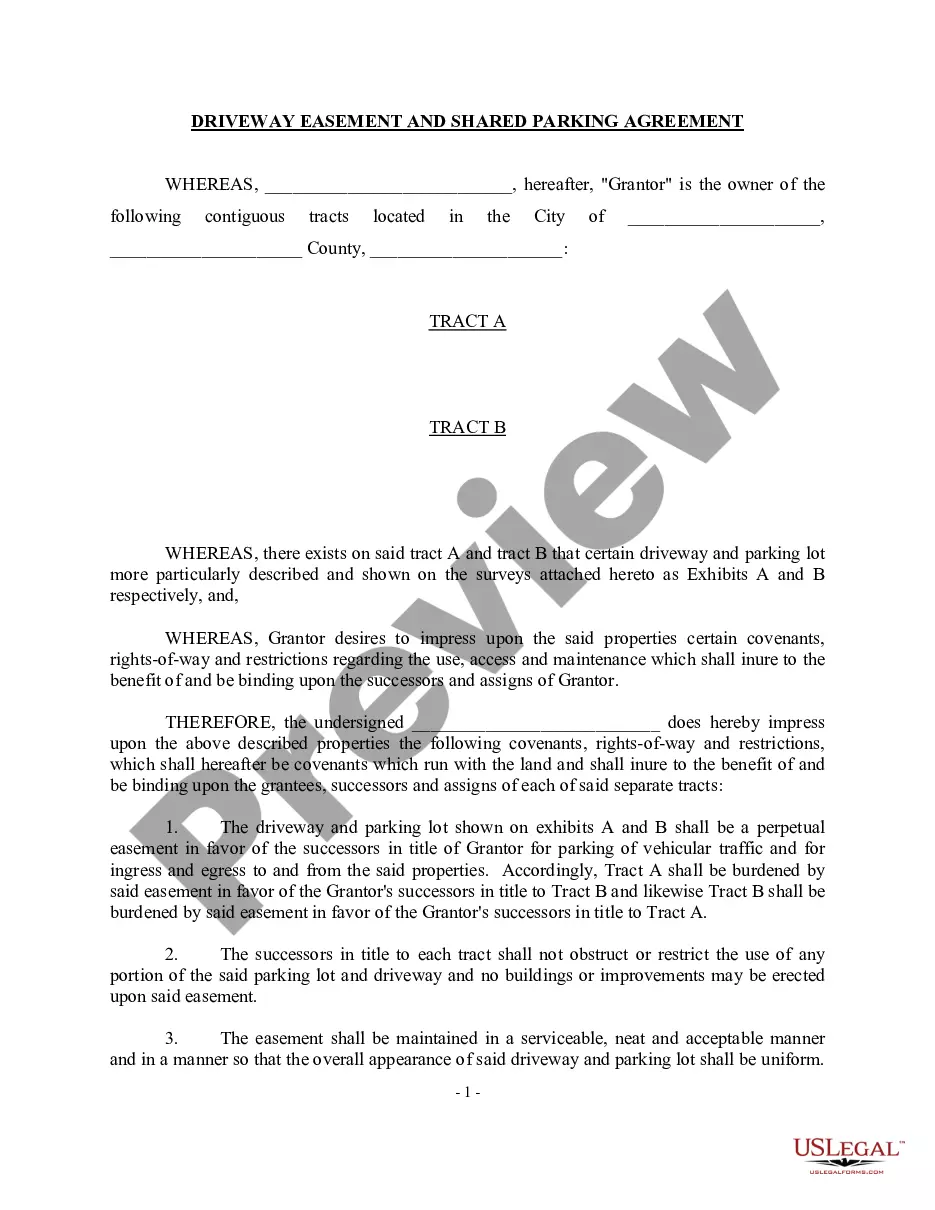
The Exclusive Easement Agreement for Parking Space is a legal document that grants a specific individual or entity the exclusive right to use a designated parking space. This form serves to establish the terms under which the easement is granted, ensuring that both the grantor and grantee understand their rights and obligations concerning the use of the parking space. Unlike a general parking agreement, this form provides an irrevocable and perpetual easement, which gives the grantee lasting rights that are attached to their property.
Key parts of this document
- Identification of the parties involved: Clearly states who the grantor and grantee are.
- Description of the parking space: Details the specific location and legal description of the parking space being granted.
- Terms of the easement: Outlines the rights and limitations associated with the use of the parking space.
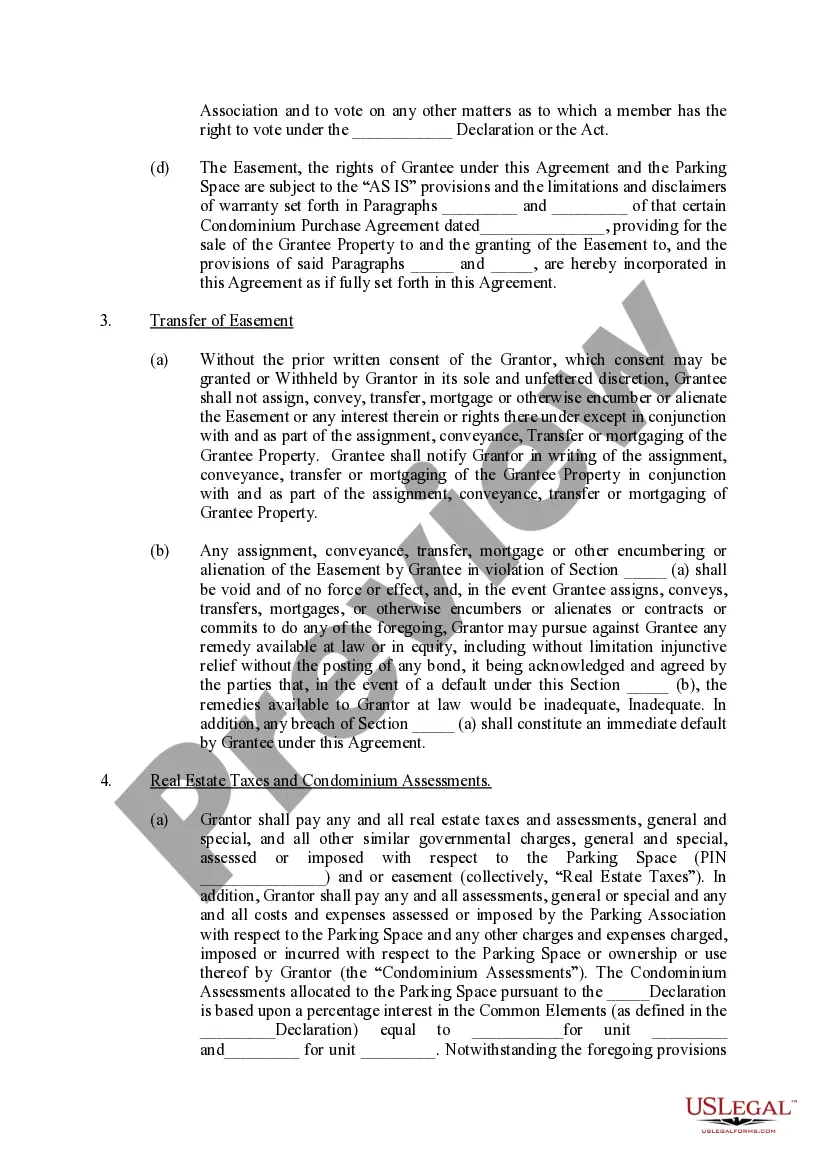
- Payment responsibilities: Specifies who is liable for real estate taxes and installment assessments related to the parking space.
- Liability and indemnification: Includes clauses that protect the grantor from liability related to the use of the parking space.
- Default provisions: Details what constitutes a default and the remedies available to the grantor.

When to use this form
This form should be utilized when a property owner wishes to grant exclusive rights to another party for the use of a parking space, often in condominium or multi-unit settings. Use this form when you want to formalize parking arrangements to prevent disputes regarding space usage among different property owners or tenants. Additionally, it is important when the parking space needs to be included as part of the property transfer during the sale of a condominium or similar property.
Who should use this form
- Property owners, often referred to as grantors, looking to designate parking rights for a specific party.
- Residents or tenants, known as grantees, who need secure access to parking spaces linked to their residential units.
- Developers or property managers who require legal documentation to manage parking space allocations effectively.
How to complete this form
- Identify the parties: Fill in the names and addresses of both the grantor and grantee.
- Describe the property: Provide the legal description and address of the parking space being granted.
- Specify the terms: Clearly outline the rights and obligations of both parties, including any payment provisions for assessments and taxes.
- Review for compliance: Ensure that the form complies with any applicable state laws governing easements and property rights.
- Sign and date the agreement: All parties must sign and date the form, and ensure notarization as required.
Does this document require notarization?
Yes, this form must be notarized to be legally valid. Notarization verifies the identities of the signatories and ensures that the agreement was signed voluntarily. US Legal Forms offers integrated online notarization, allowing you to complete the process securely via video call, available 24/7 without the need for travel.
Get your form ready online
Our built-in tools help you complete, sign, share, and store your documents in one place.
Make edits, fill in missing information, and update formatting in US Legal Forms—just like you would in MS Word.
Download a copy, print it, send it by email, or mail it via USPS—whatever works best for your next step.
Sign and collect signatures with our SignNow integration. Send to multiple recipients, set reminders, and more. Go Premium to unlock E-Sign.
If this form requires notarization, complete it online through a secure video call—no need to meet a notary in person or wait for an appointment.
We protect your documents and personal data by following strict security and privacy standards.

Make edits, fill in missing information, and update formatting in US Legal Forms—just like you would in MS Word.

Download a copy, print it, send it by email, or mail it via USPS—whatever works best for your next step.

Sign and collect signatures with our SignNow integration. Send to multiple recipients, set reminders, and more. Go Premium to unlock E-Sign.

If this form requires notarization, complete it online through a secure video call—no need to meet a notary in person or wait for an appointment.

We protect your documents and personal data by following strict security and privacy standards.
Common mistakes to avoid
- Failing to include all necessary parties, leading to potential disputes.
- Not providing a clear legal description of the parking space.
- Omitting or misinterpreting the terms of the easement, which can lead to misunderstandings.
- Neglecting to follow state laws when drafting or signing the agreement.
Why complete this form online
- Convenience: Access and download the form from anywhere at any time.
- Editability: Customize the agreement to reflect specific terms that suit your situation.
- Reliability: Forms are created based on legal standards and are periodically updated to comply with changes in legislation.
Looking for another form?

Form popularity
FAQ
Rights of way (similar to the driveway example, but also including walkways or pathways); Public utilities, such as gas, electricity or water and sewer mains; Parking areas; Access to light and air; and. Shared walls.
Exclusive Easements in California This is known as an exclusive easement. With this type of arrangement, only one party (or maybe a limited number of parties) have the right to use the land for a specified purpose.
Exclusive means that only one party or perhaps a limited number of parties can use that easement. Non-exclusive means that a number of different parties can use the easement. Non-exclusive can also mean that additional parties could be granted the right to use that same easement in the future.
An easement grants its holder a non-possessory right to use the land for some purpose.In a non-exclusive easement, the party who benefits from the easement is not permitted to exclude other individuals, including the property owner, from use of that property.
The Exclusive Easement Explained Most easements are non-exclusive where the person benefitting cannot exclude others from these benefits. Someone with an exclusive easement may stop others from obtaining the benefits even though this individual is not the owner of the land.
Exclusive means that only one party or perhaps a limited number of parties can use that easement. Non-exclusive means that a number of different parties can use the easement. Non-exclusive can also mean that additional parties could be granted the right to use that same easement in the future.
There are two types of easements: affirmative and negative. An affirmative easement gives the easement holder the right to do something on the grantor of the easement's land, such as travel on a road through the grantor's land.
Express Easements An express easement is created by a deed or by a will. Thus, it must be in writing. An express easement can also be created when the owner of a certain piece of property conveys the land to another, but saves or reserves an easement in it.