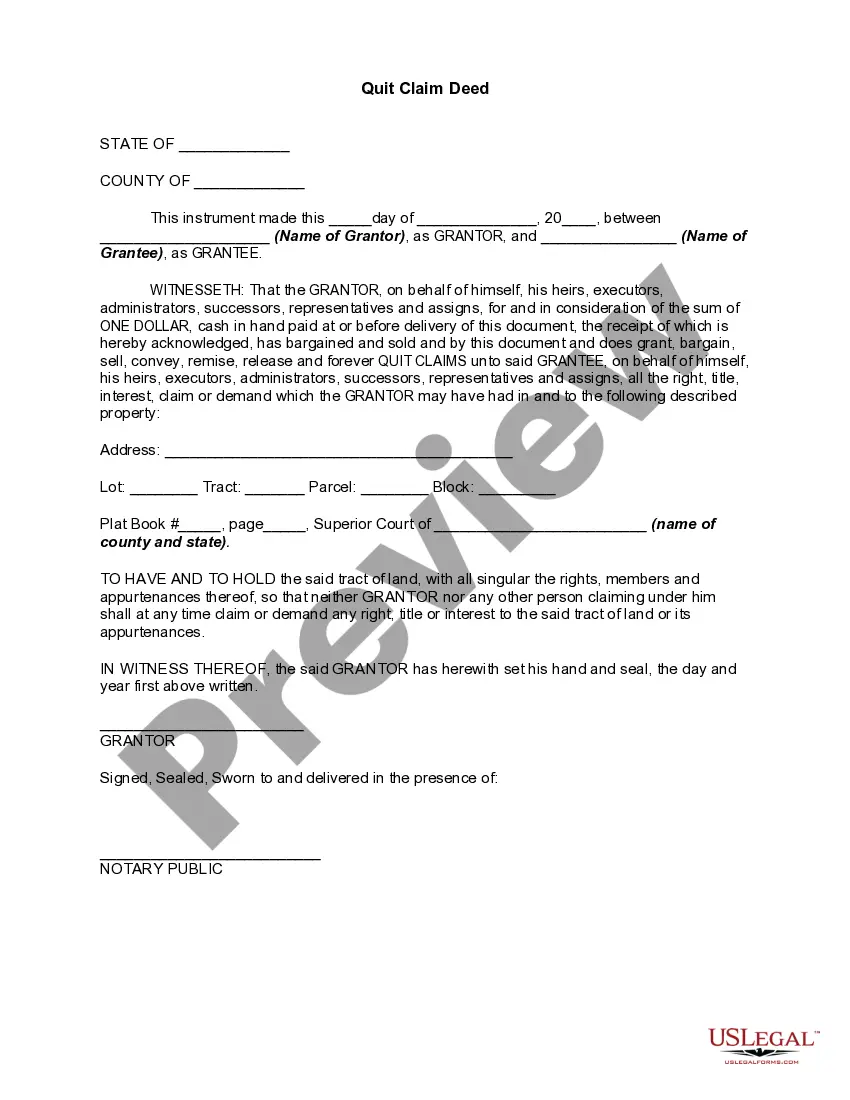
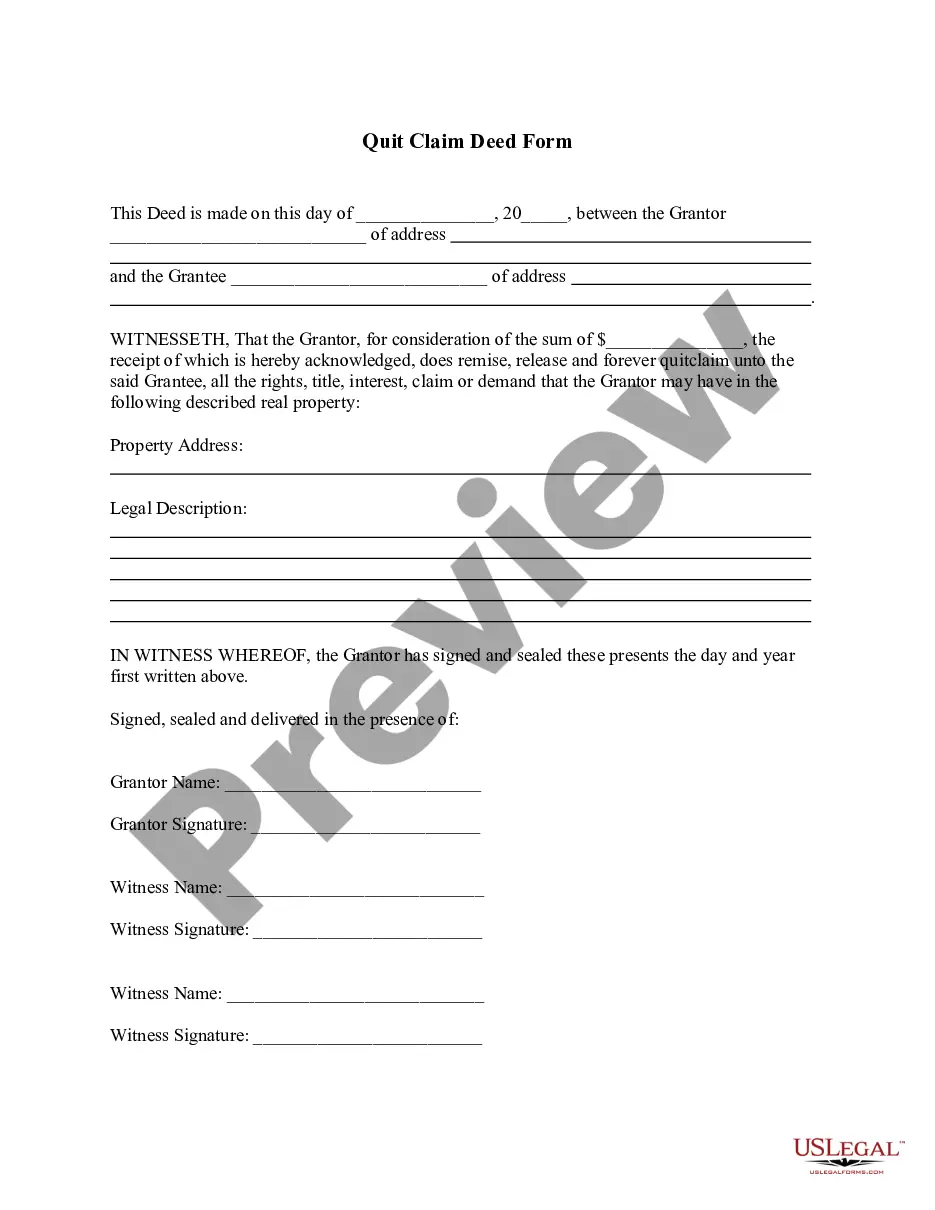
A Connecticut Quit Claim Deed is a legal document that is used to transfer ownership of real property from one person (the granter) to another (the grantee). The deed conveys any interest the granter may have in the property to the grantee, but does not guarantee that the granter actually owns the property or that the title is free from any defects or encumbrances. The deed is commonly used in cases of divorce, when a spouse needs to transfer their interest in the marital home to the other spouse. There are two types of Connecticut Quit Claim Deeds: an ordinary Connecticut Quit Claim Deed and a Statutory Connecticut Quit Claim Deed. An ordinary Connecticut Quit Claim Deed is typically used when the granter is transferring their interest in the property to the grantee, but does not guarantee the title of the property. A Statutory Connecticut Quit Claim Deed is used when the granter is transferring their interest in the property to the grantee and does guarantee the title of the property.
Connecticut Quit Claim Deed
Description

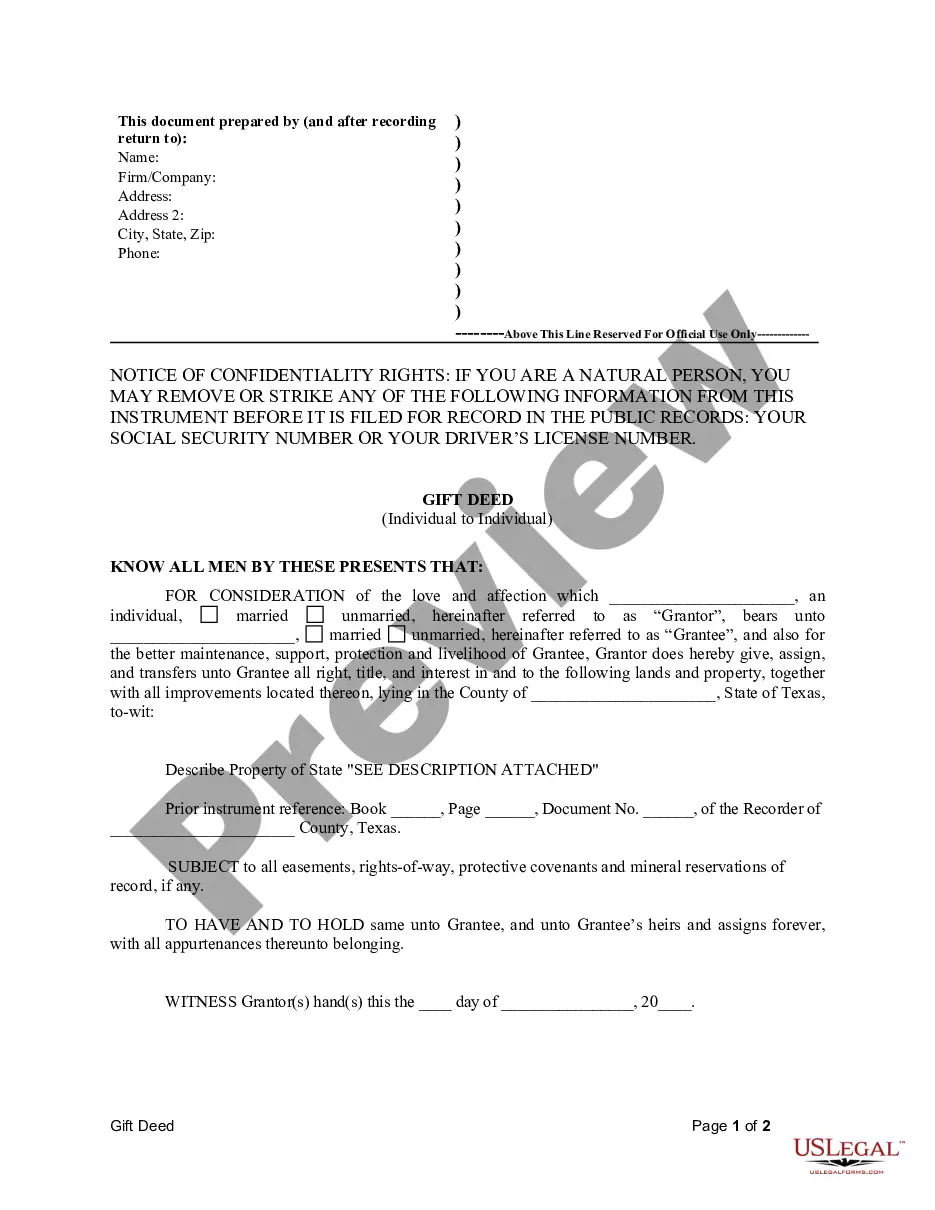
How to fill out Connecticut Quit Claim Deed?
If you’re searching for a method to effectively create the Connecticut Quit Claim Deed without employing a legal expert, then you’ve come to the perfect destination.
US Legal Forms has established itself as the most comprehensive and trustworthy collection of formal templates for every personal and business need. Every document available on our online platform is crafted in compliance with federal and state laws, ensuring that your records are in order.
Another excellent benefit of US Legal Forms is that you will never misplace the documents you purchased - you can access any of your downloaded templates in the My documents section of your profile whenever necessary.
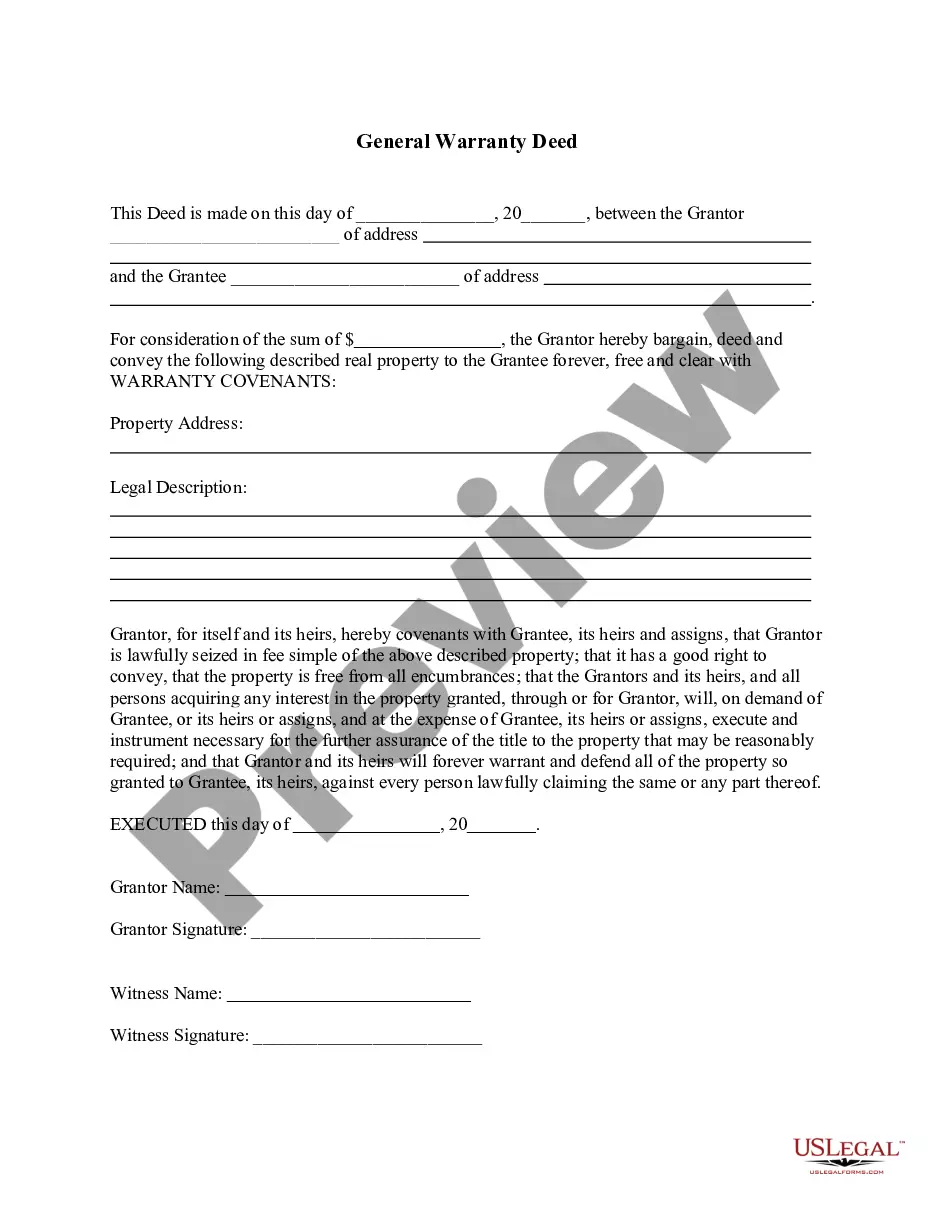
- Confirm that the document displayed on the page aligns with your legal circumstances and state laws by reviewing its text description or exploring the Preview mode.
- Type the document name in the Search tab located at the top of the page and choose your state from the dropdown menu to find another template if there are any discrepancies.
- Check the content once more and select Buy now when you are assured that the paperwork meets all the requirements.
- Log in to your account here and click Download. If you do not have an account yet, register for the service and choose a subscription plan.
- Utilize your credit card or the PayPal option to pay for your US Legal Forms subscription. The document will be available for download immediately afterwards.
- Select the format in which you wish to save your Connecticut Quit Claim Deed and download it by clicking the designated button.
- Upload your template to an online editor for quick completion and signing, or print it out for manual preparation.
Form popularity
FAQ
Yes, you can fill out a Connecticut Quit Claim Deed yourself, especially if the transaction is straightforward. However, using resources like UsLegalForms can provide guidance and ensure all necessary information is included correctly. This can help you avoid potential mistakes that could complicate the filing process.
One major disadvantage of a Connecticut Quit Claim Deed is that it provides no warranty of title. This means the grantee receives no guarantee that the grantor holds clear title to the property. Additionally, if there are any encumbrances or debts attached to the property, the grantee assumes those risks without any recourse.
A Connecticut Quit Claim Deed does not override a will; instead, it serves to transfer property interests directly. If a property is transferred via a quitclaim deed, it may no longer be part of the estate and thus, not be governed by the will. It's essential to understand property rights to avoid conflicts among heirs.
Using a Connecticut Quit Claim Deed can simplify property transactions when trust exists between the parties involved. It is often employed to update ownership records without the need for a lengthy title search or extensive legal procedures. This efficiency makes it suitable for quick transfers in personal or informal arrangements.
Quitclaim deeds are most often used for transferring property between family members or to clear up any title issues. They are frequently utilized in divorce settlements, where one spouse transfers interest in the property to the other. Also, they can be practical for estate planning, allowing property to pass seamlessly among heirs.
To file a Connecticut Quit Claim Deed, start by obtaining the correct form, which you can find online or through legal services like UsLegalForms. Ensure that the document contains the necessary information such as the names of the grantor and grantee, a legal description of the property, and proper signatures. You then file this deed with your local town clerk's office to complete the process.
Individuals who transfer property between family members often benefit the most from a Connecticut Quit Claim Deed. Since it does not require a title search, fast transactions can happen, making it ideal for gifting property or settling affairs. Additionally, it avoids the formalities of traditional real estate transactions, reducing costs and legal obligations.
Yes, you can create your own Connecticut Quit Claim Deed without assistance. With the right forms and a clear understanding of what you need to include, the process can be straightforward. Utilizing services like US Legal Forms allows you to access templates that will ensure the deed is filled out properly, making sure your transaction is smooth and legally binding.
Using a Connecticut Quit Claim Deed to transfer property to yourself may sound unusual, but it can serve specific legal purposes. For example, people often use this method to remove a spouse from the title after a divorce or to modify how the property is held. This process might simplify future transactions and clarify ownership ratings, so consider guidance from resources like US Legal Forms to manage this effectively.
In North Carolina, you do not need an attorney to create a quitclaim deed, although having legal advice can be beneficial. A Connecticut Quit Claim Deed can be beneficial for simple property transfers, but it is wise to understand your situation fully. Services like US Legal Forms can provide assistance and templates to help ensure you meet all necessary requirements.