Alabama Deed of Temporary Easement
What this document covers
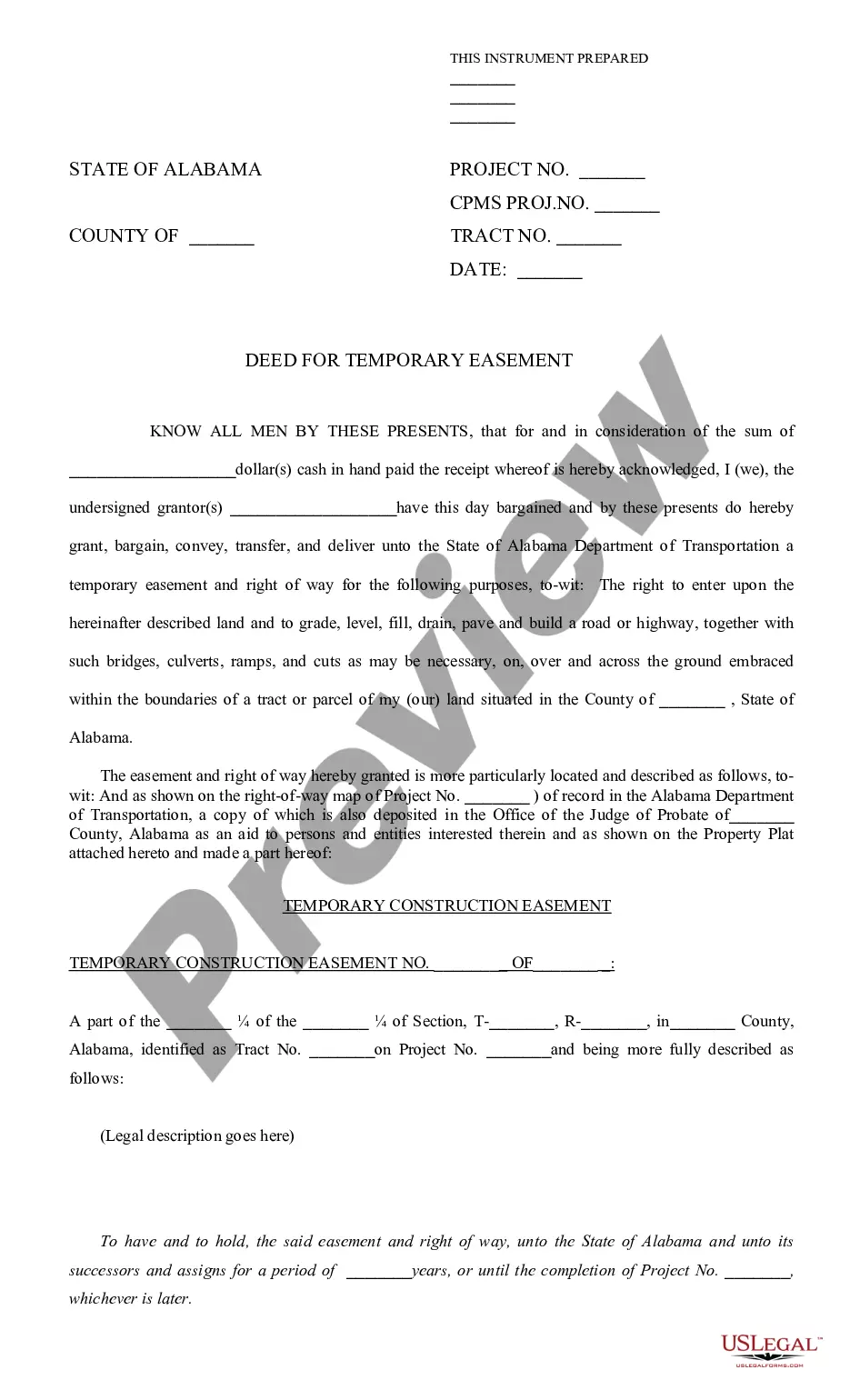
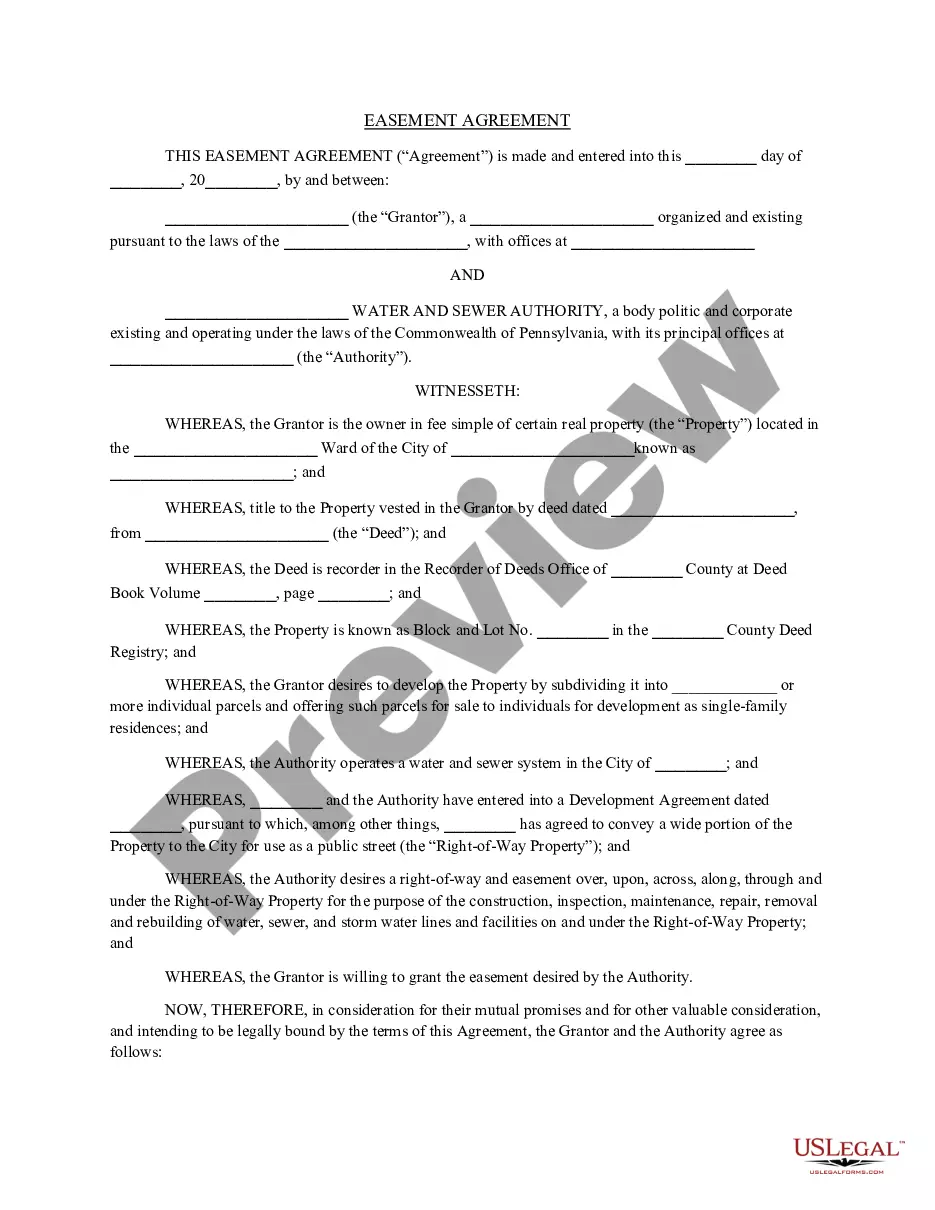
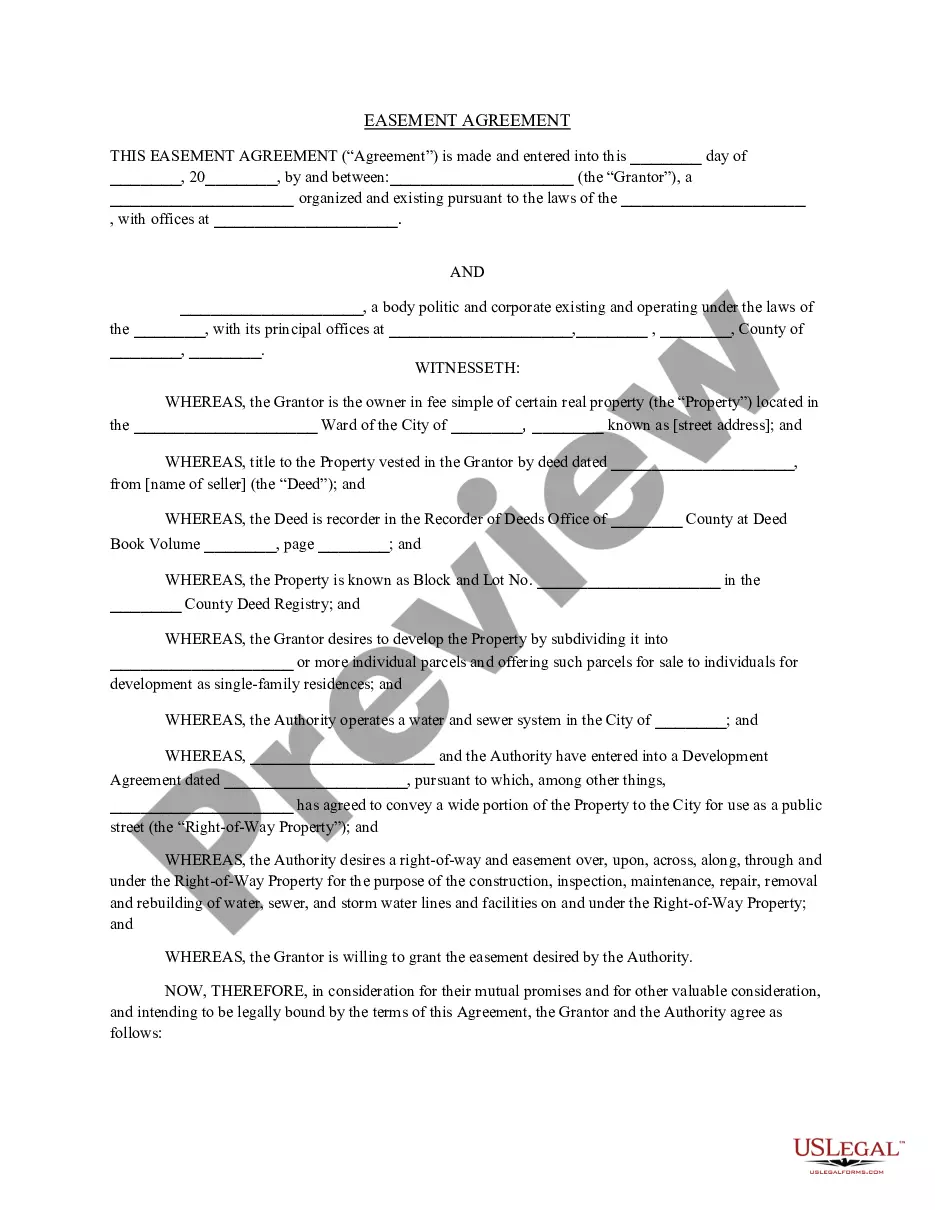
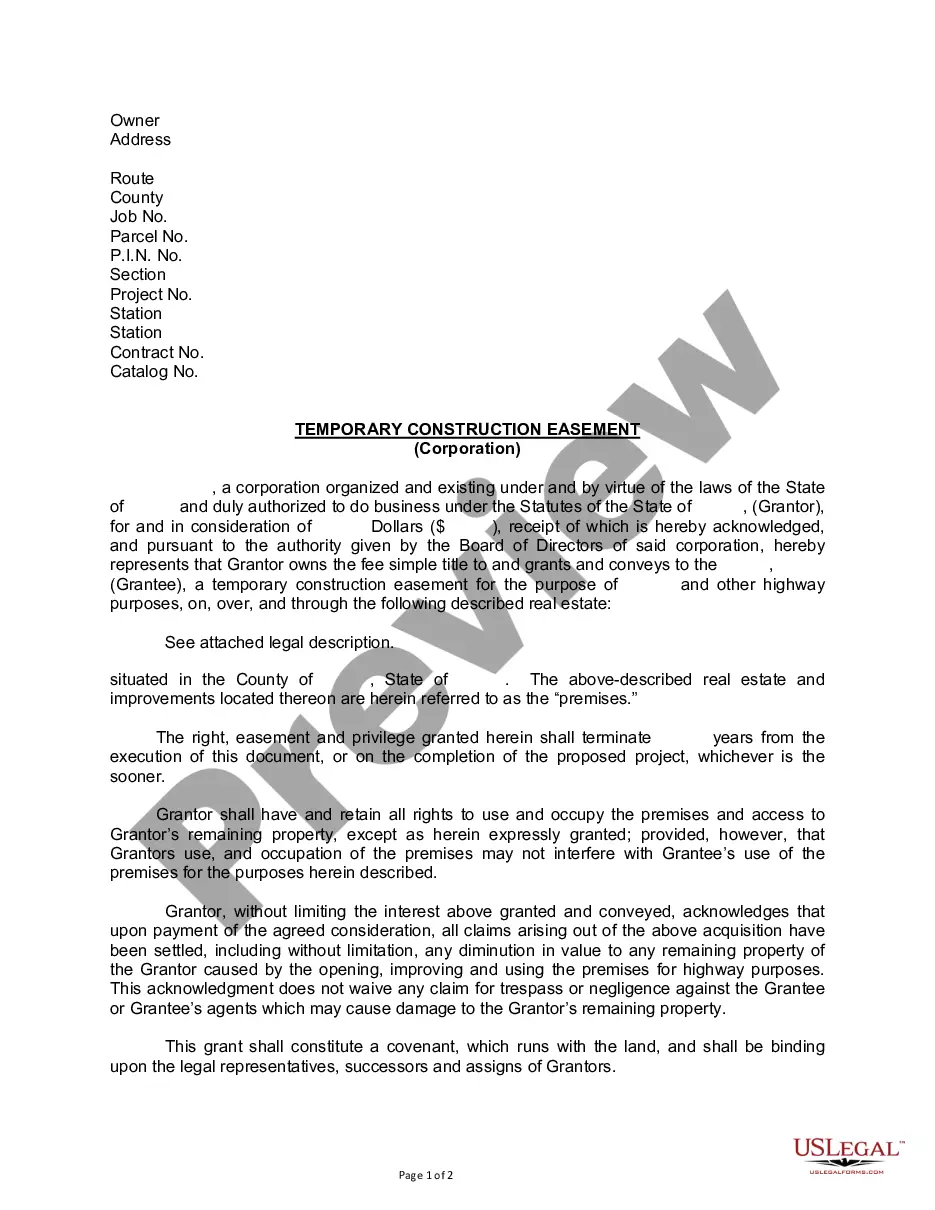
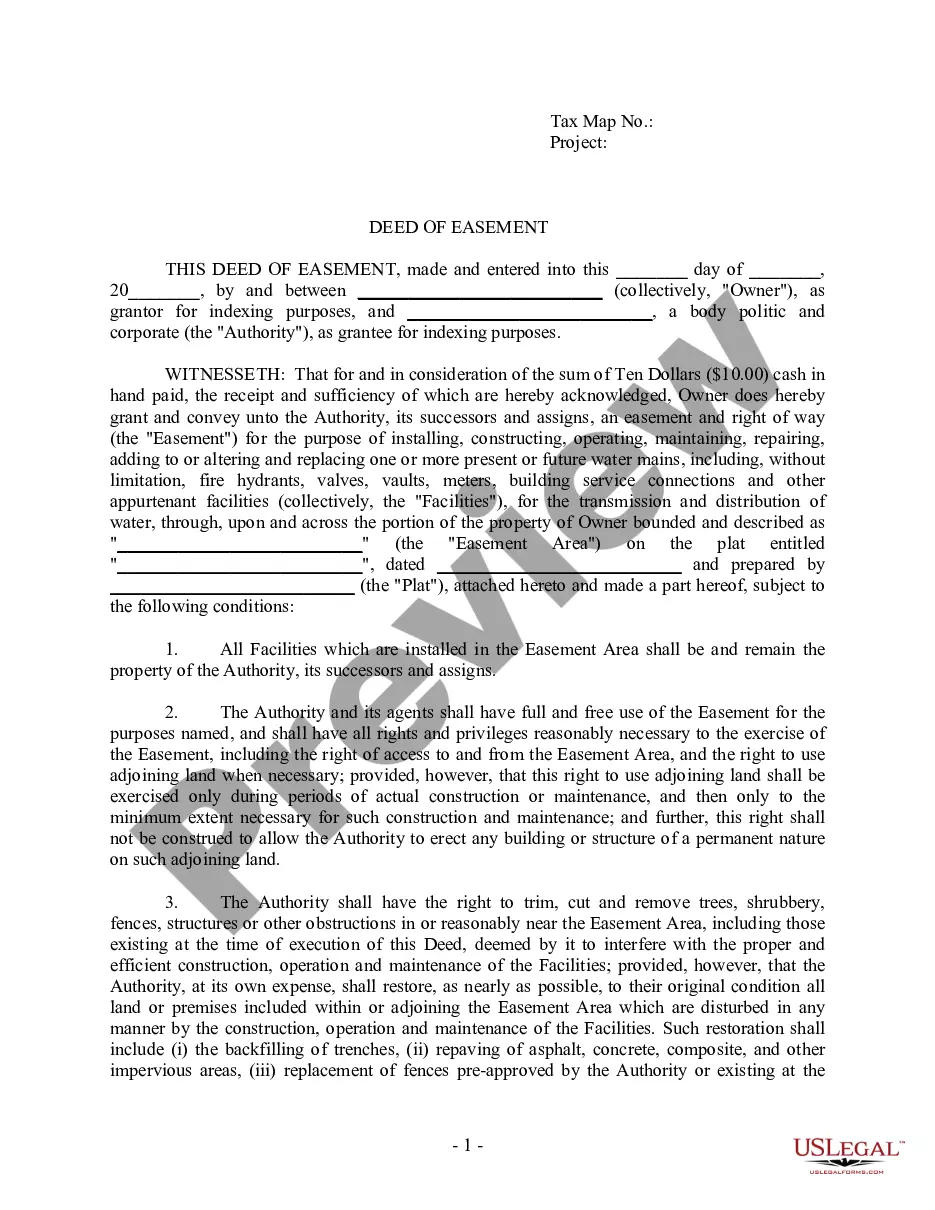
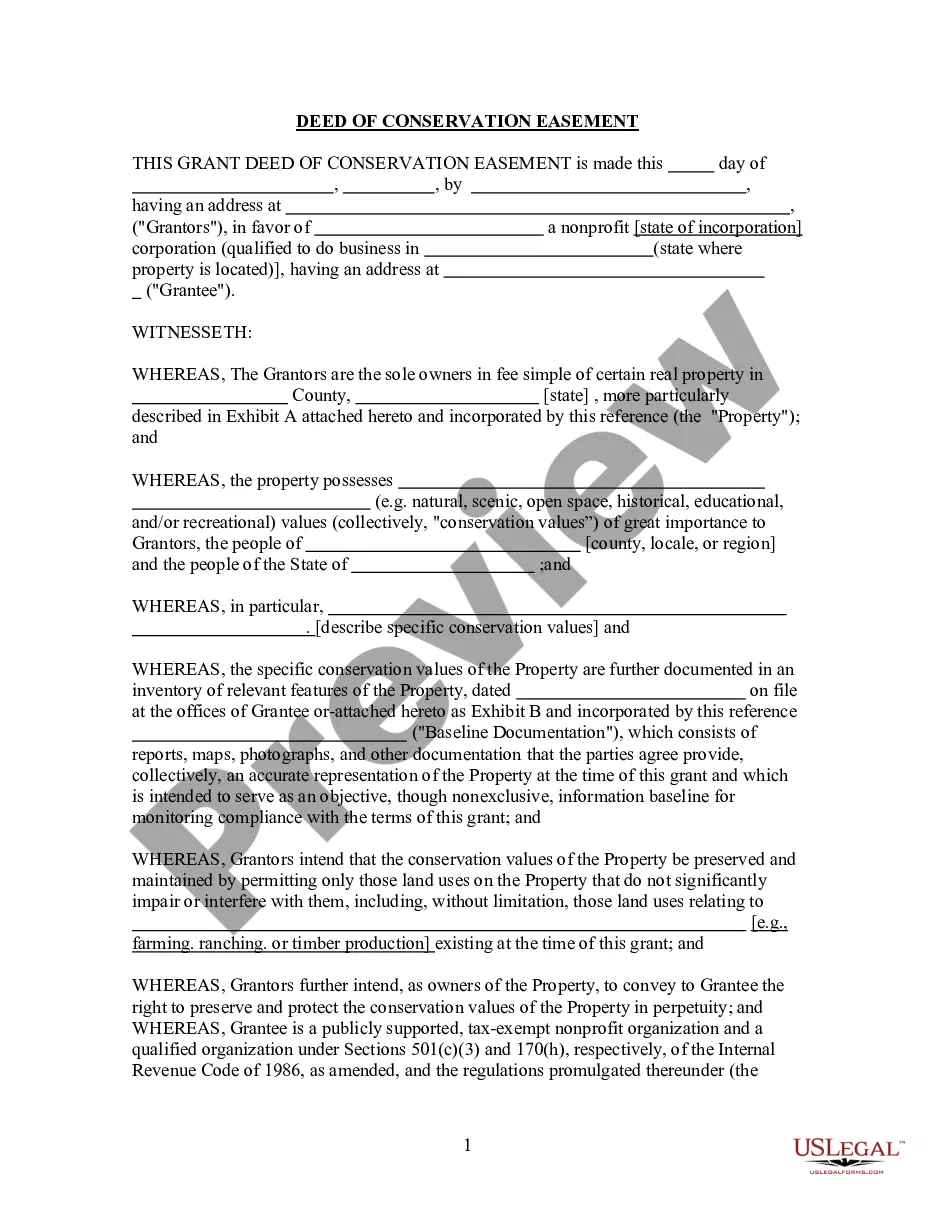
The deed of temporary easement is a legal document that allows a landowner to grant another party the right to use a specific portion of their land for a limited purpose, without transferring ownership. This form is essential when land access is necessary for temporary projects, such as construction, allowing work to be done while ensuring the landowner retains overall control of the property.
Key components of this form
- Identification of the grantor and grantee parties.
- Specific description of the land involved and the easement area.
- The defined purpose for which the easement is granted, such as road construction.
- Duration of the easement, typically specified in years or until the project completion.
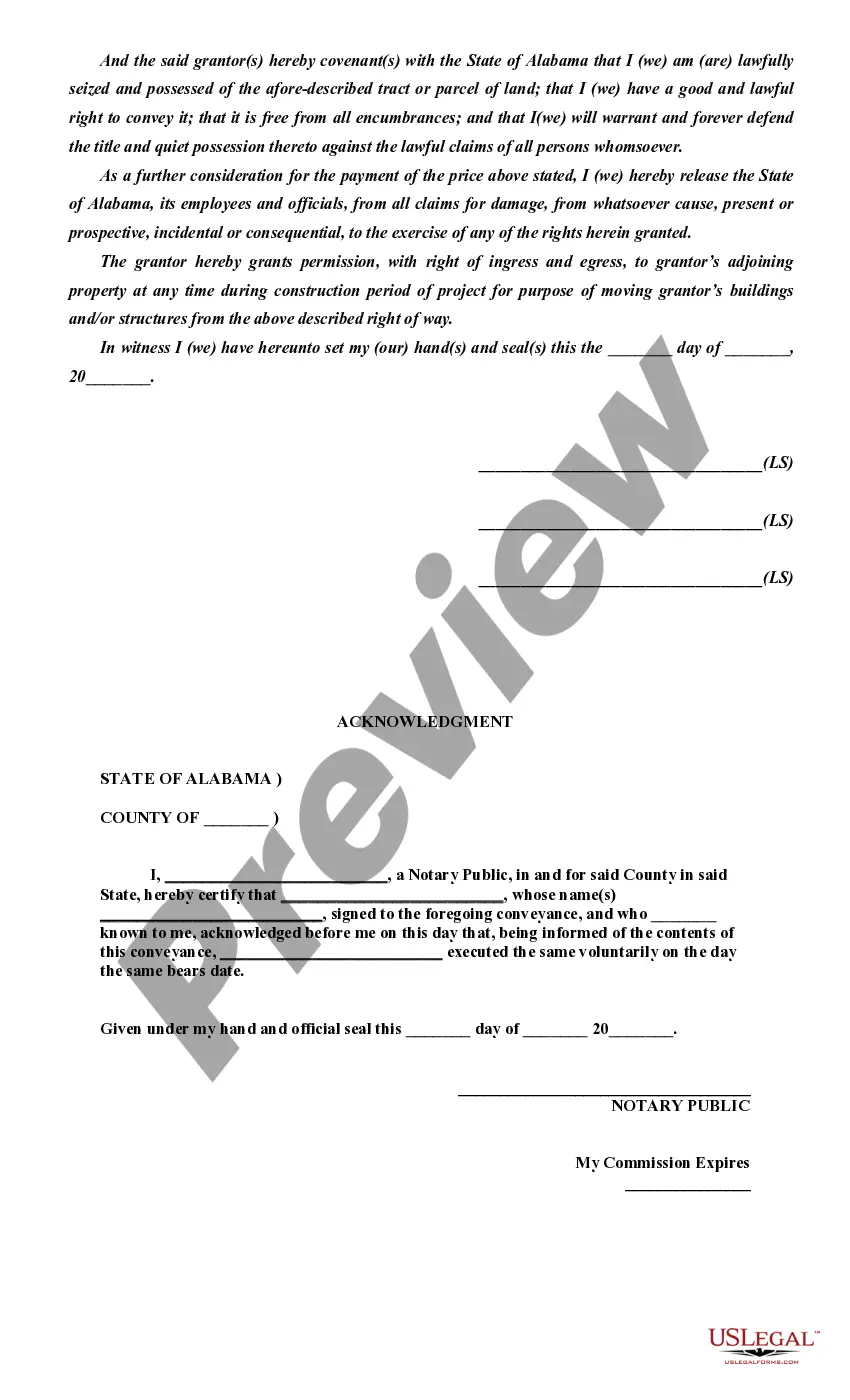
- Covenants regarding lawfulness and defense against claims.
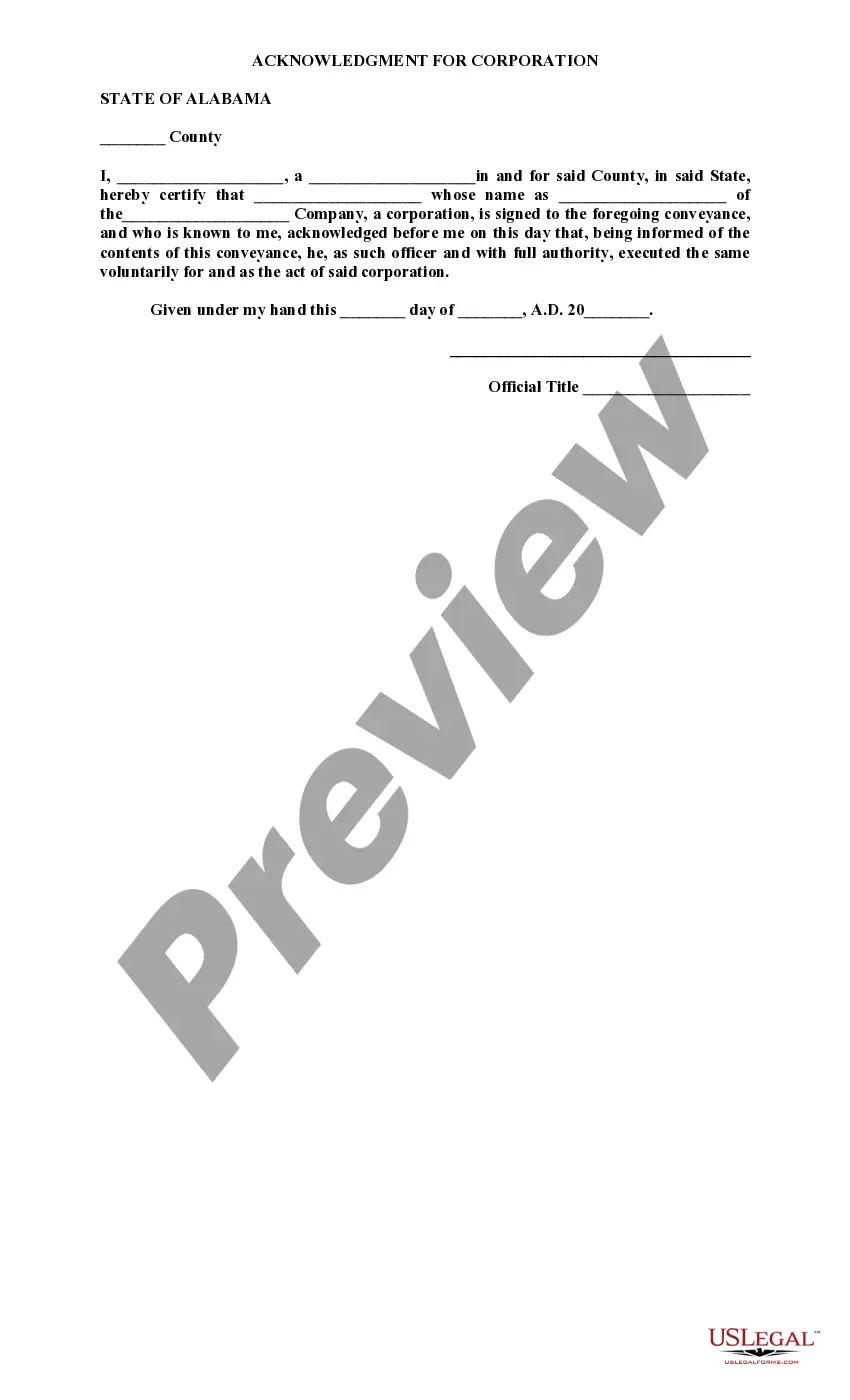
- Acknowledgment provisions for notarization and corporate certifications if applicable.
When to use this form
This form is typically used when a temporary easement is needed for construction projects, road building, or similar activities that require the use of another party's land. It is particularly relevant when the project requires access for grading, leveling, or other alterations to the land but does not involve permanent changes or selling the property.
Intended users of this form
- Landowners granting access for specific temporary projects.
- Contractors needing legal permission to access private land for construction.
- Government agencies managing public projects that require temporary land use.
Completing this form step by step
- Identify the grantor(s) and grantee (such as the State of Alabama Department of Transportation).
- Provide a detailed description of the land being encumbered.
- Specify the purpose of the temporary easement, such as road construction and any specific rights granted.
- Enter the duration of the easement and any related project numbers.
- Ensure all parties sign the document and include notarization as required.
Does this document require notarization?
Yes, this form must be notarized to be legally valid. It is essential to have a notary public witness the signing of the deed. US Legal Forms offers integrated online notarization services for your convenience, available 24/7 through secure video calls.
Get your form ready online
Our built-in tools help you complete, sign, share, and store your documents in one place.
Make edits, fill in missing information, and update formatting in US Legal Forms—just like you would in MS Word.
Download a copy, print it, send it by email, or mail it via USPS—whatever works best for your next step.
Sign and collect signatures with our SignNow integration. Send to multiple recipients, set reminders, and more. Go Premium to unlock E-Sign.
If this form requires notarization, complete it online through a secure video call—no need to meet a notary in person or wait for an appointment.
We protect your documents and personal data by following strict security and privacy standards.

Make edits, fill in missing information, and update formatting in US Legal Forms—just like you would in MS Word.

Download a copy, print it, send it by email, or mail it via USPS—whatever works best for your next step.

Sign and collect signatures with our SignNow integration. Send to multiple recipients, set reminders, and more. Go Premium to unlock E-Sign.

If this form requires notarization, complete it online through a secure video call—no need to meet a notary in person or wait for an appointment.

We protect your documents and personal data by following strict security and privacy standards.
Common mistakes to avoid
- Failing to accurately describe the property involved in the easement.
- Omitting signatures or necessary notarization.
- Not specifying the exact duration, leading to possible disputes.
- Neglecting to include acknowledgment provisions for corporate signatories when applicable.
Why use this form online
- Convenient access to legal documents that can be downloaded anytime.
- Editable templates to customize according to your specific needs.
- Reliable and secure storage for essential legal documents.
Looking for another form?

Form popularity
FAQ
A property owner may have limited ability to block an easement if it has been established legally, but there are often specific grounds on which they can contest access. If the easement is temporary, there may be more options for objection compared to permanent easements. It’s best to evaluate the terms of any existing Alabama Deed of Temporary Easement and seek legal advice if you believe blocking access is warranted.
Easement laws in Alabama govern the rights individuals have to access and use another person's property. These laws define how easements can be created, modified, or terminated, and they vary depending on the type, such as temporary or permanent. Consulting an expert or utilizing resources from uSlegalforms can help ensure compliance with Alabama's regulations when dealing with an Alabama Deed of Temporary Easement.
Yes, you can refuse a utility easement in Alabama, but there are certain legal processes you must follow. Typically, utility companies may request easements for placement of infrastructure, but property owners can negotiate terms or deny access altogether. Understanding your rights with regard to an Alabama Deed of Temporary Easement can provide you with clarity on how to effectively manage these requests.
The primary difference between a permanent easement and a temporary easement lies in the duration of use. A permanent easement provides long-term rights of access, while a temporary easement is limited to a specific time frame for a defined purpose. If you're considering an Alabama Deed of Temporary Easement, it's essential to recognize this distinction and assess which option best suits your needs.
A permanent easement grants someone the right to use another person's property indefinitely for a particular purpose, such as utility access. Unlike temporary easements, permanent easements remain in effect even after the original purpose has concluded. Understanding the implications of an Alabama Deed of Temporary Easement versus a permanent one can help you make informed decisions regarding property rights.
To release an easement by deed, you must create a new document that clearly states your intent to terminate the easement. You should include details about the original easement, such as its location and purpose. Once completed, this release should be signed, notarized, and recorded with the appropriate local office, making it effective in the eyes of the law, especially if it involves an Alabama Deed of Temporary Easement.
A temporary construction easement allows a person or entity to access another person's land for a specific purpose, usually related to construction or maintenance work. It is typically limited to a set period during which the easement holder can perform necessary activities without permanently affecting the property. Using an Alabama Deed of Temporary Easement can formalize this arrangement, ensuring both parties understand their rights and responsibilities.
Generally, a property owner cannot block access to an established easement. Once an easement is legally recorded, it grants the holder certain rights that must be respected. If you face difficulties regarding access, you may want to consult the Alabama Deed of Temporary Easement for guidance on your rights and potential resolutions.
An example of an access easement is when a homeowner allows neighbors to use a pathway that crosses their land to reach a public road. This easement typically includes specific terms about the use of the path, maintenance responsibilities, and limits to ensure that both parties understand their rights. For those in Alabama, utilizing the Alabama Deed of Temporary Easement can provide a structured approach in outlining such arrangements.
Writing an easement involves clearly stating the intent to grant rights over a property. Start with crucial details such as the address, grantor, and grantee's names. Specify the purpose, extent, and any terms or conditions that apply. To ensure your easement aligns with Alabama regulations, consider incorporating the Alabama Deed of Temporary Easement as a guiding document.