Alabama Objections to Deposition Notice
Overview of this form
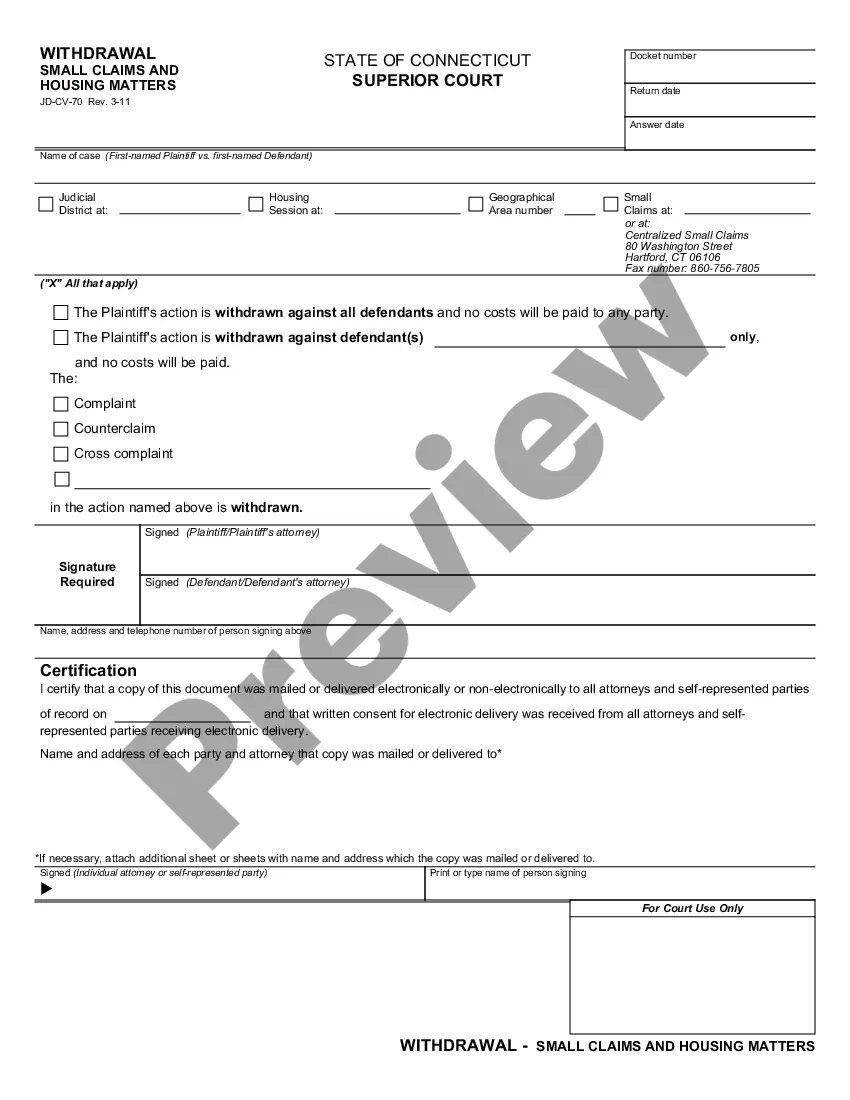
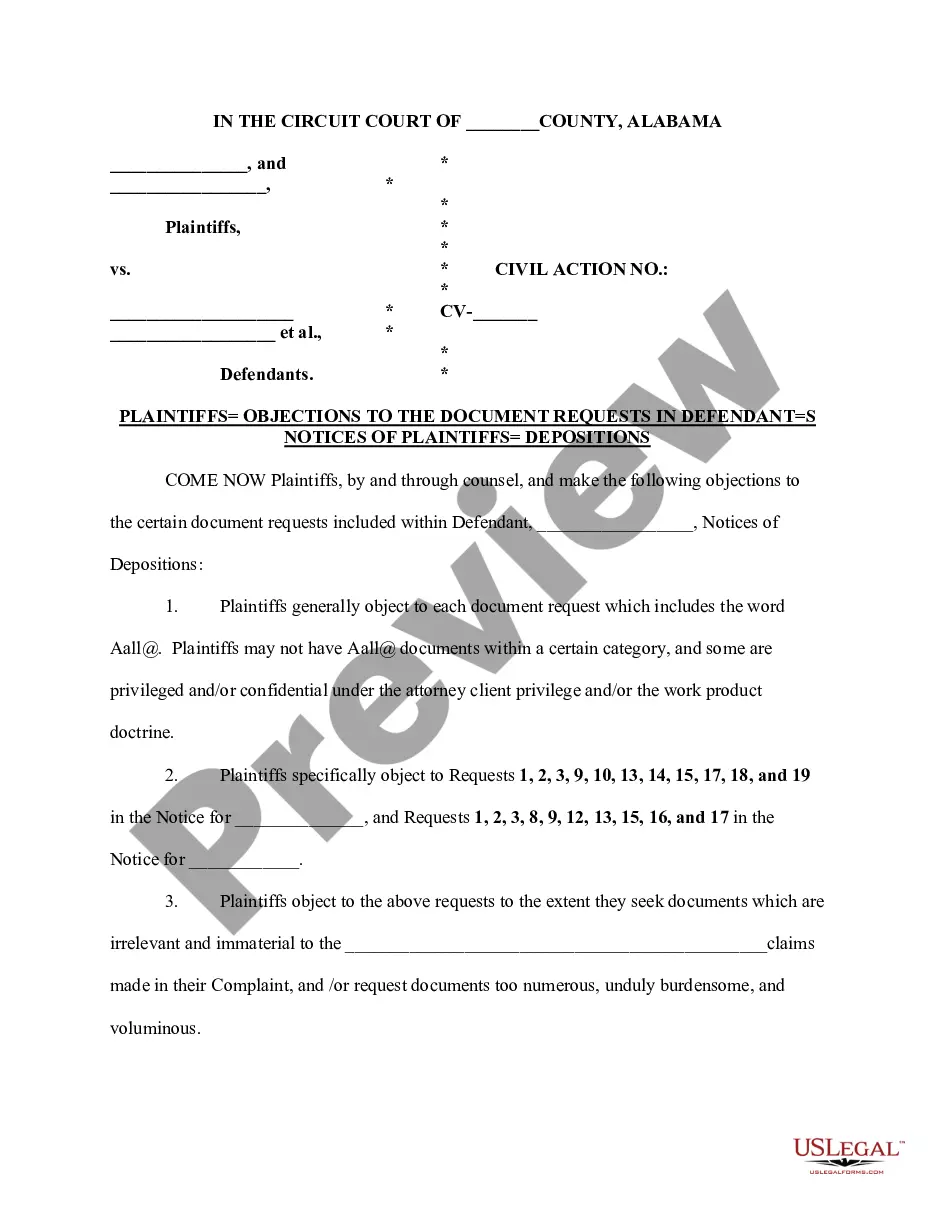
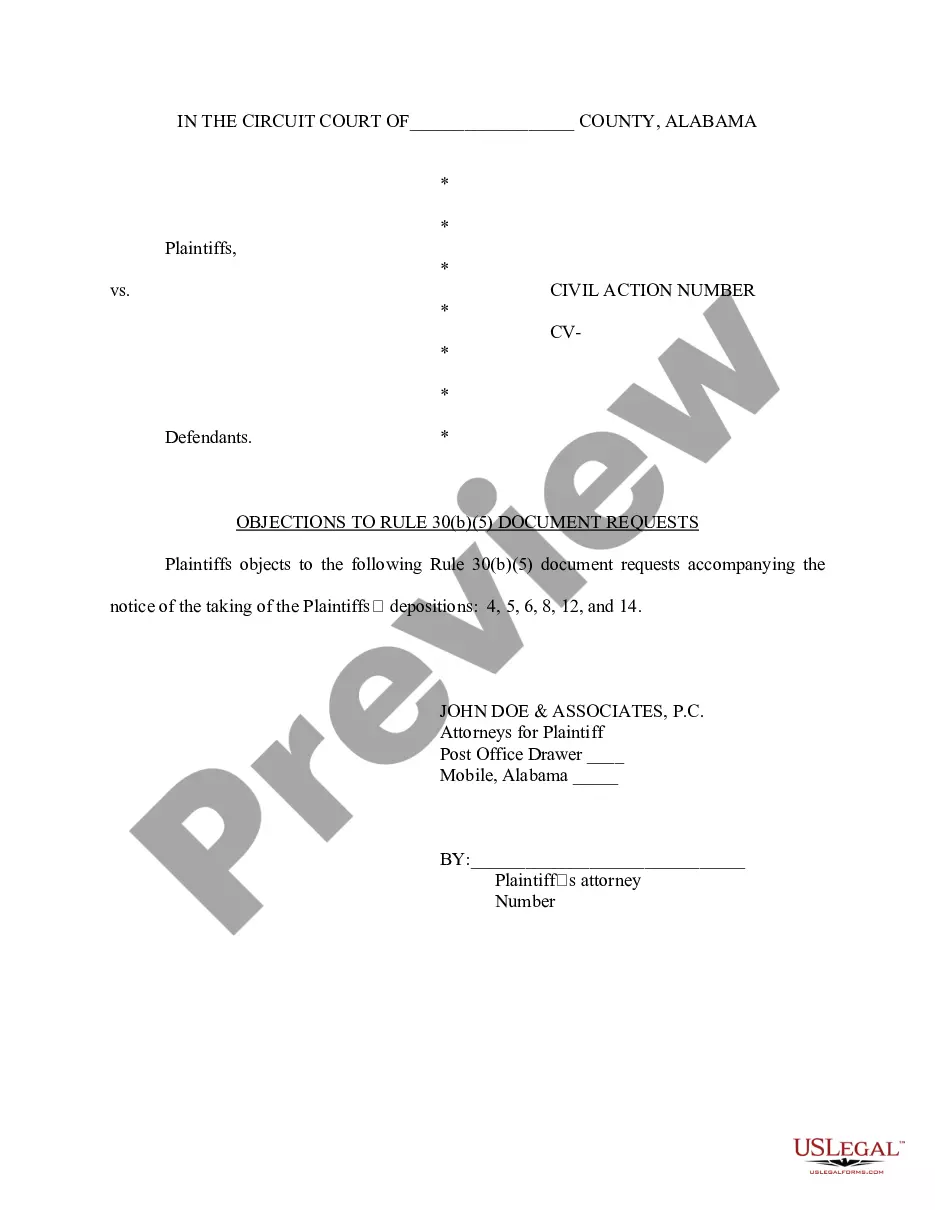
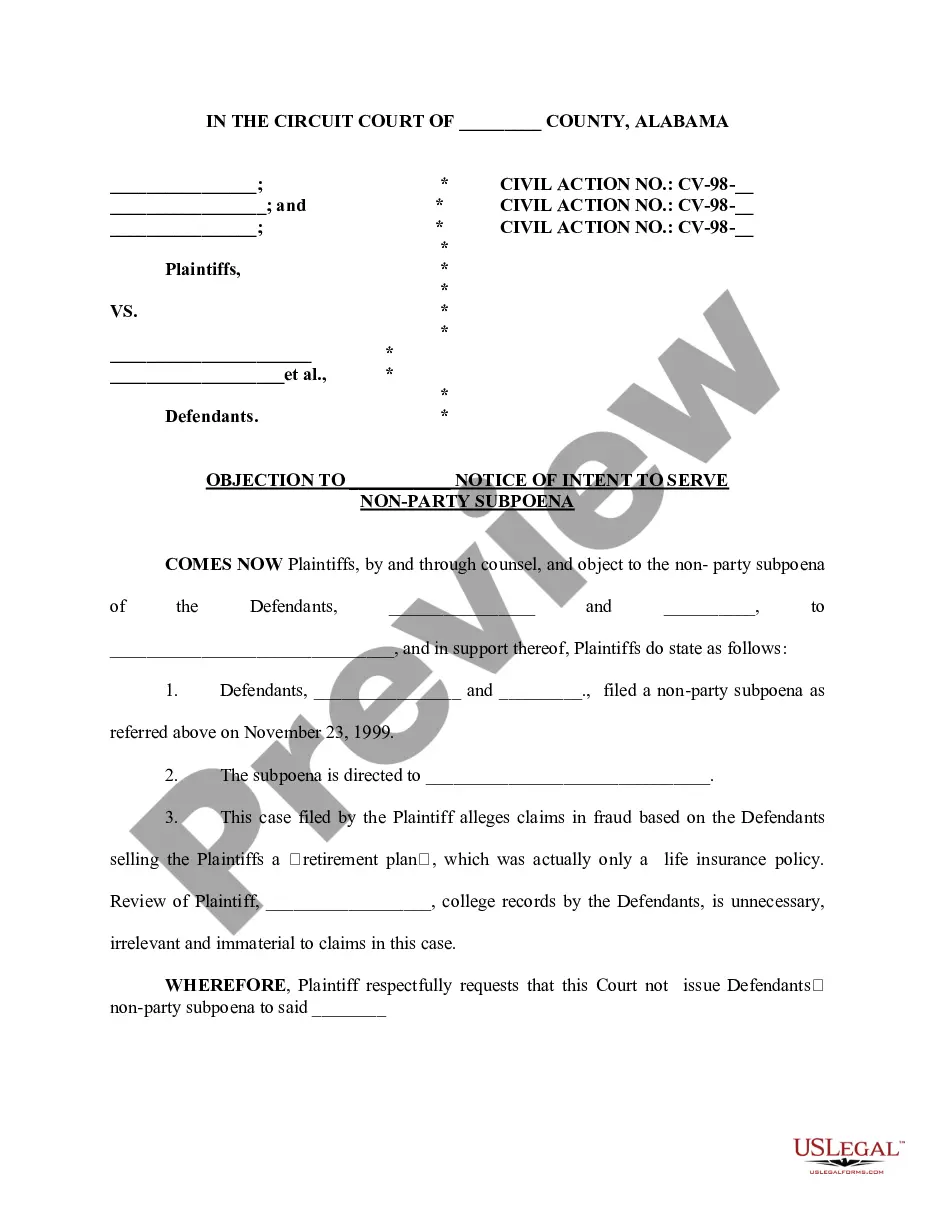
The Objections to Deposition Notice form is a legal document used by plaintiffs to formally object to requests made during the deposition process. It typically addresses discovery requests that seek irrelevant or immaterial information concerning the litigation. This form clearly outlines the specific objections and related details, ensuring that the plaintiffs protect their rights during legal proceedings. Unlike general objection templates, this form specifically pertains to deposition notices, ensuring a focused legal response.
Form components explained
- Caption section identifying plaintiffs and defendants.
- Civil action number and court information.
- Clear objections to specific document requests.
- Legal grounds for each objection specified.
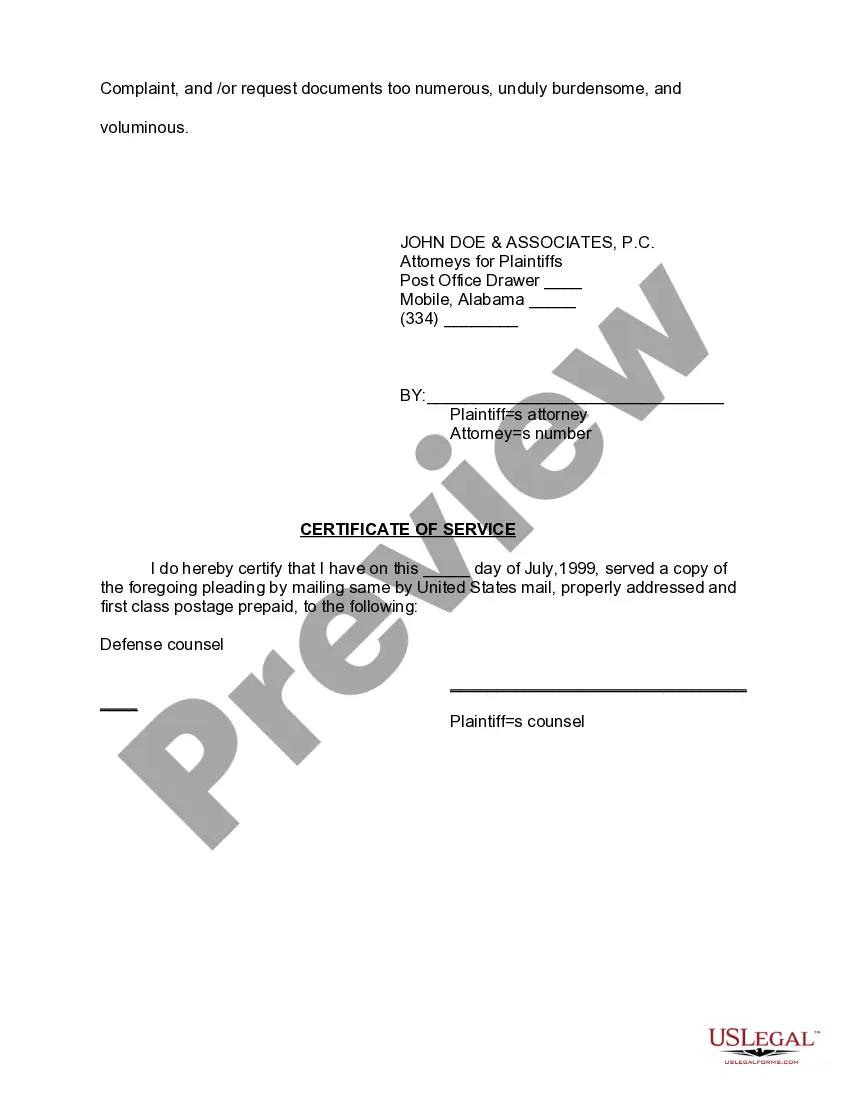
- Statement of service for proper notification to the defense counsel.
When to use this form
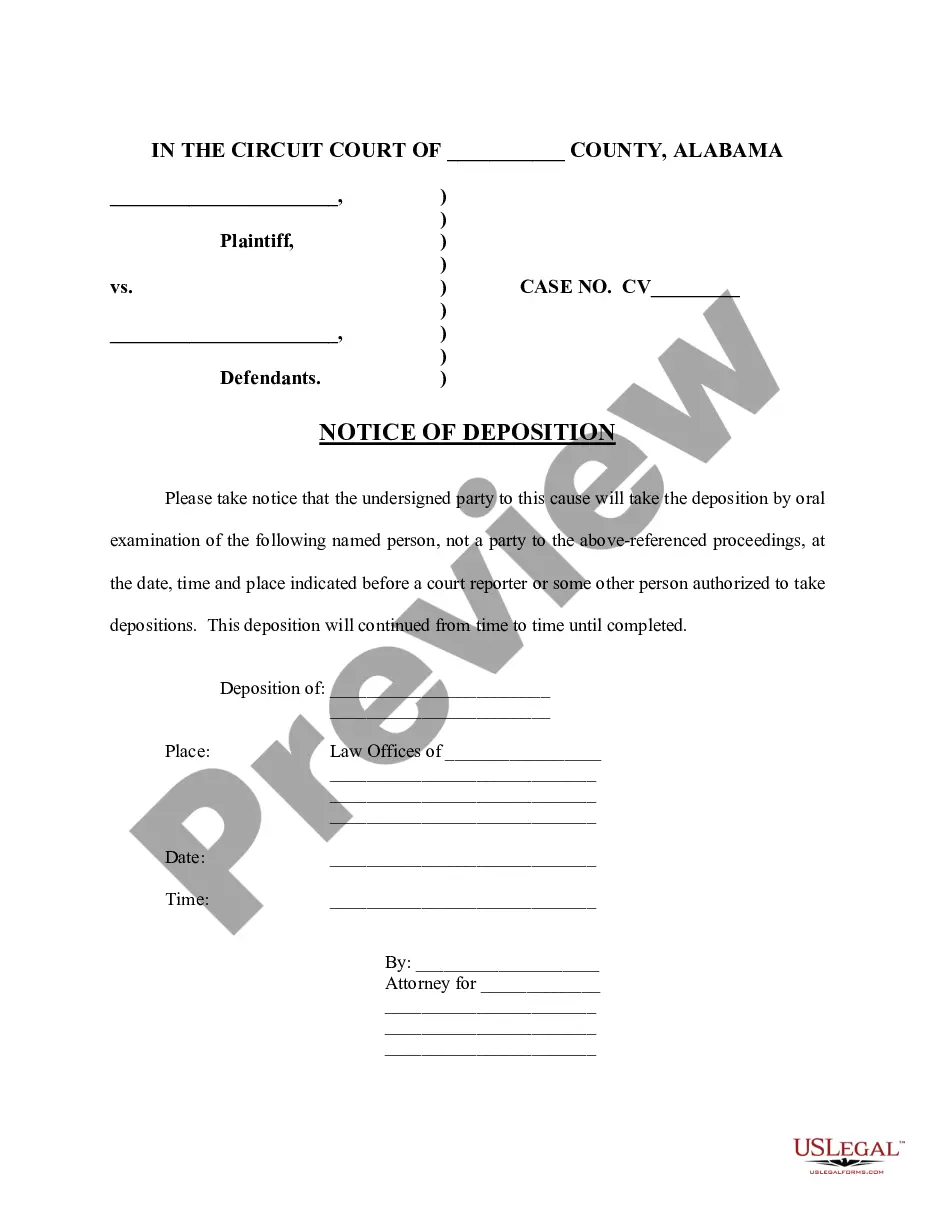
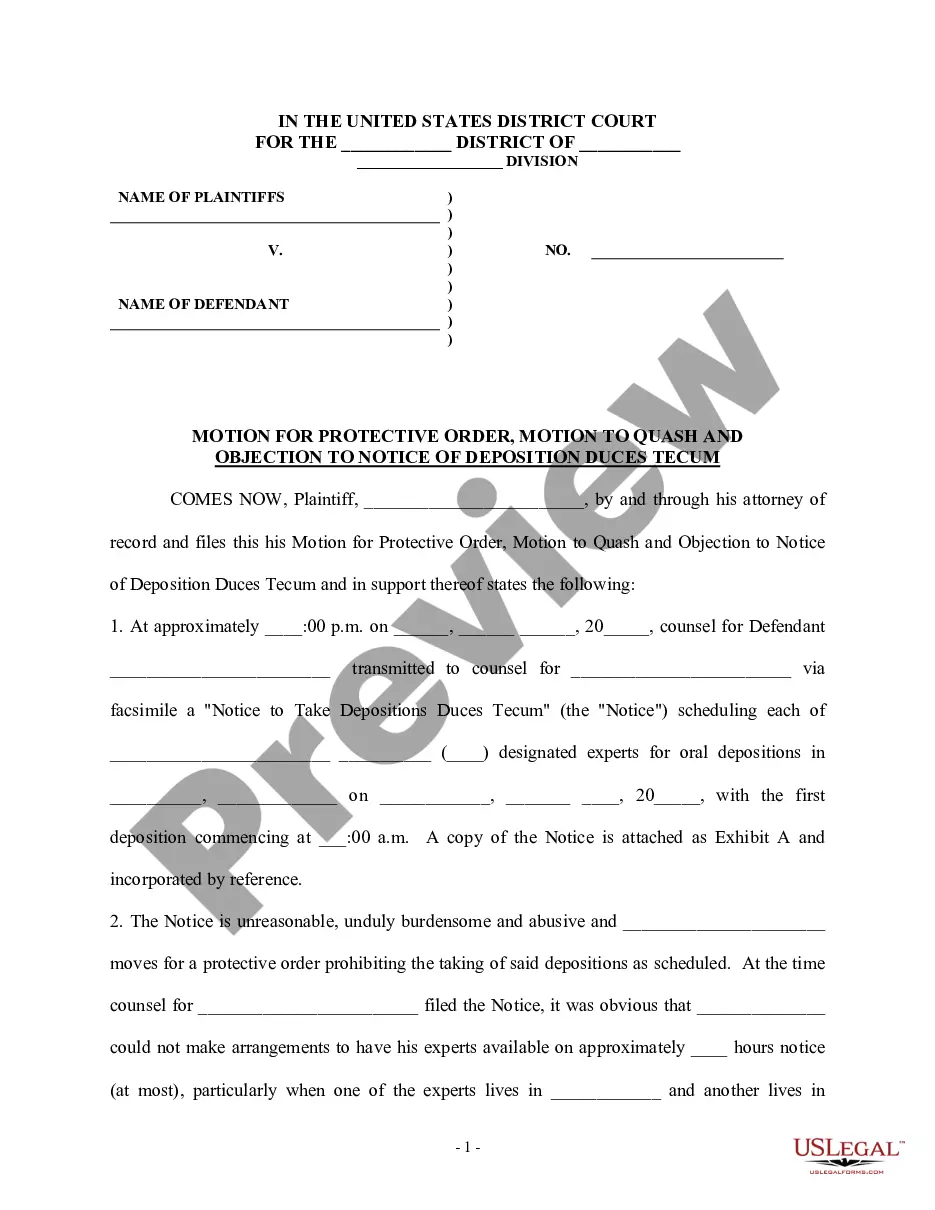
This form should be used when plaintiffs receive a deposition notice from defendants that contains document requests. It is essential in situations where the requested information is deemed irrelevant to the claims being litigated or overly burdensome to produce. Filing this form serves to protect the plaintiffs from disclosing information that is not pertinent to their case.
Who can use this document
- Plaintiffs involved in a civil lawsuit.
- Attorneys representing plaintiffs defending against unnecessary or irrelevant document requests.
- Legal teams needing to formalize objections to deposition notices.
Completing this form step by step
- Identify the parties involved by filling in the plaintiffs and defendants' names.
- Complete the civil action number and relevant court information.
- Clearly state your objections to specific document requests included in the deposition notice.
- Include the grounds for each objection, specifying relevance and burden.
- Sign the form as the plaintiffs' attorney and include the attorney's bar number.
Notarization requirements for this form
This form does not typically require notarization unless specified by local law. Always check your jurisdictionâs regulations to confirm if notarization is needed for legal documents related to depositions.
Get your form ready online
Our built-in tools help you complete, sign, share, and store your documents in one place.
Make edits, fill in missing information, and update formatting in US Legal Forms—just like you would in MS Word.
Download a copy, print it, send it by email, or mail it via USPS—whatever works best for your next step.
Sign and collect signatures with our SignNow integration. Send to multiple recipients, set reminders, and more. Go Premium to unlock E-Sign.
If this form requires notarization, complete it online through a secure video call—no need to meet a notary in person or wait for an appointment.
We protect your documents and personal data by following strict security and privacy standards.
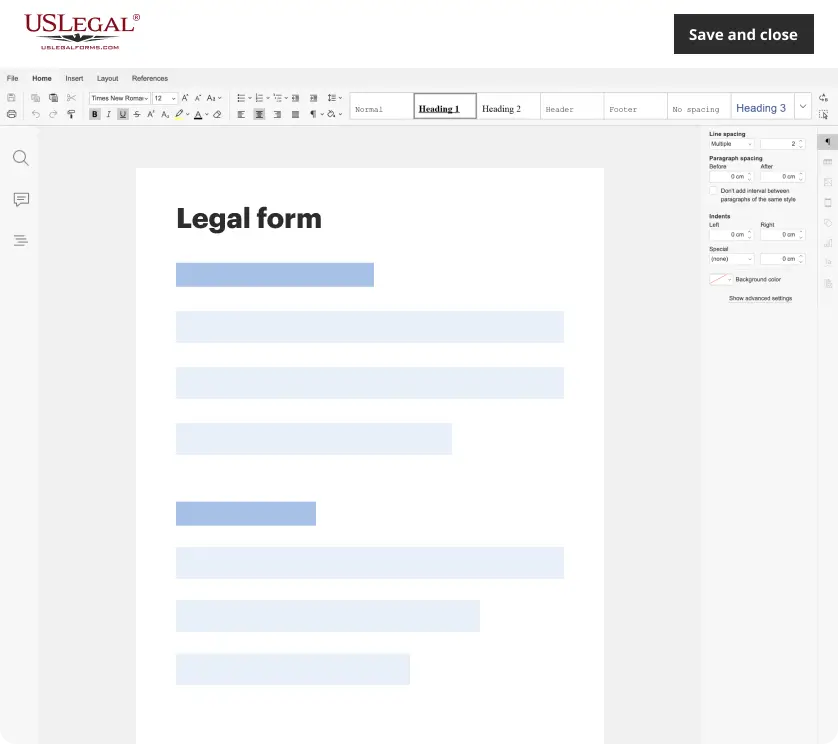
Make edits, fill in missing information, and update formatting in US Legal Forms—just like you would in MS Word.
Download a copy, print it, send it by email, or mail it via USPS—whatever works best for your next step.
Sign and collect signatures with our SignNow integration. Send to multiple recipients, set reminders, and more. Go Premium to unlock E-Sign.
If this form requires notarization, complete it online through a secure video call—no need to meet a notary in person or wait for an appointment.
We protect your documents and personal data by following strict security and privacy standards.
Avoid these common issues
- Not specifying which document requests are being objected to.
- Failing to provide valid legal grounds for the objections.
- Omitting to properly sign and date the form.
- Not serving the document to the appropriate defense counsel.
Why use this form online
- Convenient access to a comprehensive template drafted by attorneys.
- Editability to customize according to your specific case needs.
- Ensures you are following legal standards for objections in your jurisdiction.
Looking for another form?


Form popularity
FAQ
Hearsay. Assume facts, not in evidence. Calls for an opinion. Speaking and coaching objections. Privilege. Form. Mischaracterizes earlier testimony. Asked and answered.
Private information. You have a right to refuse any questions about a person's health, sexuality, or religious beliefs (including your own). Privileged information. Irrelevant information.
Never Guess to Answer a Question. Avoid Any Absolute Statements. Do Not Use Profanity. Do Not Provide Additional Information. Avoid Making Light of the Situation. Never Paraphrase a Conversation. Do Not Argue or Act Aggressively. Avoid Providing Privileged Information.
Hearsay. You're free to object to a question of hearsay during a trial. Assume facts, not in evidence. It depends. Calls for an opinion. Speaking and coaching objections. Privilege. Form. Mischaracterizes earlier testimony. Asked and answered.
Relevance of Answer/Question. Question Lacks Foundation. Lacks Personal Knowledge/Speculation. Creation of a Material Fact. Improper Character Evidence. Lay Witness Opinion. Hearsay.
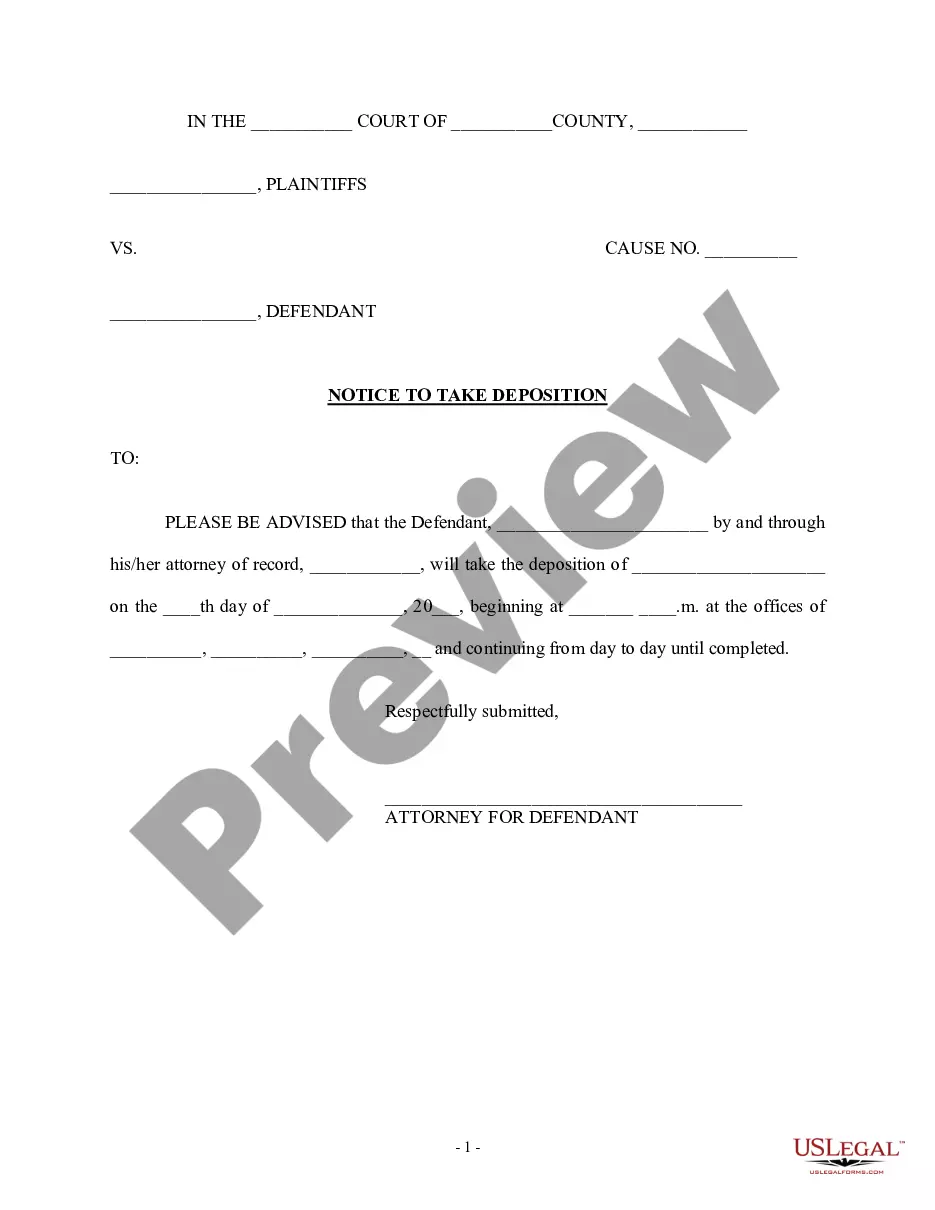
Objecting to Notice of Deposition The written objection must be served on the party seeking to take the deposition as well as any other party or attorney on whom the deposition notice was served. If three (3) calendar days before, the objecting party must serve the objection by way of personal service.
You can object to the form of a question in deposition.An Attorney objecting to the form of a question is asking the other attorney to clarify a specific point. Common examples of objections as to form include: lack of authentication, compound, asked and answered, ambiguous then object to the form of the question.
Lie. Begin an answer with Well to be honest with you2026. Guess and speculate. Engage in casual conversations with the court reporter and other people present in the depositions. Volunteer information. Don't review documents carefully. Lose your temper. Don't take breaks.