Alabama Motion to Amend Complaint
About this form
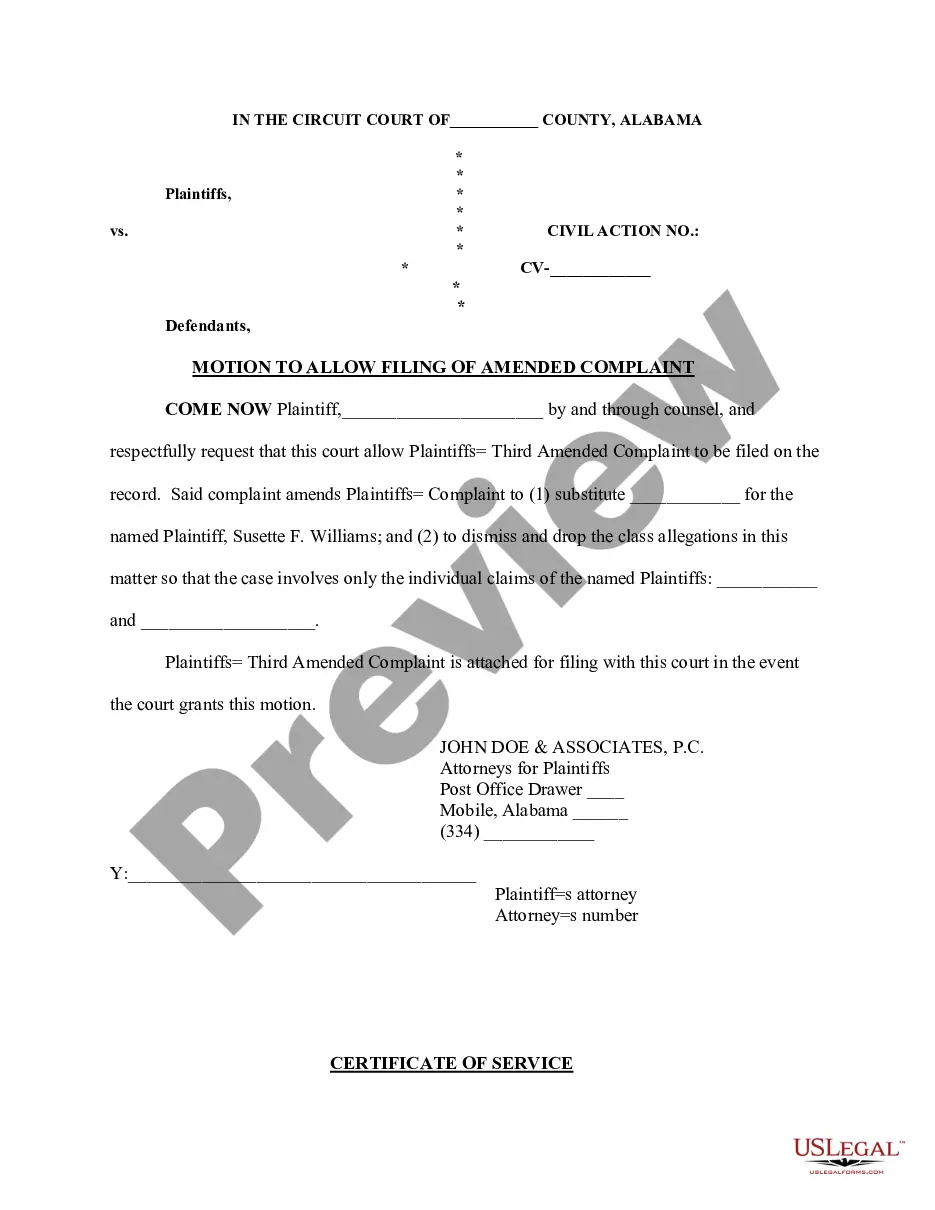
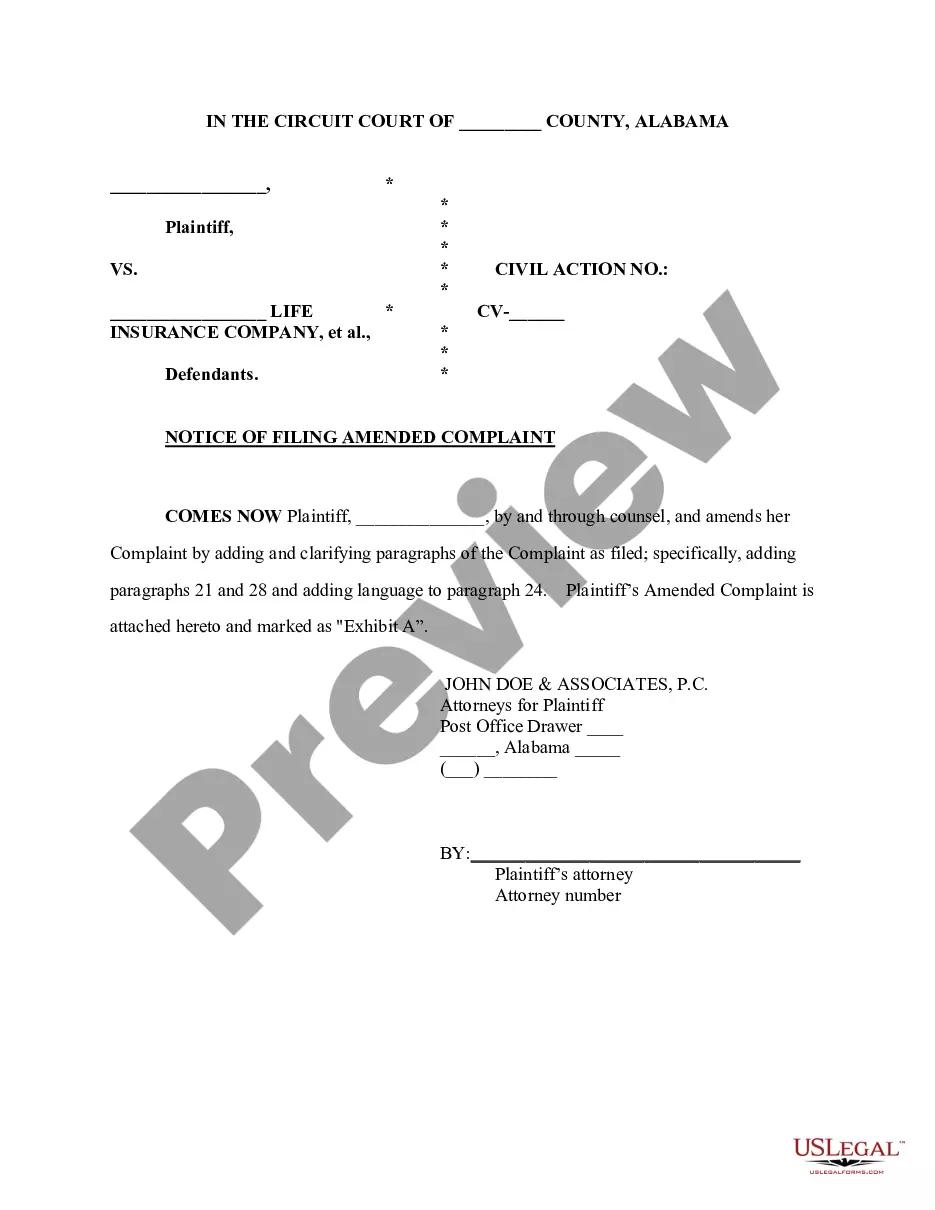
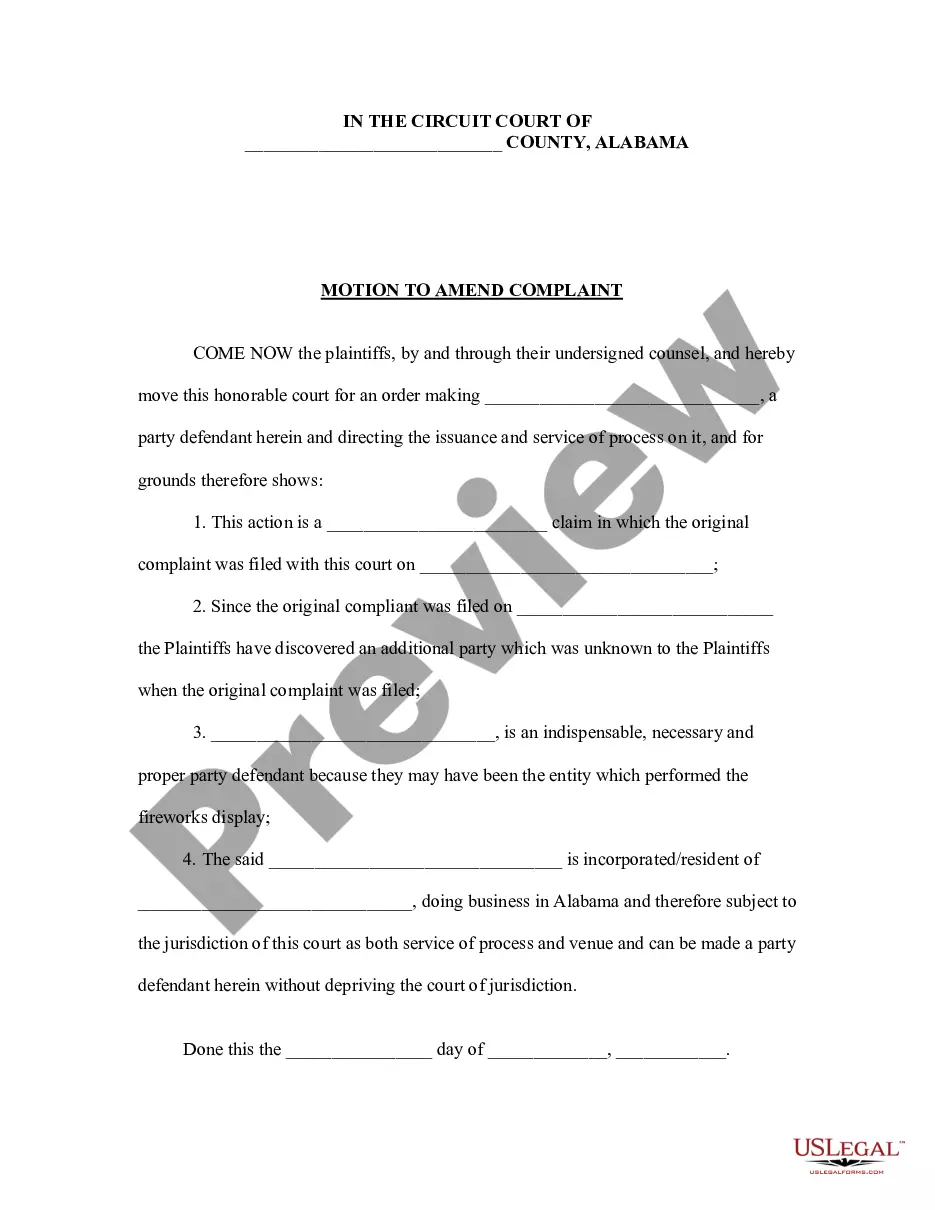
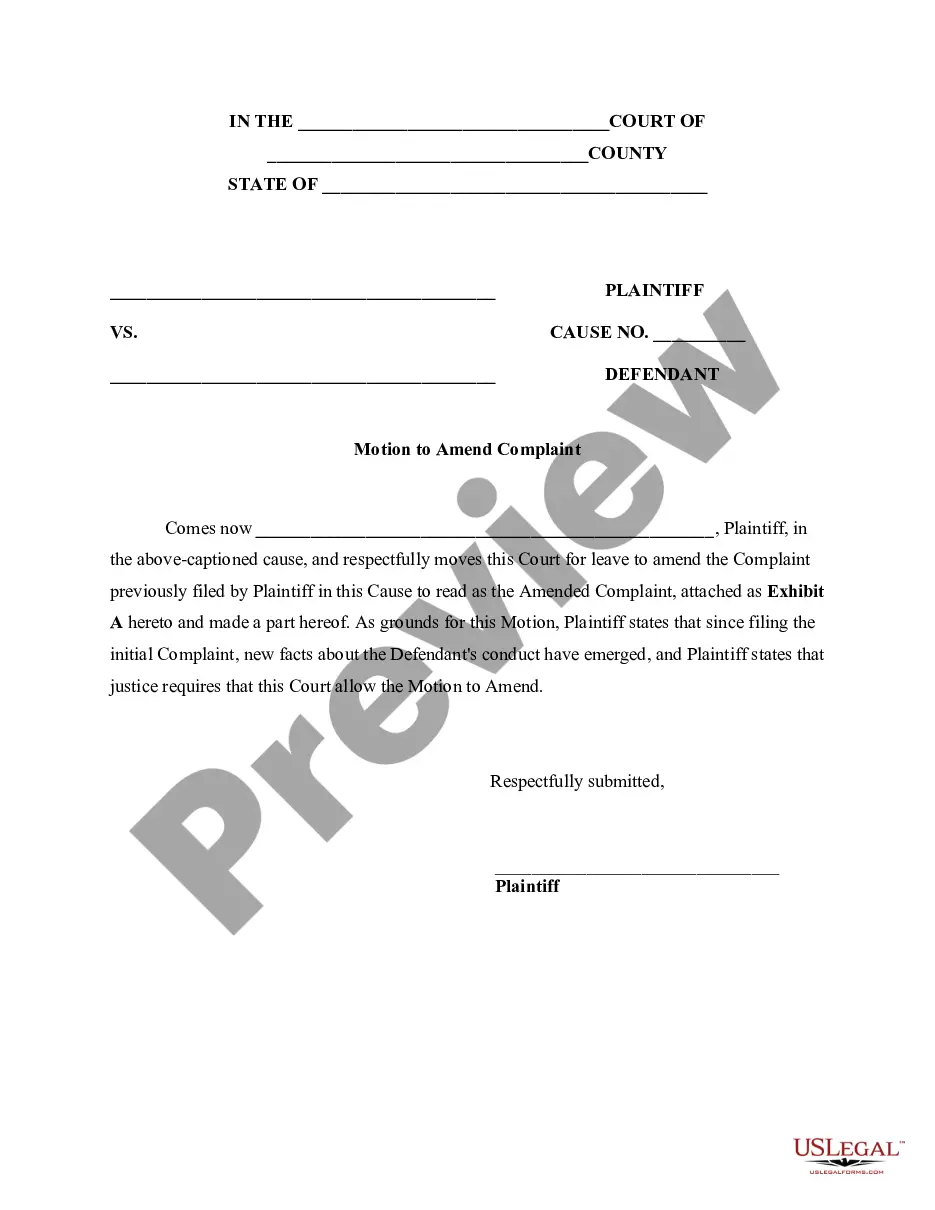
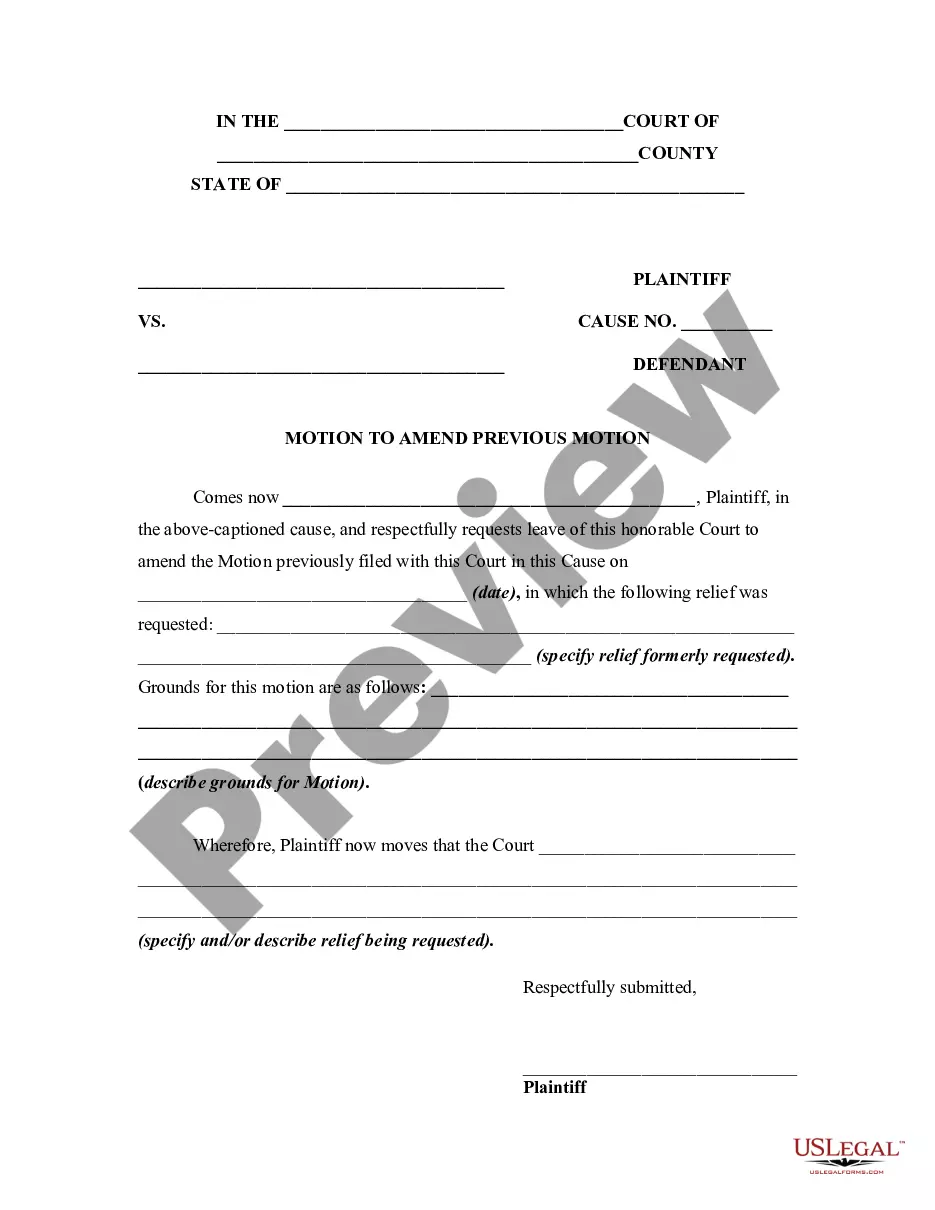
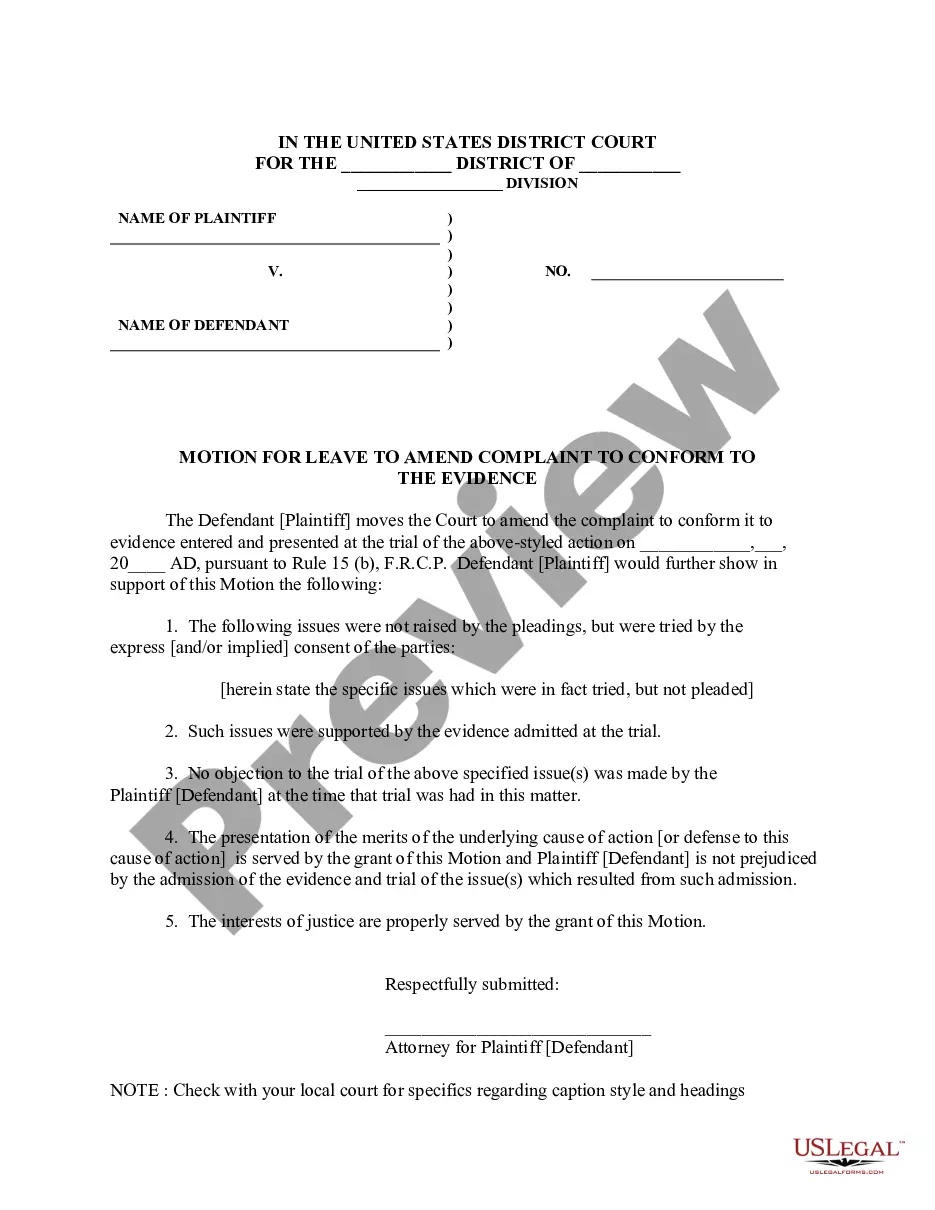
The Motion to Amend Complaint is a legal document filed in court that requests permission to make changes to an existing complaint. This form is used to update the details of a case, such as substituting parties or modifying claims, making it distinct from the original complaint. By submitting this motion, the plaintiff can ensure the court has the most accurate and relevant information for the case.
Main sections of this form
- Claim of the plaintiff requesting to amend the existing complaint.
- Details of the proposed amendments, including substitutions and deletions.
- Attachment of the amended complaint for reference.
- Signature of the plaintiffâs attorney with contact information.
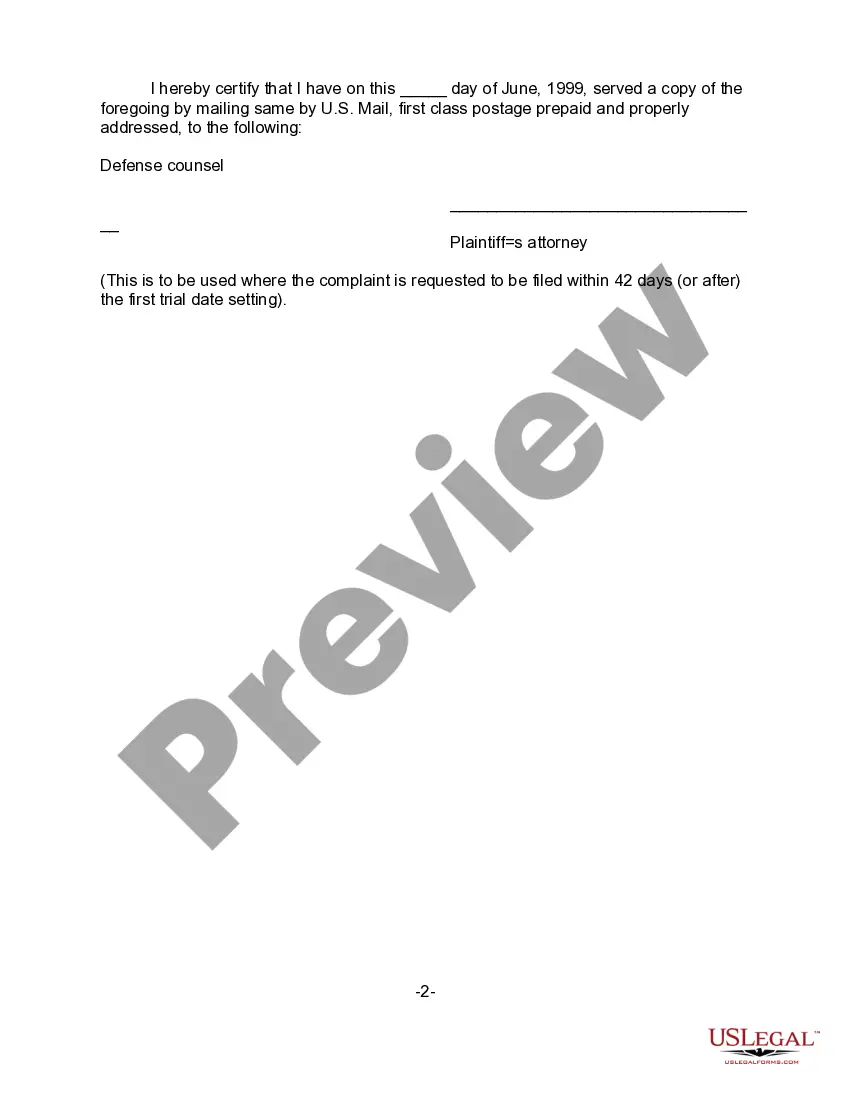
- Certificate of service ensuring all parties are notified of the motion.

When to use this document
This form should be used when a plaintiff needs to change their previously filed complaint, whether to substitute a party, update claims, or correct errors. It is particularly necessary when the changes occur within a specific timeframe set by the court or after a trial date has been established.
Who this form is for
- Individuals or entities that have filed a complaint and need to amend it.
- Lawyers representing plaintiffs in civil litigation.
- Parties seeking to ensure their case is accurately represented in court.
Steps to complete this form
- Identify the original complaint and the necessary changes needed.
- Complete the motion by clearly stating the amendments being requested.
- Attach the third amended complaint to the motion for the court's reference.
- Ensure the plaintiff's attorney signs the motion and includes their contact information.
- File the motion with the court and serve copies to all involved parties.
Notarization guidance
This form does not typically require notarization unless specified by local law. Always verify local rules to ensure compliance.
Get your form ready online
Our built-in tools help you complete, sign, share, and store your documents in one place.
Make edits, fill in missing information, and update formatting in US Legal Forms—just like you would in MS Word.
Download a copy, print it, send it by email, or mail it via USPS—whatever works best for your next step.
Sign and collect signatures with our SignNow integration. Send to multiple recipients, set reminders, and more. Go Premium to unlock E-Sign.
If this form requires notarization, complete it online through a secure video call—no need to meet a notary in person or wait for an appointment.
We protect your documents and personal data by following strict security and privacy standards.

Make edits, fill in missing information, and update formatting in US Legal Forms—just like you would in MS Word.

Download a copy, print it, send it by email, or mail it via USPS—whatever works best for your next step.

Sign and collect signatures with our SignNow integration. Send to multiple recipients, set reminders, and more. Go Premium to unlock E-Sign.

If this form requires notarization, complete it online through a secure video call—no need to meet a notary in person or wait for an appointment.

We protect your documents and personal data by following strict security and privacy standards.
Avoid these common issues
- Failing to properly cite the original complaint or relevant case details.
- Not attaching the amended complaint, which is crucial for the courtâs review.
- Submitting the motion after the courtâs deadline for amendments.
- Incomplete information in the certificate of service.
Benefits of completing this form online
- Convenience of accessing forms from anywhere at any time.
- Editability allows for quick revisions and updates to the motion.
- Reliable templates drafted by licensed attorneys ensure legal compliance.
Legal use & context
- This form allows the plaintiff to make necessary adjustments to ensure complete and accurate pleadings.
- Amending a complaint can help improve the chances of a successful outcome by addressing any legal deficiencies.
- The court has the discretion to grant or deny the motion based on the presented justification.
What to keep in mind
- The Motion to Amend Complaint is essential for plaintiffs needing to revise their legal claims.
- Clear and thorough reasons for amendments are crucial for the court's consideration.
- Using this form online facilitates quick and precise amendments to legal documents.
Looking for another form?
Form popularity
FAQ
The defendant shall answer the amendments, or the complaint as amended, within 30 days after service thereof, or such other time as the court may direct, and judgment by default may be entered upon failure to answer, as in other cases.
Once a defendant has answered, a first amended complaint can only be filed and served with leave of court. If the plaintiff did not get the court's permission, it is not deemed a valid first amended complaint.
Amend. v. to alter or change by adding, subtracting, or substituting. One can amend a statute, a contract or a written pleading filed in a law -suit. The change is usually called an amendment.
2021 California Rules of Court (2) "Amended pleading" means a pleading that completely restates and supersedes the pleading it amends for all purposes.A supplement to a pleading may add information to or may correct omissions in the modified pleading.
(e) (1) In response to a demurrer and prior to the case being at issue, a complaint or cross-complaint shall not be amended more than three times, absent an offer to the trial court as to such additional facts to be pleaded that there is a reasonable possibility the defect can be cured to state a cause of action.
It means to change the basis for the case in some way. A motion to amend a complaint is the formal way of asking the court for permission to change the original complaint.
Amended complaint. n. what results when the party suing (plaintiff or petitioner) changes the complaint he/she has filed. It must be in writing, and can be done before the complaint is served on any defendant, by agreement between the parties (usually their lawyers), or upon order of the court.