Alabama Letters of Administration
About this form
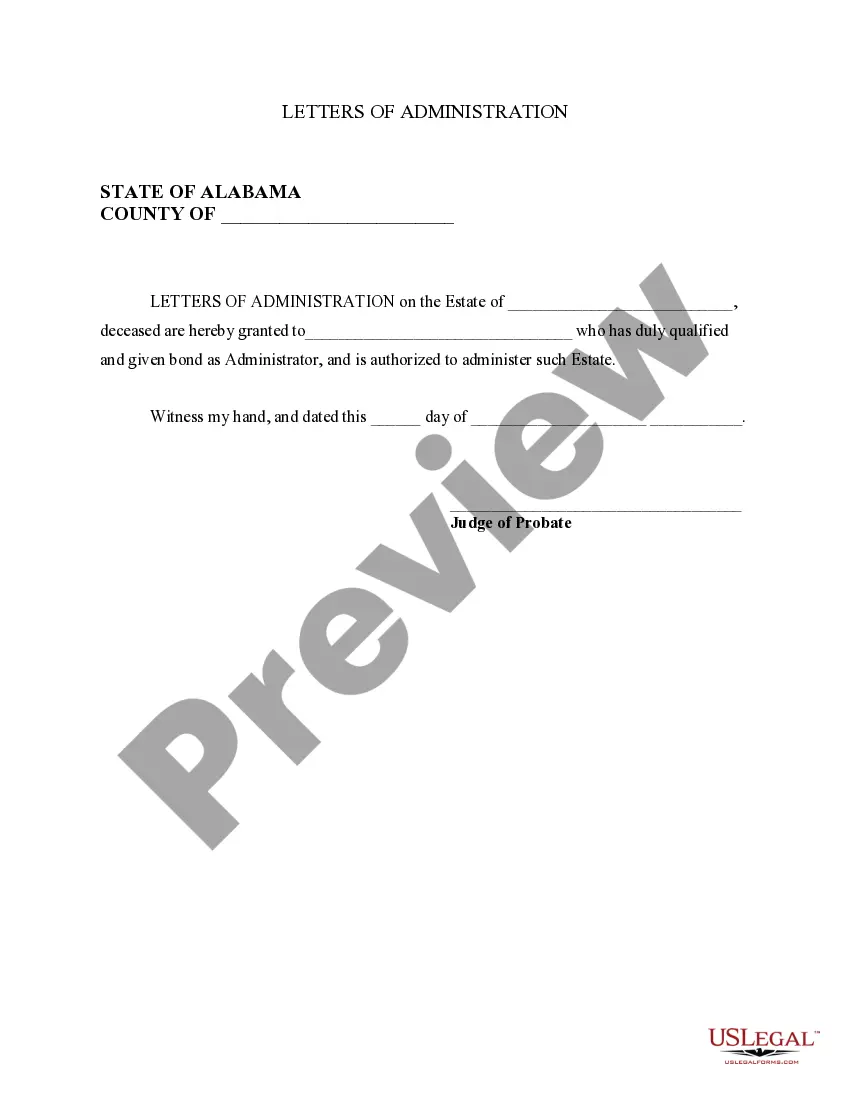
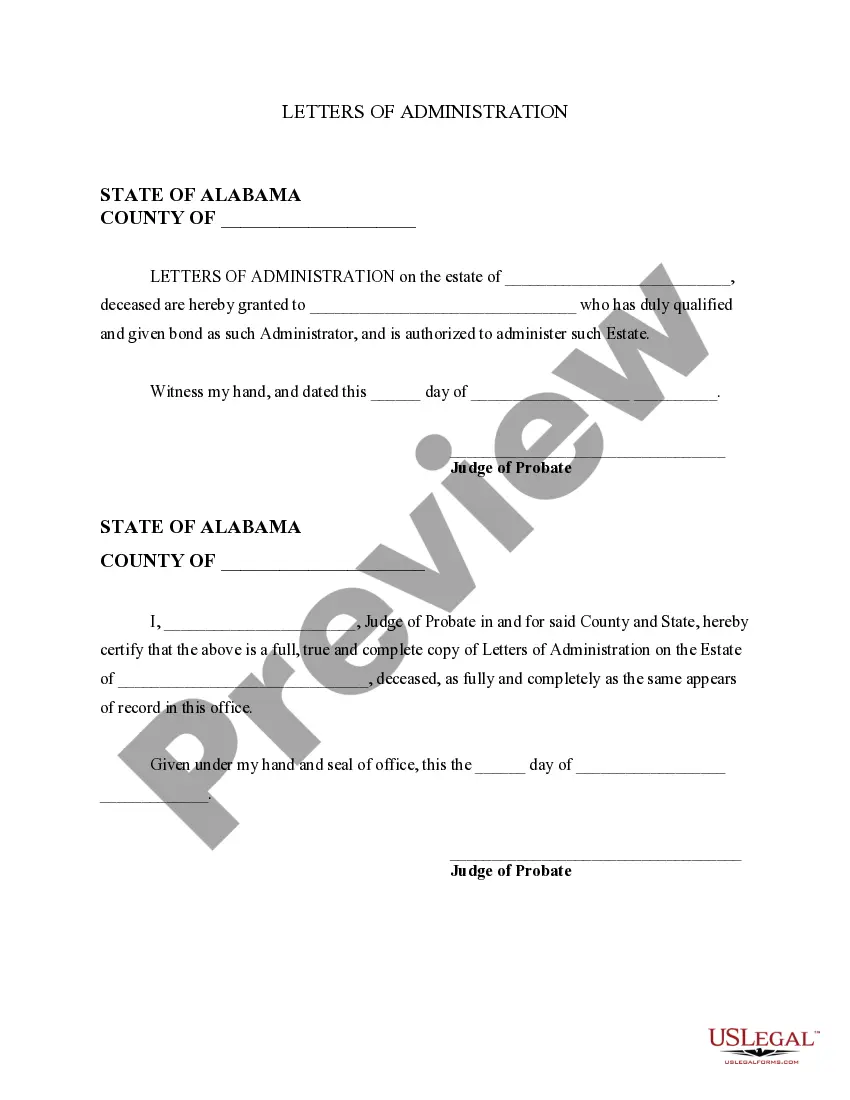
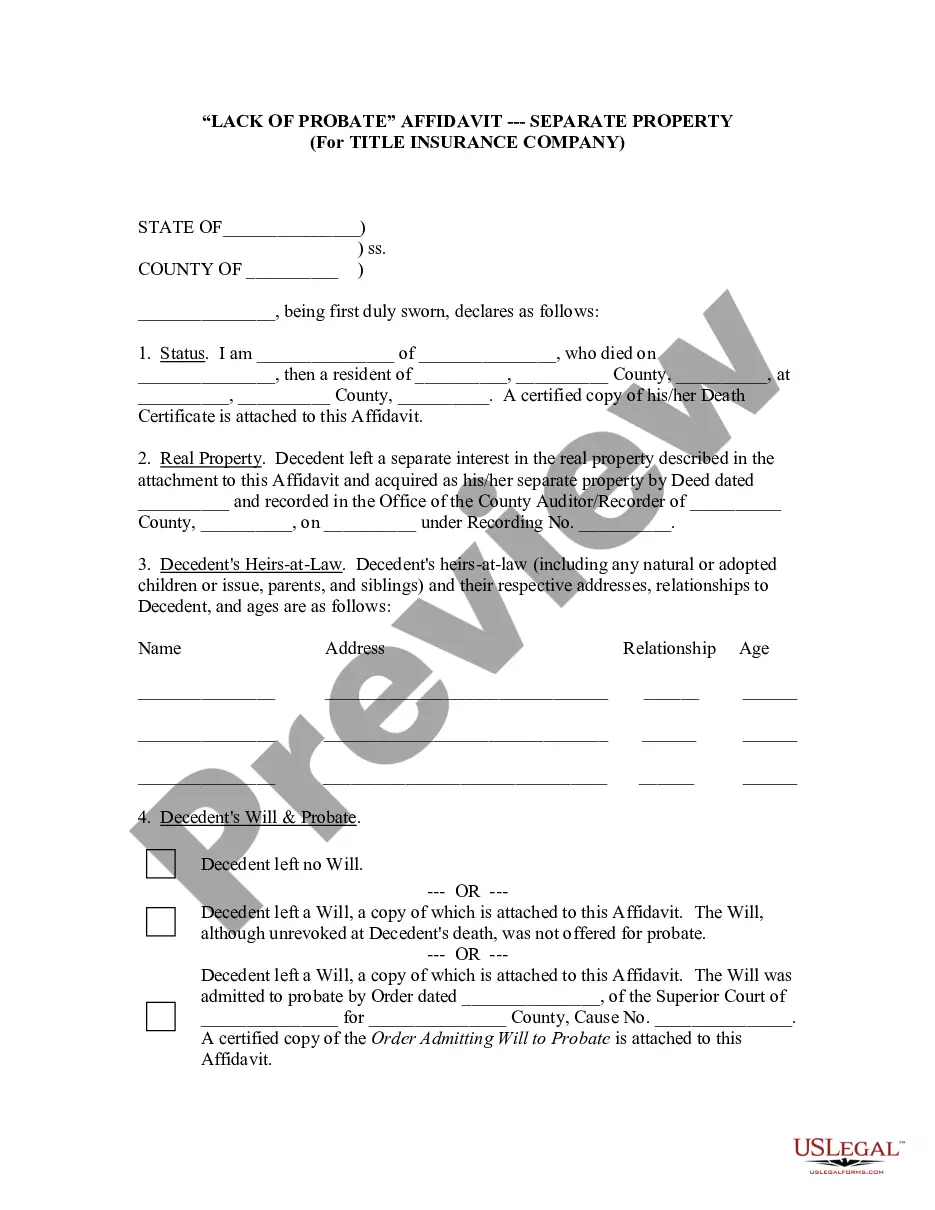
Letters of Administration are legal documents that appoint an individual as the Administrator of an estate. This form is essential for individuals overseeing the distribution of a deceased person's assets when there is no will or executor named. It is specifically designed to give the Administrator the authority to manage and distribute the estate's property according to state laws.
Key components of this form
- Title of the document specifying it as Letters of Administration.
- Details of the deceased individual whose estate is being managed.
- Name of the appointed Administrator with the assurance that they have qualified and given bond.
- Date and signature from the Judge of Probate to grant official authority.
Common use cases
This form is used in situations where an individual needs to be appointed as the Administrator of an estate, particularly when the deceased did not leave behind a will. It is commonly utilized in probate proceedings and when the estate's assets need to be officially managed or distributed to heirs or beneficiaries.
Who needs this form
This form is intended for:
- Individuals seeking to administer an estate of a deceased person with no will.
- Family members or friends of the deceased who have been designated or wish to take on the role of Administrator.
- Legal representatives handling estates in the probate process.
How to prepare this document
- Identify the deceased person and write their name in the designated field.
- Enter the name of the individual being appointed as the Administrator.
- Specify the county and state where the form is being filed.
- Provide the date of signature on the document.
- Obtain the signature of the Judge of Probate to finalize the appointment.
Notarization guidance
This form does not typically require notarization unless specified by local law. It is important to confirm local requirements to ensure compliance when filing.
Get your form ready online
Our built-in tools help you complete, sign, share, and store your documents in one place.
Make edits, fill in missing information, and update formatting in US Legal Forms—just like you would in MS Word.
Download a copy, print it, send it by email, or mail it via USPS—whatever works best for your next step.
Sign and collect signatures with our SignNow integration. Send to multiple recipients, set reminders, and more. Go Premium to unlock E-Sign.
If this form requires notarization, complete it online through a secure video call—no need to meet a notary in person or wait for an appointment.
We protect your documents and personal data by following strict security and privacy standards.

Make edits, fill in missing information, and update formatting in US Legal Forms—just like you would in MS Word.

Download a copy, print it, send it by email, or mail it via USPS—whatever works best for your next step.

Sign and collect signatures with our SignNow integration. Send to multiple recipients, set reminders, and more. Go Premium to unlock E-Sign.

If this form requires notarization, complete it online through a secure video call—no need to meet a notary in person or wait for an appointment.

We protect your documents and personal data by following strict security and privacy standards.
Common mistakes
- Failing to complete all required fields, which can delay processing.
- Not providing accurate information about the deceased or the Administrator.
- Forgetting to obtain the necessary signature from the Judge of Probate.
Why use this form online
- Convenient access to legal forms anytime, from anywhere.
- Editable templates allow for easy customization based on specific needs.
- Secure and reliable process for obtaining legal documentation.
Legal use & context
- Letters of Administration grant legal authority for managing the estate.
- Written and executed forms provide a record for probate courts.
- Failure to use this form correctly may result in legal complications or challenges from heirs.
What to keep in mind
- Letters of Administration are crucial for managing an estate without a will.
- Proper completion and filing lead to effective estate administration.
- Understanding the requirements specific to Alabama ensures compliance and efficiency.
Looking for another form?
Form popularity
FAQ
Before applying for a grant you must publish an online notice of your intention to apply for Letters of Administration on the NSW Online Registry.
Typically, it takes four to six weeks after the decedent's death to appoint an executor or administrator. Even in the most routine probates, the law requires a minimum four-month wait after the Notice to Creditors has been issued before any action can be taken to distribute or close the estate.
At PKWA Law, our legal fees for applying a Grant of Letters of Administration are $1,500 (without GST and disbursements). How much are the court fees and disbursements? The court fees range from about $300 to about $600.
The fee for applying for probate or letters of administration depends on the value of the estate. You won't pay a fee if the value of the estate is less than £5,000. If the estate is valued at A£5,000 or more the fee is A£215. This is the same for both post and online applications.
Do you need a solicitor Many executors and administrators act without a solicitor. However, if the estate is complicated, it is best to get legal advice.
A letter of administration is an official document that gives the person named in the letter the legal right to access the assets, money and property of a person who's died without a will, pay their remaining taxes and settle their debts.The will is invalid. No executors are named in the will.
Letters of Administration are granted by a Surrogate Court or probate registry to appoint appropriate people to deal with a deceased person's estate where property will pass under Intestacy Rules or where there are no executors living (and willing and able to act) having been validly appointed under the deceased's will
Determine who has priority to serve. State law establishes the qualifications for an administrator and sets the order of priority that the court must follow in making an appointment. Prepare to file a petition to administer. Collect the necessary information. File the petition with the court.
To apply for a Letter of Administration you need to have details of everything the deceased person owned and how much this is worth, as well as their outstanding debts. You will need this information to complete the Inheritance Tax returns and calculate any Inheritance Tax that needs to be paid to HM Revenue & Customs.