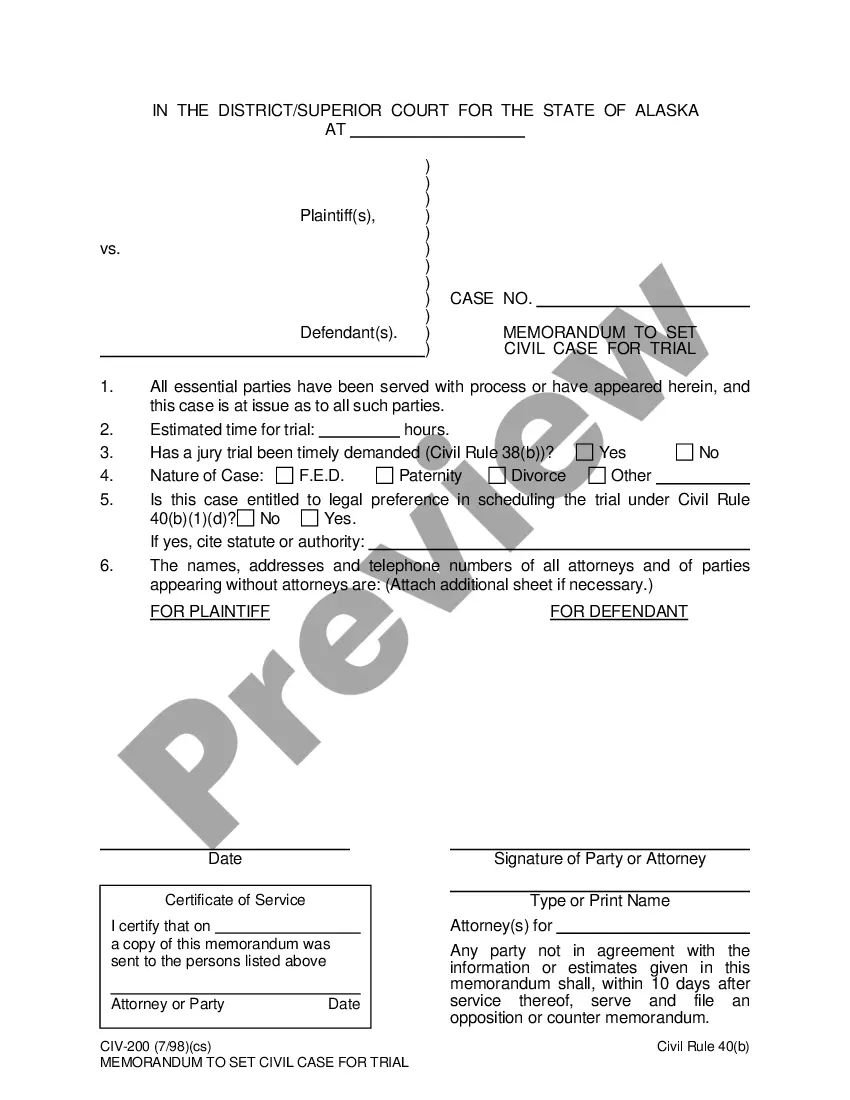
Alaska Fiduciary Deed
Understanding this form
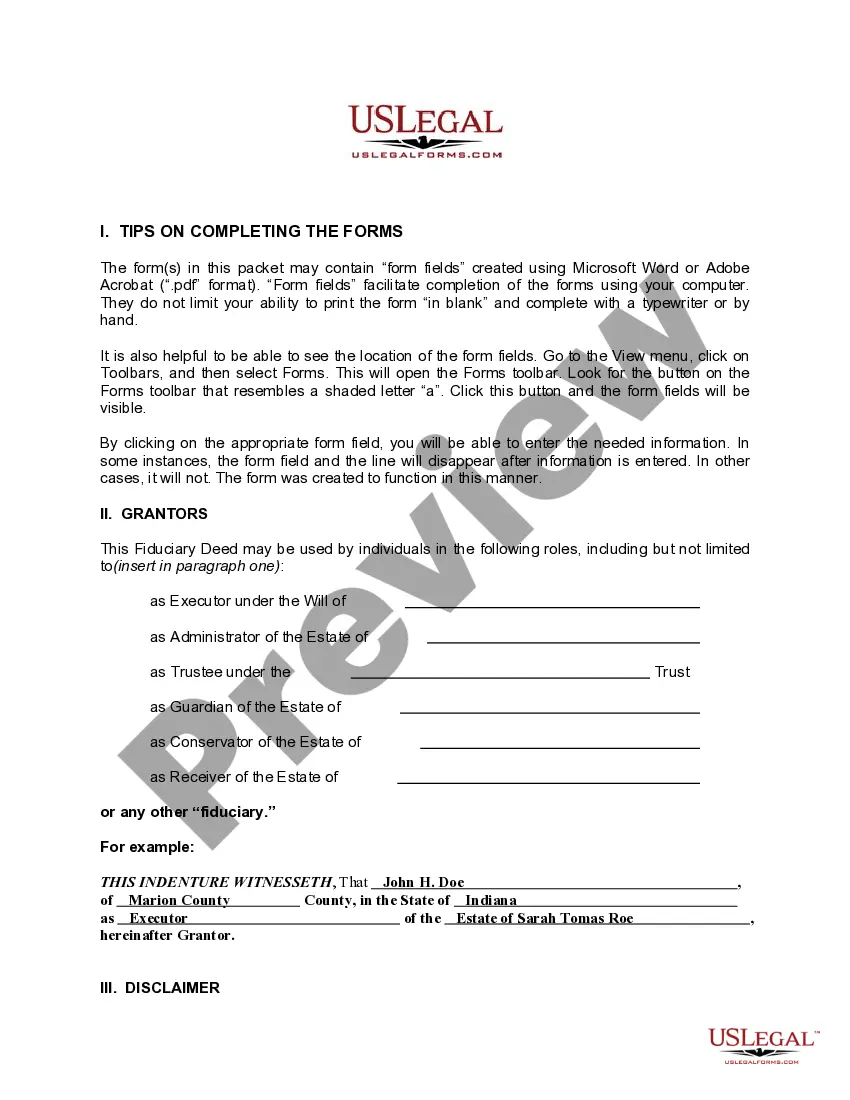
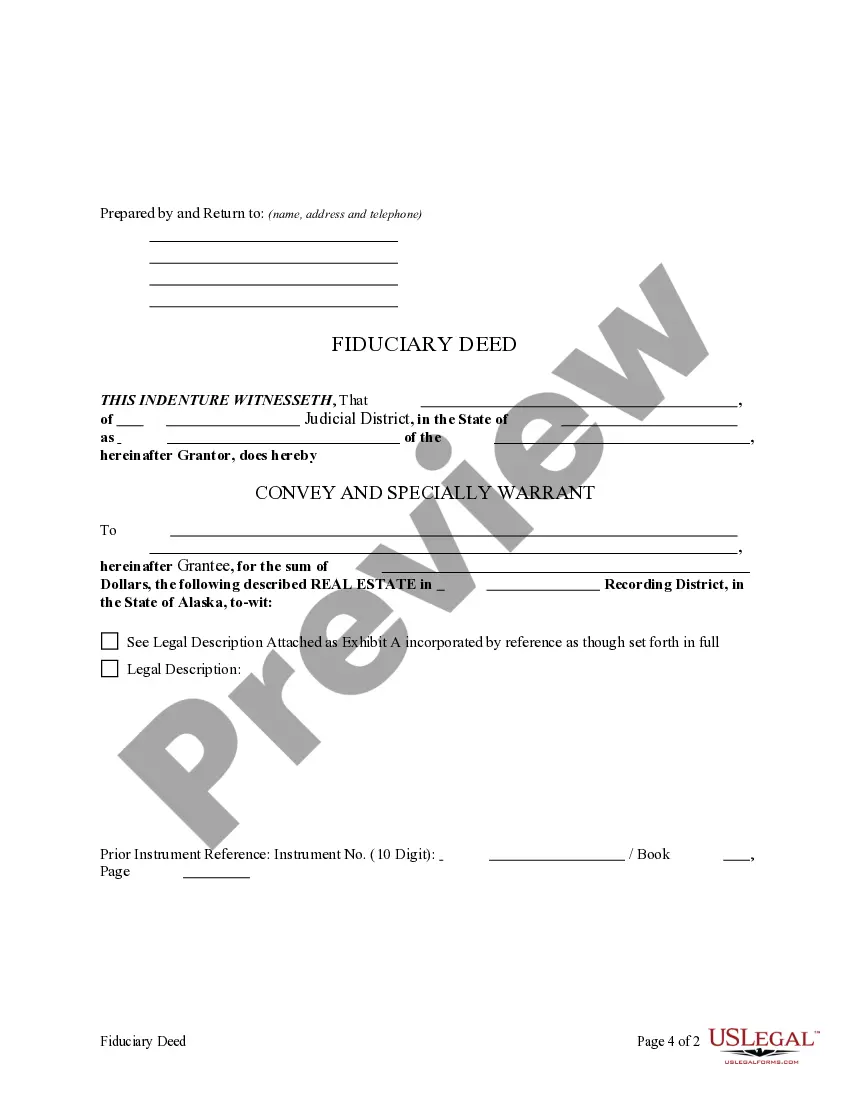
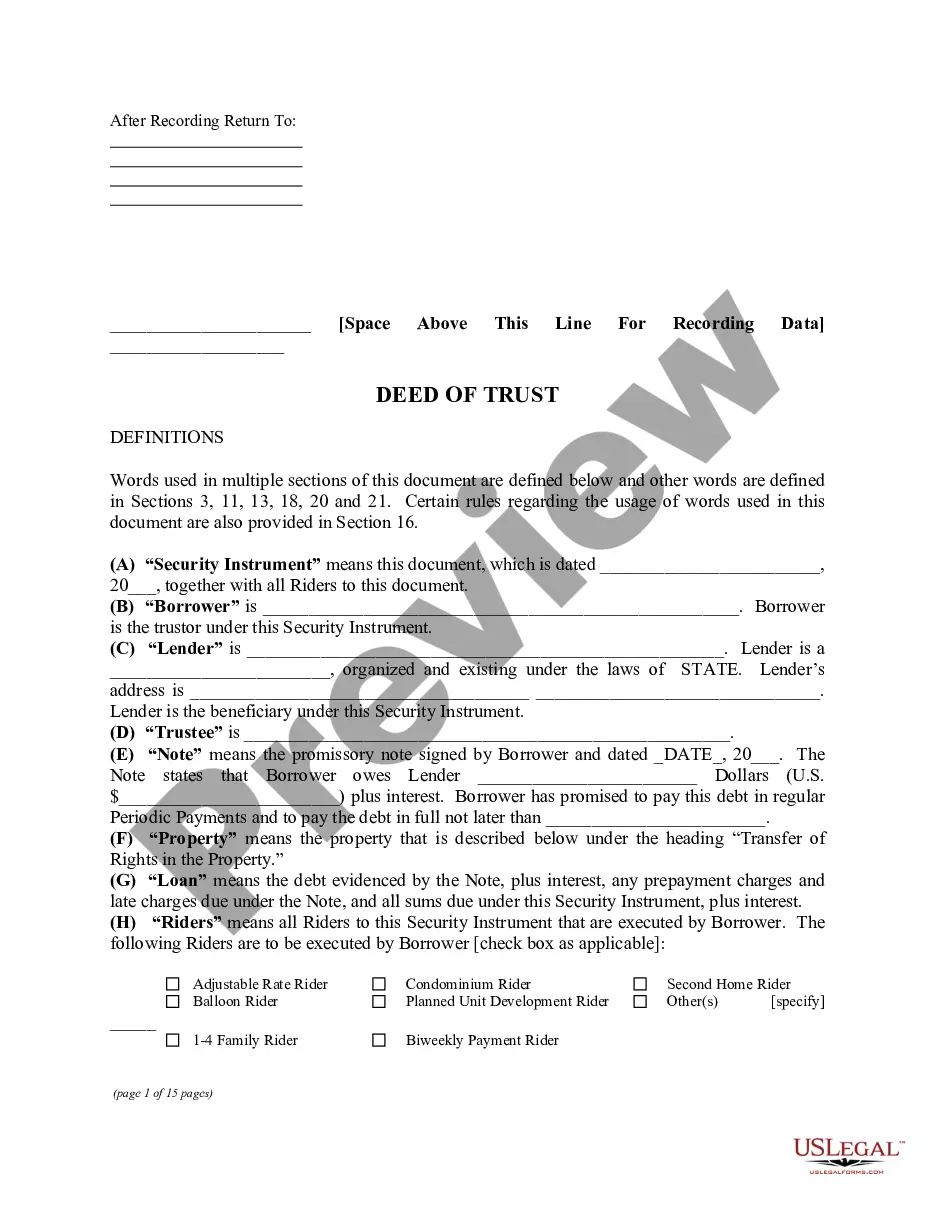
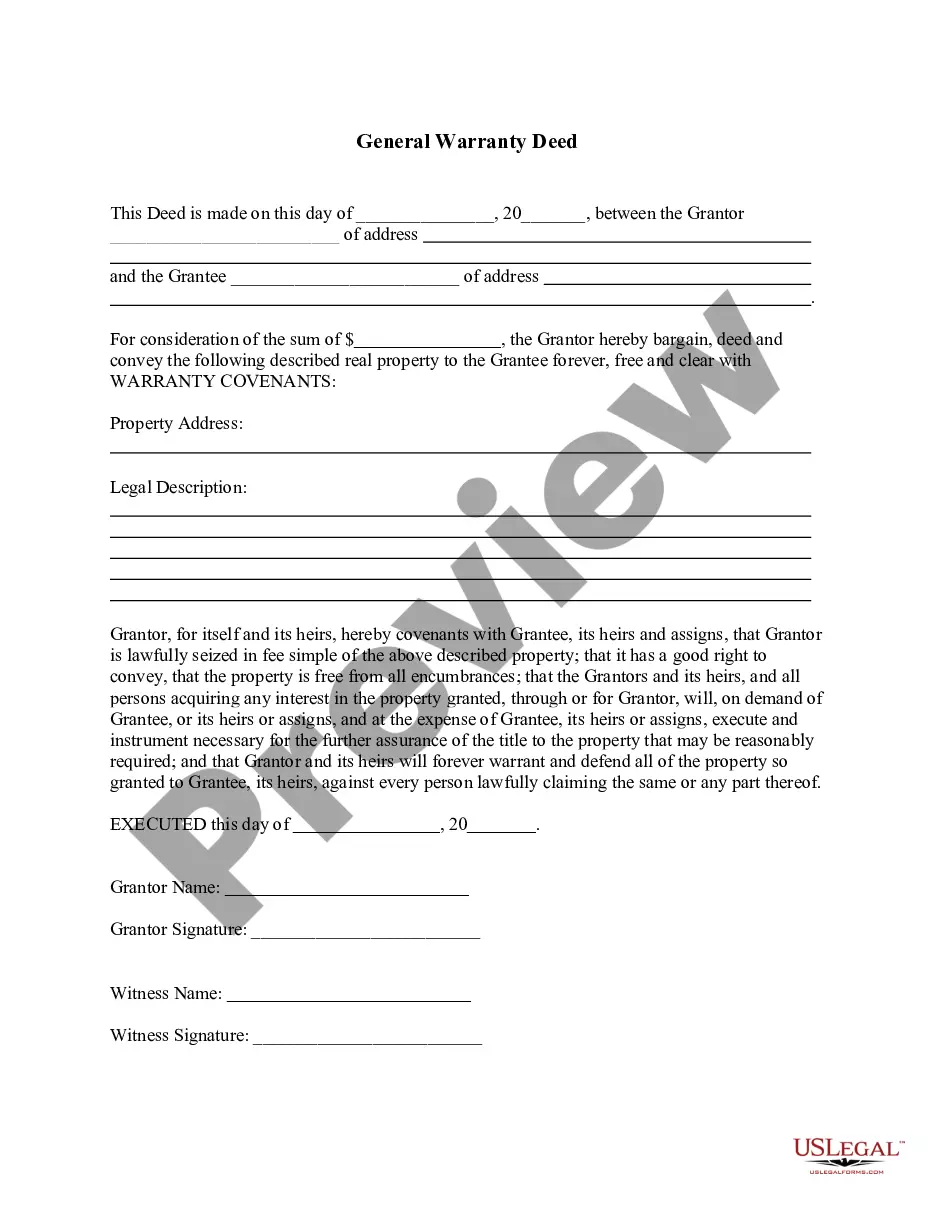
The Fiduciary Deed is a legal document used when a fiduciary grants property to a grantee on behalf of another party. Unlike a traditional deed, this form is specifically designed for situations where the grantor is acting in an official fiduciary capacity, such as an executor of an estate or a court-appointed guardian. The fiduciary deed outlines the transfer of property rights while providing limited warranties regarding the title, thus ensuring legal protection for both parties involved.
Form components explained
- Grantor Information: Details about the fiduciary acting on behalf of the property owner.
- Grantee Information: Information regarding the individual or entity receiving the property.
- Property Description: A detailed description of the property being transferred.
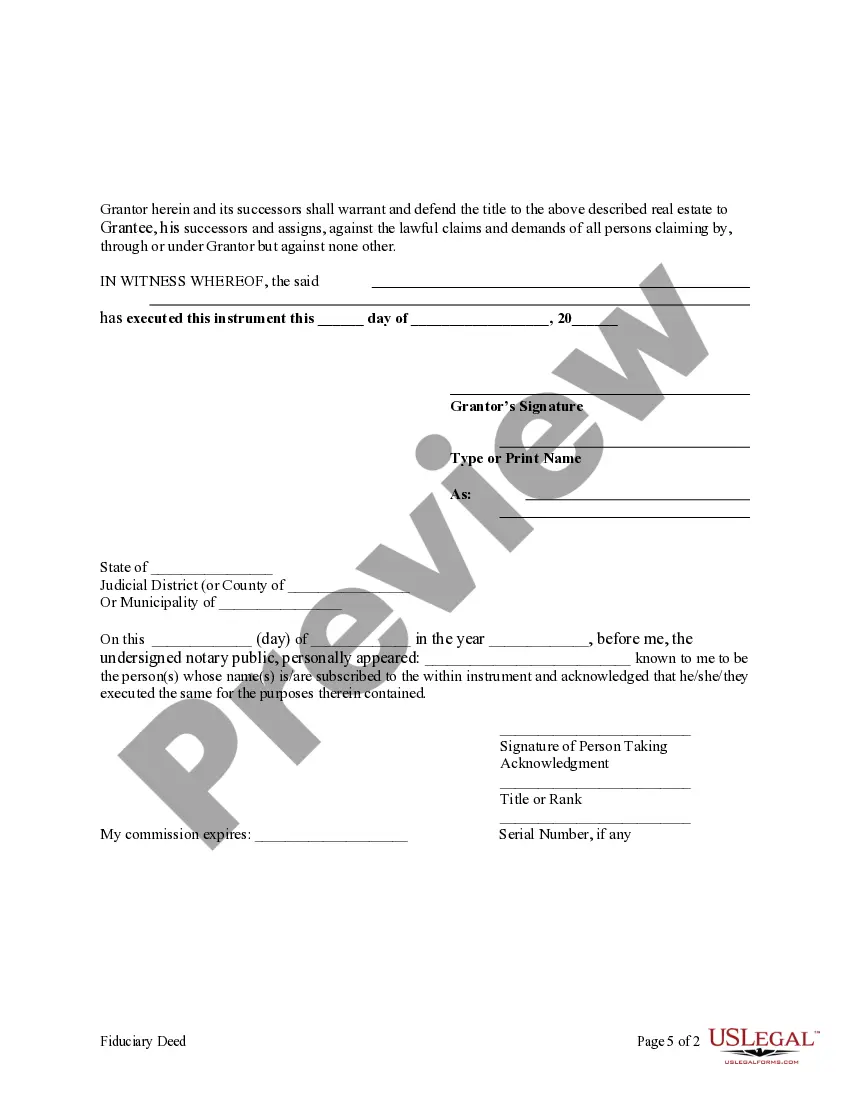
- Warranties: Clauses specifying the extent of the warranty that the grantor provides.
- Signatures: Spaces for the required signatures of the grantor and any witnesses, if applicable.


When this form is needed
This form is commonly used in scenarios where a fiduciary, such as an executor or trustee, needs to transfer property owned by another party. Examples include situations involving estate settlements, guardianships, or agency relationships where the fiduciary is legally obligated to act in the best interest of another individual.
Who can use this document
This Fiduciary Deed is suitable for:
- Executors of a will responsible for distributing estate property.
- Trustees managing and transferring property held in trust.
- Guardians appointed for minors or individuals who cannot manage their own affairs.
- Any fiduciaries acting under a court directive or legal obligation.
How to prepare this document
- Identify the parties involved by entering the names of the grantor (fiduciary) and the grantee.
- Specify the property by providing a detailed description, including legal descriptions if necessary.
- Enter any applicable warranty clauses that reflect the extent of the grantorâs warranties regarding the property.
- Ensure all required signatures are completed, including those of witnesses if mandated by law.
- Review the filled form for accuracy before finalizing and filing.
Notarization guidance
This form does not typically require notarization unless specified by local law. However, some jurisdictions may necessitate a notary for the conveyance to be legally recognized. Always check local requirements to ensure compliance.
Get your form ready online
Our built-in tools help you complete, sign, share, and store your documents in one place.
Make edits, fill in missing information, and update formatting in US Legal Forms—just like you would in MS Word.
Download a copy, print it, send it by email, or mail it via USPS—whatever works best for your next step.
Sign and collect signatures with our SignNow integration. Send to multiple recipients, set reminders, and more. Go Premium to unlock E-Sign.
If this form requires notarization, complete it online through a secure video call—no need to meet a notary in person or wait for an appointment.
We protect your documents and personal data by following strict security and privacy standards.

Make edits, fill in missing information, and update formatting in US Legal Forms—just like you would in MS Word.

Download a copy, print it, send it by email, or mail it via USPS—whatever works best for your next step.

Sign and collect signatures with our SignNow integration. Send to multiple recipients, set reminders, and more. Go Premium to unlock E-Sign.

If this form requires notarization, complete it online through a secure video call—no need to meet a notary in person or wait for an appointment.

We protect your documents and personal data by following strict security and privacy standards.
Typical mistakes to avoid
- Not providing a complete and accurate property description.
- Failing to obtain required signatures from witnesses or notary.
- Using outdated forms that may not comply with current state laws.
- Not understanding the scope of the fiduciaryâs authority, leading to unauthorized transactions.
Benefits of completing this form online
- Convenient access to legal forms at any time, allowing for quick completion.
- Editable templates help ensure that users can customize the form to meet specific needs.
- Reliable source of forms drafted by licensed attorneys, ensuring compliance with legal standards.
Legal use & context
- A Fiduciary Deed is enforceable to convey property rights under fiduciary obligations.
- The deed protects the Grantorâs liability, but does not absolve them of all duties related to the fiduciary role.
- Legal contexts may vary by state; consult local laws to ensure proper use.
Summary of main points
- The Fiduciary Deed is specifically designed for fiduciaries to convey property legally.
- It includes unique warranty clauses that limit liability for the Grantor.
- Compliance with state laws is essential for validity.
- Completing the form correctly avoids common legal pitfalls.
Looking for another form?








Form popularity
FAQ
Retrieve your original deed. Get the appropriate deed form. Draft the deed. Sign the deed before a notary. Record the deed with the county recorder. Obtain the new original deed.
Fiduciary deeds are just one of several types of deeds used in property transfers. This type is used to transfer property such as real estate when the owner can't sign a deed for legal or other reasons. Fiduciary deeds are commonly employed when settling estates and the original owner of the property is deceased.
Fiduciary Deed Uses An executor of an estate will typically act as fiduciary in this example.A warranty deed describes the amount of the interest that the owner has in the property and guarantees that the title can be transferred without any unknown liens or other claims to block it.
A corrective affidavit is a statutory device under Cal.Gov. Code 27201, used to correct a minor error in a document that has been recorded at an earlier date. Minor errors are those that, when corrected, cause no actual change in the substance of the document.
You can correct an error on a California deed through a Correction Deed or Corrective Deed. Usually deed errors are as a result of someone attempting to prepare a deed without proper knowledge or professional help.
Resolving Small Ambiguities: The Scrivener Affidavit. Sometimes an omission attracts attention just after recording. The Correction Deed: Stronger Than a Scrivener's Affidavit. Obtain your correction deed form. Execute the correction deed. Record the correction deed.
If a deed is to have any validity, it must be made voluntarily.If FRAUD is committed by either the grantor or grantee, a deed can be declared invalid. For example, a deed that is a forgery is completely ineffective. The exercise of UNDUE INFLUENCE also ordinarily serves to invalidate a deed.
Determine if the error is harmless or fatal to the transfer of title. Decide what instrument is best suited to the error. Draft a corrective deed, affidavit, or new deed. Obtain the original signature(s) of the Grantor(s). Re-execute the deed with proper notarization and witnessing.
By both spouses as tenants by the entirety; By both spouses as Alaska Community Property with a right of survivorship; or. By a Trustee in trust; or.