Tenant Rights For Security Deposit
Description
Get your form ready online
Our built-in tools help you complete, sign, share, and store your documents in one place.
Make edits, fill in missing information, and update formatting in US Legal Forms—just like you would in MS Word.
Download a copy, print it, send it by email, or mail it via USPS—whatever works best for your next step.
Sign and collect signatures with our SignNow integration. Send to multiple recipients, set reminders, and more. Go Premium to unlock E-Sign.
If this form requires notarization, complete it online through a secure video call—no need to meet a notary in person or wait for an appointment.
We protect your documents and personal data by following strict security and privacy standards.
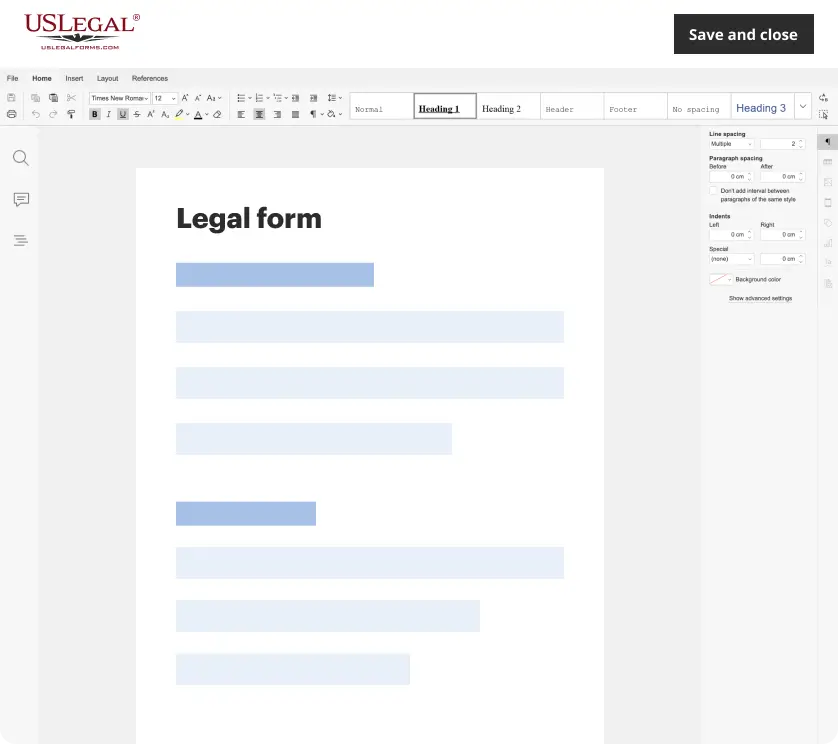
Make edits, fill in missing information, and update formatting in US Legal Forms—just like you would in MS Word.
Download a copy, print it, send it by email, or mail it via USPS—whatever works best for your next step.
Sign and collect signatures with our SignNow integration. Send to multiple recipients, set reminders, and more. Go Premium to unlock E-Sign.

If this form requires notarization, complete it online through a secure video call—no need to meet a notary in person or wait for an appointment.
We protect your documents and personal data by following strict security and privacy standards.
Looking for another form?
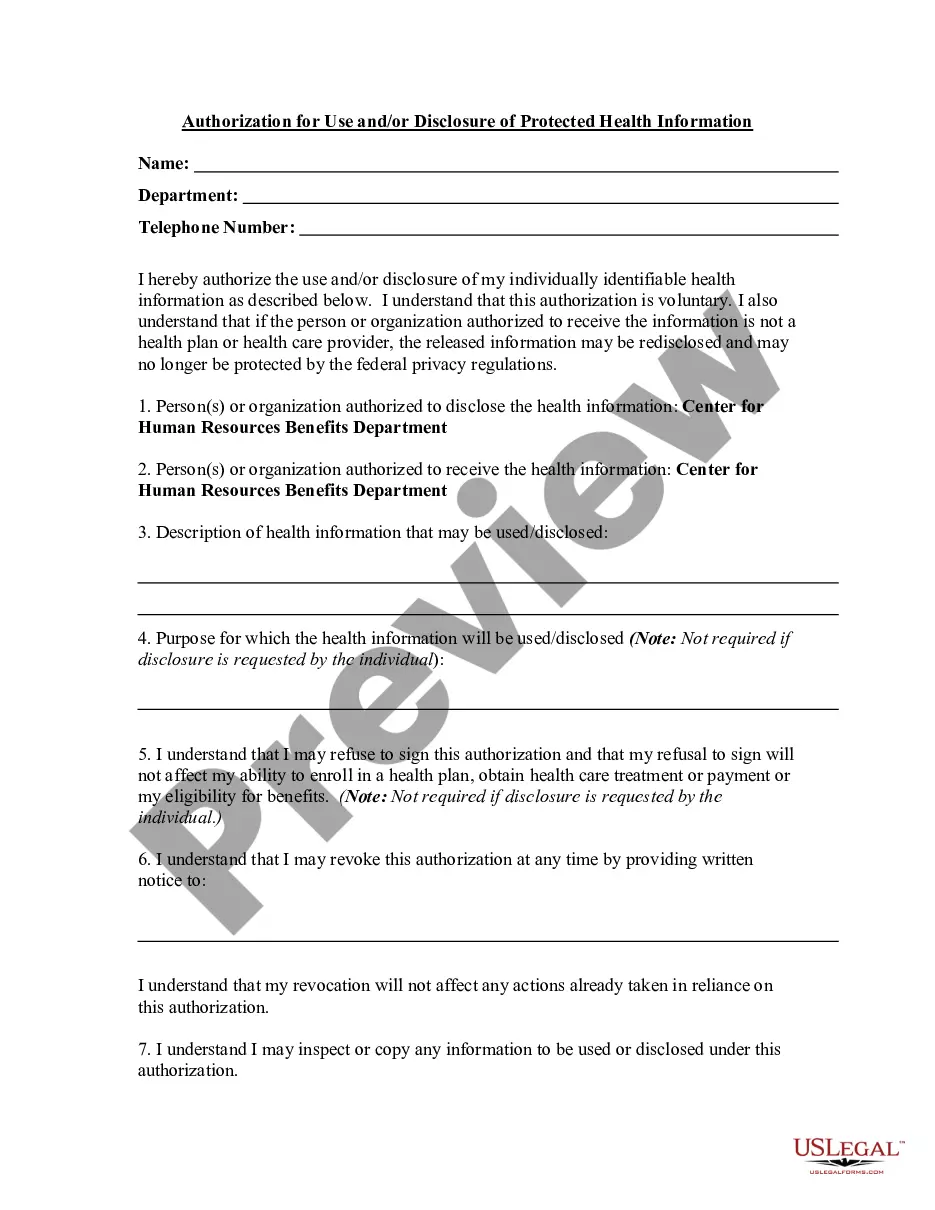



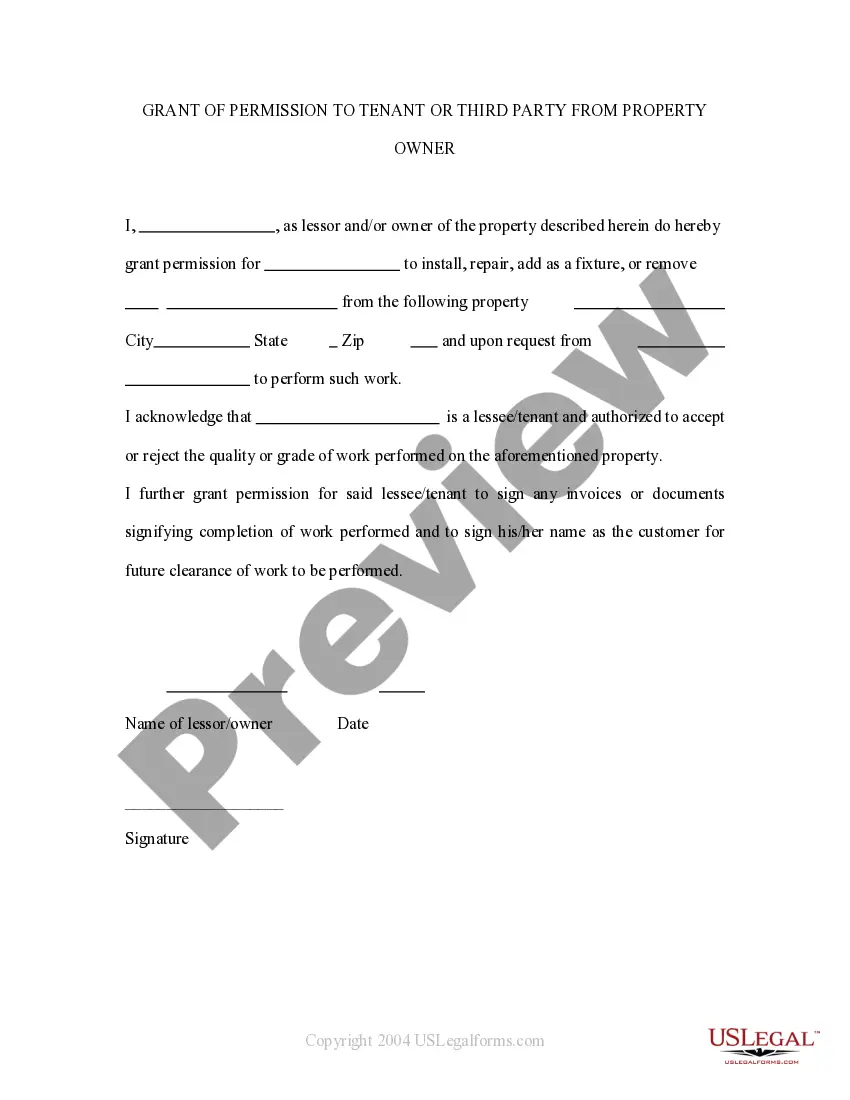
How to fill out Grant Of Permission To Tenant Or Third Party From Property Owner?
Locating a reliable source for the latest and most applicable legal templates is half the challenge of dealing with bureaucracy.
Selecting the appropriate legal documents requires precision and careful consideration, which is why it is crucial to obtain samples of Tenant Rights For Security Deposit solely from trustworthy providers, such as US Legal Forms.
Once the form is on your device, you can edit it using the editor or print it out to complete it by hand. Remove the stress associated with your legal documentation. Explore the extensive US Legal Forms library where you can find legal templates, assess their applicability to your situation, and download them instantly.
- Utilize the catalog navigation or search bar to locate your template.
- Review the form’s description to verify if it meets the requirements of your state and county.
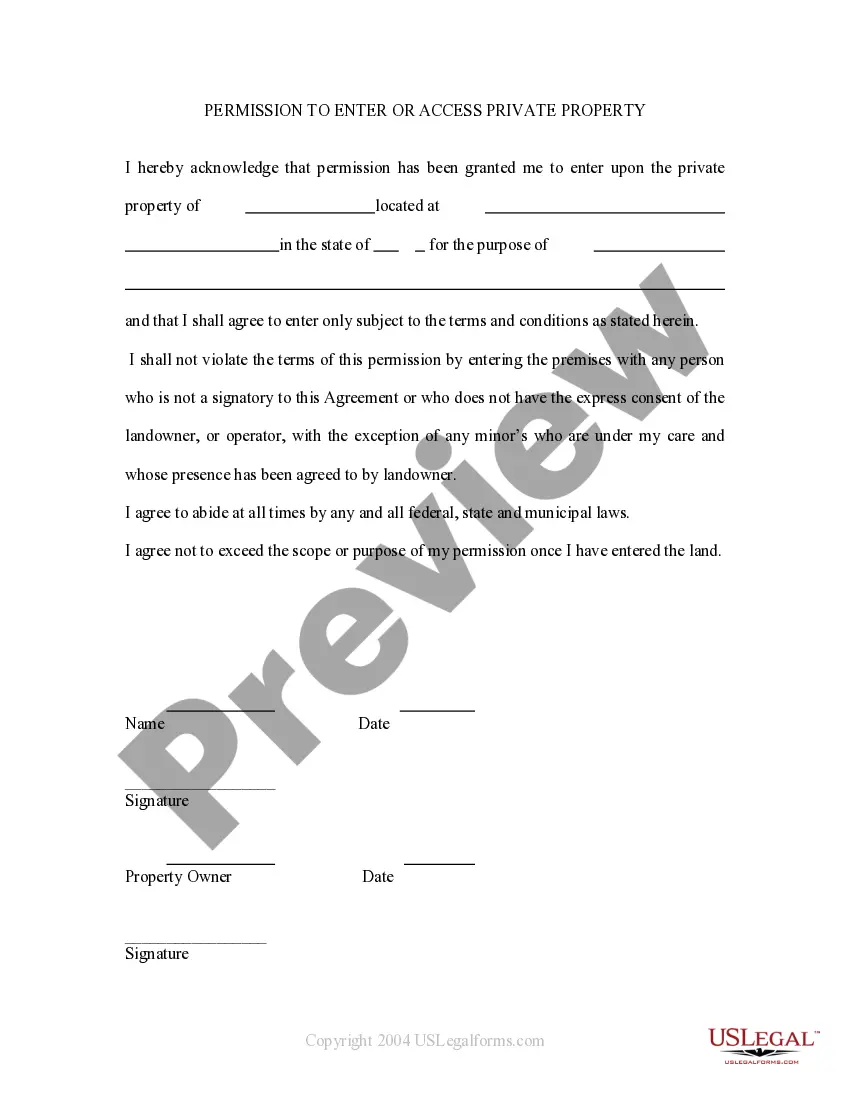
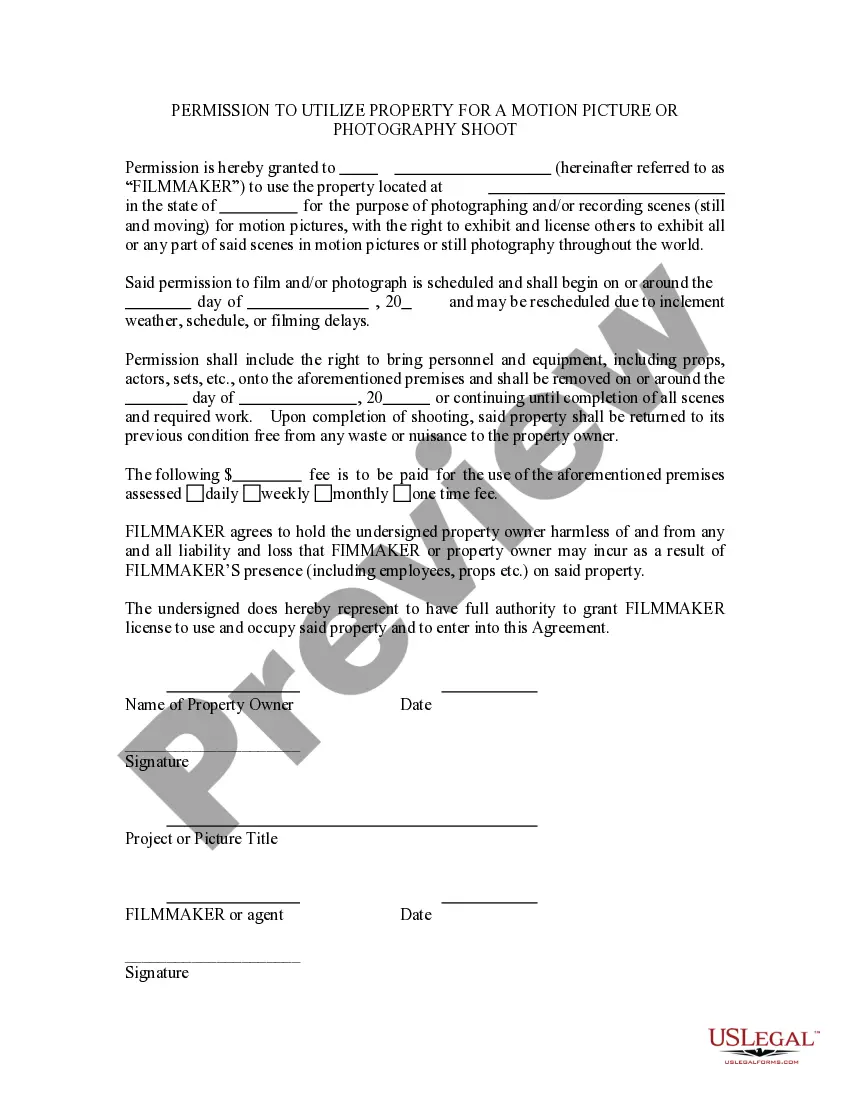
- Examine the form preview, if available, to confirm it is the document you need.
- Return to the search to find an appropriate template if the Tenant Rights For Security Deposit does not satisfy your needs.
- Once you are confident about the form’s applicability, download it.
- If you are a registered user, click Log in to verify your identity and access your chosen templates in My documents.
- If you do not yet have an account, click Buy now to acquire the form.
- Select the pricing option that suits your needs.
- Proceed to the registration to complete your purchase.
- Finalise your transaction by selecting a payment method (credit card or PayPal).
- Choose the file format for downloading Tenant Rights For Security Deposit.
Form popularity
FAQ
Deposits must be protected and the Prescribed Information given to tenants within 30 days of receiving the deposit. Failure to do so means that the tenant can go to Court during the tenancy or after it has ended, and seek a financial penalty against the landlord.
A California bill turned law will limit how much landlords can charge for security deposits. Gov. Gavin Newsom signed Assembly Bill 12 into law, which states that security deposits can't be any larger than one month's rent, on Oct. 11. The law is slated to take effect on July 1, 2024.
Some landlords will charge tenants a nonrefundable fee, such as a fee for cleaning. Such fees are legal if clearly disclosed to the tenant as part of the leasing process. They represent part of the cost of leasing the unit and are different from a security deposit which is designed to ensure compliance with the lease.
Section 92.104 of the Texas Property Code describes what a landlord may deduct from a security deposit: Before returning a security deposit, the landlord may deduct from the deposit damages and charges for which the tenant is legally liable under the lease or as a result of breaching the lease.
The landlord must return a tenant's security deposit plus interest, less any damages rightfully withheld, within 45 days after the tenancy ends. If the landlord fails to do this without a good reason, you may sue for up to three times the withheld amount, plus reasonable attorney's fees.