Image Usage Consent
Description
Get your form ready online
Our built-in tools help you complete, sign, share, and store your documents in one place.
Make edits, fill in missing information, and update formatting in US Legal Forms—just like you would in MS Word.
Download a copy, print it, send it by email, or mail it via USPS—whatever works best for your next step.
Sign and collect signatures with our SignNow integration. Send to multiple recipients, set reminders, and more. Go Premium to unlock E-Sign.
If this form requires notarization, complete it online through a secure video call—no need to meet a notary in person or wait for an appointment.
We protect your documents and personal data by following strict security and privacy standards.

Make edits, fill in missing information, and update formatting in US Legal Forms—just like you would in MS Word.

Download a copy, print it, send it by email, or mail it via USPS—whatever works best for your next step.

Sign and collect signatures with our SignNow integration. Send to multiple recipients, set reminders, and more. Go Premium to unlock E-Sign.

If this form requires notarization, complete it online through a secure video call—no need to meet a notary in person or wait for an appointment.

We protect your documents and personal data by following strict security and privacy standards.
Looking for another form?


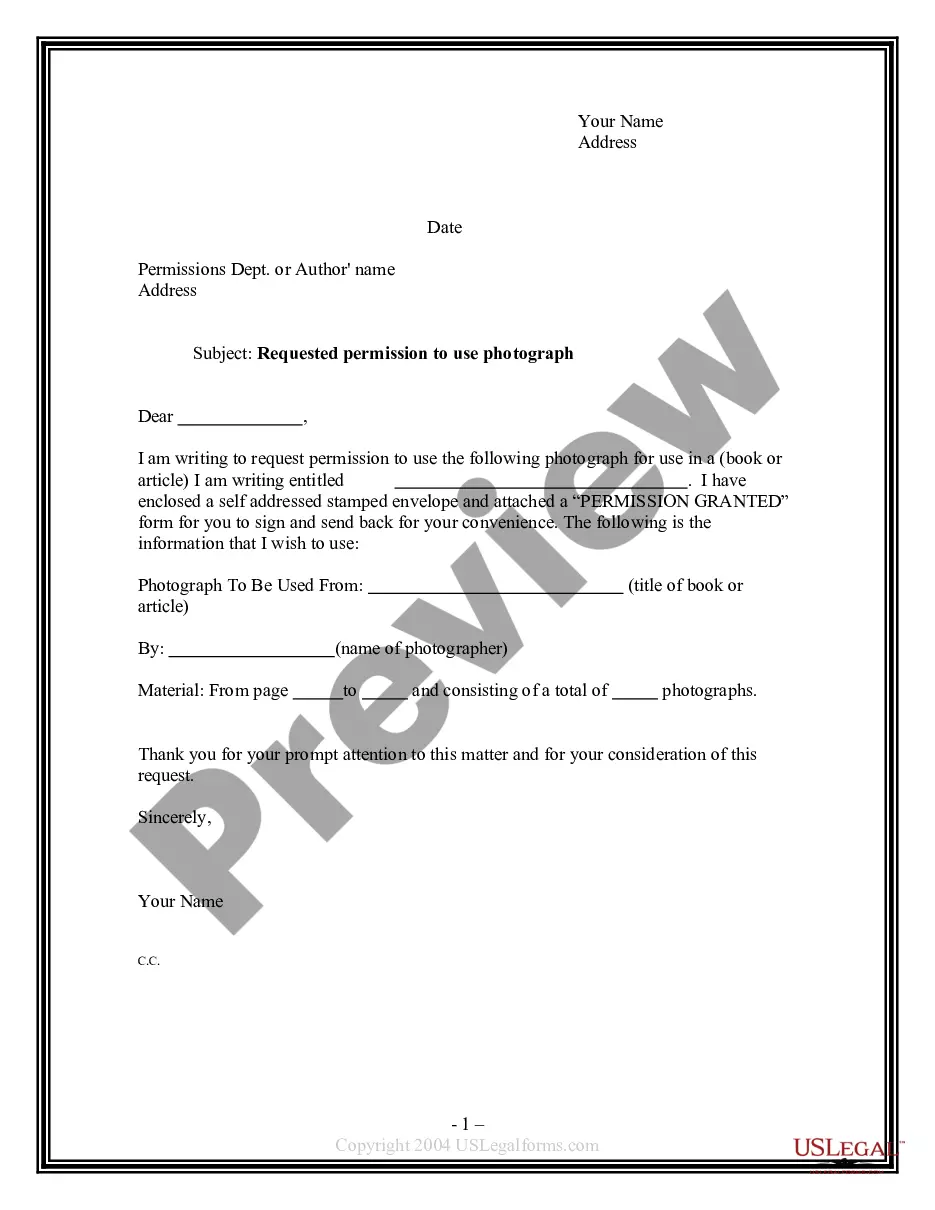
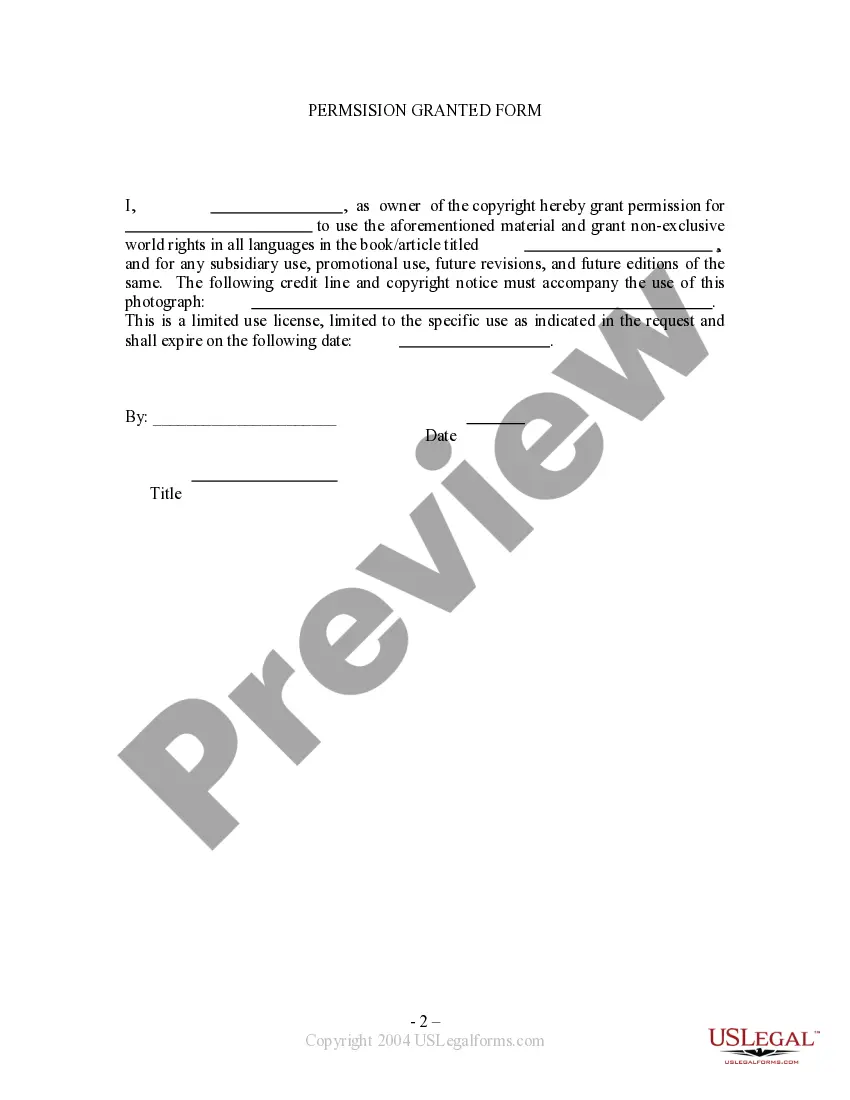
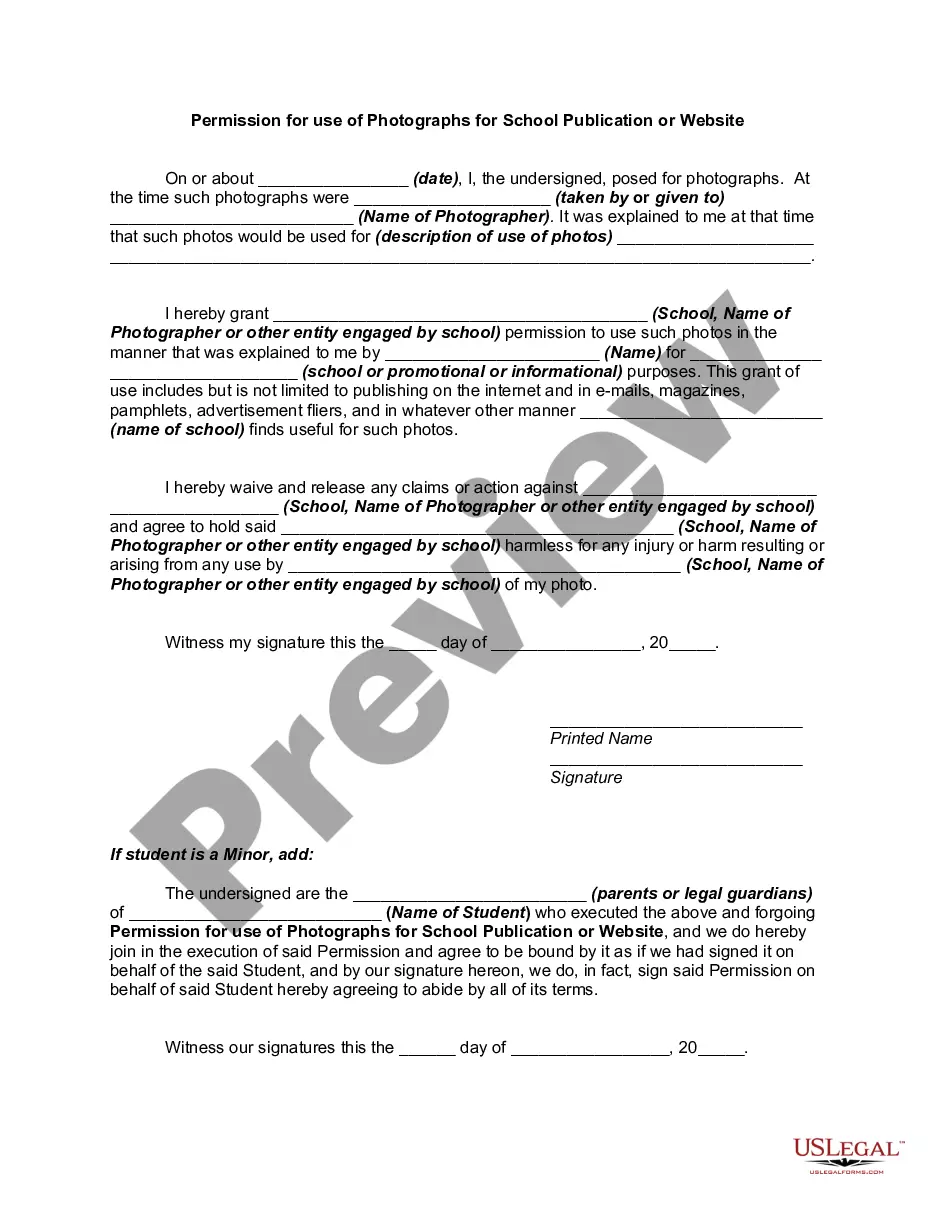
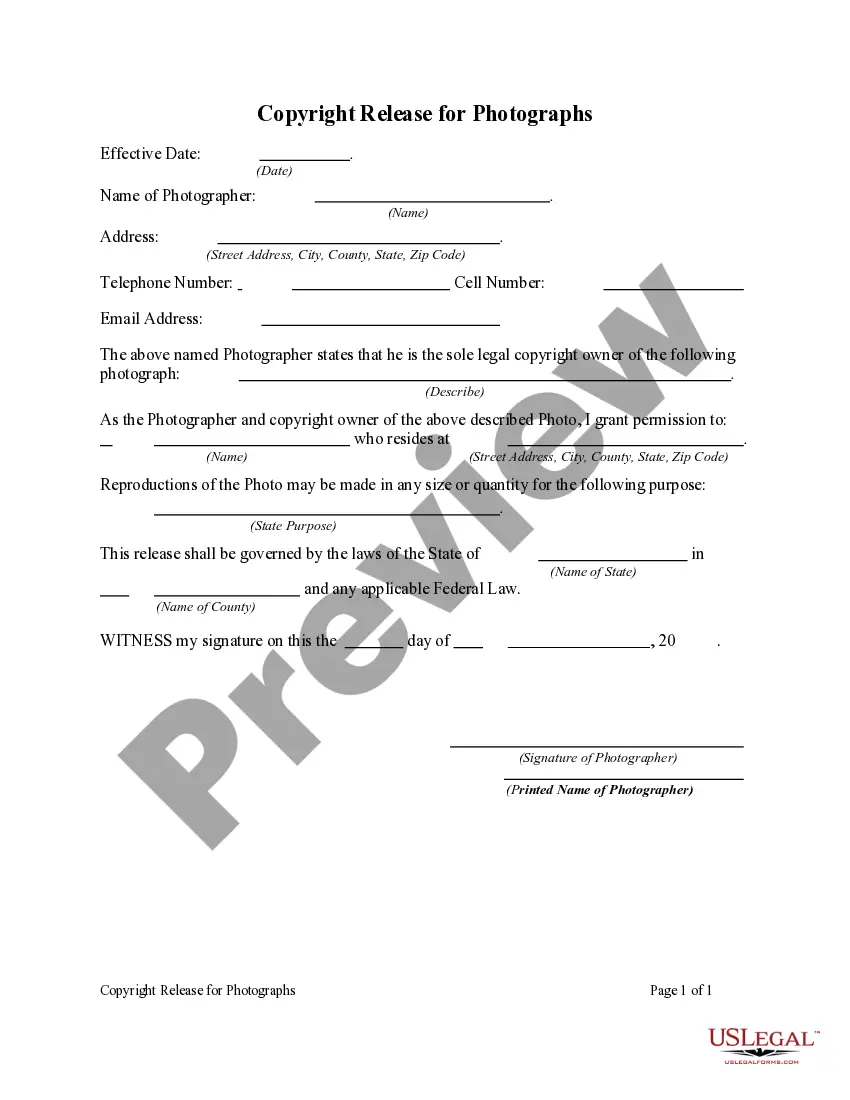
How to fill out Requested Permission To Use Photograph?
- If you're a returning user, simply log in to your account to download the necessary form by clicking the Download button. Ensure your subscription is active, and renew if needed.
- For first-time users, start by exploring the Preview mode to review form descriptions. Confirm you've selected a template that meets your specific needs and aligns with local legal requirements.
- If necessary, search for alternative templates using the Search tab to find exactly what you're looking for and ensure compliance.
- Proceed to purchase by selecting the Buy Now button and choosing a subscription plan. Create an account to unlock access to the full library of forms.
- Complete your transaction by entering your payment details or using a PayPal account to finalize the subscription.
- After your purchase, download the form to your device. You can access it anytime through the My Forms menu.
By leveraging US Legal Forms, individuals and attorneys can quickly and effectively assemble vital legal documents, ensuring adherence to legal standards.
Don’t hesitate! Start using US Legal Forms today to simplify your legal documentation process and acquire your essential forms hassle-free.
Form popularity
FAQ
To find the usage rights of an image, start by checking the source where you found the image. Many images include information about their usage rights in the description or metadata. Additionally, you can use reverse image search tools to trace the image and find its original licensing terms. Understanding image usage consent is crucial to ensure you use images legally and avoid copyright issues.
Typically, your employer cannot use your photo without your consent due to image usage consent regulations. Even in a workplace context, your image remains your property and should not be exploited without your agreement. If you find that your employer has used your image without permission, it is advisable to discuss the matter with them or seek legal advice. Being informed about your rights encourages a respectful work environment.
A company cannot use your likeness without your permission due to image usage consent laws. Your likeness is a reflection of your identity, and using it without consent can result in legal action. If you suspect your likeness has been used incorrectly, it's important to take action to protect your rights. Awareness and understanding of these rights can empower you.
When a company uses your picture without permission, it's called an infringement on your image rights or a violation of image usage consent. This can have serious legal implications, and it's important to recognize that you have control over your image. If you believe your rights have been violated, consider consulting with a legal expert for guidance. Protecting your image is crucial in today’s digital age.
No, your image should not be used without your permission. Image usage consent is essential for protecting your personal rights. If you see your image used without consent, you have the right to address the issue, either through direct communication with the party involved or legal actions if necessary. Always stay informed about your image rights to safeguard against misuse.
Generally, a company cannot use your image without your permission due to image usage consent laws. Your likeness is your property, and using it without consent can lead to legal consequences for that company. Always ensure you understand your rights regarding any image before sharing. If you find your image used without your consent, it's wise to seek legal advice.
Asking for consent to take pictures involves clear communication. You might say, 'Would you be okay with having your photo taken during this event? Your image may be used for promotional purposes, and we want to ensure you are comfortable.' This approach emphasizes respect for individual preferences while securing the necessary image usage consent.
To write a photography consent form, start with a title that specifies its purpose. Include your name, the name of the photographer or organization, and a statement that explains the use of the images. You should clearly ask for image usage consent, specifying how the images will be used, like in social media or printed materials. Lastly, provide space for signatures and dates to confirm agreement.
A photo release typically includes a clear statement granting permission for someone to use images of you. You might say, 'I, Your Name, grant Photographer/Organization Name the right to use my image for marketing and promotional purposes, acknowledging that I receive no compensation.' This wording ensures that you have given informed image usage consent.
A photo disclaimer statement informs individuals that photos may be taken during an event. It is essential for obtaining image usage consent. A simple example would be, 'By attending this event, you consent to the use of your image in promotional materials.' This informs everyone clearly about their rights concerning photography.