Primary Physical Custody And School
Description
Get your form ready online
Our built-in tools help you complete, sign, share, and store your documents in one place.
Make edits, fill in missing information, and update formatting in US Legal Forms—just like you would in MS Word.
Download a copy, print it, send it by email, or mail it via USPS—whatever works best for your next step.
Sign and collect signatures with our SignNow integration. Send to multiple recipients, set reminders, and more. Go Premium to unlock E-Sign.
If this form requires notarization, complete it online through a secure video call—no need to meet a notary in person or wait for an appointment.
We protect your documents and personal data by following strict security and privacy standards.

Make edits, fill in missing information, and update formatting in US Legal Forms—just like you would in MS Word.

Download a copy, print it, send it by email, or mail it via USPS—whatever works best for your next step.

Sign and collect signatures with our SignNow integration. Send to multiple recipients, set reminders, and more. Go Premium to unlock E-Sign.

If this form requires notarization, complete it online through a secure video call—no need to meet a notary in person or wait for an appointment.

We protect your documents and personal data by following strict security and privacy standards.
Looking for another form?



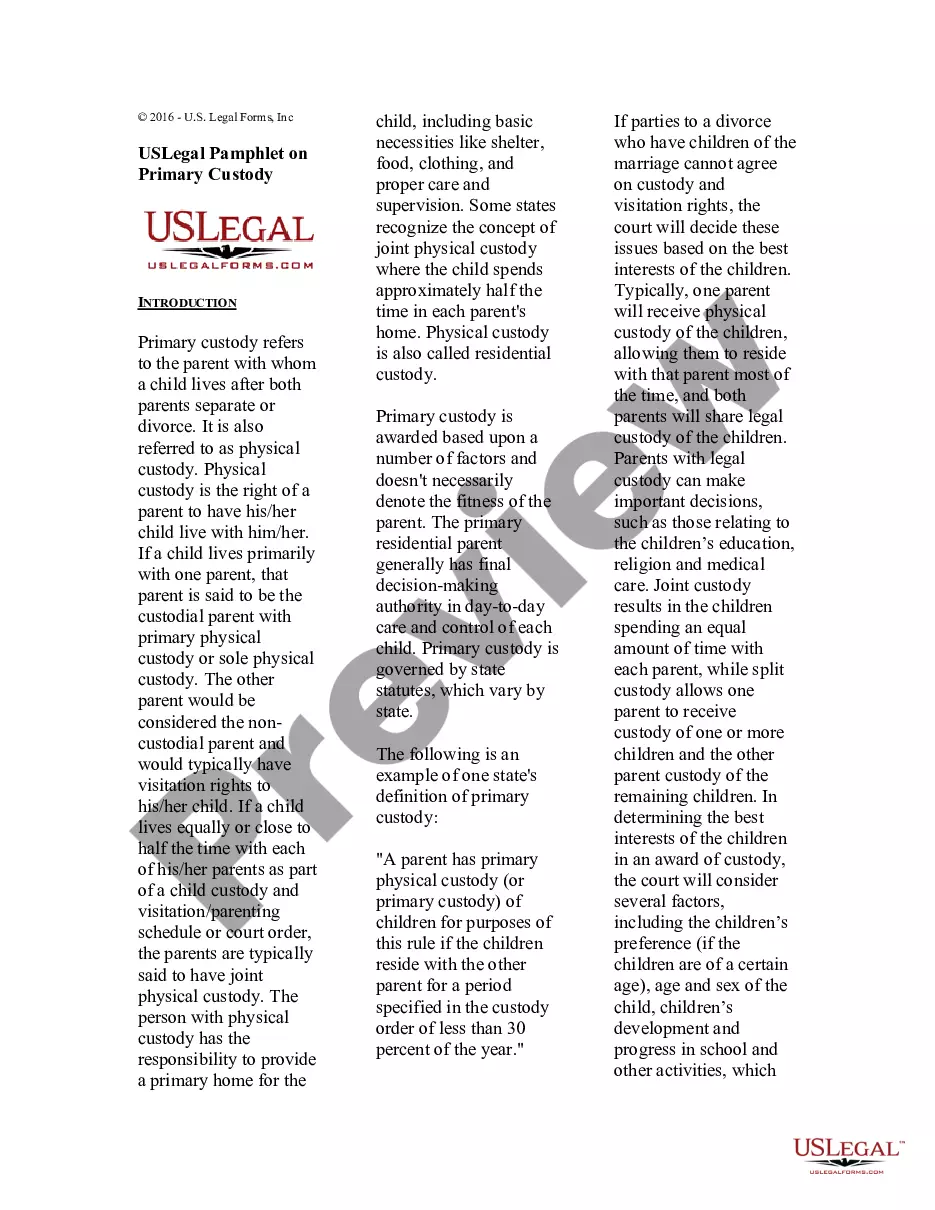
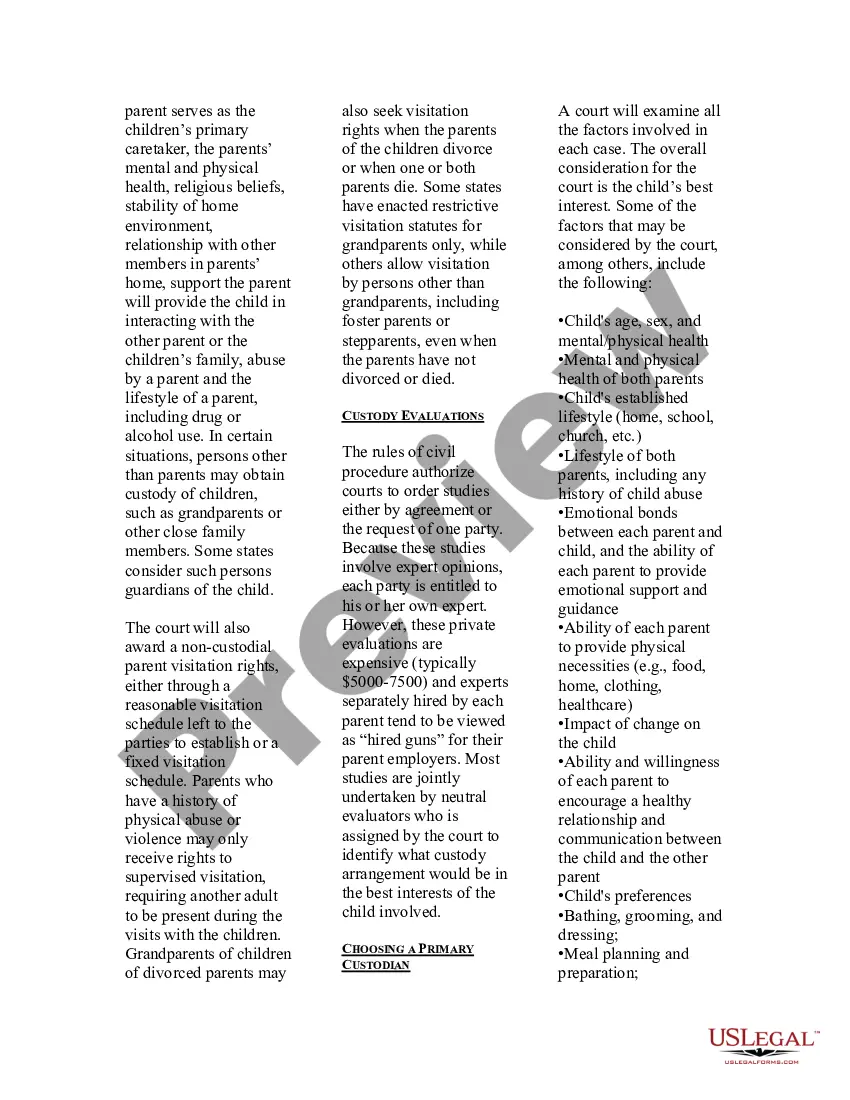
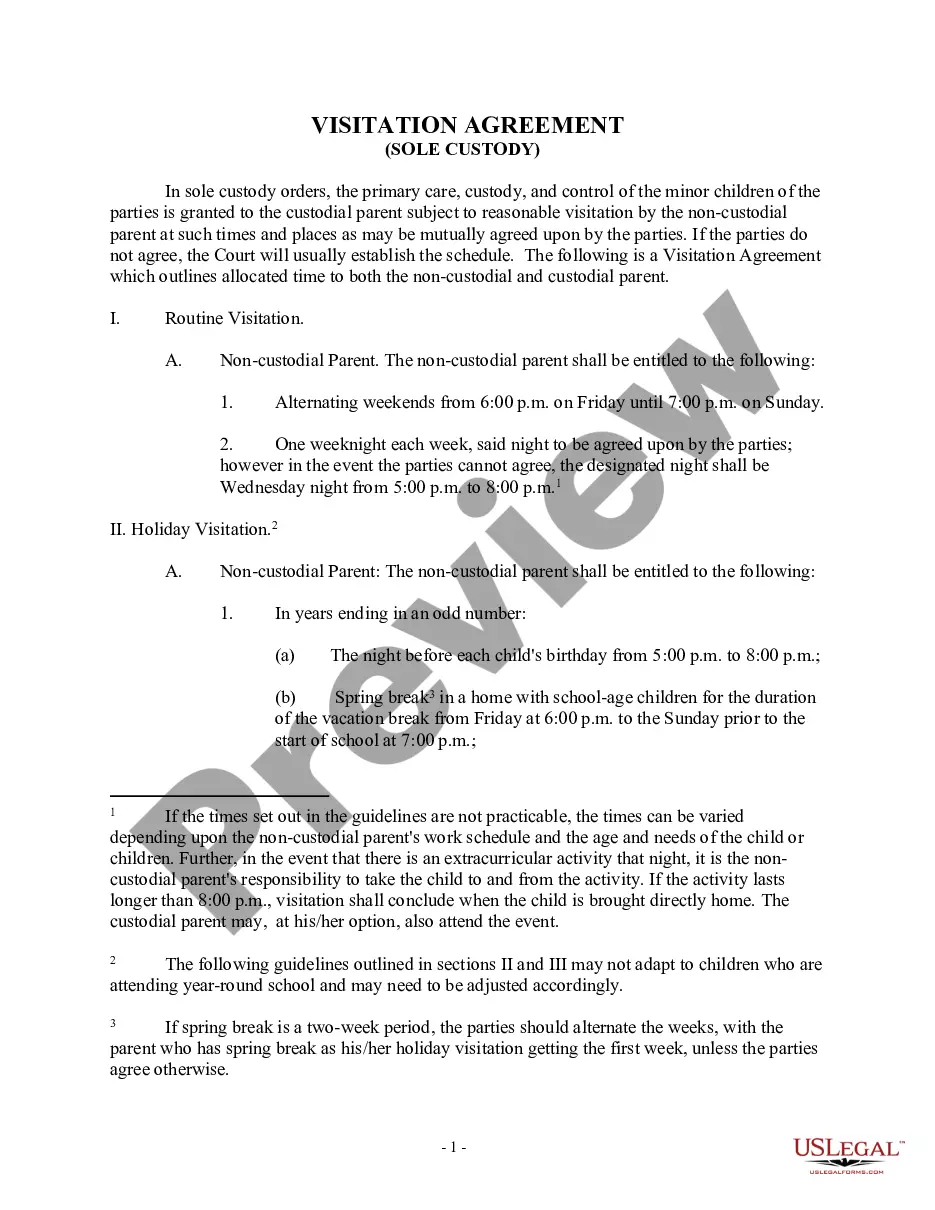
How to fill out USLegal Pamphlet On Primary Custody?
Whether for commercial reasons or for personal matters, everyone must confront legal challenges at some point in their lives.
Completing legal paperwork requires meticulous attention, starting with selecting the appropriate form template.
With an extensive US Legal Forms catalog available, you will never have to waste time searching for the correct template online. Utilize the library’s easy navigation to find the appropriate form for any circumstance.
- Locate the template you require by using the search bar or browsing the catalog.
- Review the form’s details to confirm it aligns with your case, jurisdiction, and locality.
- Click on the form’s preview to examine it.
- If it is the incorrect document, return to the search feature to locate the Primary Physical Custody And School template you need.
- Download the file if it fulfills your requirements.
- If you possess a US Legal Forms account, simply click Log in to access previously saved documents in My documents.
- In case you don't have an account yet, you can download the form by clicking Buy now.
- Select the appropriate pricing option.
- Complete the account registration form.
- Choose your payment method: use a credit card or PayPal account.
- Select the file format you desire and download the Primary Physical Custody And School.
- Once it is downloaded, you can fill out the form using editing software or print it out and complete it manually.
Form popularity
FAQ
One of the biggest mistakes in a custody battle is failing to prioritize the child's best interests, particularly when it comes to primary physical custody and school arrangements. Parents may become overly focused on winning or proving a point, rather than considering how their actions affect their child's well-being. Open communication and cooperation with the other parent can lead to better outcomes for your child. With tools from US Legal Forms, you can create agreements that emphasize collaborative parenting and focus on the child's needs.
In a 50/50 custody arrangement, both parents share equal time with their child, which can significantly impact primary physical custody and school decisions. Schools often require consistent communication between both parents to ensure that academic responsibilities and events are managed effectively. It's essential to establish a clear plan for how you will handle school-related matters, including transportation and attendance at school functions. Utilizing resources like US Legal Forms can help you draft an agreement that outlines these responsibilities.
Split custody arrangements can complicate a child's schooling, as they might need to adapt to different homes and schedules. In these situations, it's essential to establish clear communication between both parents and the school to ensure that the child receives support in both environments. Each parent should collaborate with the school to maintain consistency in the child's education and extracurricular activities. Tools and resources from USLegalForms can help you navigate split custody arrangements effectively, ensuring that primary physical custody and school needs are met.
Winning sole physical custody requires a strong understanding of family law and a clear demonstration of what's best for the child. You should gather evidence that shows your ability to provide a stable environment, including your home, work schedule, and support network. Document any incidents that may affect the child's well-being, and be prepared to present this information in court. Additionally, consider using platforms like USLegalForms to access resources and legal documents that can help strengthen your case for primary physical custody and school.
When discussing primary physical custody and school, it is important to understand how custody arrangements affect a child's education. Typically, the parent who has primary physical custody is responsible for making decisions regarding the child's schooling, including enrollment, attendance, and extracurricular activities. However, both parents can still be involved, especially if they share joint legal custody. Using resources like US Legal Forms can help you navigate custody agreements and ensure that your child's educational needs are met.
The rights of primary physical custody encompass the authority to manage your child's daily activities and educational needs. This includes choosing their school and attending parent-teacher meetings. It's essential to understand these rights to ensure that you can effectively support your child, particularly in areas related to primary physical custody and school.
As a primary parent, you possess the right to make decisions that directly impact your child's upbringing. This includes choices about their education, like selecting schools and participating in school activities. Your role emphasizes the importance of providing a stable environment, particularly regarding primary physical custody and school matters.
With primary physical custody, you have the right to make significant decisions about your child's daily life, including education, health care, and extracurricular activities. This includes determining their school placement and schedule. Understanding these rights helps you advocate effectively for your child's needs, especially in matters related to primary physical custody and school.
To win primary physical custody, start by showing your active involvement in your child's life. Document your participation in their education, health care, and daily routines. Courts look favorably on parents who emphasize stability and support, particularly in relation to primary physical custody and school attendance.