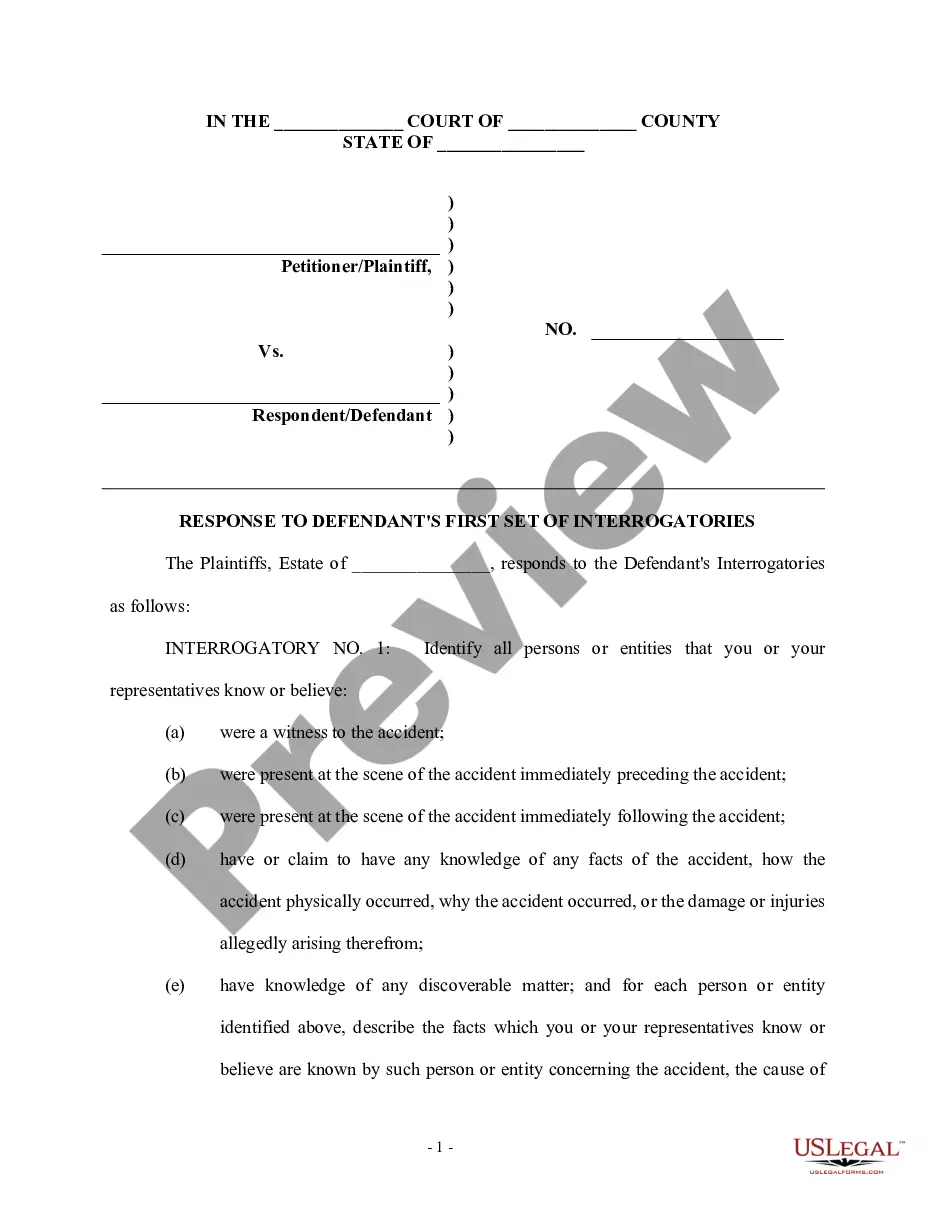
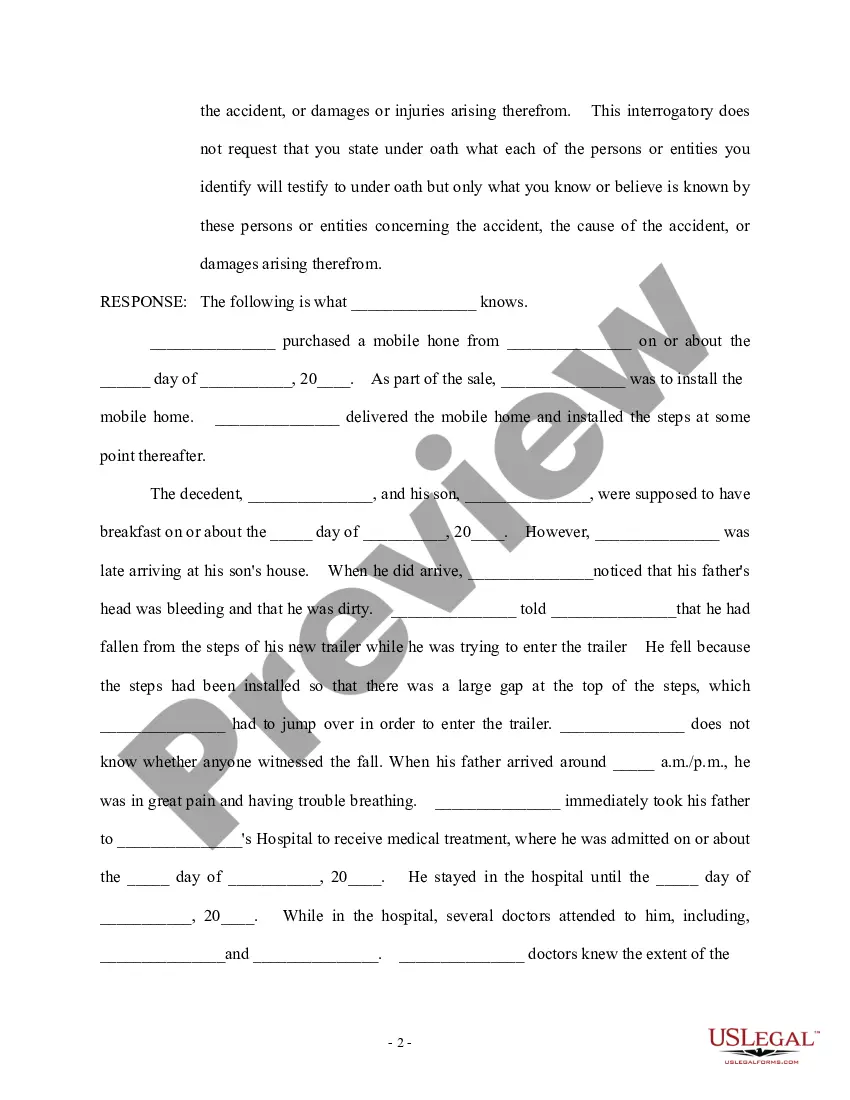
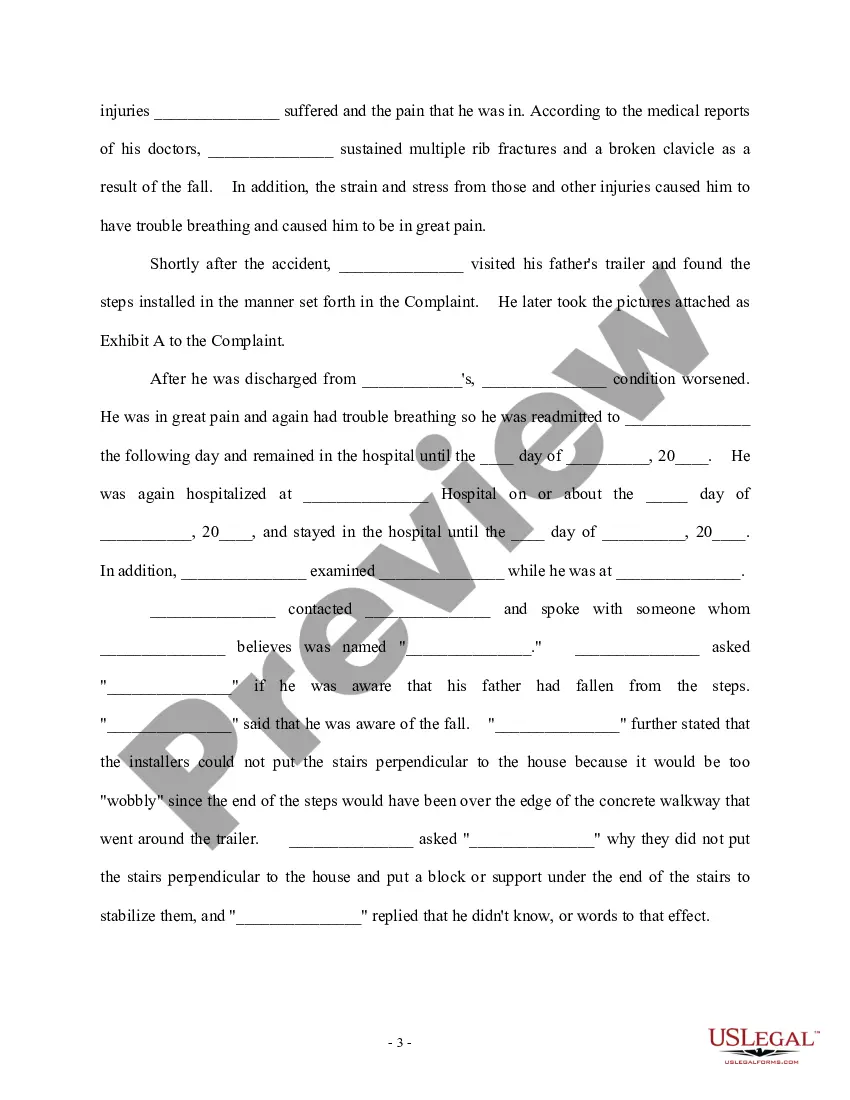
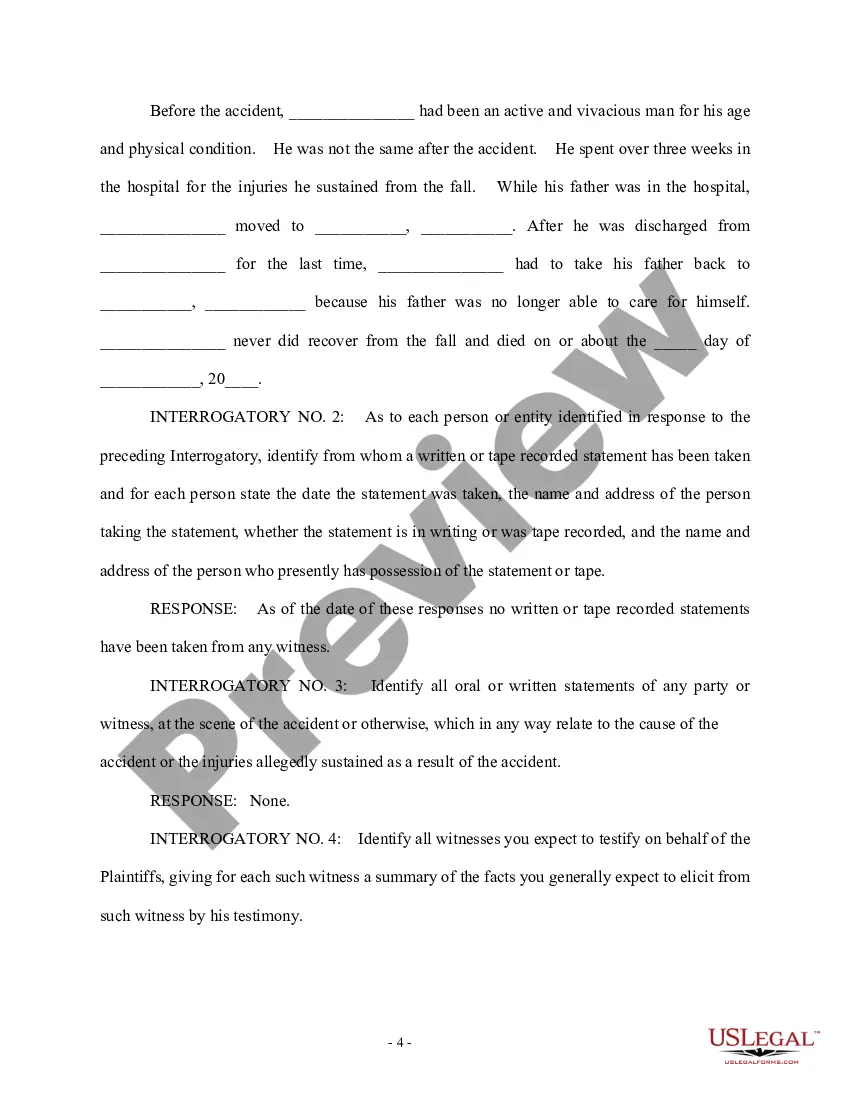
Response To Interrogatories Florida
Description

Get your form ready online
Our built-in tools help you complete, sign, share, and store your documents in one place.
Make edits, fill in missing information, and update formatting in US Legal Forms—just like you would in MS Word.
Download a copy, print it, send it by email, or mail it via USPS—whatever works best for your next step.
Sign and collect signatures with our SignNow integration. Send to multiple recipients, set reminders, and more. Go Premium to unlock E-Sign.
If this form requires notarization, complete it online through a secure video call—no need to meet a notary in person or wait for an appointment.
We protect your documents and personal data by following strict security and privacy standards.

Make edits, fill in missing information, and update formatting in US Legal Forms—just like you would in MS Word.

Download a copy, print it, send it by email, or mail it via USPS—whatever works best for your next step.

Sign and collect signatures with our SignNow integration. Send to multiple recipients, set reminders, and more. Go Premium to unlock E-Sign.

If this form requires notarization, complete it online through a secure video call—no need to meet a notary in person or wait for an appointment.

We protect your documents and personal data by following strict security and privacy standards.
Looking for another form?



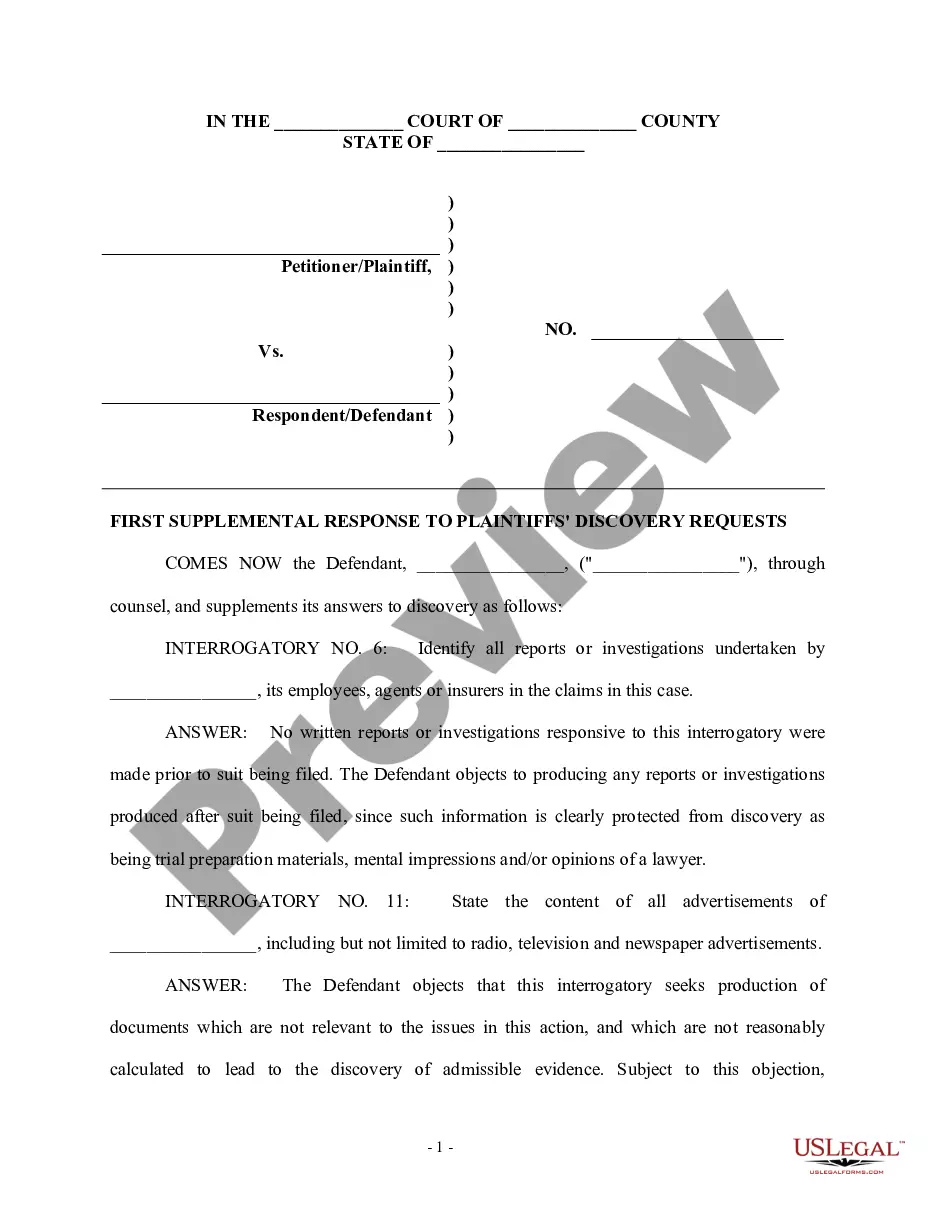


How to fill out Response To First Set Of Interrogatories - Personal Injury?
Obtaining legal documents that adhere to federal and local statutes is essential, and the web provides numerous alternatives to choose from.
However, what’s the benefit of expending time hunting for the properly constructed Response To Interrogatories Florida example online when the US Legal Forms digital repository already holds such documents gathered in one location.
US Legal Forms is the most extensive online legal archive featuring over 85,000 editable templates created by lawyers for any business and personal situation.
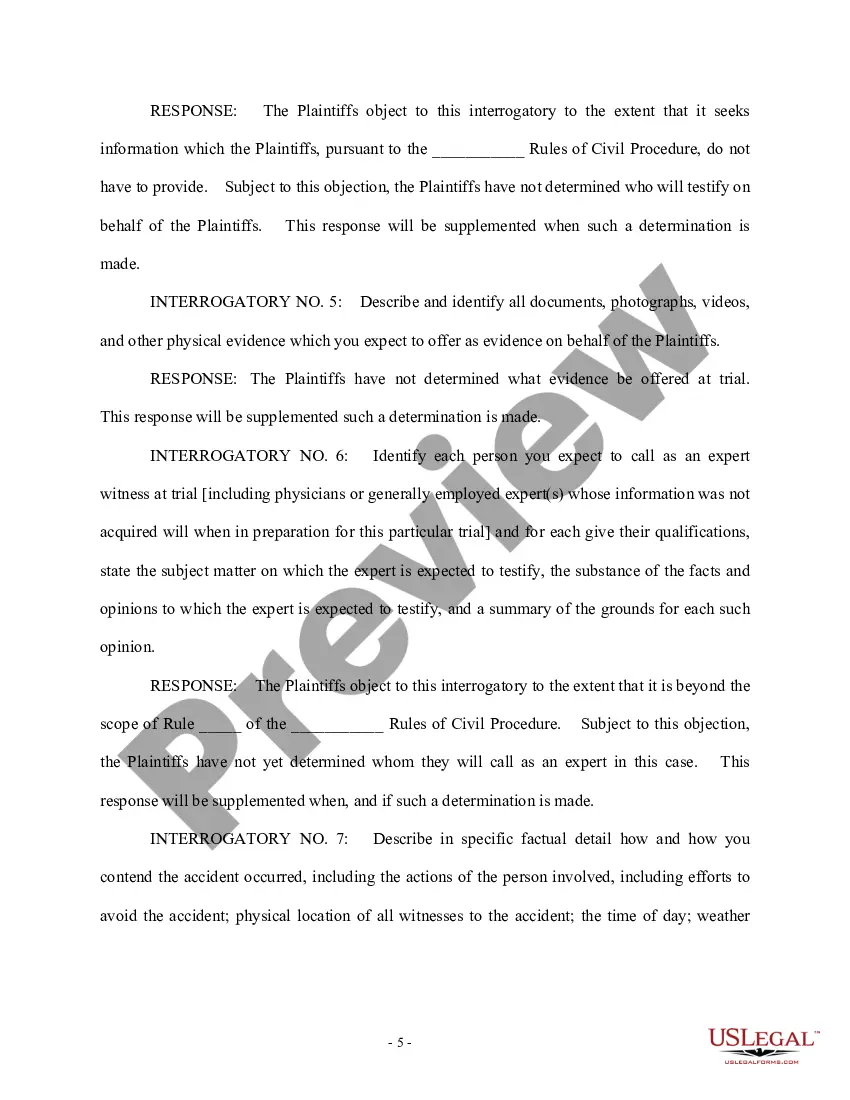
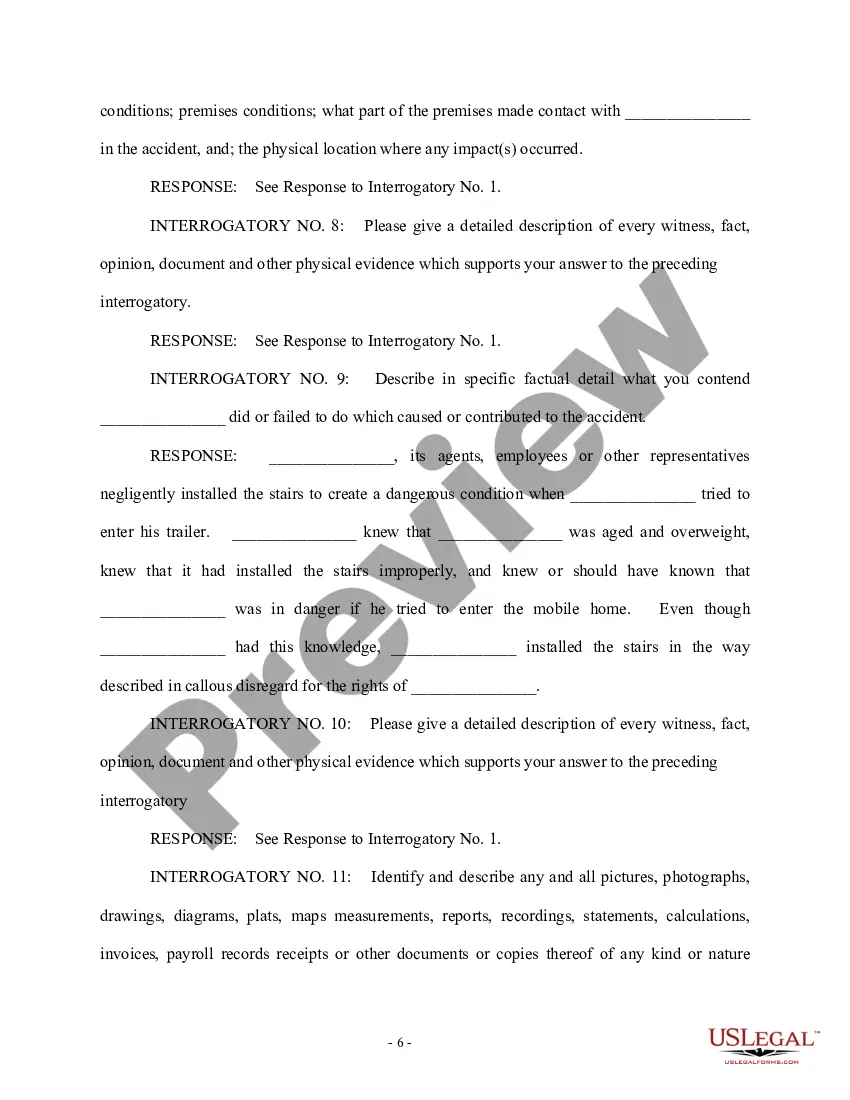
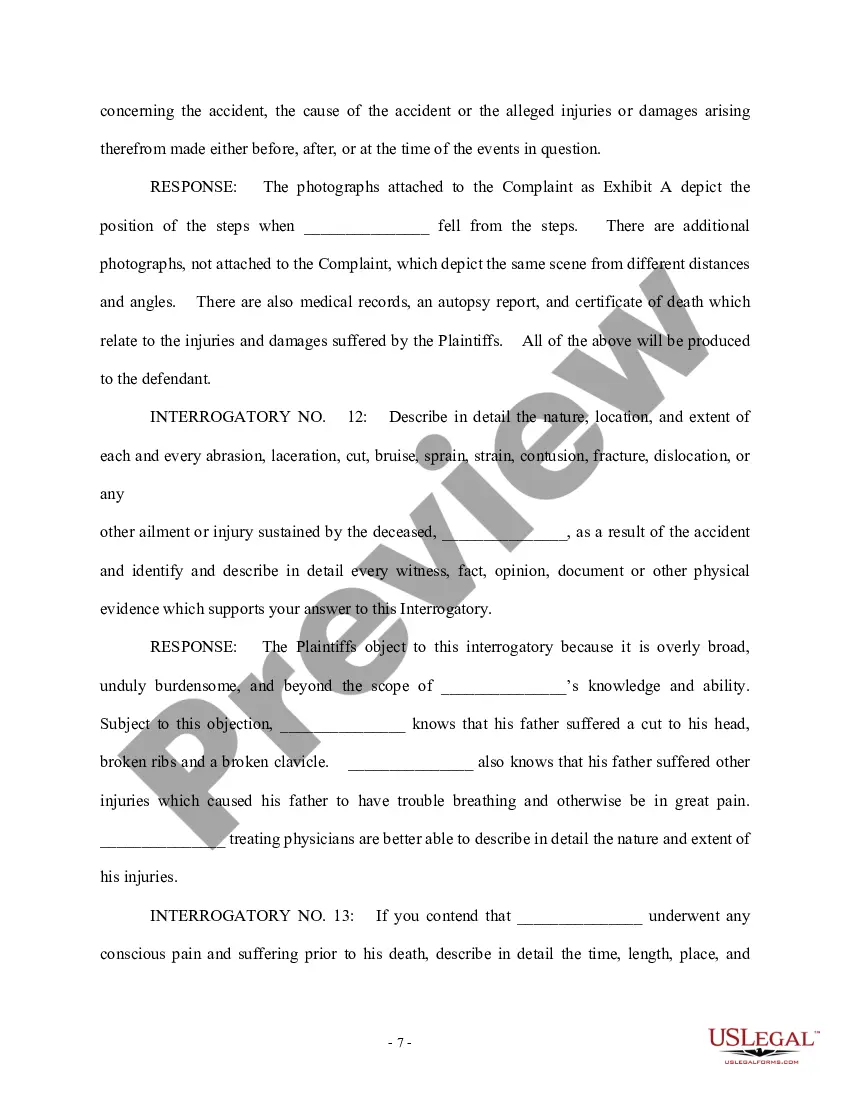
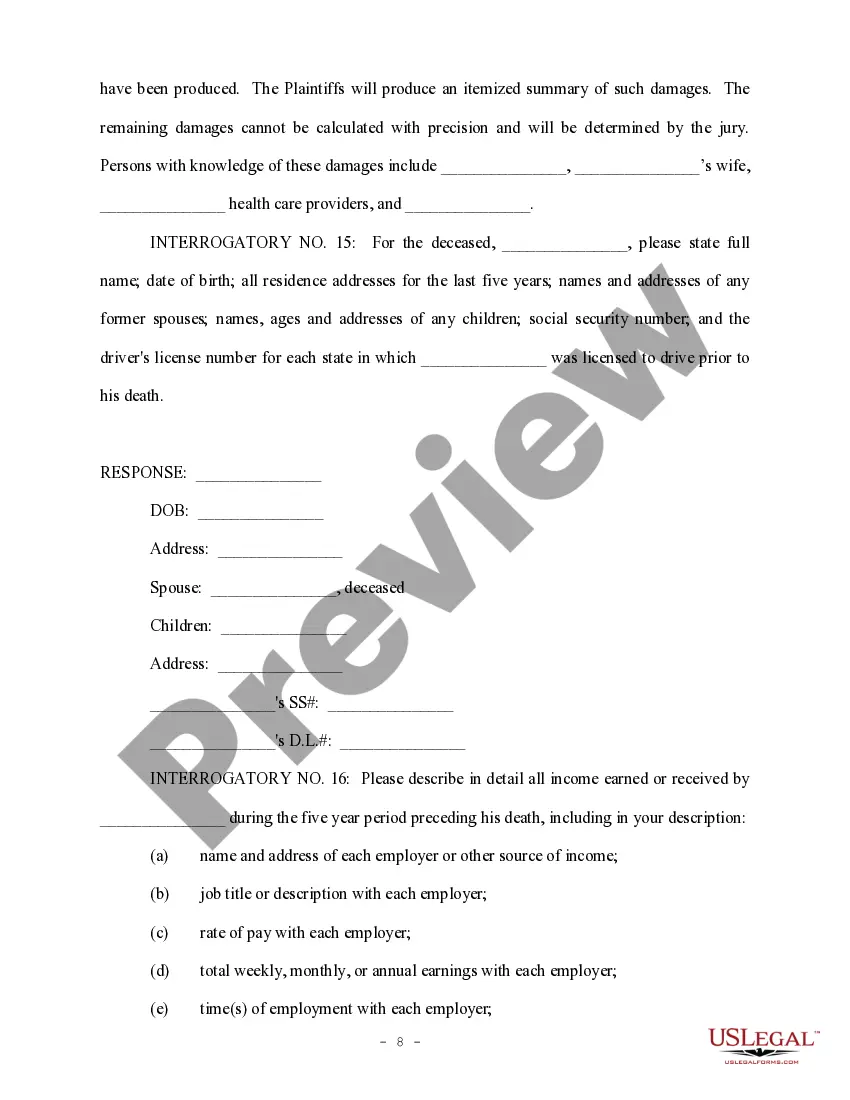
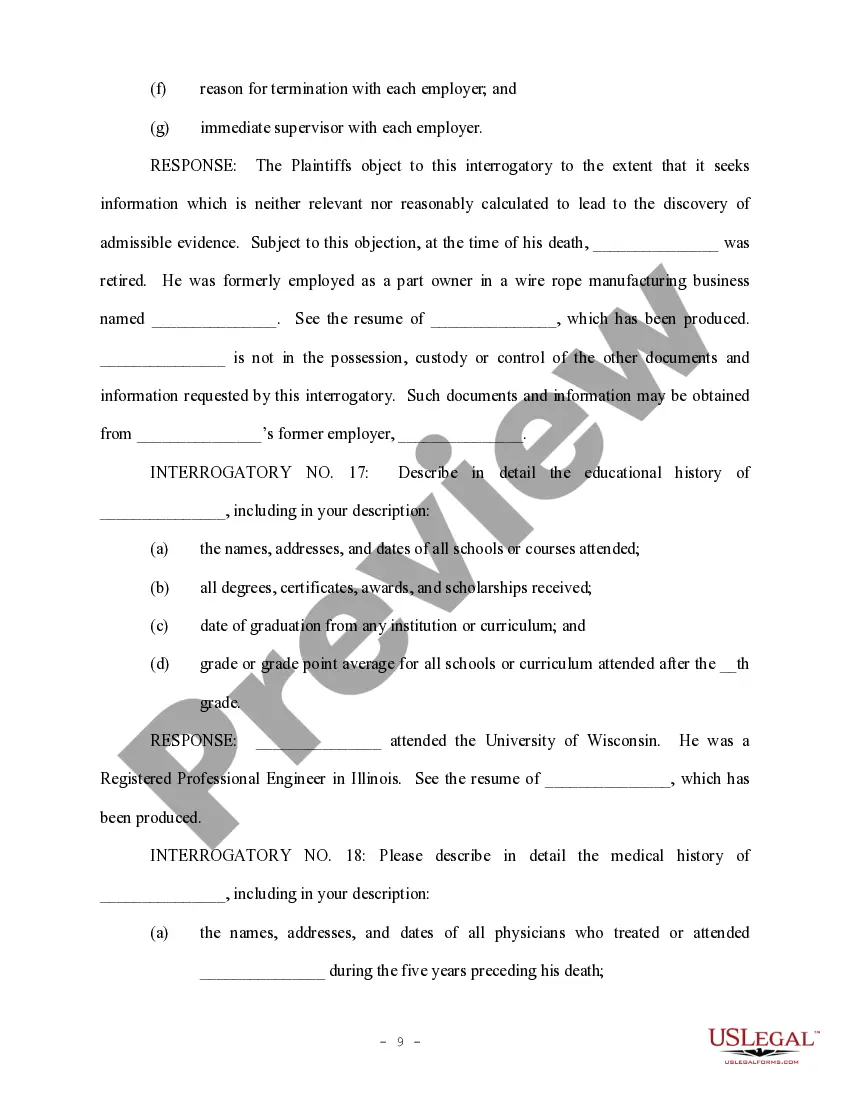
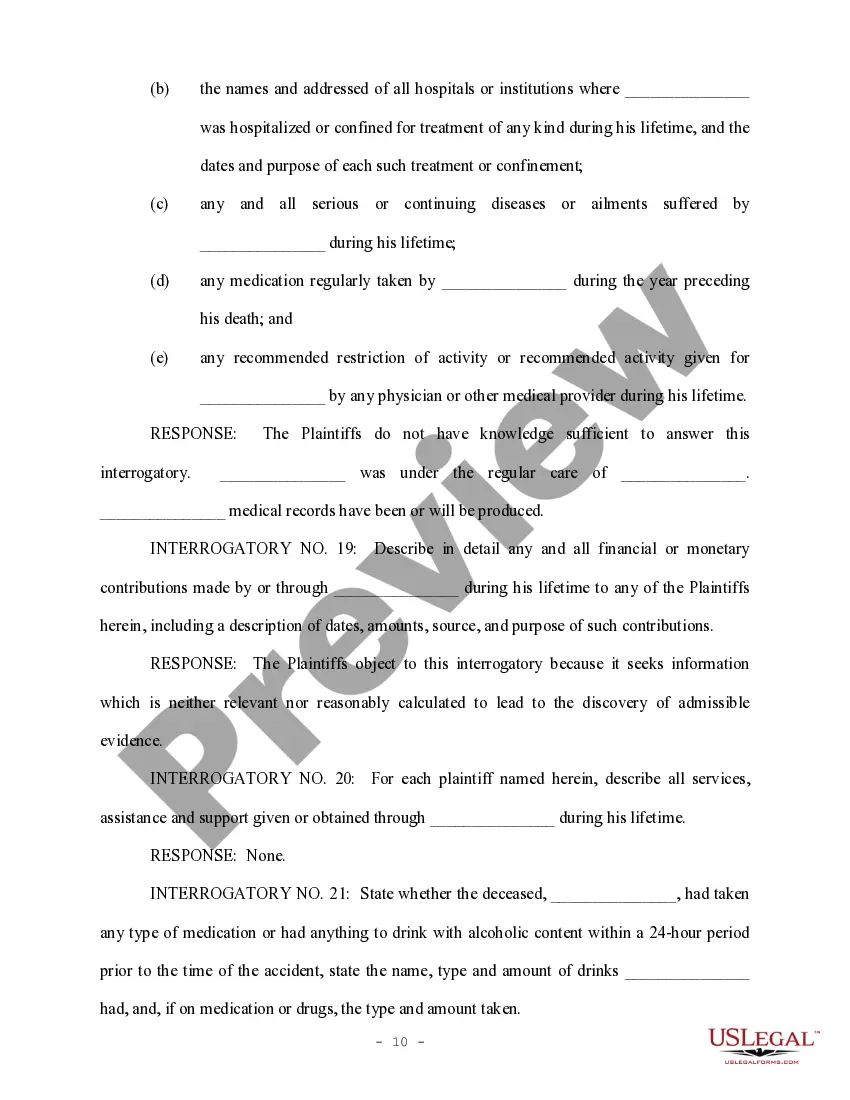
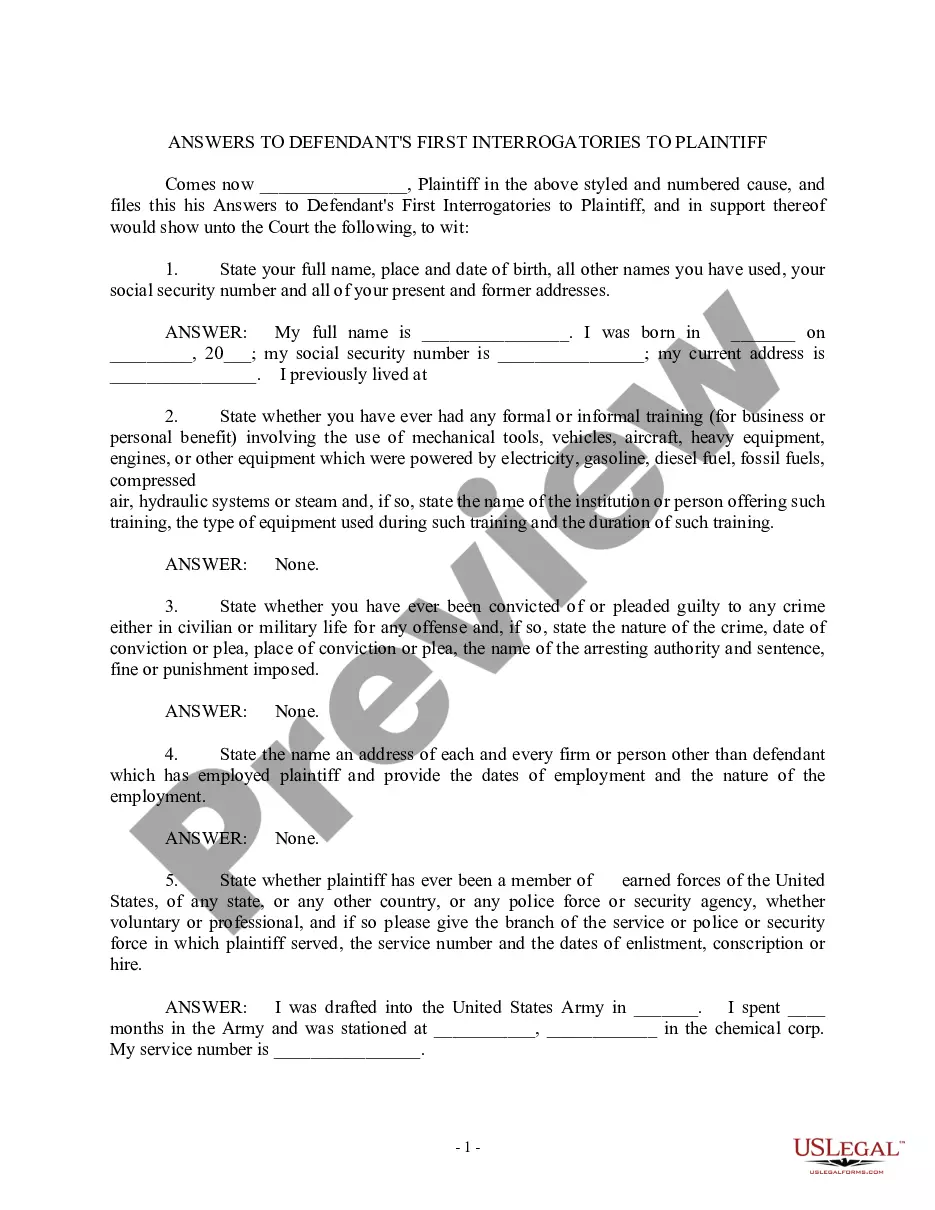
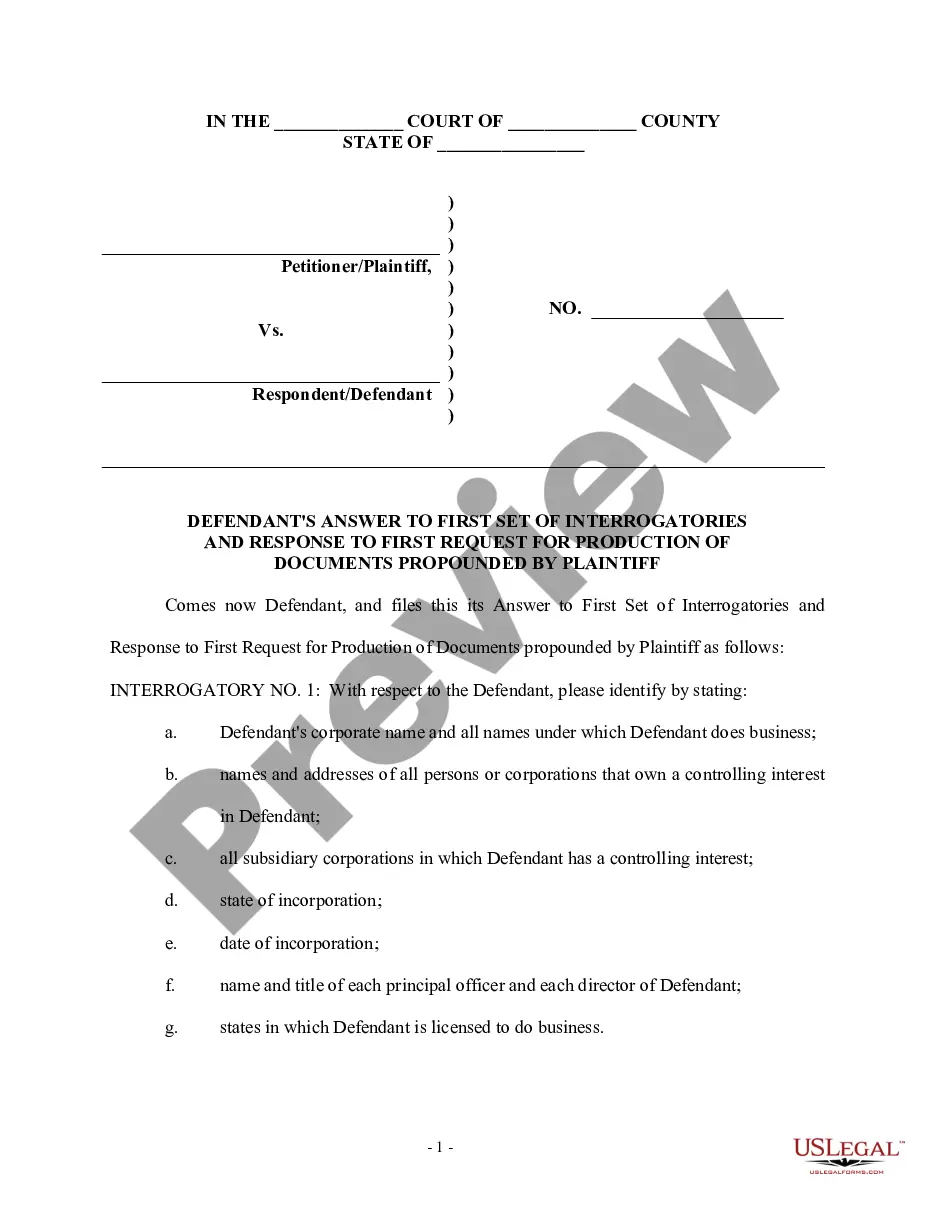
Explore the template using the Preview feature or through the text information to verify it meets your requirements.
- They are easy to navigate with all documents categorized by state and intended use.
- Our experts stay updated with legal changes, ensuring your documents are always current and compliant when acquiring a Response To Interrogatories Florida from our site.
- Acquiring a Response To Interrogatories Florida is quick and straightforward for both existing and new customers.
- If you have an account with an active subscription, Log In and download the required document sample in the appropriate format.
- If you are a newcomer to our website, follow the steps below.
Form popularity
FAQ
Interrogatories are a list of questions written on a court form. The receiving party answers the interrogatories by copying the questions onto a form called ?Responses to Interrogatories? and then responding to each question, signing the document to affirm the information in the responses is true and accurate.
You have 30 days to respond to the interrogatories. If you were served by mail, you typically have 35 days from the date of mailing to respond. Just below the top caption identifying the case, the form identifies the Answering (or Responding) party. Make sure that this is you.
If you are unable to answer a specific question because you don't know or don't have access to the appropriate information, you must indicate the reasons. You may refer to a previous response when responding to an interrogatory providing the previous response sufficiently answers the later interrogatory.
The party to whom the interrogatories are directed must serve the answers and any objections within 30 days after the service of the interrogatories, except that a respondent may serve answers or objections within 45 days after service of the process and initial pleading on that respondent.
There is no form for your answer, but you typically have to respond in a specified format, using paper with numbers down the left-hand side, with your name and address at the top left, the name of the court and of the case, and the case number.