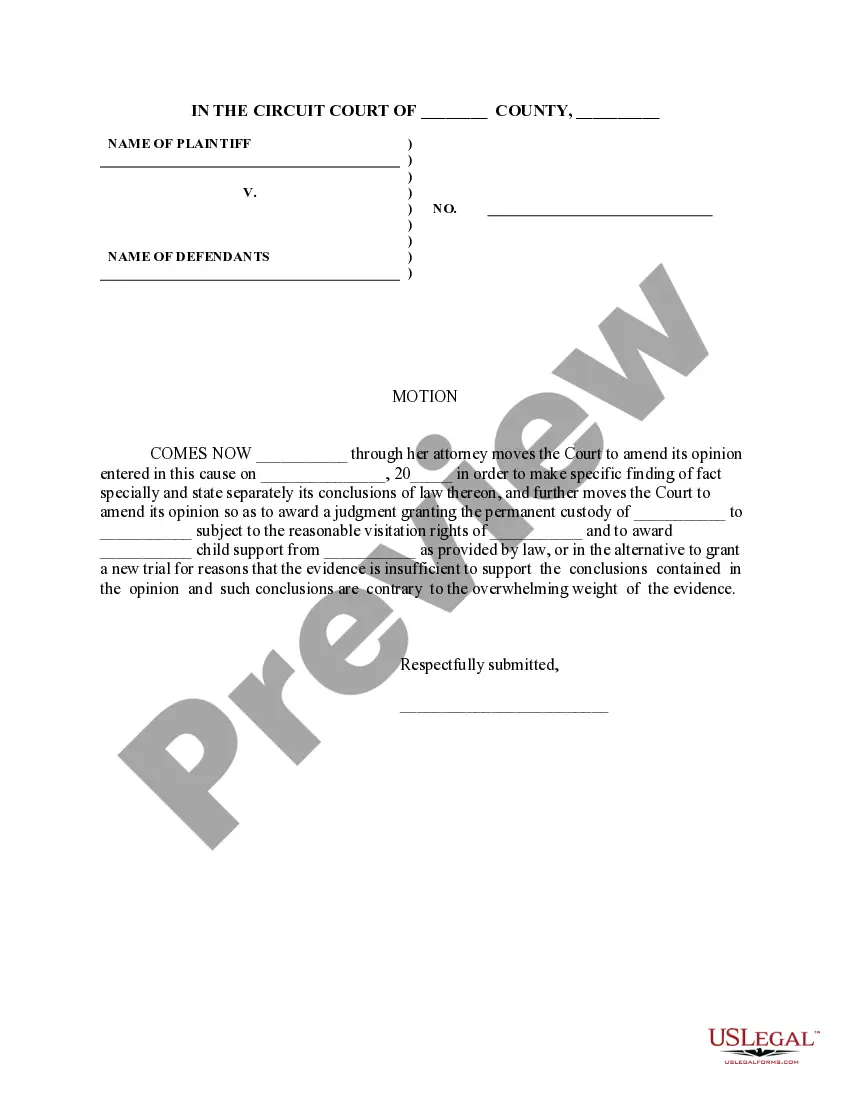
Fact Conclusions Without Inference Indicators
Description
Get your form ready online
Our built-in tools help you complete, sign, share, and store your documents in one place.
Make edits, fill in missing information, and update formatting in US Legal Forms—just like you would in MS Word.
Download a copy, print it, send it by email, or mail it via USPS—whatever works best for your next step.
Sign and collect signatures with our SignNow integration. Send to multiple recipients, set reminders, and more. Go Premium to unlock E-Sign.
If this form requires notarization, complete it online through a secure video call—no need to meet a notary in person or wait for an appointment.
We protect your documents and personal data by following strict security and privacy standards.

Make edits, fill in missing information, and update formatting in US Legal Forms—just like you would in MS Word.

Download a copy, print it, send it by email, or mail it via USPS—whatever works best for your next step.

Sign and collect signatures with our SignNow integration. Send to multiple recipients, set reminders, and more. Go Premium to unlock E-Sign.

If this form requires notarization, complete it online through a secure video call—no need to meet a notary in person or wait for an appointment.

We protect your documents and personal data by following strict security and privacy standards.
Looking for another form?

How to fill out Motion To Make Specific Findings Of Fact And State Conclusions Of Law - Domestic Relations?
Legal administration can be daunting, even for seasoned professionals.
When you seek a Fact Conclusions Without Inference Indicators and struggle to find time to search for the correct and current version, the tasks can become stressful.
Access state- or county-specific legal and business documents with ease.
US Legal Forms addresses all requirements you may encounter, whether personal or professional paperwork, all in one convenient location.
If it's your first experience with US Legal Forms, create a free account to gain unlimited access to all platform benefits. Here are the steps to follow after finding the form you need: Confirm it is the correct document by previewing it and reviewing its details. Ensure the template is approved in your state or county. Select Buy Now when you are ready. Opt for a monthly subscription plan. Choose your preferred file format and Download, fill out, eSign, print, and submit your document. Benefit from the US Legal Forms online catalog, supported by 25 years of expertise and reliability. Streamline your daily document management into a seamless and user-friendly process today.
- Utilize state-of-the-art tools to complete and oversee your Fact Conclusions Without Inference Indicators.
- Access a valuable database of articles, guides, handbooks, and materials pertinent to your context and requirements.
- Save time and energy searching for necessary documents, leveraging US Legal Forms’ advanced search and Preview feature to locate Fact Conclusions Without Inference Indicators and acquire it.
- If you possess a subscription, Log In to your US Legal Forms account, look for the form, and retrieve it.
- Visit My documents tab to review the documents you have previously saved and manage your folders as desired.
- An extensive web form catalog can be a transformational solution for anyone aiming to manage these circumstances effectively.
- US Legal Forms stands out as a leading provider of online legal forms, boasting over 85,000 state-specific legal documents available at your convenience.
- With US Legal Forms, you can efficiently tackle your legal needs.
Form popularity
FAQ
A conclusion indicator is not required in an argument, although it can enhance clarity. An argument can stand strong without these indicators, focusing instead on the logical connections between statements. This approach allows for fact conclusions without inference indicators to be effectively communicated. Emphasizing logical reasoning is key to making your argument compelling.
Indicators of conclusion are phrases that signal the end of reasoning and the presentation of a final point. These may include terms like 'in conclusion' or 'to summarize.' However, in fact conclusions without inference indicators, the conclusion can still be clear without these phrases. Recognizing the argument's flow is critical for understanding its outcome.
Not all arguments contain indicator words, and many can still be effective without them. While these words provide clarity and guidance, the core of an argument lies in its reasoning and logic. Fact conclusions without inference indicators can still convey meaningful points. Therefore, focus on the substance of the argument rather than solely on the language used.
Inference indicators are words or phrases that signal the presence of a conclusion or premise. Common examples include 'therefore,' 'thus,' and 'hence.' While these indicators can enhance clarity, they are not required for fact conclusions without inference indicators. Understanding the argument's structure is more important than relying solely on these indicators.
An argument becomes invalid when its premises do not logically support its conclusion. This can occur due to faulty reasoning, unsupported claims, or contradictions within the argument. Recognizing these flaws is vital to ensure that fact conclusions without inference indicators maintain their integrity. Evaluating each component of an argument helps identify weaknesses.
A statement that merely expresses an opinion or a belief is not considered an argument. For instance, saying 'I like chocolate' does not qualify as an argument because it lacks reasoning or evidence. In contrast, fact conclusions without inference indicators require logical support to validate the claim. This distinction is essential for clear and effective communication.
Yes, an argument can be presented without the use of indicator words. While these words often help clarify the structure of an argument, they are not strictly necessary. In fact conclusions without inference indicators can still effectively communicate a point. Understanding the logic behind the argument is crucial, regardless of the presence of indicators.
To identify fact conclusions without inference indicators effectively, look for words like 'therefore,' 'thus,' and 'hence.' These words signal that a conclusion is being drawn based on the preceding information. By recognizing these indicators, you can better differentiate between facts and opinions. Utilizing this approach can enhance your understanding of legal documents and improve your decision-making.