Motion To Lift Restraining Order Form With A Lawyer
Description
Get your form ready online
Our built-in tools help you complete, sign, share, and store your documents in one place.
Make edits, fill in missing information, and update formatting in US Legal Forms—just like you would in MS Word.
Download a copy, print it, send it by email, or mail it via USPS—whatever works best for your next step.
Sign and collect signatures with our SignNow integration. Send to multiple recipients, set reminders, and more. Go Premium to unlock E-Sign.
If this form requires notarization, complete it online through a secure video call—no need to meet a notary in person or wait for an appointment.
We protect your documents and personal data by following strict security and privacy standards.
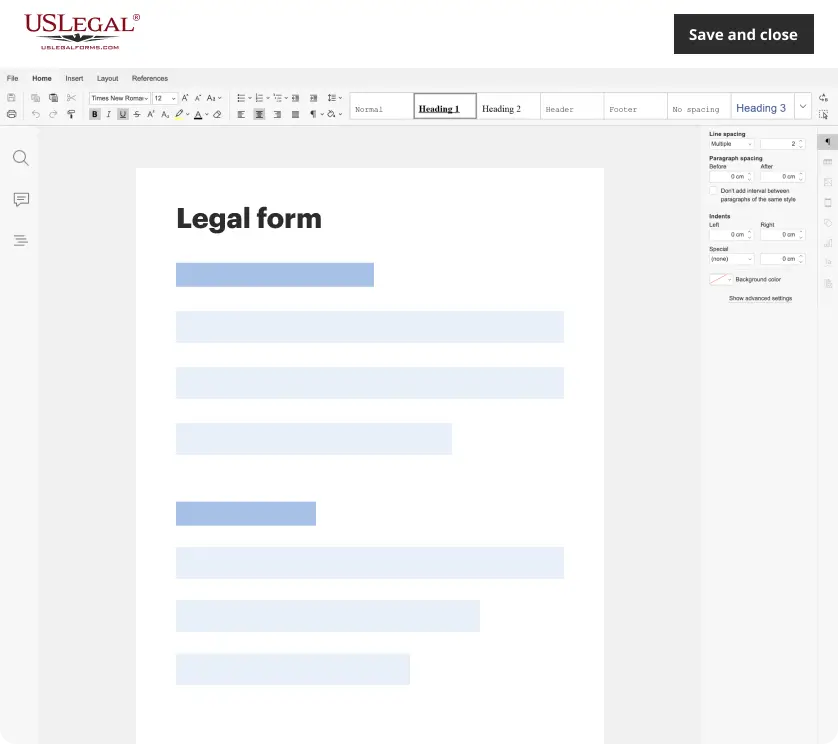
Make edits, fill in missing information, and update formatting in US Legal Forms—just like you would in MS Word.
Download a copy, print it, send it by email, or mail it via USPS—whatever works best for your next step.
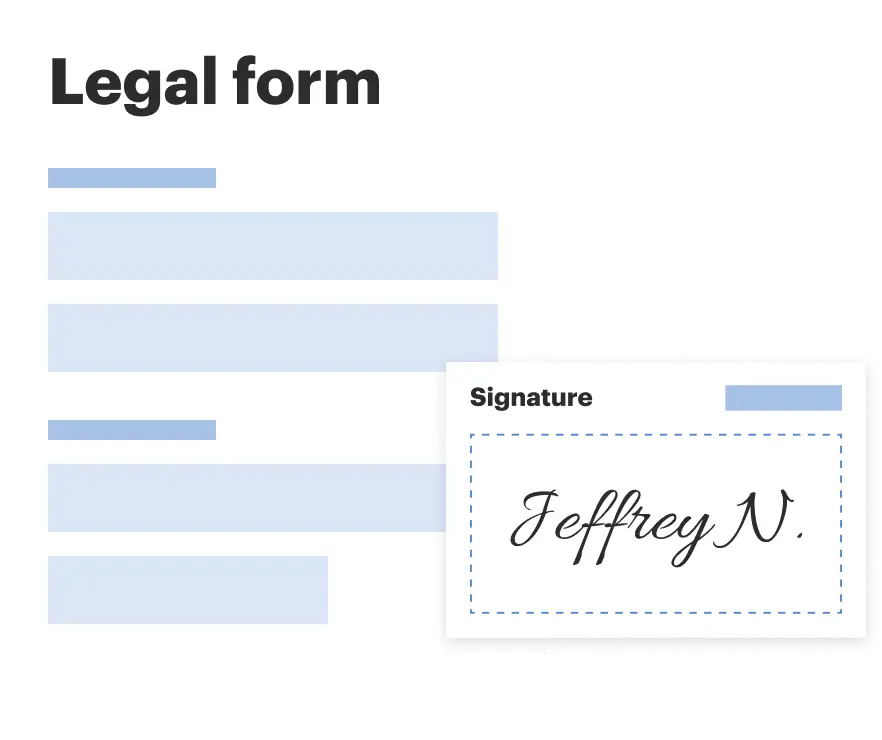
Sign and collect signatures with our SignNow integration. Send to multiple recipients, set reminders, and more. Go Premium to unlock E-Sign.

If this form requires notarization, complete it online through a secure video call—no need to meet a notary in person or wait for an appointment.
We protect your documents and personal data by following strict security and privacy standards.
Looking for another form?
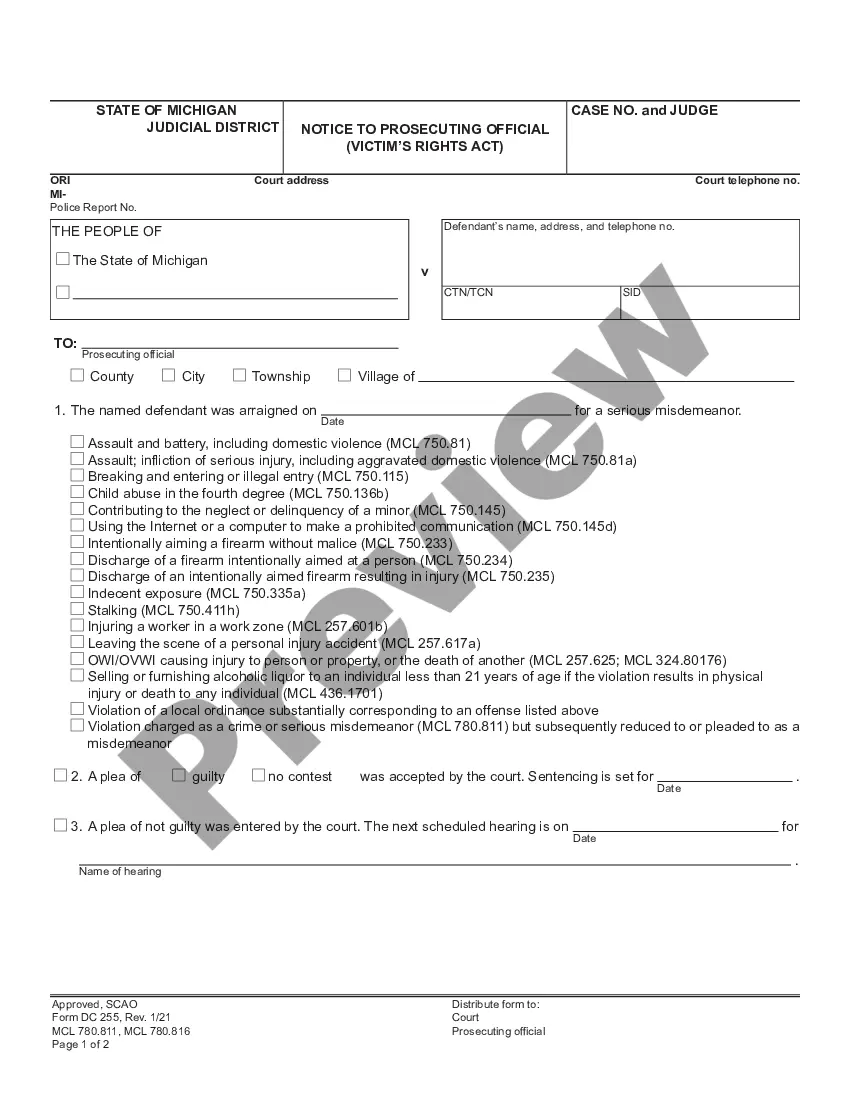
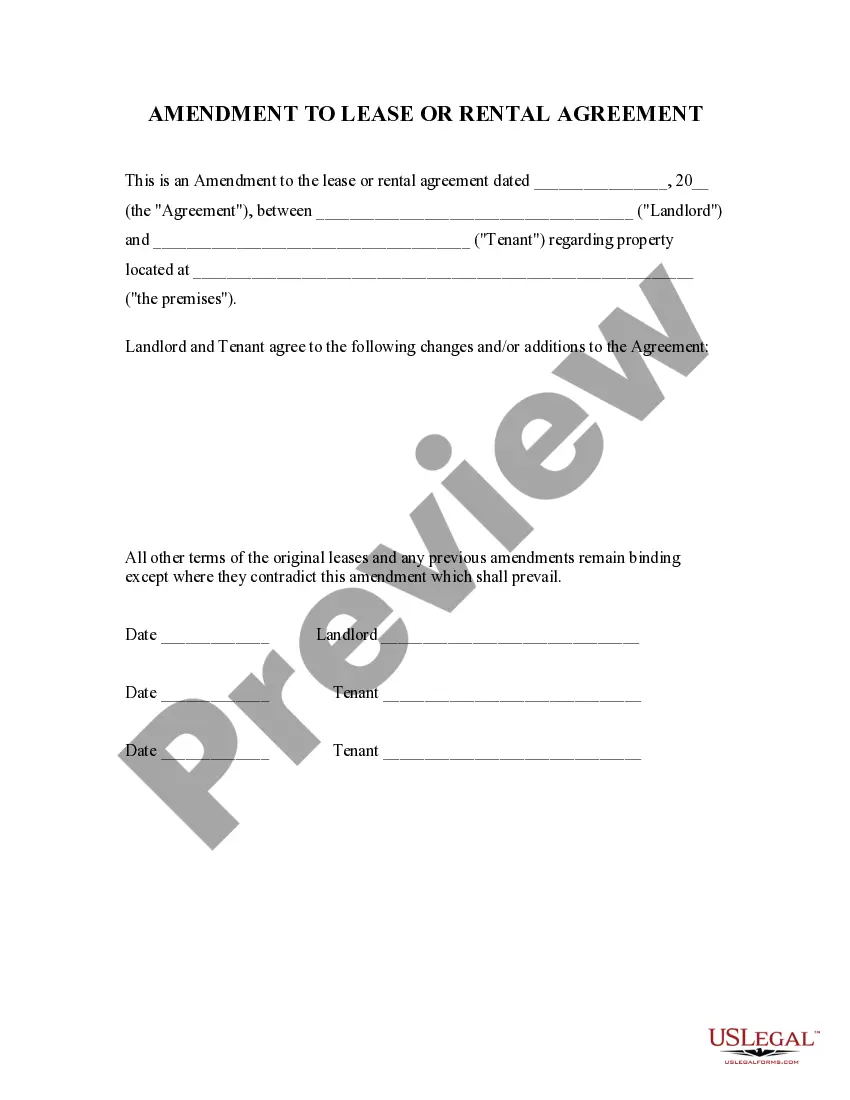
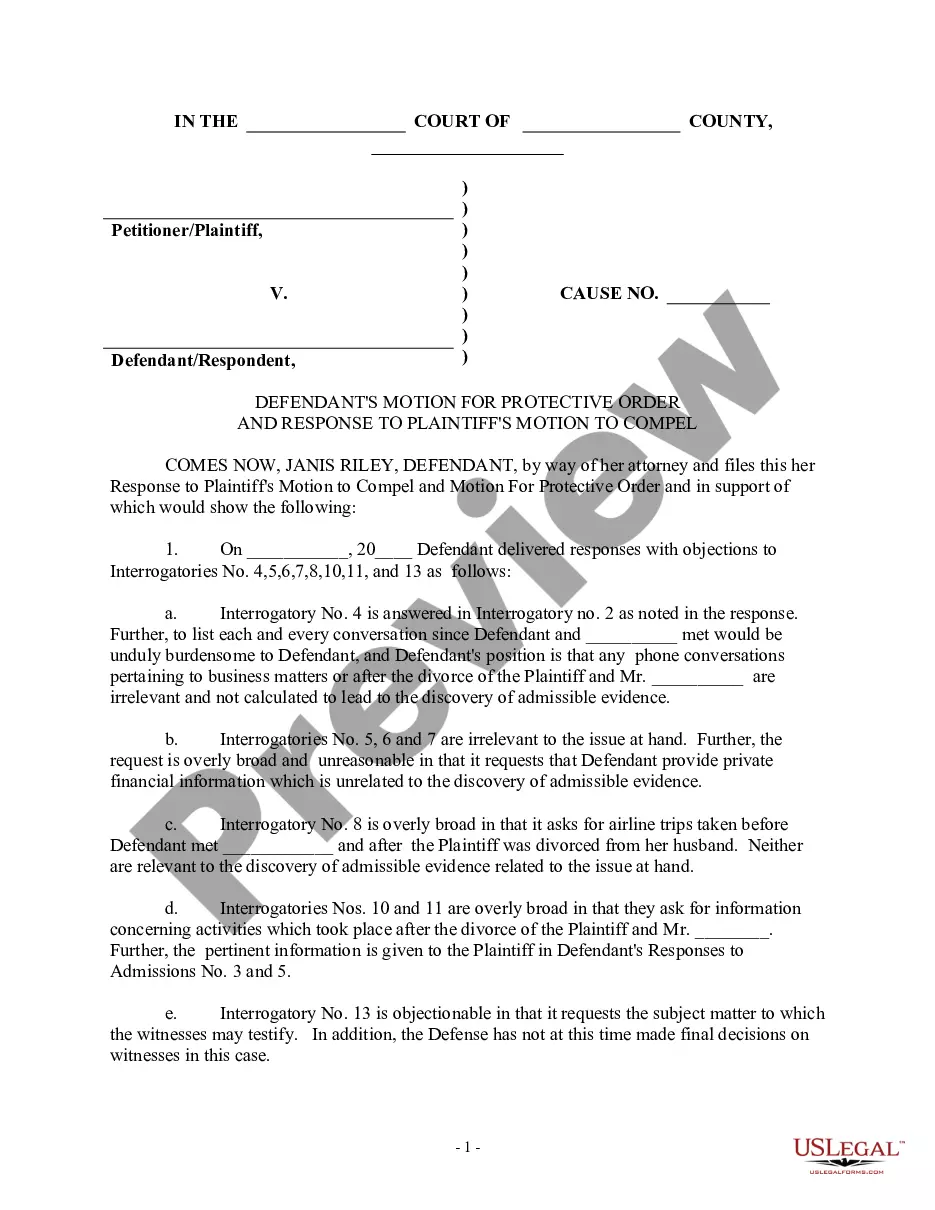
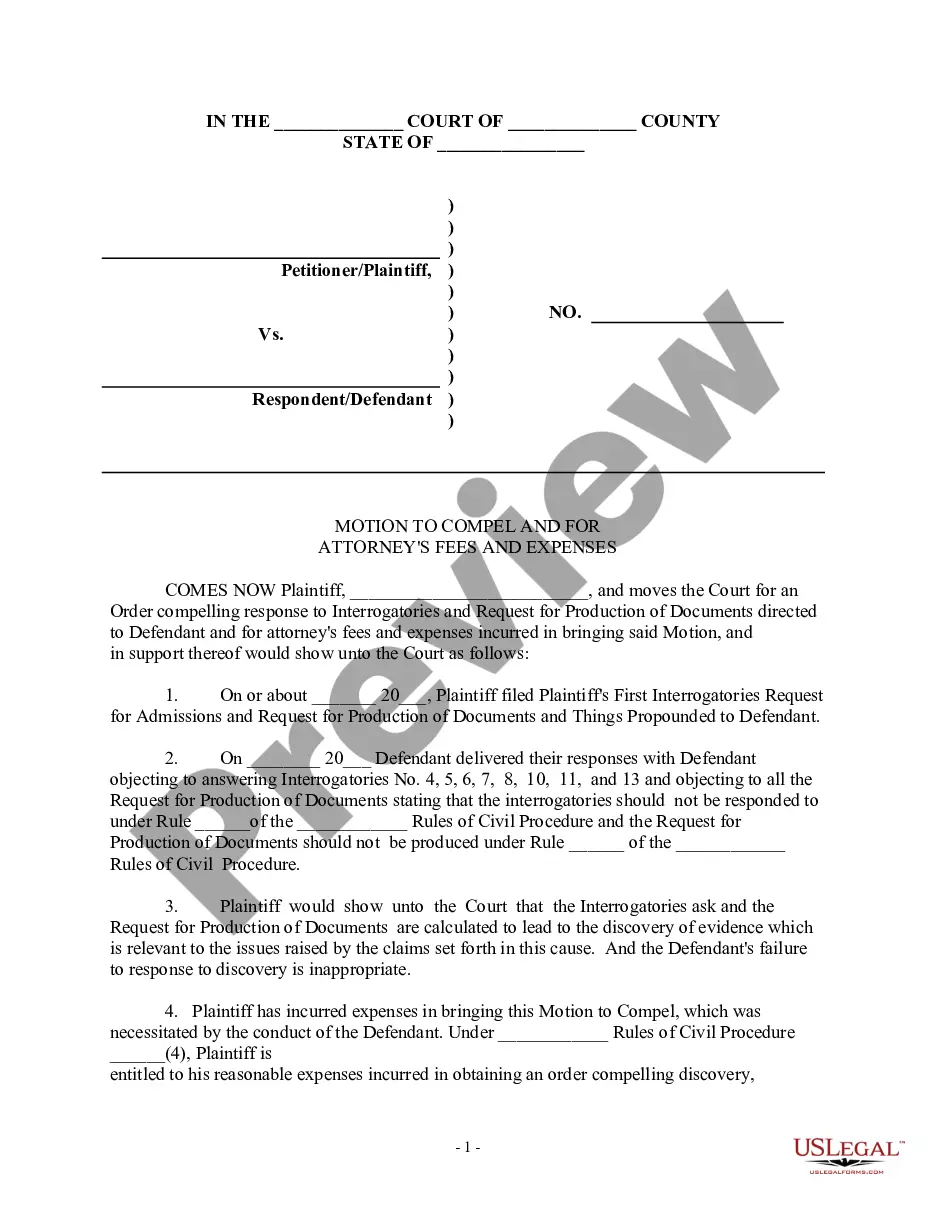
How to fill out Defendant's Motion For Protective Order And Response To Plaintiff's Motion To Compel?
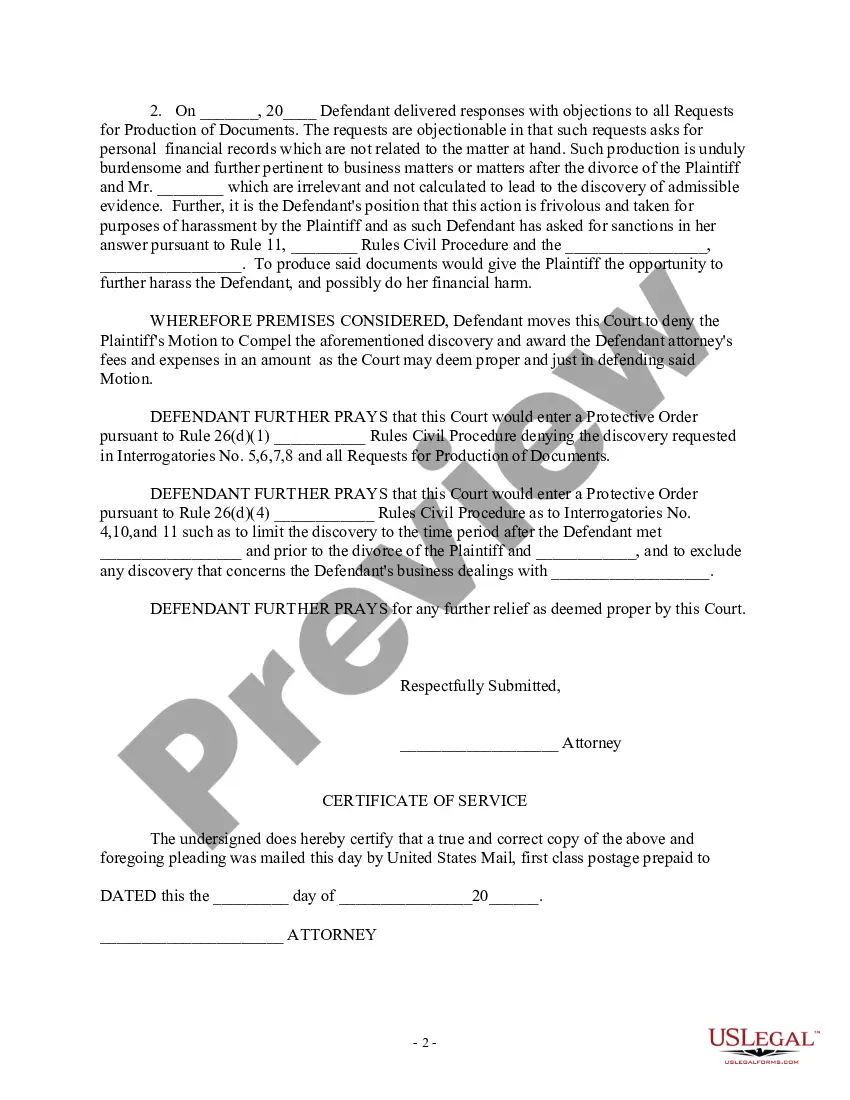
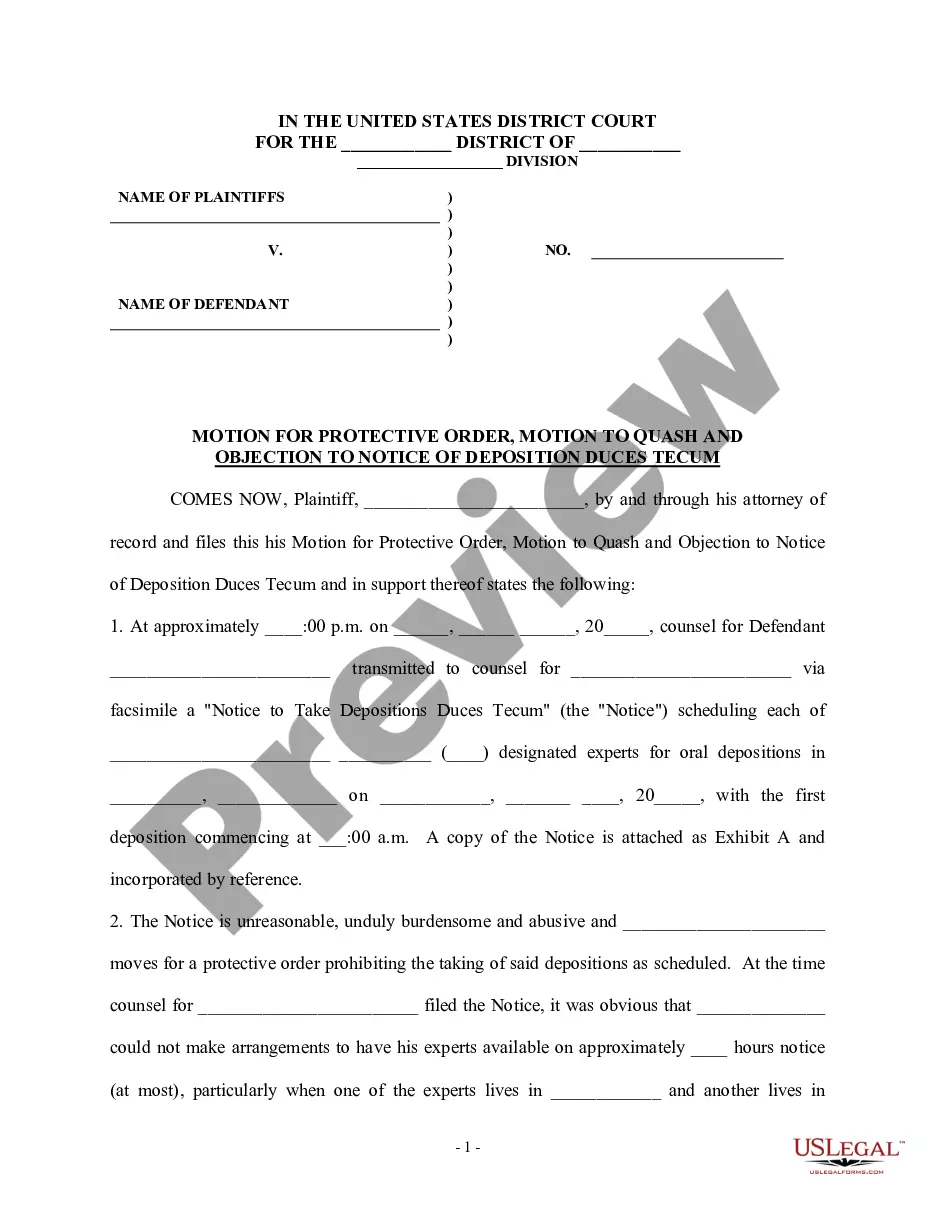
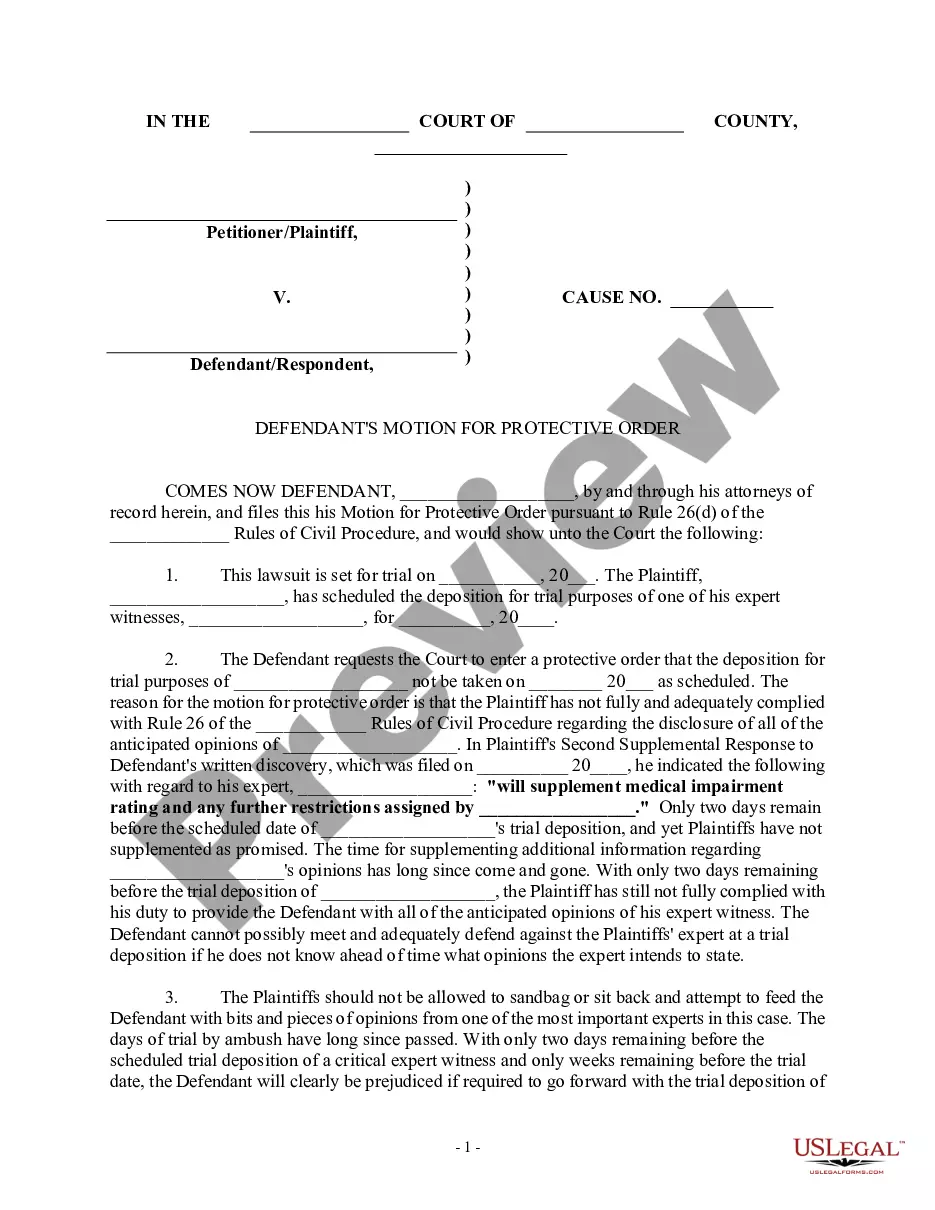
The Motion To Remove Restraining Order Document With An Attorney you find on this page is a reusable legal template created by experienced attorneys in compliance with federal and state laws and regulations.
For over 25 years, US Legal Forms has supplied individuals, organizations, and lawyers with more than 85,000 validated, state-specific documents for any business and personal situation.
Subscribe to US Legal Forms to have validated legal templates for all of life’s situations readily available.
- Search for the document you require and review it.
- Browse through the file you searched and preview it or examine the document description to ensure it meets your requirements. If it does not, use the search bar to find the correct one. Click Buy Now when you have identified the template you need.
- Register and Log In.
- Choose the pricing plan that best suits you and sign up for an account. Use PayPal or a credit card to make a swift payment. If you already have an account, Log In and check your subscription to proceed.
- Obtain the editable template.
- Pick the format you want for your Motion To Remove Restraining Order Document With An Attorney (PDF, DOCX, RTF) and download the file onto your device.
- Fill out and sign the documentation.
- Print the template to complete it manually. Alternatively, use an online versatile PDF editor to quickly and accurately fill out and sign your form with a legally-binding electronic signature.
- Re-download your documents as needed.
- Utilize the same document again whenever necessary. Access the My documents tab in your profile to redownload any previously saved documents.
Form popularity
FAQ
An attorney can issue a subpoena without a court file being opened, but if the clerk issues a blank subpoena, a court file must be opened and will collect a $50 fee. Rule 1.1702(5). A court file will also be opened for any motions relating to the subpoena and the clerk will collect a $50 fee then as well.
In addition, rule 1.943 allows for voluntary dismissal of the plaintiff's petition without prejudice once as a matter of right. Id. r. 1.943.
In Iowa, you have to file an action against the other party to seek enforcement of the existing court decree order. The enforcement action is formally known as an Application for Rule to Show Cause, commonly referred to as a contempt filing. This filing brings the opposing party's bad acts to the court's attention.
You must electronically file this Appearance and Answer using EDMS at unless you obtain from the court an exemption from electronic filing requirements.
IT IS THEREFORE ORDERED AS FOLLOWS: Except in exigent or unusual circumstances, any continuance motion or request must be in writing, signed by the client, and filed not later than seven days before the court event for which rescheduling is requested.
In Iowa, you have to file an action against the other party to seek enforcement of the existing court decree order. The enforcement action is formally known as an Application for Rule to Show Cause, commonly referred to as a contempt filing. This filing brings the opposing party's bad acts to the court's attention.
An order to show cause is a type of court order that requires one or more of the parties to a case to justify, explain, or prove something to the court. Courts commonly use orders to show cause when the judge needs more information before deciding whether or not to issue an order requested by one of the parties.
If you want to file for divorce or are responding to a divorce your spouse has filed without using an attorney, you must use the forms in chapter 17 of the Iowa Court Rules. The forms are available free of charge on this website.