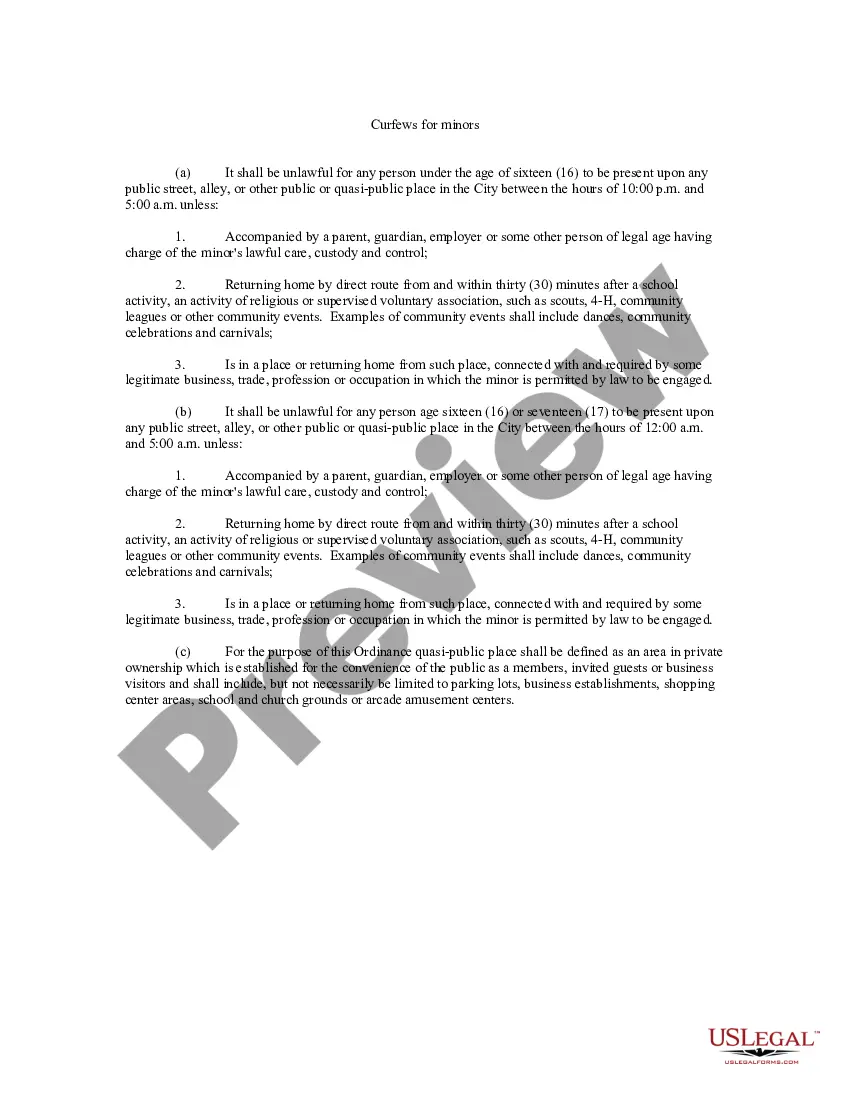
Curfews For Minors
Description
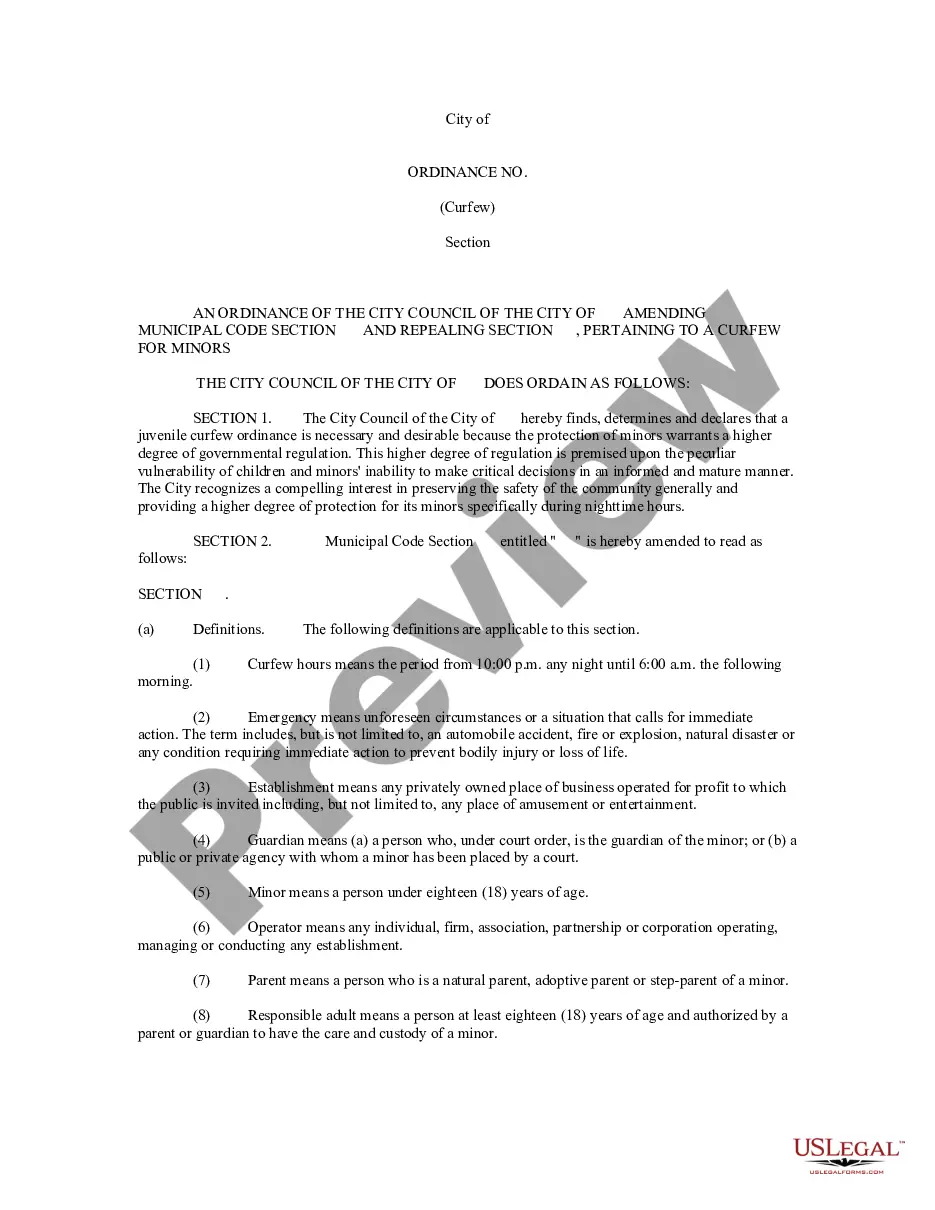
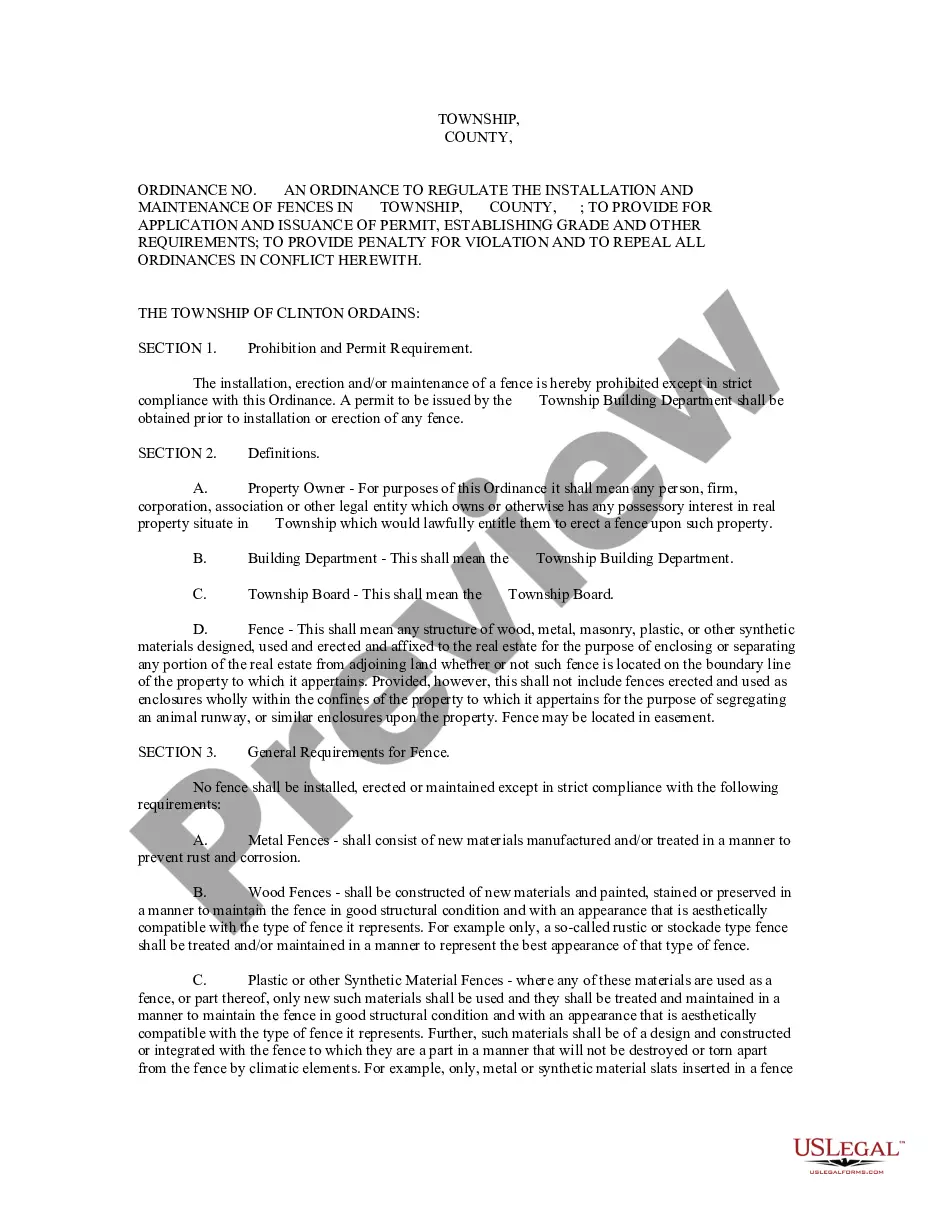



How to fill out Curfews For Minors?
The Curfews For Minors presented on this page is a versatile formal template crafted by experienced attorneys in compliance with federal and local laws.
For over 25 years, US Legal Forms has supplied individuals, organizations, and legal professionals with more than 85,000 verified, state-specific documents for various business and personal situations. It’s the quickest, easiest, and most dependable method to obtain the paperwork you require, as the service assures the utmost level of data security and anti-malware safeguards.
Subscribe to US Legal Forms to have certified legal documents available for every aspect of life.
- Search for the document you require and review it.
- Browse the file you searched for and preview it or read the form description to confirm it meets your needs. If it doesn’t, use the search bar to find the correct one. Click Buy Now when you have found the template you require.
- Register and Log In.
- Choose the pricing plan that works for you and set up an account. Use PayPal or a credit card for a swift payment. If you already possess an account, Log In and verify your subscription to proceed.
- Obtain the fillable template.
- Select the format you desire for your Curfews For Minors (PDF, DOCX, RTF) and save the document on your device.
- Fill out and sign the paperwork.
- Print the template to complete it by hand. Alternatively, use an online multifunctional PDF editor to swiftly and correctly fill out and sign your document with a legally-recognized electronic signature.
- Download your paperwork once again.
- Utilize the same document again whenever necessary. Access the My documents tab in your profile to redownload any forms that you have accessed previously.
Form popularity
FAQ
A legal curfew for minors varies by location and local laws, often restricting those under 18 from being out during certain late-night hours. Commonly, these laws aim to protect youth and prevent delinquency. To stay informed about the specific curfew laws affecting your area, refer to local ordinances or consult a legal resource. Knowing about curfews for minors can help you navigate any potential issues.
When explaining curfew, focus on the reasons behind it, such as safety and responsibility. Encourage open communication so the child feels involved in the process. Use real-life examples to illustrate potential risks of staying out late, and remind them that curfews for minors are intended to keep them safe. Ensuring they understand the rationale can lead to greater adherence.
To create an effective curfew, start by discussing expectations with your child, considering their age and maturity. Establish clear rules about the consequences of breaking curfew and ensure that both parties agree. It is also useful to revisit the curfew regularly, adjusting it as necessary to reflect changing circumstances or increased responsibility. Crafting good curfews for minors can build trust and accountability.
The allowed time for minors to be out depends on local curfew laws and parental guidelines. Many areas enforce curfews that require individuals under 18 to be indoors by a certain hour, often around 10 or 11 PM. Exceptions may apply for school events or emergencies, but verifying local rules is essential. Understanding curfews for minors can help you plan ahead.
Yes, New Jersey has curfew laws for minors. In many municipalities, these laws restrict individuals under the age of 18 from being outside during specified late-night hours. The specific times may vary, but typically curfew times range from 10 PM to 6 AM. Familiarizing yourself with local curfews for minors can help ensure compliance and avoid unnecessary trouble.
A reasonable curfew for a 17-year-old often varies by community and family values. Generally, teens can have a later curfew, possibly around midnight on weekends, while weekdays may be earlier, such as 10 or 11 PM. It's important to communicate openly about expectations to ensure the teen feels respected and responsible. Establishing clear curfews for minors can foster trust between parents and teens.
Several states have established curfew laws for minors, including California, Texas, and Florida, among others. The stipulations can widely differ from state to state or even city to city. Curfews for minors are designed to curtail juvenile misconduct and foster safer neighborhoods. For those seeking specific information on curfew laws in various states, US Legal Forms provides easy access to legal documents and guidelines.
Not every state has a designated curfew for minors; however, many states implement local ordinances that enforce curfew rules. These regulations can vary significantly, sometimes even within a single state. Curfews for minors are tailored to local needs, reflecting community values and safety concerns. To navigate these laws effectively, you can use resources like US Legal Forms, which offers information and templates related to curfew policies.
Yes, Maryland has curfew laws that apply to minors, with specific times designated when youth must be indoors. These laws can differ by county, so it is essential to check the local regulations. Curfews for minors are intended to protect them and reduce delinquency rates. If you’re a parent in Maryland, staying informed allows you to help your child adhere to these important laws.
A juvenile curfew refers to laws that set specific hours during which minors cannot be in public places without adult supervision. These curfews aim to limit juvenile crime and ensure the safety of young people. Curfews for minors vary by location, with each city or state having its own set of rules. Understanding these laws can help parents guide their children and support community standards.