Sample Photography Contract For Clients
Description
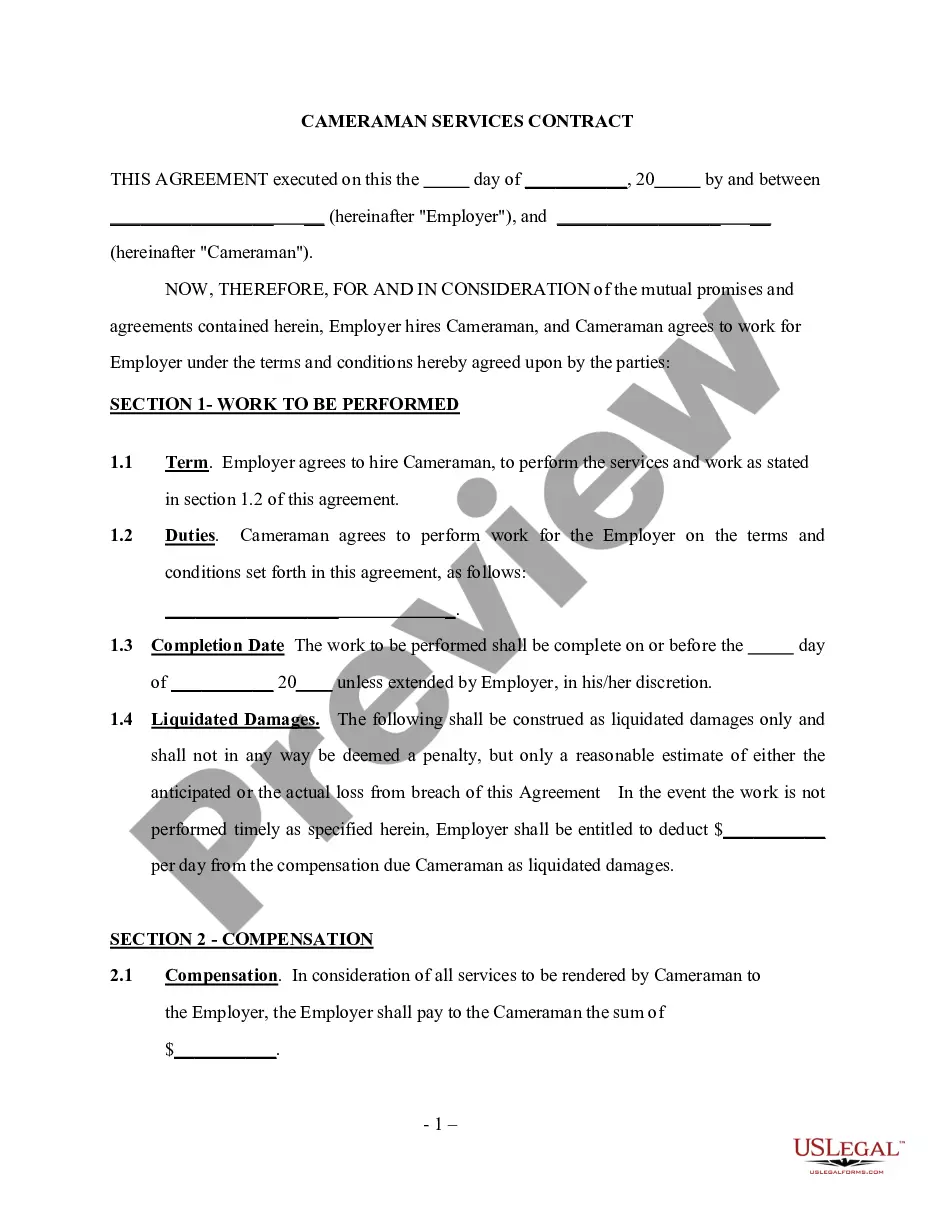
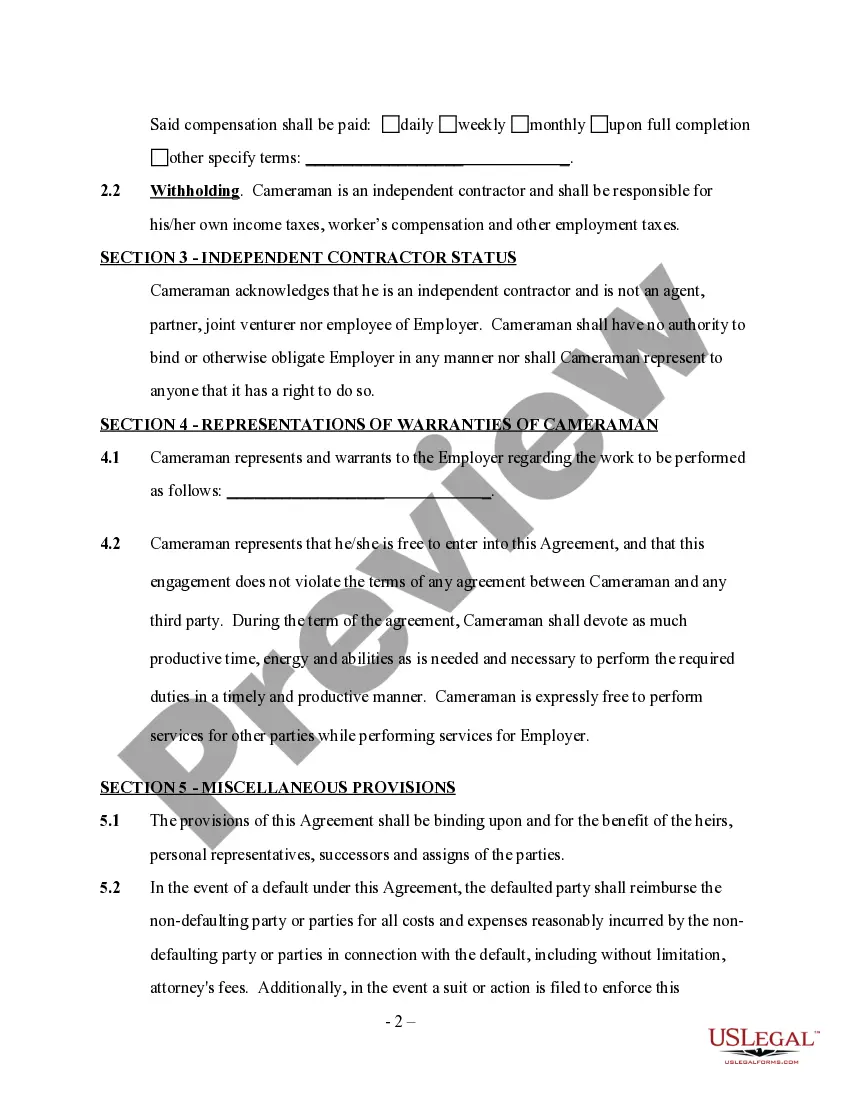
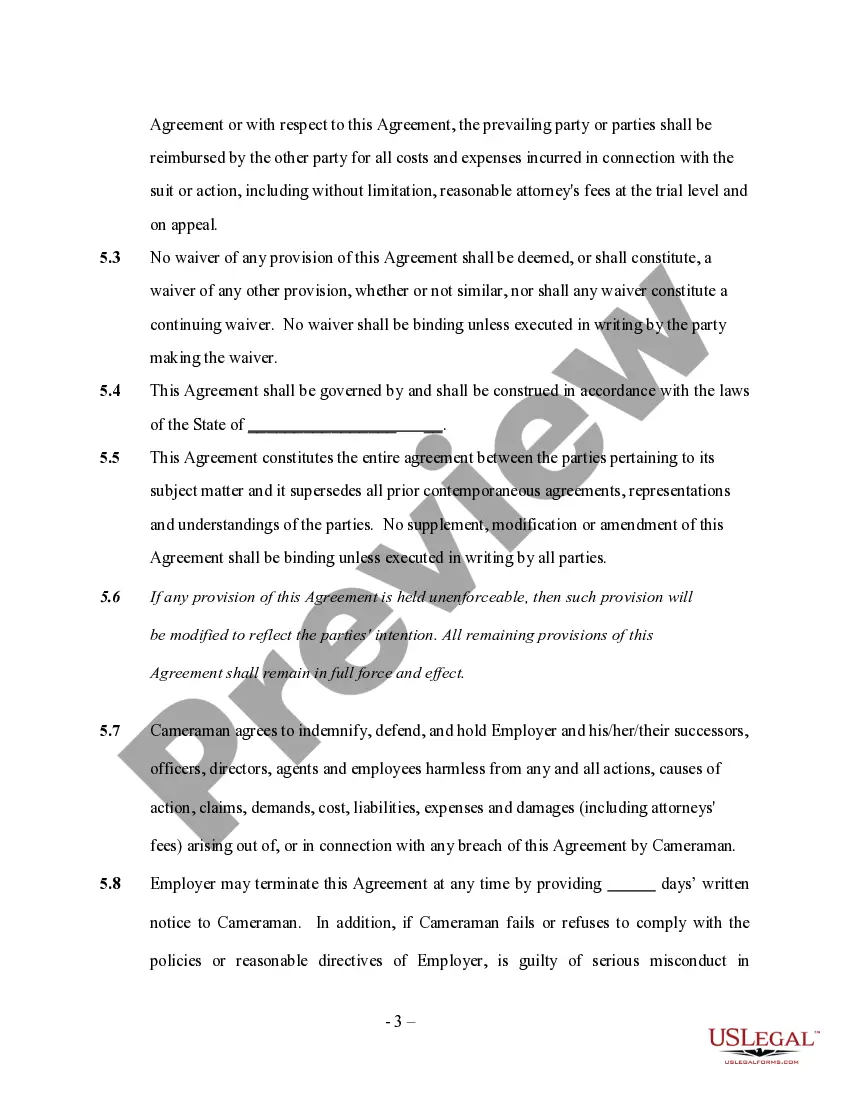
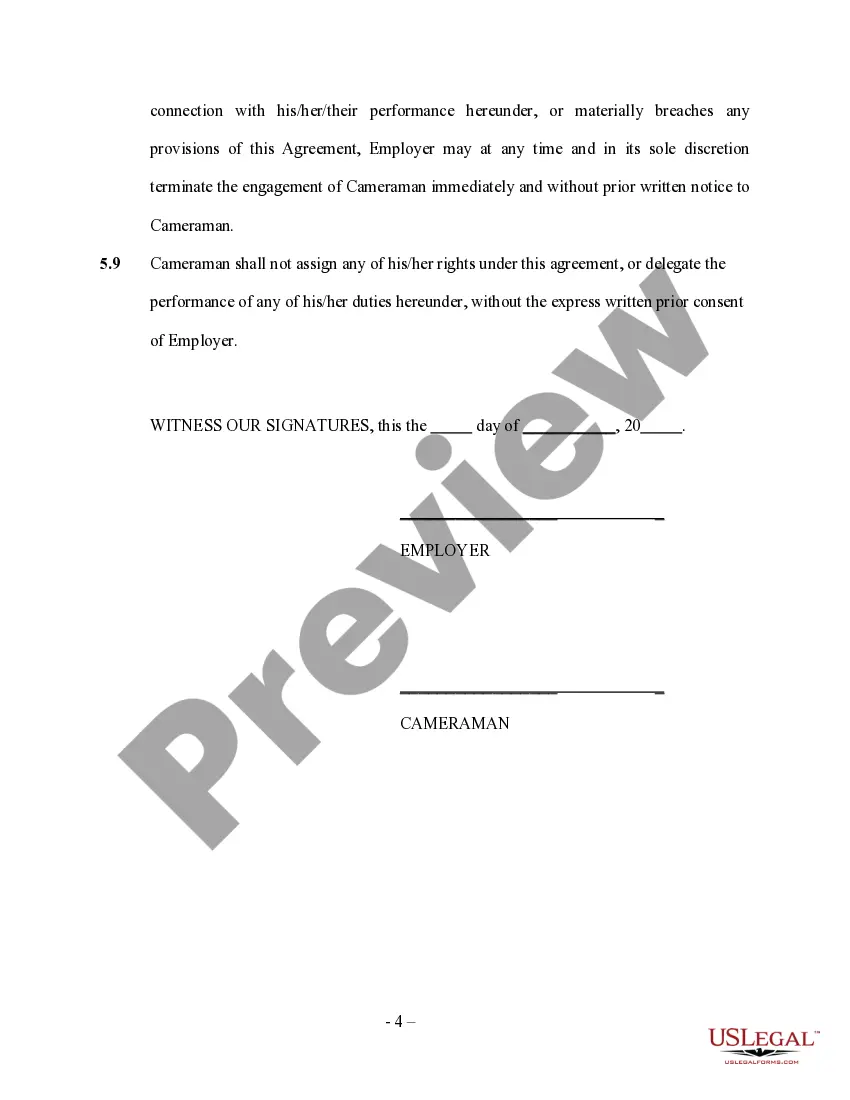
Get your form ready online
Our built-in tools help you complete, sign, share, and store your documents in one place.
Make edits, fill in missing information, and update formatting in US Legal Forms—just like you would in MS Word.
Download a copy, print it, send it by email, or mail it via USPS—whatever works best for your next step.
Sign and collect signatures with our SignNow integration. Send to multiple recipients, set reminders, and more. Go Premium to unlock E-Sign.
If this form requires notarization, complete it online through a secure video call—no need to meet a notary in person or wait for an appointment.
We protect your documents and personal data by following strict security and privacy standards.

Make edits, fill in missing information, and update formatting in US Legal Forms—just like you would in MS Word.

Download a copy, print it, send it by email, or mail it via USPS—whatever works best for your next step.

Sign and collect signatures with our SignNow integration. Send to multiple recipients, set reminders, and more. Go Premium to unlock E-Sign.

If this form requires notarization, complete it online through a secure video call—no need to meet a notary in person or wait for an appointment.

We protect your documents and personal data by following strict security and privacy standards.
Looking for another form?

How to fill out Cameraman Services Contract - Self-Employed?
The Example Photography Agreement For Clients displayed on this page is a reusable legal framework crafted by expert attorneys in accordance with federal and state regulations.
For over 25 years, US Legal Forms has offered individuals, organizations, and legal experts with more than 85,000 validated, state-specific documents for any professional and personal circumstance. It’s the quickest, simplest, and most trustworthy method to acquire the paperwork you require, as the service ensures the utmost level of data safety and anti-malware defense.
Subscribe to US Legal Forms to access verified legal templates for every scenario in life.
- Search for the document you require and examine it.
- Look through the file you requested and preview it or review the form description to ensure it meets your needs. If it doesn’t, use the search function to locate the correct one. Click Buy Now when you have found the template you require.
- Select and Log In.
- Pick the pricing option that fits you and create an account. Utilize PayPal or a credit card to complete a quick payment. If you already possess an account, Log In and verify your subscription to proceed.
- Acquire the editable document.
- Choose the format you prefer for your Example Photography Agreement For Clients (PDF, Word, RTF) and save the template on your device.
- Fill out and sign the document.
- Print the template to fill it out by hand. Alternatively, use an online versatile PDF editor to quickly and accurately complete and sign your form electronically.
- Re-download your document as needed.
- Access the same file whenever required. Go to the My documents section in your profile to download any previously acquired documents again.
Form popularity
FAQ
It's important for your contract to set out the scope of the services you'll be providing, along with a schedule. State when your services start, when they will end, and what you'll be shooting, and include a schedule or timeline so that everyone involved knows what, when, where, and how.
8 Components of a Photography Contract Service Description. Delivery Dates for Final Assets. Payment Terms + Late Fee Policy. Copyright Information + Licensing Agreement. Cost of Additional Deliverables + Licensing. Rescheduling + Date Changes. Responsibility of Expenses. All Parties' Contact Information.
Be sure to include the following on your next freelance photography contract: Name. This should include your client's legal name or the business name responsible for the session. Address. ... Location. ... Delivery. ... Cancellation policy. ... Payment method. ... Transfer of use rights and copyright ownership. ... Liability.
A Photography Contract helps to make sure everyone is on the same page about what services will be provided, what the finished product delivered will be, who owns the photos, how much the client will pay, how long the engagement will last, and who is responsible for any required costs or transportation.
8 Things to Include on a Photography Contract | Contract... clearly outline the scope of work (point them back to the agreement to avoid scope creep!) explain what is expected of each party. offer protection for both parties. determine rates and pricing. specify when payment is due and project deadlines.