Employ Accommodation Disability With Anxiety
Description


Get your form ready online
Our built-in tools help you complete, sign, share, and store your documents in one place.
Make edits, fill in missing information, and update formatting in US Legal Forms—just like you would in MS Word.
Download a copy, print it, send it by email, or mail it via USPS—whatever works best for your next step.
Sign and collect signatures with our SignNow integration. Send to multiple recipients, set reminders, and more. Go Premium to unlock E-Sign.
If this form requires notarization, complete it online through a secure video call—no need to meet a notary in person or wait for an appointment.
We protect your documents and personal data by following strict security and privacy standards.

Make edits, fill in missing information, and update formatting in US Legal Forms—just like you would in MS Word.

Download a copy, print it, send it by email, or mail it via USPS—whatever works best for your next step.

Sign and collect signatures with our SignNow integration. Send to multiple recipients, set reminders, and more. Go Premium to unlock E-Sign.

If this form requires notarization, complete it online through a secure video call—no need to meet a notary in person or wait for an appointment.

We protect your documents and personal data by following strict security and privacy standards.
Looking for another form?
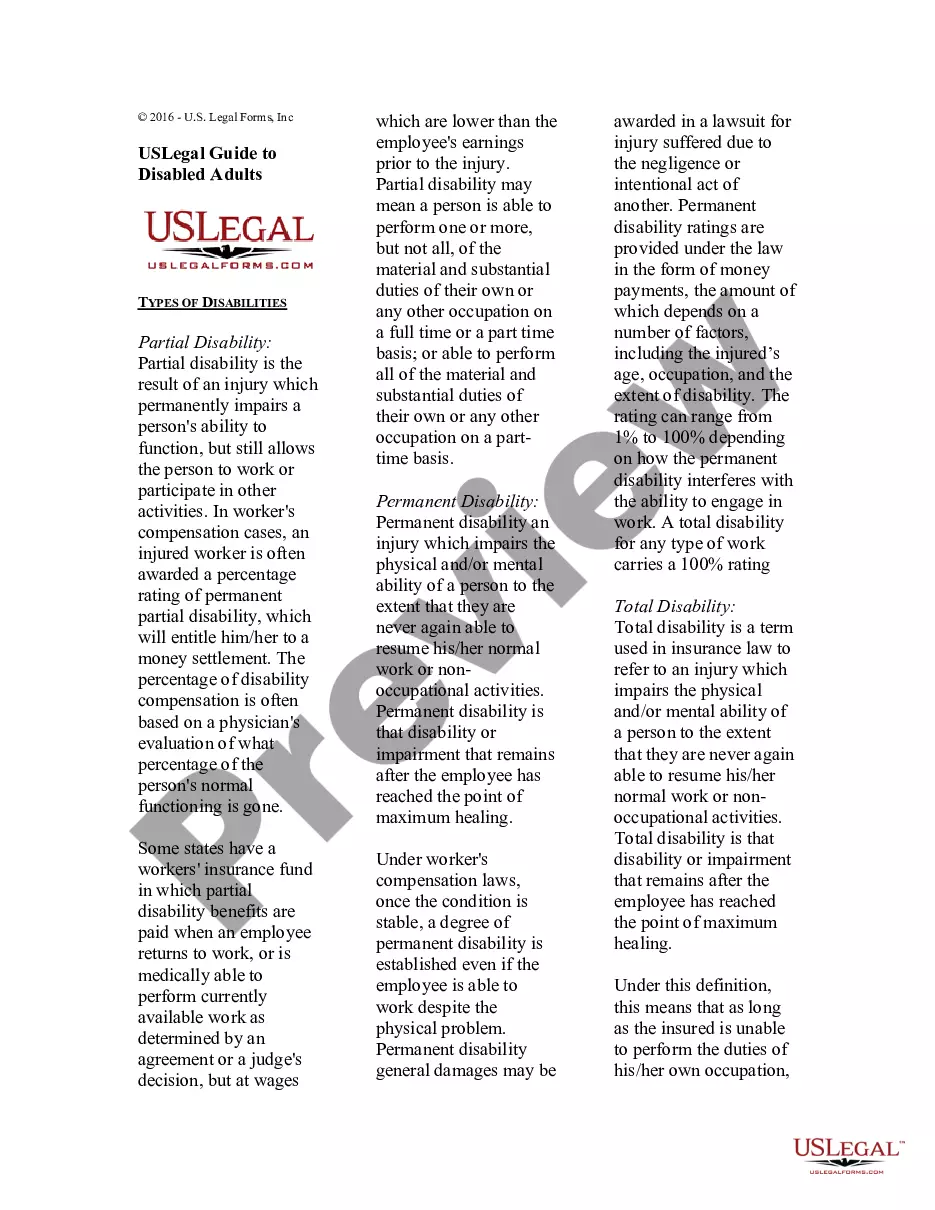
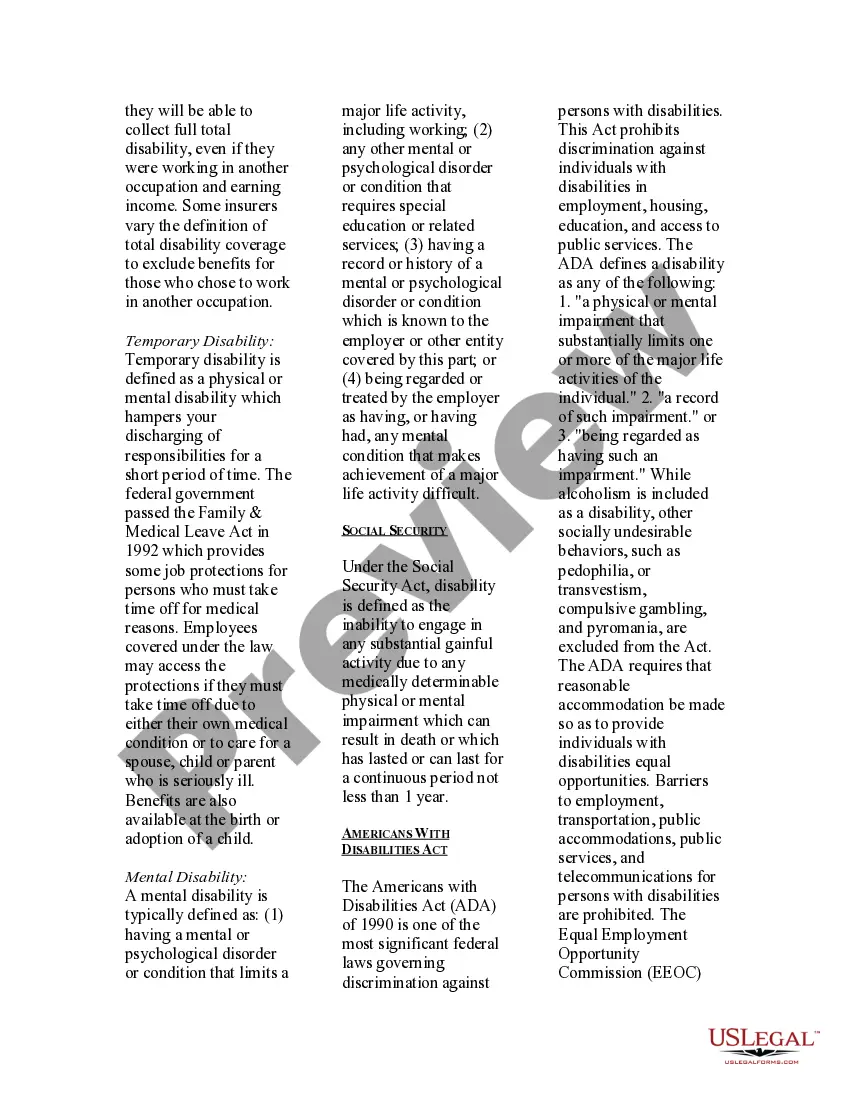
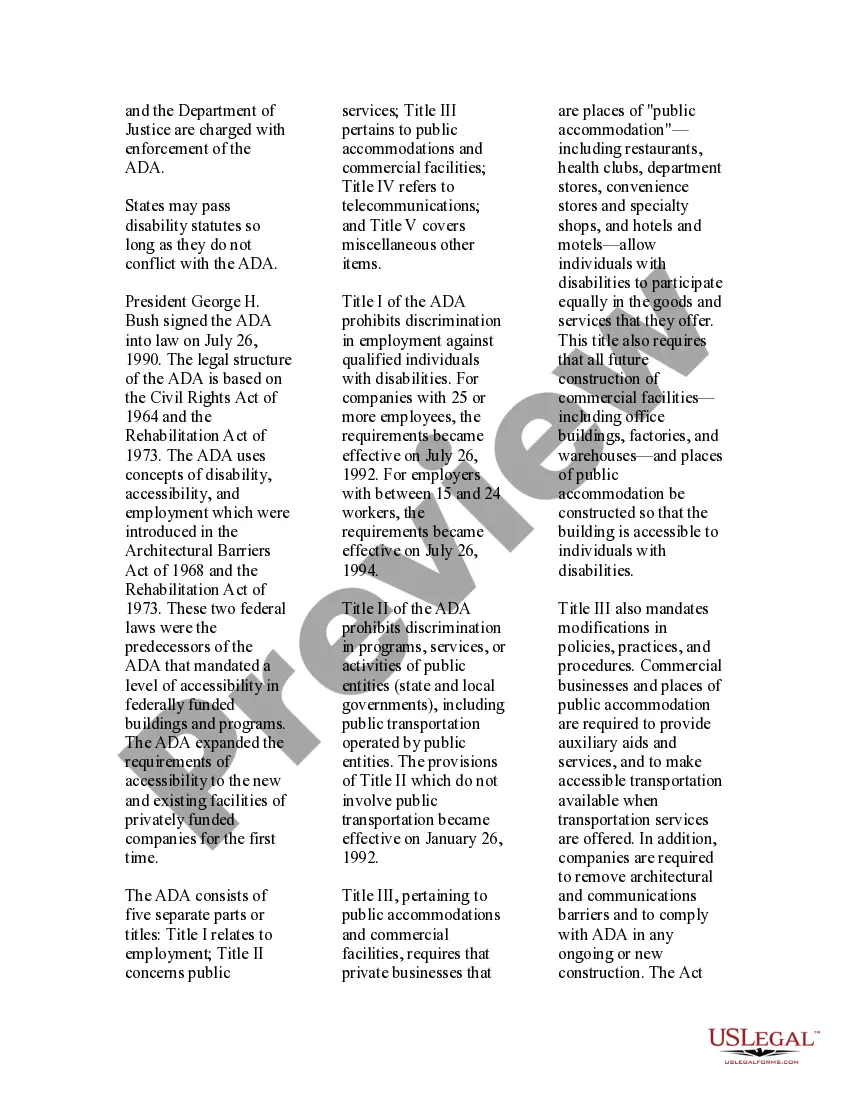
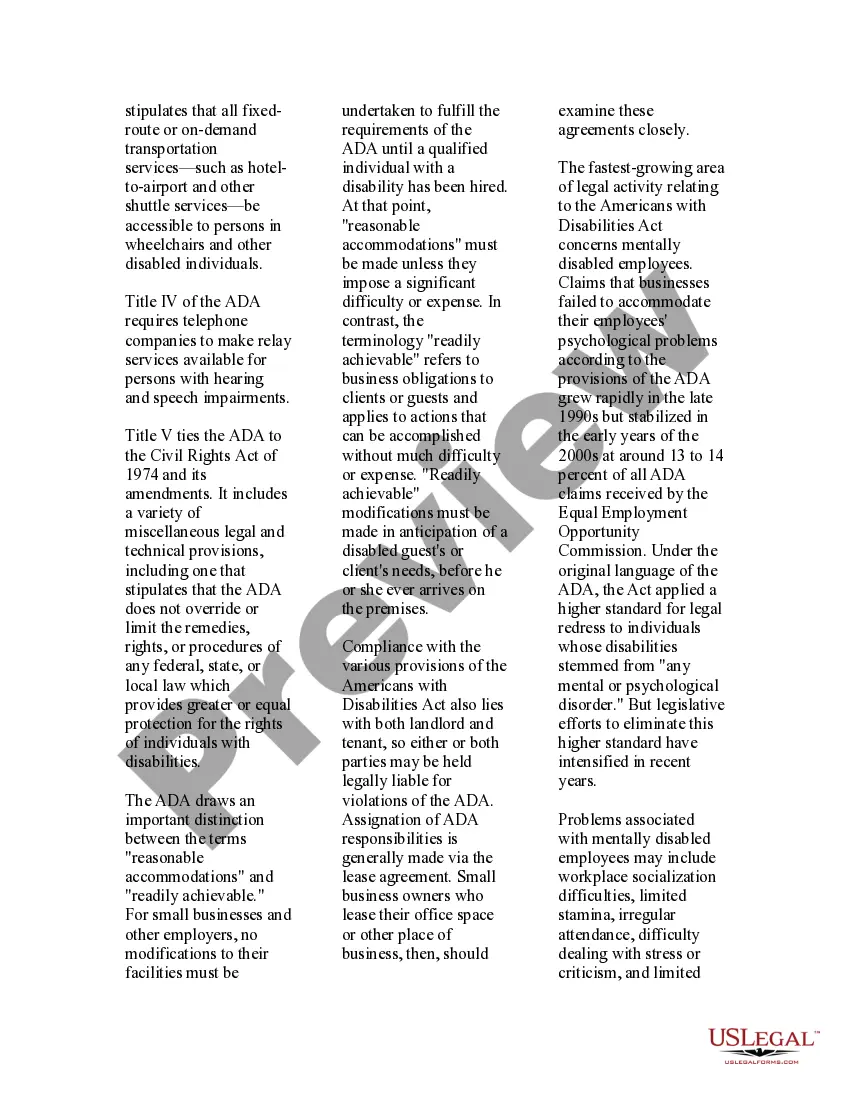
How to fill out USLegal Guide To Disabled Adults?
- Log in to your US Legal Forms account if you’re a returning user. Ensure your subscription is active to access and download documents.
- For first-time users, start by reviewing the Preview mode and a thorough description of the form. Confirm that it aligns with your disability accommodation needs and adheres to local regulations.
- If necessary, utilize the Search feature to find alternative forms that better suit your requirements.
- Once you’ve found the correct document, click the Buy Now button and select a subscription plan that works for you. You’ll need to create an account to unlock full access.
- Complete your purchase by entering your payment information, whether through credit card or PayPal.
- After your payment is confirmed, download the form directly to your device. You can revisit it later anytime from the My Forms section in your profile.
With US Legal Forms, you gain access to a robust collection of over 85,000 customizable legal forms and packages, which ensures that you find exactly what you need to meet your legal requirements.
Empower yourself with the tools provided by US Legal Forms to confidently navigate your legal needs for accommodation due to anxiety. Start today for a more supportive workplace environment!
Form popularity
FAQ
Yes, you can get disability accommodations for anxiety if it substantially limits your ability to perform major life activities. Employers are legally required to engage in an interactive process to find suitable accommodations. These adjustments are designed to support you in managing your condition while maintaining job performance. Explore our resources to learn how to initiate this process effectively.
An accommodation statement typically includes a clear description of your anxiety-related needs and the adjustments required to fulfill your job responsibilities. For instance, it may state that you require a quiet workspace to reduce anxiety triggers or flexible work hours. The statement should effectively convey how these accommodations enhance your productivity and well-being. You can find templates to assist in crafting a strong accommodation statement on our platform.
To prove disability for anxiety, you need to provide medical documentation that outlines your condition and its impact on your daily life. This may include evaluations from licensed professionals who can confirm the severity and duration of your anxiety. Important documentation can help in securing necessary accommodations in the workplace. Our platform offers tools to help you prepare the required documents efficiently.
The duty to accommodate for anxiety refers to an employer's legal obligation to make adjustments that help employees manage their condition. This duty requires a careful assessment of the employee's needs and a commitment to finding solutions. Employers must balance their operational requirements while ensuring a supportive atmosphere for their workforce. You can learn more about legal expectations through our comprehensive resources.
Reasonable accommodations for anxiety may include changes in work hours, modified job responsibilities, or access to a quiet workspace. These adjustments aim to minimize anxiety triggers and create a supportive work environment. Employers are encouraged to discuss potential options to suit both their needs and yours. Exploring our resources can provide you with further insights and suggestions for effective accommodations.
When writing an accommodation letter for anxiety, start by clearly stating your situation and the type of support you need. Be specific about how the requested accommodations will assist you in performing your job effectively. It's also helpful to include any relevant medical information that supports your request. Our platform can guide you through the entire letter-writing process to ensure clarity and completeness.
An accommodation letter for anxiety typically outlines your condition and the specific adjustments needed for your workplace. For instance, it might request a flexible work schedule to manage anxiety triggers effectively. Such a letter should clearly state how these accommodations will help you perform your job duties. Using our platform, you can easily generate a personalized accommodation letter that meets your needs.
A sample letter of accommodation for anxiety should clearly state your request for specific adjustments at work due to your condition. Include details about your diagnosis and how it affects your performance. It is also beneficial to mention any supportive documentation from a healthcare provider. Using a platform like USLegalForms can help you generate an effective letter to request employ accommodation disability with anxiety.
Yes, anxiety can be regarded as a disability in the workplace, particularly if it affects your job performance. Employers must provide reasonable accommodations to help individuals manage their anxiety while working. This might include flexible schedules or modified duties. Knowing your rights and how to advocate for employ accommodation disability with anxiety is essential.
Anxiety becomes a disability when it substantially limits a person's ability to perform major life activities, including work. If anxiety causes significant distress or hinders your daily functioning, you may qualify for disability support. It is important to evaluate your condition and seek guidance from a professional. Understanding the threshold for employ accommodation disability with anxiety can empower your next steps.