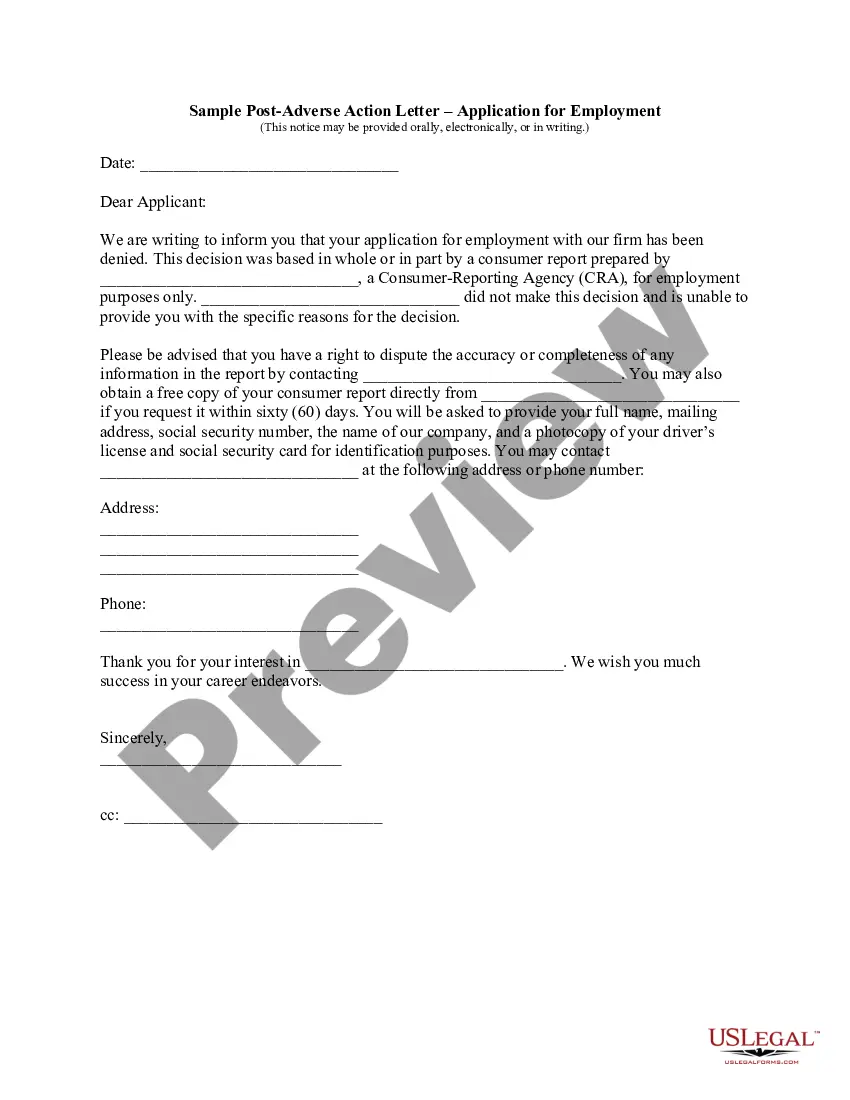
Action Message Format
Description
Get your form ready online
Our built-in tools help you complete, sign, share, and store your documents in one place.
Make edits, fill in missing information, and update formatting in US Legal Forms—just like you would in MS Word.
Download a copy, print it, send it by email, or mail it via USPS—whatever works best for your next step.
Sign and collect signatures with our SignNow integration. Send to multiple recipients, set reminders, and more. Go Premium to unlock E-Sign.
If this form requires notarization, complete it online through a secure video call—no need to meet a notary in person or wait for an appointment.
We protect your documents and personal data by following strict security and privacy standards.

Make edits, fill in missing information, and update formatting in US Legal Forms—just like you would in MS Word.

Download a copy, print it, send it by email, or mail it via USPS—whatever works best for your next step.

Sign and collect signatures with our SignNow integration. Send to multiple recipients, set reminders, and more. Go Premium to unlock E-Sign.

If this form requires notarization, complete it online through a secure video call—no need to meet a notary in person or wait for an appointment.

We protect your documents and personal data by following strict security and privacy standards.
Looking for another form?
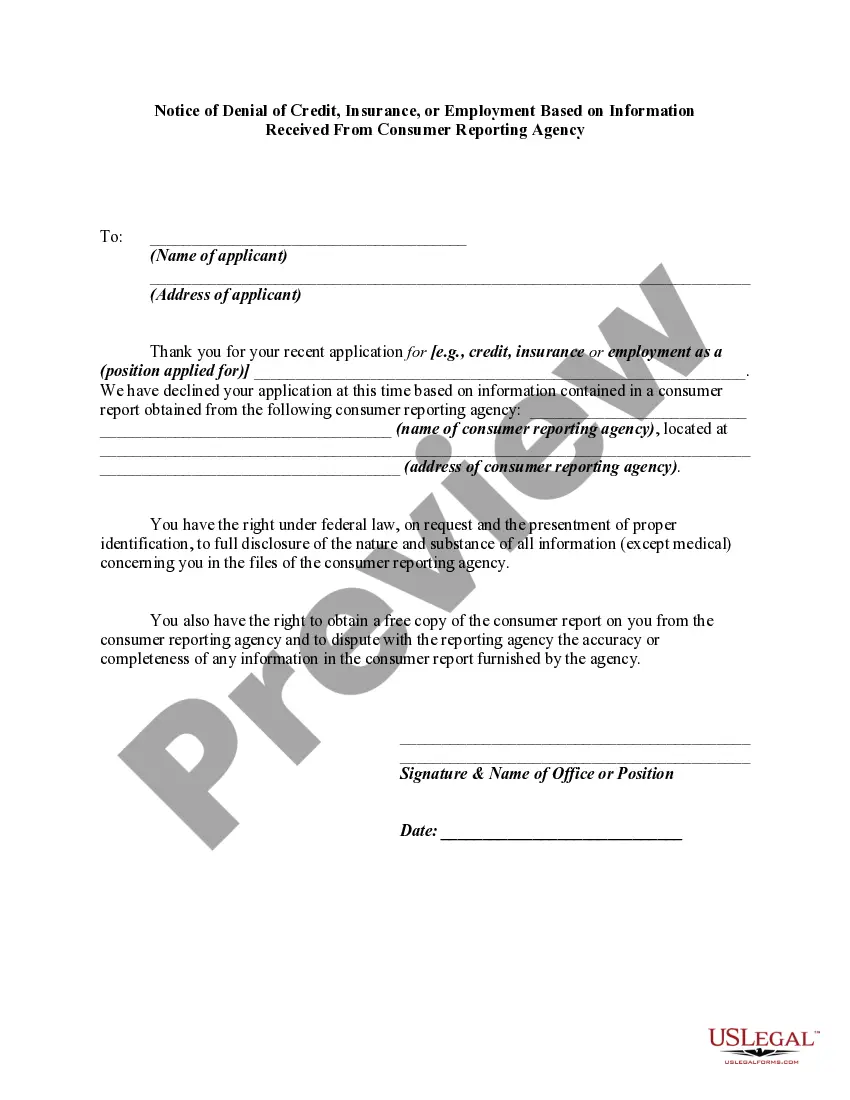
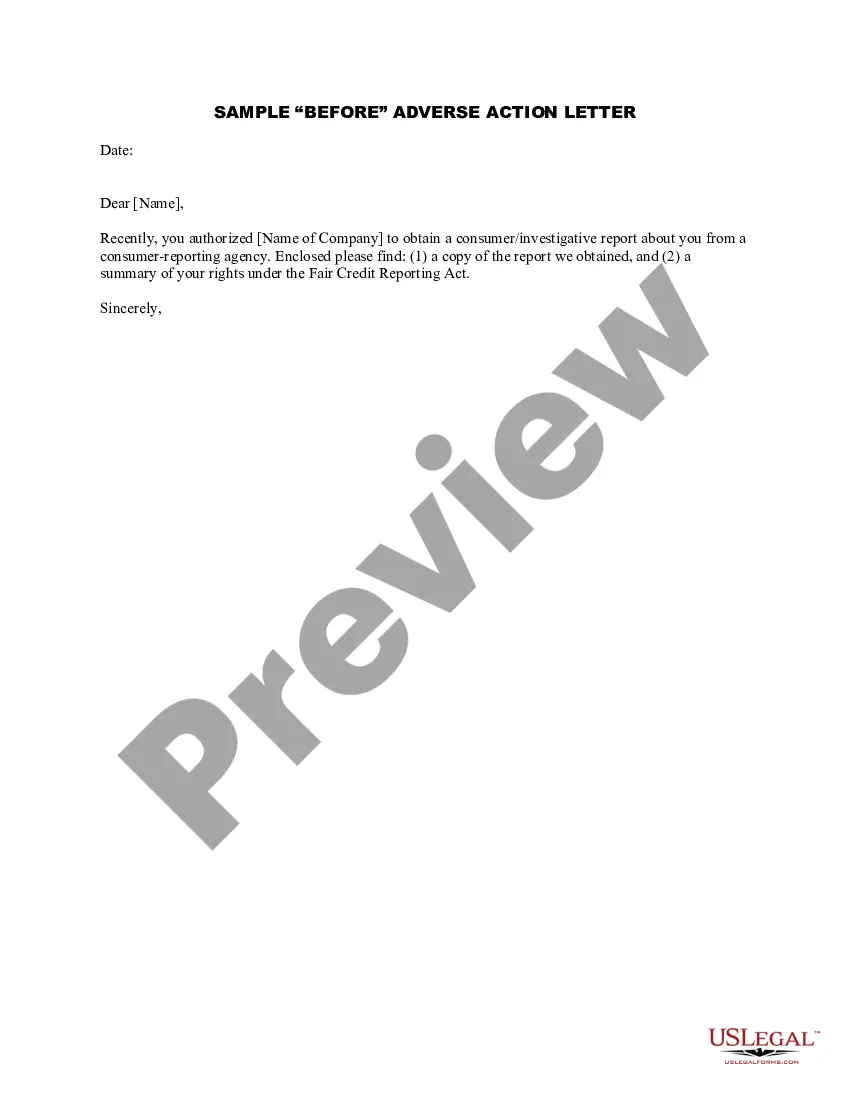
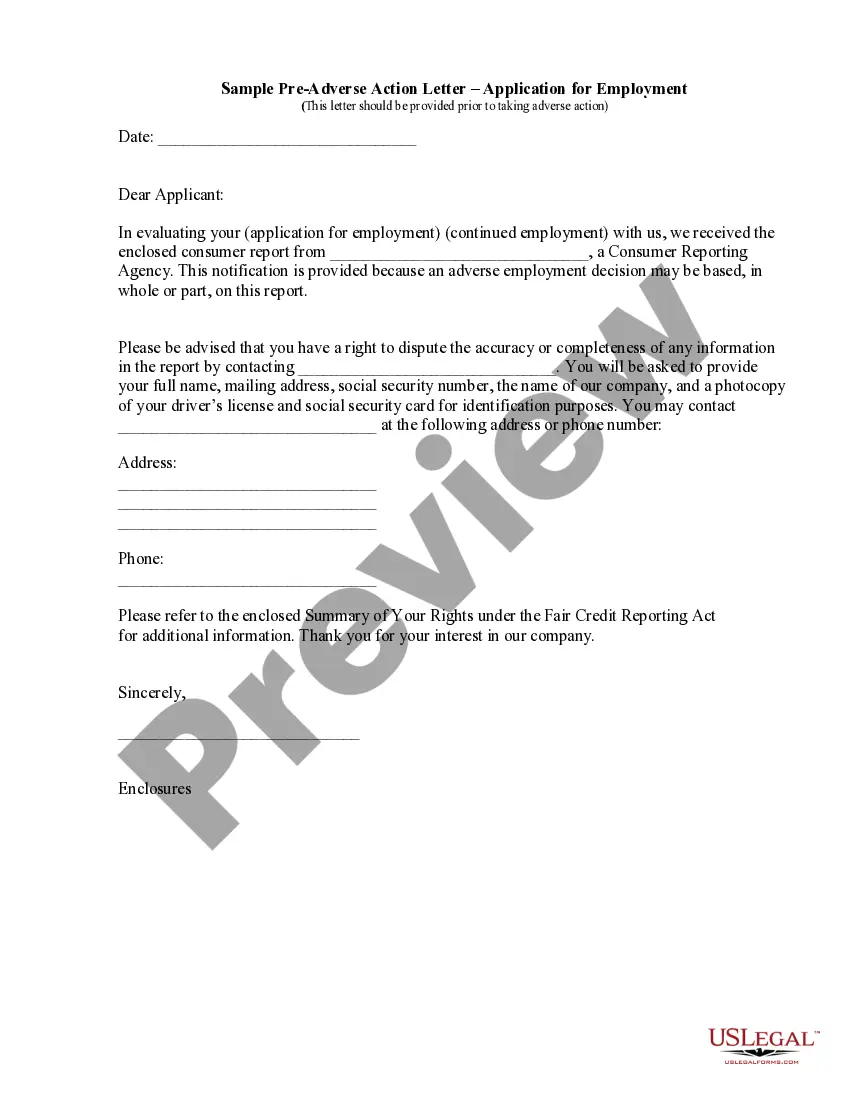
How to fill out Sample Post-Adverse Action Letter Regarding Application For Work Or Employment?
Legal administration can be overwhelming, even for seasoned experts.
When you are looking for an Action Message Format and do not have the opportunity to invest time in finding the correct and current version, the process can be challenging.
Utilize advanced tools to complete and manage your Action Message Format.
Access a wealth of articles, guides, and resources related to your situation and needs.
Confirm that this is the appropriate document by previewing it and reviewing its description. Ensure the template is valid in your state or county. Click Buy Now when you are ready. Choose a subscription plan. Locate the format you need and Download, fill out, eSign, print, and send your documents. Take advantage of the US Legal Forms online library, supported by 25 years of experience and reliability. Revolutionize your daily document management into a seamless and user-friendly process today.
- Save time and effort searching for the documents you require, and use US Legal Forms' advanced search and Review tool to find the Action Message Format you need.
- If you have a monthly subscription, Log Into your US Legal Forms account, search for the document, and download it.
- Check the My documents tab to view the documents you have previously downloaded and organize your folders as desired.
- If this is your first experience with US Legal Forms, create an account for unlimited access to all the platform's benefits.
- Here are the steps to follow after obtaining the form you need.
- A robust online form library can dramatically improve efficiency for those who wish to manage these situations effectively.
- US Legal Forms is a leader in online legal documentation, boasting over 85,000 state-specific legal forms available at your convenience.
- With US Legal Forms, you can handle various legal and business documents, whether personal or commercial, all from a centralized platform.
Form popularity
FAQ
Do you need to notarize a Loan Agreement? First and foremost, understand that personal loan agreements fall into the classification of contracts. Technically, you don't have to notarize these documents. But if you want to make this document legally binding, then notarization is the best course of action.
For example, if the note's terms are unclear or there is evidence that the note's maker did not intend to repay the debt, the court may invalidate the note. It is also possible for the payee to not be able to sign a promissory note if they knew the maker could not repay the debt at the time of signing it.
Loan agreements typically include covenants, value of collateral involved, guarantees, interest rate terms and the duration over which it must be repaid. Default terms should be clearly detailed to avoid confusion or potential legal court action.
Do you need to notarize a Loan Agreement? First and foremost, understand that personal loan agreements fall into the classification of contracts. Technically, you don't have to notarize these documents. But if you want to make this document legally binding, then notarization is the best course of action.
A personal loan agreement is a legally binding contract that defines the expectations for both a borrower and a lender. It can be drawn up with an official lender, like a bank or credit union, or used in a more informal situation, such as with a friend who's lending you an amount of money.
A personal loan agreement is a legally binding contract that defines the expectations for both a borrower and a lender. It can be drawn up with an official lender, like a bank or credit union, or used in a more informal situation, such as with a friend who's lending you an amount of money.
A loan agreement is any written document that memorializes the lending of money. Loan agreements can take several forms. The most basic loan agreement is commonly called an "IOU." These are typically used between friends or relatives for small amounts of money, and simply state the dollar amount that is owed.
At its most basic, a promissory note should include the following things: Date. Name of the lender and borrower. Loan amount. Whether the loan is secured or unsecured. If it's secured with collateral: What is the collateral? ... Payment amount and frequency. Payment due date. Whether the loan has a cosigner, and if so, who.