Letter Debt Using With A Credit Card
Description
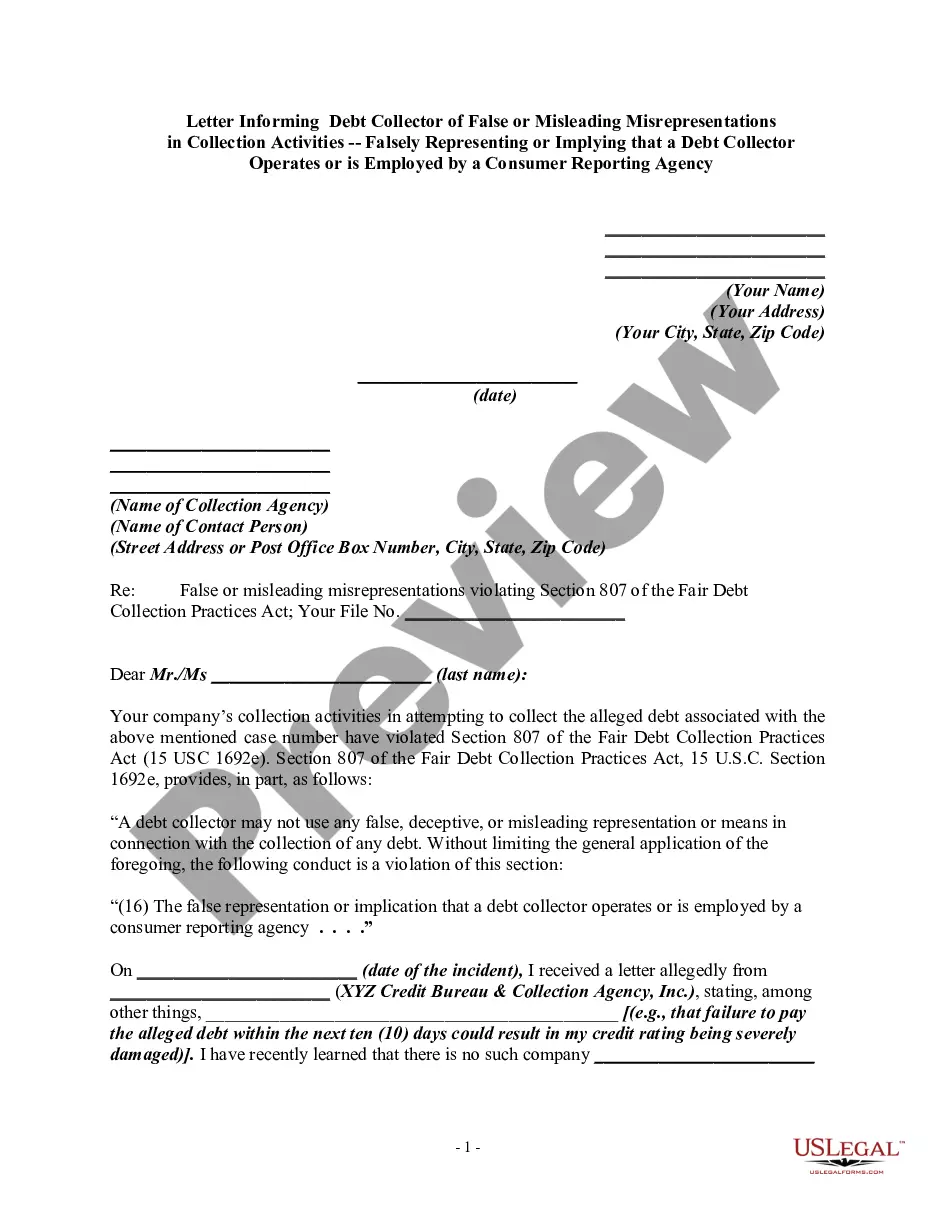
Get your form ready online
Our built-in tools help you complete, sign, share, and store your documents in one place.
Make edits, fill in missing information, and update formatting in US Legal Forms—just like you would in MS Word.
Download a copy, print it, send it by email, or mail it via USPS—whatever works best for your next step.
Sign and collect signatures with our SignNow integration. Send to multiple recipients, set reminders, and more. Go Premium to unlock E-Sign.
If this form requires notarization, complete it online through a secure video call—no need to meet a notary in person or wait for an appointment.
We protect your documents and personal data by following strict security and privacy standards.

Make edits, fill in missing information, and update formatting in US Legal Forms—just like you would in MS Word.

Download a copy, print it, send it by email, or mail it via USPS—whatever works best for your next step.

Sign and collect signatures with our SignNow integration. Send to multiple recipients, set reminders, and more. Go Premium to unlock E-Sign.

If this form requires notarization, complete it online through a secure video call—no need to meet a notary in person or wait for an appointment.

We protect your documents and personal data by following strict security and privacy standards.
Looking for another form?

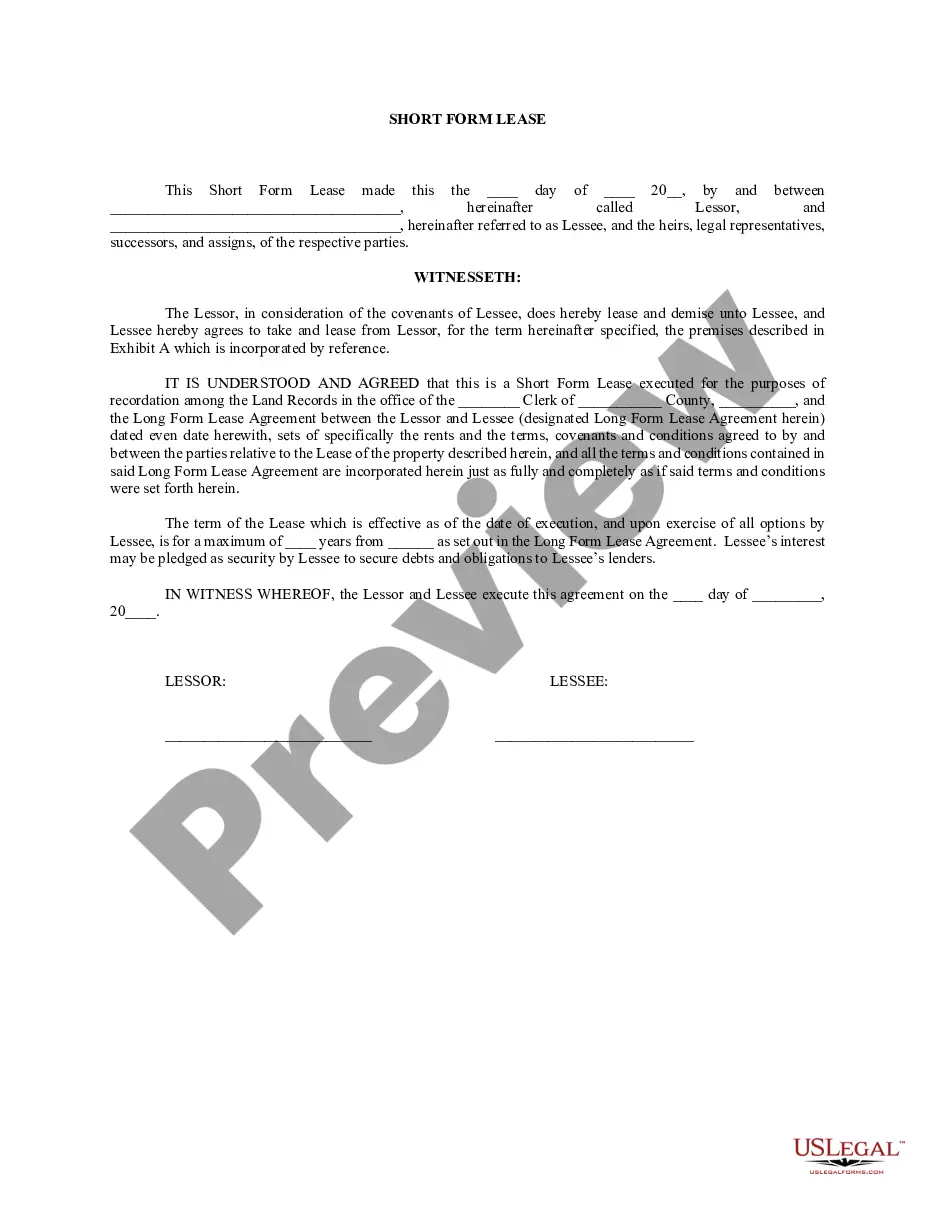





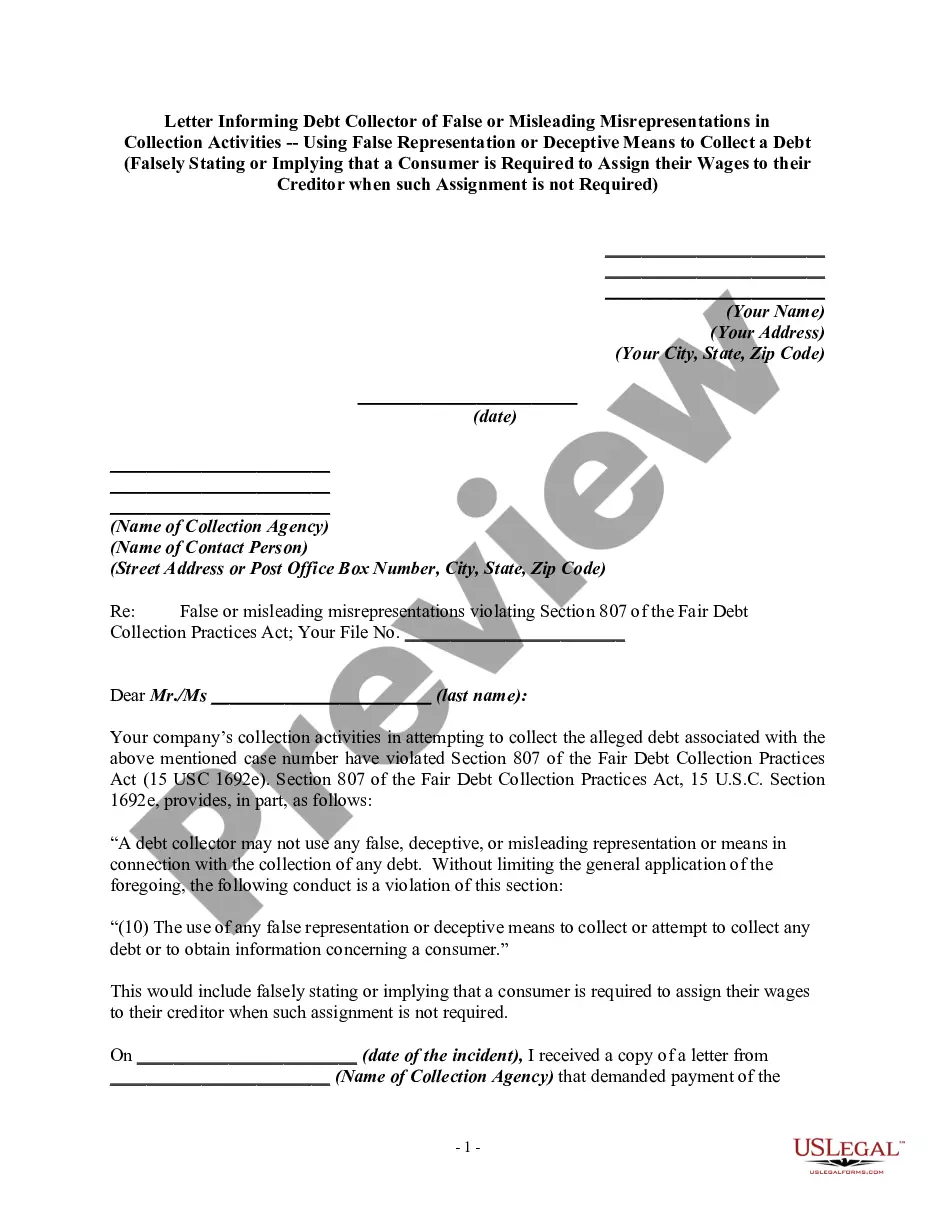
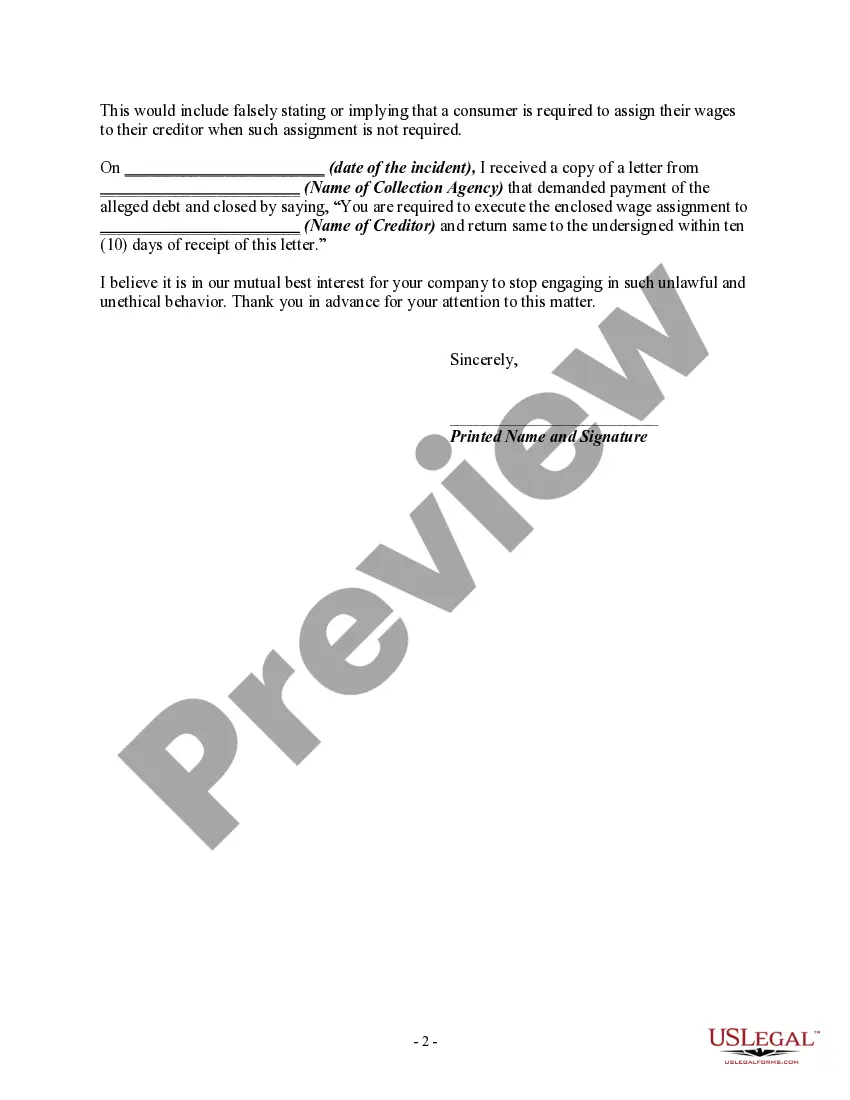
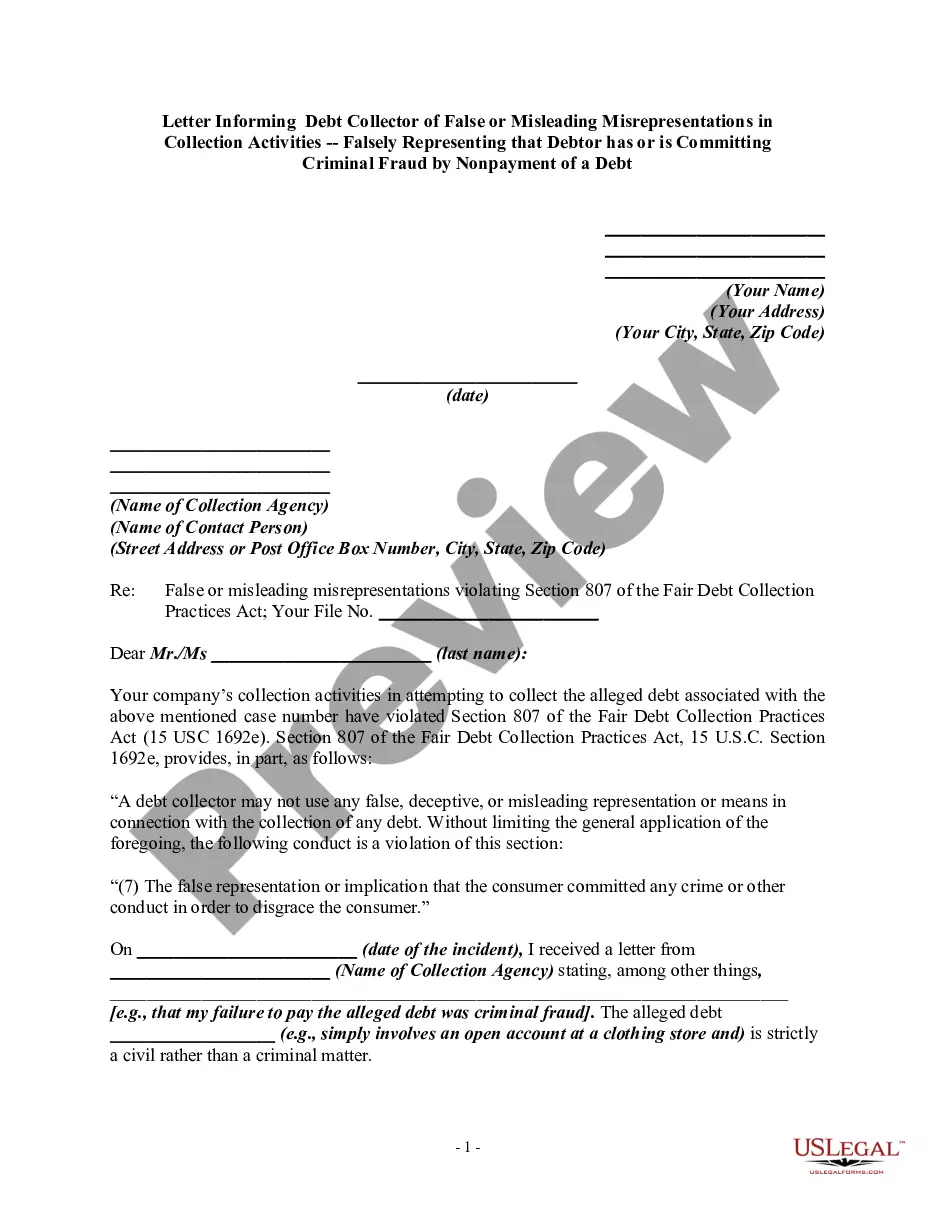
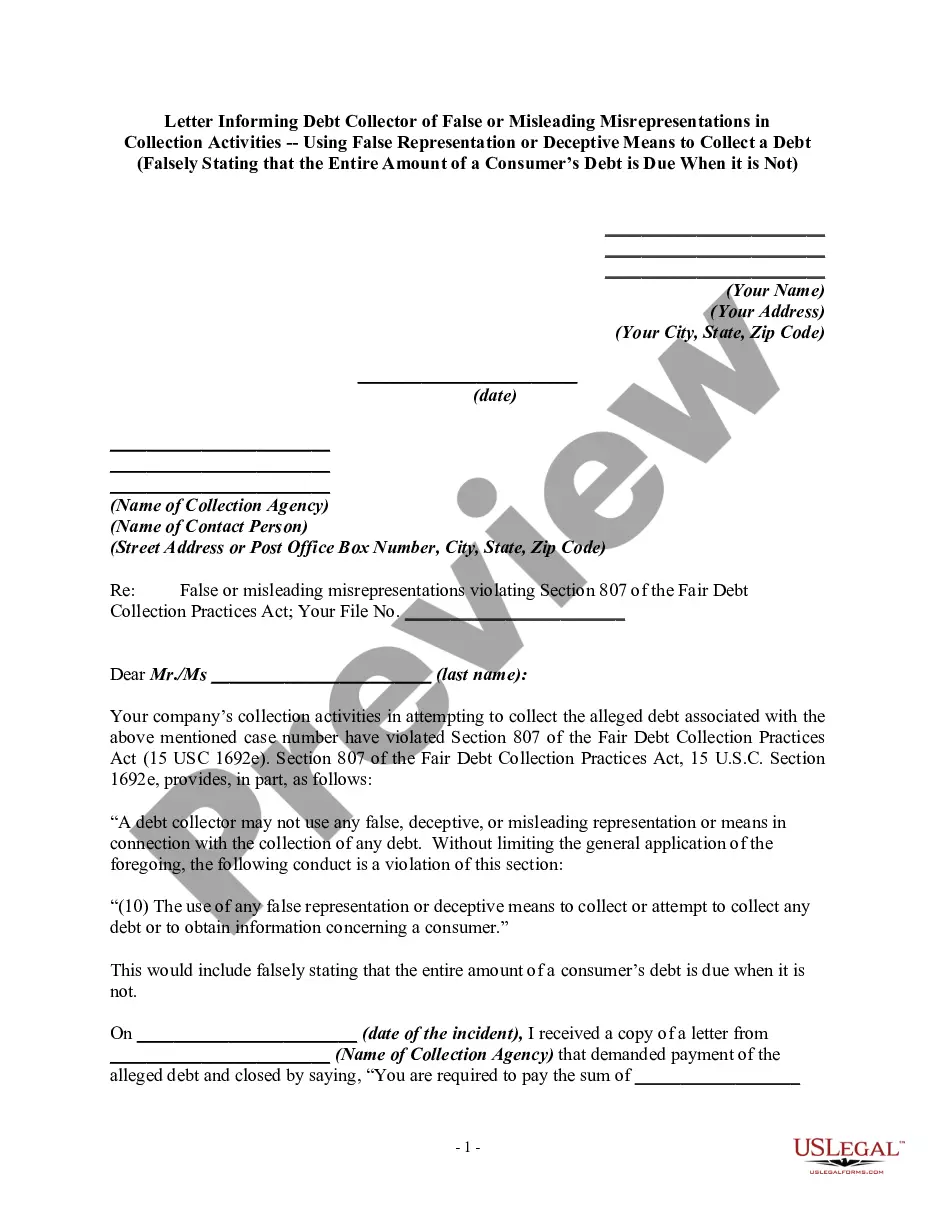
How to fill out Letter Informing Debt Collector Of False Or Misleading Misrepresentations In Collection Activities - Using False Representation Or Deceptive Means To Collect A Debt?
- Log into your US Legal Forms account if you're a returning user; check the validity of your subscription and hit the Download button for the required form template.
- If you're new to US Legal Forms, begin by reviewing the Preview mode and the form descriptions to identify the most suitable template for your local laws.
- Utilize the Search tab if the chosen form doesn't meet your needs; ensuring you've selected the accurate document is crucial before proceeding.
- Proceed to purchase the document by clicking on the Buy Now button; choose the right subscription plan and create an account to unlock the full library.
- Complete your purchase by entering your credit card details or utilizing your PayPal account for a seamless transaction.
- After your purchase, download the form to your device for easy editing. You can also find it anytime in the My Forms section of your profile.
In conclusion, utilizing US Legal Forms significantly simplifies the process of drafting your letter for debt using a credit card. With a vast collection of over 85,000 forms and expert assistance, you can ensure your documents are both precise and legally valid.
Start your journey to stress-free legal documentation today by creating an account with US Legal Forms.
Form popularity
FAQ
Ignoring debt collection letters can lead to serious consequences, including damage to your credit score and legal action. Collectors can report unpaid debts to credit agencies, impacting your ability to secure loans or other financial products. Additionally, they may file a lawsuit to collect the debt, which could result in wage garnishment. It is crucial to engage with these letters to protect your financial health.
Yes, you should respond to a debt collector letter promptly. Your response can clarify your stance on the debt and potentially lead to a more favorable resolution. Ignoring the issue can complicate matters, whereas addressing it allows you to explore repayment options or dispute the claim if necessary. Taking action helps you regain control of your financial situation.
Ignoring a debt collection letter is generally not recommended. When you do not respond, you may lose your chance to negotiate or dispute the debt. Addressing the letter can help you understand your options, including payment plans or settling the debt. Always take the first step to handle the situation openly.
If you don't respond to a debt collection letter using a credit card, the collector may take further action. This could include reporting the debt to credit bureaus, which can lower your credit score. Additionally, the collector may escalate their efforts, possibly leading to a lawsuit. It's better to address the situation proactively.
Debts typically become uncollectible after a specific period, often ranging from three to six years, depending on state laws. After this period, creditors may choose not to pursue the debt, making the debt statute-barred. However, understanding when debt becomes uncollectible is essential, especially with letter debt using a credit card, as it can impact your financial planning. To navigate this process properly, consider using tools from uslegalforms to keep informed and organized.
The rule of 72 is a simple formula used to estimate the number of years it will take for an investment or debt to double, based on a fixed annual interest rate. For credit card debt, if you divide 72 by the interest rate, you get the approximate time it takes for your debt to grow significantly. Understanding this rule can highlight the importance of addressing letter debt using a credit card before it escalates. This awareness will empower you to manage your finances better.
The 777 rule for debt collectors refers to the guidelines that suggest contacting debtors no more than seven times within a seven-day period. This rule aims to protect consumers from harassment while ensuring they are aware of their obligations. When dealing with letter debt using a credit card, it's crucial to understand these limits to manage communications effectively. If you're facing persistent calls, know that you have rights that can help you.
Credit card companies often settle for 40% to 60% of the total debt, but it can vary based on your negotiation and the company's policies. Factors include how long the debt has remained unpaid and your overall financial situation. It's wise to structure your settlement proposal in a letter debt using with a credit card to provide clarity and detail, which can enhance your chances of reaching a favorable agreement.
The 777 rule is an informal guideline that suggests that debt collectors may be willing to negotiate a settlement after the debt has aged and the borrower has not made payments for roughly seven months. This period gives you leverage for negotiating a lower amount. To approach this process more effectively, consider sending a letter debt using with a credit card to the collector, outlining your situation and your proposed settlement.
Yes, you can ask your credit card company to forgive some or all of your debt. This process often involves demonstrating financial hardship or presenting a reasonable settlement offer. Utilizing a letter debt using with a credit card might strengthen your case, allowing for clear communication of your struggles and intentions, which creditors often appreciate.