Good Faith Violation
Description
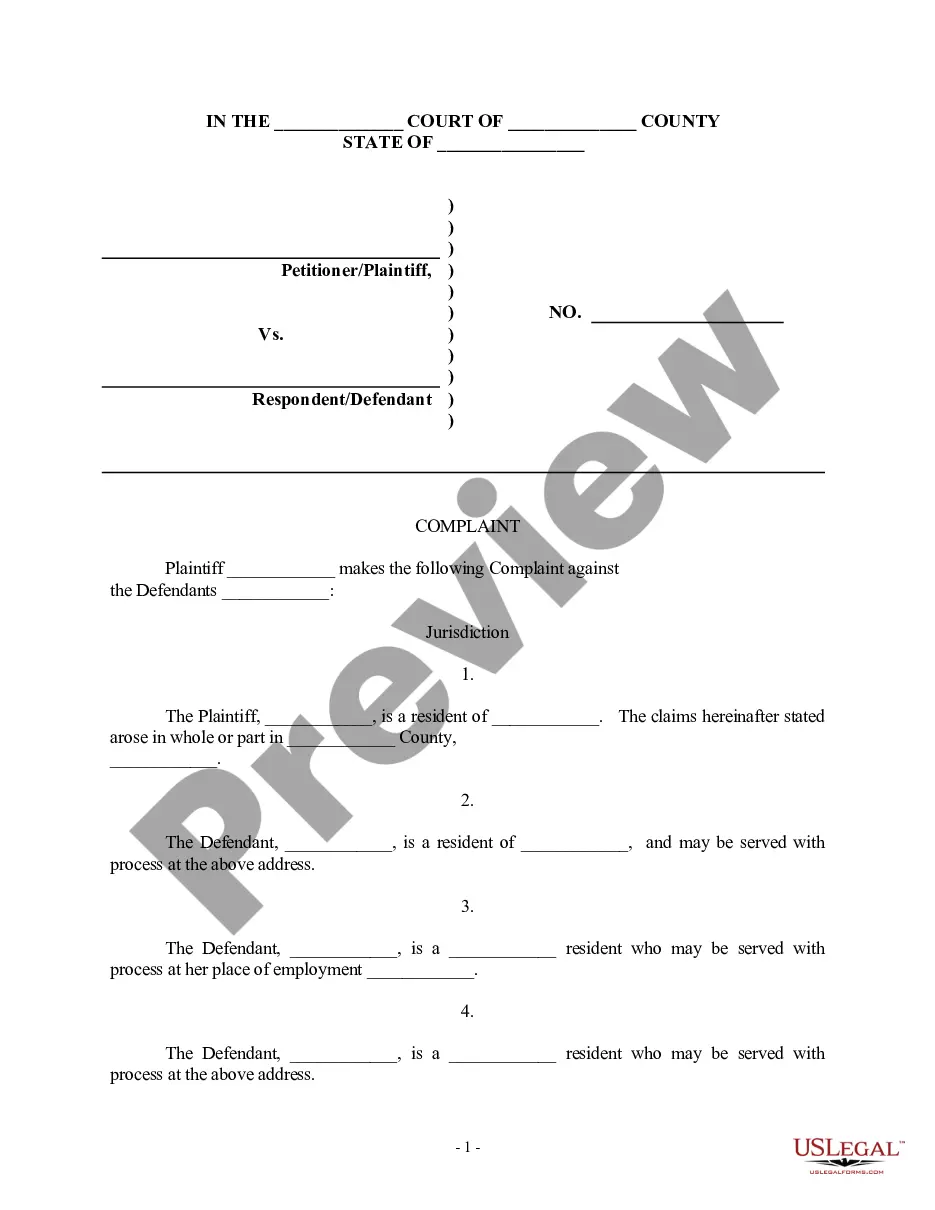
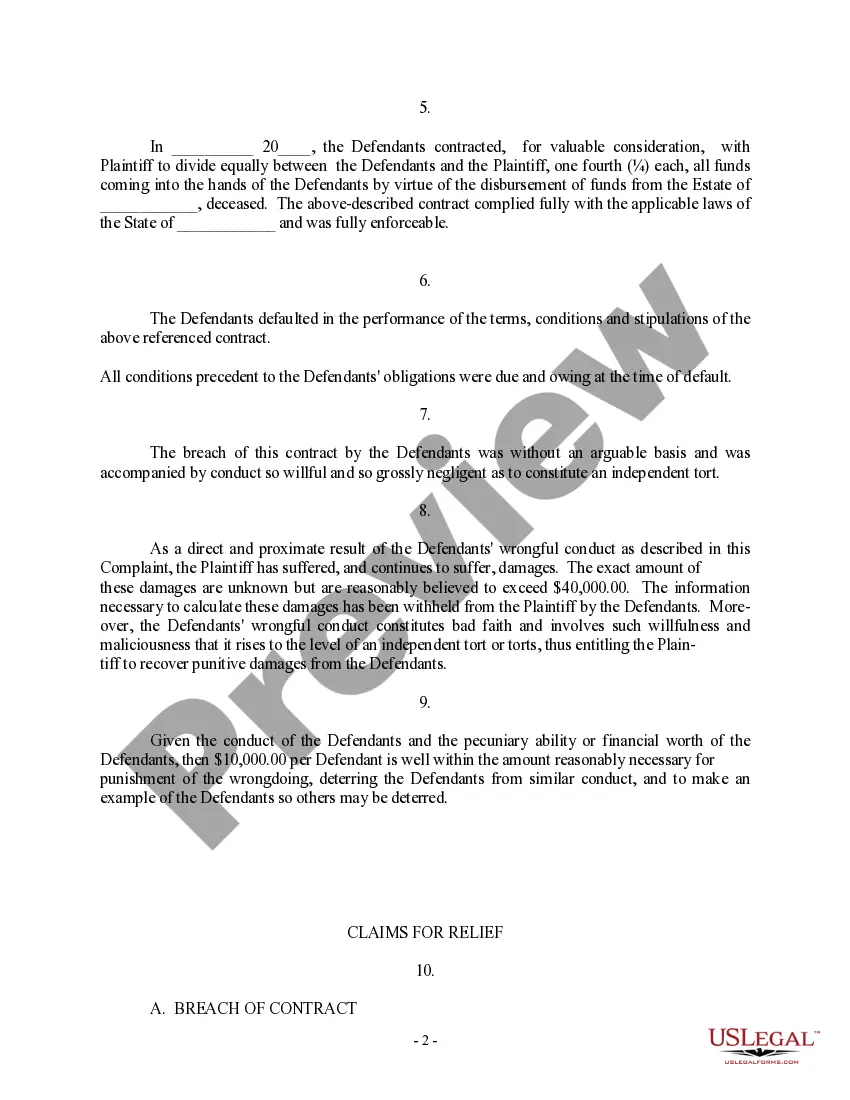
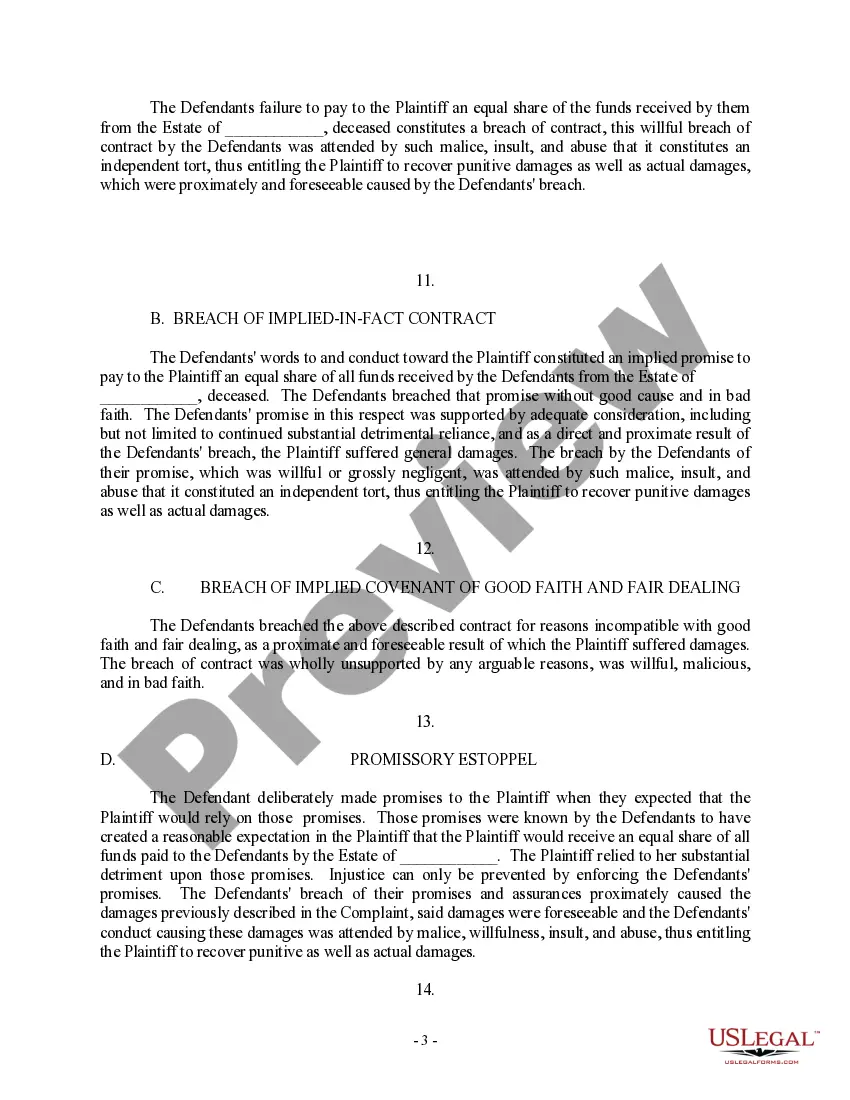
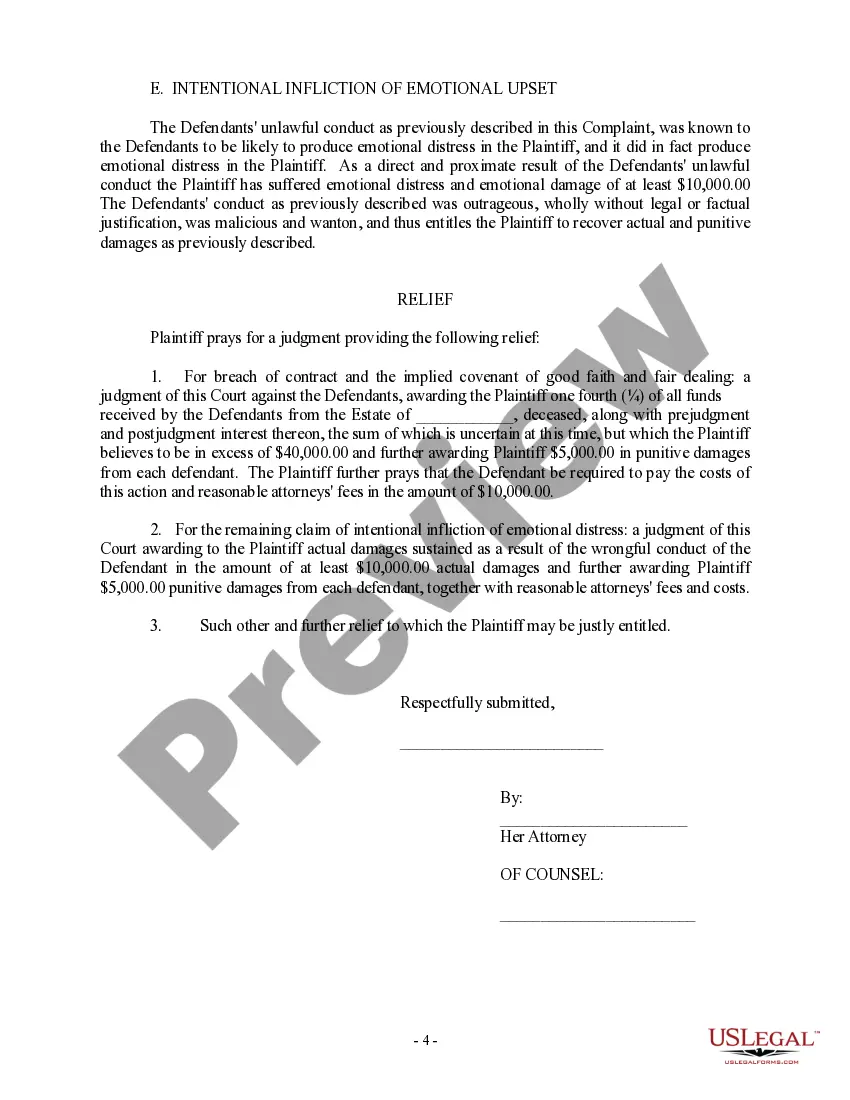
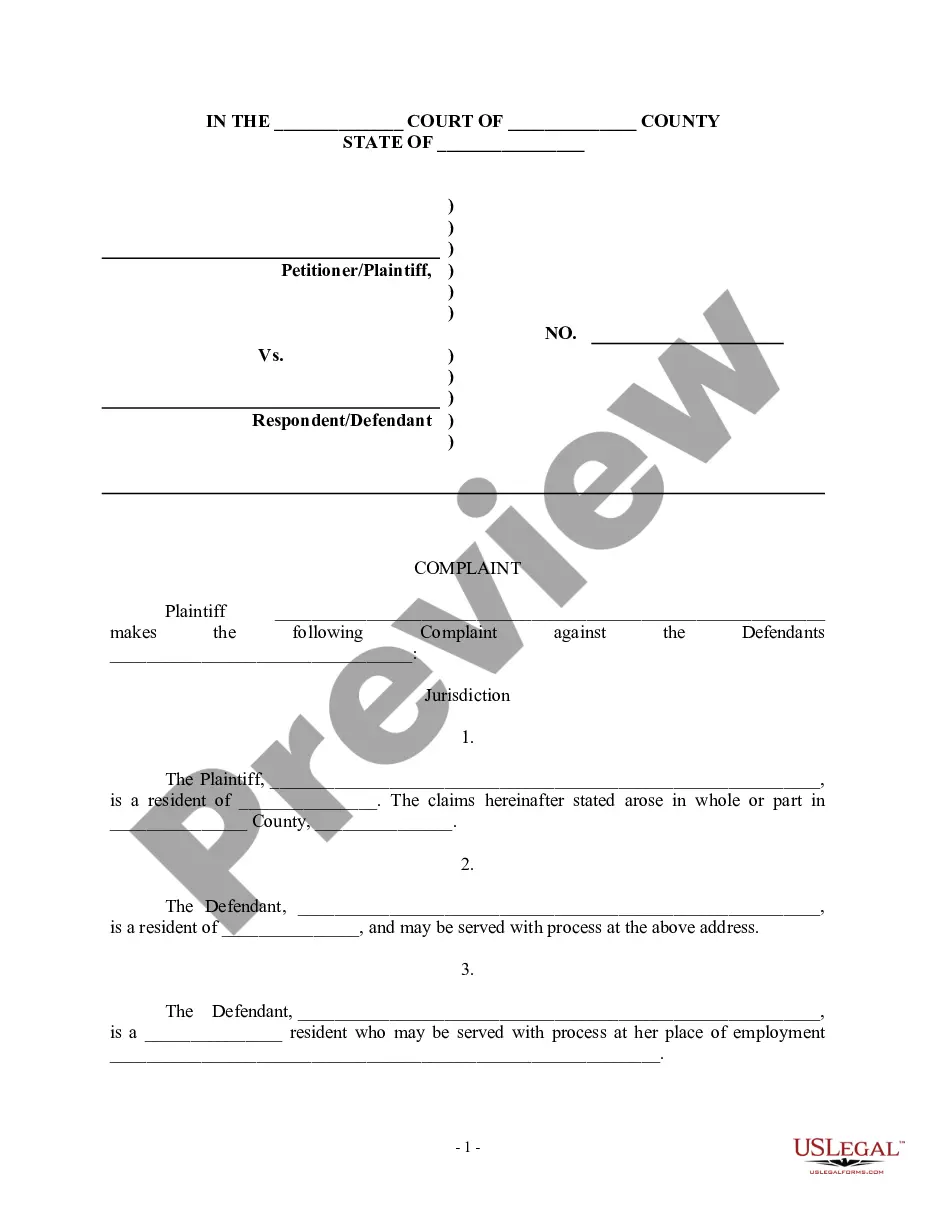
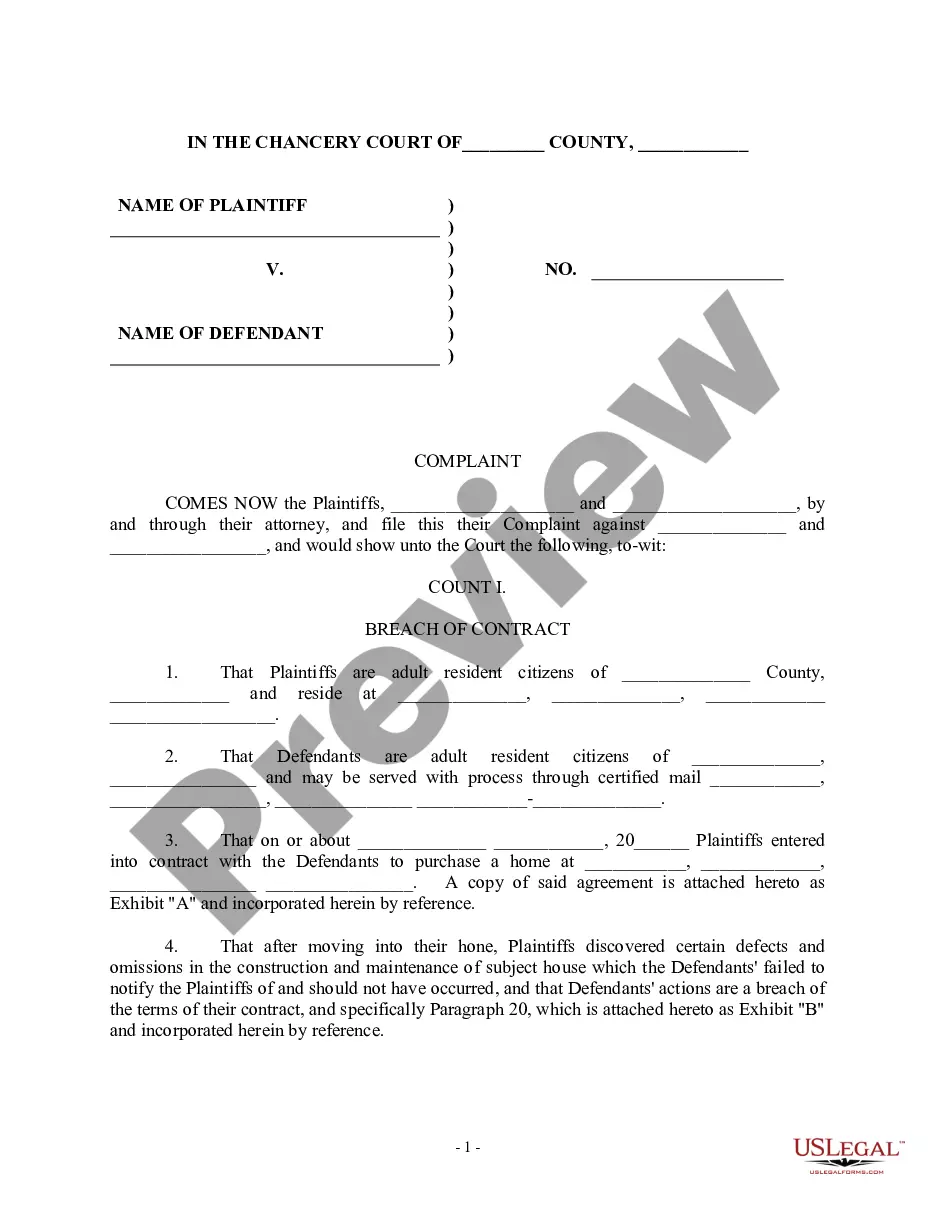
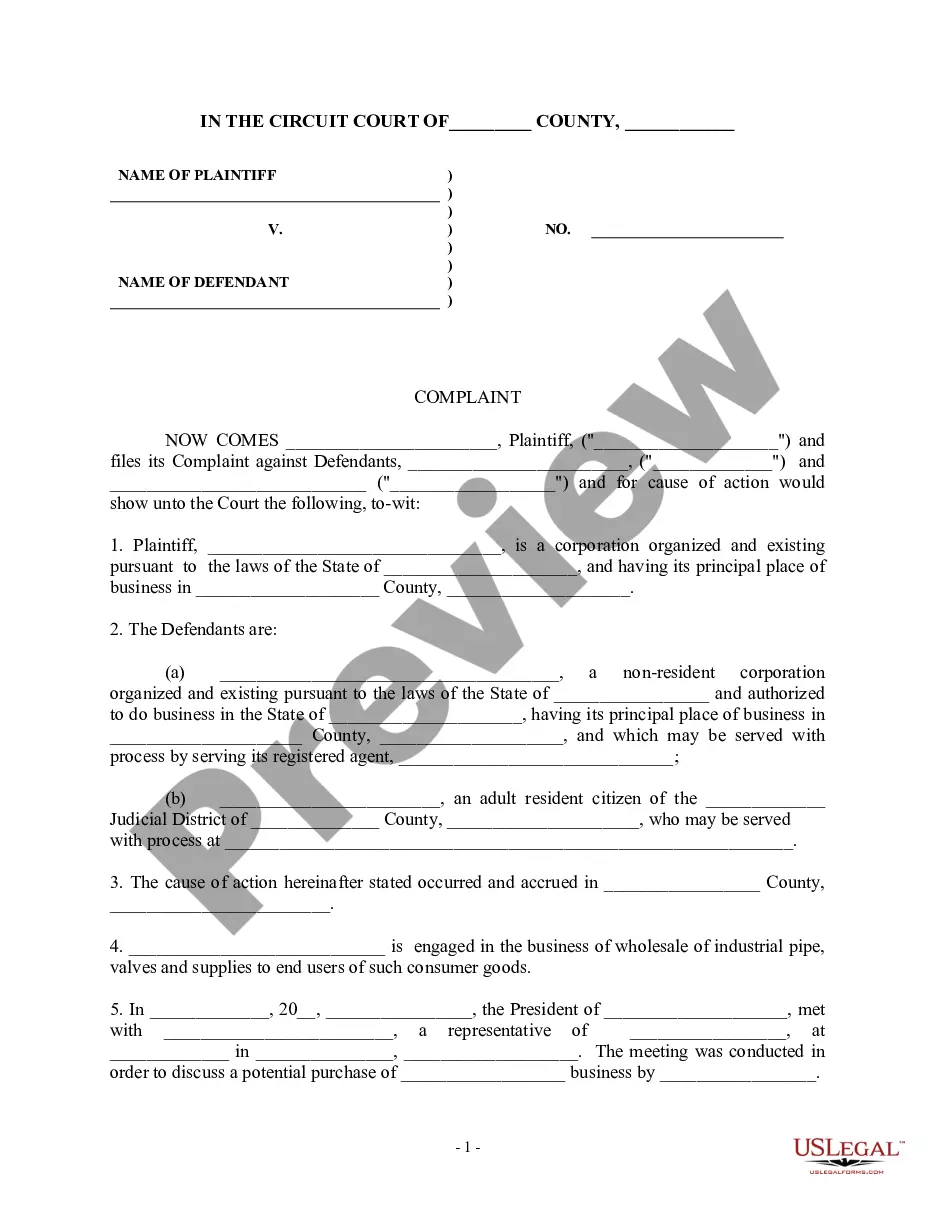
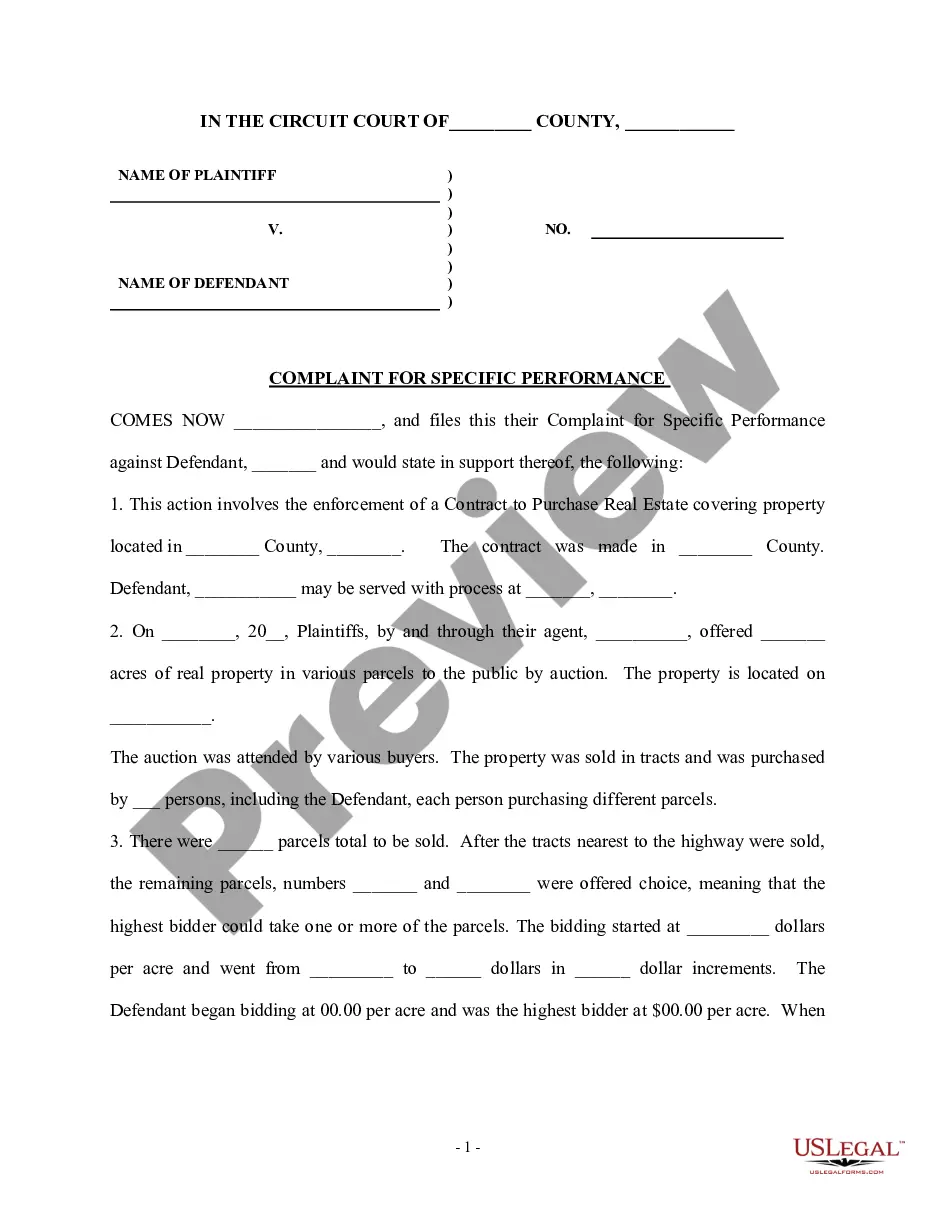
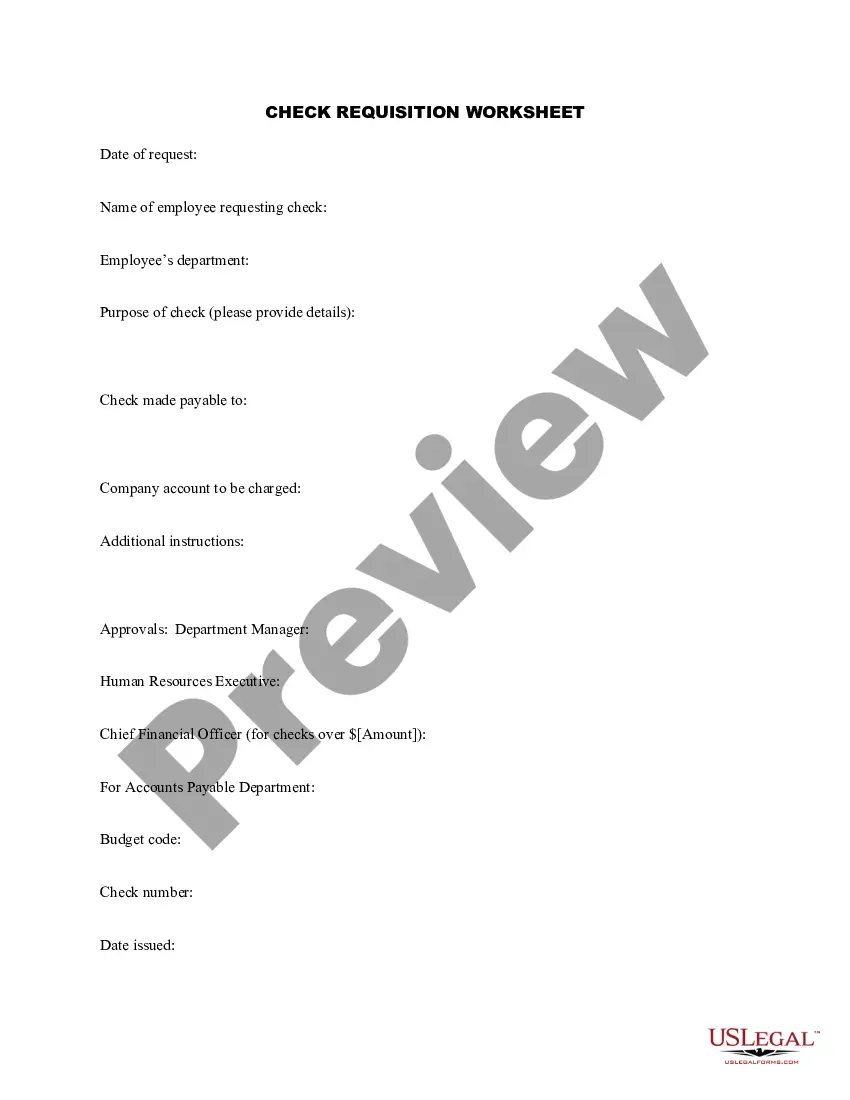


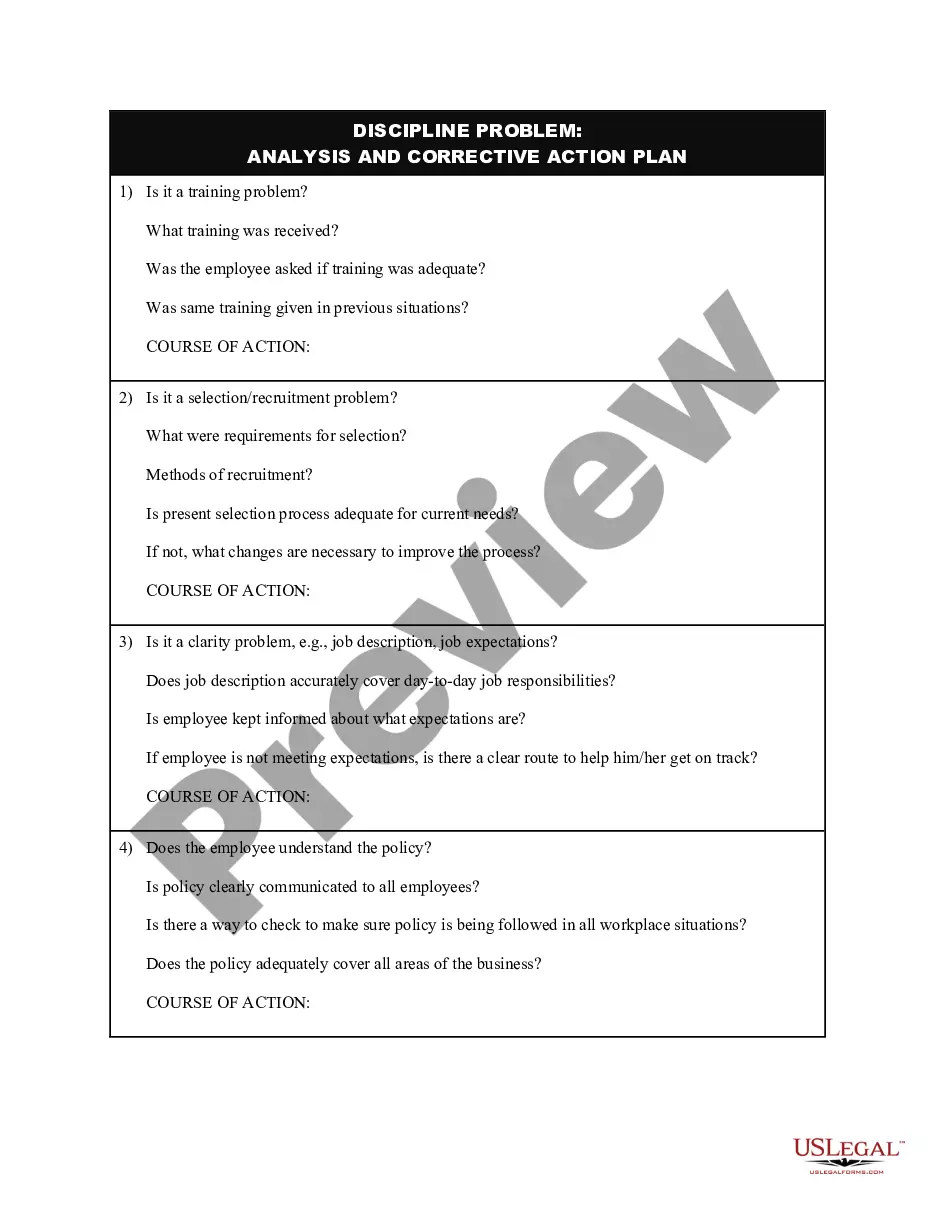
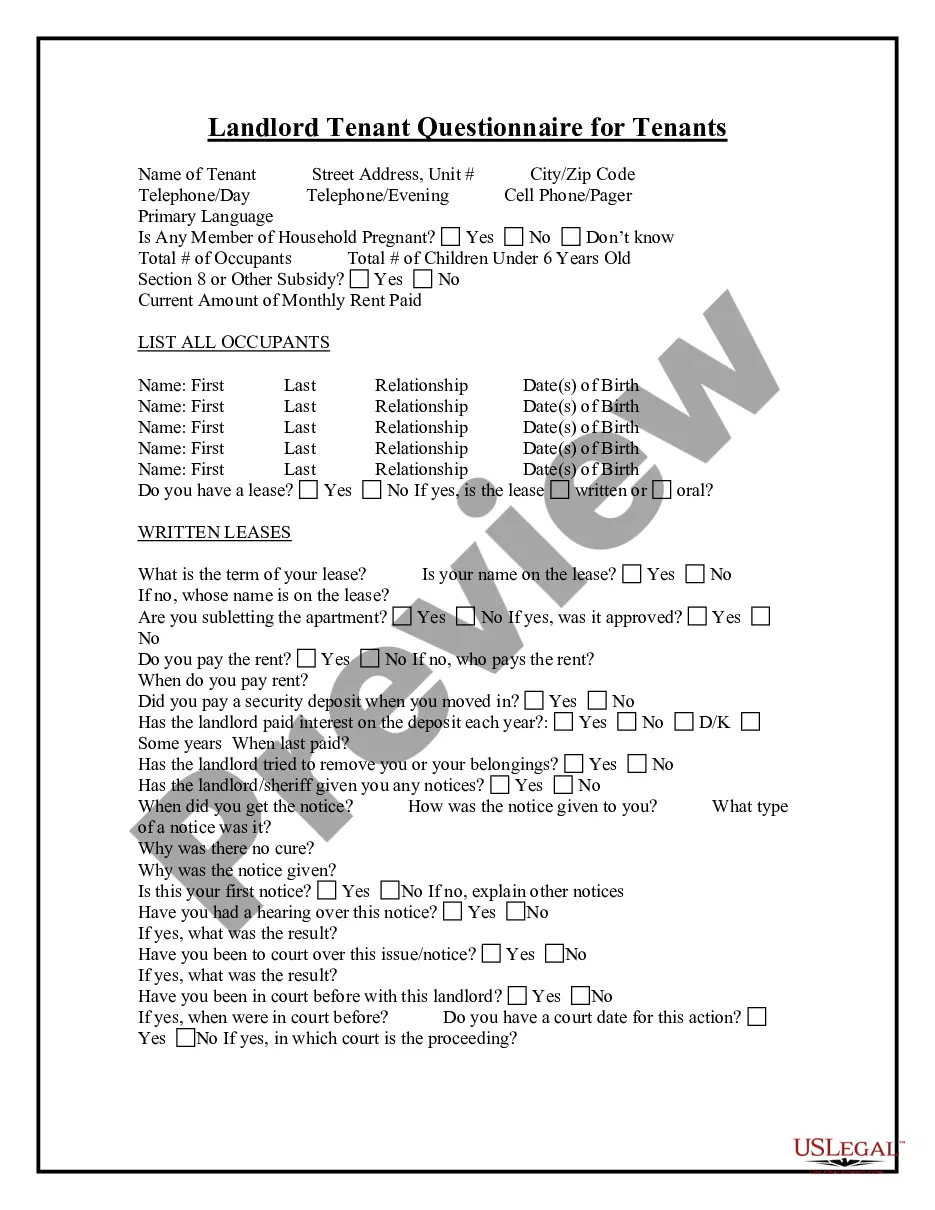



How to fill out Complaint Regarding Breach Of Contract To Divide Estate Proceeds, Implied Contract, Good Faith And Fair Dealing, Promissory Estoppel, Emotional Distress?
- If you're a returning user, simply log in to your account. Ensure your subscription is active to access and download the required template effortlessly.
- For first-time users, start by browsing the extensive library of over 85,000 forms. Check the Preview mode and descriptions to select the correct document tailored to your jurisdiction.
- Need a different template? Use the Search function above to find alternative options that better fit your needs.
- Once you've chosen the right document, click the Buy Now button. Select your preferred subscription plan and create an account to unlock the library's resources.
- Complete your purchase using either your credit card or PayPal for a seamless transaction.
- After successfully purchasing, download your form directly to your device for completion. You can also revisit it anytime through the My Forms section in your profile.
US Legal Forms stands out with a robust collection of templates, making it easier than ever to avoid legal pitfalls. By allowing users to access premium experts, it ensures that all documents are completed accurately and legally sound.
Take control of your legal document needs today with US Legal Forms. Start now and safeguard yourself from a good faith violation!
Form popularity
FAQ
If you receive a good faith violation, it can lead to consequences such as fines or restrictions on your ability to conduct business. It’s vital to understand the nature of the violation and address it promptly. Seeking advice from professionals and using reliable resources like USLegalForms can assist you in navigating this issue.
Bypassing good faith violations involves adhering to established protocols and communicating clearly with all involved parties. It's also helpful to familiarize yourself with the regulations that apply to your transactions. Utilizing services from platforms like USLegalForms can provide guidance and ensure compliance.
A good faith violation occurs when a party fails to act honestly and openly in business dealings. For instance, if a broker executes a trade without confirming the client's intention, this can be viewed as a violation. Recognizing these violations is key to maintaining integrity in your transactions.
Receiving one good faith violation can impact your reputation and lead to penalties. Depending on the situation, you might face restrictions on future transactions or additional oversight. It's crucial to respond promptly to such notifications and seek guidance to prevent further issues.
To get around good faith violations, it's essential to understand the specific regulations governing your transactions. You can start by documenting all communications and maintaining transparency with all parties involved. Using trusted platforms, like USLegalForms, can also help you stay compliant and avoid potential violations.
To determine if you committed a good faith violation, reflect on your actions in your contracts and agreements. Ask yourself if you were transparent, honest, and attentive to your obligations. If you suspect you may have misled or failed to support the other party, a good faith violation may have occurred. Utilizing resources like US Legal Forms can provide clarity and guidance in addressing these concerns effectively.
A good faith violation can manifest in various ways, such as not honoring commitments, failing to communicate important details, or acting in bad faith during negotiations. For instance, if a party knowingly misrepresents facts or deliberately obstructs a process, they may be committing a good faith violation. These actions undermine the foundation of transparency and cooperation. Recognizing these behaviors is vital for protecting your interests.
A violation of good faith occurs when one party fails to act honestly or fairly in a contractual relationship. This means, instead of cooperating and being open, one party may deceive or withhold crucial information. In legal terms, this breach can lead to disputes and potential damages. Understanding the concept of good faith violation is essential for maintaining trust in any agreement.
Good faith violations do not automatically disappear simply by having Fidelity as a broker. These violations remain part of your trading record and can affect your trading privileges. Engaging with Fidelity's support team to understand their specific policies can help you manage any violations more effectively.
Good faith principles are generally enforced in various contracts and relationships, including trading. While financial institutions may impose consequences for good faith violations, the legal enforceability varies by situation. Understanding your rights and obligations can help you navigate compliance effectively.